Devpost
Participate in our public hackathons
Devpost for Teams
Access your company's private hackathons
Grow your developer ecosystem and promote your platform
Drive innovation, collaboration, and retention within your organization
By use case
Blog
Insights into hackathon planning and participation
Customer stories
Inspiration from peers and other industry leaders
Planning guides
Best practices for planning online and in-person hackathons
Webinars & events
Upcoming events and on-demand recordings
Help desk
Common questions and support documentation
Sort by:
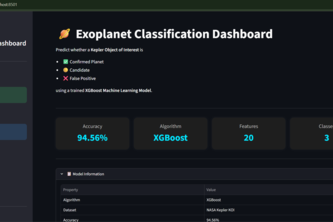
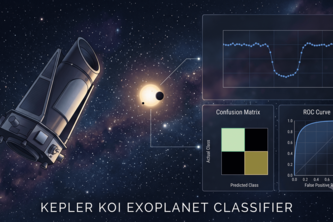
AI-powered exoplanet classification using NASA's Kepler data.
An end-to-end ML application that classifies NASA Kepler Objects of Interest into Confirmed, Candidate, or False Positive using XGBoost (94.56% accuracy) with FastAPI and Streamlit.
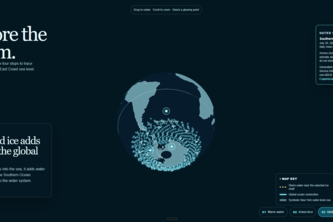
An interactive 3D learning map that shows how warm water can weaken Antarctic ice shelves, how grounded ice adds to global sea level, and why New York is affected.
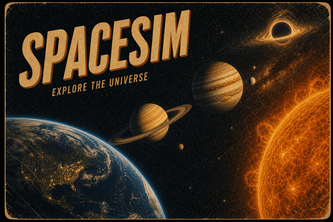
Explore a sourced universe in your browser. Learn how scale, time, motion, and uncertainty shape the Solar System, the ISS, and the stars.
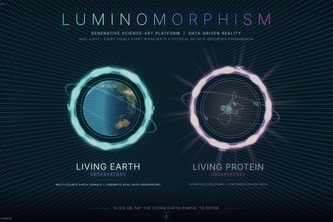
An evidence-aware scientific observatory runtime connecting cinematic WebGL experiences with traceable data, models, predictions, and fallbacks across planetary and molecular scales.
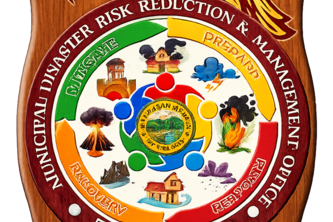
A locally developed emergency monitoring, response-coordination, and public-safety portal for Calanasan, Apayao—with potential for adaptation by other remote and hazard-prone communities.
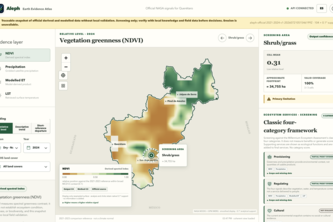
AI-powered ecosystem-service intelligence that turns Earth observation signals into transparent, confidence-aware territorial decisions.
Real-time disaster intelligence for safer, faster humanitarian response.
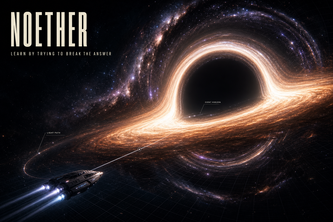
Learn why AI hallucinates and how measurement catches it. Playable physics with computed black holes, a real broken benchmark, and GPT-5.6 as the map-maker, never the referee.
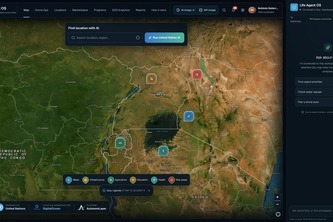
Life Agent OS is an AI operating system for understanding cities and coordinating humanitarian action.
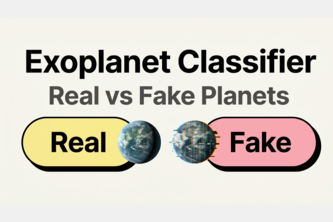
“AI-powered classifier that separates real Kepler exoplanets from false positives using NASA’s KOI and FPP catalogs.”
A machine learning classifier that identifies real exoplanet transit signals vs false positives, achieving 90% accuracy by learning the physical signatures astronomers use to validate planets.
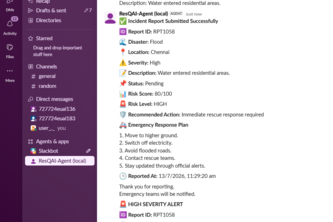
An AI-powered Slack agent that provides real-time disaster alerts, emergency guidance, safety tips, and incident coordination to help communities prepare for and respond to natural disasters.
ExoVision AI uses machine learning to analyze real NASA exoplanet data, accurately classifying potential exoplanets while providing explainable predictions to accelerate astronomical research.
i like to hae my project well send toall the people in this society and you know that because i know that and i know that because i have made this project so u know
The public record on 2,027 U.S. data centers: water, power, noise, air, wildlife. In plain language, fully cited, free.
AI-powered platform that analyzes solar feasibility, energy generation, investment cost, and ROI using live weather, solar radiation, and web-scraped market data.
Turning solar confusion into clear energy decisions.
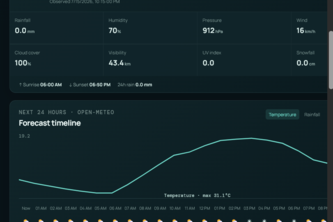
AI-powered hyperlocal forecasting and real-time disaster risk intelligence that helps people predict, prepare, and respond faster.
AI-Powered Disaster Intelligence for a Safer World
FloodLens turns live flood, terrain, gauge, and alert data into a clear local risk decision, AR/3D context, and first preparedness actions on desktop and mobile.
METEORX predicts hazardous meteoroids in real time using SciPy and orbital math, estimating impact zones and destruction risk via a scalable web platform.
Forecast the storm before it hits.