Inspiration
Climate change is increasing the frequency of floods, cyclones, heatwaves, and earthquakes across the world. During disasters, many communities—especially in rural and low-connectivity regions—struggle to access reliable real-time weather alerts and emergency guidance.
I wanted to build a platform that goes beyond a traditional weather app and acts as an intelligent disaster-response assistant. Our goal was to combine AI, live weather intelligence, disaster analytics, and emergency preparedness into one futuristic platform capable of helping people make safer real-time decisions.
This inspired me to create WeatherWise AI Sentinel — an AI-powered disaster intelligence platform designed to improve preparedness, accessibility, and real-time emergency response.
What it does
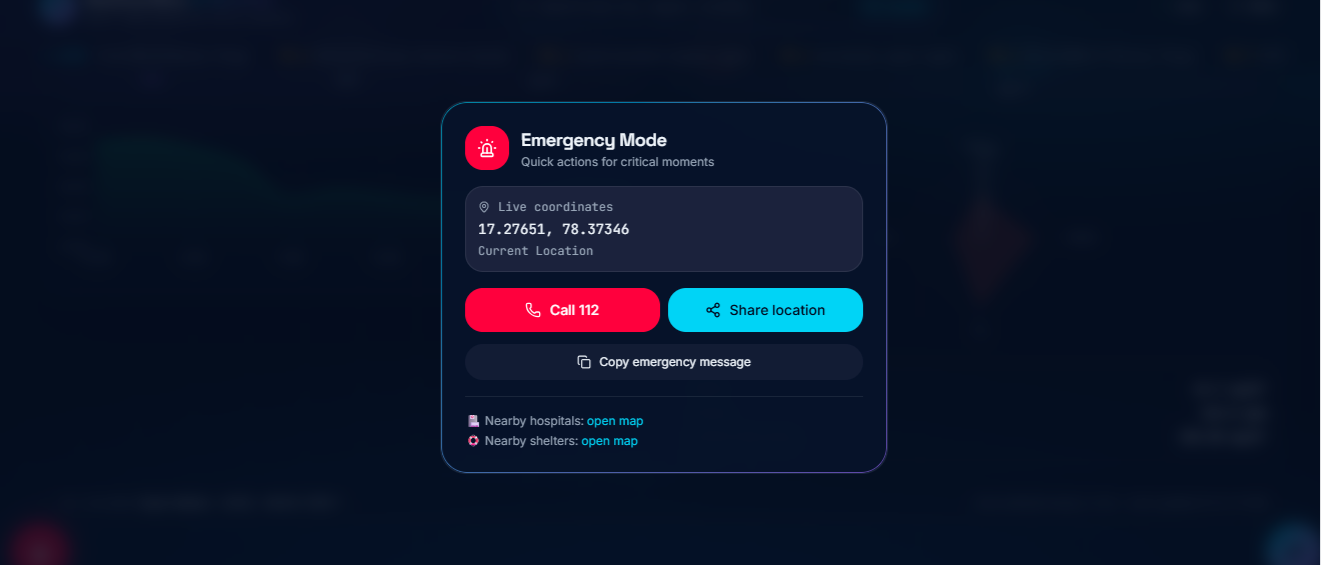
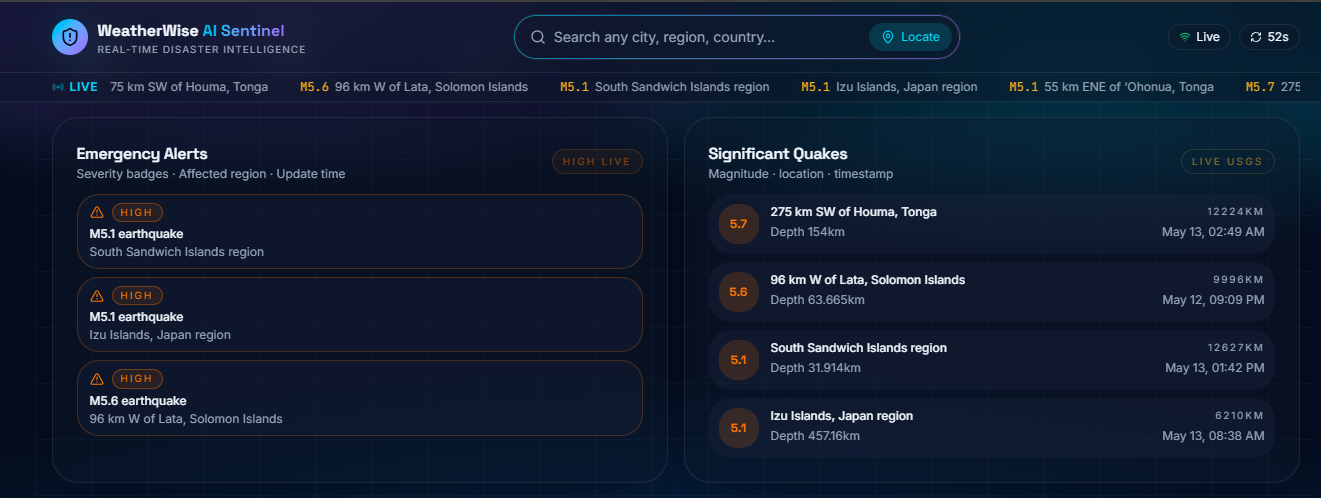
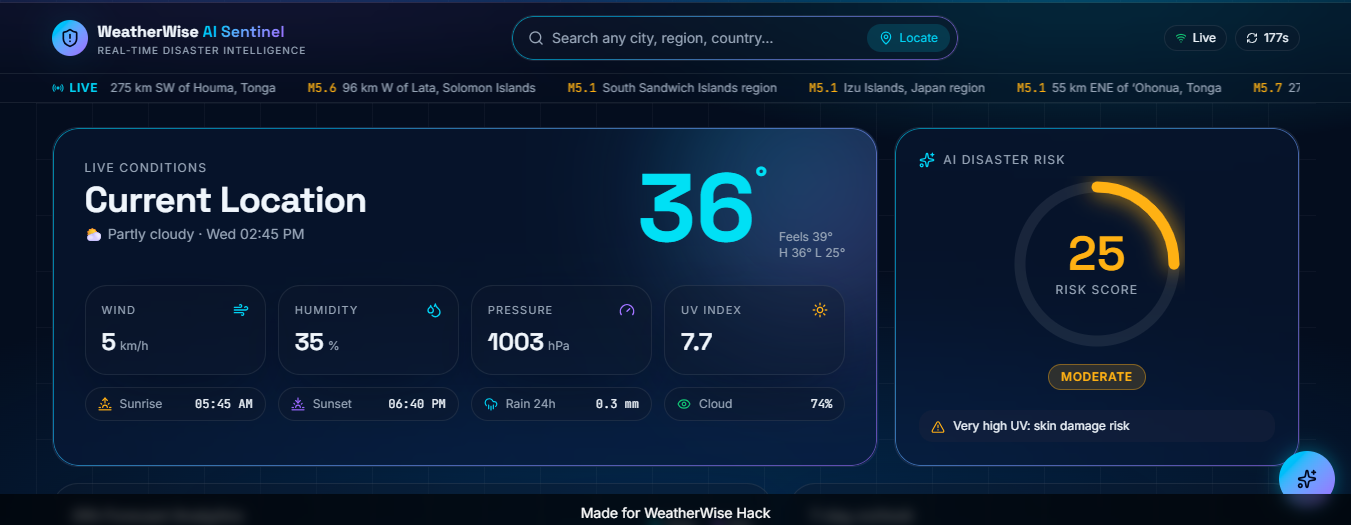
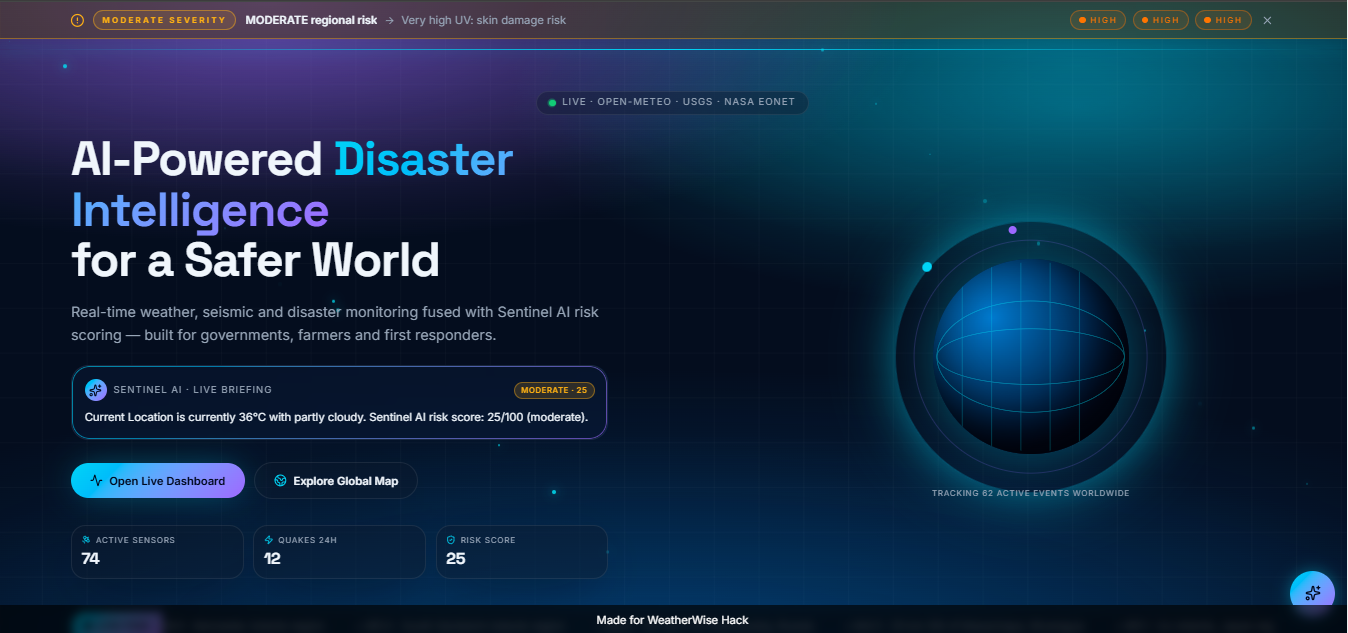
WeatherWise AI Sentinel is a real-time weather and disaster intelligence platform that helps users:
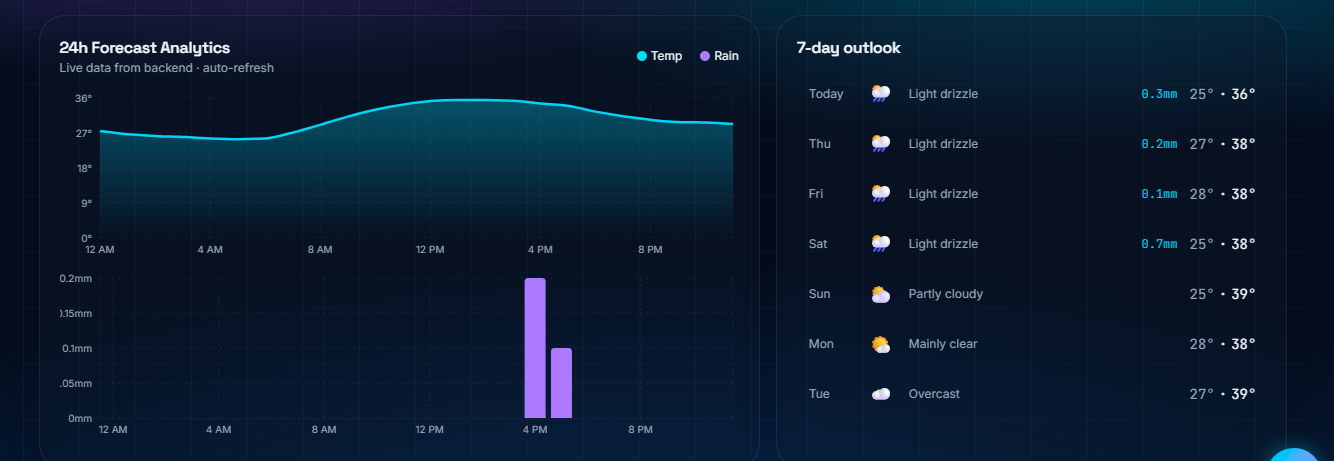
Monitor live weather conditions Track floods, cyclones, and earthquakes Analyze disaster risk using AI Receive real-time emergency alerts Access nearby shelters and safe zones Get AI-generated safety recommendations Use offline-ready emergency features Monitor AQI and environmental conditions
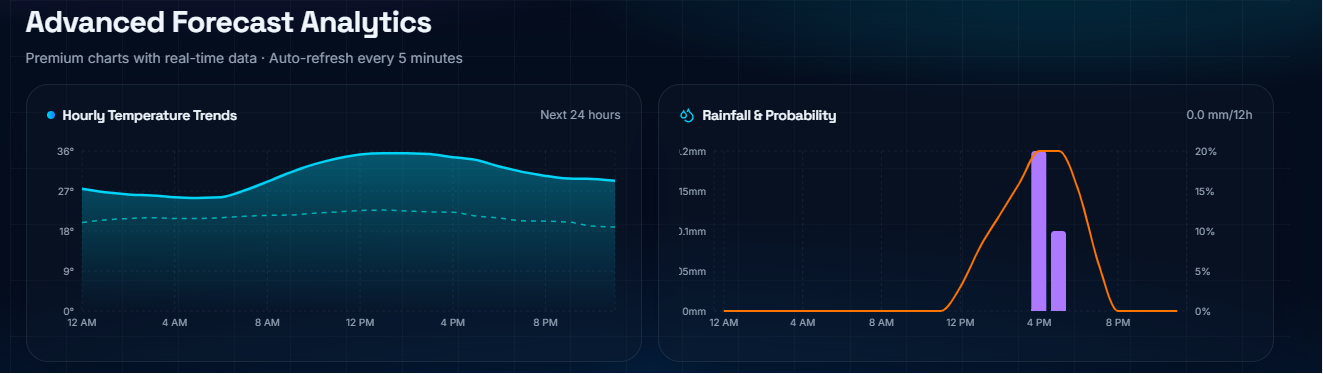
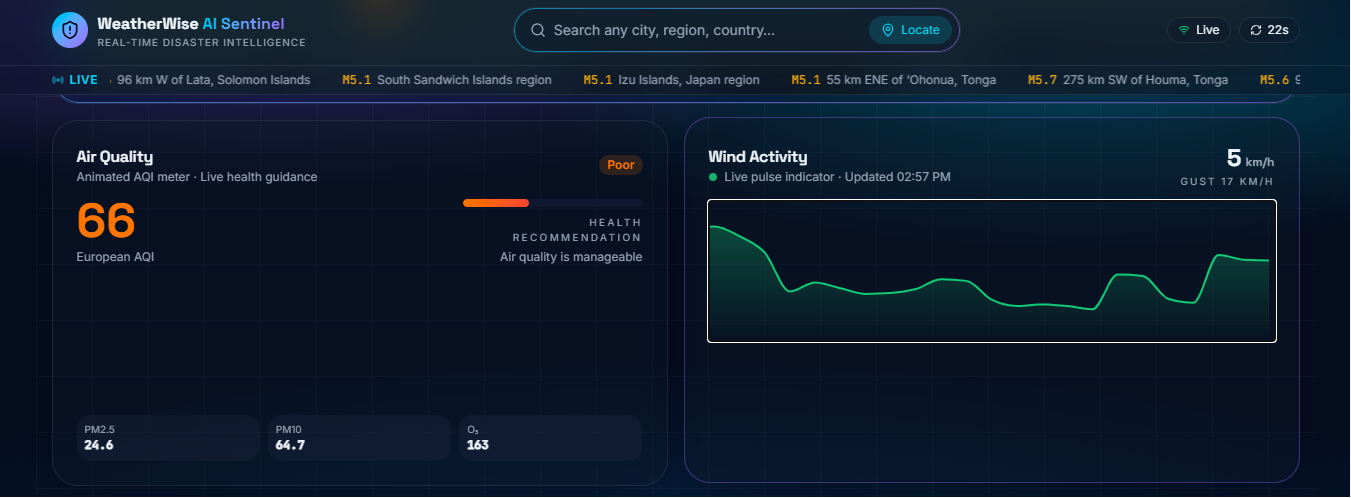
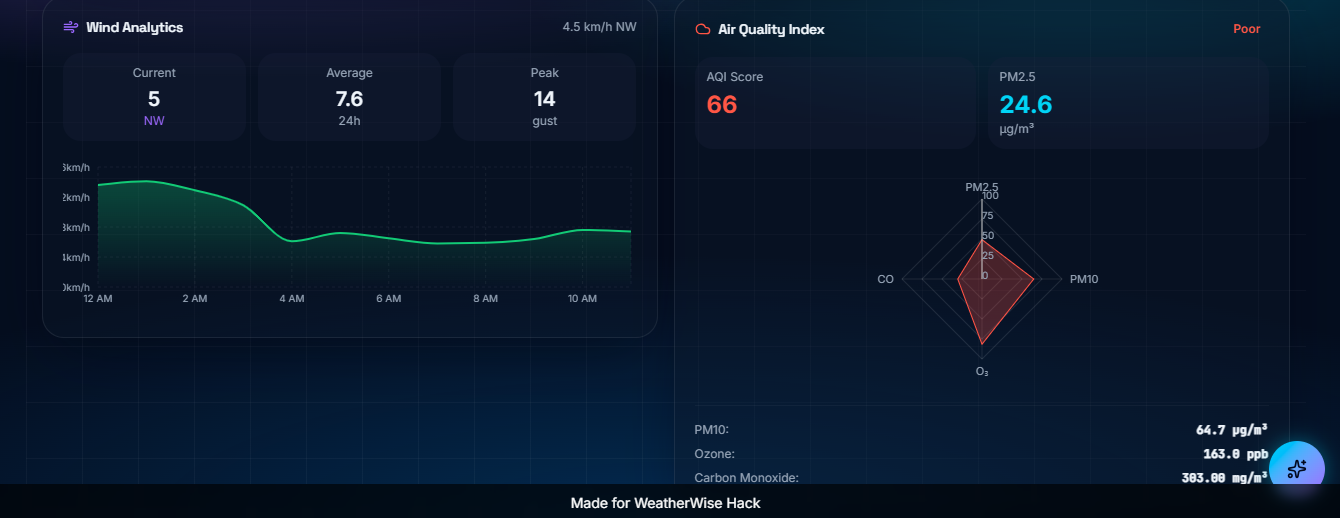
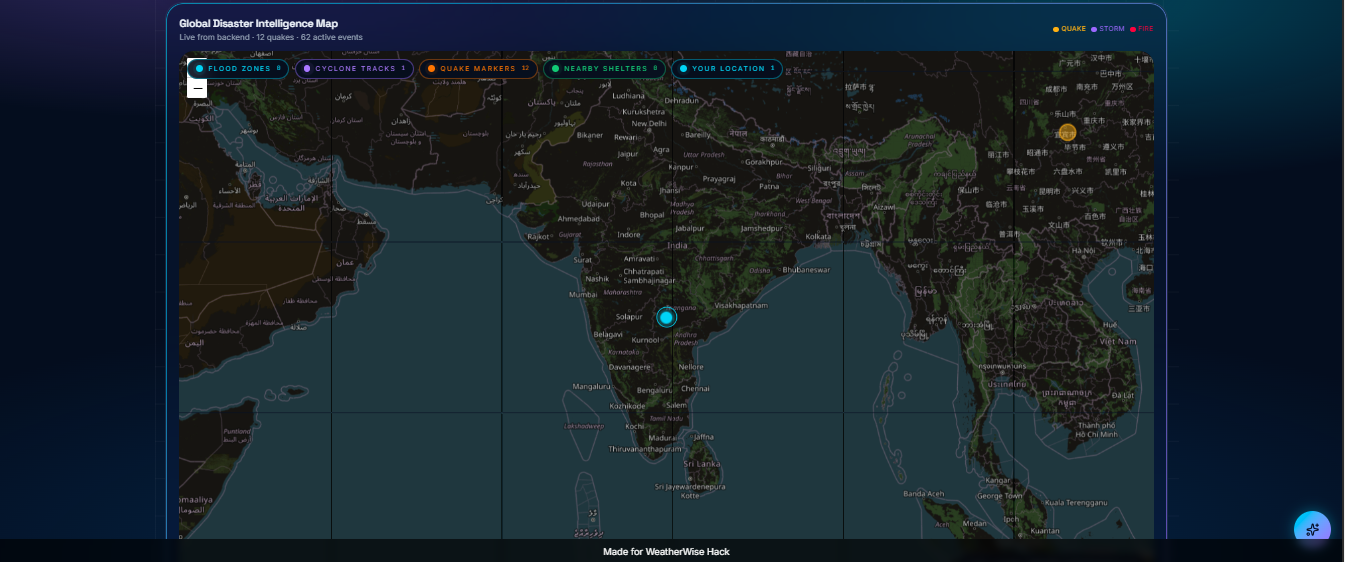
The platform combines multiple live APIs, AI-powered analysis, interactive maps, and intelligent forecasting into a single command-center style dashboard.
How we built it
Frontend:
React.js / Next.js Tailwind CSS Framer Motion
Backend:
Node.js Express.js
Database:
MongoDB
APIs & Services:
OpenWeather API WeatherAPI Tomorrow.io NOAA datasets OpenAI API Google Maps / Mapbox Firebase Twilio
Visualization:
Chart.js Real-time analytics dashboards Interactive mapping layers
Deployment:
Vercel Render
Challenges we ran into
One of the biggest challenges was integrating multiple live weather APIs and ensuring the platform remained responsive and visually clean while processing large amounts of real-time data.
I faced challenges while:
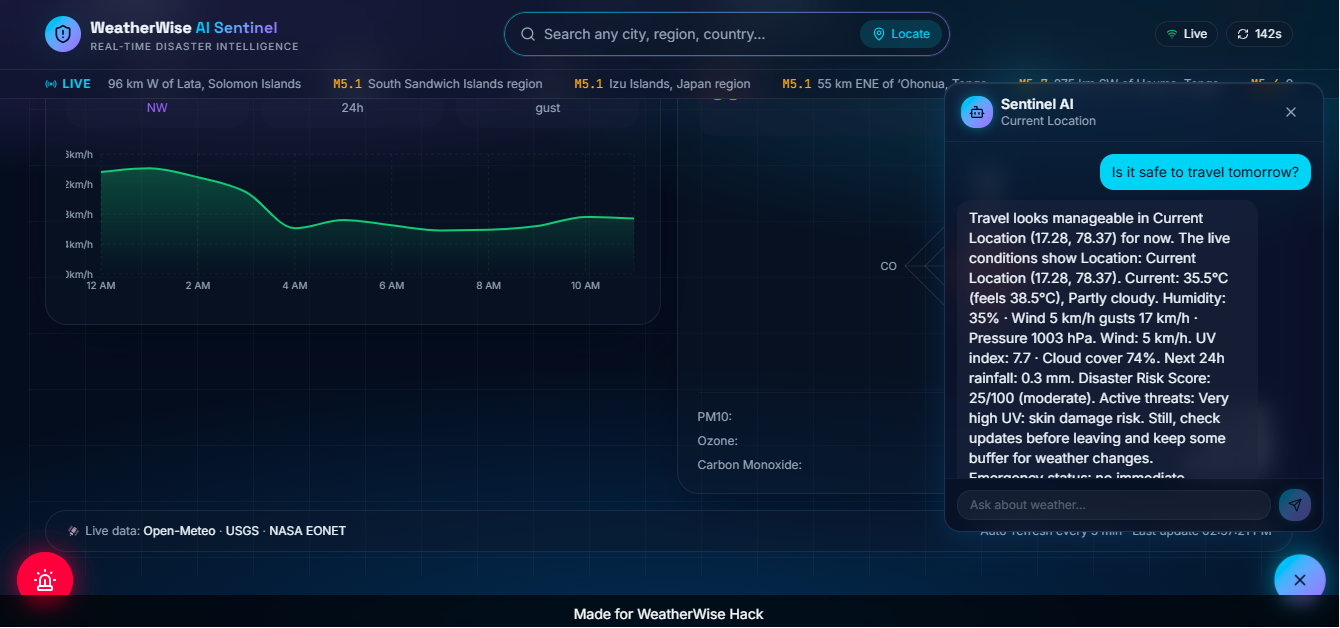
Handling live disaster data streams Designing a futuristic yet usable UI Optimizing map performance Making the AI chatbot context-aware Implementing responsive layouts for different screen sizes Managing real-time updates efficiently
Another major challenge was creating a dashboard that looked and behaved like a real emergency intelligence platform instead of a basic weather application.
Accomplishments that we're proud of
I am proud of building a fully functional AI-powered disaster intelligence platform that combines real-time weather monitoring, disaster prediction, emergency preparedness, and modern UI/UX into a single experience.
Some of my biggest accomplishments include:
Successfully integrating multiple live weather APIs for real-time forecasting and disaster analysis Building an AI-powered assistant capable of providing contextual weather insights and emergency recommendations Designing a futuristic command-center style dashboard with interactive maps and live analytics Implementing real-time disaster tracking for floods, cyclones, earthquakes, and severe weather conditions Creating an offline-first architecture to support users in low-connectivity regions Developing AI-based disaster risk scoring and crop damage prediction features Building a responsive and visually polished platform that feels like a real-world emergency intelligence system
Most importantly, we are proud that our project focuses on solving real-world problems and improving disaster preparedness for vulnerable communities.
What we learned
During the development of WeatherWise AI Sentinel, we learned a lot about building scalable real-time systems and integrating AI into disaster intelligence platforms.
Some of the key things we learned include:
Working with multiple live weather and disaster APIs simultaneously Managing real-time data updates and dynamic dashboards Building responsive and highly interactive user interfaces Implementing AI-powered contextual analysis using real weather data Optimizing map performance with live overlays and disaster markers Handling asynchronous API requests and backend performance challenges Designing applications focused on accessibility and real-world usability Improving frontend architecture and component reusability
I also learned how powerful technology and AI can be when applied to public safety, disaster preparedness, and climate resilience.
What's next for WeatherWise AI Sentinel
I plan to continue improving WeatherWise AI Sentinel and transform it into a more advanced disaster-response ecosystem.
Future improvements include:
Satellite imagery integration for advanced weather analysis Voice-enabled emergency assistant with multilingual support WhatsApp-based disaster alert bot Community-driven incident reporting AI-powered long-term disaster prediction models IoT sensor integration for hyperlocal monitoring Government and emergency service integration Advanced evacuation planning and route optimization Mobile application support for Android and iOS More accurate AI risk analysis using historical disaster datasets
Built With
- ai
- api
- cors
- css
- dotenv
- earthquake
- eonet
- express.js
- feed
- framermotion
- gateway
- gemini
- javascript
- leaflet.js
- lucide
- markdown
- mysql
- mysql2
- nasa
- node.js
- open-meteo
- openai
- openstreetmap
- overpass
- react
- recharts
- render
- sonner
- tailwind
- usgs
- vercel
- vite

Log in or sign up for Devpost to join the conversation.