-
-

front page
-
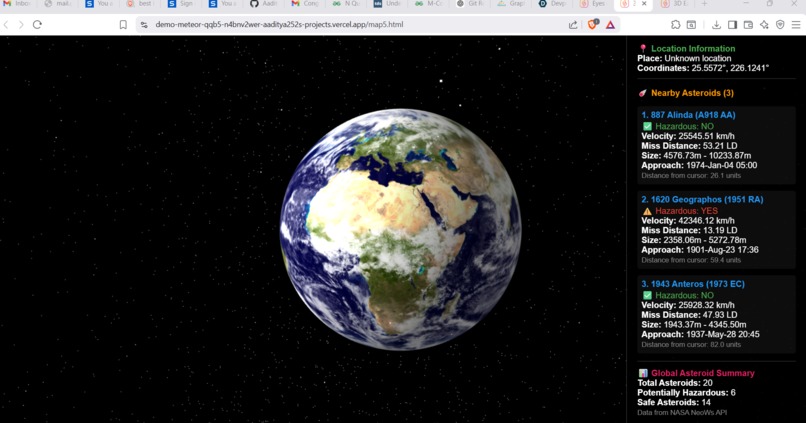
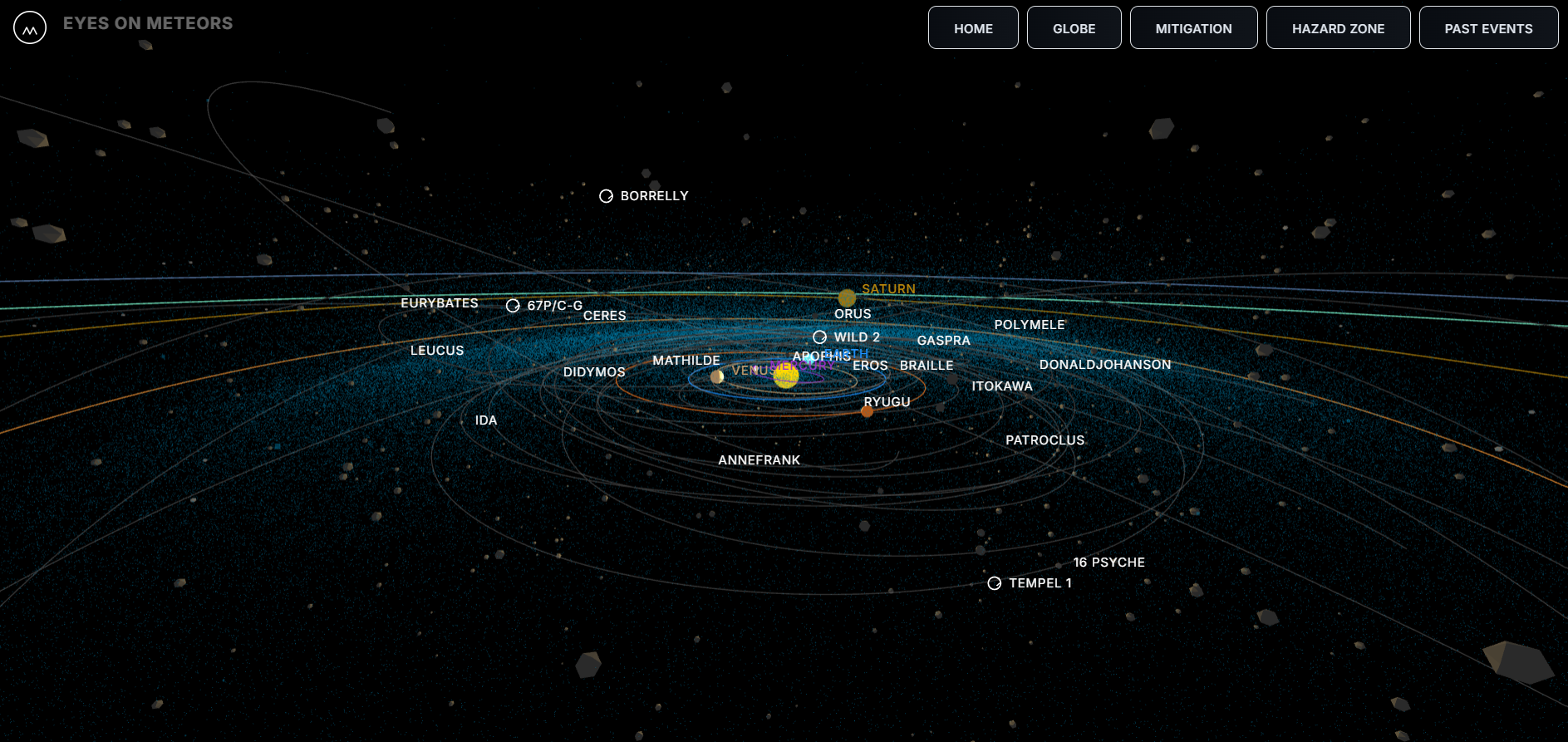
Live trajectory detection and locator using orbital mathematics of the nearby meteors
-
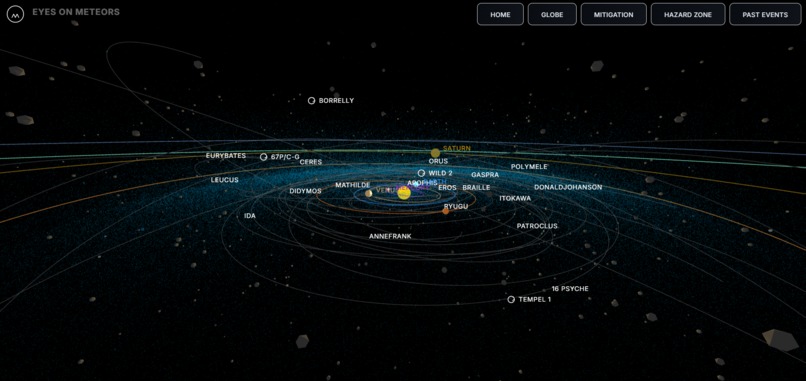
The beautiful three.js based background free moving background
-
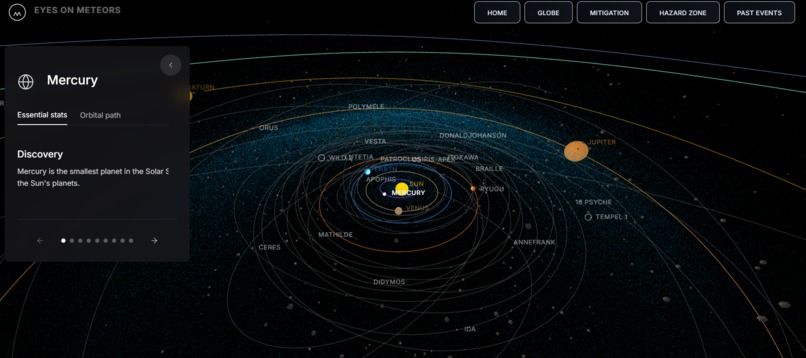
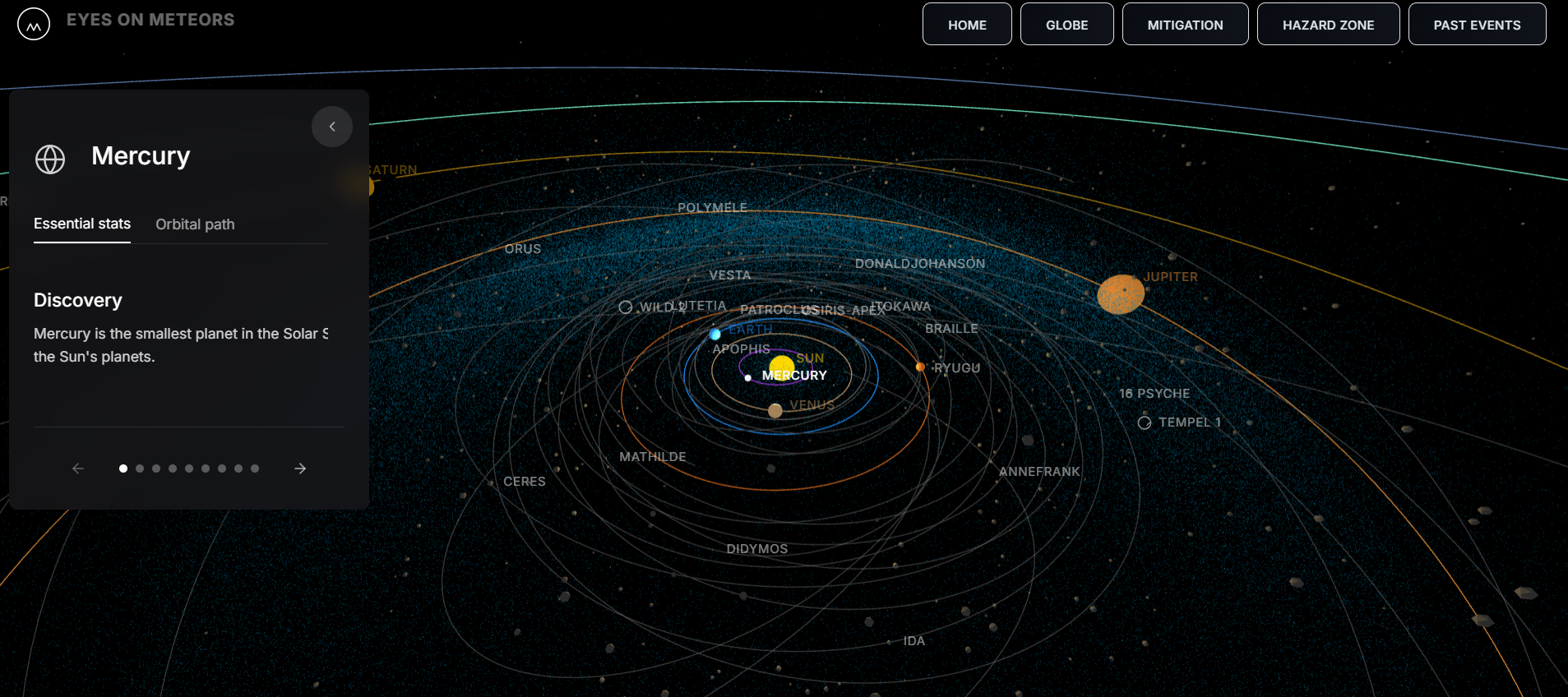
live information fetching form nasa website about the solar moons and planets

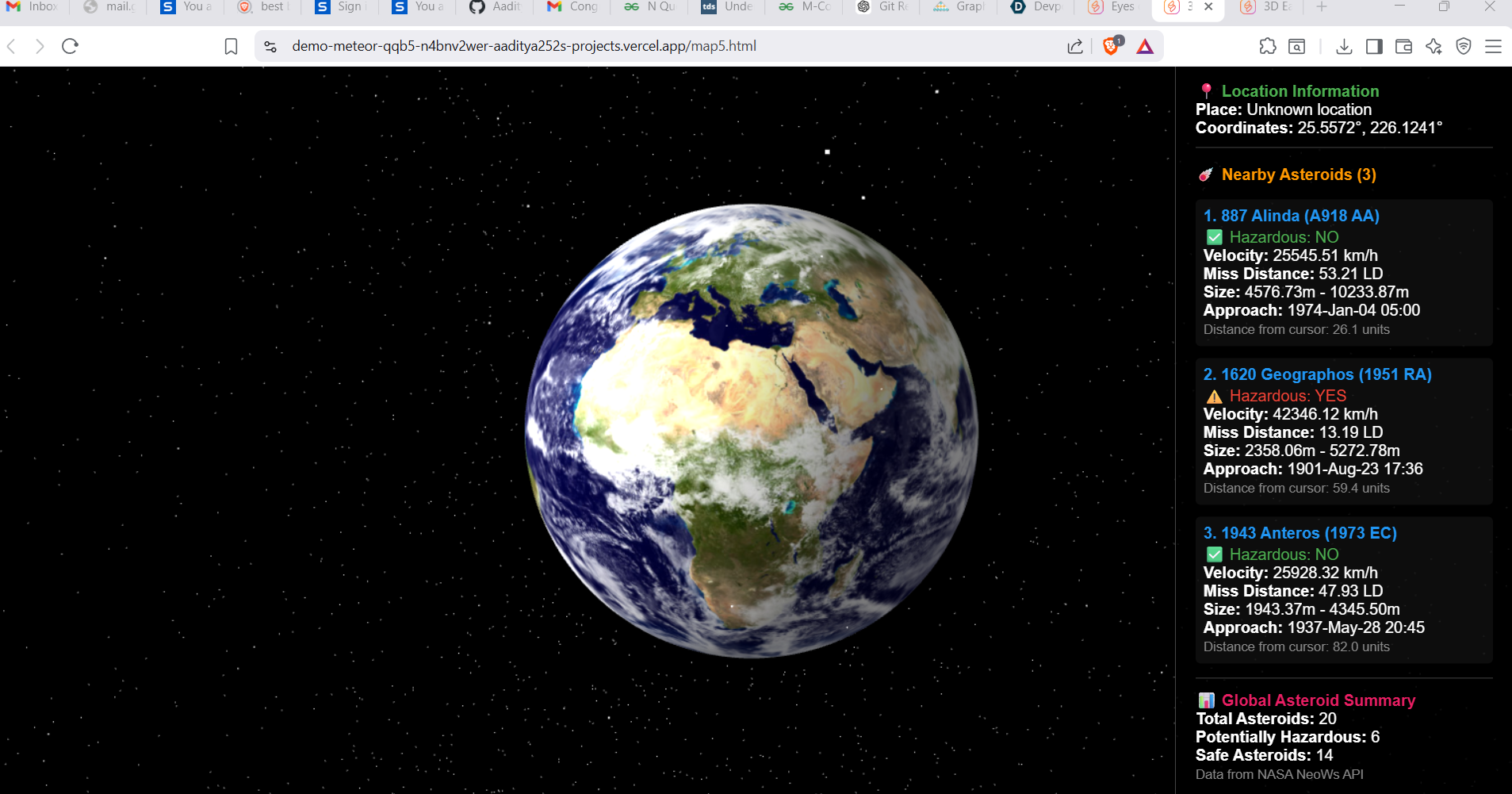
Inspiration
Near-Earth objects pose a real but under-visualized threat. Inspired by space research from agencies like NASA, we wanted to make asteroid risk understandable, visual, and actionable using modern computing.
What it does
MEOTEORX predicts potentially hazardous meteoroids in real time. It calculates trajectory, velocity, and kinetic energy to estimate impact zones and visualize potential destruction, turning complex astrophysics into a simple, interactive dashboard.
How we built it
We built a full-stack web app combining a React frontend with a Python computation engine. Using SciPy, we implemented orbital mechanics, vector calculations, and energy models. The app is deployed on Vercel for scalability and fast access.
Challenges we ran into
Translating complex orbital mechanics into real-time computations Handling precision vs performance trade-offs Designing intuitive visualizations for highly technical data Lack of direct real-time datasets for near-Earth objects
Accomplishments that we're proud of
Built a working real-time simulation engine Successfully modeled trajectory + impact estimation Created a clean UI that simplifies astrophysics concepts Delivered a scalable, deployable full-stack system
What we learned
Practical application of scientific computing in real-world problems How to integrate math-heavy backend logic with frontend UX Importance of clear data visualization for complex systems Trade-offs in simulation accuracy vs performance
What's next for MEOTEORX
Integrate live NEO datasets from NASA APIs Add real-time alerts and early warning system Improve impact prediction using machine learning Build a 3D visualization engine for trajectory tracking Expand into a full disaster intelligence platform
Built With
- apify
- firbase
- nasa
- openstreetmap
- spacemap


Log in or sign up for Devpost to join the conversation.