Devpost
Participate in our public hackathons
Devpost for Teams
Access your company's private hackathons
Grow your developer ecosystem and promote your platform
Drive innovation, collaboration, and retention within your organization
By use case
Blog
Insights into hackathon planning and participation
Customer stories
Inspiration from peers and other industry leaders
Planning guides
Best practices for planning online and in-person hackathons
Webinars & events
Upcoming events and on-demand recordings
Help desk
Common questions and support documentation
Sort by:
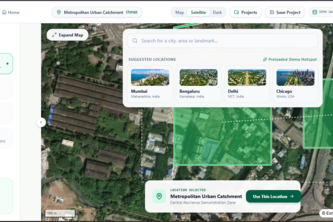
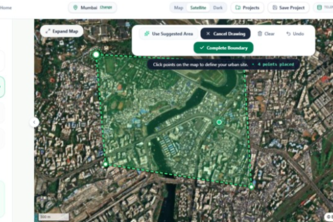
An AI-powered urban ecology compiler that transforms real-world geospatial data and city goals into optimized, visual plans for greener, cooler, more resilient cities.
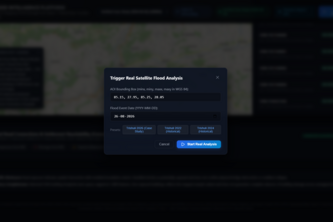
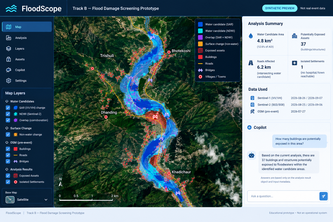
Turn satellite imagery into flood-impact maps, identify potentially exposed infrastructure, and reveal settlements at risk of losing road access.
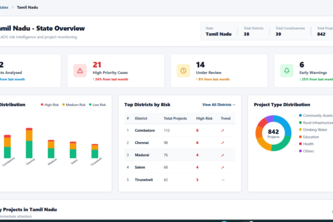
An AI-powered platform that detects, explains, and connects MPLADS project risk signals to help authorities prioritize evidence-based verification and proactive monitoring.
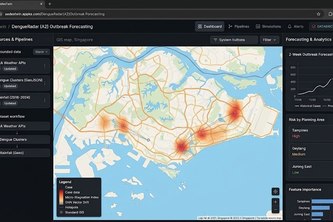
DengueRadar forecasts which Singapore neighbourhoods will see dengue clusters 2 to 4 weeks ahead, prioritising areas with the most seniors and children so inspectors and residents act early.
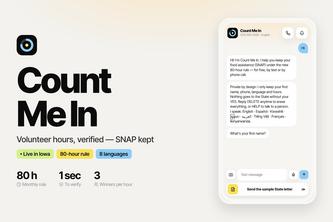
Volunteering → verified hours → SNAP kept. An SMS & voice assistant in 8 languages helps Iowans meet the new 80-hour rule, and gives pantries the regular volunteers they need.
AccessLens scores how easily HDB residents reach supermarkets, hawkers, clinics and parks by public transport, using real passenger flows to flag elderly-dense areas left behind.
See who gets cut off before a hawker centre closes. HawkerReach maps which seniors lose walkable access, which centres get overloaded, and where a temporary market helps most.
AedesTwin fuses live NEA data, weather feeds, and Graph Neural Networks to forecast dengue risk 2 weeks ahead, shifting Singapore from reacting to outbreaks to proactive prevention.
An autonomous dengue early warning system that retrains itself, forecasts risk 2 weeks ahead by planning area, and puts seniors first. Officers approve every update.
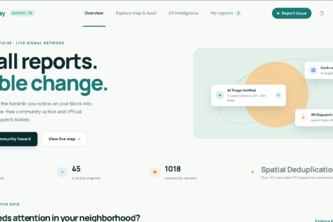
An interactive community hazard tracker that uses AI triage and spatial deduplication to turn neighbor reports into verified, official 311 city dispatch tickets.
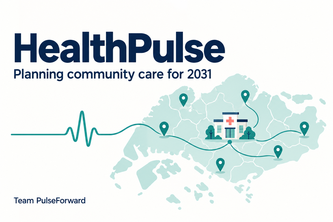
Forecasts 2031 community care demand for all 55 planning areas, nets out 31 announced facilities, and flags the 5 most underserved areas, built on Databricks with Singapore open data.
See the Flood. Map the Risk. Act Smarter.
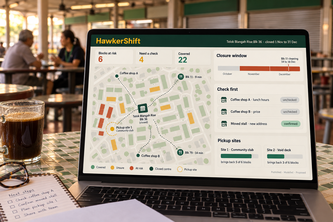
HawkerShift helps community coordinators identify HDB blocks at risk of losing walkable access to affordable meals during hawker centre closures, verify alternatives and plan targeted support.
Headliner routes the tour your fans already want, using Qloo’s taste data to show touring artists where their fans really are, what size room to book, and who should open.
HeatGuard maps heat exposure, senior vulnerability and support gaps to help communities prioritise outreach and plan cooling support where it matters most.
See who's alone. Reach them first.
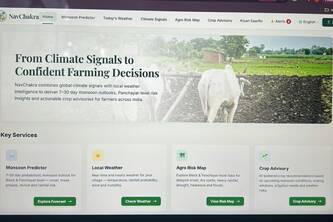
From Climate Signals to Confident Farming Decisions
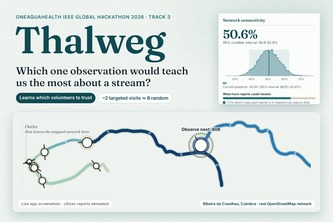
Volunteers' river reports disagree. Thalweg learns who's reliable, shows where uncertainty lives in a real stream, and picks the one observation that would teach us the most.
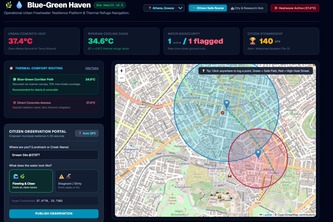
Routes vulnerable European citizens along cooling urban streams during extreme heatwaves while crowdsourcing freshwater health for municipal biosecurity and public works dispatch.
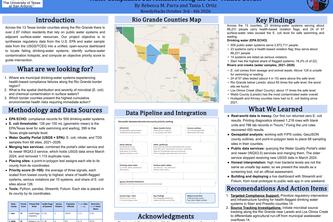
RioClear Initiative maps drinking-water violations and river contamination along the Texas–Mexico border, and ranks which counties need action first.
Dora turns ecological questions into actionable insights for conservation teams, researchers, and land managers by uncovering historical patterns and forecast possible changes.
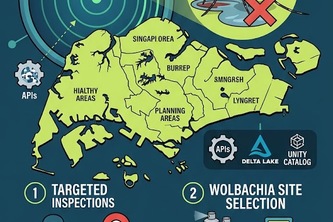
Forecasts dengue-cluster risk for all 55 planning areas 2–8 weeks ahead, knows where Wolbachia already protects, and ranks which estates NEA should cover next. Built on Databricks.
88,400 Singapore seniors live alone, double a decade ago. Our Databricks risk map scores every HDB town on isolation and center coverage, so volunteers reach the neediest neighborhoods first.