-
-
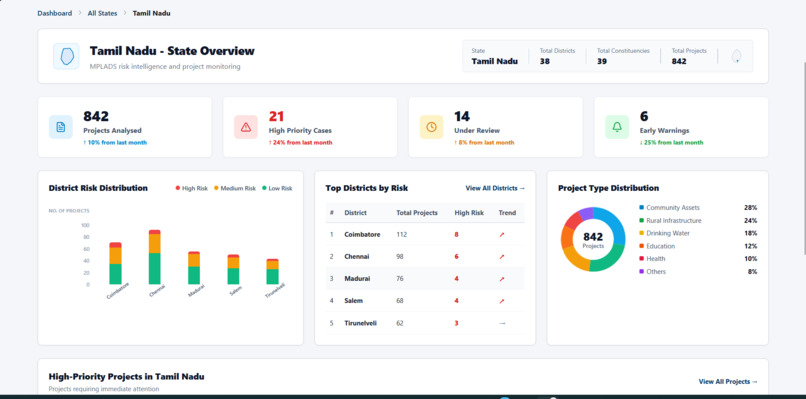
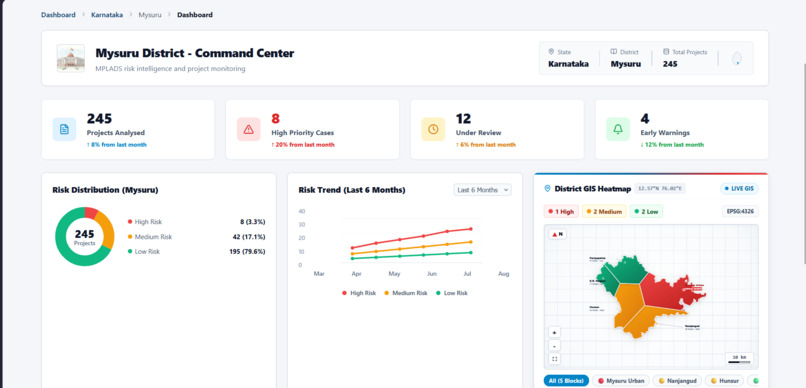
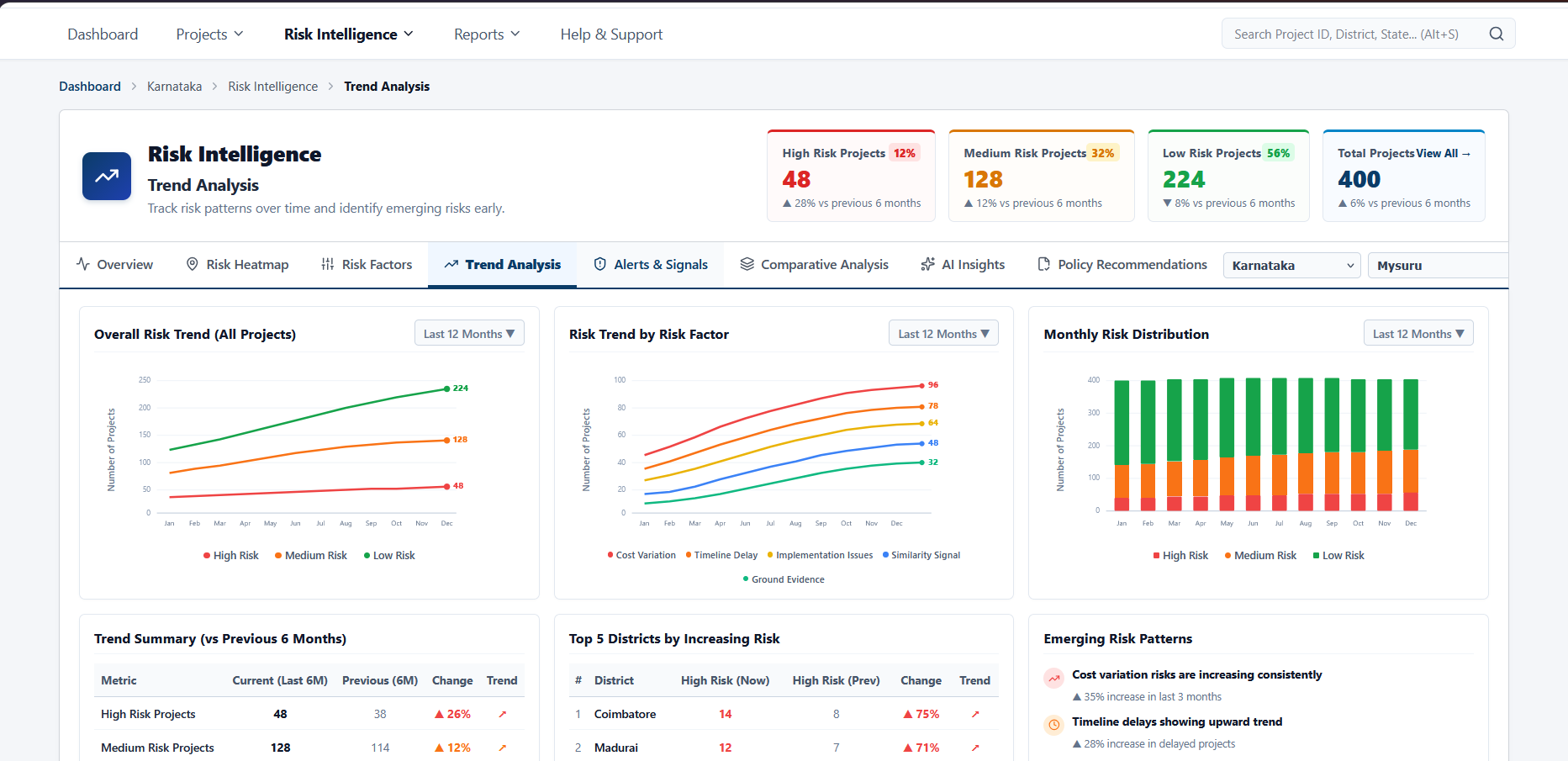
Risk Trend Analysis
-
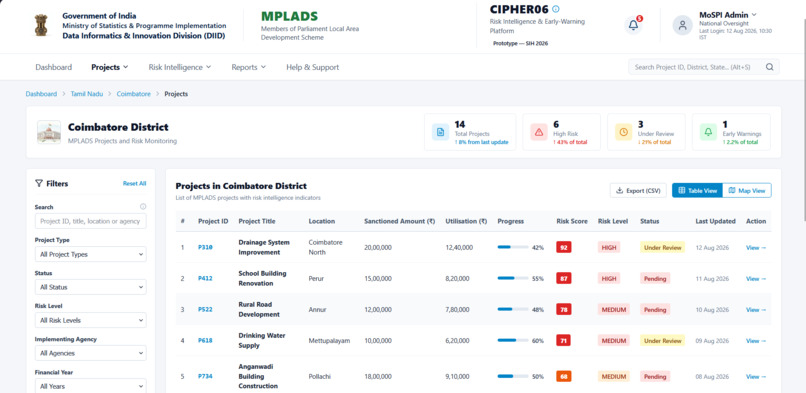
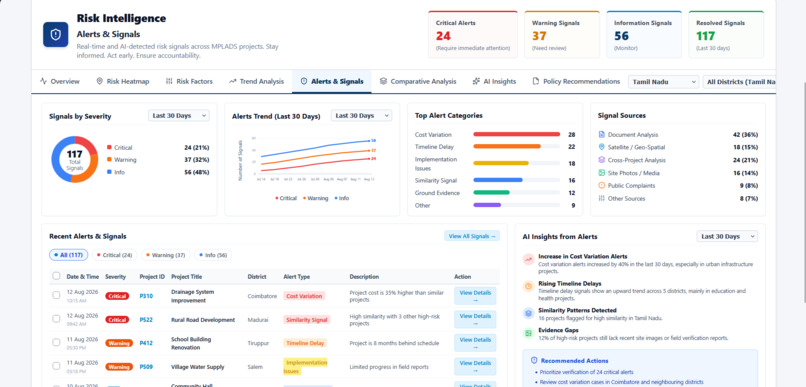
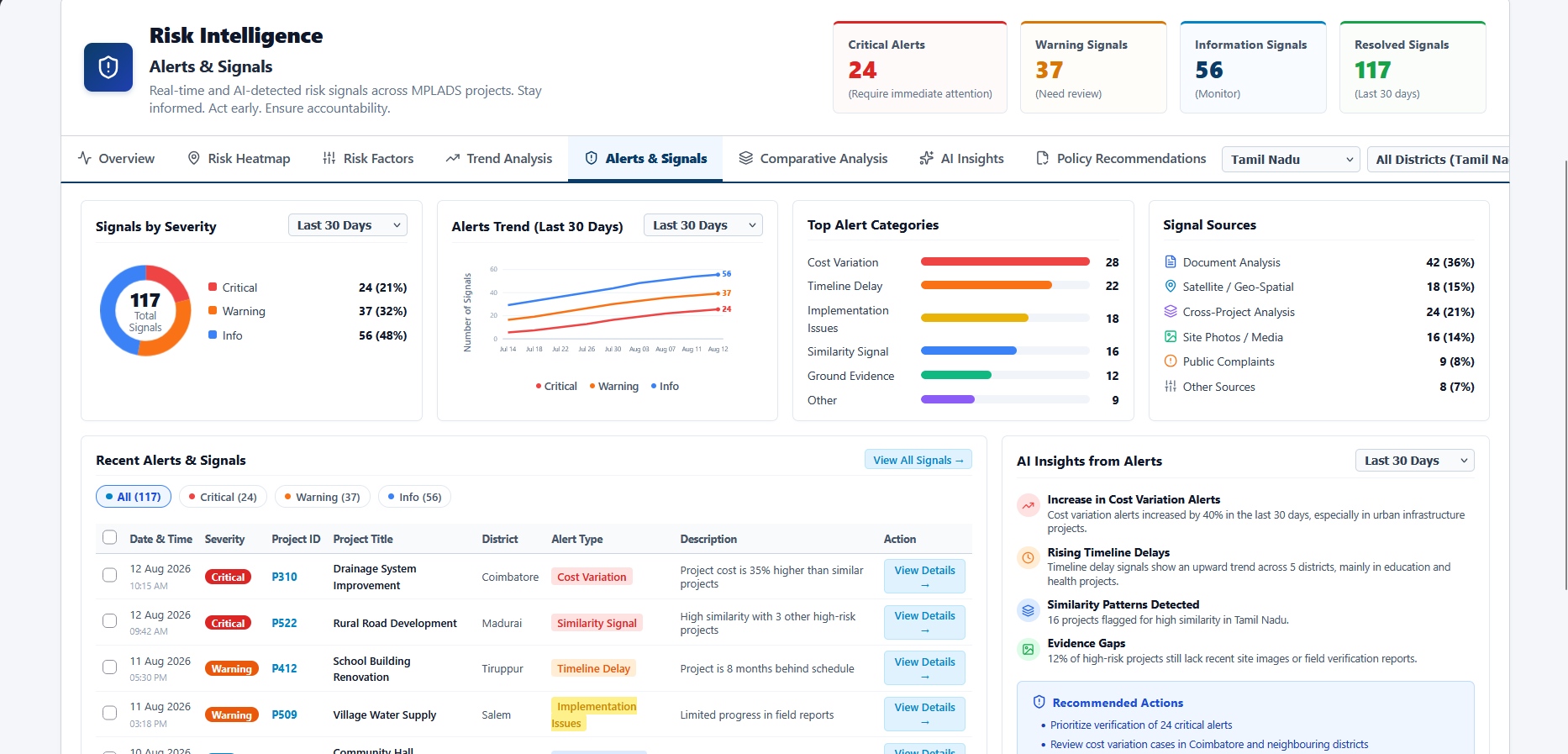
Risk Intelligence – Smart Alerts
-
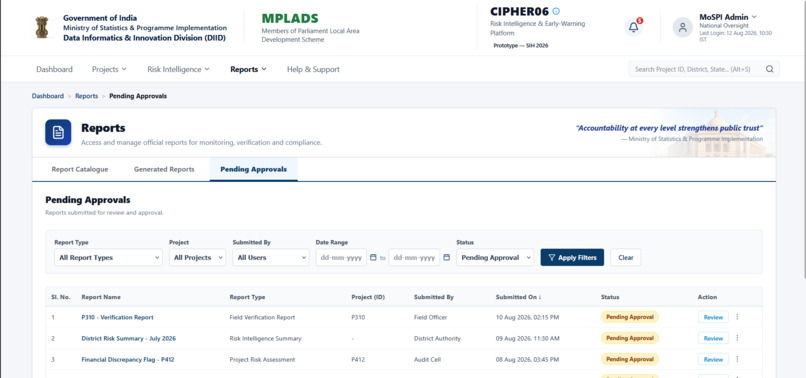
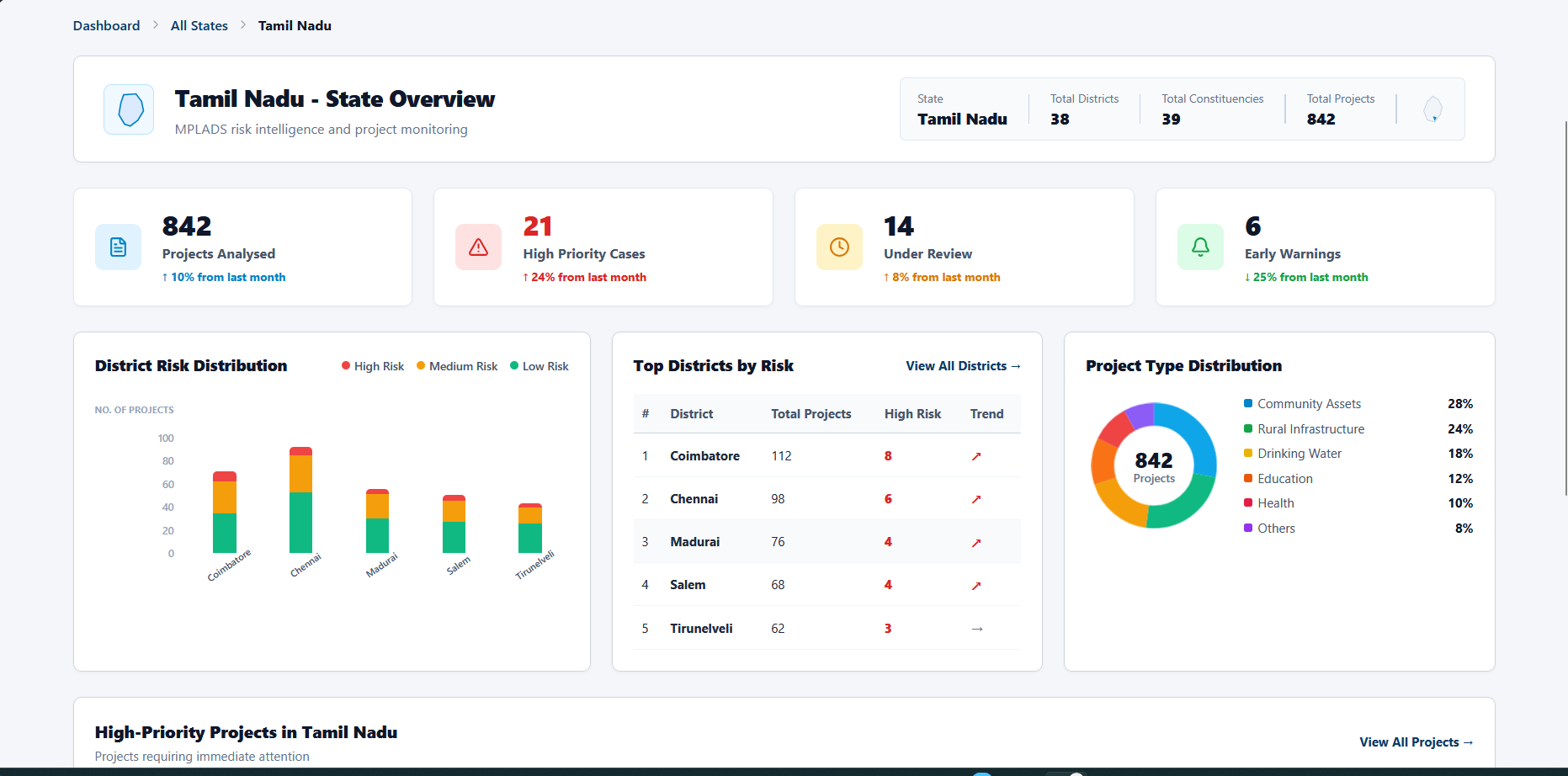
State Overview – State Analytics
-
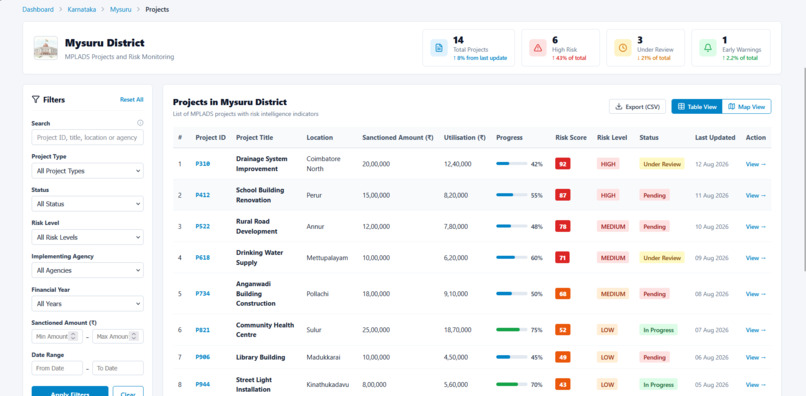
Risk Intelligence Dashboard
-
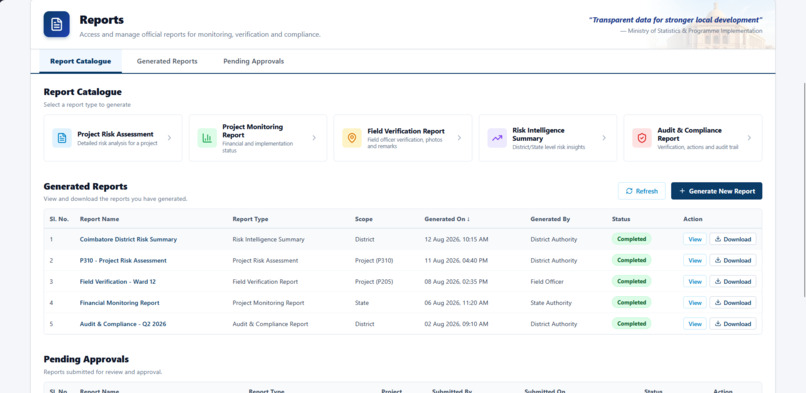
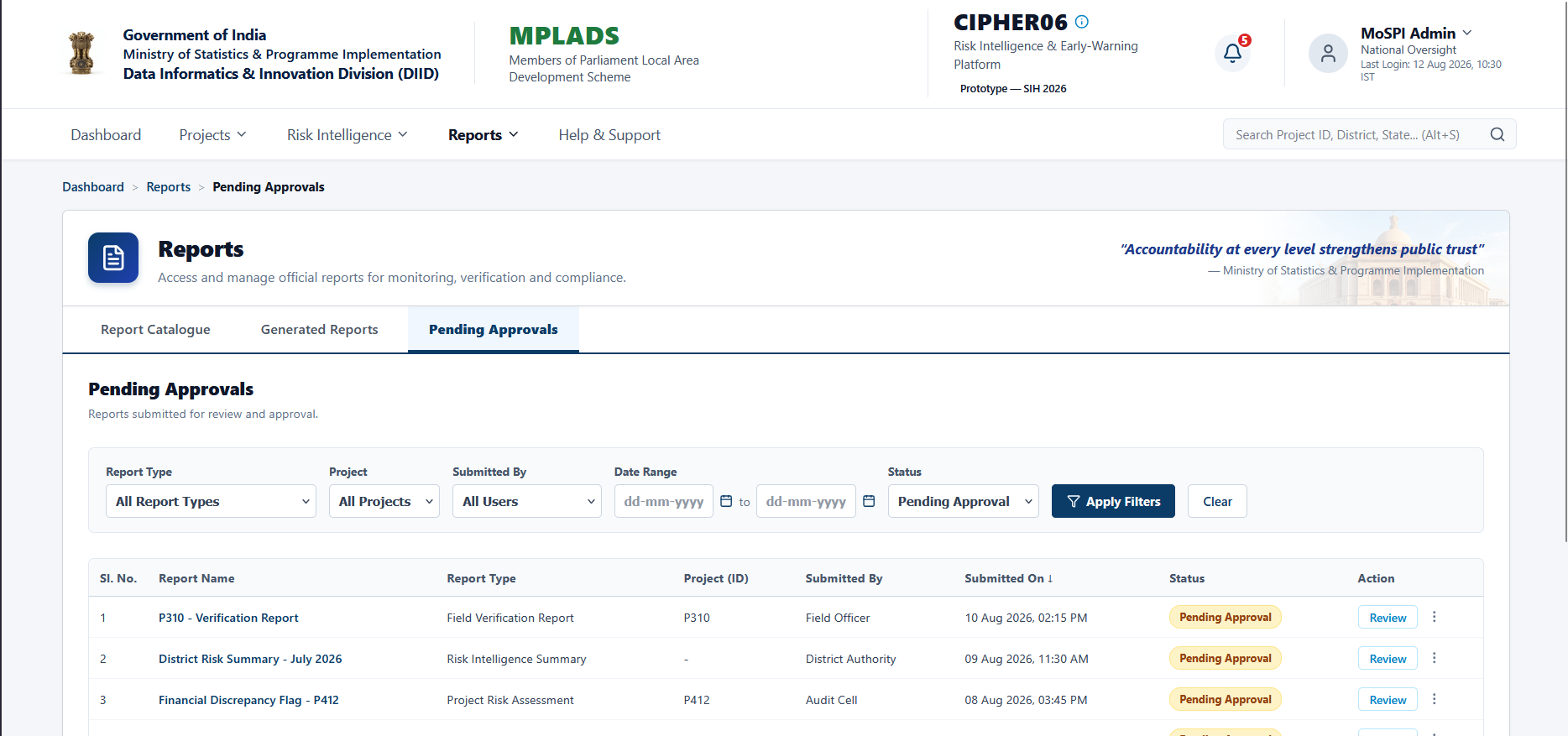
Pending Approvals – Approval Workflow
-
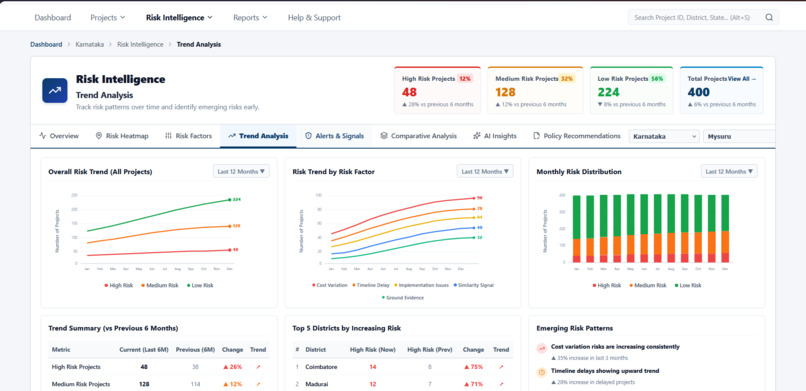
Risk Trends – Trend Analysis
-
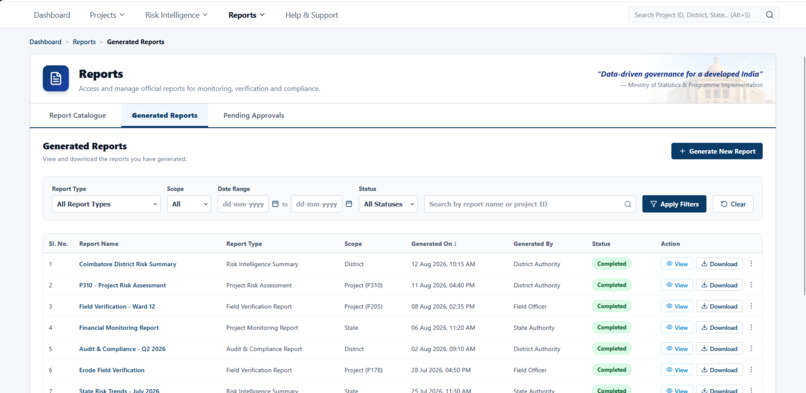
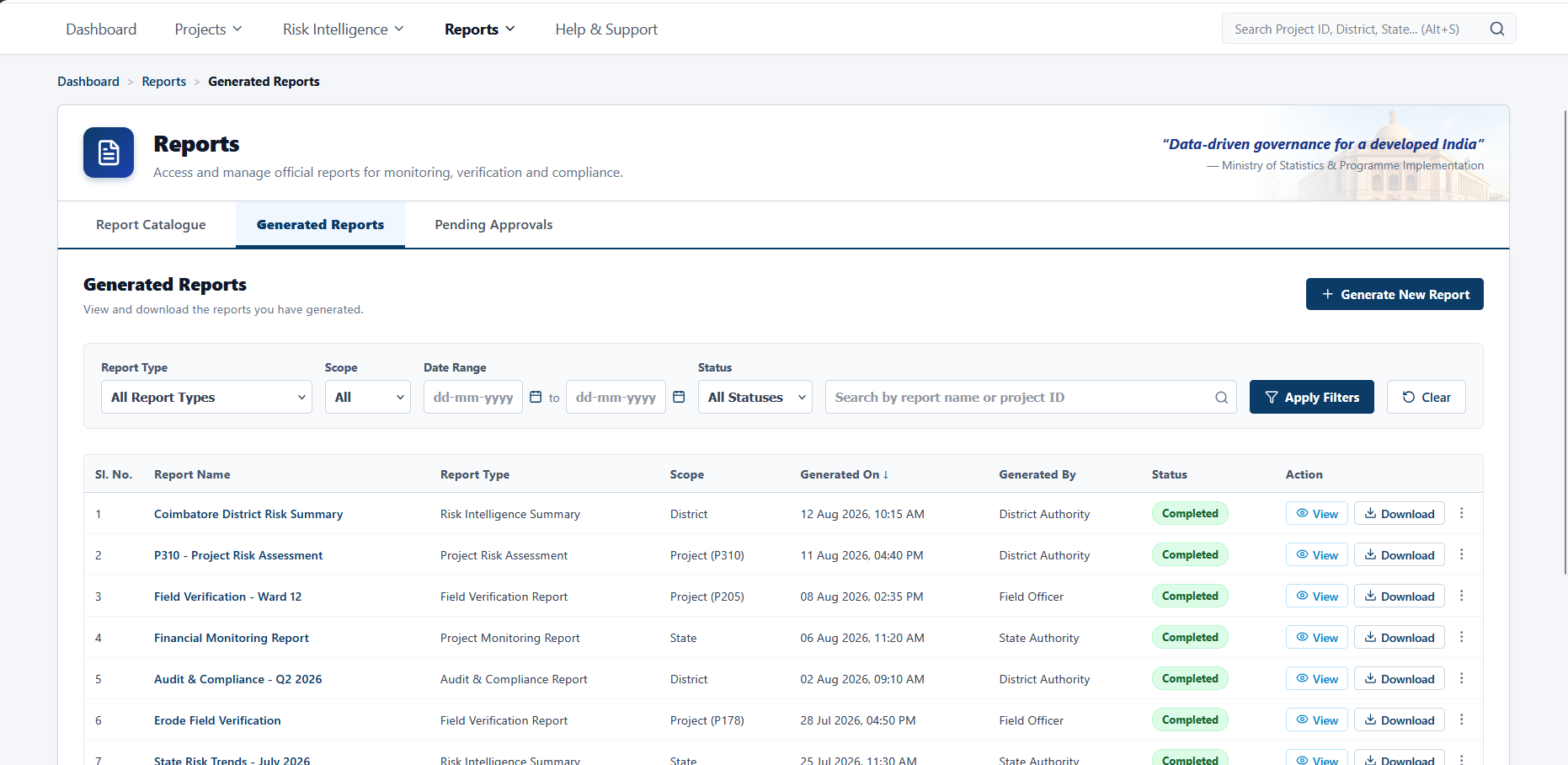
Generated Reports – Report Tracking
-
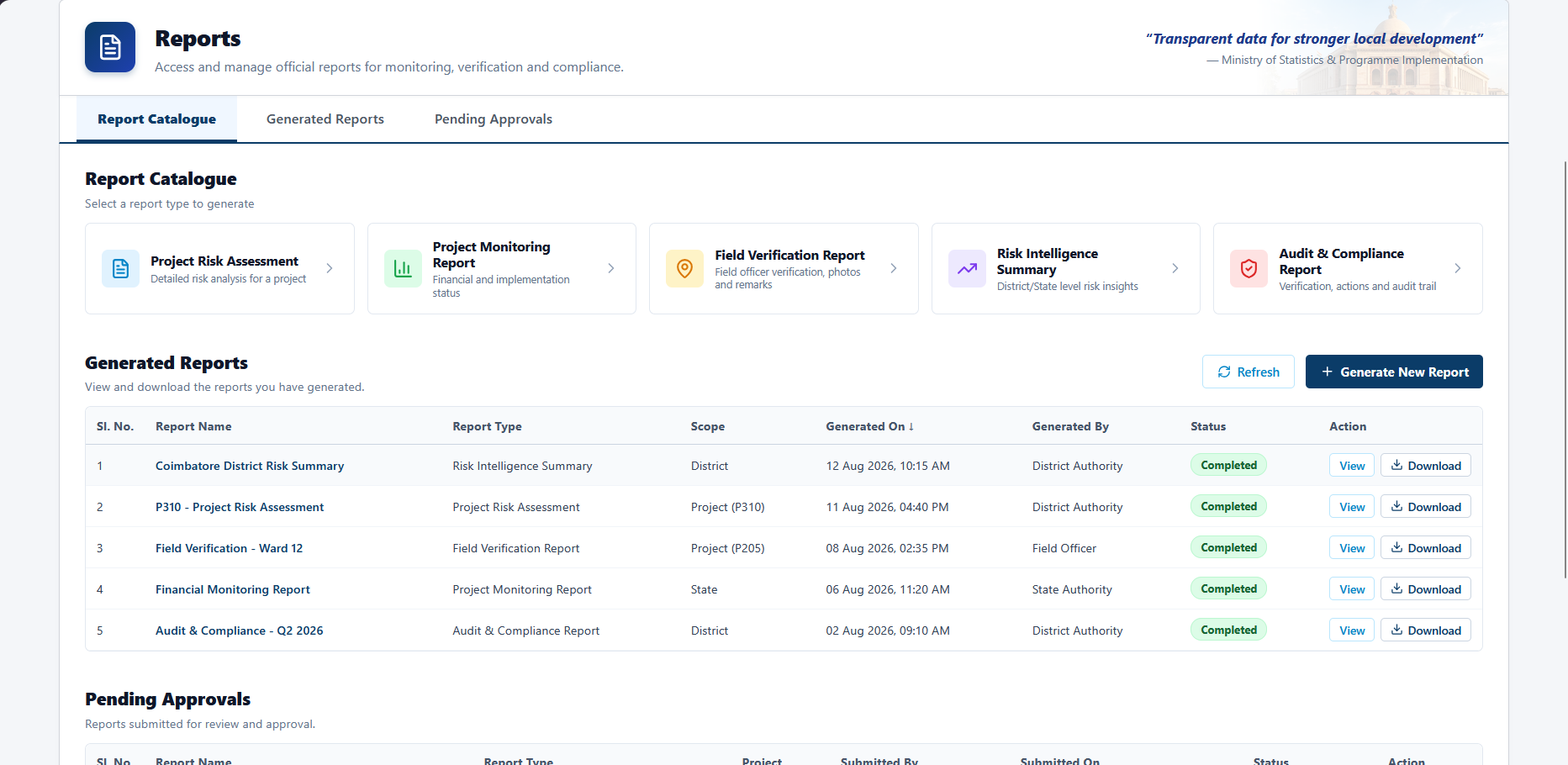
Reports Dashboard – Report Management
-
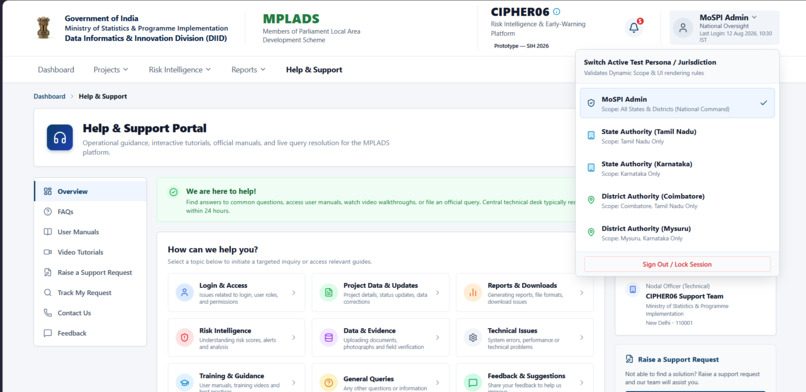
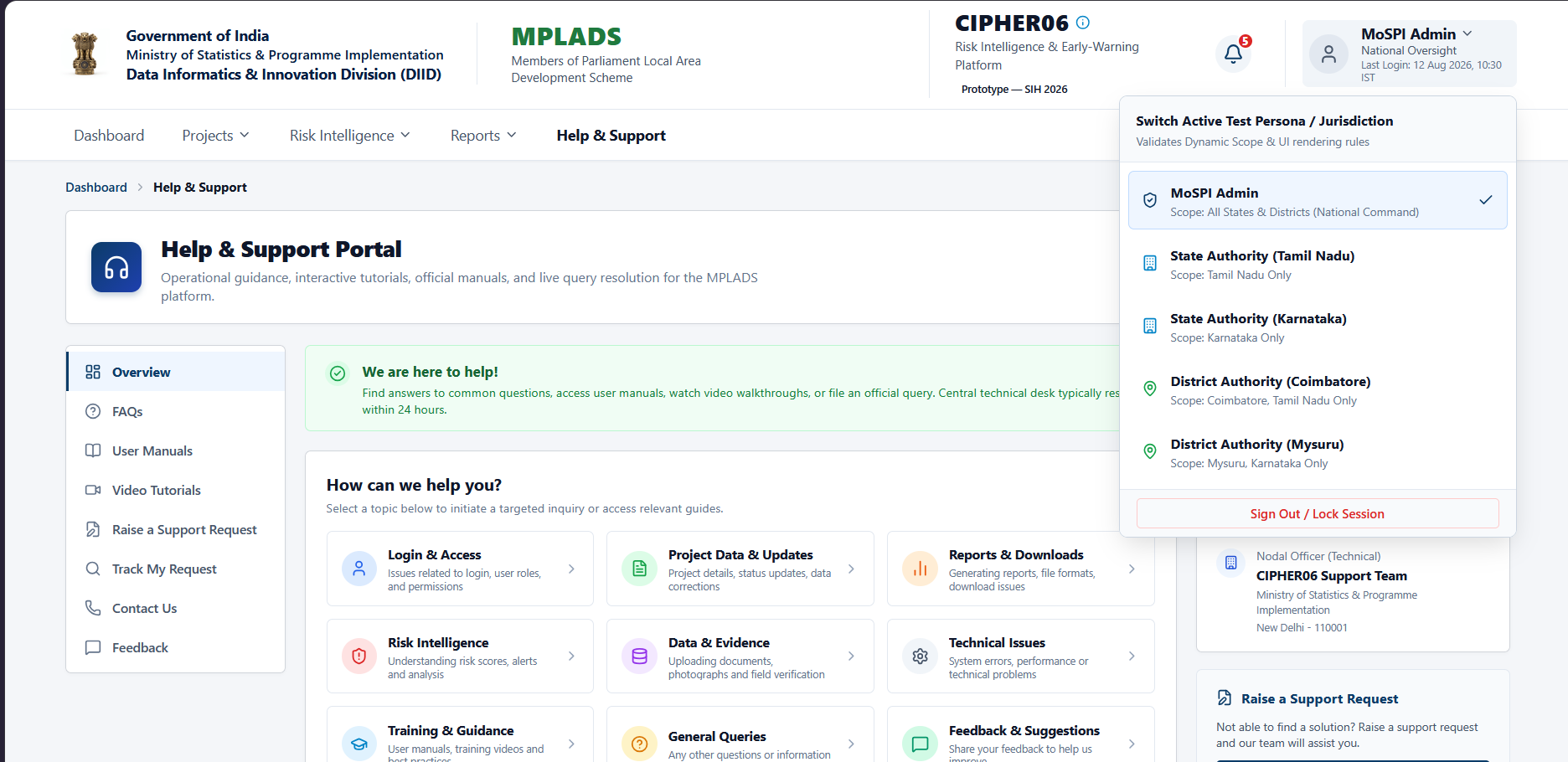
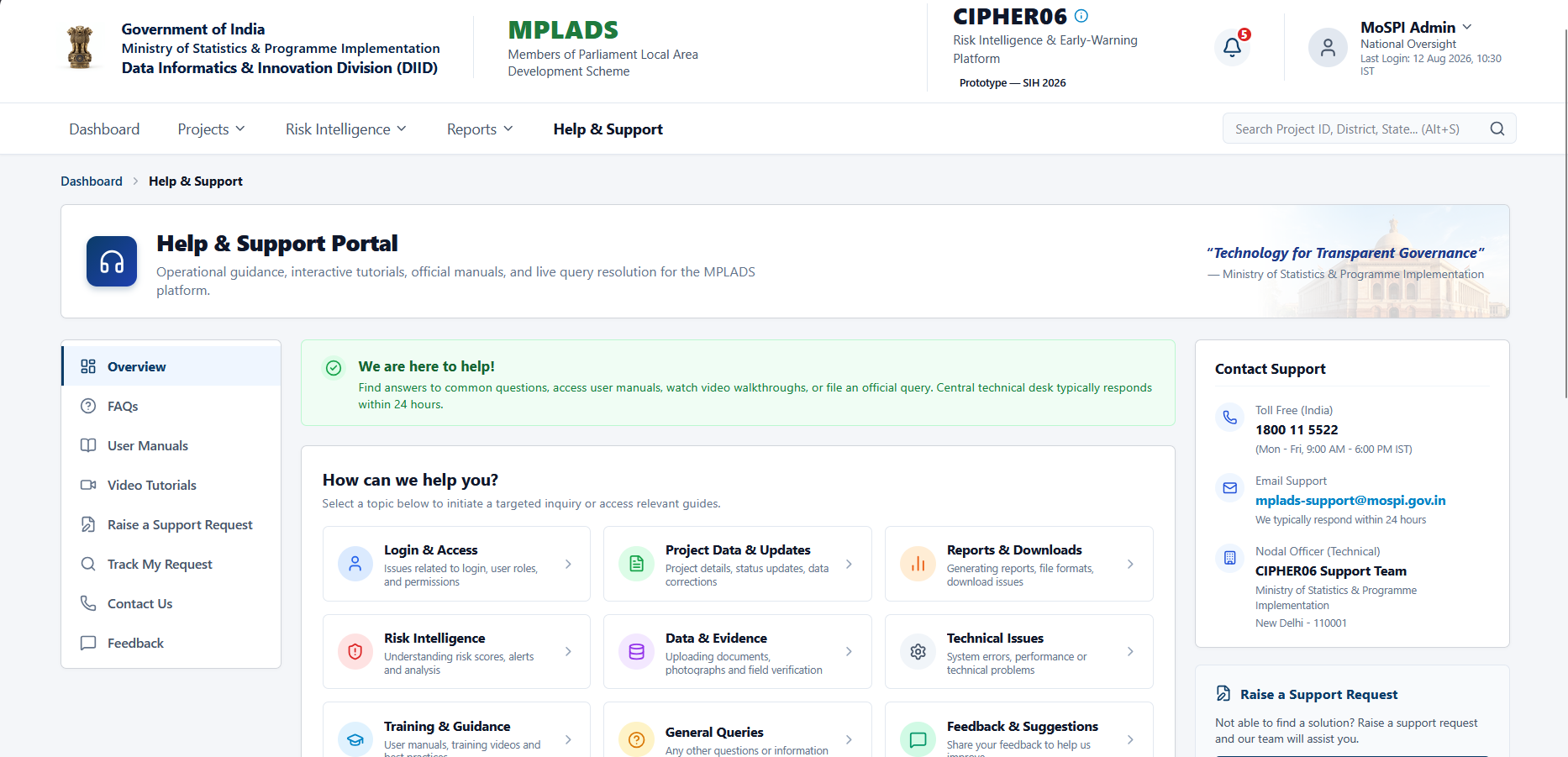
Help & Support – User Assistance
-
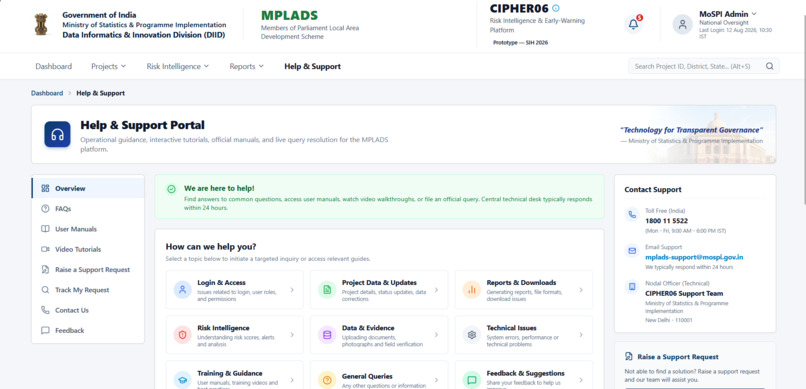
+Risk Trends – Trend Analysis
-
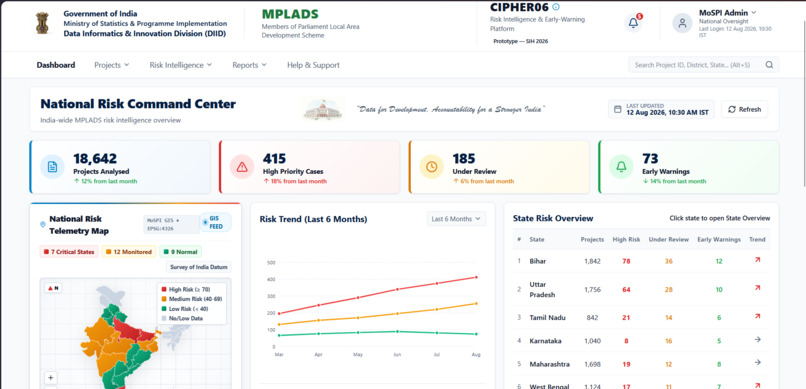
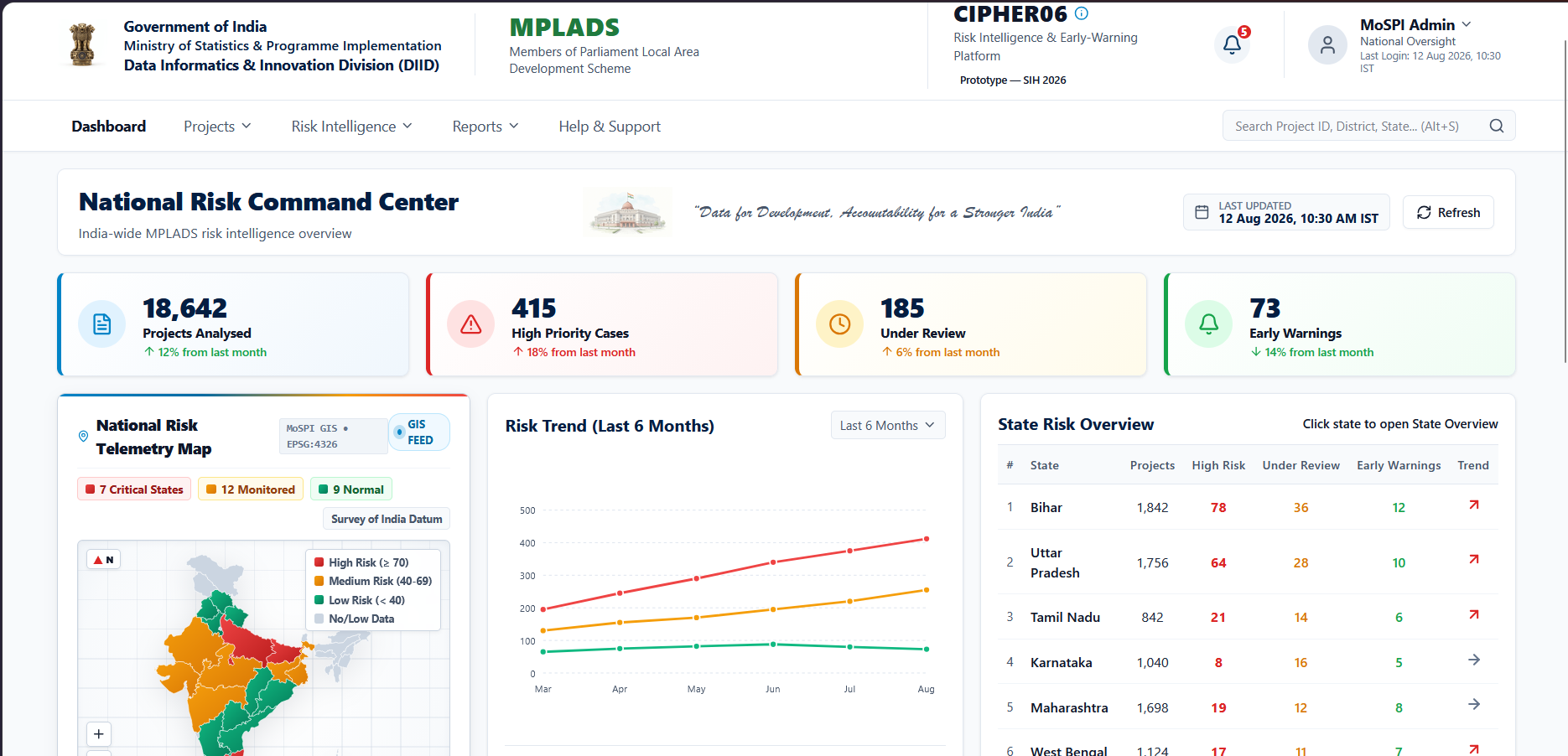
National Dashboard – National Overview
-
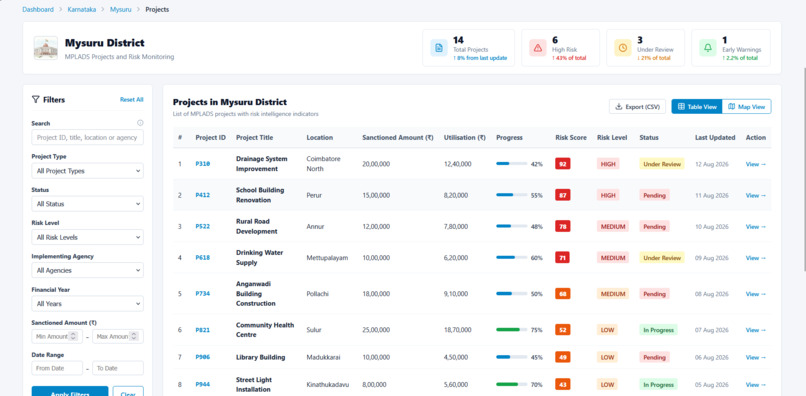
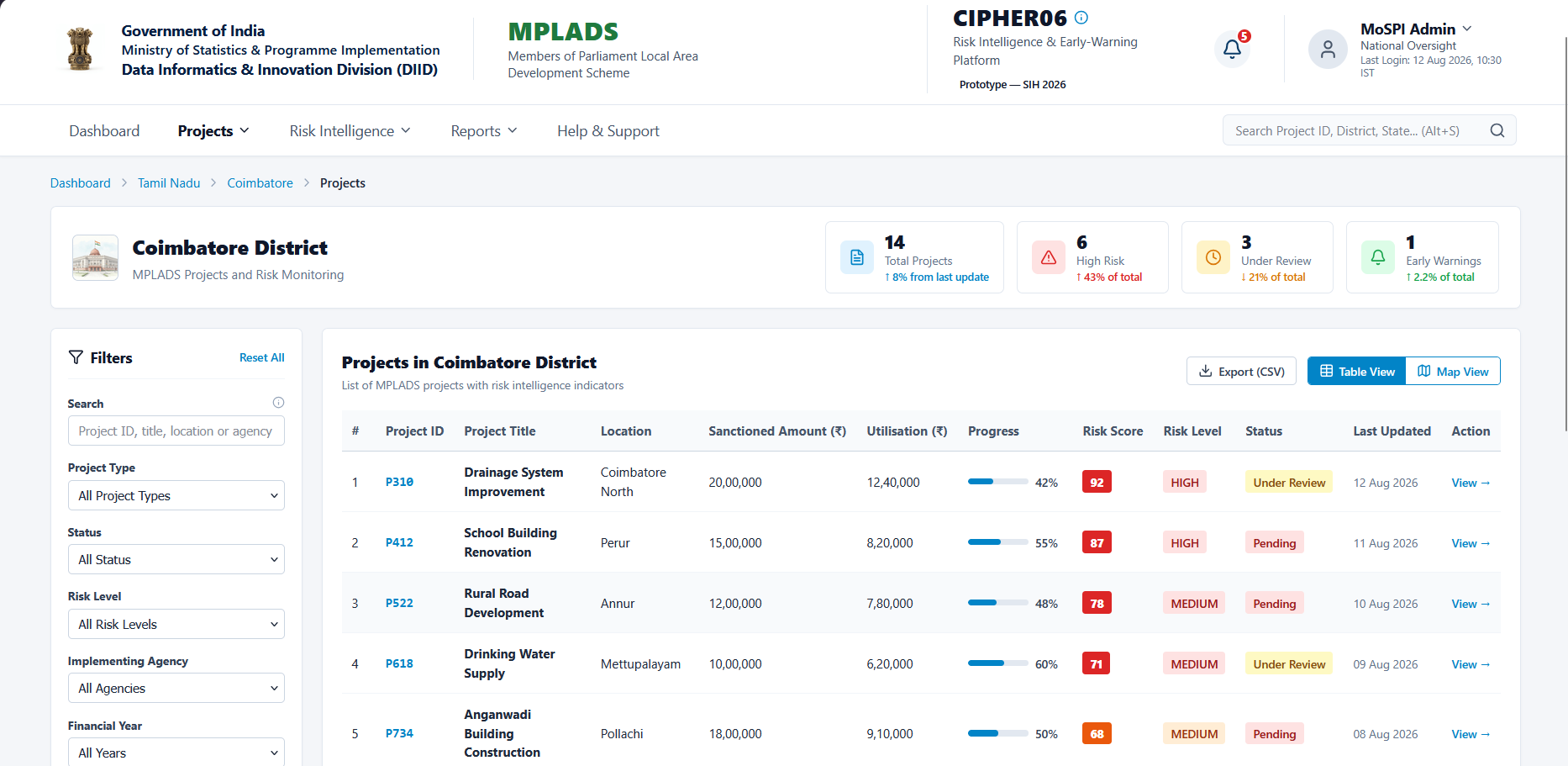
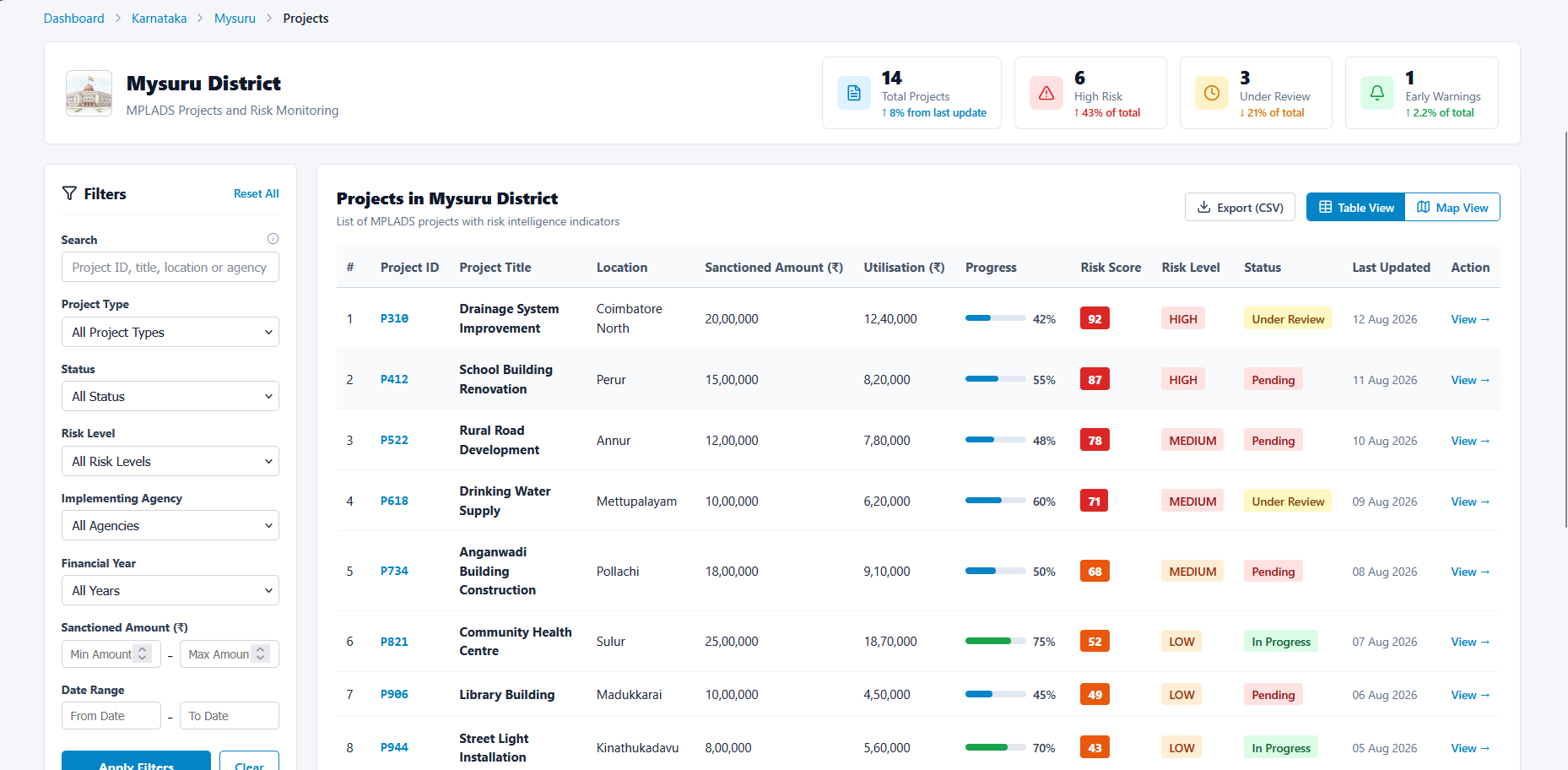
District Reports – Risk Reporting
-

Login Page – Authorized Access
-

Inspiration
Public development projects involve financial allocations, implementation timelines, multiple agencies, and geographically distributed works. Monitoring these projects individually can make it difficult to identify unusual patterns early or recognize when potential risks are connected across multiple projects.
We were inspired to build a solution that goes beyond displaying project information. Our goal is to help authorities understand which projects may require attention, why they have been flagged, and what relationships or evidence deserve further examination.
What it does
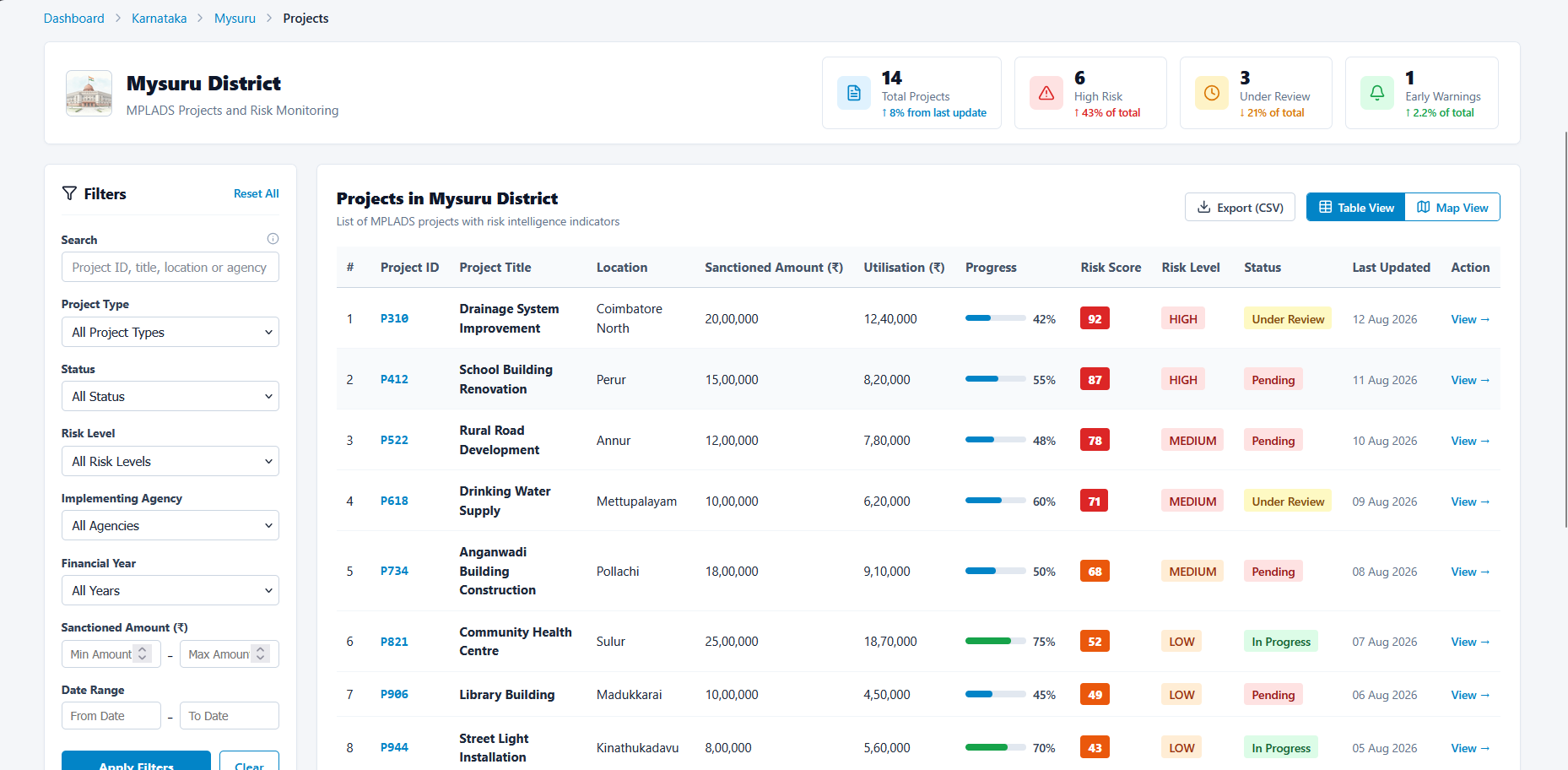
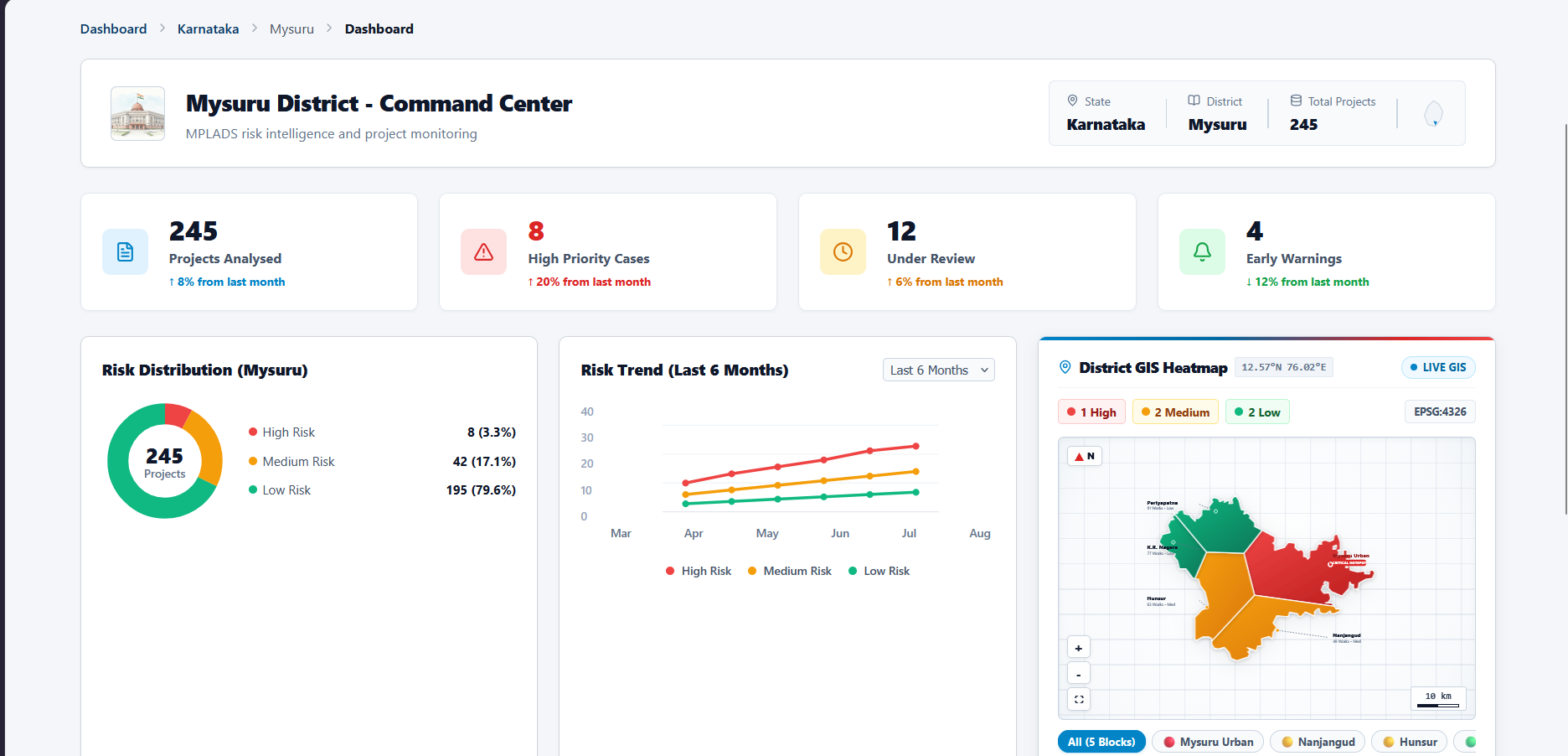
CIPHER06 – MPLADS Risk Intelligence Platform is an AI-assisted decision-support platform designed to identify, explain, and connect potential risk signals in the Members of Parliament Local Area Development Scheme (MPLADS).
Key capabilities include:
- Multi-factor Risk Scoring: Combines financial, execution, payment, completion, anomaly, and network-risk dimensions into a composite risk-priority score.
- Connected-Risk Intelligence: Analyses relationships between projects, agencies, contractors, and locations to highlight potentially meaningful patterns across multiple projects.
- Why Flagged?: Helps users understand the factors contributing to a project's risk assessment.
- Geographic Intelligence: Supports exploration from national and state-level monitoring to districts, geographic hotspots, and individual projects.
- Evidence-Oriented Investigation: Incorporates evidence-integrity concepts and an audit-trail workflow to support traceable verification.
- Human-in-the-Loop Decisions: Helps authorities prioritize investigations while keeping verification and administrative decisions under authorized human control.
The central idea is to identify potential risk signals, explain why they matter, examine their relationships, and help authorities prioritize verification.
A risk score indicates verification priority, not proof or probability of fraud.
How we built it
The frontend is built using React 19, TypeScript 6, and Vite 8, with CSS Modules and custom CSS for the interface. React Router DOM manages application navigation, while Lucide React provides interface icons.
For geographic visualization and spatial processing, the application uses Leaflet, D3-geo, D3-Delaunay, and GeoJSON datasets. Oxlint supports code quality checks. The frontend follows a modular architecture with reusable components, pages, service layers, type definitions, and data providers.
The project also includes separate development workstreams for AI and backend functionality. The Python-based AI component uses Pandas, NumPy, and Scikit-learn to calculate budget anomaly scores using sector-level cost-per-unit comparisons. The FastAPI backend workstream includes PostgreSQL integration, SQLAlchemy models, data-import workflows, and services for project management, risk analysis, and graph-related functionality.
These components form the technical foundation for the proposed risk-intelligence workflow. The current main frontend uses mock data by default, while the AI and backend components are maintained in separate development branches and are not yet fully integrated into the main application.
Challenges we ran into
One major challenge was working with limited publicly available project information. Financial information alone cannot establish implementation progress, completion delays, evidence consistency, or connected-risk patterns. Comprehensive analysis requires additional authorized monitoring records, reliable geographic information, and suitable historical outcomes.
We addressed this challenge by distinguishing available source data, derived analytical features, and illustrative demonstration data rather than presenting unavailable information as official data.
Another challenge was making risk assessments explainable. A score without context is insufficient for responsible investigation. We designed the workflow to present contributing risk factors, relationships between projects, and evidence-oriented review.
We also recognized that a shared agency, a geographic connection, or an unusual financial pattern does not independently establish wrongdoing. Responsible risk intelligence must support investigation rather than make unsupported accusations.
Accomplishments that we're proud of
- Developed a modular React and TypeScript dashboard prototype for project monitoring and geographic risk visualization.
- Designed a multi-factor risk-scoring approach covering six risk dimensions.
- Developed a separate AI anomaly-scoring component based on sector-level cost-per-unit comparisons.
- Built a FastAPI backend foundation with PostgreSQL models, data-import workflows, and project and risk-related API routes.
- Designed connected-risk analysis concepts to examine relationships among projects and related entities.
- Incorporated evidence-integrity and audit-trail concepts into the investigation workflow.
- Established a human-in-the-loop approach that prioritizes explainability, accountability, and responsible decision support.
What we learned
We learned that meaningful risk intelligence requires more than a single anomaly score. Data quality, normalization, appropriate comparisons, relationship analysis, explainability, and human verification are all essential.
We also learned to distinguish unusual behaviour from confirmed wrongdoing, a graph relationship from proof of misconduct, and a prototype demonstration from a fully integrated production system.
Working across frontend, AI, and backend branches reinforced the importance of consistent API contracts, data models, testing, and end-to-end integration.
What's next for CIPHER06 – MPLADS Risk Intelligence Platform
Our next steps include integrating the frontend with the backend and AI services, validating API contracts, and strengthening end-to-end testing. We plan to improve data quality, refine risk and graph calculations, and evaluate anomaly detection against reliable historical outcomes.
Further development will focus on authorized MPLADS data integration, authoritative geographic information, secure authentication and role-based authorization, stronger evidence verification, and production deployment readiness.
Our long-term vision is to help authorities identify emerging risk patterns earlier, prioritize field verification more effectively, and make better-informed decisions about public development projects.
CIPHER06 follows one core principle: Anomaly does not equal fraud. AI assists with detection, explanation, and prioritization; authorized officials verify the evidence and make the decisions.
Built With
- alembic
- asyncpg
- css-modules
- d3-delaunay
- d3-geo
- docker
- fastapi
- geojson
- joblib
- leaflet.js
- lucide-react
- numpy
- oxlint
- pandas
- postgresql
- pydantic
- python
- react
- react-router-dom
- scikit-learn
- scipy
- sqlalchemy
- typescript
- uvicorn
- vite


Log in or sign up for Devpost to join the conversation.