Devpost
Participate in our public hackathons
Devpost for Teams
Access your company's private hackathons
Grow your developer ecosystem and promote your platform
Drive innovation, collaboration, and retention within your organization
By use case
Blog
Insights into hackathon planning and participation
Customer stories
Inspiration from peers and other industry leaders
Planning guides
Best practices for planning online and in-person hackathons
Webinars & events
Upcoming events and on-demand recordings
Help desk
Common questions and support documentation
Sort by:
Agents get prompt-injected; their reasoning fails. AgentGate enforces access at the network layer below the agent, streams every decision to Splunk, and auto-triages each denial via the MCP Server.
An agentic platform using Graph Attention Networks & Splunk MCP to map third-party vendor connections, scoring risk and hunting lateral supply chain threats in real-time.
Real-time observability for Splunk AI agents. Monitors health, quality, and cost of every MCP tool call. Detects hallucinations, forecasts token spikes, and self-heals automatically.
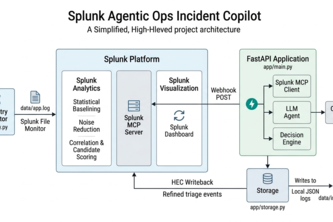
Using MCP for Splunk security incident alert investigation
An Agentic Platform that reduces noise, correlates signals into incidents, performs MCP-driven investigations, evidence-based RCA, and human-governed remediation with Splunk operational intelligence.
Aegis stops the noise, finds what broke first, and remembers every incident your team has ever had - so when it happens again, it tells you exactly what fixed it last time.
A resilience layer for Splunk's agentic stack: hedge across hosted gpt-oss-120b/20b, fall back when MCP times out, and emit every recovery as a Splunk HEC event the SOC team already watches.
⚡A unified AI-powered observability and security platform delivering real-time system monitoring, instant threat detection, and branded incident reporting for SOC teams.
An autonomous SOC agent that connects to Splunk via MCP Server, investigates alerts automatically, and generates structured incident reports — without a human writing a single SPL query.
Auto-instrument CrewAI & LangGraph agents in one line, stream telemetry to Splunk, and detect adversarial inputs with native ML.
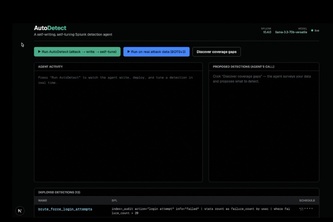
A self-writing, self-tuning Splunk detection agent.
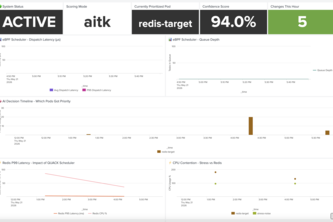
QUACK is an AI-powered container scheduling system that combines Splunk's AI platform with eBPF kernel-level actuation. It extends the scheduler with automated, intelligent container prioritization.
A platform to detect anamolies
Stop unsafe AI-agent actions before they close the wrong alert, skip evidence, or mutate production systems without approval.
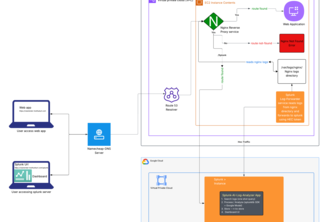
Splunk-AI-Log-Analyzer is an AI-powered app built with the Splunk SDK and Gemini. Detects anomalies, identifies root causes, and delivers recommendations to resolve incidents faster.
Turn plain English into powerful Splunk queries using AI instantly.
Your code and your logs, finally in one place.
Observability + Best Use of MCP Server. Ask Splunk in plain English; Gemini 2.5 Flash drives Splunkbase App #7931 OR REST — both paths verified end-to-end on real Splunk + GitLab CI data.
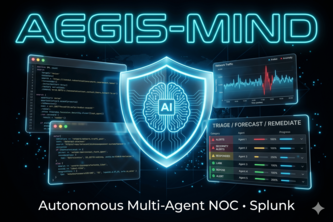
AI-powered Splunk app: autonomous agents for incident triage, remediation & traffic forecasting. Bilingual copilot translates natural language to SPL with Self-Healing auto-correction.
Autonomous AI security investigation for Splunk, powered by Splunk MCP Server
TITAN HELIX turns Splunk into a super-agent — six AI agents reason through MCP to find the silent root cause and blast radius in seconds, citing every SPL. Not alerts; AIOps that shows its work.
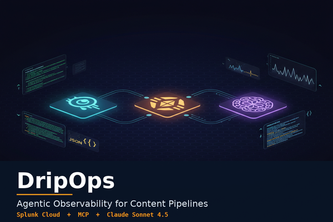
Three-lane observability stack — Cloudflare Workers + Splunk Cloud + Claude Sonnet 4.5 via MCP — that watches my content pipeline and autonomously fires PRs or Telegram alerts when it breaks.
Predictive Blast Radius for Splunk alerts — pushes future-cascade impact into the alert payload at fire time.
AI compliance copilot that cuts suspicious transaction reviews from 10 minutes to 10 seconds. LangChain ReAct agent + banking-grade security (RBAC, SHA256, PBKDF2, LLM Guard).