Devpost
Participate in our public hackathons
Devpost for Teams
Access your company's private hackathons
Grow your developer ecosystem and promote your platform
Drive innovation, collaboration, and retention within your organization
By use case
Blog
Insights into hackathon planning and participation
Customer stories
Inspiration from peers and other industry leaders
Planning guides
Best practices for planning online and in-person hackathons
Webinars & events
Upcoming events and on-demand recordings
Help desk
Common questions and support documentation
Sort by:
Using AI to forecast tidal levels to find low tide for use with finding ghost traps.
Turning Cardiac Data into Visual Intelligence.
Does Apertus inform Swiss voters fairly, or does it just tell them what they want to hear?
From Observation To Understanding.
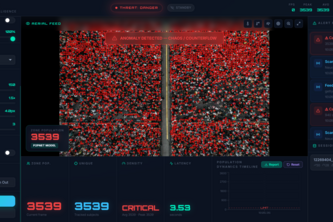
An OpenCV-powered crowd safety platform that counts people, tracks movement, detects overcrowding and stampede-like anomalies, and alerts operators in real time.
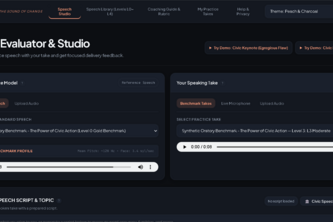
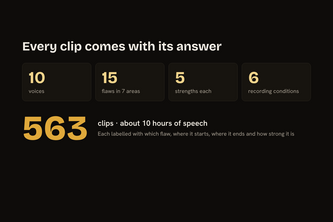
Contrastive Speech-Delivery Evaluation with Temporal Flaw Grounding
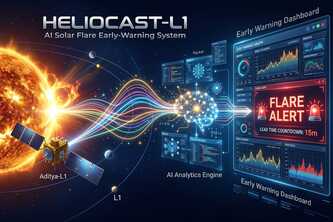
Our AI analyzes live Aditya-L1 X-rays to predict solar flares before they peak, giving satellite and grid operators the exact lead time needed to safeguard Earth's technology.
The sound of change
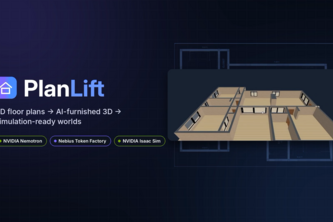
Turn one floor-plan photo into a furnished, walkable 3D scene — then keep editing it live with a Nemotron-powered AI agent inside NVIDIA Isaac Sim.
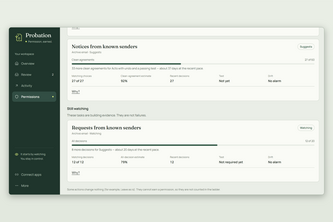
A personal AI that earns permission to act, one task at a time, by proving on your own email history that it would have done what you did. Nemotron on Nebius, Tavily for web checks.
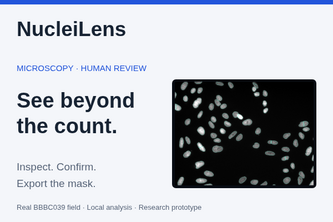
See beyond the count: inspect microscopy nuclei, compare split/merge alternatives, and export reviewed masks with an audit trail.
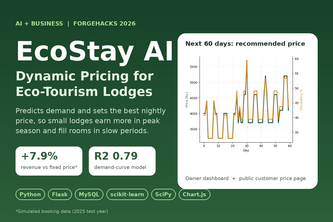
AI that predicts demand and sets the best nightly price for small eco-lodges, so they earn more in peak seasons and fill rooms in slow ones. Owners get a dashboard; guests see one clear price.
Making cities cooler with AI-powered roof analysis that helps prioritize buildings for cool-roof coatings within a limited budget.
Evidence-driven intelligence that turns research into better decisions.
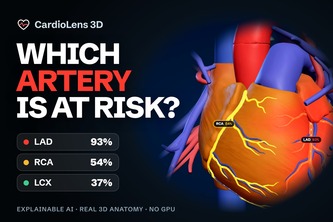
Risk scores are just numbers; cardiologists think in arteries. CardioLens predicts which coronary arteries are likely narrowed and shows it on a real 3D heart anyone can understand.
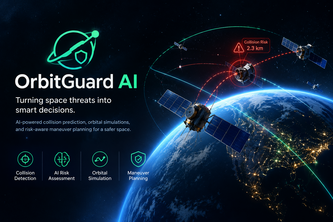
An AI-powered space safety system that predicts satellite collision risks, simulates orbital trajectories, and helps identify safer maneuvers to protect satellites from space debris.
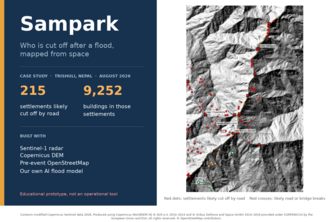
Give it an area and a flood date. Using free Sentinel radar, our own AI flood model and pre-event OpenStreetMap, Sampark maps where the flood hit, what was damaged and who is likely cut off.
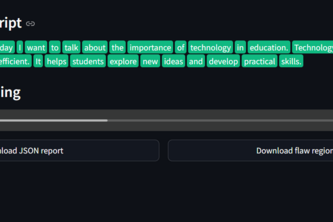
Read a great speech, see exactly where your delivery drifts from it, and why. Every flaw is pinned to a time range and explained with the numbers behind it.
When monsoon clouds blind every camera in the sky, NadiNet's free satellite radar still sees the Jamuna and warns officials which riverbanks will collapse next, weeks before families lose their homes.
“Know What You Said. Know How to Say It Better.”
Physics-gated multimodal satellite intelligence for Himalayan flood damage and community isolation.
Turning Apertus 8B into an unsupervised cross-lingual semantic-difference detector by reading its middle layer hidden states and mean-centering them with no prompting, no training.
Your speech, under a microscope. Resonance hears the exact moment you rush, stall or say "uh", tells you why, and lets you fix it. Your accent is never scored. Your delivery always is.
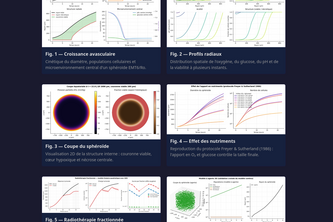
Tumor Lab is an open-source, mechanistic tumor growth simulator and strategy game built to model the delicate clinical dilemma between cancer control and treatment toxicity.