-
-
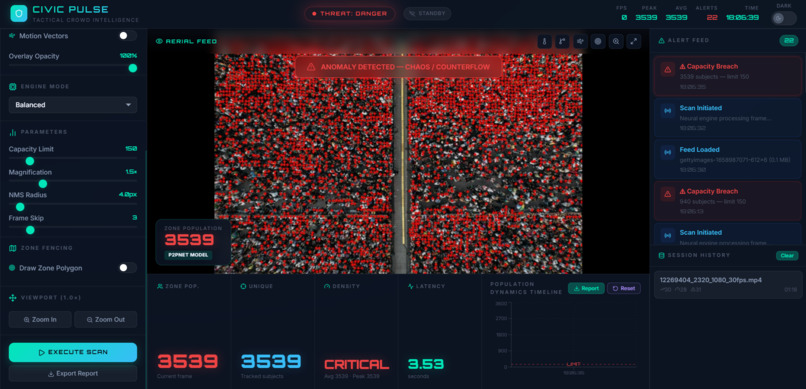
Output
-
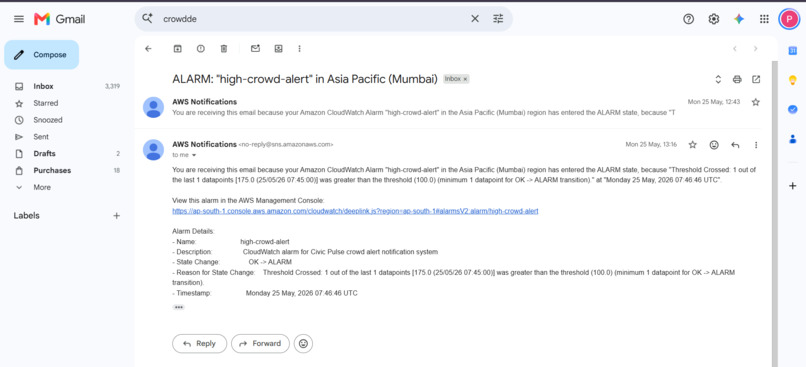
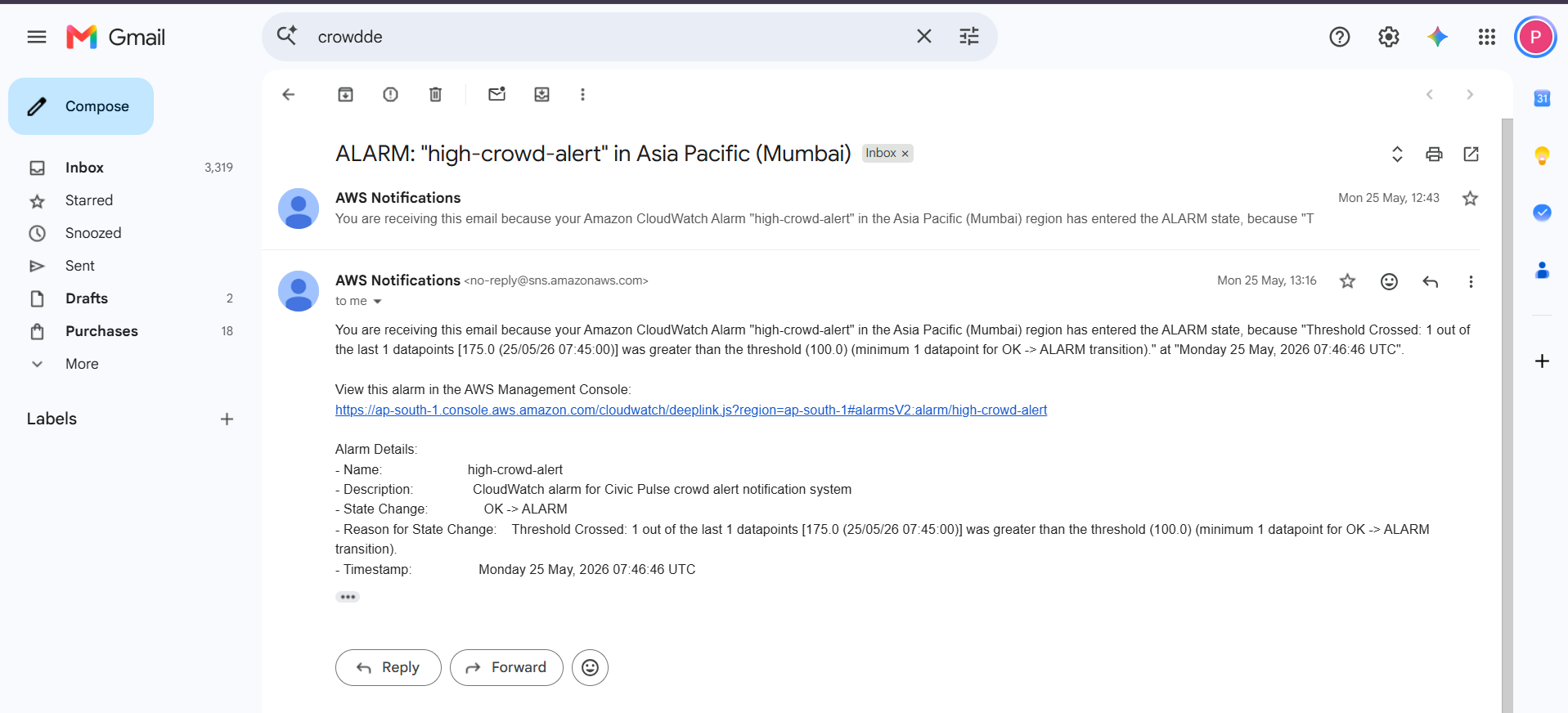
AWS alert
-
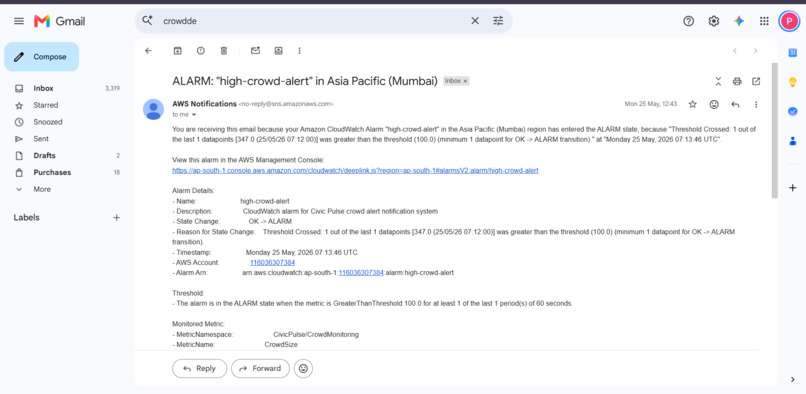
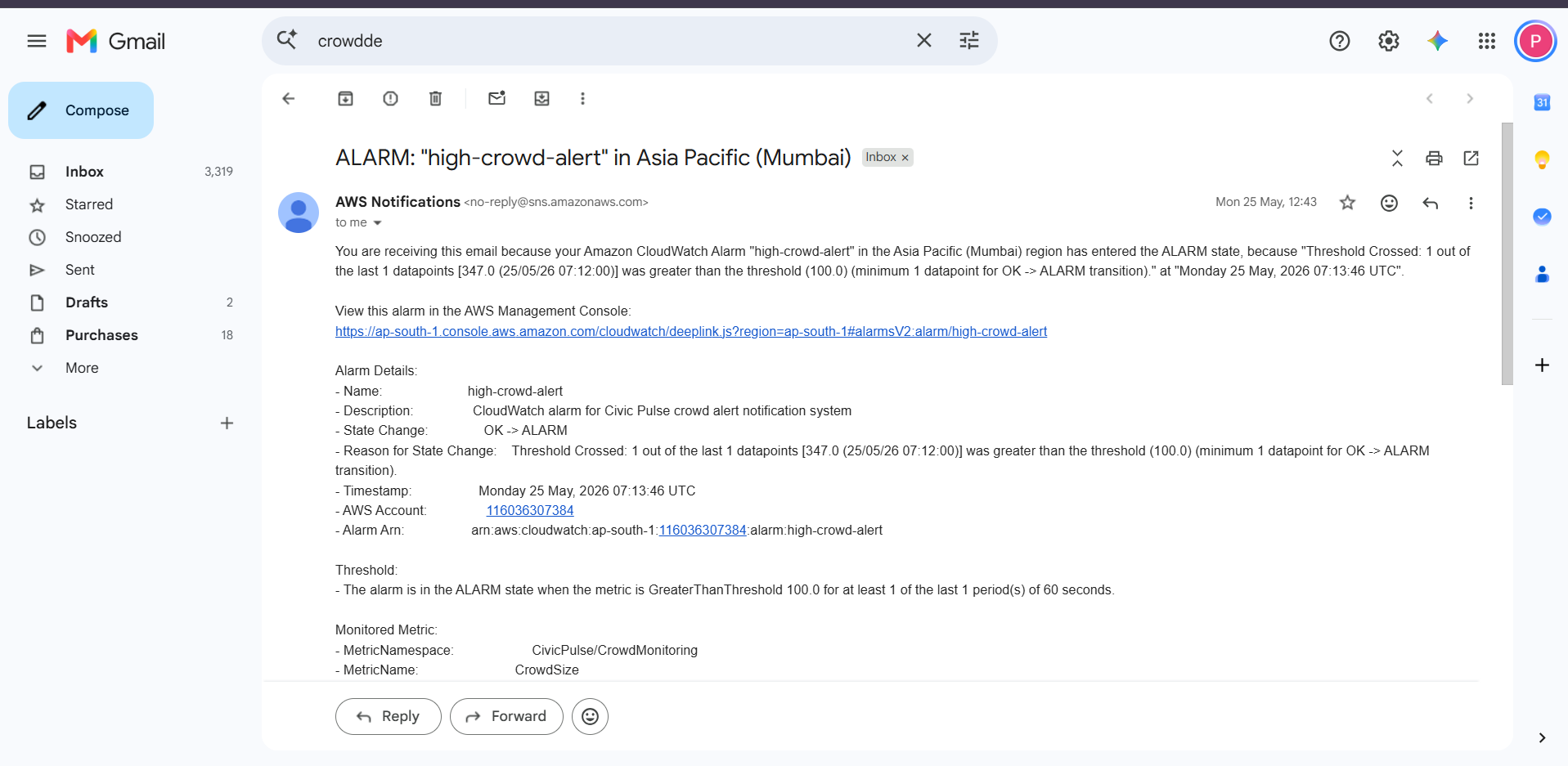
AWS alert
-
-
-
-
-
-
-
-
-
Inspiration
Large public gatherings, rallies, festivals, transport hubs, and emergency situations can become unsafe when crowd density increases faster than security teams can respond.
Traditional CCTV monitoring requires operators to continuously watch multiple screens. Basic object detectors also struggle with dense crowds because people overlap, appear at different scales, and may be viewed from moving drones or elevated cameras.
We wanted to build a system that does more than count people. CrowdSafe Vision converts visual crowd behavior into practical safety intelligence: how many people are present, where they are concentrated, whether movement is abnormal, and when an operator should be alerted.
What it does
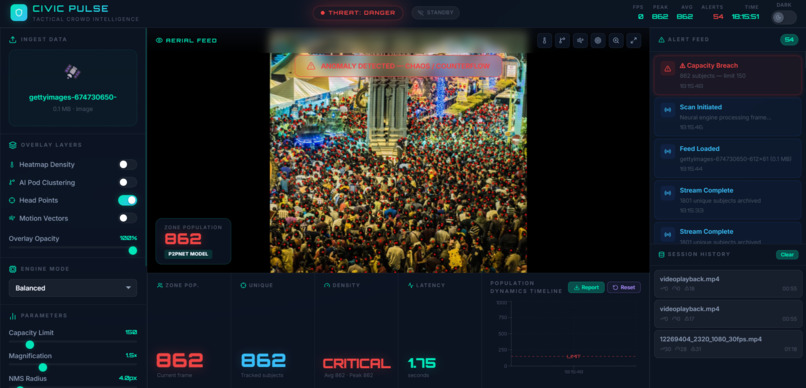
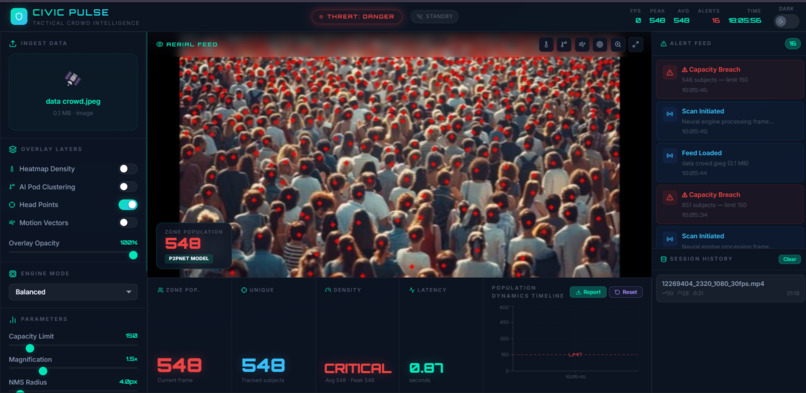
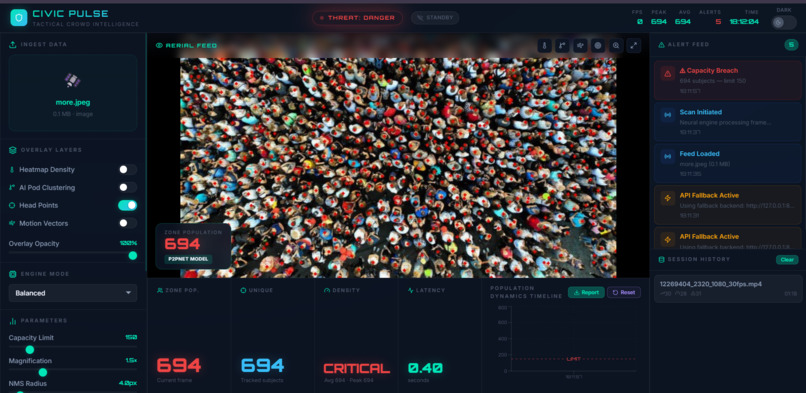
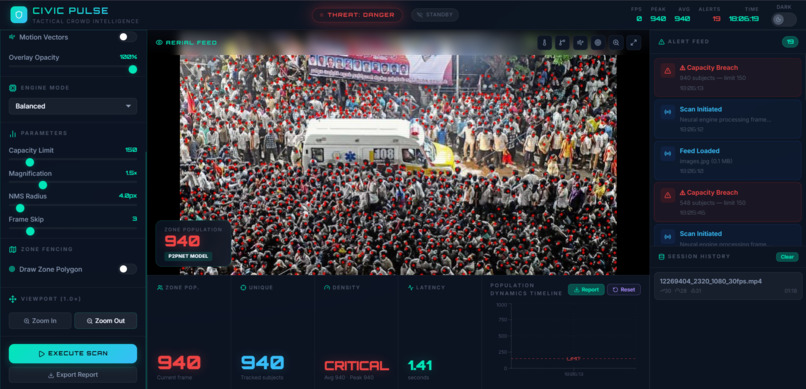
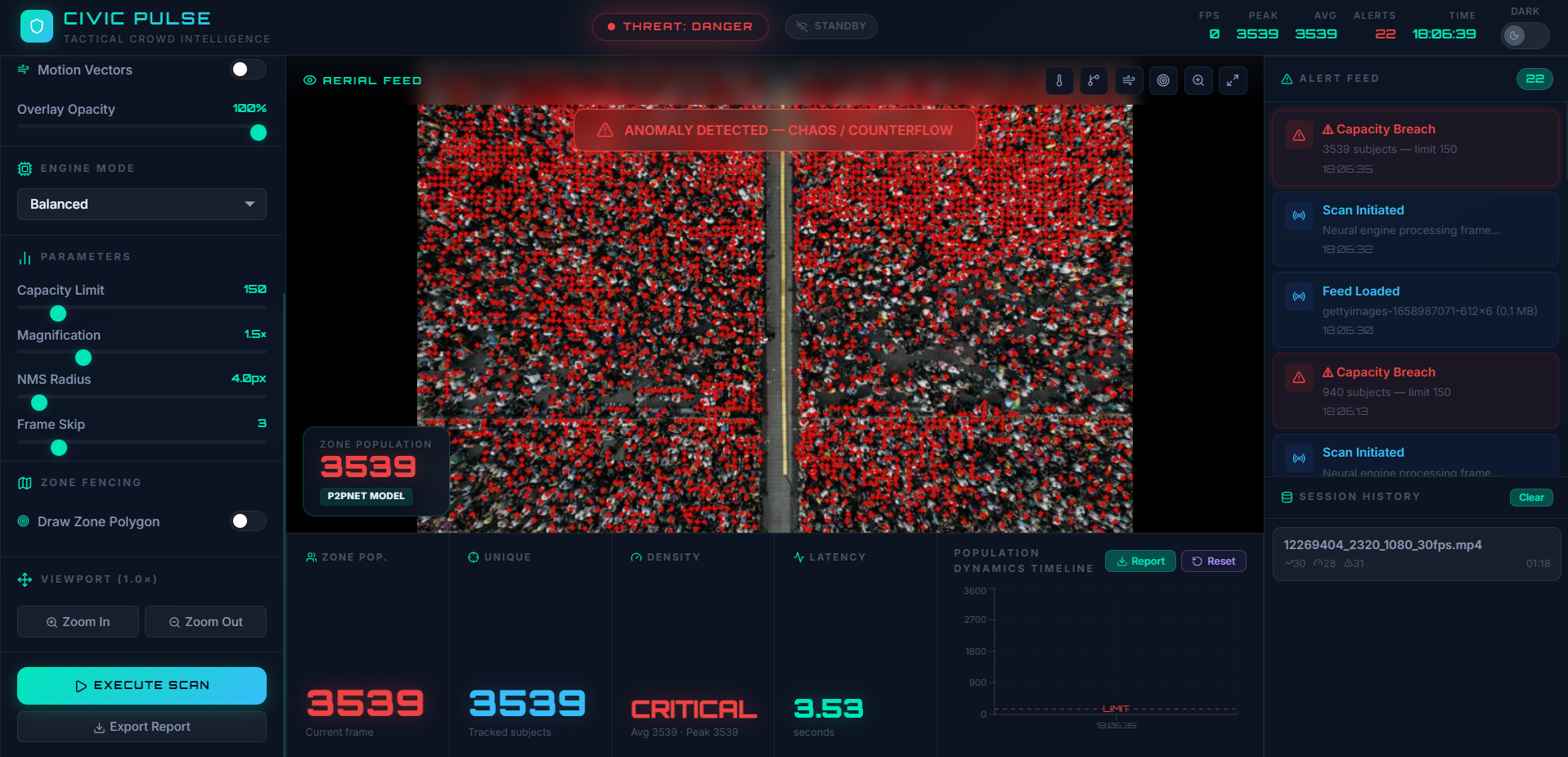
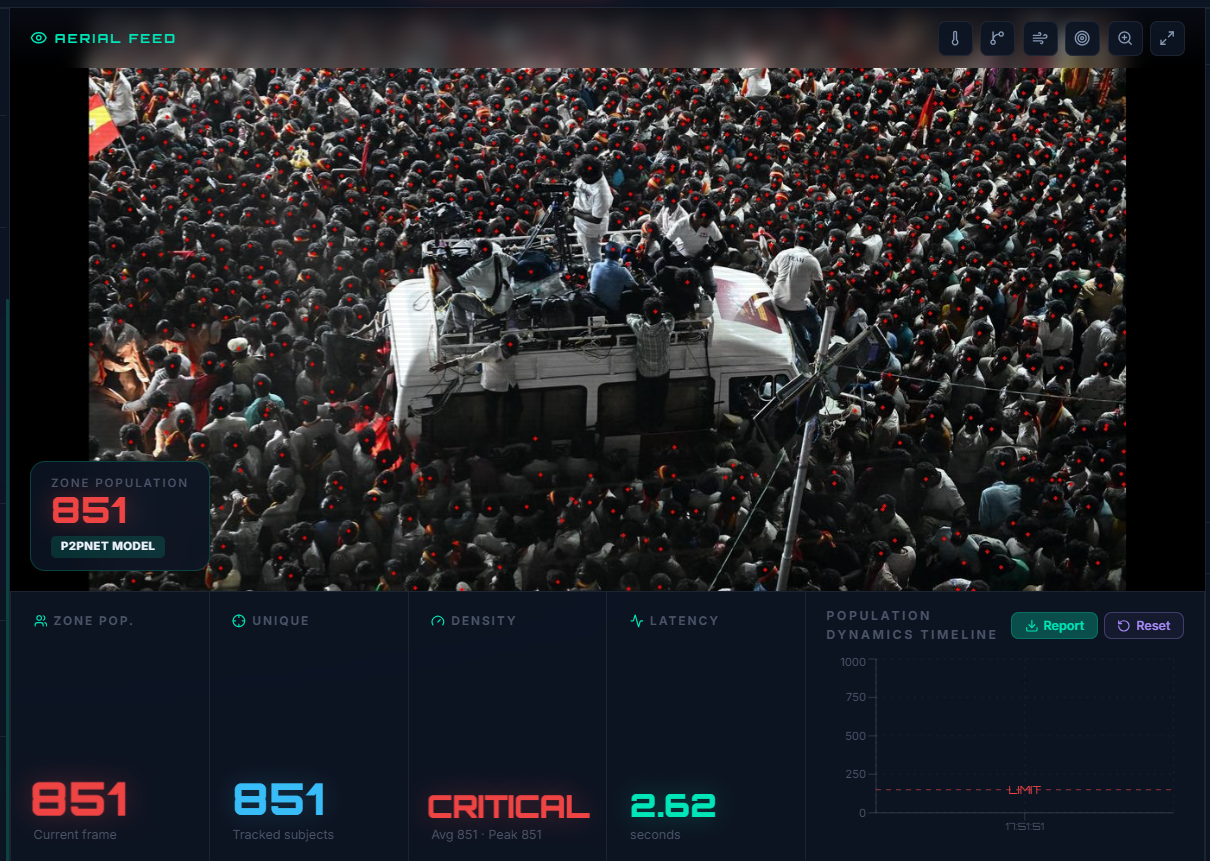
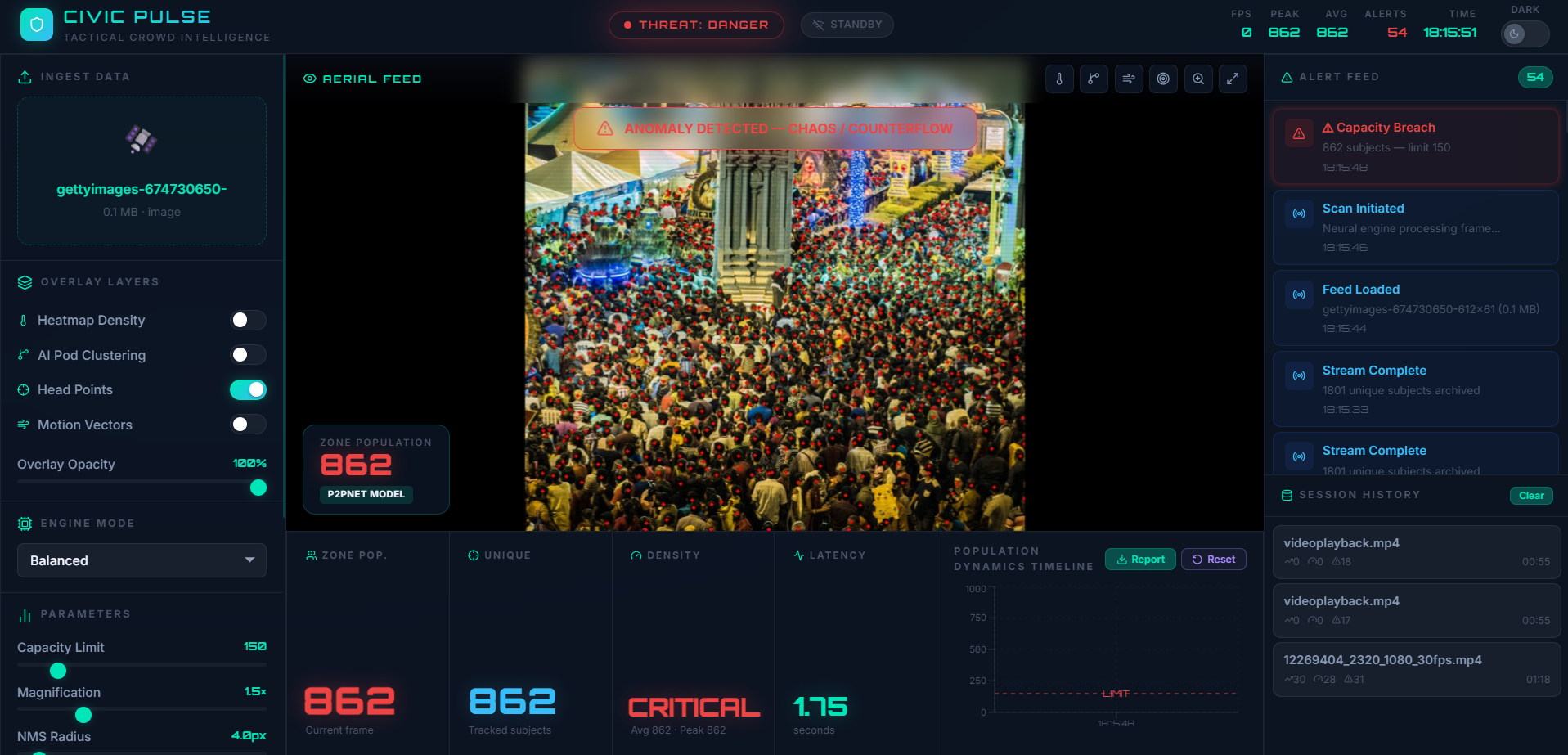
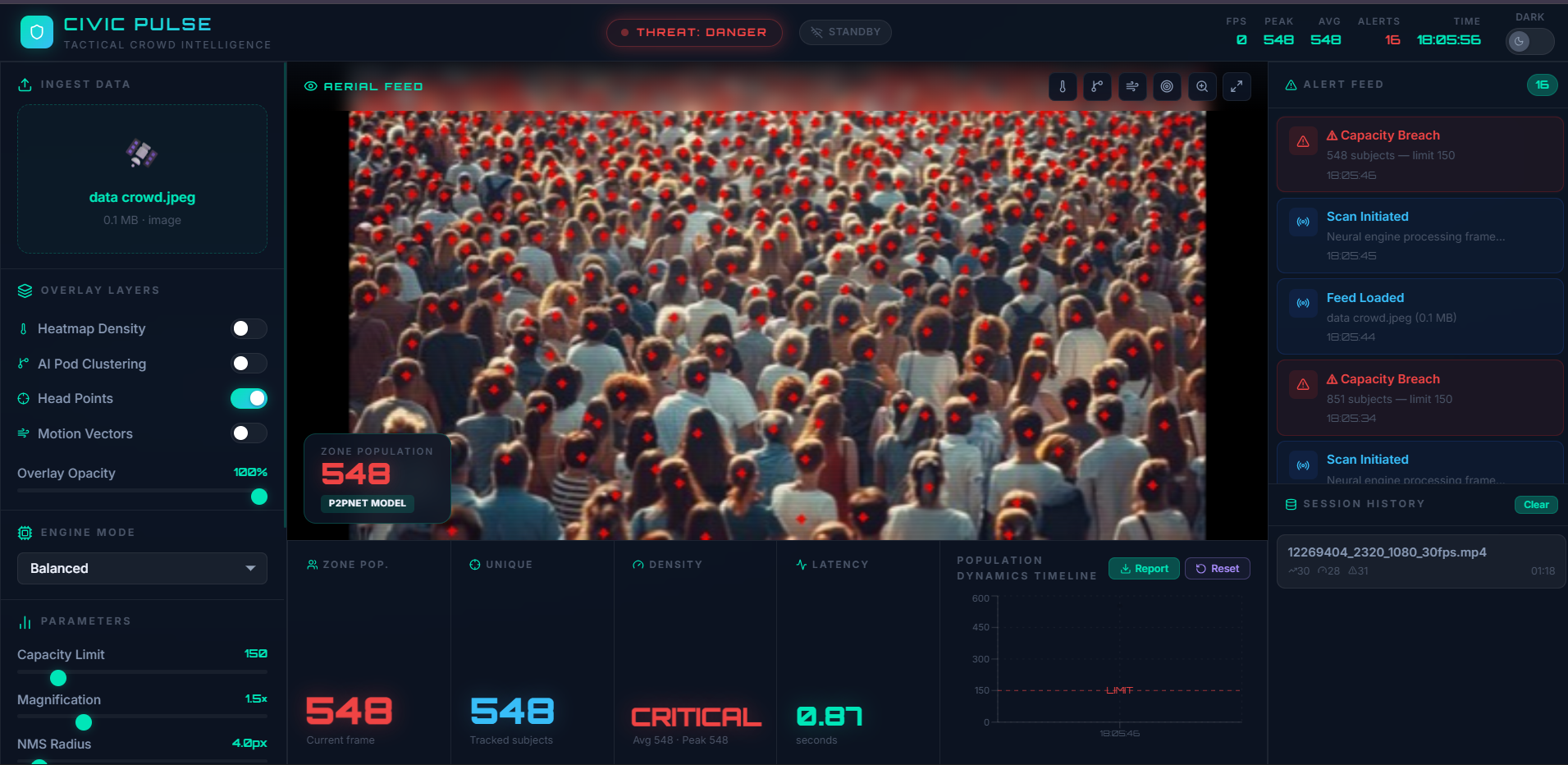
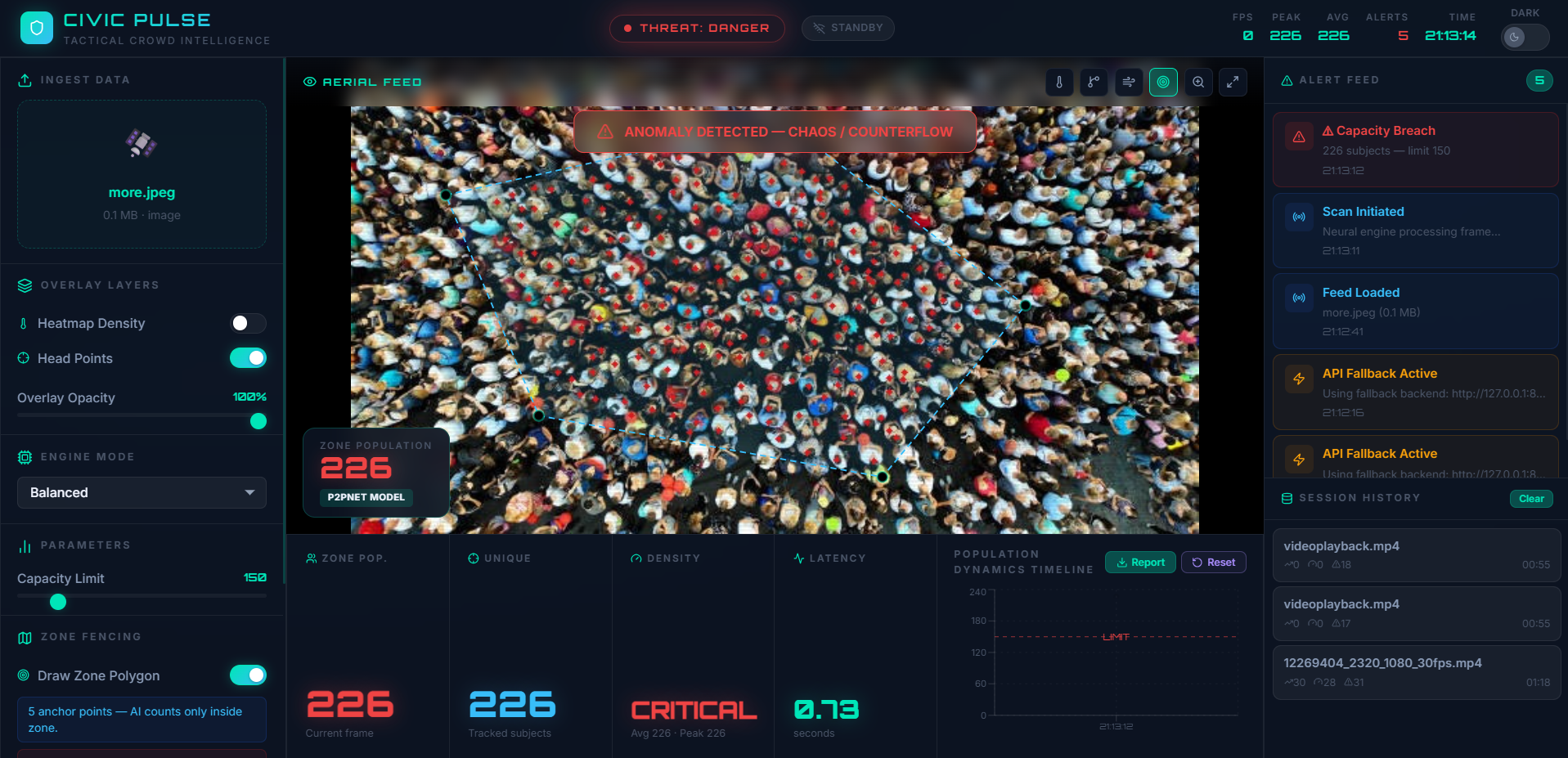
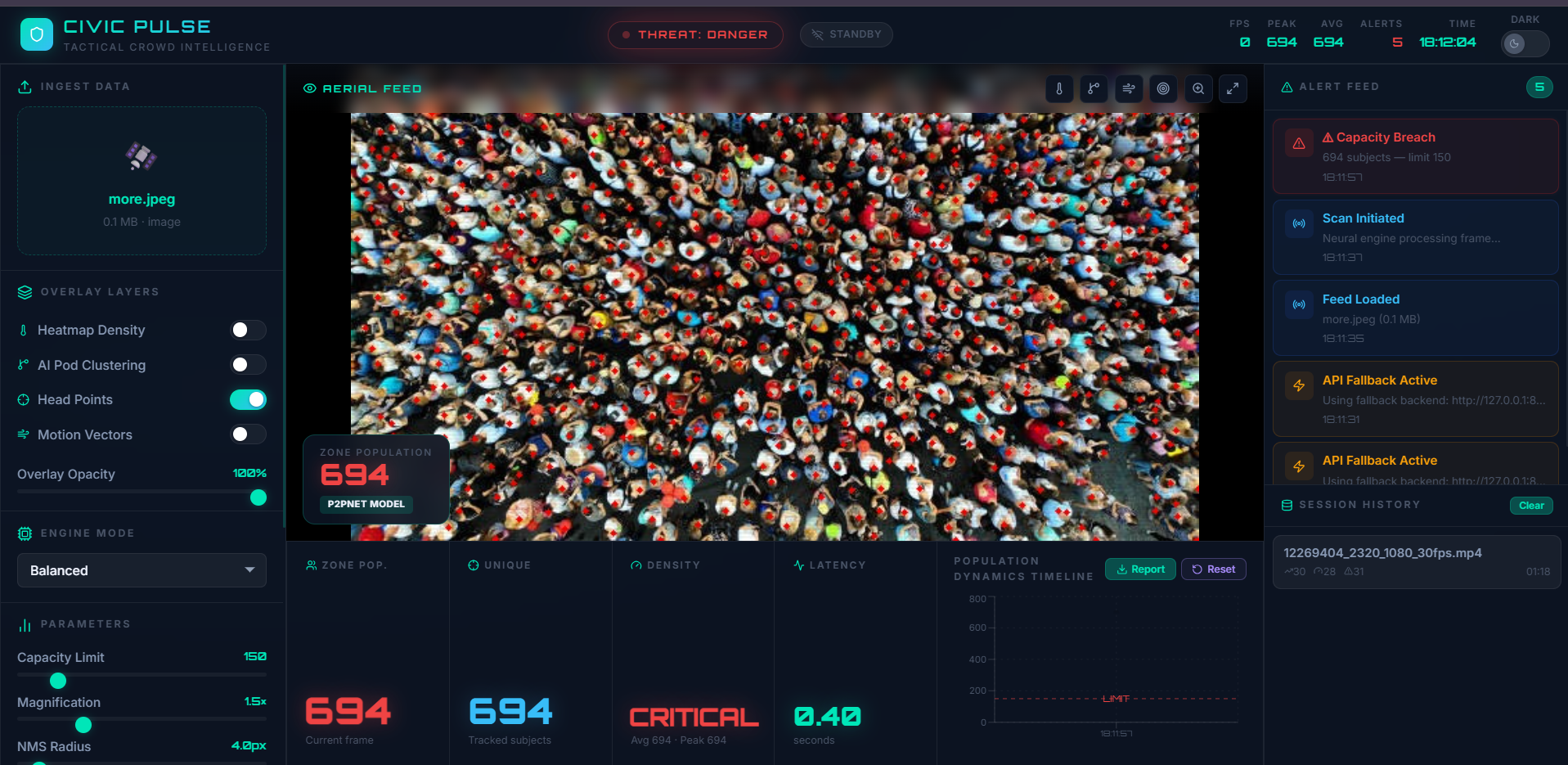
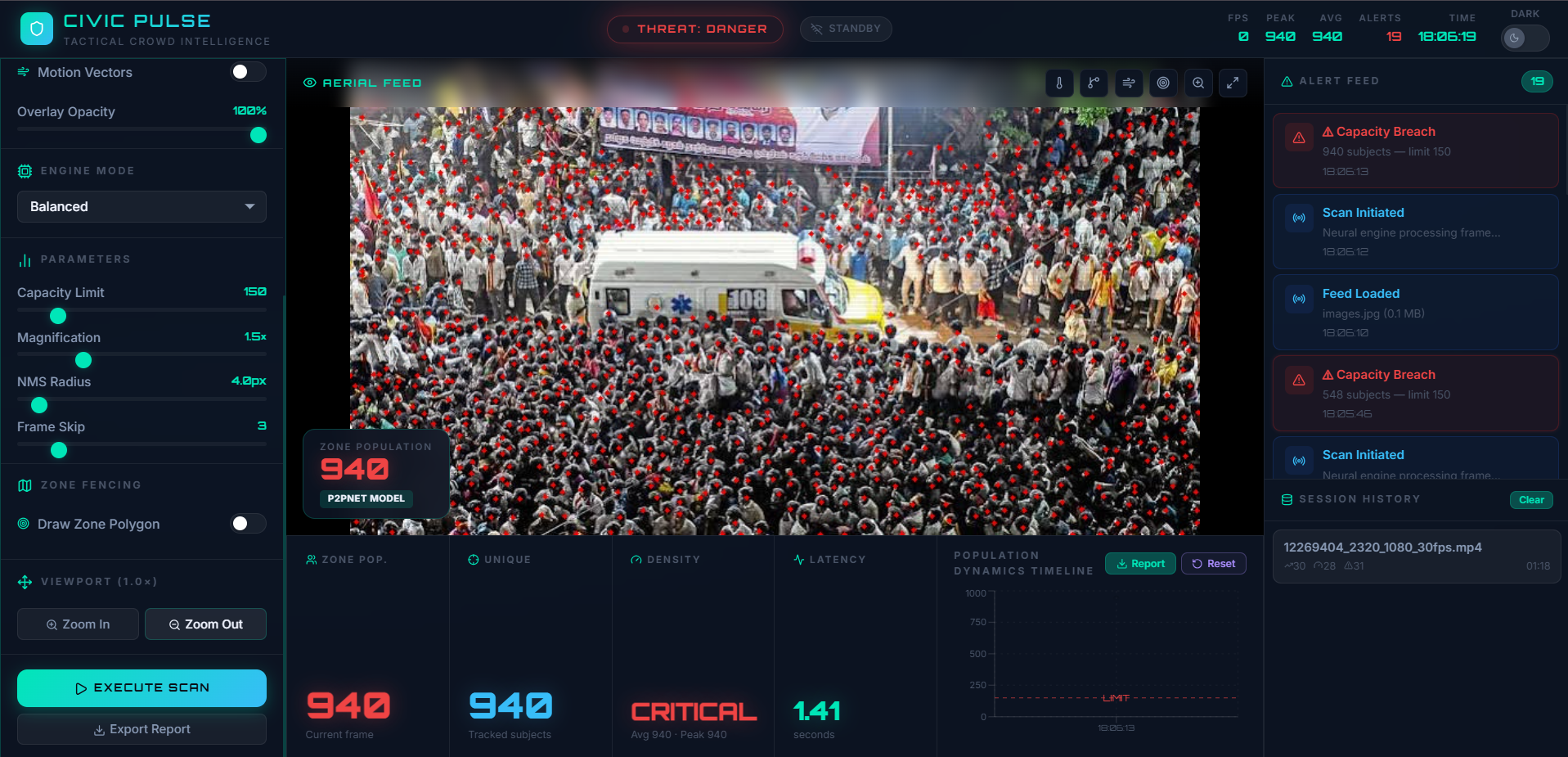
CrowdSafe Vision is an AI-powered crowd monitoring platform for images and drone-view videos.
It provides:
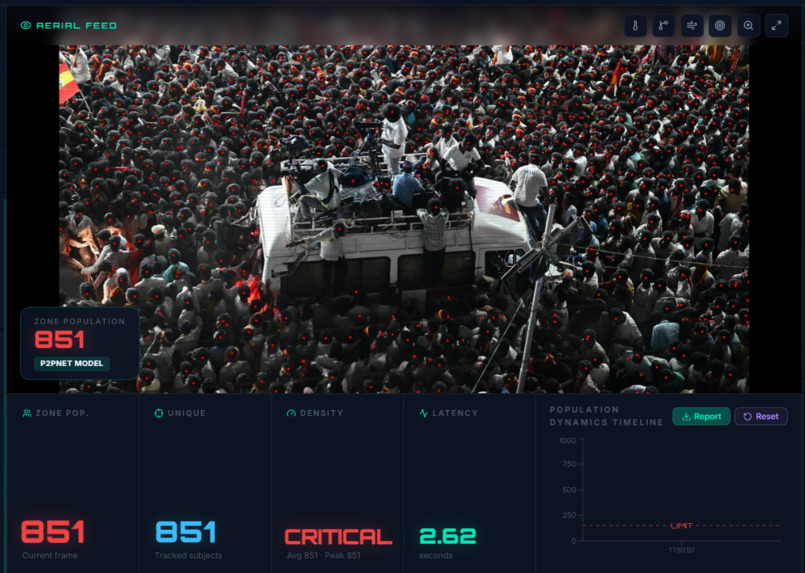
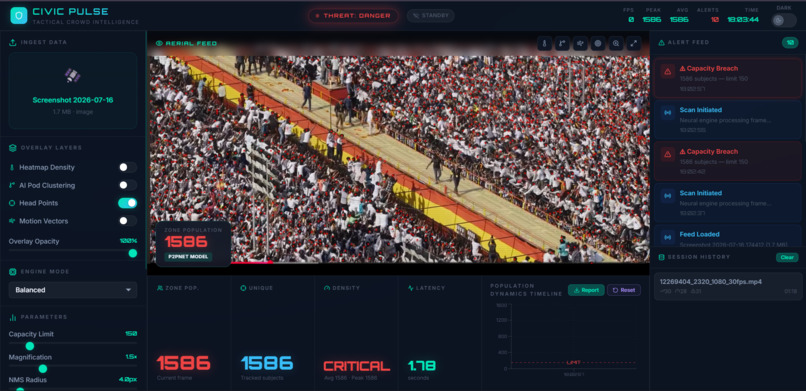
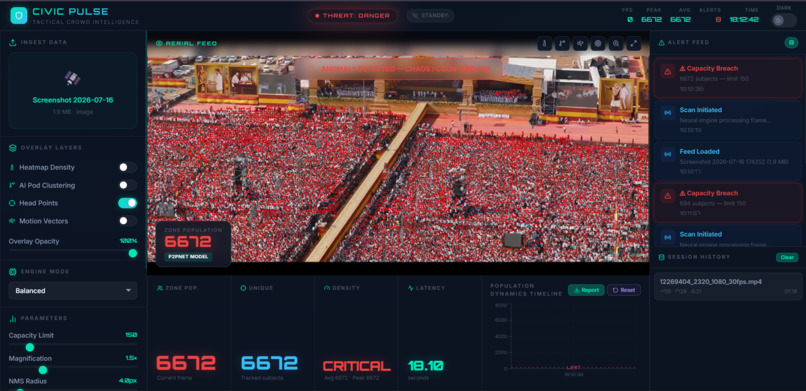
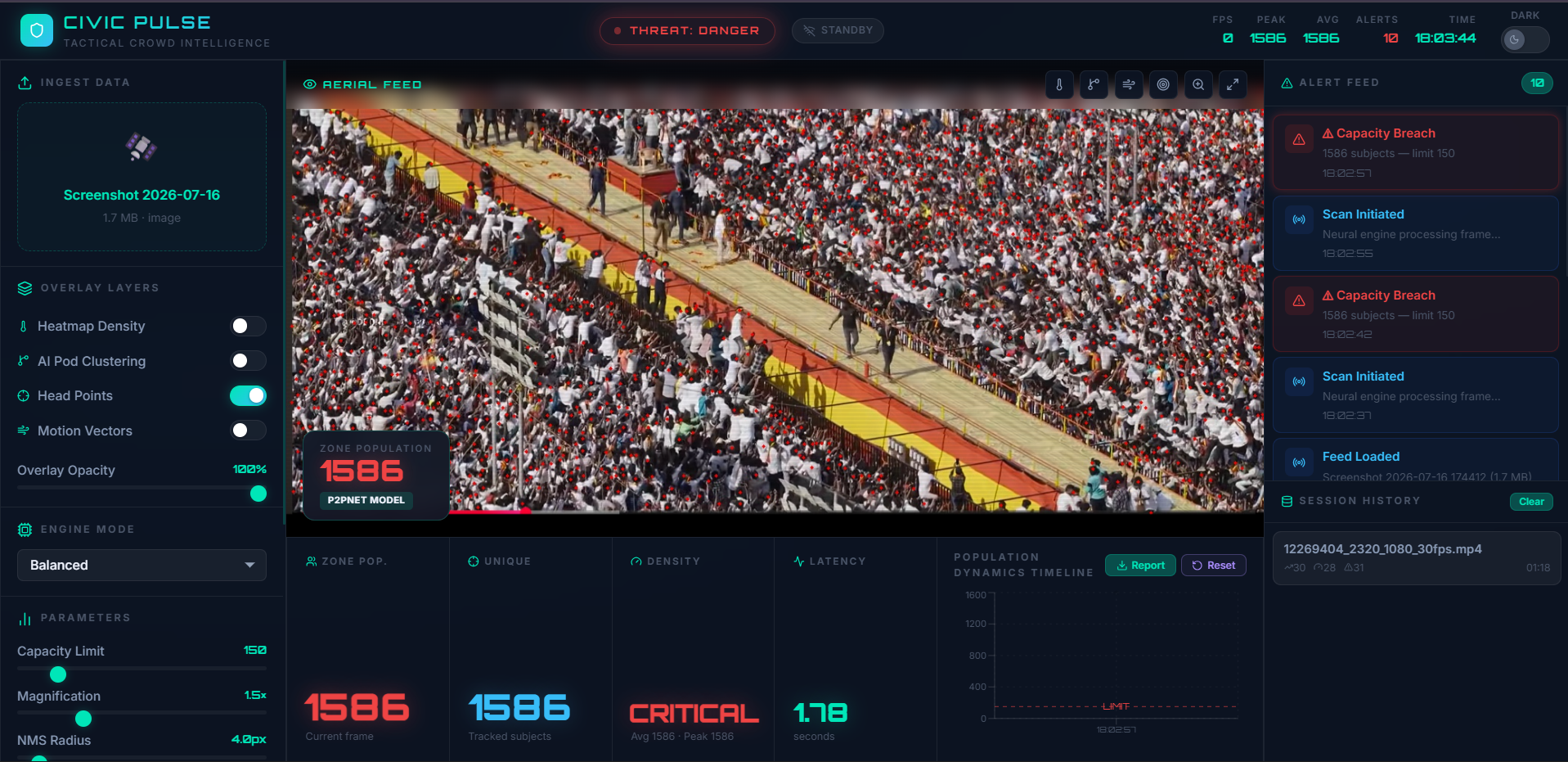
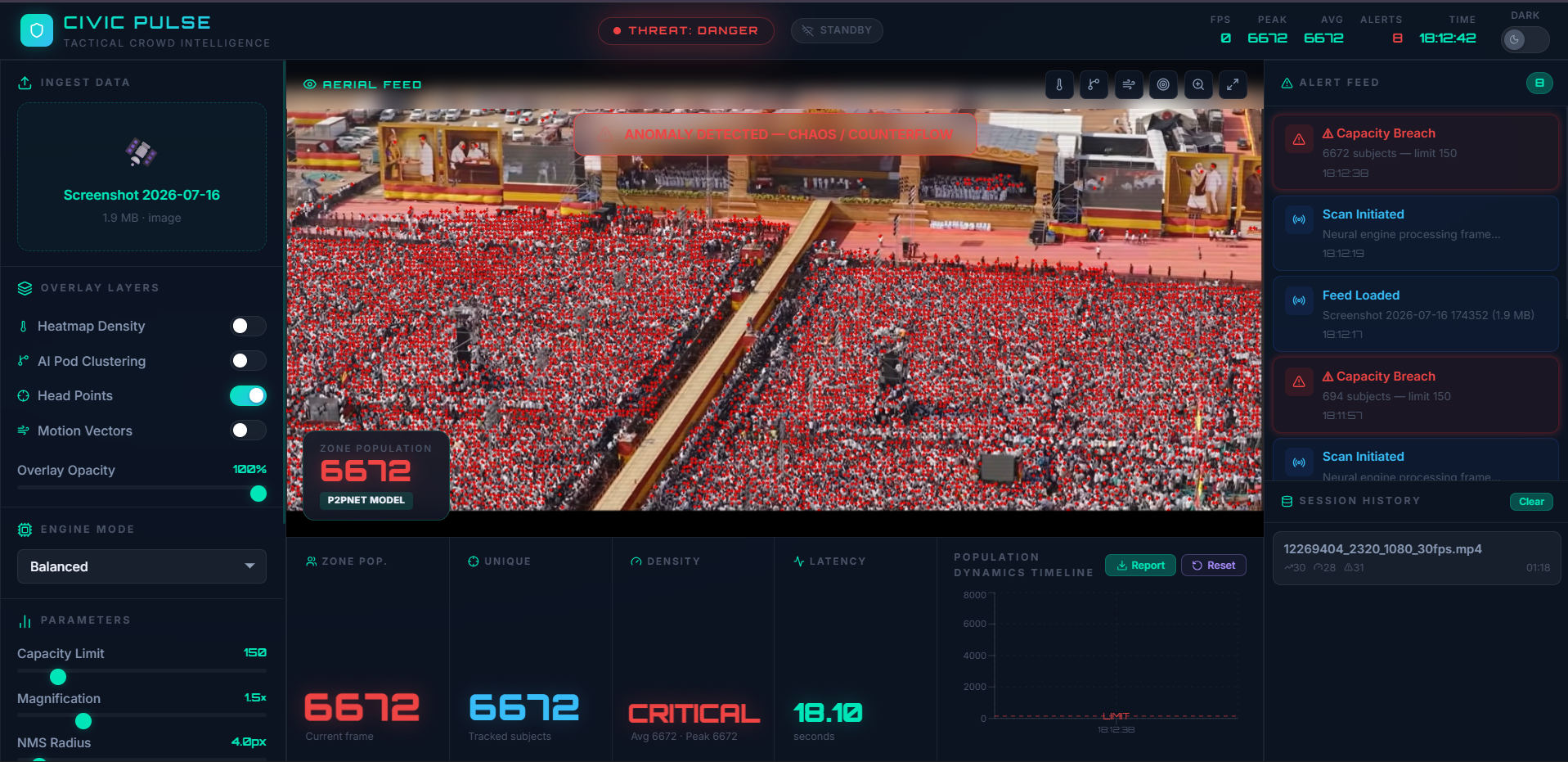
- Point-based human-head localization for dense crowds
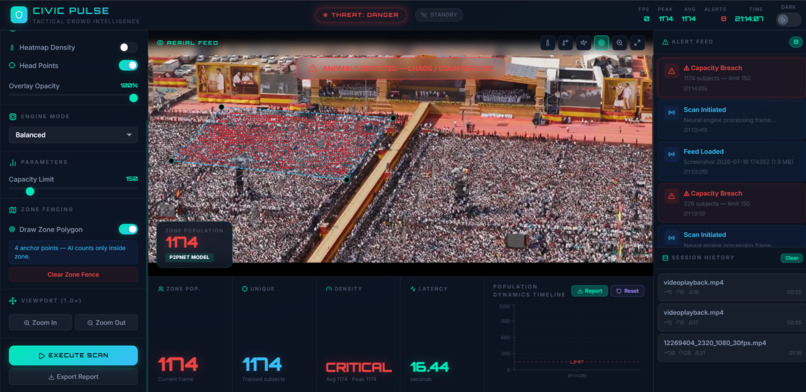
- Crowd counting and zone population estimation
- Unique-subject tracking across video frames
- Capacity-limit monitoring
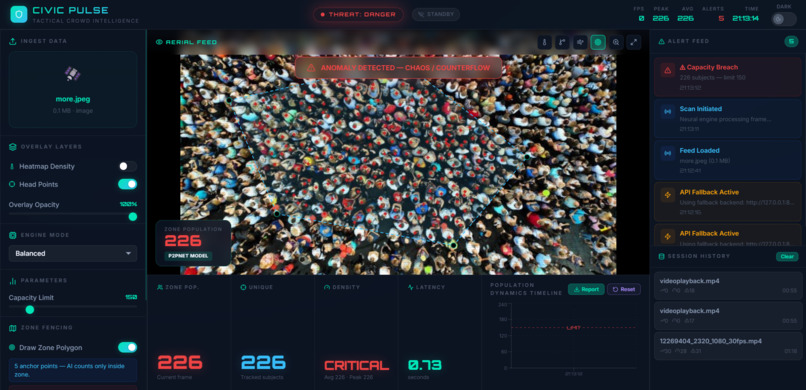
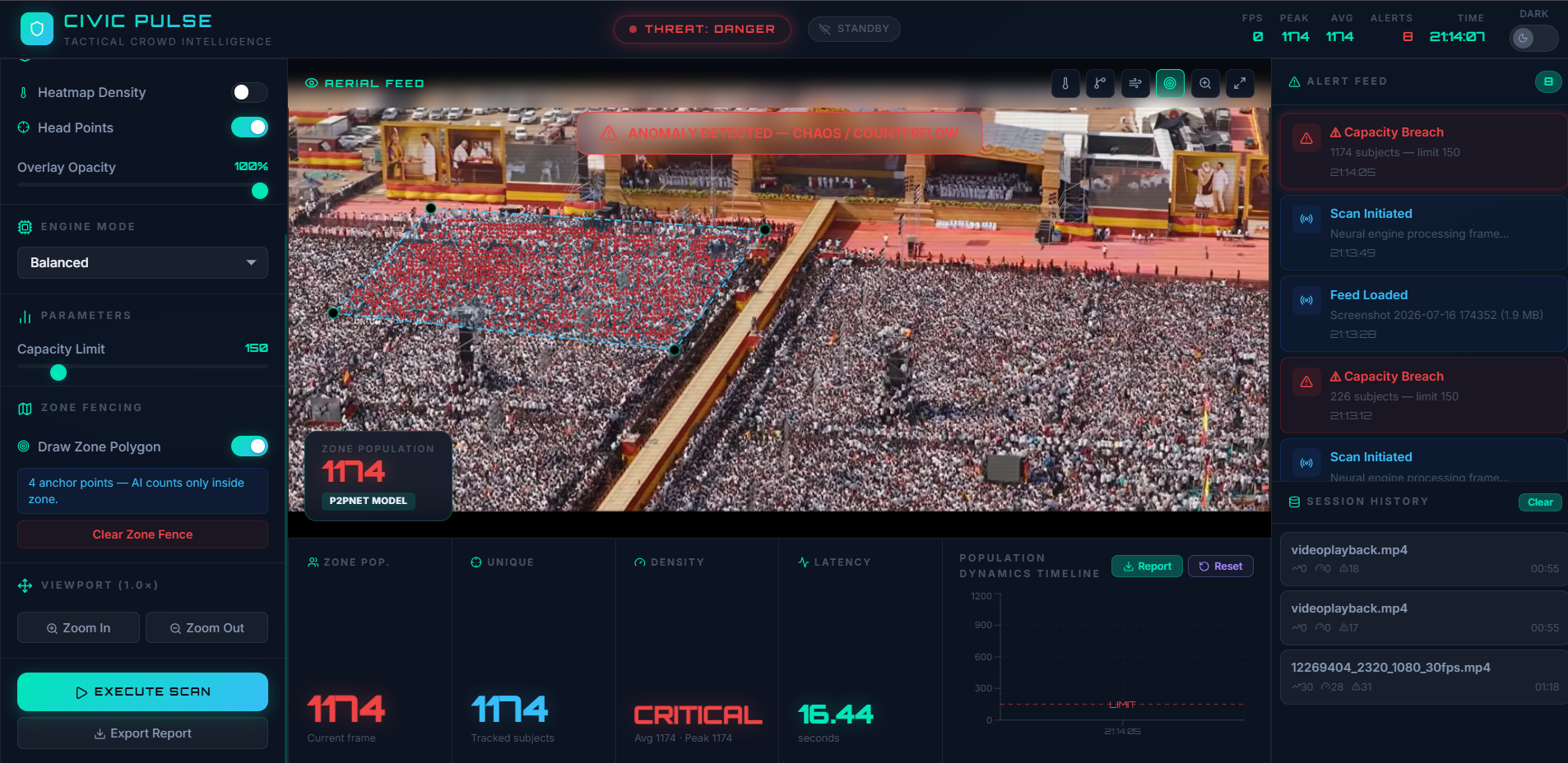
- Chaos and rapid-movement anomaly detection
- Drone-motion compensation
- Polygon-based zone fencing
- Density heatmaps and visual overlays
- Real-time WebSocket telemetry
- Session history and downloadable reports
- AWS CloudWatch monitoring
- AWS SNS safety notifications
The system is designed for event security teams, public-safety operators, smart-city command centers, and organizations managing large venues.
How we built it
CrowdSafe Vision uses a React/Vite dashboard connected to an asynchronous FastAPI backend.
Computer vision pipeline
The backend uses OpenCV for:
- Image and video decoding
- Color-space conversion
- CLAHE contrast enhancement
- Optical-flow feature tracking
- Affine camera-motion estimation
- Polygon zone filtering
- Heatmap rendering
- Motion-vector overlays
- Annotated frame generation
- JPEG encoding
For crowd localization, we use a point-based P2PNet model with a VGG-16 backbone. Instead of drawing large bounding boxes, the model predicts points near individual heads. This is better suited to dense scenes where bounding boxes overlap heavily.
The inference engine supports image magnification, confidence thresholds, tiled processing, overlapping-patch merging, duplicate suppression, CPU execution, and CUDA acceleration when available.
Tracking and movement analysis
For videos, detected head points are passed to a tracking pipeline that combines:
- Lucas–Kanade optical flow
- Global affine motion estimation
- Drone-drift compensation
- Euclidean-distance matching
- Hungarian assignment using SciPy
- Track aging and removal
- Velocity estimation
- Cumulative unique-subject counting
This helps distinguish actual crowd movement from movement caused by a moving camera.
Safety and alert pipeline
The system evaluates crowd counts and movement behavior against configurable thresholds.
It can detect:
- Normal crowd conditions
- Elevated density
- Capacity-limit breaches
- Rapid movement by multiple tracked subjects
- Possible chaos, stampede-like movement, or counterflow
- Crowd concentration inside a selected zone
- Predicted capacity breaches based on recent count trends
The frontend displays SAFE, MODERATE, and DANGER threat states.
AWS integration
CrowdSafe Vision sends operational telemetry to AWS CloudWatch, including crowd-size and anomaly metrics. This allows deployments to be monitored through cloud dashboards and alarms.
We also use AWS SNS to notify subscribed operators when important crowd-safety events occur.
The complete decision flow is:
Video or image input ↓ OpenCV preprocessing ↓ P2PNet head-point detection ↓ Tracking and crowd analysis ↓ Capacity or movement-risk evaluation ↓ AWS CloudWatch telemetry ↓ AWS SNS notification ↓ Human operator response
Built With
- amazon-web-services
- boto3
- cloudwatch
- docker
- face
- fastapi
- hub
- hugging
- javascript
- numpy
- p2pnet
- pillow
- python
- pytorch
- react
- recharts
- scikit-learn
- scipy
- sns
- sqlite
- sqlmodel
- uvicorn
- vgg-16
- vite
- websockets

Log in or sign up for Devpost to join the conversation.