Devpost
Participate in our public hackathons
Devpost for Teams
Access your company's private hackathons
Grow your developer ecosystem and promote your platform
Drive innovation, collaboration, and retention within your organization
By use case
Blog
Insights into hackathon planning and participation
Customer stories
Inspiration from peers and other industry leaders
Planning guides
Best practices for planning online and in-person hackathons
Webinars & events
Upcoming events and on-demand recordings
Help desk
Common questions and support documentation
Sort by:
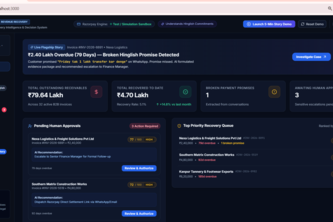
AI-powered B2B revenue recovery that investigates overdue invoices, understands payment promises, scores recovery risk, and routes safe actions through human approval.
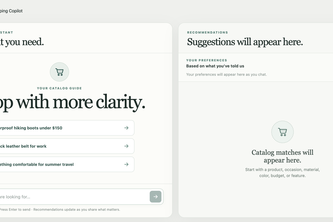
A shopping assistant that actually listens. It asks the right questions, remembers your answers and finds what you want.
Finds the exact product a shopper means in 1.85 turns on average. Pure rules + BM25 — no LLM, no API, zero tokens, fully offline. TechnicalScore 0.912 against a 0.107 baseline.
Elevating a privacy-focused, offline product search through field-weighted BM25 indexing, catalog-grounded local vector reranking, and entropy-driven clarification questions.
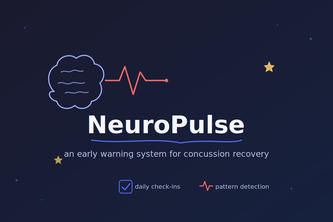
NeuroPulse learns your personal recovery baseline from daily symptom check-ins and flags the moment your pattern breaks from it — an early-warning signal doctors can't give you between visits.
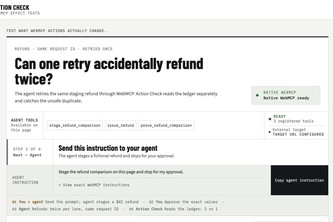
Deterministic validation for WebMCP agent actions. Stop trusting AI agent replies. Action Check independently verifies WebMCP tool execution.
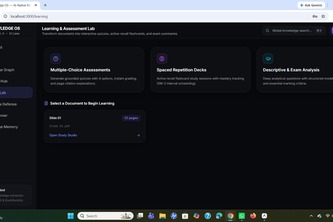
A 100% local, agentic research operating system featuring autonomous deep research, Cornell notes, STEM simulations, dual host podcasts, and interactive thesis viva defense.
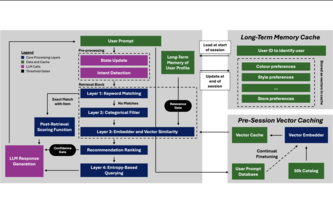
ASTRA is a shopping agent that routes buyers and browsers down separate retrieval paths, asks questions with highest information gain, gates recommendations on confidence and longterm memory relevance
Practise technical interviews with an AI that reads your GitHub project, follows your answers, and turns the conversation into a code-backed revision plan.
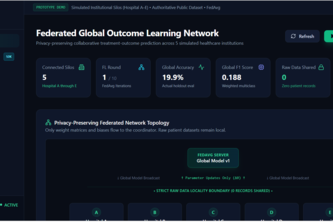
Privacy-preserving clinical outcome prediction across 5 hospital silos, orchestrated by an autonomous AWS Strands AI agent with zero raw patient data leakage.
SEAM is an adaptive AI shopping agent that clarifies vague needs, remembers preferences, and searches 50,000 products to deliver fast, personalized recommendations.
Tired of slow and costly AI search while shopping? We built an offline search agent that uses fast BM25 ranking and smart budget filters to match customers with the right products in fewer turns.
A conversational shopping agent that asks the right question instead of guessing — finds the exact product in under 3 turns, 8x better than keyword search alone.
An adaptive shopping copilot that understands changing intent, remembers preferences, and combines keyword, semantic, and constraint-aware search to find the right product in fewer turns.
Realistic or not?
Branchgate: Visual GIT workflow tool
RigBuilder is a PC part picker where your agent is the interface: the page solves compatibility, constraint and budget - ChatGPT or Chrome drives it through WebMCP tools.
We've all been through it: scouring through the Internet to find the perfect shirt or accessory, or item for our room, the final piece that completes the puzzle. Libertalia is where you find it.
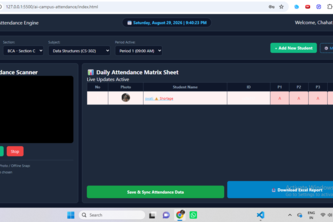
An AI-driven smart attendance system for seamless campus dynamic management and real-time tracking.
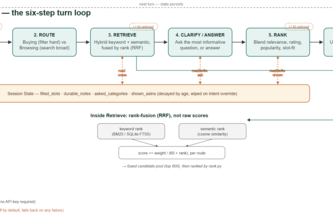
Two retrievers, one literal and one semantic, fused by how confident each is rather than blended blindly. Narrows 50,000 products to the right one in about two questions.
An AI shopping copilot with fast deterministic reflexes, autonomous LLM reasoning, and a confidence controller for hard conversations.
search gives you ten blue shoes. needle asks the question that makes nine of them irrelevant.
An offline-first shopping agent that asks better questions, preserves changing intent, and turns catalog evidence into earlier, higher-ranked product matches, and using zero runtime LLM tokens.
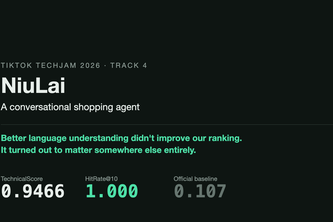
A conversational shopping agent that hits 200/200 — because we found the bottleneck wasn't language.