Devpost
Participate in our public hackathons
Devpost for Teams
Access your company's private hackathons
Grow your developer ecosystem and promote your platform
Drive innovation, collaboration, and retention within your organization
By use case
Blog
Insights into hackathon planning and participation
Customer stories
Inspiration from peers and other industry leaders
Planning guides
Best practices for planning online and in-person hackathons
Webinars & events
Upcoming events and on-demand recordings
Help desk
Common questions and support documentation
Sort by:
LORE is a social platform that uses AI to turn conversations into plans, shared memories, and stronger connections.
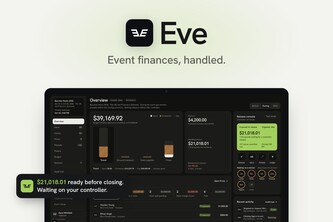
post-event finances, on autopilot
Orb Companion is a glowing companion that notices you, responds with light, and starts a gentle conversation. A true listener, it makes reaching out feel easier.
The Finish transforms a dress you already own into three AI-styled looks, with coordinated accessories, hairstyle guidance, makeup inspiration, and a one-tap gold-to-silver transformation.
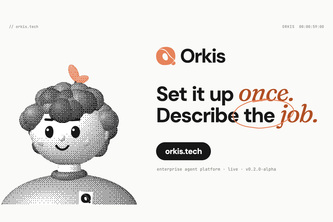
Orkis makes it easy for people and enterprise teams to launch and manage AI agents. Orkis configures the agents and coordinates their work, with each new agent reusing the setup you already have.
Can’t decide where to go? Puss asks a few questions, then guesses a real spot near you that matches your vibe. Plan with friends too: everyone answers, Puss picks 3, the party votes.
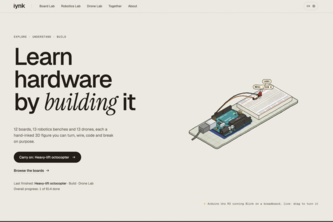
Learn hardware without buying it. Wire, code, break and fly real boards, robots and drones for free in your browser, in your language, with an AI partner that finds you a friend
Stop hand-building robot simulations. Film your table on a phone, and RealiSIM turns it into a physics-checked MuJoCo world you can pip install and train on. Reality in, simulation out.
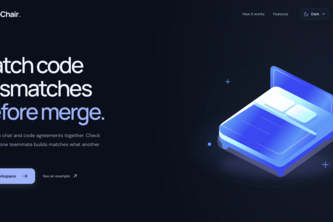
Claude Code and Codex on one team, one contract, zero "it works on my machine"
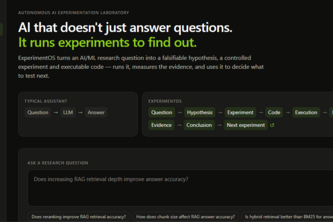
AI that doesn't just answer questions. It runs experiments to find out: ExperimentOS turns AI/ML research questions into measured, evidence-backed experiments with NVIDIA Nemotron.
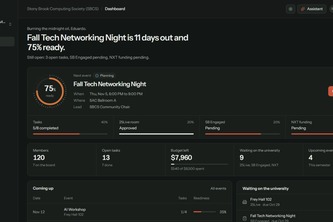
ClubOS simplifies club management at Stony Brook University, helping student organizations streamline operations, collaborate, and automate tasks in one place.
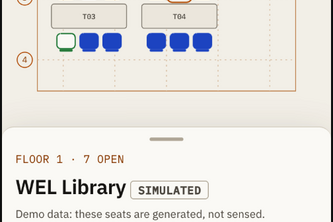
Stop ghost seats, start study sessions: Smart desk sensors that end fake backpack seat-saving while socially connecting students studying the same subjects or with the same interests.
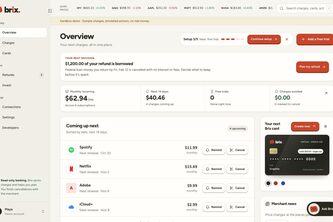
Catch money moments before they pass. Brix warns students before trials bill, spots borrowed money in aid refunds, and saves gift cards from expiring, by app, WhatsApp or a phone call.
Shows where satellite records first place a plantation fire and how it spread, sealed on a blockchain, so a buyer can check a watchdog's grievance in their own browser.
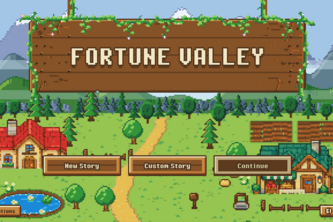
Fortune Valley is a town where you live out years of money decisions, then watch them replay across 1,000 possible futures. Learn through simulation so you don't need to make your life the test.
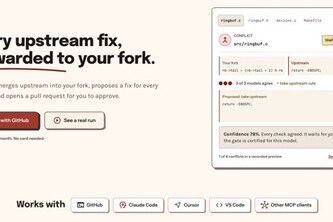
Every upstream fix, forwarded to your fork. AI agents propose conflict resolutions; you review them in a pull request.
Your smartest next move with your Toyota: buyout, refinance, trade-in, or keep. Real numbers from a tested finance engine, a plain-English why, and only options you can afford in a matter of seconds.
tot trains your train of thought. Before Claude answers, the extension asks one quick question so students think first, then use AI. Build the muscle of thinking with your friends. Be tot, not told.
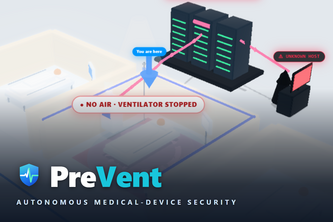
Autonomous security for the medical devices hospitals can't patch.
An intelligence layer to coordinate between platform-agnostic coding harnesses in realtime. Designed to minimize code redundancy and conflicts in fast-development small-team environments.
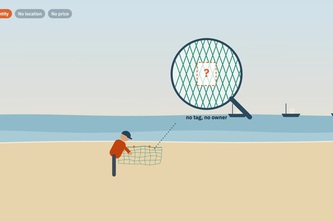
Predict where lost fishing nets drift, prioritize their recovery, and fund verified cleanups through blockchain-backed bounties.
Diagnosis, coverage and care in one.
A dirty lens doesn't crash, it quietly lies. COOLPilot checks every camera frame with OpenCV 5, verifies with an AI agent, and runs live on AWS Graviton.
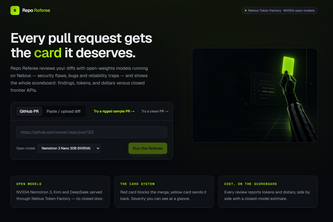
Repo Referee uses open AI models to review code, flag potential bugs and security issues, and track token usage and costs—all through a simple red-card and yellow-card system.