Devpost
Participate in our public hackathons
Devpost for Teams
Access your company's private hackathons
Grow your developer ecosystem and promote your platform
Drive innovation, collaboration, and retention within your organization
By use case
Blog
Insights into hackathon planning and participation
Customer stories
Inspiration from peers and other industry leaders
Planning guides
Best practices for planning online and in-person hackathons
Webinars & events
Upcoming events and on-demand recordings
Help desk
Common questions and support documentation
Sort by:
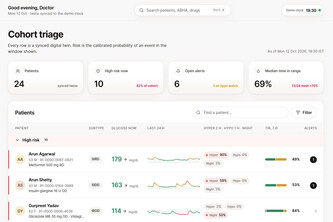
A digital twin for Type 2 diabetes, built for India: it syncs to every CGM reading, forecasts glucose 4 hours ahead, warns of highs and lows, and lets a doctor test advice on the twin first.
Single-Pass Drone Video to Accurate 3D Model Generation System AI-Enabled Georeferenced 3D Reconstruction from a Single UAV flight
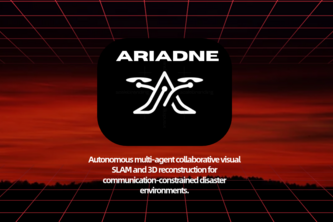
Autonomous multi-agent collaborative visual SLAM and 3D reconstruction for communication-constrained disaster environments.
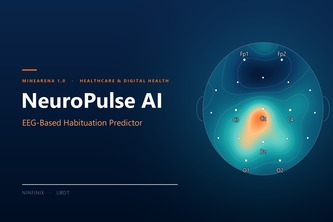
Predicting future EEG habituation from baseline brain signals using explainable AI.
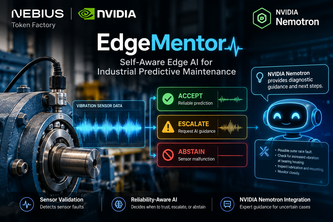
Self-aware Edge AI that detects unreliable industrial sensor predictions and escalates to NVIDIA Nemotron for intelligent guidance.
Four lost hikers, one hunting predator. OpenCV 5 cameras feed a shared living map. Across 160,000 pre-registered simulations, sharing what each hiker sees raises escapes from 27% to 42%.
MRDoc gives AI coding agents on GitLab more or less freedom for each change. It scores the risk, tests the change on a small share of real traffic, and learns from what happens.
Voice guidance for blind visitors in any building, after two volunteers walk it with their phones for 15 minutes. No beacons; 1.4 cm on benchmark video.
Help small workshops without vibration sensors spot changes in machine vibration using a slow-motion phone video—and know when a closer inspection is needed.
SLAM that knows when it is lying: an OpenCV 5 agent diagnoses tracking failures, applies one bounded fix, verifies it, and rolls it back if it did not help. Every decision is audited.
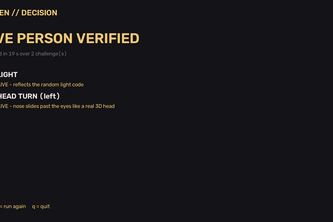
Proof-of-life face verification that a photo or screen can’t pass
Developer agent closing the loop for OpenCV 5: auto-tunes vision parameters on CPU and AWS with grounded F1 evidence and zero guesswork.
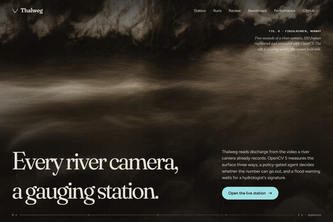
OpenCV 5 turns river video into discharge (m³/s). A policy-gated agent publishes only what the evidence supports, refuses the rest, and drafts flood warnings only a person can sign.
Find the data that deletion requests leave behind. TraceZero audits evidence across systems to uncover surviving personal data, missed deletions, and restoration risks.
Maps flood impact, damaged bridges and cut-off villages from free satellite data in minutes, with a fact-checked bilingual (English/Nepali) copilot that never states a number the maps can’t back up.
Touchline AI turns phone clips of soccer into tactical analysis. An OpenCV 5 agent catches its own mistakes, reruns bad segments, and asks a coach when it can’t fix them.
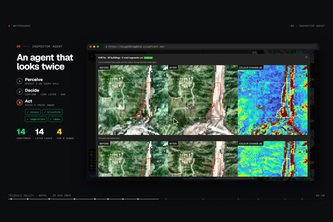
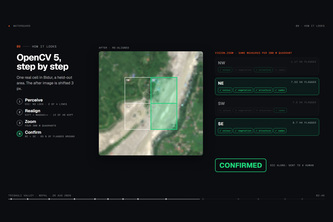
Free satellite data → a flood-damage and who-is-cut-off map in minutes, then an OpenCV 5 agent re-aligns, zooms and looks again before a human signs off. Live on AWS.
SkyWall is a multi-agent counter-UAS defense stack that detects, tracks, and defeats hostile drone swarms before they reach a high-value target.
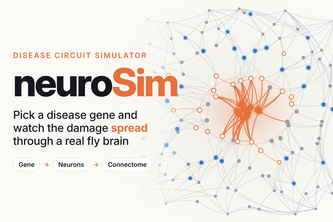
neuroSim maps disease genes to affected neurons and simulates how damage spreads through the fly brain, making neural circuits easier to research, visualize, and learn.
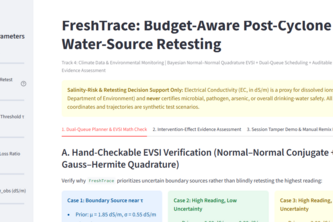
Budget-aware post-cyclone water-source retesting using Normal-Normal quadrature EVSI, dual-queue scheduling, and auditable intervention assessment.
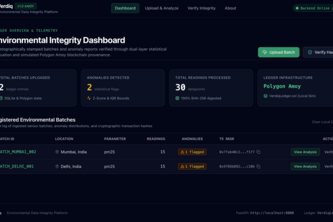
Verdiq is an AI-assisted environmental data integrity platform that detects anomalies in sensor readings and anchors cryptographic evidence on a blockchain ledger.
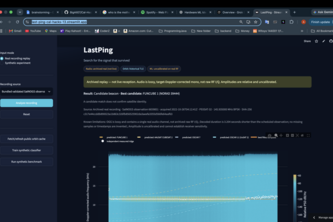
Turning satellite radio recordings into visual evidence of possible matches.
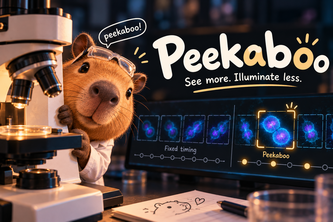
Cells need a break from the spotlight. Peekaboo uses cell shape to choose when a microscope should take its next picture, aiming to capture key moments with fewer light exposures.
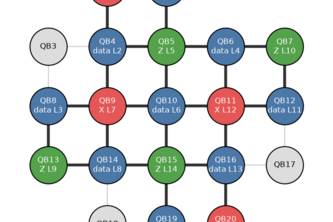
Our project builds that whole pipeline for a distance-3 rotated surface code, which uses 17 qubits, and runs it on IQM's Garnet processor.