-
-
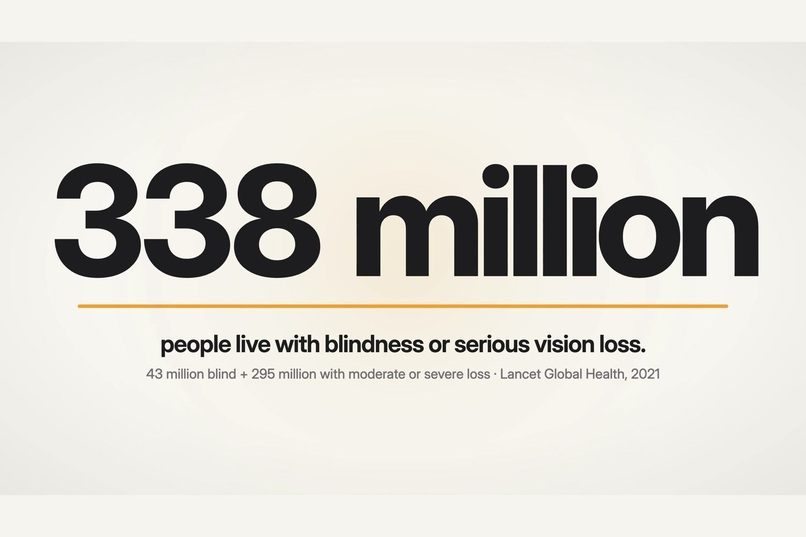
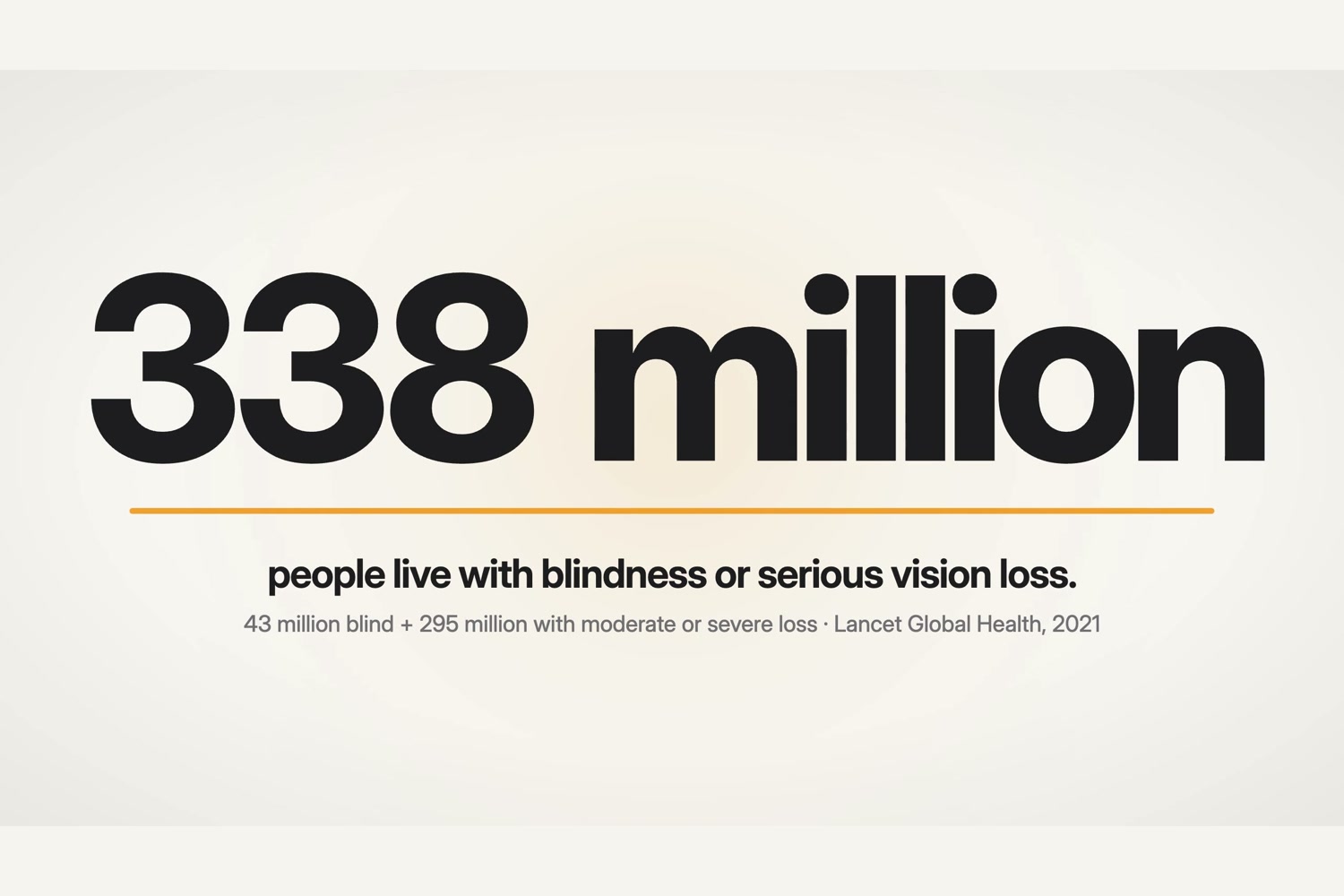
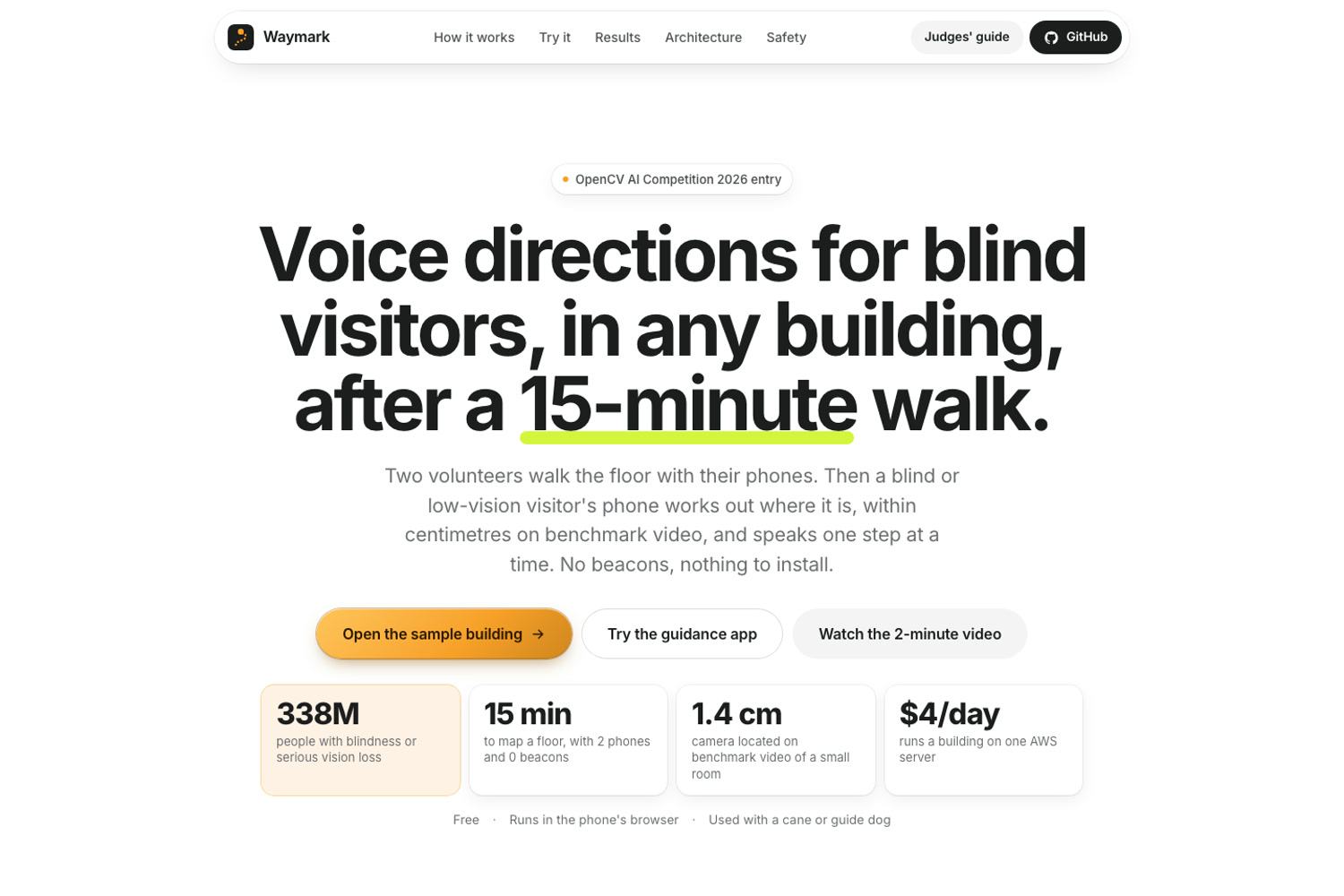
338 million people live with blindness or serious vision loss (Lancet Global Health, 2021)
-
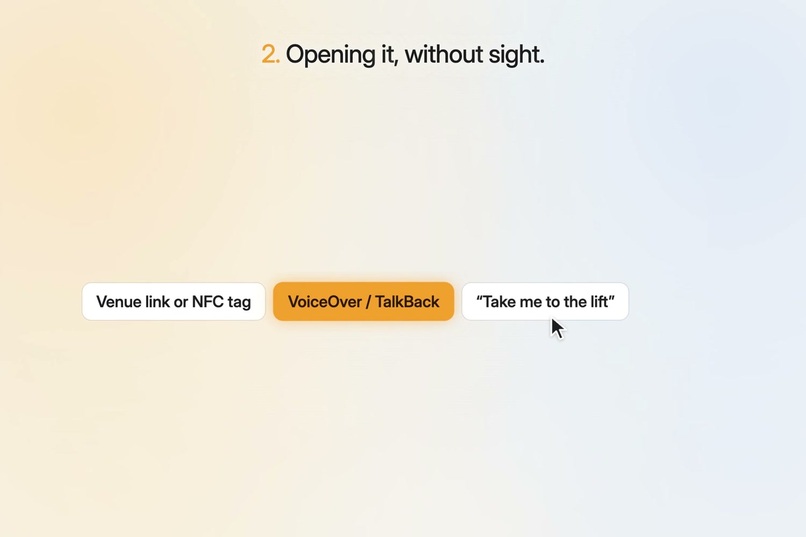
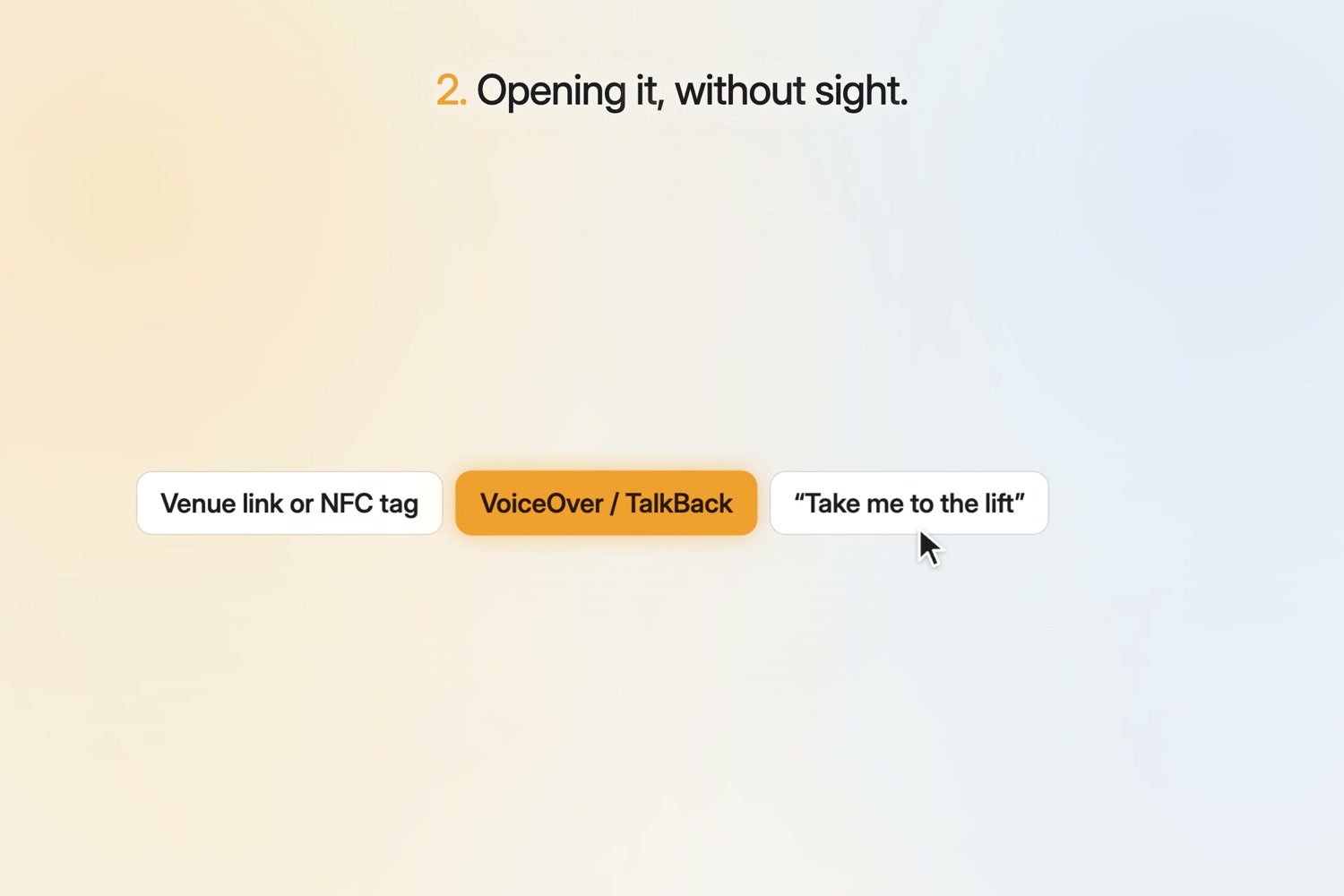
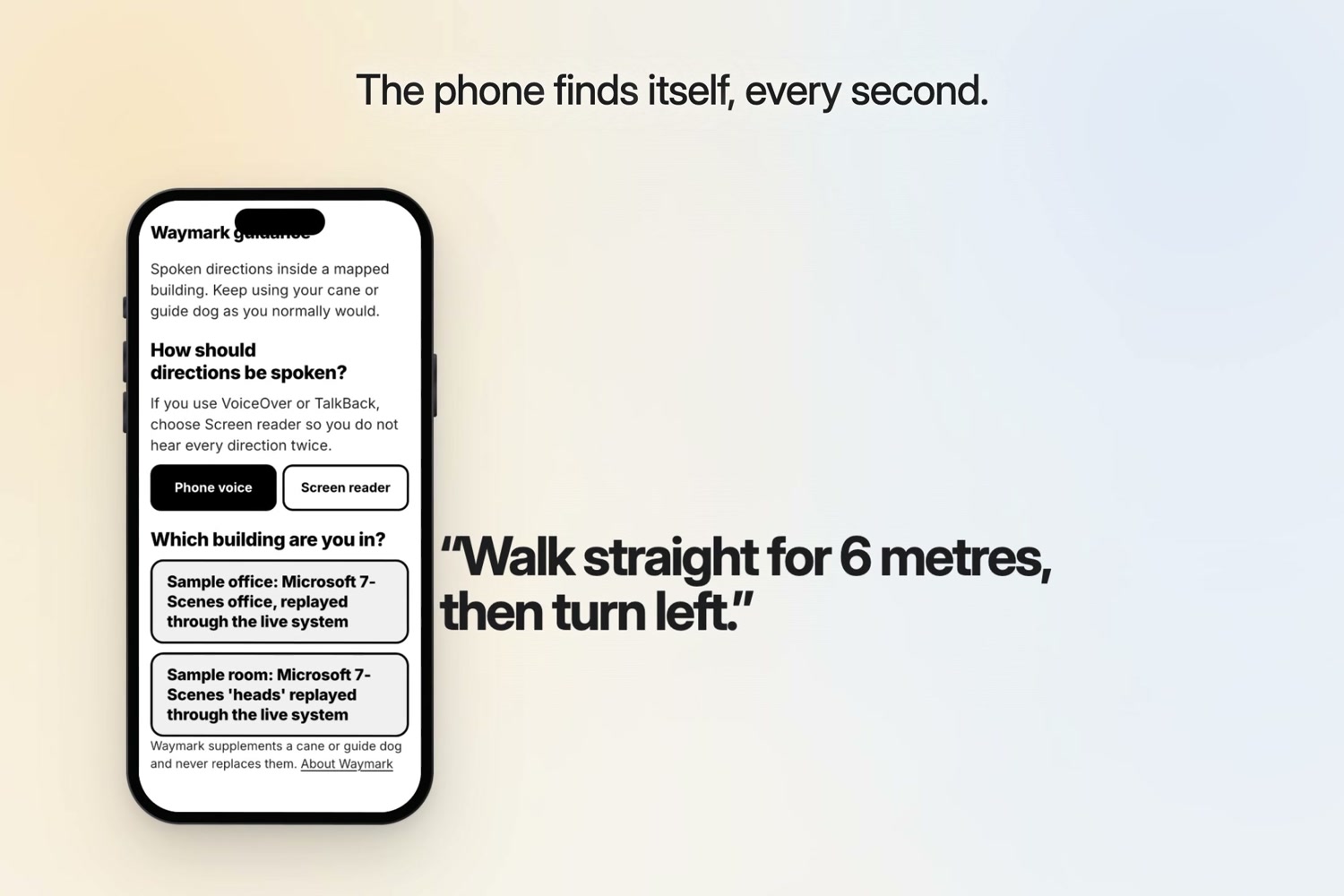
How a blind visitor opens it: venue link or NFC tag, VoiceOver or TalkBack, or just say a place
-
Two volunteers, two phones, one printed sheet, 15 minutes
-
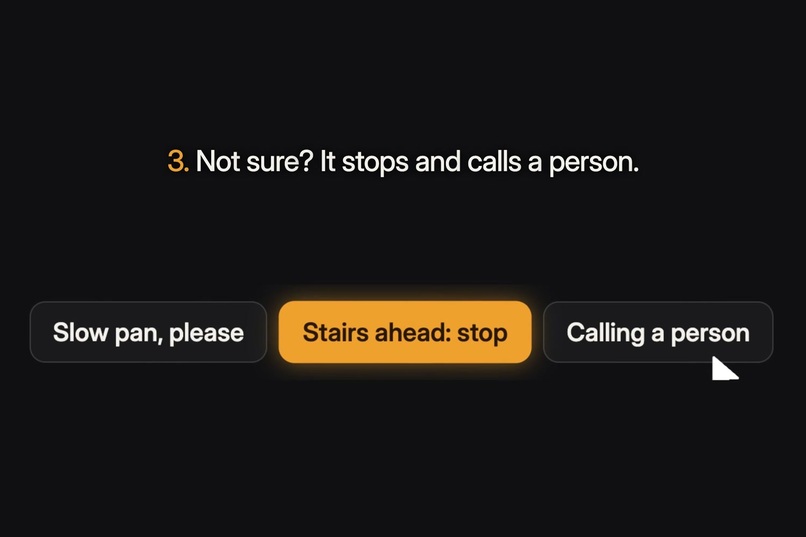
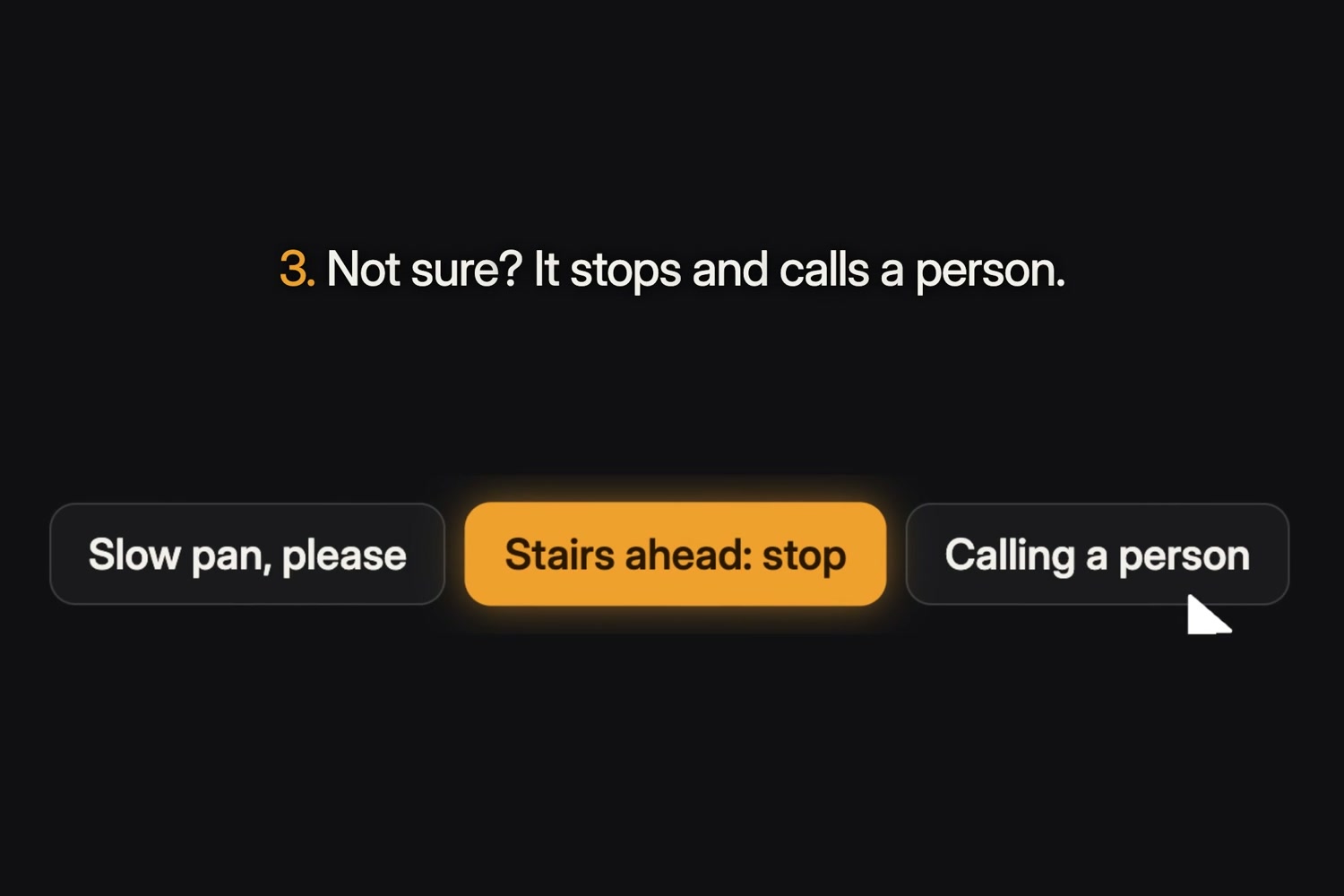
When unsure, the agent asks for a pan, stops before stairs, or calls a person
-
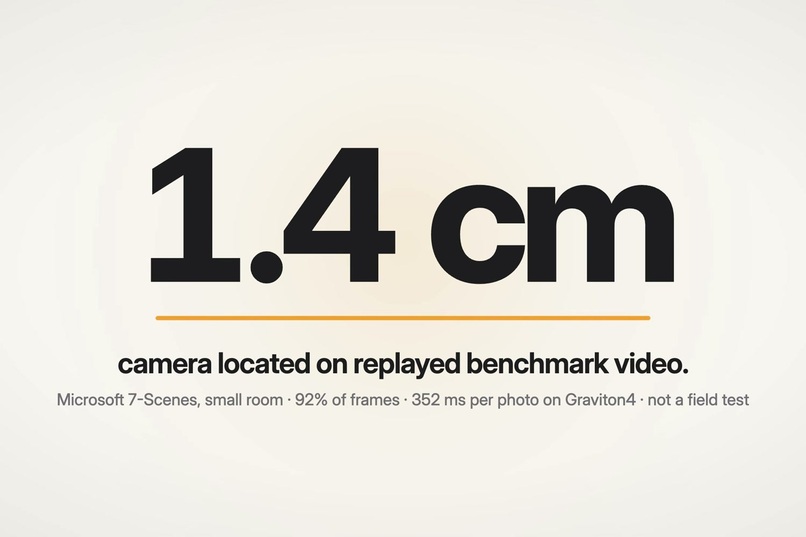
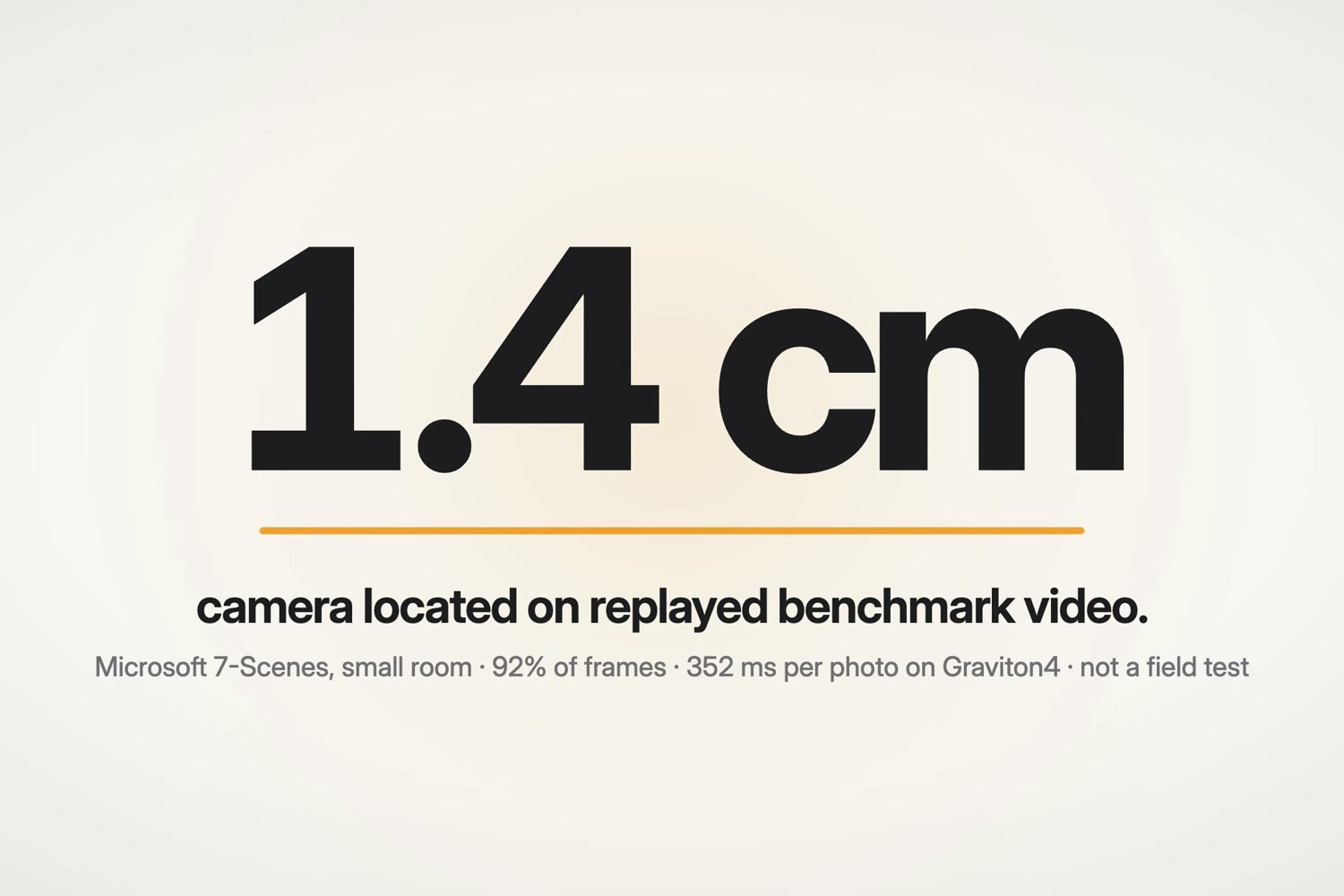
1.4 cm on replayed 7-Scenes benchmark video through the live server
-
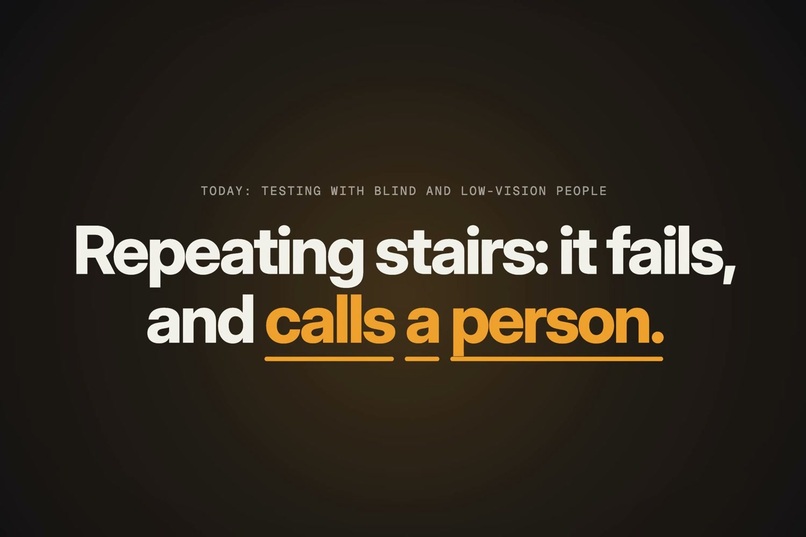
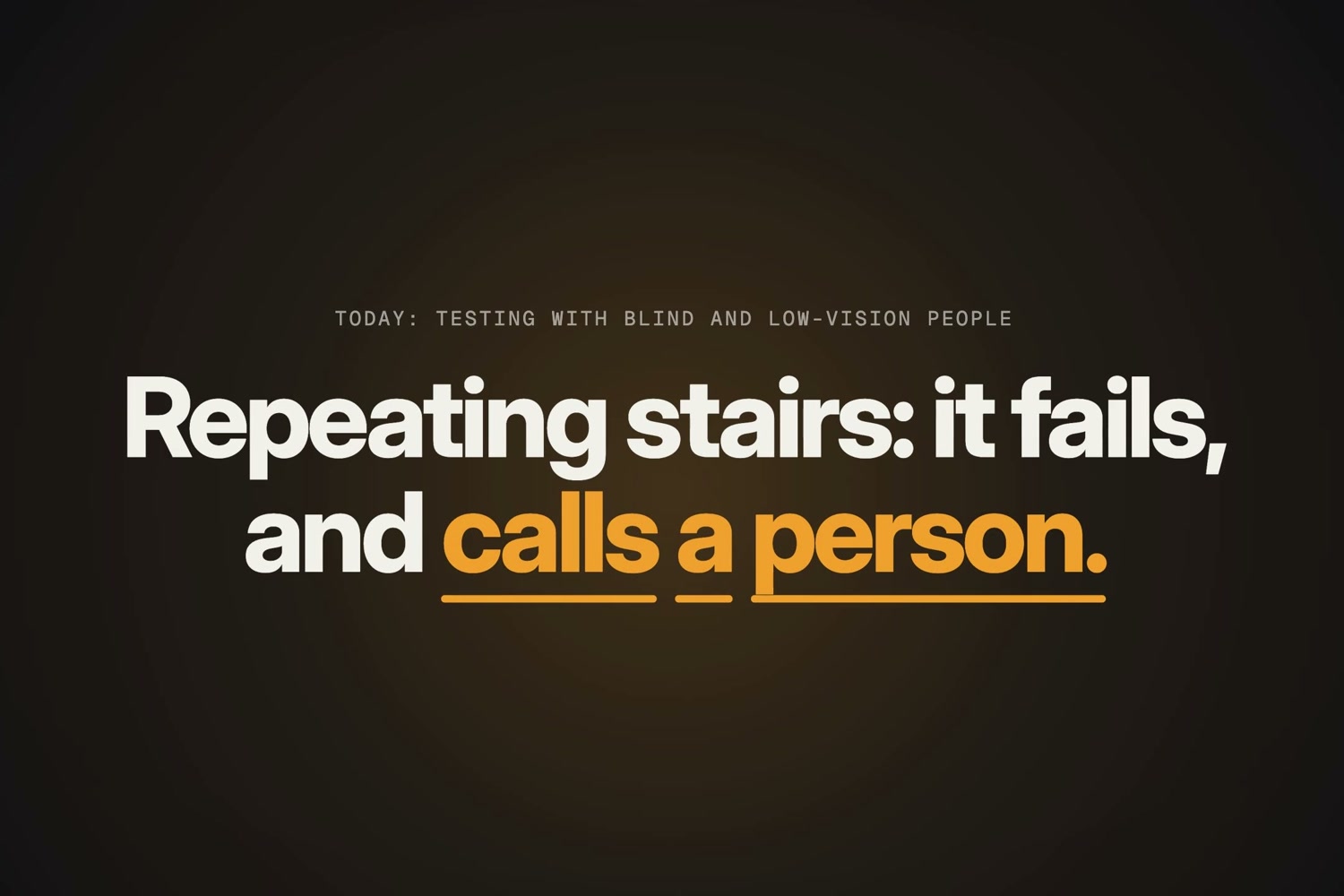
Where it breaks: repeating stairs, and it hands off to a person
-
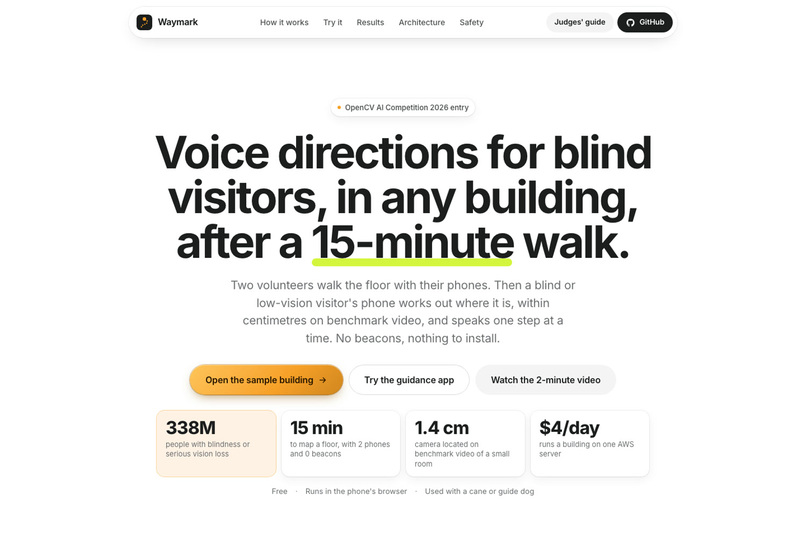
Live landing page: who it helps, how many, how fast, how accurate
-
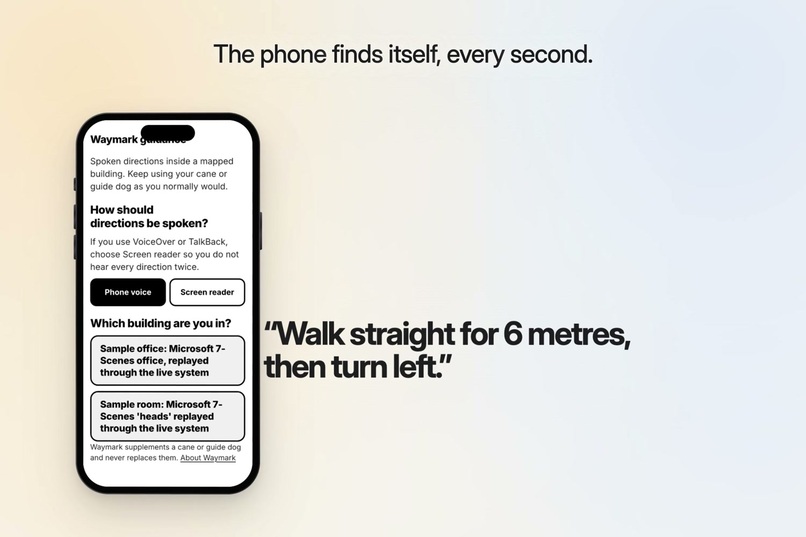
The visitor's phone finds itself every second and speaks one step at a time
-
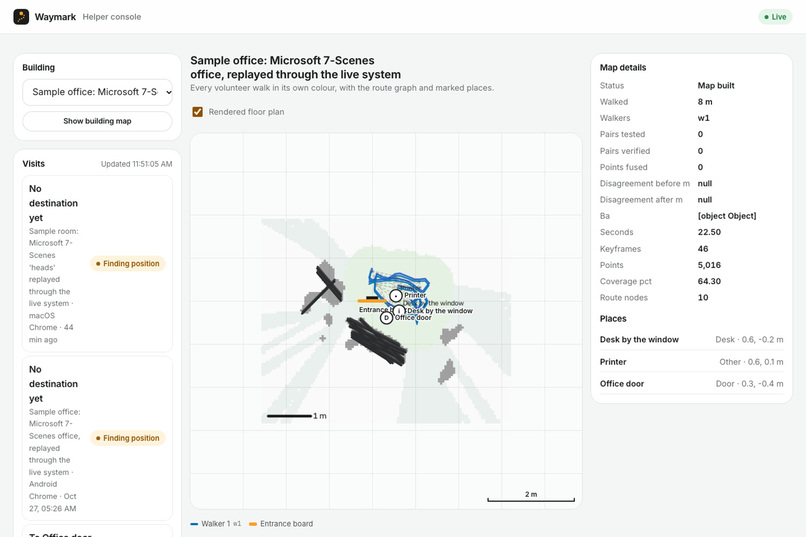
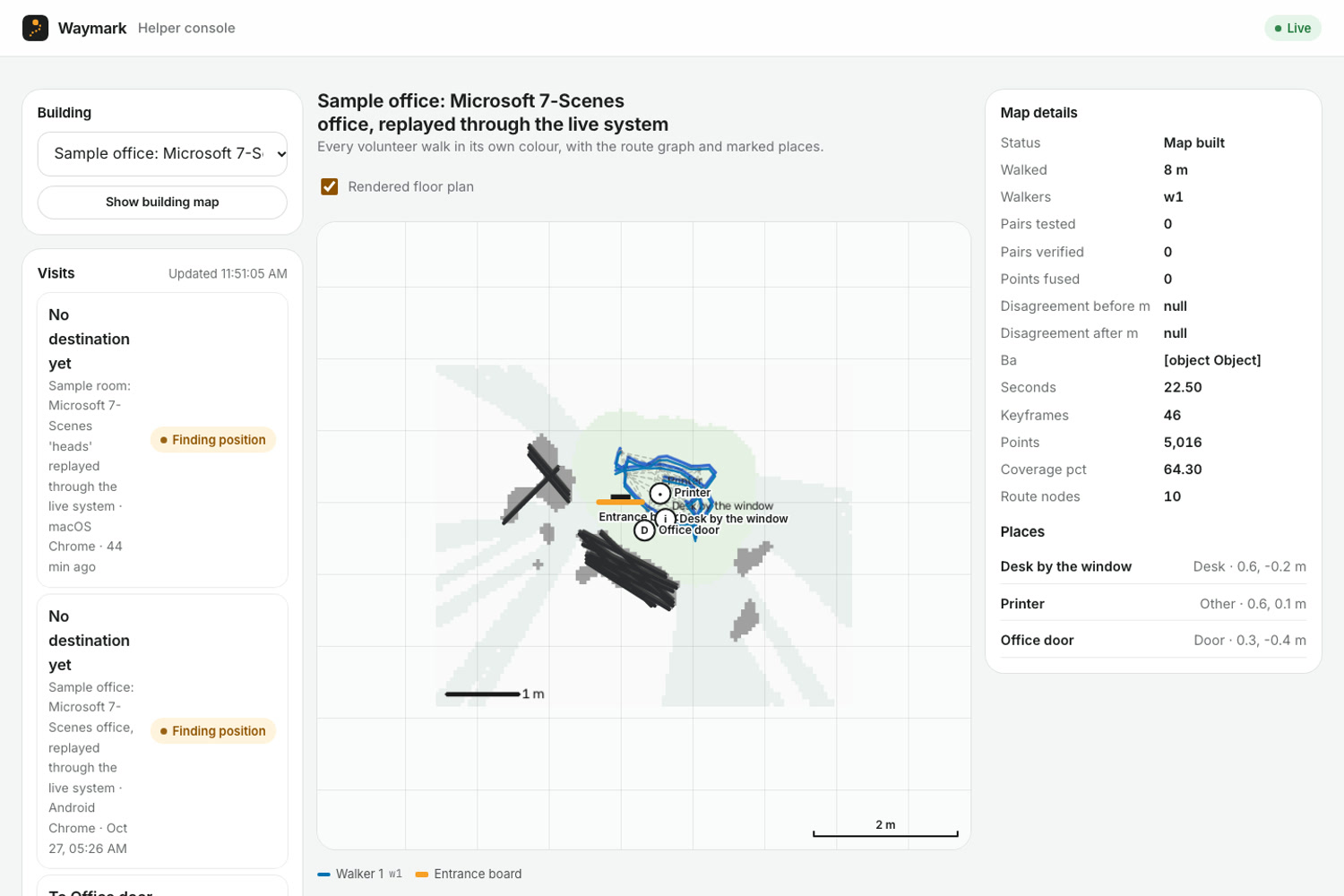
Helper console: merged map, named places, every agent decision with its reason
-
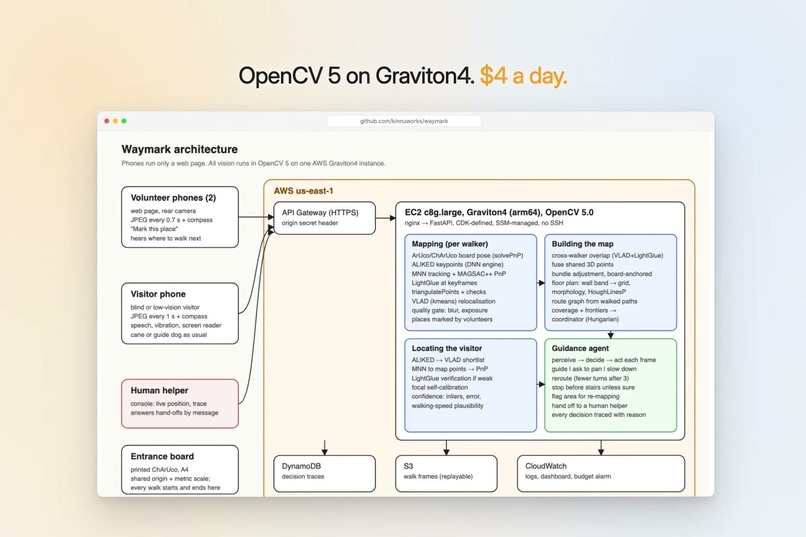
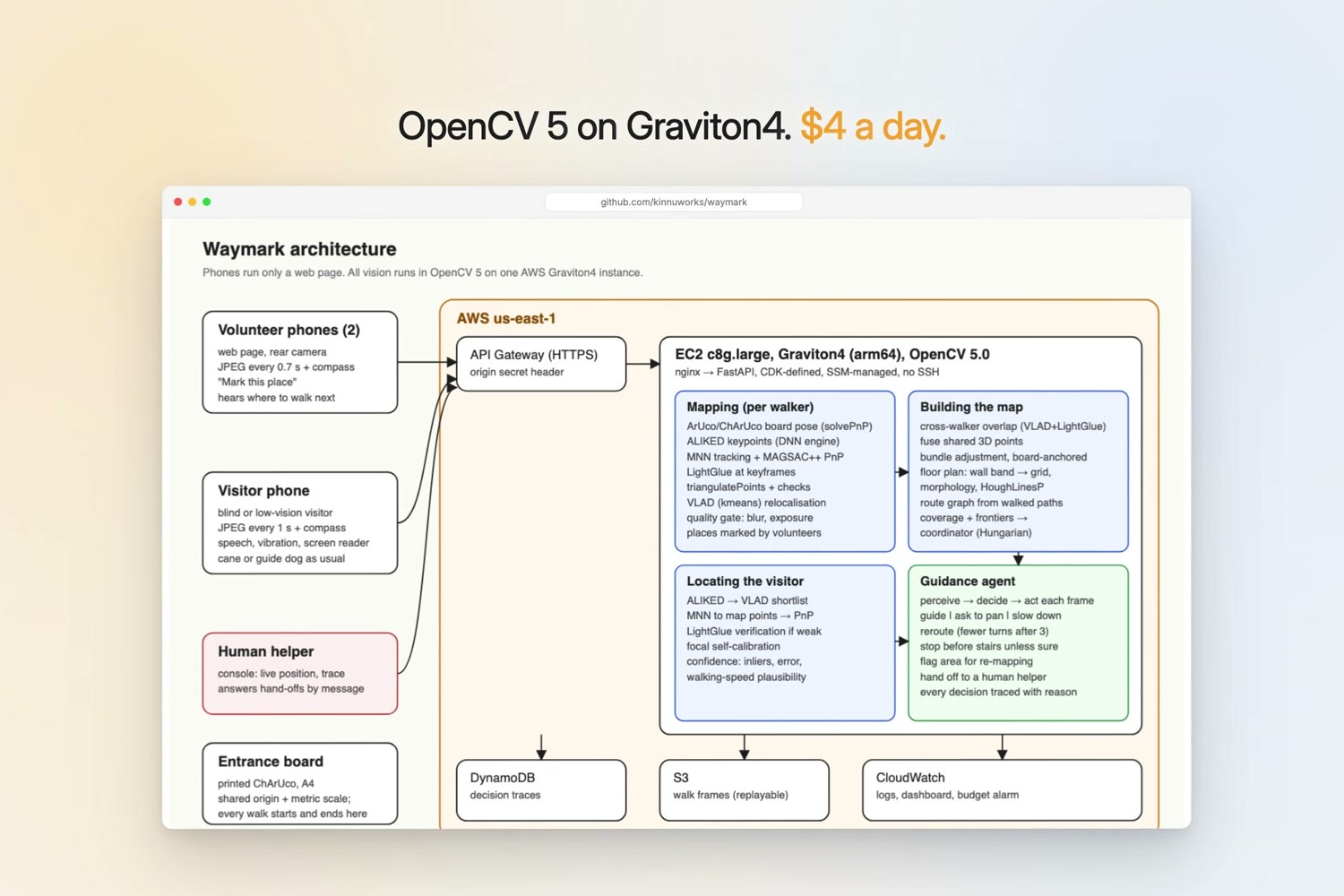
Architecture: OpenCV 5 on AWS Graviton4, API Gateway, DynamoDB, S3, CloudWatch, one CDK stack
Two volunteers walk a library, clinic or college floor with their phones. After that, a blind or low-vision visitor's phone works out where it is every second and speaks one instruction at a time.
Inspiration
GPS stops at the front door. Inside an unfamiliar library, clinic or college building, a blind visitor has to find someone to ask. Indoor guidance does exist, but it needs beacons installed throughout the building, or a company that has mapped the venue, so it is missing from almost every building people actually go to. We wanted to know how far a printed sheet of paper, two phones and OpenCV 5 could get instead.
What it does
- Map. Two volunteers tape a printed board by the entrance and walk the building with their phones for about 15 minutes. Waymark tracks each phone from its photos. An agent watches what has been covered and tells each volunteer where to walk next, so they don't cover the same corridor twice. They tap "Mark this place" at rooms, doors, stairs and lifts.
- Merge. Waymark finds the places both volunteers saw, fuses their maps into one, and produces a measured floor plan and a route graph built only from paths a sighted person actually walked.
- Guide. A blind or low-vision visitor opens the building's link (sent before the visit, or from an NFC tag beside the entrance board) with VoiceOver or TalkBack, picks a destination from labelled buttons or by dictating, and holds the phone at chest height. Once a second, Waymark works out where the phone is and speaks one instruction at a time: "Walk straight for 6 metres, then turn left." "You have arrived. Room 104 is on your right."
- Stay safe. A guidance agent acts on how sure it is. It asks the visitor to pan the phone when it can't see enough, slows them down when unsure, and re-routes with fewer turns after repeated mistakes. It stops before stairs unless certain, and calls a human helper instead of guessing. A helper console shows the visitor's position and every decision with its reason.
How we built it
- Building frame. A ChArUco board fixes one origin and metric scale for every walk (
CharucoDetector,solvePnP). - Tracking.
- ALIKED keypoints run on OpenCV 5's new DNN engine.
- Fast mutual-nearest-neighbour matching plus MAGSAC++ PnP (
solvePnPRansacwithUsacParams) tracks each frame. - LightGlue only runs where a wrong match is expensive: new keyframes, loop closures and the merge.
- New 3D points come from
triangulatePoints, with reprojection and parallax checks.
- Merge. VLAD retrieval (
kmeansvocabulary) finds overlaps between walkers. LightGlue and PnP verify them. A sparse bundle adjustment anchored to the board pulls everyone into agreement. - Floor plan. An occupancy grid,
morphologyEx,HoughLinesPandconnectedComponentsWithStats. The coordinator assigns unwalked regions with the Hungarian algorithm. - Locating visitors. VLAD shortlist, PnP, LightGlue verification when the evidence is weak, and focal-length self-calibration, so visitors never calibrate their phone.
- AWS.
- EC2 c8g.xlarge (Graviton4) running OpenCV 5's arm64 build, which ships KleidiCV.
- API Gateway for HTTPS, DynamoDB for decision traces, S3 for replayable walks, and CloudWatch.
- One CDK stack, updated over SSM with no SSH.
- Front end. Plain HTML and JavaScript, built for VoiceOver and TalkBack first.
Results
Every number re-runs from a script in the repository.
| What | Result |
|---|---|
| Whole system through the live API on Graviton (replayed 7-Scenes video of a small room, virtual board) | camera located to 1.4 cm median, 92% of frames, 354 ms per frame. A larger office room: 16 cm |
| Two walkers merged, against ground truth | 1.2 cm median keyframe error |
| Relocalisation, standard 7-Scenes protocol | 1.77 cm, 95% within 5 cm and 5°, 0 failures (HLoc: 1.0 cm) |
| Where it breaks | a staircase with repetitive steps: tracking lost, and in replay the guide stopped and called a person, as designed |
| Real building, blind and low-vision participants | in progress on 27 Oct, with a sighted spotter and their own cane or dog: results added here after the runs |
Challenges we ran into
- Bundle adjustment. Our first version used a tight Huber loss and stalled at 9 px on a synthetic test where we knew the answer. Solving in two linear stages with outlier culling in between brought it to under 1 px. With 15% gross outliers, pose error is now 4.6 mm.
- Board pose. A board seen from too far away gave confident but wrong poses from 6 corners. We now require 12 corners spread over the image, and ask volunteers to start an arm's length from it.
- Speed. LightGlue on every frame was too slow for two walkers on one Graviton instance. Measuring each stage showed where it actually mattered.
Accomplishments that we're proud of
- The whole system, run through the live API on one Graviton CPU server, locates the camera to 1.4 cm on replayed benchmark video, with no beacons and nothing installed in the building except a sheet of paper.
- The guide knows when it is wrong. On the staircase replay, where tracking fails, it stopped and called a person instead of giving a confident wrong instruction.
- Every result in this entry re-runs from a script in the public repository.
What we learned
- On Graviton the stock OpenCV 5 wheel already includes KleidiCV, and nearly all of our frame time goes to the neural network. Measuring each stage mattered more than guessing.
- Volunteers do better with one instruction at a time, so the visitor guide speaks the same way.
What's next
- Multi-floor maps with lifts and stairs.
- Re-mapping only the corridors the agent flags as changed.
- An offline mode that runs entirely on the phone.
- A study with an orientation and mobility instructor.
Built With
- aliked
- amazon-api-gateway
- amazon-cloudwatch
- amazon-dynamodb
- amazon-ec2
- amazon-web-services
- aws-cdk
- aws-graviton
- aws-systems-manager
- fastapi
- html5
- javascript
- lightglue
- numpy
- opencv
- opencv5
- python
- scipy

Log in or sign up for Devpost to join the conversation.