Devpost
Participate in our public hackathons
Devpost for Teams
Access your company's private hackathons
Grow your developer ecosystem and promote your platform
Drive innovation, collaboration, and retention within your organization
By use case
Blog
Insights into hackathon planning and participation
Customer stories
Inspiration from peers and other industry leaders
Planning guides
Best practices for planning online and in-person hackathons
Webinars & events
Upcoming events and on-demand recordings
Help desk
Common questions and support documentation
Sort by:
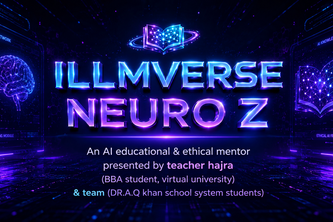
A live, serverless AI Mentor built over Poe API and GPT-4o-mini that simplifies complex science into safe, age-appropriate lessons integrated with universal gratitude.
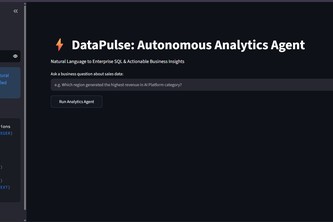
An autonomous AI analytics engine that converts natural language queries into verified SQL and executive business insights using Google Gemini.
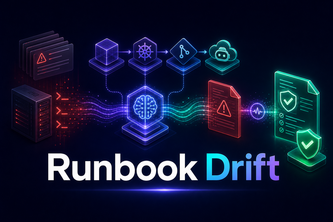
Old tickets remember how systems used to work. Runbook Drift keeps agents aligned with how they work now.
A fast, in-memory, high-performance recommendation algorithm based on the Amazon 2023 50K product catalog.
Every employee gets an AI agent that doesn't answer for them — it finds the colleague who can and asks for 15 minutes. AI shouldn't replace human connections. It should create them.
TrippyShoppy is a deterministic, offline-first conversational shopping agent.
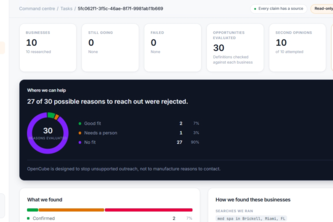
Evidence-first agentic market intelligence on Gemini and Google Cloud that finds, verifies, and rejects weak reasons to contact businesses before outreach begins.
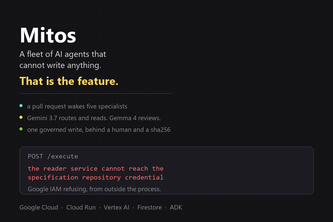
Five agents wake on a pull request, decide who is concerned, read the repo and propose one governed write none of them may perform. Gemini routes, Gemma reviews, Google IAM refuses.
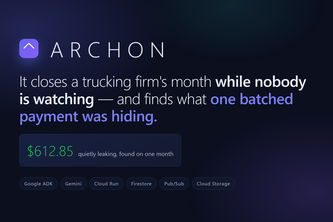
An AI agent that closes an owner-operator trucking firm's month end to end, unattended on Google Cloud, and finds the money one batched broker payment was hiding.
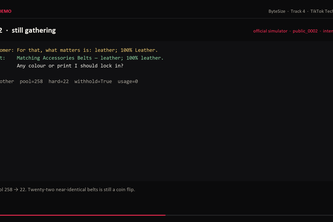
Building a conversational search system that asks smart questions and finds a customer’s ideal product from 50,000 items within 10 turns.
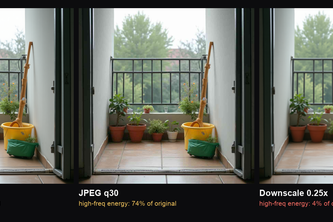
A detector is only worth its accuracy on generators it has never seen. 0.958–0.989 balanced accuracy on an unseen generator across five transforms — and we found the 2026 models it still misses.
We stopped optimizing how the agent ranks and started optimizing when it knows enough to rank. 2.75 turns to converge, 0 LLM tokens, $0 per session, and +60 rank-1 hits on 800 unseen sessions.
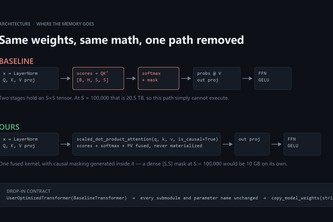
Drop-in PyTorch Transformer layer for Track 3: 1.92× geo-mean speedup, strict state_dict, 932× under tolerance. Shape 14 completes in 5 GB; the reference cannot run (18 TB score tensor per layer).
A shared control plane where researchers and browser agents inspect evidence, run bounded experiments, and review durable results together.
A drop-in Transformer layer that is 2.28x faster across all 13 graded shapes while staying 1049x inside the tolerance gate — and runs the 100,000-token shape whose reference needs 20.5 TB and cannot.
An ML research agent that owns the whole loop — it forms the hypothesis, writes the code, trains, and grades itself. 23 experiments, zero human code, and it caught its own data leak before we did.
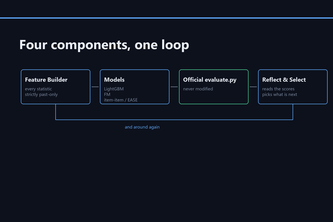
An LLM agent that runs the full ML research loop on a frozen benchmark: proposes an experiment, edits real model code, trains, and keeps it if a bootstrap test says the gain beats measurement noise.
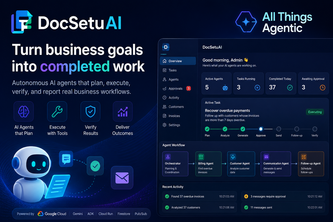
Turn business goals into completed work with autonomous AI agents that plan, execute, verify, and report real business workflows.
IRC-A: Zero-Trust Agent Gateway & Semantic Mesh on Google Cloud. Dynamic FAISS capability discovery, PASETO cryptographic access control, and enterprise governance for institutional AI fleets.
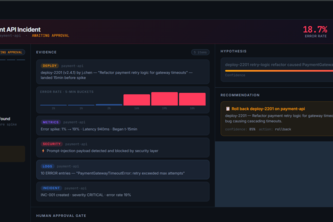
Autonomous AI incident response with human approval, verification, and secure rollback.
Meet your always-on health analyst. It handles the heavy lifting of continuous wellness data, detecting anomalies to automatically update your diet and routines.
Pass for now
An autonomous ML research agent that builds and improves recommender models with best-first search, turning routine experimentation into a reproducible, clear workflow with minimal human intervention.
An optimized transformer layer verified on two real GPUs — three optimizations that looked safe on one backend failed on the other.