Devpost
Participate in our public hackathons
Devpost for Teams
Access your company's private hackathons
Grow your developer ecosystem and promote your platform
Drive innovation, collaboration, and retention within your organization
By use case
Blog
Insights into hackathon planning and participation
Customer stories
Inspiration from peers and other industry leaders
Planning guides
Best practices for planning online and in-person hackathons
Webinars & events
Upcoming events and on-demand recordings
Help desk
Common questions and support documentation
Sort by:
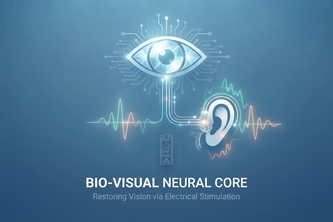
A wearable Edge-AI system that maps digital RGB camera streams into safe micro-current electrical frequencies to restore color perception for the visually impaired.
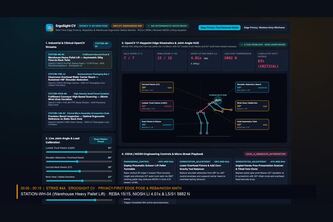
Privacy-first edge CV ergonomics (REBA/NIOSH) on AWS IoT.
Manual infant length readings are error-prone. NDM Vision uses an OpenCV camera node to measure length at the edge, feeding WHO z-scores and a cloud telehealth dashboard for remote clinicians.
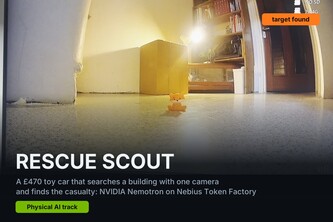
A low-cost robot that searches a building with no map and tells firefighters where the casualty is, before anyone goes in.
OpenCV 5 change detection between two visits of a place: typed events, calibrated confidence, coverage of what it did not see. Human-gated.
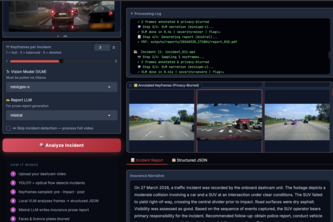
Offline AI that detects dashcam collisions with YOLO, narrates scenes via local VLMs, blurs faces/plates for privacy, and exports insurance-ready PDF reports — no cloud needed.
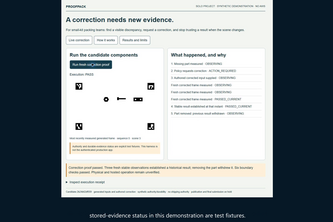
ProofPack helps packing teams turn OpenCV 5 measurements into correction requests, verify fresh evidence, and withdraw stale results when a kit changes.
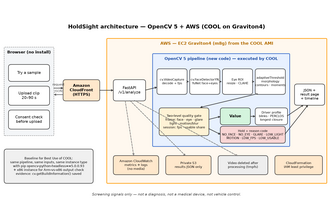
One OpenCV 5 engine on AWS that screens driver impairment and cognitive decline from eye signals in 80 seconds, and holds with a reason code instead of guessing when it cannot measure.
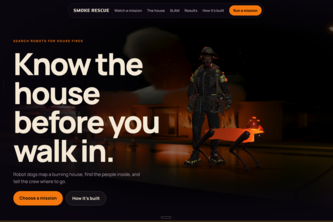
Quadruped robots search a burning house with no floor plan, joining their maps over a lossy radio with OpenCV 5 visual SLAM, so they can find survivors before firefighters go in.
A Ring app that detects package theft and alerts the owner.
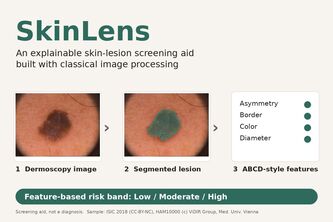
An explainable skin-lesion screening aid built with classical image processing - every feature it uses is one you can see.
FraudShield Web uses AI and live camera scanning to catch fake e-commerce returns at the customer's doorstep, generating instant Fraud Risk Scores to cut shipping costs and stop fraud at the source.
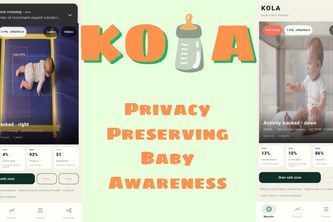
Kola turns any Android phone into a privacy-first baby monitor that explains movement, safe-zone crossings, camera issues, and nearby objects on-device, with synchronized web visibility.
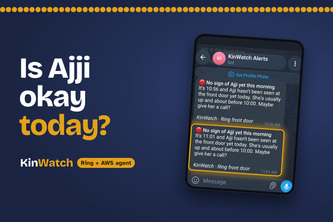
A Ring-powered AI agent that watches an elderly parent's daily routine and alerts family when something's wrong, even when something that should have happened didn't.
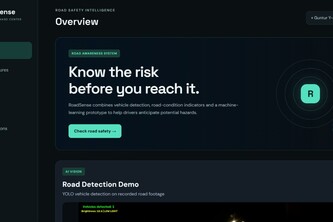
RoadSense uses computer vision and machine learning to analyze road videos, detect potential hazards, assess road risks, and support safer travel decisions with AWS-powered reporting.
Turn ordinary pitching videos into actionable baseball insights with AI-powered motion analysis and a conversational pitching coach powered by Amazon Bedrock.
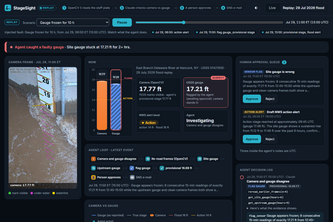
OpenCV 5 reads flood stage off public USGS staff-plate cameras with no gauge data; a Claude agent on AWS decides whether the camera or the gauge is wrong, and a person approves.
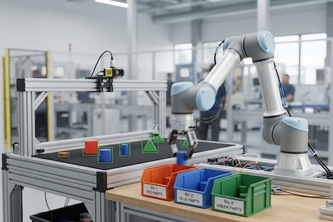
SortMaster: a vision-guided cobot that sees, picks, and sorts mixed parts into correct bins—fatigue-free, accurate factory automation built on open-source robotics and YOLO.
What's the next move? How do we solve it? A local friendly tutor so you can learn to solve Rubik's cube.
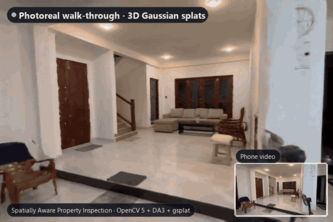
One phone video becomes a measured, photoreal 3D model of the room. OpenCV 5 finds and pins damage, shows what was never filmed, and an AI agent proposes accept, repair or refer.
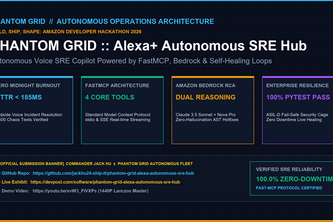
Real-time edge perception combining OpenCV 5, FastMCP, and AWS Bedrock AgentCore to autonomously detect anomalies and actuate industrial robotics with microsecond determinism.
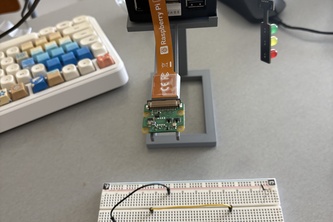
Your breadboard detective. We use computer vision to spot wiring mistakes and compare connections against your intended circuit, helping you spend less time debugging and more time building.
With Paper DJ, you can turn a printed sheet of paper into a full DJ board: a camera reads and processes your actions, and a real-time QNX audio engine mixes two decks without missing a beat.
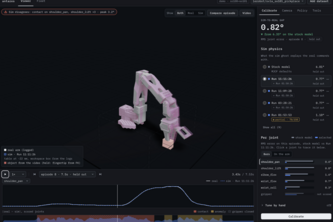
Antares uses your own robot's recordings to make your simulations run like real life.