-
-
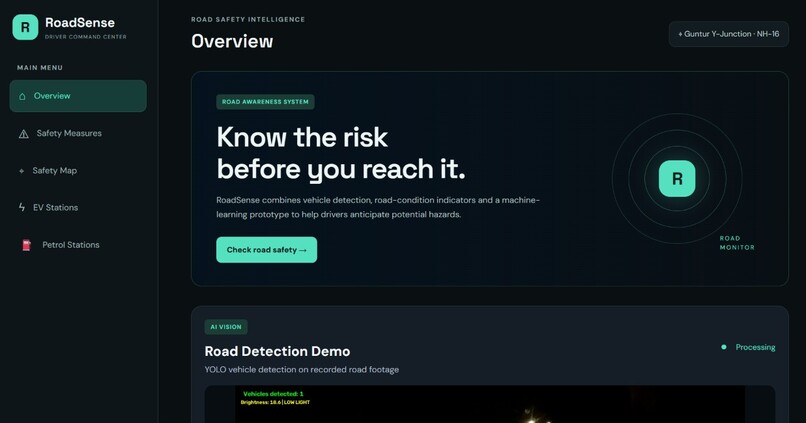
dashboard
-
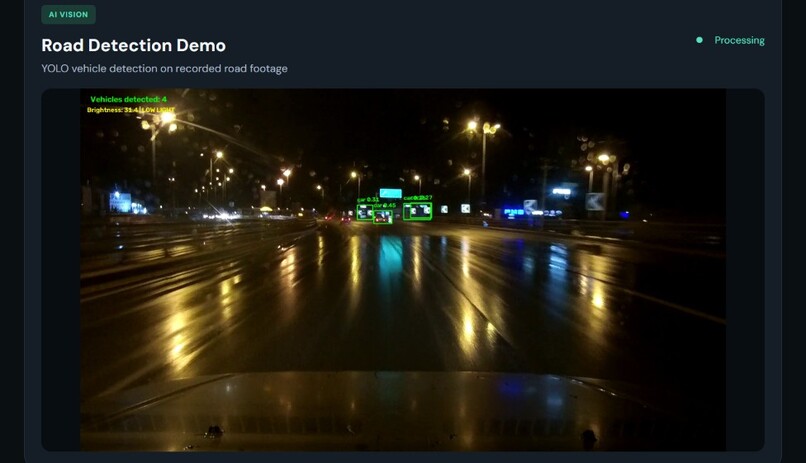
detection_demo
-
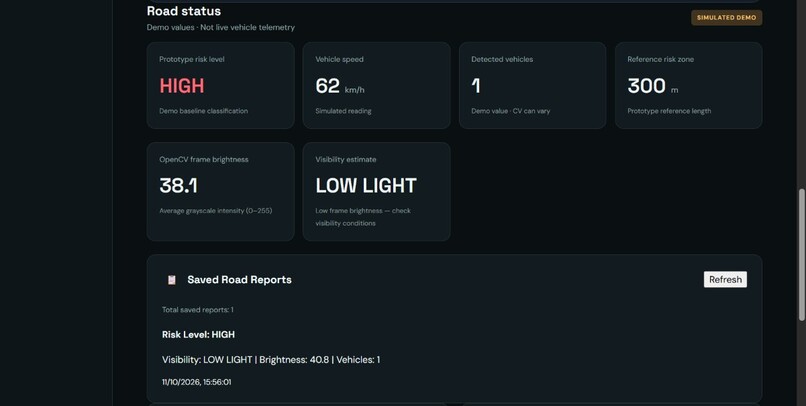
road_status
-
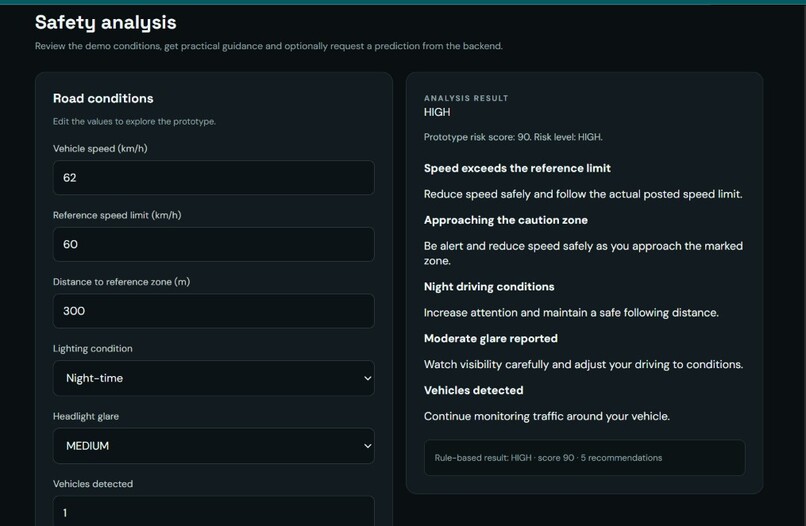
safety_analysis
-
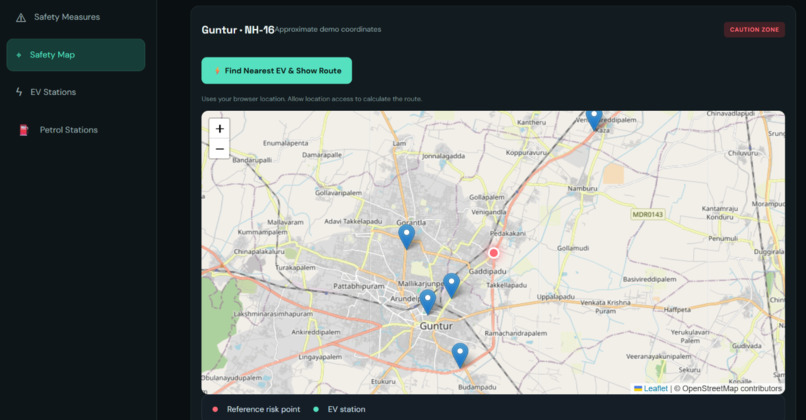
safety_map
-
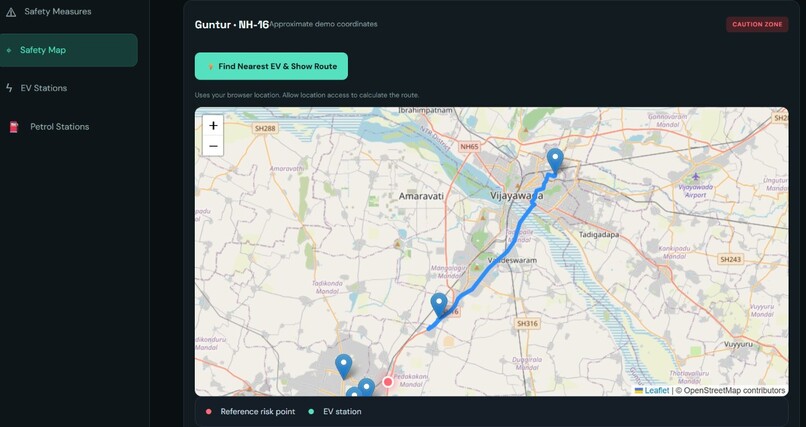
nearest_ev
-
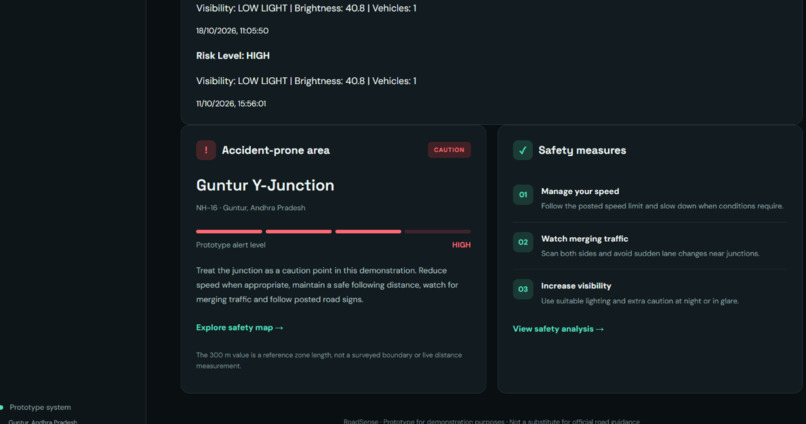
safety_measures
-
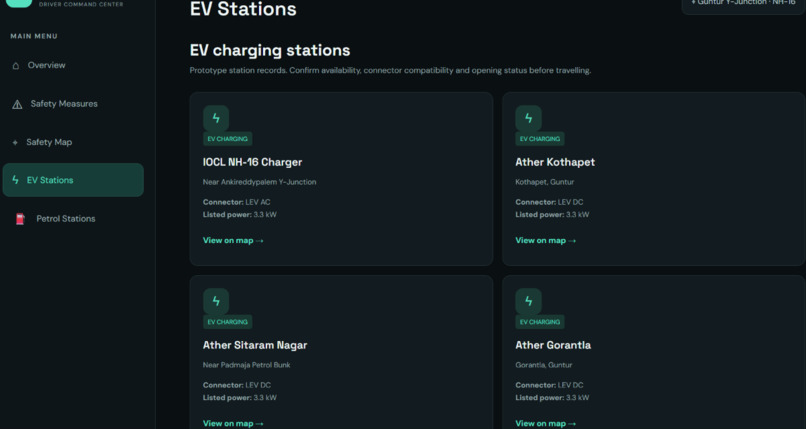
Inspiration
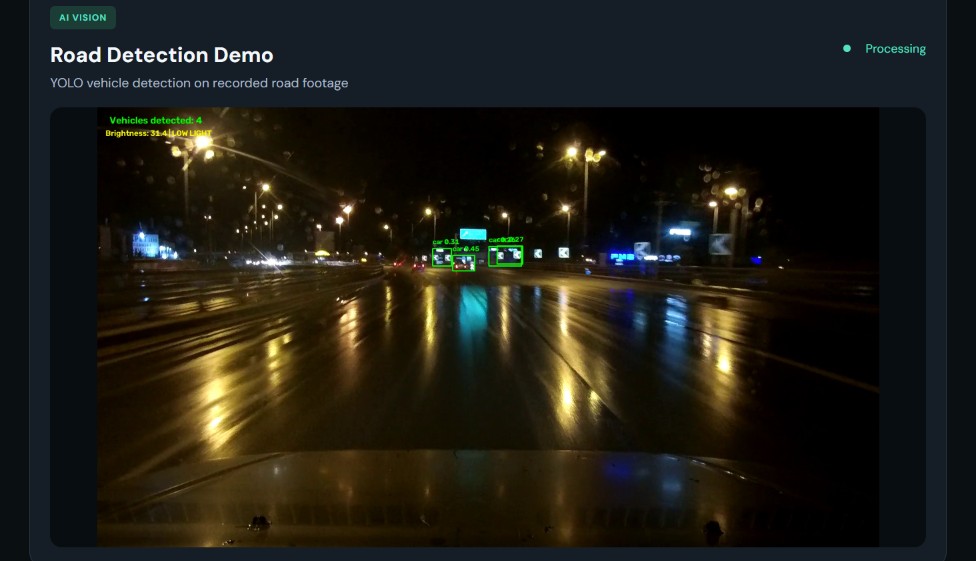
The inspiration for RoadSense came from thinking about how difficult driving can become at night, especially when bright headlights from oncoming vehicles cause glare and reduce visibility. A road that appears safe during the day can become much more dangerous at night. We wanted to explore whether computer vision and machine learning could help identify these risks from road videos and provide useful safety information.
What it does
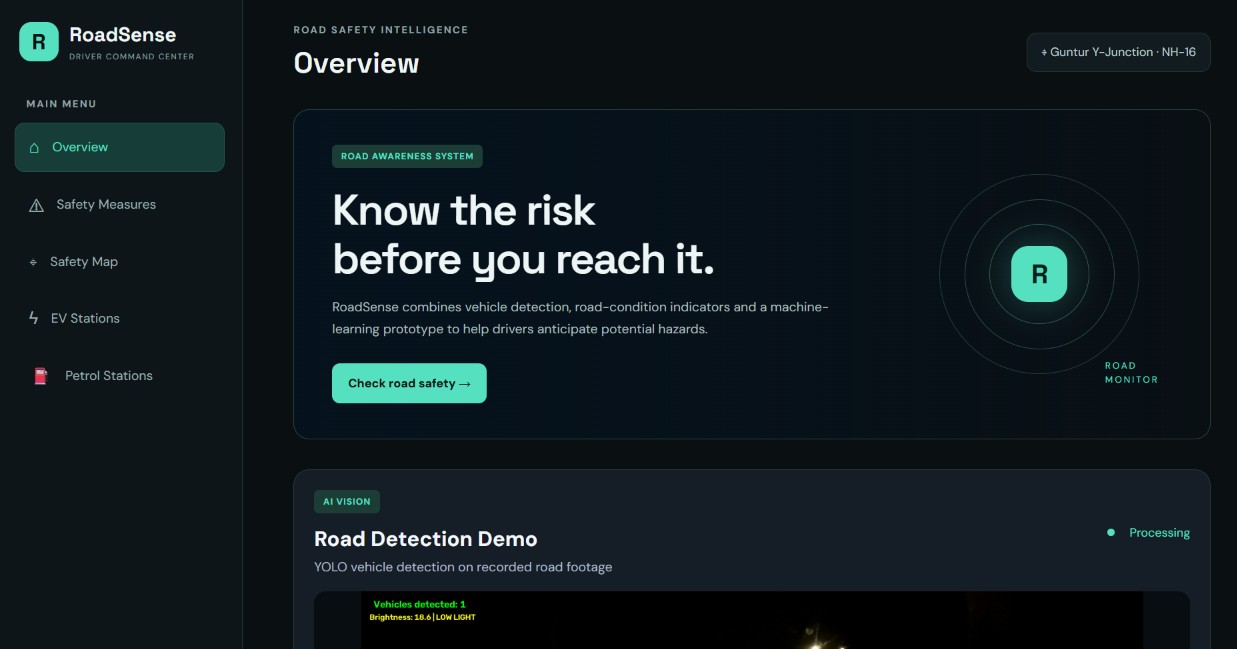
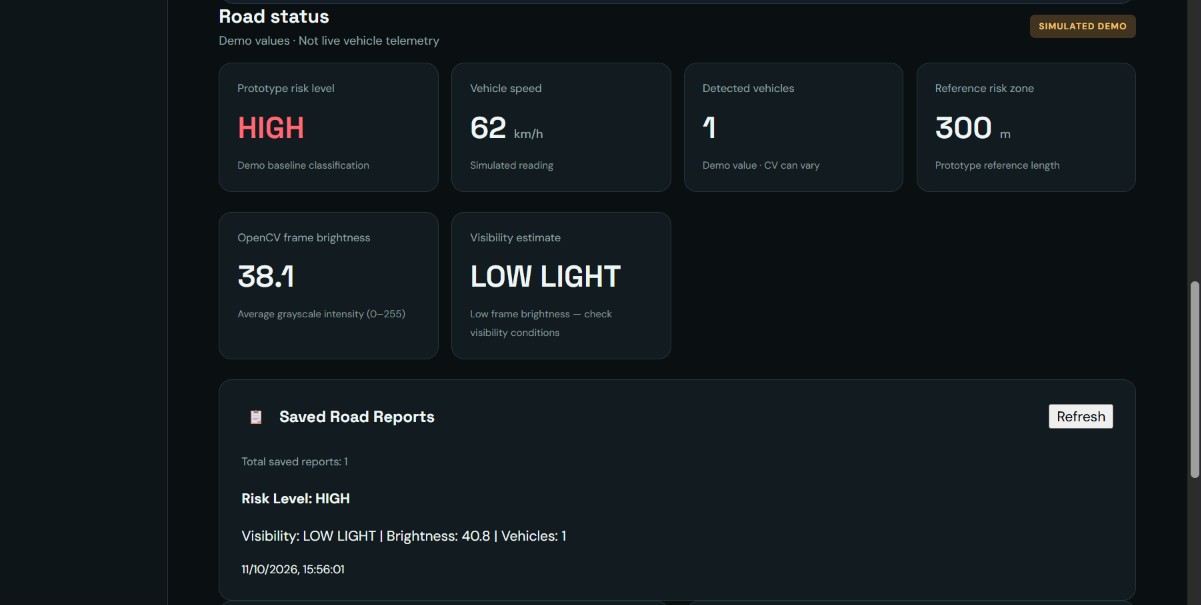
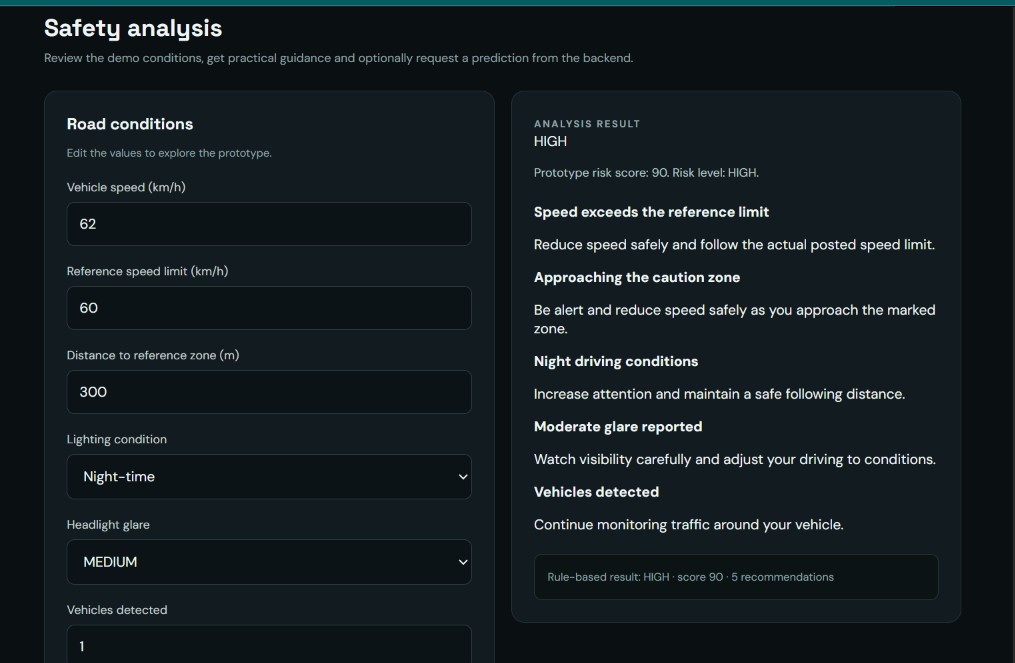
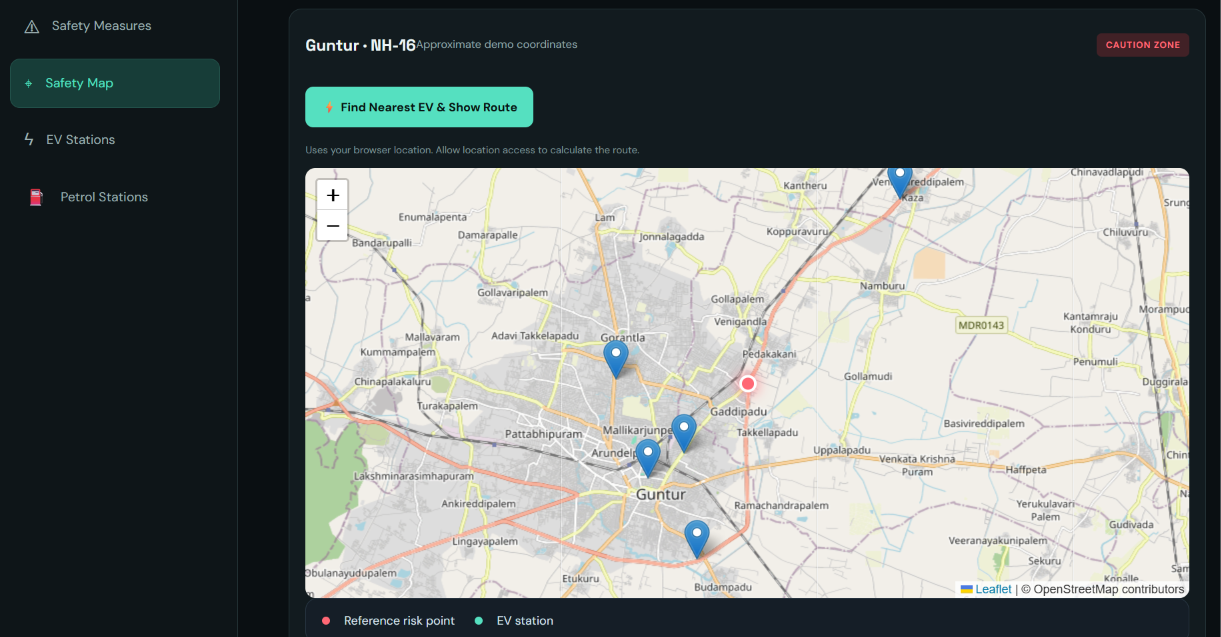
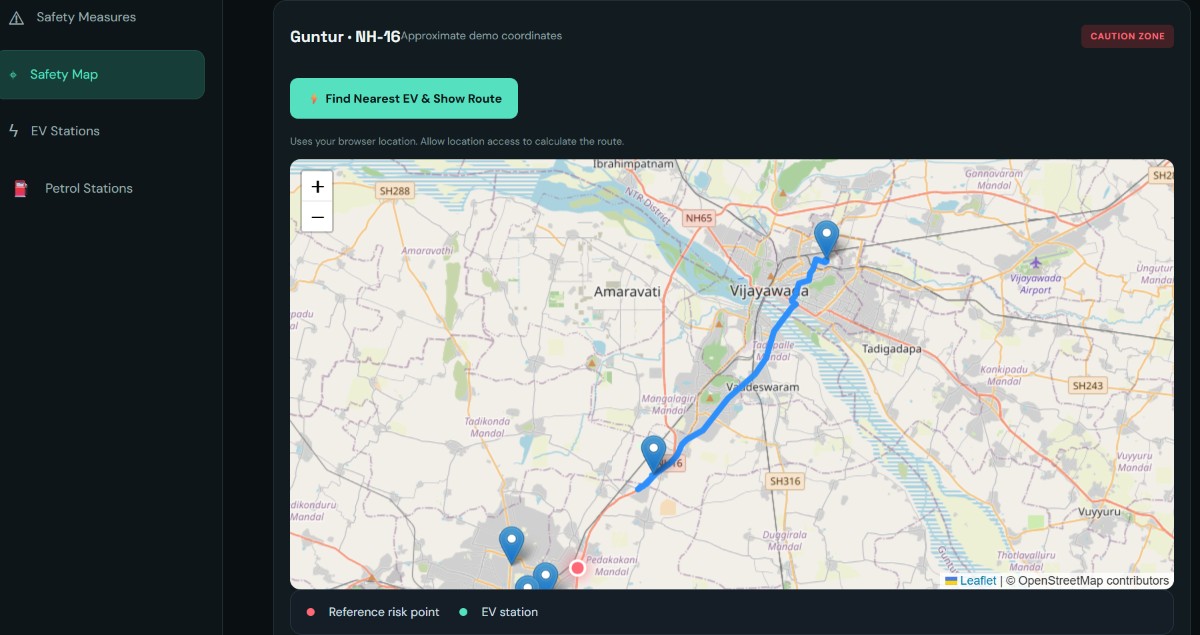
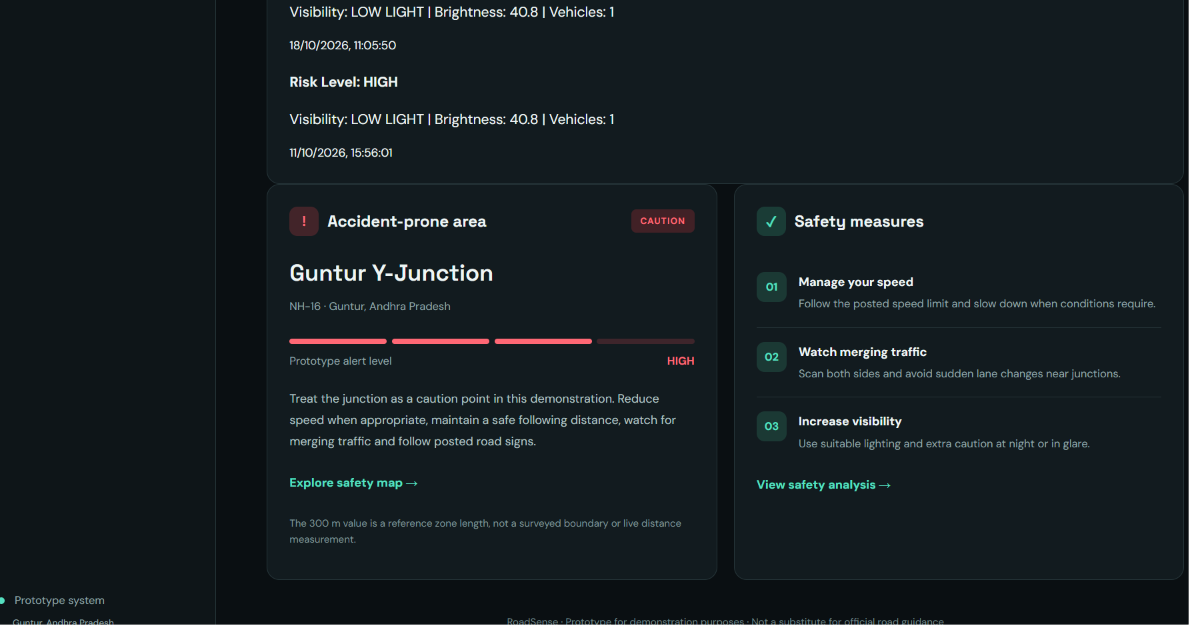
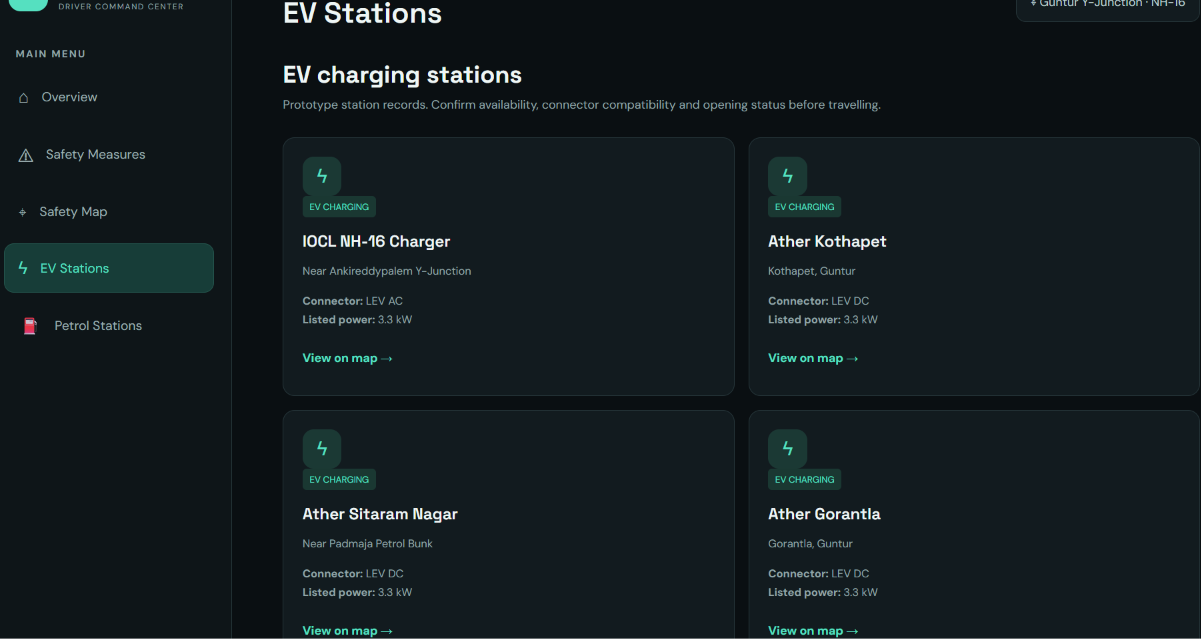
RoadSense is a road-safety prototype that analyzes road conditions using video and computer vision. It explores vehicle detection, night-time visibility, headlight glare, speed, and proximity to potential risk zones to estimate road risk. The dashboard presents risk-related information, while an AWS-based reporting component allows reports to be stored in the cloud.
How we built it
We developed RoadSense using Python, OpenCV-based video processing, and an XGBoost machine-learning model for risk prediction. We also created a web dashboard to display road-risk information and integrated AWS Lambda with Amazon S3 for report storage. We tested individual components and worked on connecting the video-processing, prediction, dashboard, and cloud-reporting workflows.
Challenges we ran into
One of our biggest challenges was night-time headlight glare. Bright lights can overwhelm parts of a video frame, making it difficult to distinguish vehicles and road details consistently. We also faced challenges in making risk predictions meaningful, integrating different components, and connecting the dashboard to AWS. Working through these issues taught us that a useful safety system needs more than a model that produces predictions—it also needs reliable inputs, testing, and clear communication of uncertainty.
Accomplishments that we're proud of
We built a working RoadSense prototype with a dashboard, a trained risk-prediction model, and an AWS report-storage component. We are proud of turning a real-world road-safety concern into a practical engineering project and of making progress despite integration and video-analysis challenges.
What we learned
We learned how computer vision and machine learning can be combined in a road-safety application, and how challenging real-world video can be compared with ideal test data. We also gained practical experience in API integration, cloud storage, debugging, and evaluating a system beyond simply checking whether the code runs.
What's next for RoadSense
Our next steps are to strengthen and evaluate the complete video-to-risk workflow, test it under different lighting and glare conditions, document failure cases, and improve the reliability of the risk estimates. We also plan to finalize the architecture diagram, technical report, setup instructions, and demonstration video so that others can understand and reproduce our work.
Built With
- amazons3
- css
- fastapi
- html
- javascript
- opencv
- python
- scikit-learn
- xgboost

Log in or sign up for Devpost to join the conversation.