Devpost
Participate in our public hackathons
Devpost for Teams
Access your company's private hackathons
Grow your developer ecosystem and promote your platform
Drive innovation, collaboration, and retention within your organization
By use case
Blog
Insights into hackathon planning and participation
Customer stories
Inspiration from peers and other industry leaders
Planning guides
Best practices for planning online and in-person hackathons
Webinars & events
Upcoming events and on-demand recordings
Help desk
Common questions and support documentation
Sort by:
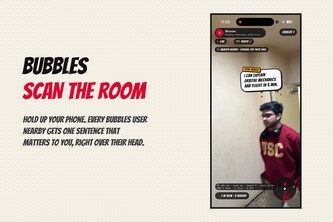
Bubbles turns campus encounters into connections. Aim your phone at nearby students, and AI shows the part of their story that matters to you—shared interests, useful skills, and reasons to say hello.
Control your Laptop with your Watch and say “Hey June” to ask an AI assistant about anything on your screen.
GPS gets you to the building, not the room. Indoorbility’s interactive AI agent guides blind & low-vision users indoors to the exact room using iPhone LiDAR, voice, haptics and computer vision.
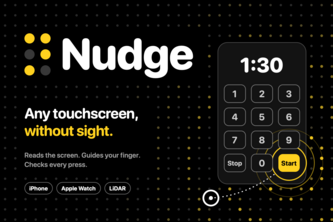
Touchscreens are a wall of glass for blind people. Nudge uses your phone camera to read any screen, then guides your finger to the right button with sound and a wrist tap, checking every press.
An AI copilot that talks a bystander through a medical emergency with voice, camera and AR, then hands the report to EMS.
Indoor navigation for disasters: tap Tornado, Earthquake or Fire, and Safe Spot guides you to safety inside your home using its 3D scan.
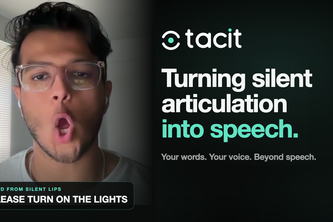
TACIT turns silent lip movements into speech, helping people without a natural voice participate in real conversations—with personalized voices, expressive shortcuts, and control over every word.
A baseball cap that guides blind people hands-free. It sees what a cane can’t, tells you what’s ahead, and answers when you ask.
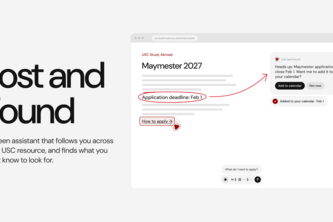
USC doesn’t need another chatbot. Lost and Found is an AI that sees and acts on your screen, so it works on top of every USC site and surfaces the resources you’d never have found on your own.
Familiar helps people with dementia recognize the people they love. The Vexo band knows each voice, Meta glasses recognize faces, and our app shows who’s there and how they know them.
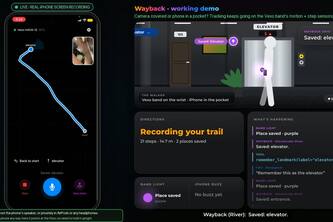
Imagine a world where every place you've been is one ask away. Wayback Trail remembers where you walked and guides you back by voice, light and buzz, whether you can see, hear or speak.
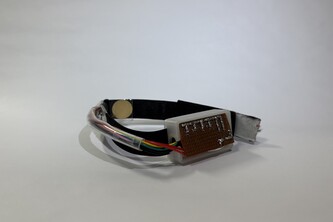
A band that feels speech as vibration at the larynx. Tap once and the iPhone app says your words clearly, in your own voice, then tracks how your speech changes week to week for your doctor.
Sift clears the junk from your camera roll. Swipe to keep or delete, or let it find duplicates and big videos for you. It all runs on your iPhone: no cloud, no account, no uploads.
Capture ten seconds on iPhone. Pick the moment up with your hands and replay it in your room on Quest 3.
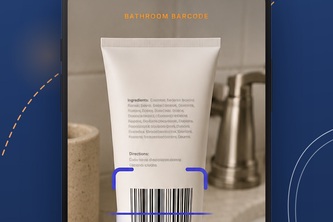
An iPhone alarm for heavy sleepers. Scan a barcode across the room to stop it, then a stay-awake check makes sure you stayed up.
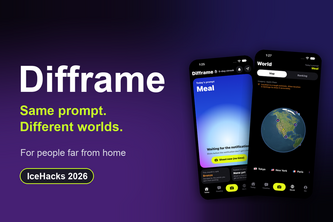
Same prompt. Different worlds.
A party scavenger hunt for iPhone: scan to join, race your friends, and let on-device Vision decide who actually found it. Honk.
Pitch tools for choir, orchestra, and rehearsal
HeadsUp uses Mac cameras and AirPods motion sensors to translate head gestures into cursor controls, empowering people with tetraplegia to navigate digital devices without hand movement
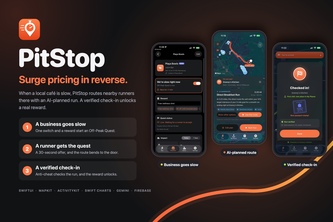
Surge pricing in reverse: when a local café is slow, PitStop routes nearby runners there with an AI-planned run. A verified check-in unlocks a real reward.
Conversational Automotive Repair & Visual Intelligence System
Pi is a desktop pet running on local AI. Close a project and it saves where you left off; reopen and it tells you. It also handles tasks, focus timers and notes, all private and offline.
Record every ski run with GPS, get an instant AI-coach score, and share your line.
Turning real-world spaces into interactive tactile and audio maps, empowering blind and visually impaired people to explore unfamiliar environments independently.