Devpost
Participate in our public hackathons
Devpost for Teams
Access your company's private hackathons
Grow your developer ecosystem and promote your platform
Drive innovation, collaboration, and retention within your organization
By use case
Blog
Insights into hackathon planning and participation
Customer stories
Inspiration from peers and other industry leaders
Planning guides
Best practices for planning online and in-person hackathons
Webinars & events
Upcoming events and on-demand recordings
Help desk
Common questions and support documentation
A story-driven 3D game where every street tells a story. Explore neighborhoods, remove accessibility barriers, and redesign a city so no resident is left behind.
A procedurally animated journey through a collapsing clockwork universe, where acceleration transforms motion into stillness.
Predict shortages before they happen. Optimize medical supply allocation across hospitals using probabilistic AI forecasting, mathematical optimization, and explainable decisions.
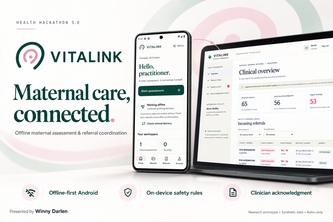
Maternal care, connected. An offline-first platform helping frontline health workers assess maternal risks, identify warning signs, and coordinate timely referrals with clinicians.
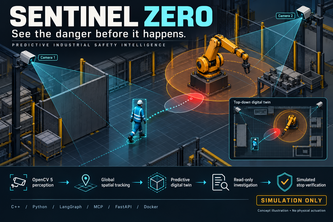
Predict industrial collisions before they happen. SENTINEL ZERO uses OpenCV 5, multi-camera spatial tracking, and uncertainty-aware risk forecasting to visualize hazards in a simulated workcell.
A lightweight mobile web platform connecting smallholder farmers directly to local markets using predictive demand matching and decentralized logistics.
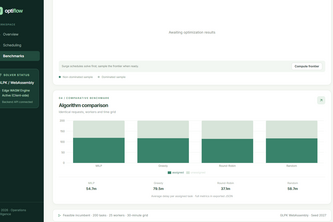
A browser-native MILP scheduling engine that solves high-contention resource allocation problems with 0.0% constraint violations in milliseconds using WebAssembly.
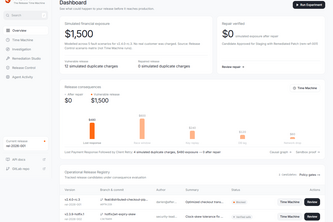
AFTERMATH uses AI-assisted investigations and release simulations to expose failures, compare fixes, trace root causes, and help engineers make safer deployment decisions.
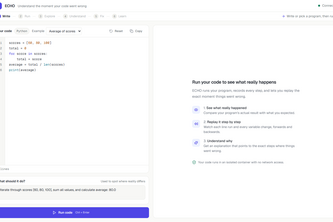
Don't just fix the mistake. Understand the moment it was made. ECHO uses real execution traces and Gemini AI to help students replay bugs, discover root causes, verify fixes, and learn from mistakes.
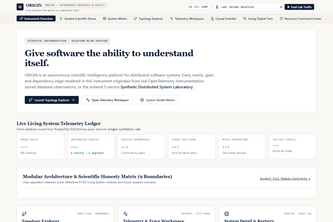
Give software the ability to understand itself. ORIGIN investigates distributed-system failures, tests causal hypotheses, simulates alternative futures, and verifies safe recovery.