Devpost
Participate in our public hackathons
Devpost for Teams
Access your company's private hackathons
Grow your developer ecosystem and promote your platform
Drive innovation, collaboration, and retention within your organization
By use case
Blog
Insights into hackathon planning and participation
Customer stories
Inspiration from peers and other industry leaders
Planning guides
Best practices for planning online and in-person hackathons
Webinars & events
Upcoming events and on-demand recordings
Help desk
Common questions and support documentation
Sort by:
A robust ConvNeXt-Tiny deepfake detector achieving 98.9% accuracy and 0.9994 AUC, engineered with physics-informed augmentation to survive JPEG compression and image degradation.
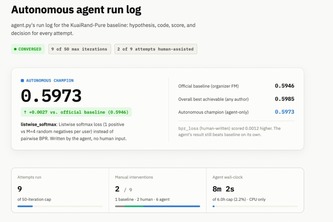
An AI research agent that autonomously builds, tests, explains, and improves recommender systems, without leaking future data.
Agent AI-yoh is an autonomous AutoML research agent that designs, runs, and audits recommender-system experiments, helping teams discover better models with reproducible, trustworthy evidence.
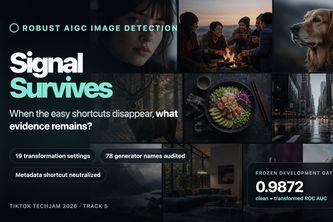
A shortcut-resistant AIGC image ranker built to retain evidence across real-world redistribution and unseen generator families.
From oops to SOTA—an autonomous ML scientist that turns failed experiments, weird metrics, and fresh research into better models, one loop at a time.
Hazelnut is a conversational shopping agent, given a short customer message, the agent returns ranked catalog recommendations, surfacing the target product as early and as highly ranked as possible.
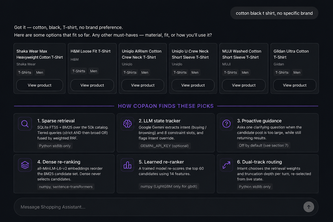
Shoppers don't describe products, they quote them. Copaon matches the quote back to the catalog: 50,000 products narrowed to one in two turns.
Your shopping assistant forgets what you said five minutes ago. Larpers Go Shopping fixes that, tracking evolving intent while never losing sight of what you're actually shopping for.
Fully offline conversational shopping agent that finds a customer’s hidden target product inside a frozen 50,000-product Amazon catalog within at most 10 dialogue turns.
A multi-turn shopping copilot that understands evolving intent and finds the right product faster.
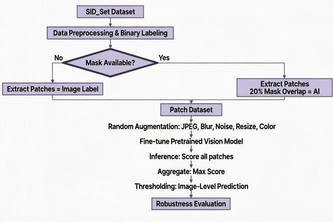
We detect AI-generated images through our pipeline that utilizes DINOv2, overlapping patches, and real-world augmentations to capture subtle local AI artifacts and improve robustness.
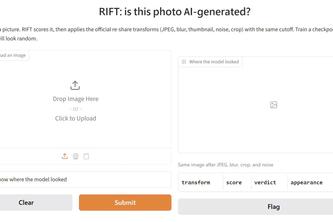
RIFT detects AI images after compression, blur, resizing and reposting. It combines frozen CLIP with forensic signals and uses a fixed low-FPR threshold for realistic social-media evaluation.
Same outputs, 7.1x faster: hand-tuned Triton kernels and CUDA graphs for Transformers on a Tesla T4.
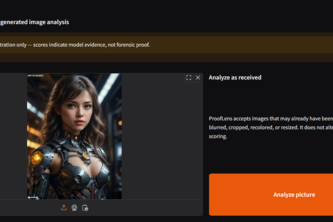
ProofLens detects AI-generated images while remaining robust to real-world transformations such as compression, blur, cropping, color changes, and resizing.
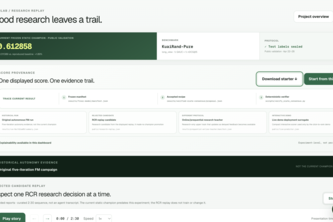
Team Senior Prompt Engineers working on creating an Autonomous Machine Learning Research Agent for Recommendation system, using the KuaiRand-Pure dataset.
"A situation of scanning a DNA sample for disease markers in seconds instead of days. That's what our Genome Disease Detector does."
Same math. Fewer kernels. Less memory
It is an agent that does the research, not just the training. It forms a hypothesis, writes the code, scores it with the official metric, and keeps only what clears the bar.
An LLM-driven agent that runs the ML research loop without a human in it: propose a hypothesis, write a complete training script, execute it in a sandbox, score it, reflect on the result, repeat.
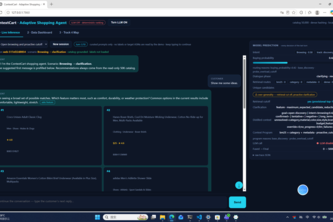
ContextCart — Turning every conversation into the right product.
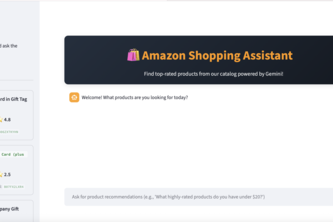
An intelligent product discovery assistant built on Google ADK & Gemini to search Amazon catalog metadata, evaluate ratings, and recommend tailored items.
An intent-aware conversational shopping agent that remembers evolving customer needs, asks high-value questions, and combines exact, lexical, and semantic retrieval to return a better Top 10.
We gave an AI agent a dataset and a scoring rule without hints. It proposed, coded, and tested its own recommender models, which beat the official baseline entirely on its own.
A shopping copilot that treats every product it shows as a commitment rather than a list, and every question it asks as a turn it has to earn.