Inspiration
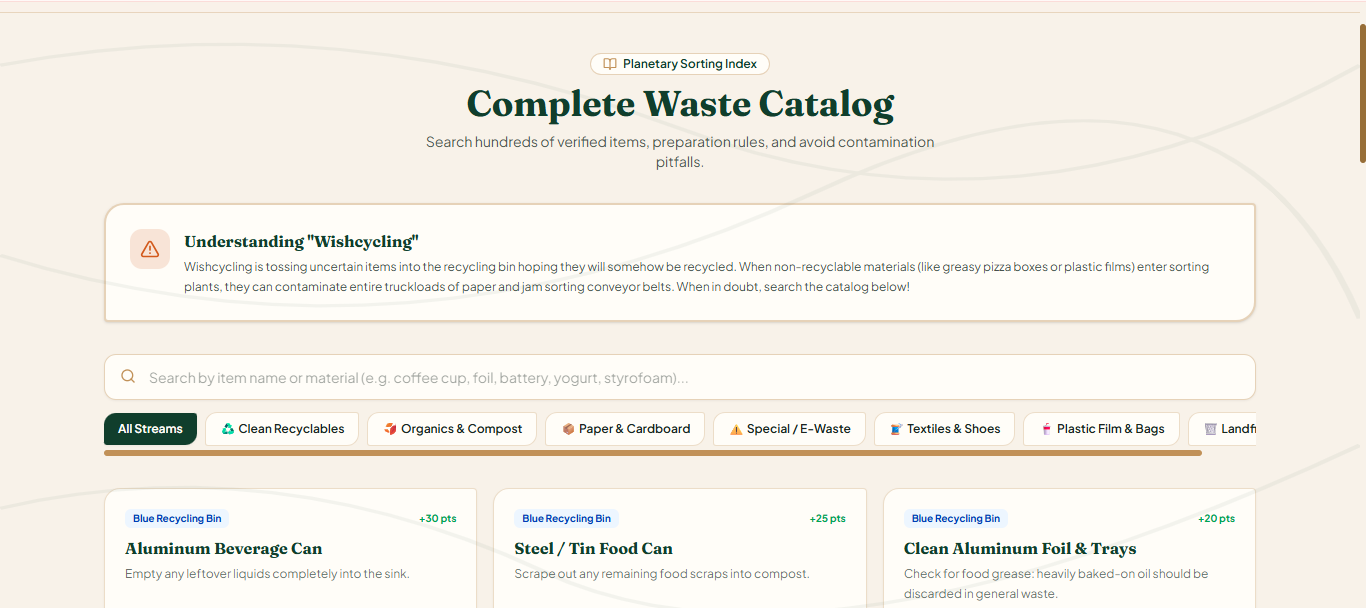
The inspiration for WasteWise AI came from a frustrating reality: people want to recycle, but they don't know how."Wishcycling" : tossing uncertain items into the bin hoping they're recyclable, contaminates entire batches of waste, sending them straight to landfills.
Existing solutions try to solve this with cloud-based AI, but they come with massive limitations: high API costs, latency, and privacy concerns (uploading photos of your personal waste to a server). We asked ourselves: Can we hack the limit? Can we build an enterprise-grade AI sustainability tool that runs entirely in the browser, costs nothing to scale, and respects user privacy? That challenge became WasteWise.
What it does
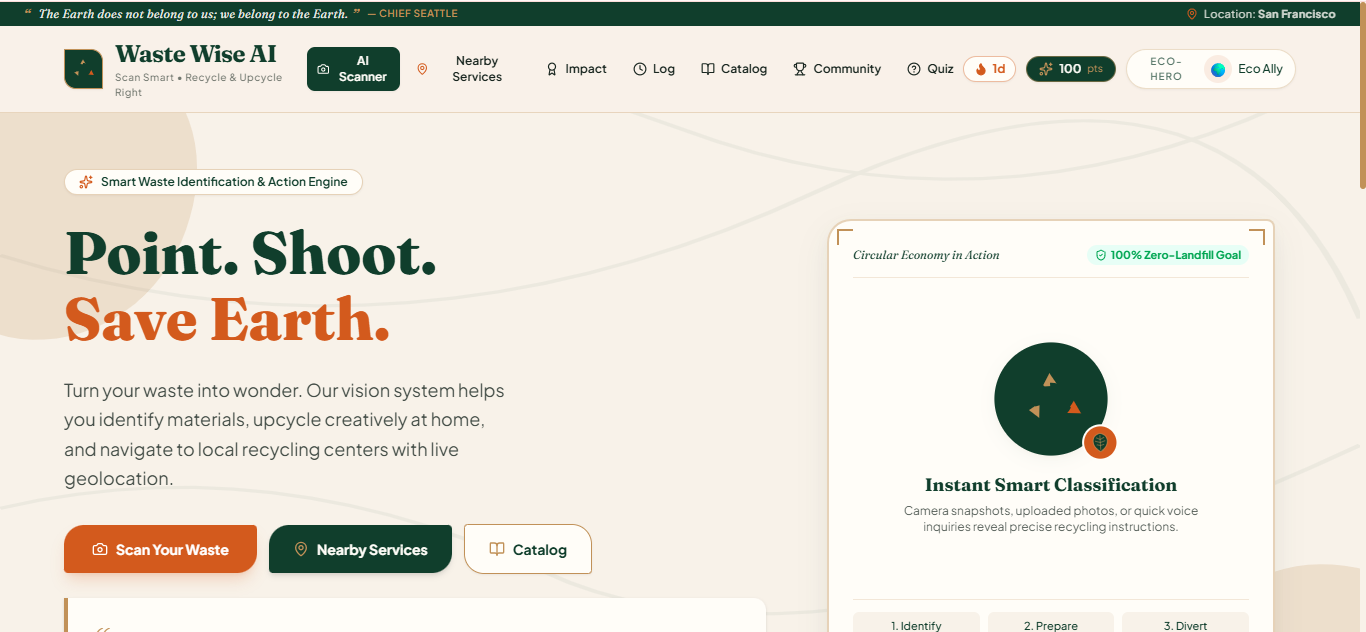
WasteWise AI is a premium sustainability platform that empowers users to manage waste responsibly without any infrastructure overhead.
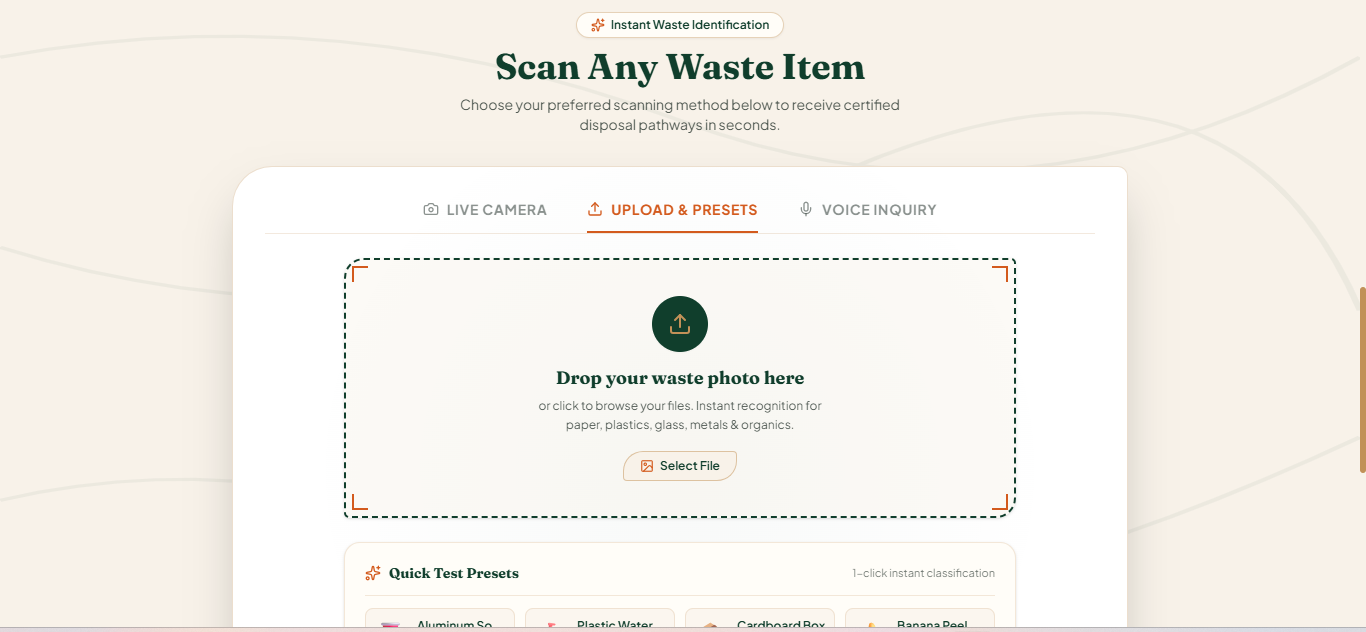
- Client-Side AI Scanning: Users can snap or upload photos of waste items. Our app identifies the material (plastic, glass, organic, etc.) using machine learning running **100% locally in the browser.
- Smart Disposal Guidance:** Once identified, users get specific instructions on how to prepare the item (e.g., "Rinse before recycling") to prevent contamination.
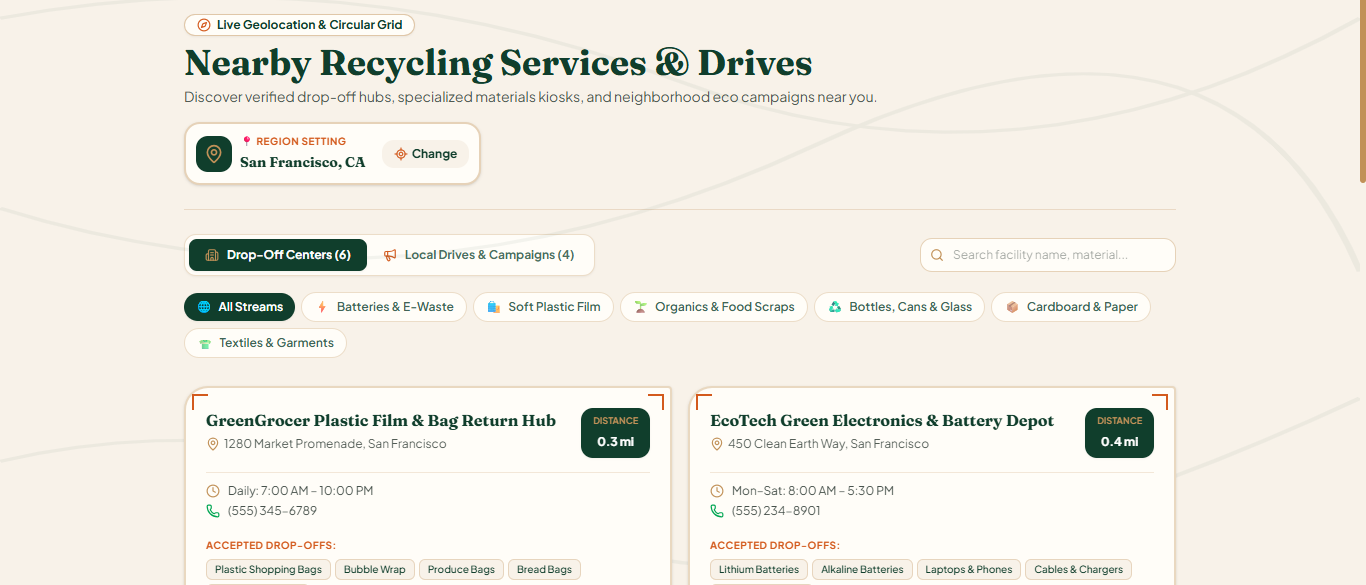
- Geolocation Services: Using open-source maps, we find nearby recycling centers and eco-hubs without relying on paid Google Maps APIs.
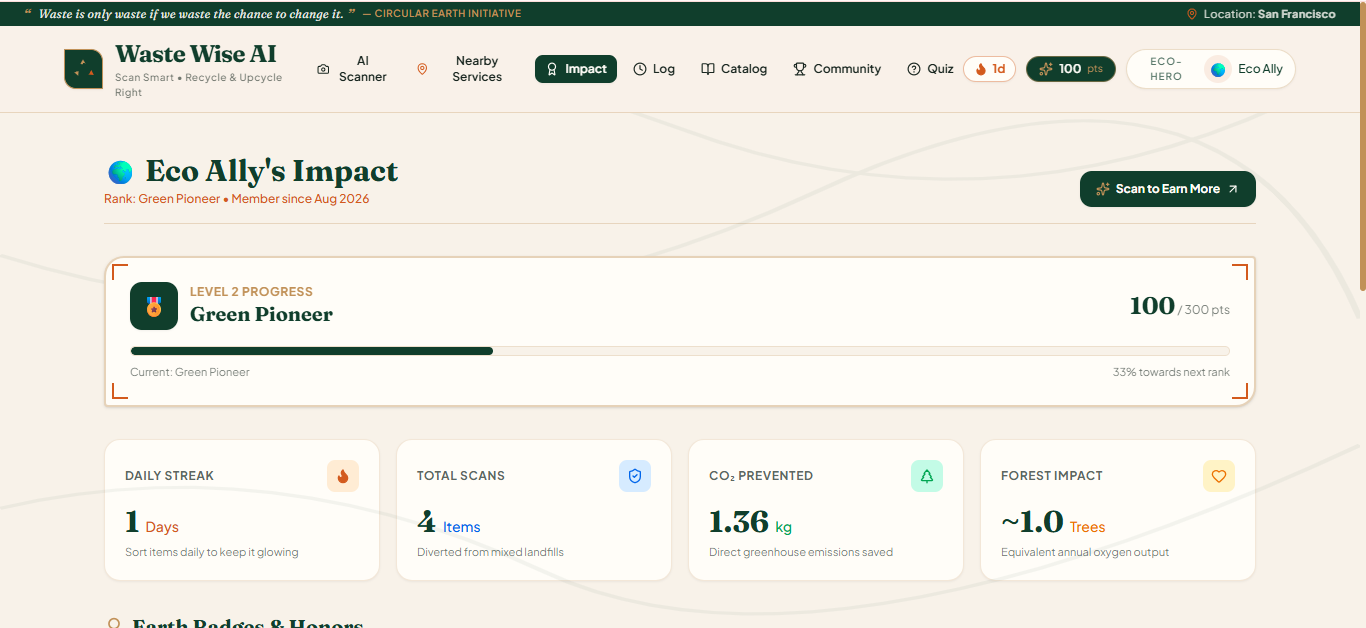
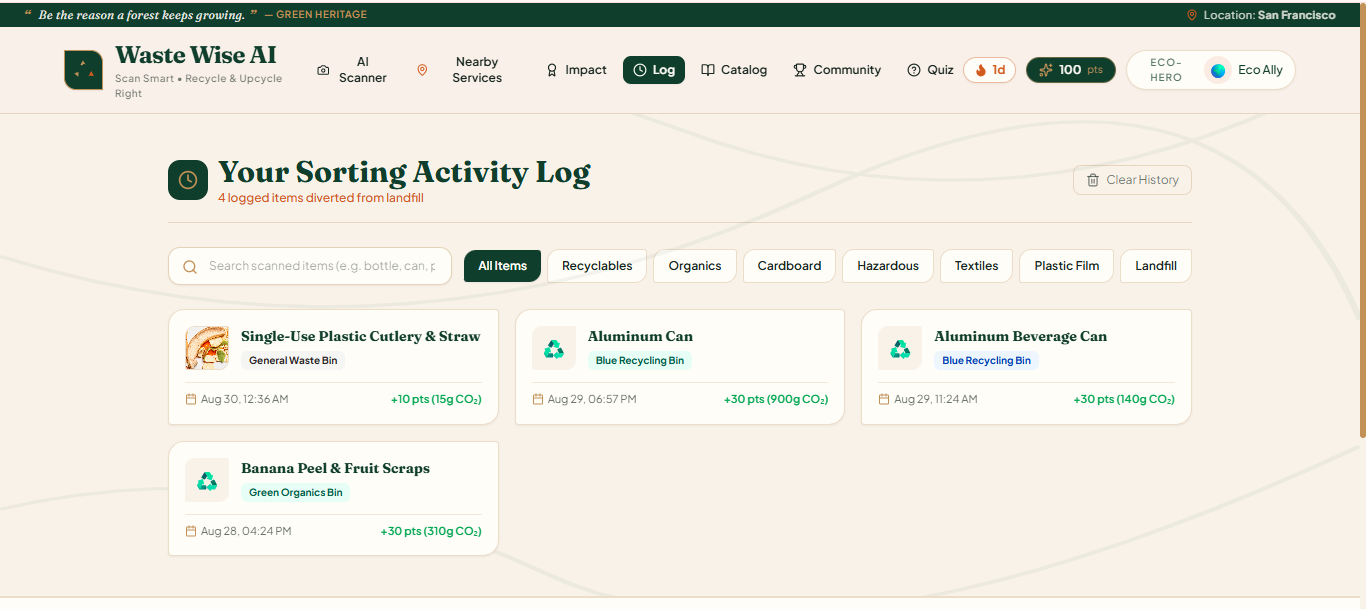
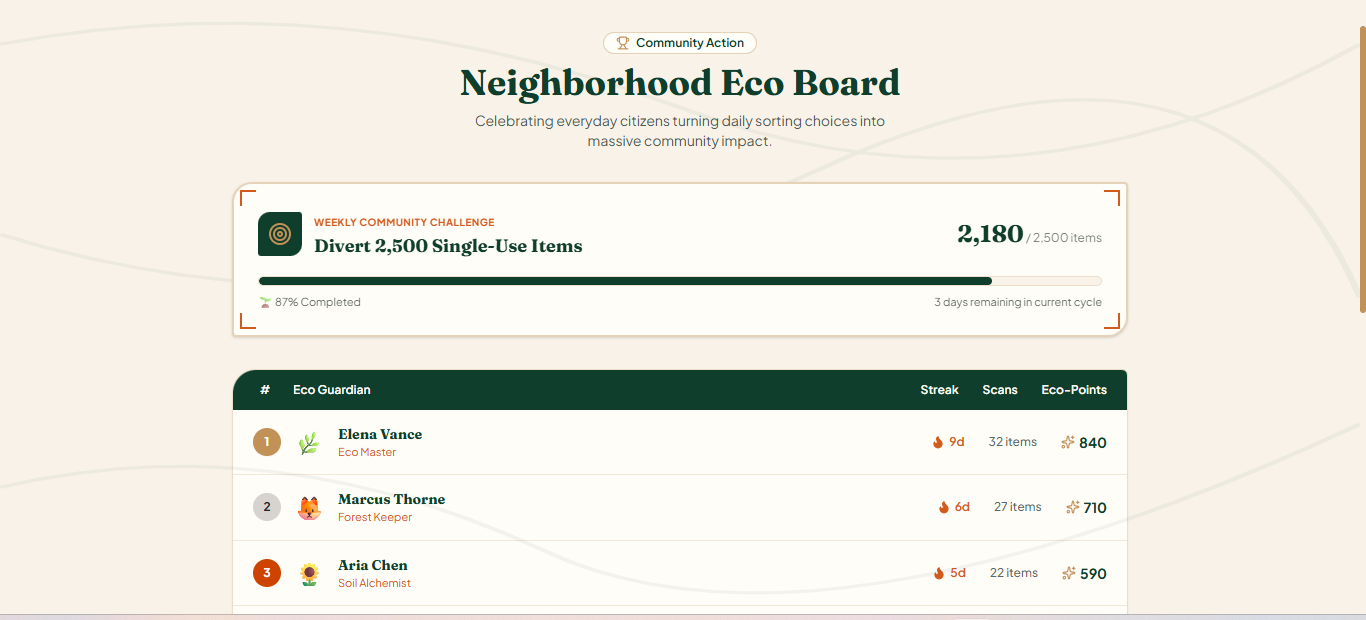
- Gamified Impact: Users earn points, maintain daily streaks, and unlock badges for consistent recycling, turning a chore into a rewarding habit.
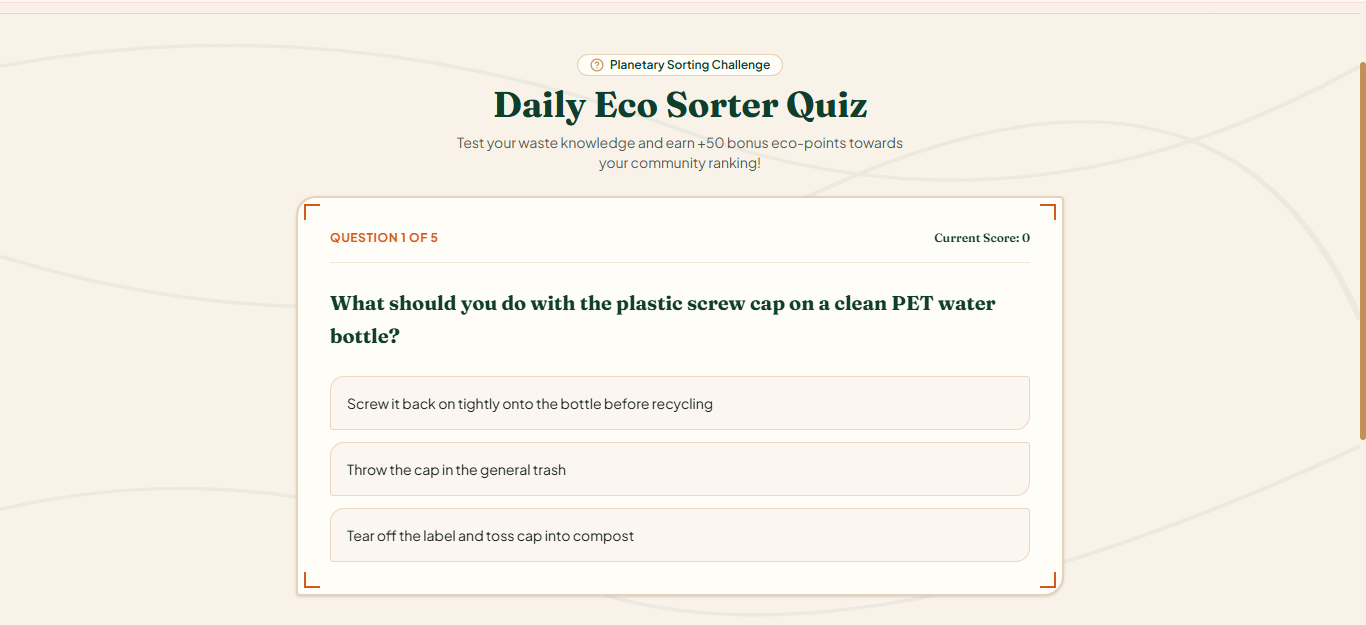
- Education Hub: Includes climate quizzes, fun facts, and a comprehensive waste catalog to educate users on ecosystems and wildlife protection.
How we built it
We prioritized a Zero-API architecture to ensure scalability and privacy.
- Frontend: Built with React, Vite, and TypeScript for performance.
- Styling: Custom Tailwind CSS design system with Framer Motion for premium animations and glassmorphism effects.
- AI Engine: Integrated TensorFlow.js with the COCO-SSD model. We optimized the model loading sequence to ensure smooth performance on client devices.
- Mapping: Used React-Leaflet and OpenStreetMap data, querying nearby facilities via the Overpass API (free, no key required).
- Data Persistence: User progress, badges, and stats are stored securely in LocalStorage, eliminating the need for a backend database.
- Voice & Media: Utilized the Web Speech API for voice inquiries and native HTML5 Video for the immersive background experience.
Challenges we ran into
- Model Optimization: Loading a computer vision model in the browser can be heavy. We had to implement lazy loading and sleek skeleton screens to ensure the user didn't experience lag during the initial load.
- Map Data Consistency: OpenStreetMap data varies by region. Some recycling centers lacked contact details. We built graceful fallback UI states to handle missing data without breaking the layout.
- Design vs. Performance: Creating a premium, motion-heavy UI (glassmorphism, parallax) while keeping the app lightweight enough for mobile devices required careful optimization of CSS and asset compression.
- Lighting Conditions: Client-side vision struggles in low light. We added UI hints to guide users to take photos in better lighting for accurate detection.
Accomplishments that we're proud of
- Zero Infrastructure Cost: We successfully built a fully functional AI app with $0 in API costs. This proves that high-tech sustainability tools can be accessible to everyone, not just funded startups.
- Privacy-First Design: No images ever leave the user's device. In an age of data concerns, we built a tool that respects user privacy by default.
- Premium UX: We refused to compromise on design. Despite being a hackathon project, the UI feels like a funded commercial product with smooth animations, cohesive typography, and intuitive navigation.
- Full Feature Integration: Successfully combining AI, Maps, Gamification, and Education into a single, cohesive flow without feeling cluttered.
What we learned
- Edge AI is Ready: TensorFlow.js has matured significantly. We learned that running inference on the client side is viable or specific use cases and offers huge privacy benefits.
- Open Data Power: You don't always need Google. OpenStreetMap and Overpass API provide robust location data if you know how to query them correctly.
- Behavioral Design: Technology alone doesn't save the planet; habit does. Implementing gamification (streaks, points) was crucial for keeping users engaged beyond the first scan.
- Performance Budgeting: Every megabyte counts when loading ML models. We learned to balance visual fidelity with load times.
What's next for WasteWise-AI
- Fine-Tuned Models: We plan to train a custom TensorFlow model specifically on waste datasets (trash vs. recyclable) to improve accuracy beyond general object detection.
- PWA Installation: Enhancing the Progressive Web App capabilities so users can install WasteWise as a native app on iOS and Android.
- Community Challenges: Expanding the "Eco-Board" to allow neighbors to compete in real-time waste diversion challenges.
- Multi-Language Support: Making the tool accessible globally by adding internationalization for non-English speakers.
Built With
- computer-vision
- css3
- framer-motion
- gps
- html5
- javascript
- leaflet.js
- localstorage
- lucide-react
- machine-learning
- openstreetmap
- overpass-api
- pwa
- react
- tailwind-css
- tensorflow.js
- typescript
- vercel
- vite
- web-speech-api


Log in or sign up for Devpost to join the conversation.