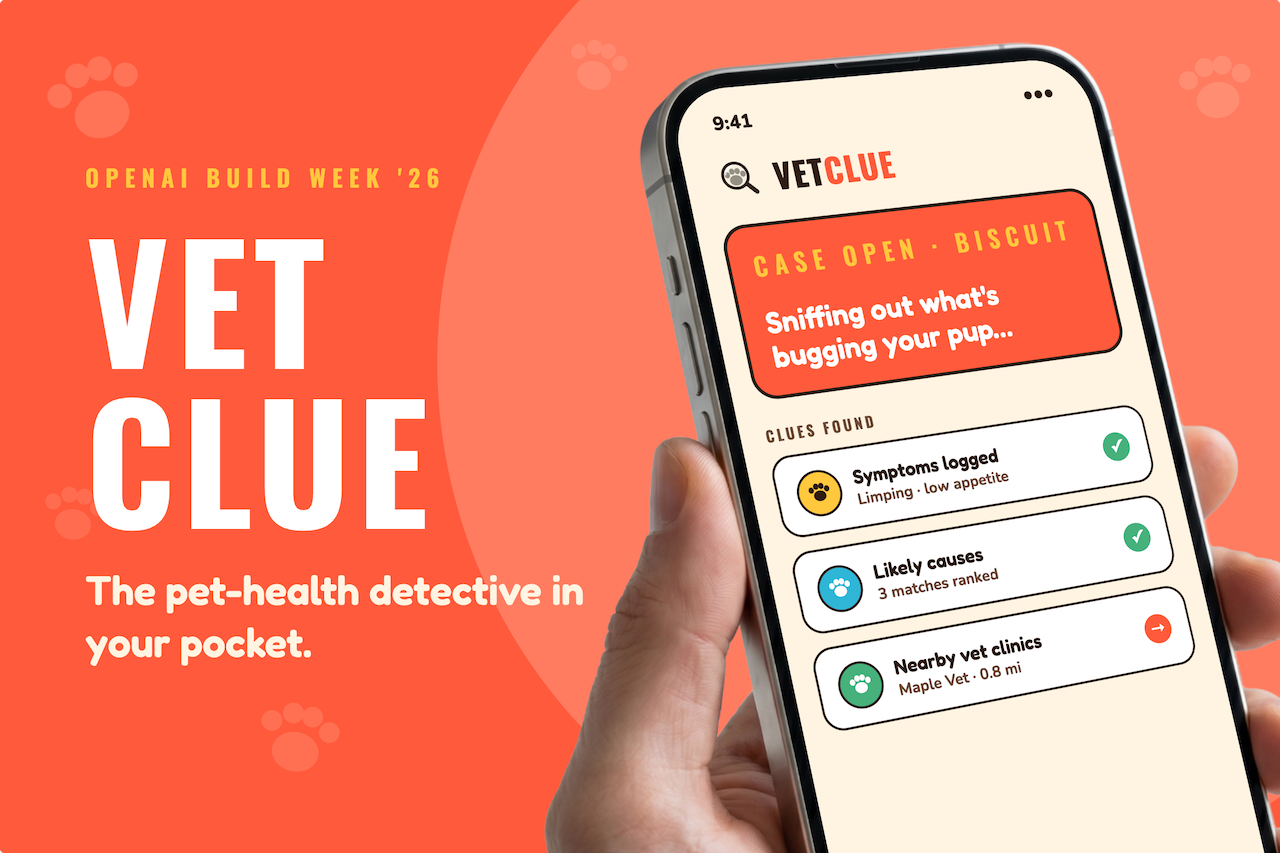
Inspiration
VetClue began with my 17-year-old blind cat, Mr. Neelix. Yes, named after the Star Trek character. We adopted him from a shelter when he was two, and he traveled across the country with us while my partner attended graduate school. Through every move, he has been our constant companion and loyal cuddle buddy.
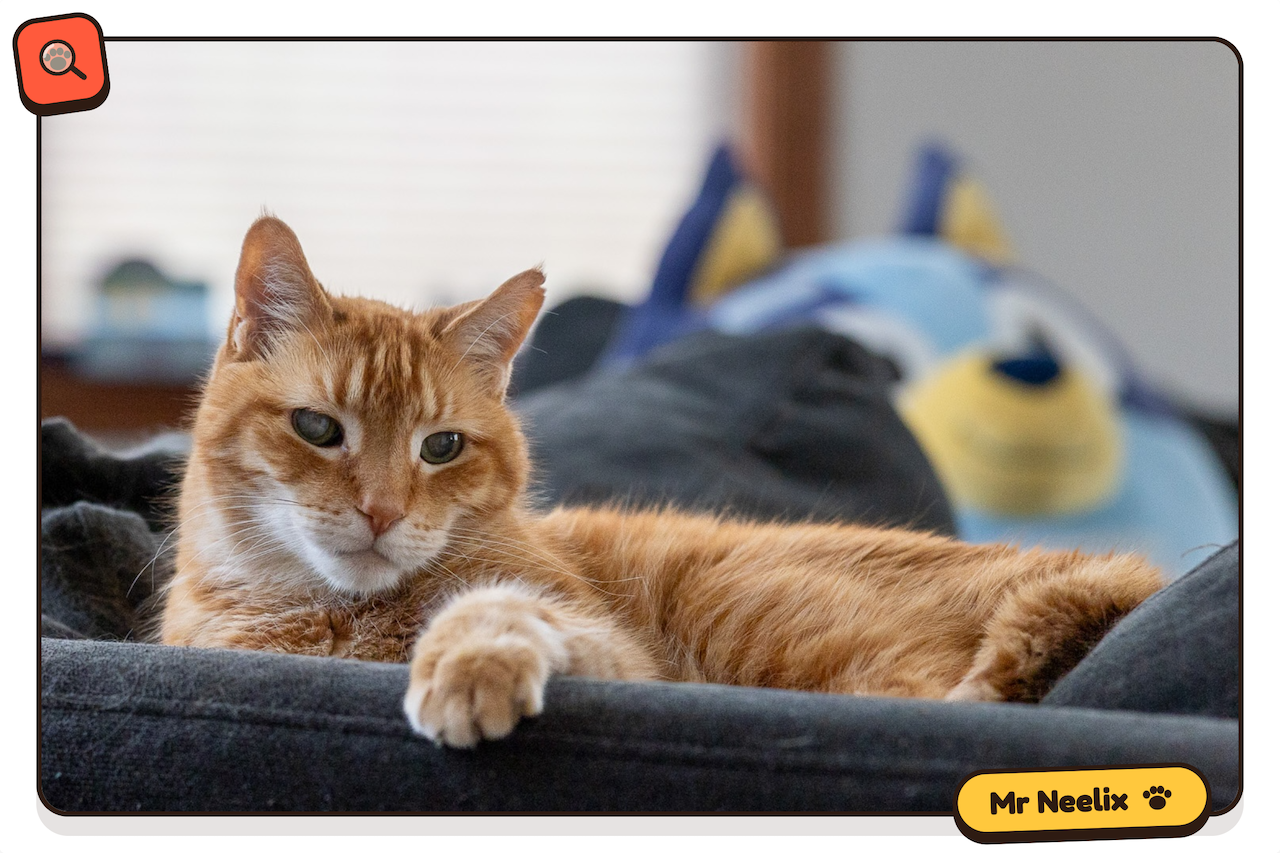
A few months ago, Neelix stopped eating normally and seemed uncomfortable when he tried. ChatGPT helped us recognize that a dental problem might be worth asking a veterinarian about. We then spent hours researching local clinics, looking for one with feline dental experience and compassionate, fear-free handling. Neelix is deeply afraid of carriers and cages, which we suspect comes from his early time in the shelter.
We eventually found a wonderful clinic. They discovered a tooth infection and determined that several teeth needed to be removed. The team was kind, patient, and understanding of his fear.
That experience stayed with me. Pet health problems are scary, and it is difficult to research clinics or make confident choices while watching an animal you love suffer. I wanted an AI assistant that could organize what was happening, identify urgent warning signs, research well-reviewed clinics for a pet’s specific needs, prepare a clear handoff, and help with appointment scheduling.
Phone calls are also difficult for me because of social anxiety, and many veterinary clinics still schedule primarily by phone. I wanted to explore how that part of the process could be handled with less stress.
That became VetClue, an AI assistant designed to help pet owners move from a frightening concern to the right clinic and a prepared next step.
Why this could matter at scale
My experience with Neelix showed me the problem from the pet owner’s side. The 2025 AVMA Economic State of the Veterinary Profession report helped me understand the pressure on veterinary clinics.
The report found that:
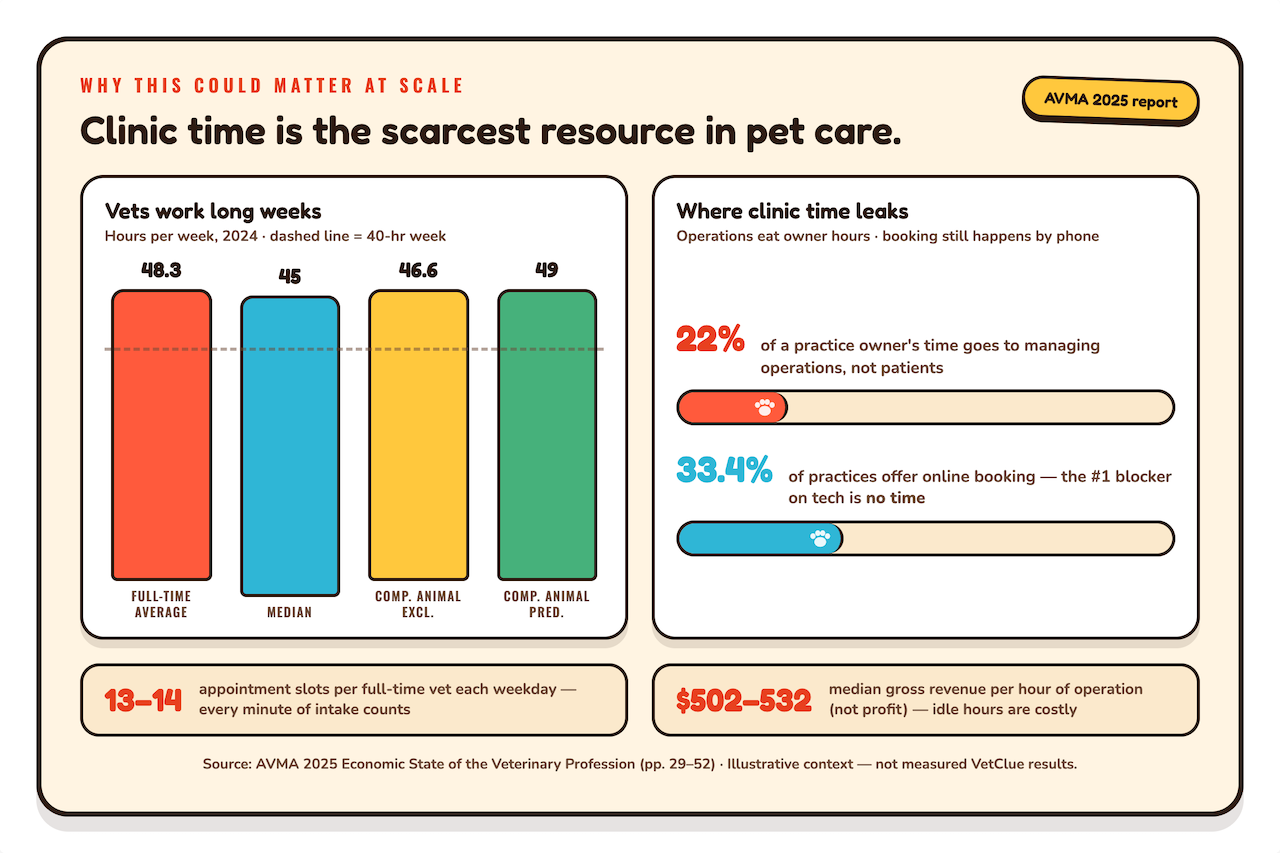
The report also encourages practices to improve efficiency before adding staff and specifically identifies automated processes such as online appointment scheduling as one possible approach.
These findings showed me that repetitive intake, scheduling, and client communication consume time inside an already busy system. Even modest improvements could return meaningful time to clinic teams and help them focus more of their capacity on patient care.
The AVMA report does not measure VetClue’s savings or the time pet owners spend researching and calling clinics. Our savings figures are an illustrative planning model, not proven results. The owner-side opportunity comes from my experience with Neelix and is something we still need to validate with real users and clinics.
The report identifies automation, including online scheduling, as one way clinics can improve efficiency before adding staff.
How VetClue fills the gap
The need is just as real for pet owners. Pew Research Center found that 97% of pet owners consider their pets part of the family, including 51% who consider them as much a part of the family as a human member.
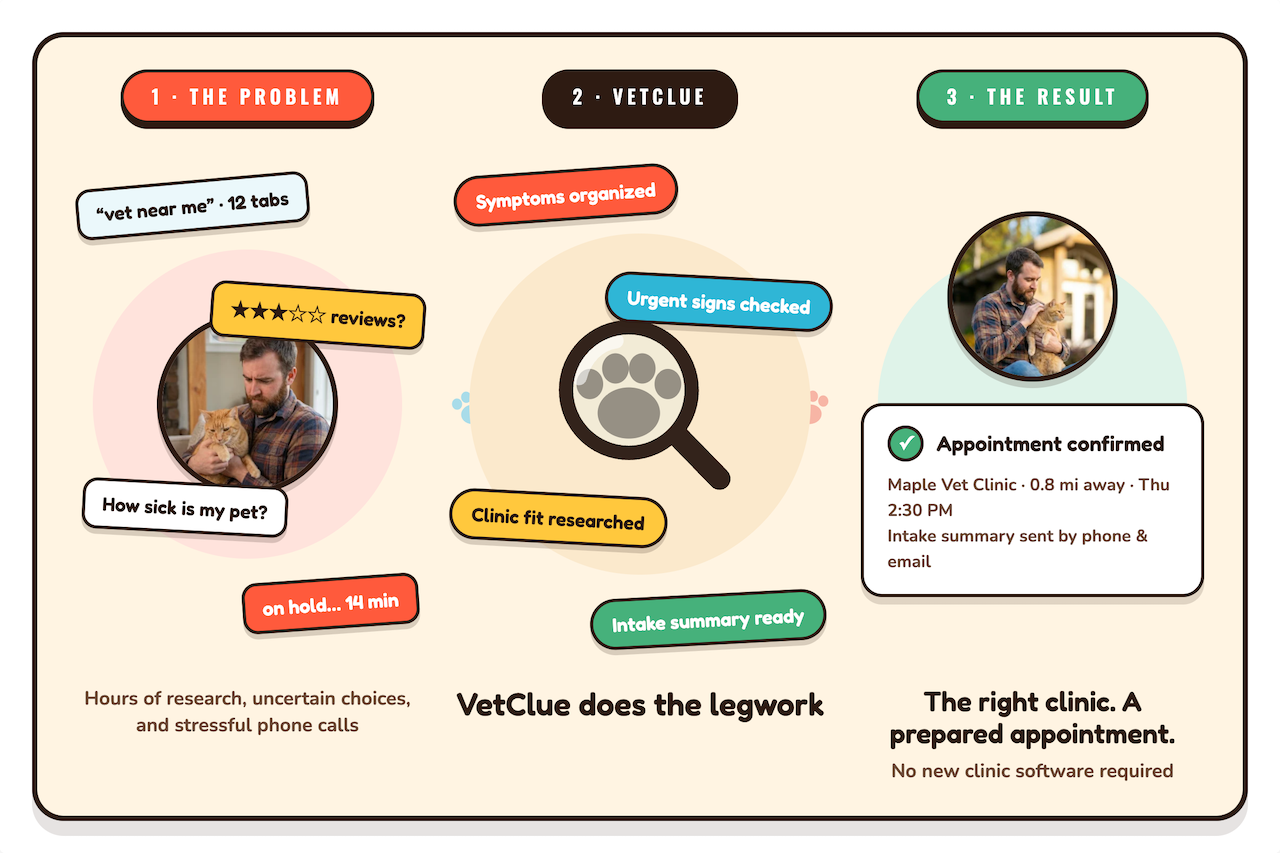
VetClue brings both sides together. It gives owners a calmer path to the right care while reducing repetitive intake, research, and scheduling work for clinics. It does this through the phone and intake systems clinics already use, without requiring them to purchase or learn new scheduling software.
VetClue’s savings figures are planning estimates, not AVMA findings or proven results. They still need to be validated with real pet owners and clinics.
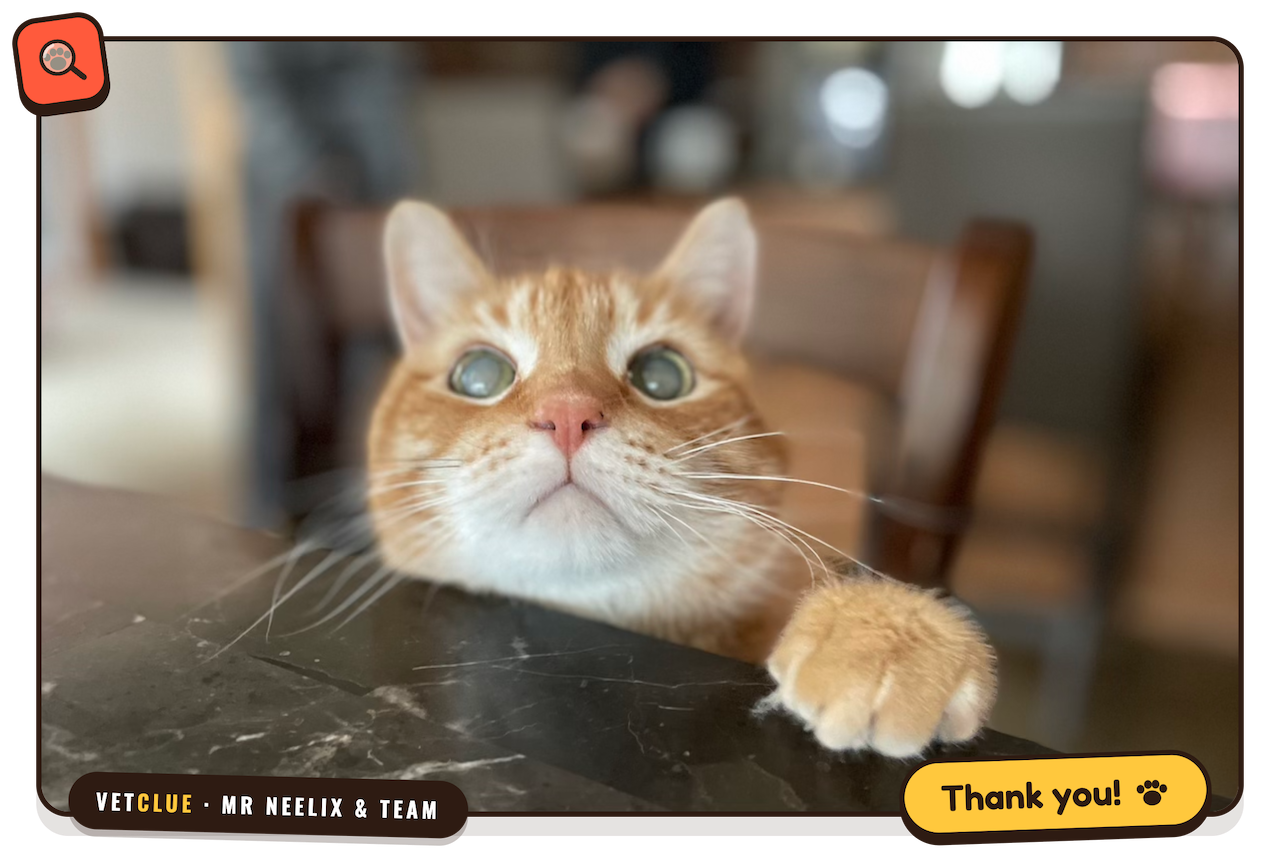
Thank you for checking out VetClue! Be sure to Follow me on X

Built With
- adobe-illustrator
- apify
- cloud-functions
- dataforseo
- firebase
- firestore
- google-calendar
- openai
- rag
- react
- retell-ai
- serpapi
- typescript
- vite
- voice-ai

Log in or sign up for Devpost to join the conversation.