-
-
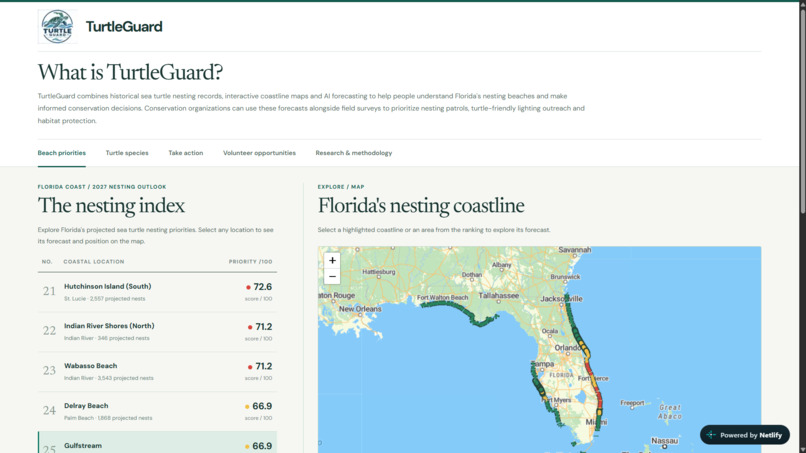
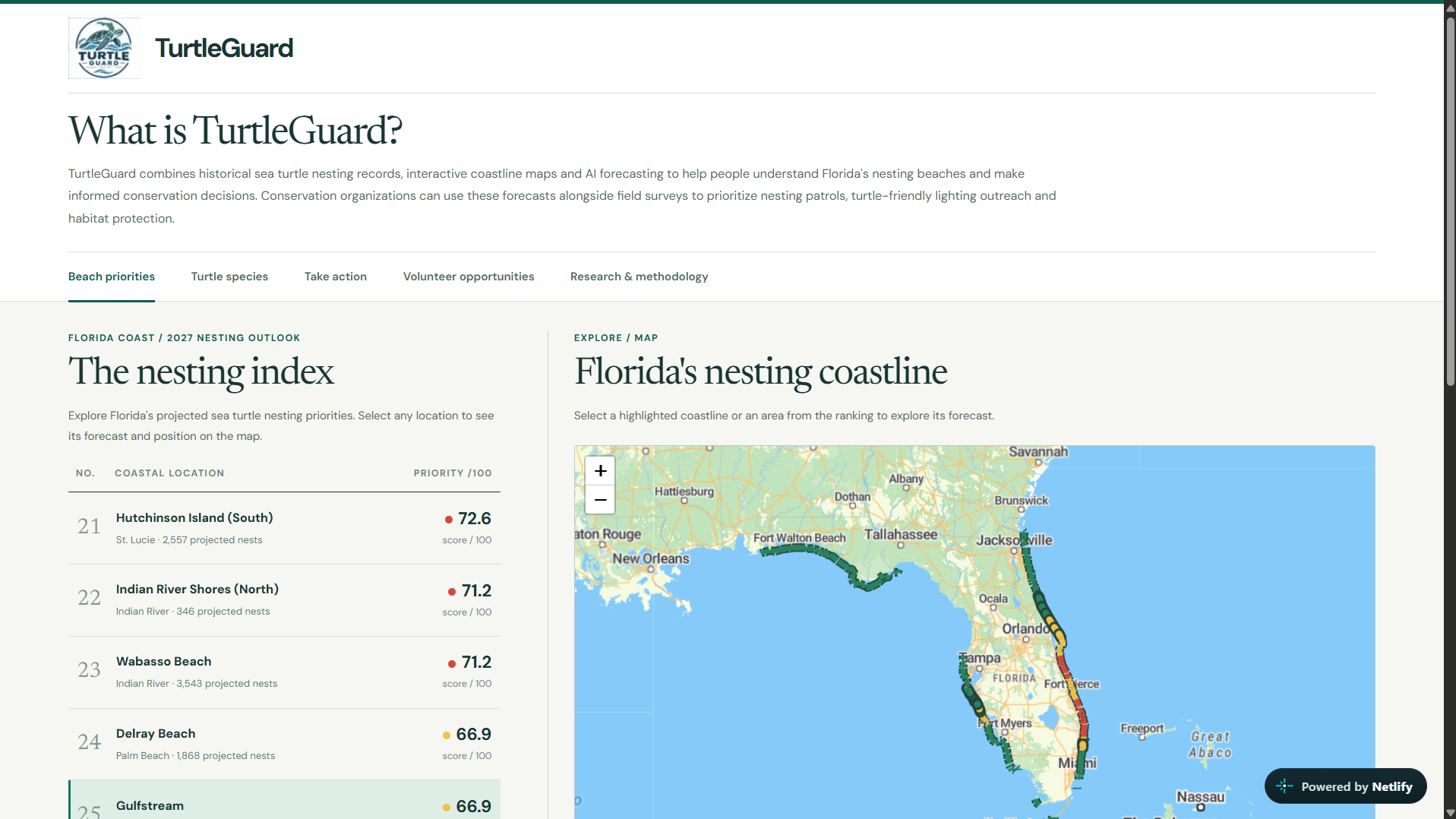
Main Page
-
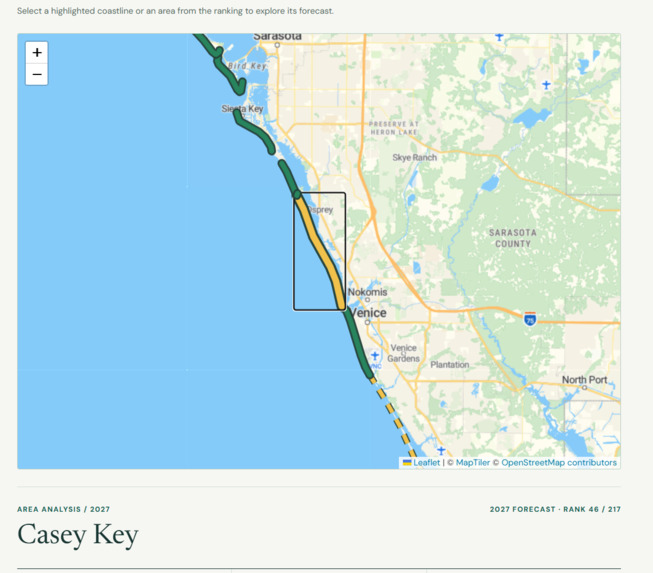
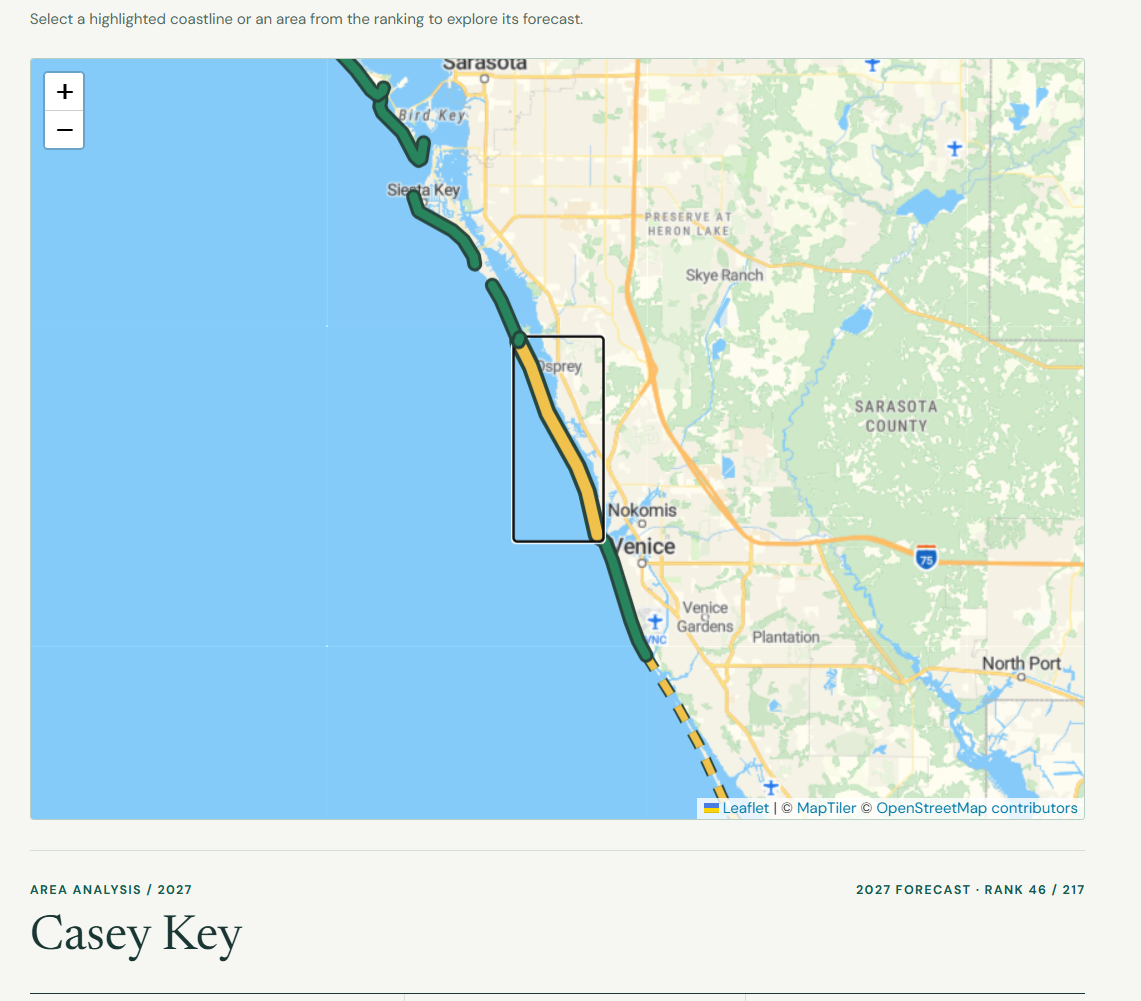
Map Selection
-
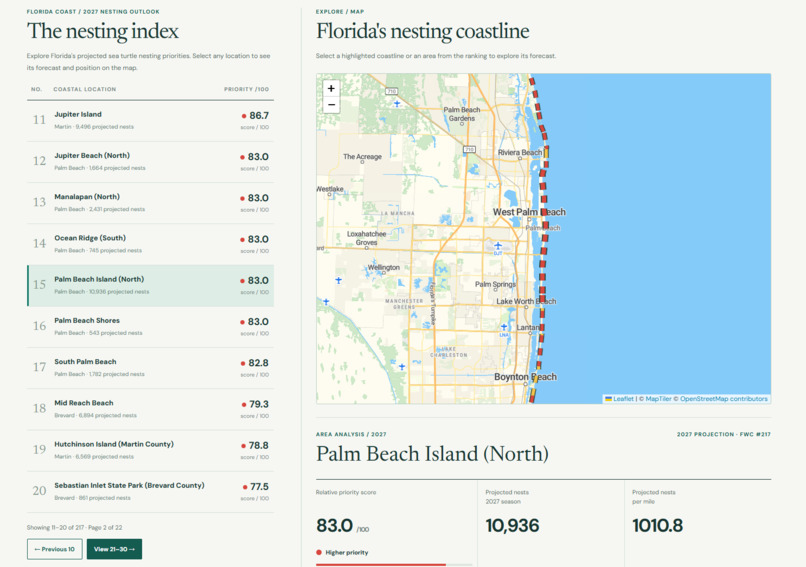
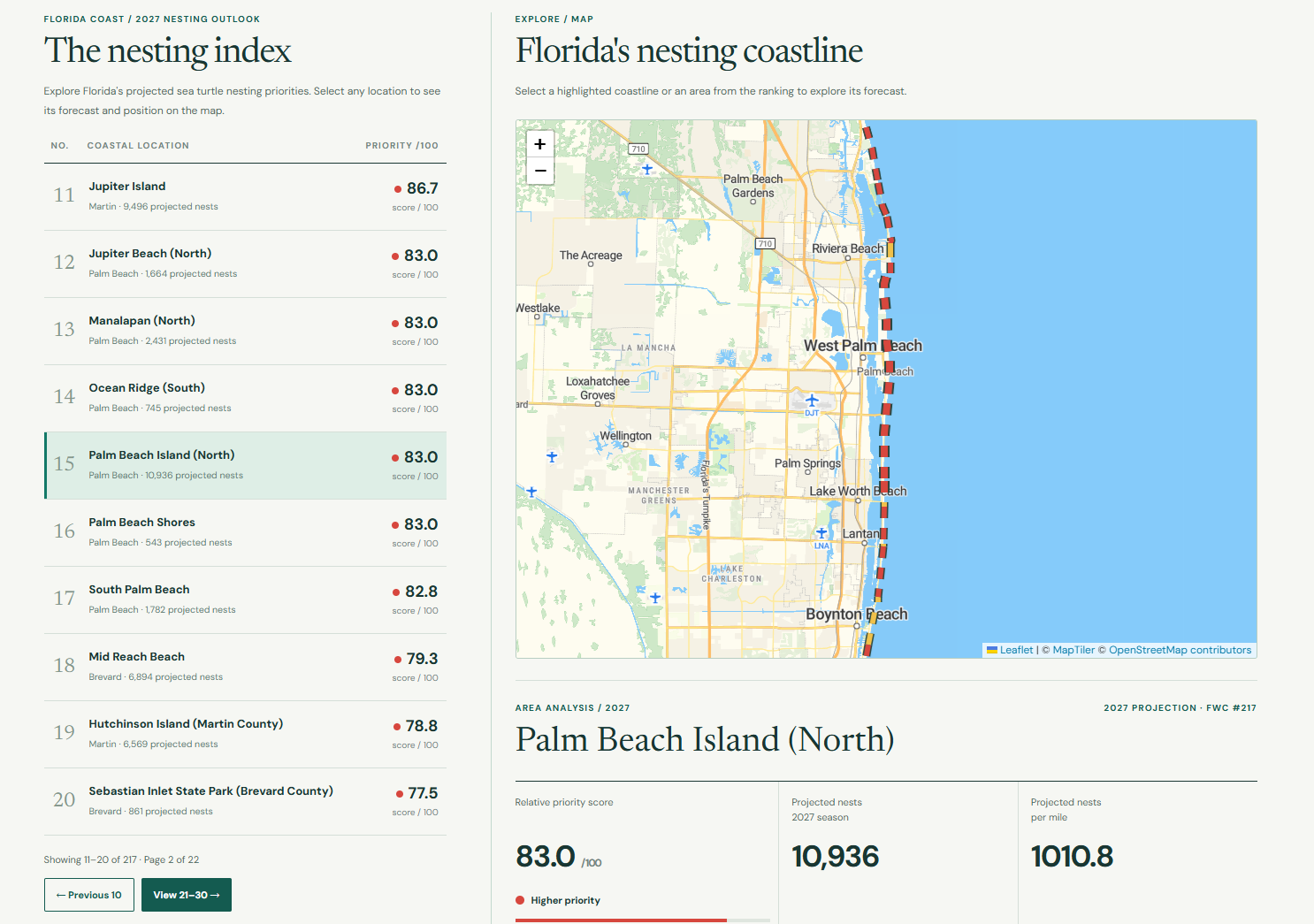
Nesting Priority Index
-
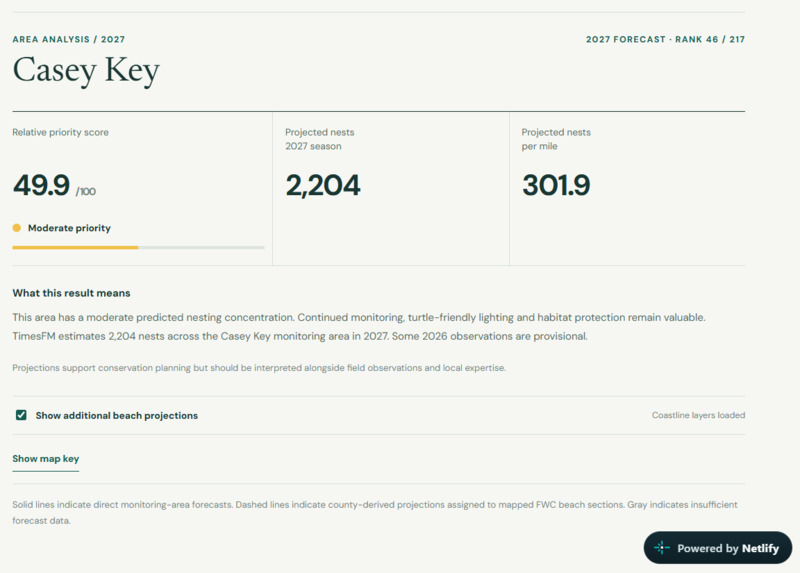
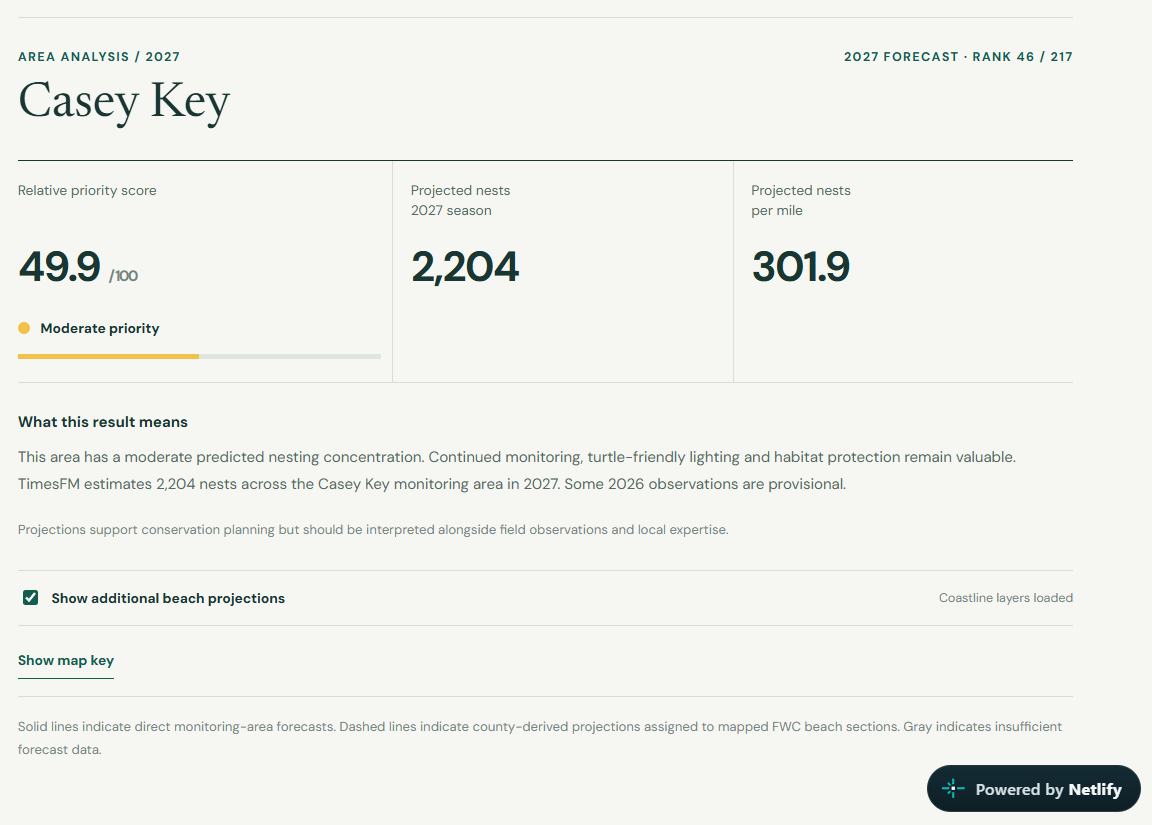
Area Analysis
-
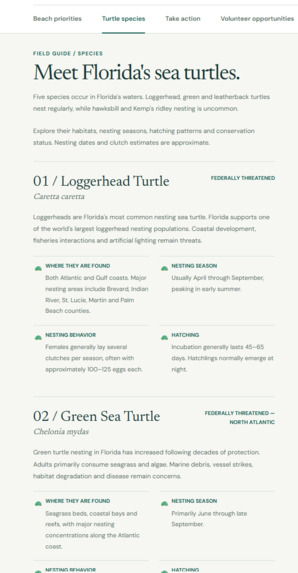
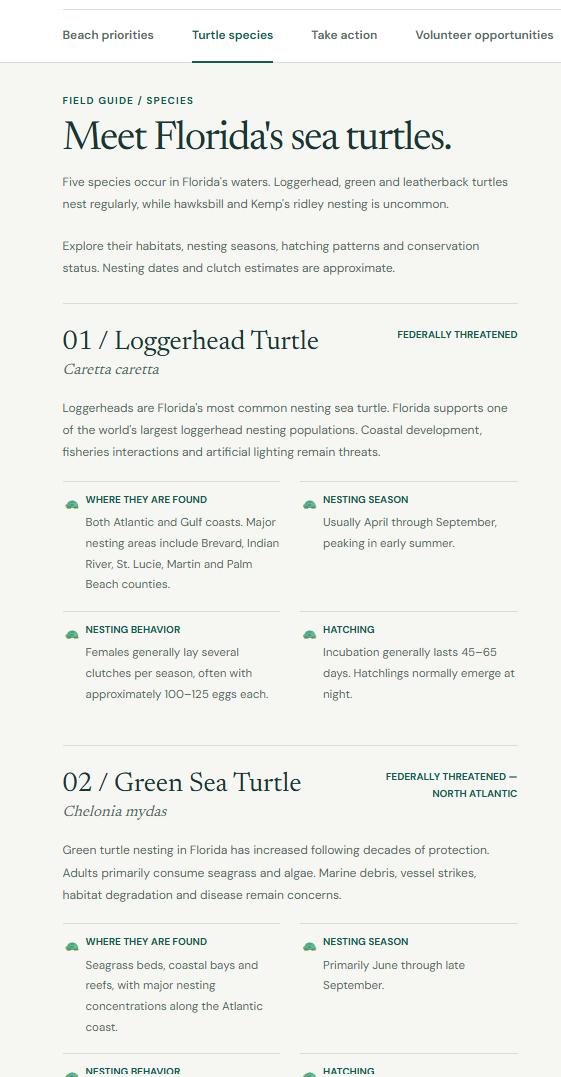
Turtle Species Tab
-
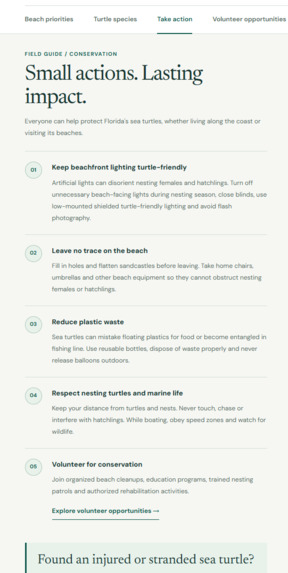
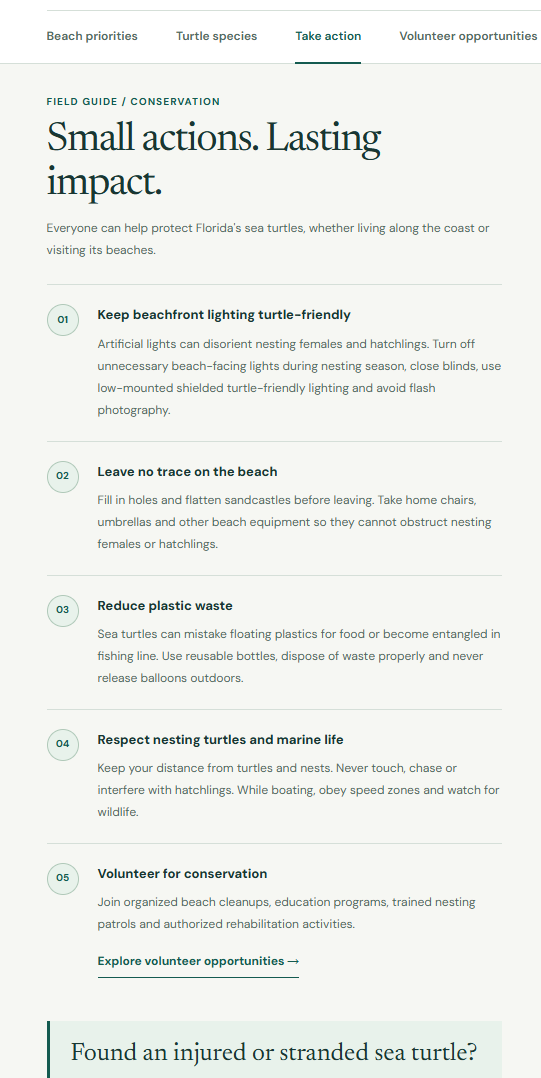
Take Action Tab
-
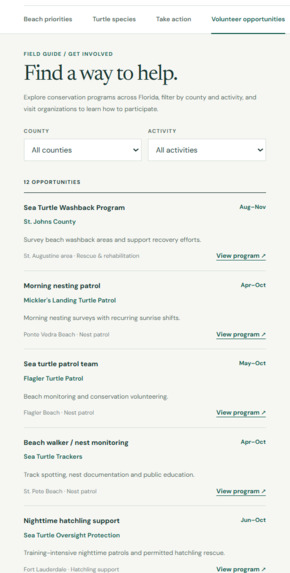
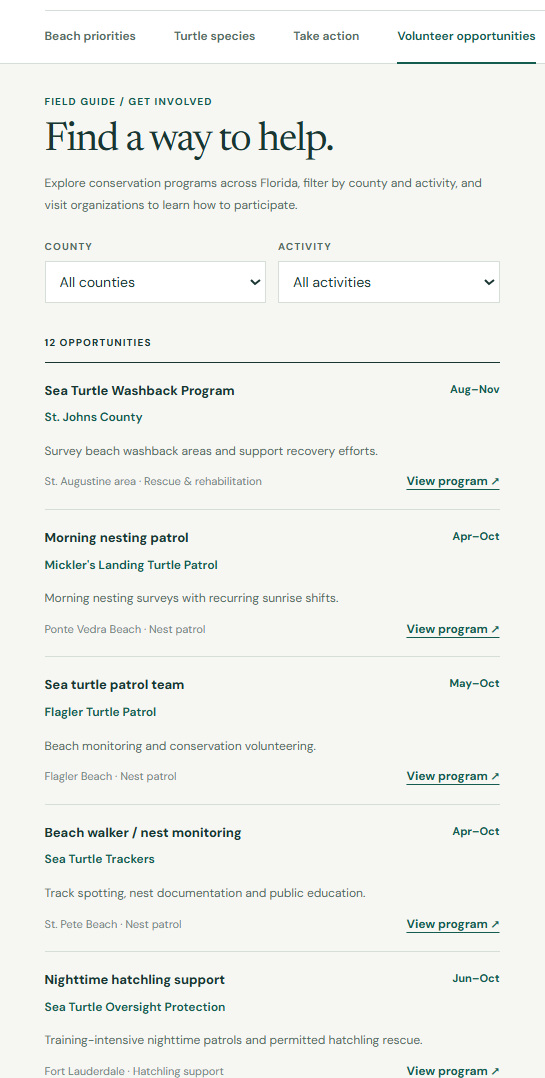
Volunteer Opportunities Tab
-
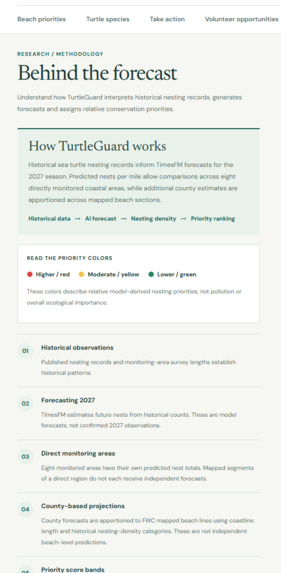
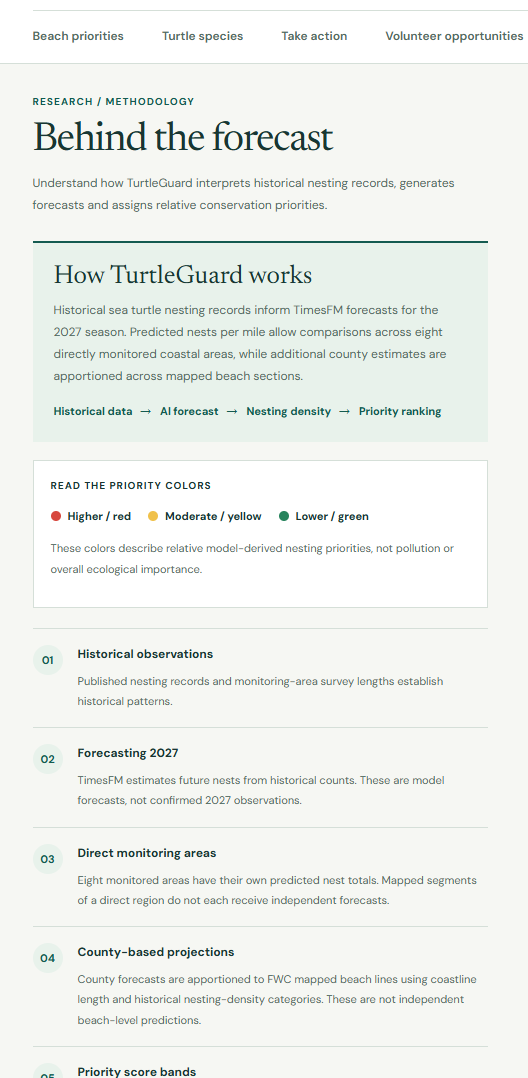
Research and Methodology Tab
Inspiration
Florida is home to some of the most important sea turtle nesting beaches in the world, yet these species continue to face many challenges ranging from pollution to habitat loss. Our team wanted to investigate how new artificial intelligence technologies could help address this conservation challenge. We were inspired by asking ourselves "What if we could predict where sea turtles will nest and use that information to guide conservation efforts?” With the recent release of Google’s TimesFM 3 forecasting model, we saw an opportunity to take historical nesting data and turn it into meaningful predictions. So, we created TurtleGuard which combines AI forecasting, interactive maps, and conservation resources to make this important information available to everyone.
What it does
TurtleGuard is an AI-powered platform that forecasts sea turtle nesting activity along Florida's coastline for the 2027 nesting season. It uses Google's TimesFM 3 forecasting model and records from the Florida Fish and Wildlife Conservation Commission to generate predictions about future nesting activity. Then, these forecasts are transformed into priority scores that allow the user to determine coastal areas that would benefit from conservation attention. Using the interactive map, it is possible to explore over 200 coastal locations and, for each, view the projected nesting totals and the relative priority score compared to other beaches. Additionally, beyond the forecasts, TurtleGuard provides information about the different species of sea turtles that call Florida home, conservation recommendations, and up-to-date volunteer opportunities.
How we built it
We built TurtleGuard by combining AI, environmental datasets, and web development. The first thing we did was collect historical sea turtle nesting records and geographic survey data from the Florida Fish and Wildlife Conservation Commission. Then, using Python, Pandas, and NumPy, we processed the datasets and implemented Google’s TimesFM 3 foundation model to forecast nesting activity for 2027. Then, we combined these predictions with geographic information to calculate the projected nesting densities and assign relative conservation priority scores to Florida’s beaches. For the frontend, we used HTML, CSS, and JavaScript to make an interactive website that integrated Leaflet.js and the MapTiler API to show our results on a detailed map. Then, we connected the forecasting outputs to the website with JSON and GeoJSON files, allowing the users to explore predictions and conservation resources. Lastly, we deployed TurtleGuard using Netlify to make our platform accessible without setting up a complex local server.
Challenges we ran into
One of the biggest issues we ran into during the project was navigating the limitations of AI systems, particularly AI hallucinations and inaccurate information. Throughout the early stages of the project, the AI tools would occasionally generate fabricated data that looked correct at first glance but in reality was actually incredibly misleading. This was extra challenging when working with geographic coordinates and nesting forecasts where even small inaccuracies could undermine the credibility of the project we built. To solve this problem, we had to carefully verify our datasets, troubleshoot unexpected errors, and distinguish legitimate forecasting results from AI-generated misinformation. Another challenge was integrating the Python-based backend into our HTML, CSS, and Javascript frontend while ensuring the map continued to display accurate information.
Accomplishments that we're proud of
Our greatest accomplishment was transforming an ambitious idea into a fully functional platform within the time limit of the hackathon. Even though our team had varying levels of programming experience, we successfully integrated Google’s TimesFM 3 model with real-world sea turtle nesting data to generate 2027 predictions. Something we are particularly proud of is the interactive map that shows nesting forecasts in an easy to understand visual format for over 200 coastal locations. Also, we are proud that we went above and beyond the core forecasting functionality by also incorporating educational resources, conservation recommendations, and volunteer opportunities. This was done to make TurtleGuard useful to a broader audience. Finally, we are proud that we are able to demonstrate that a team with diverse academic backgrounds can still collaborate and build something meaningful.
What we learned
Throughout the development of TurtleGuard, we learned how to apply new AI tools to solve real-world problems. We gained a significant amount of hands-on experience with Google’s TimesFM 3 forecasting model, Python-based data processing, geographic information systems, and frontend web development. We think one of the most valuable lessons was understanding the different ways that AI-generated outputs can be inaccurate and we grew in our ability to detect hallucinations, verify the data, and evaluate the model’s results. We also learned strategies on how to take complex scientific datasets and turn them into meaningful predictions that everyday users can understand. Lastly, we discovered that making a meaningful technological innovation does not require everyone to have extensive programming experience, but rather a willingness to learn, experiment, and solve problems together.
What's next for TurtleGuard
Even though TurtleGuard started as a hackathon project, we think it has the potential to develop into a valuable resource for sea turtle conservation. Our next goal is to further improve the accuracy of our forecasting model by incorporating more environmental factors such as ocean temperatures, weather patterns and coastal development. Also, we hope to expand TurtleGuard beyond Florida and eventually provide nesting forecasts for locations around the world. Another thing that we would like to do is develop more advanced visualization tools like historical comparisons, forecast confidence intervals, and automatically updated nesting predictions. Lastly, we would like to improve the website’s accessibility, mobile experience, and volunteer coordination features.
Built With
- chatgpt
- claude
- css3
- fetch-api
- fwc-beach-survey-geographic-data
- fwc-sea-turtle-nesting-datasets
- gemini
- geojson
- geospatial-data-processing
- git
- github
- google-fonts
- googletimesfm3.0
- html5
- javascript
- json
- leaflet.js
- maptiler-api
- netlify
- numpy
- openstreetmap
- pandas
- python
- python-http-server
- time-series-forecasting


Log in or sign up for Devpost to join the conversation.