-
-
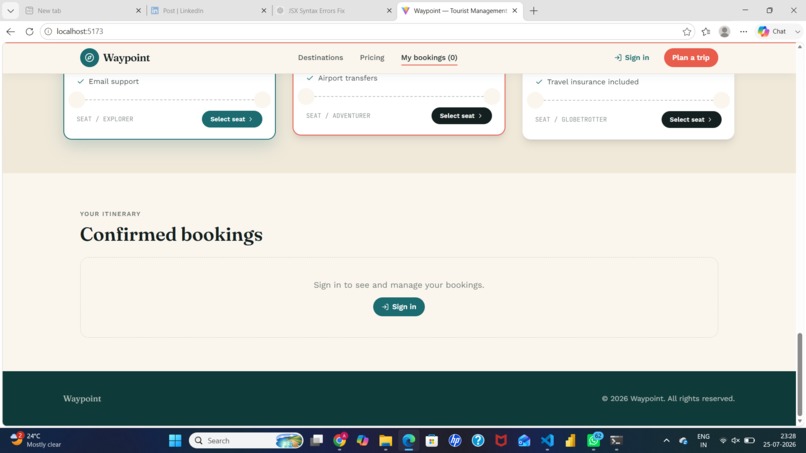
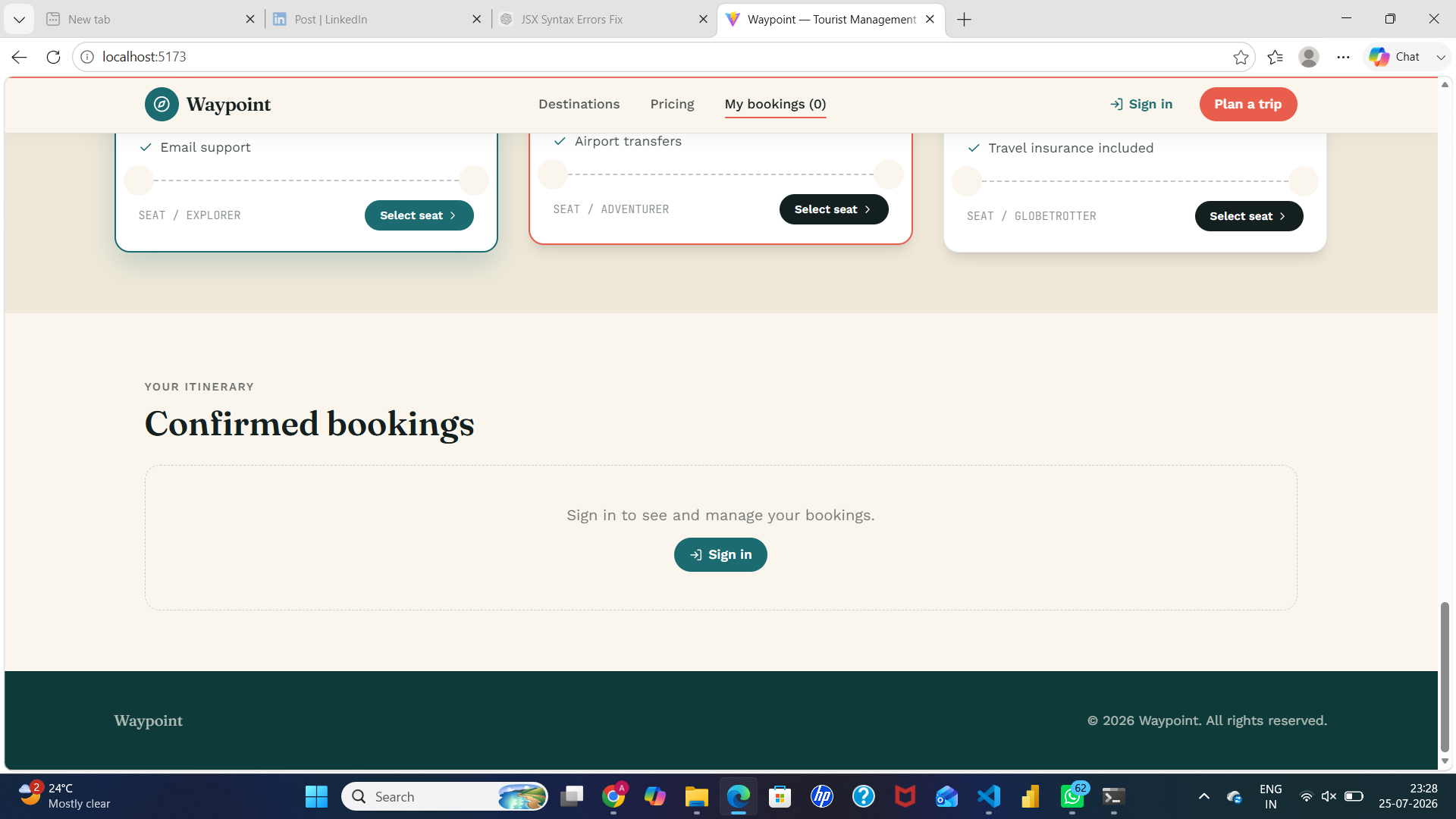
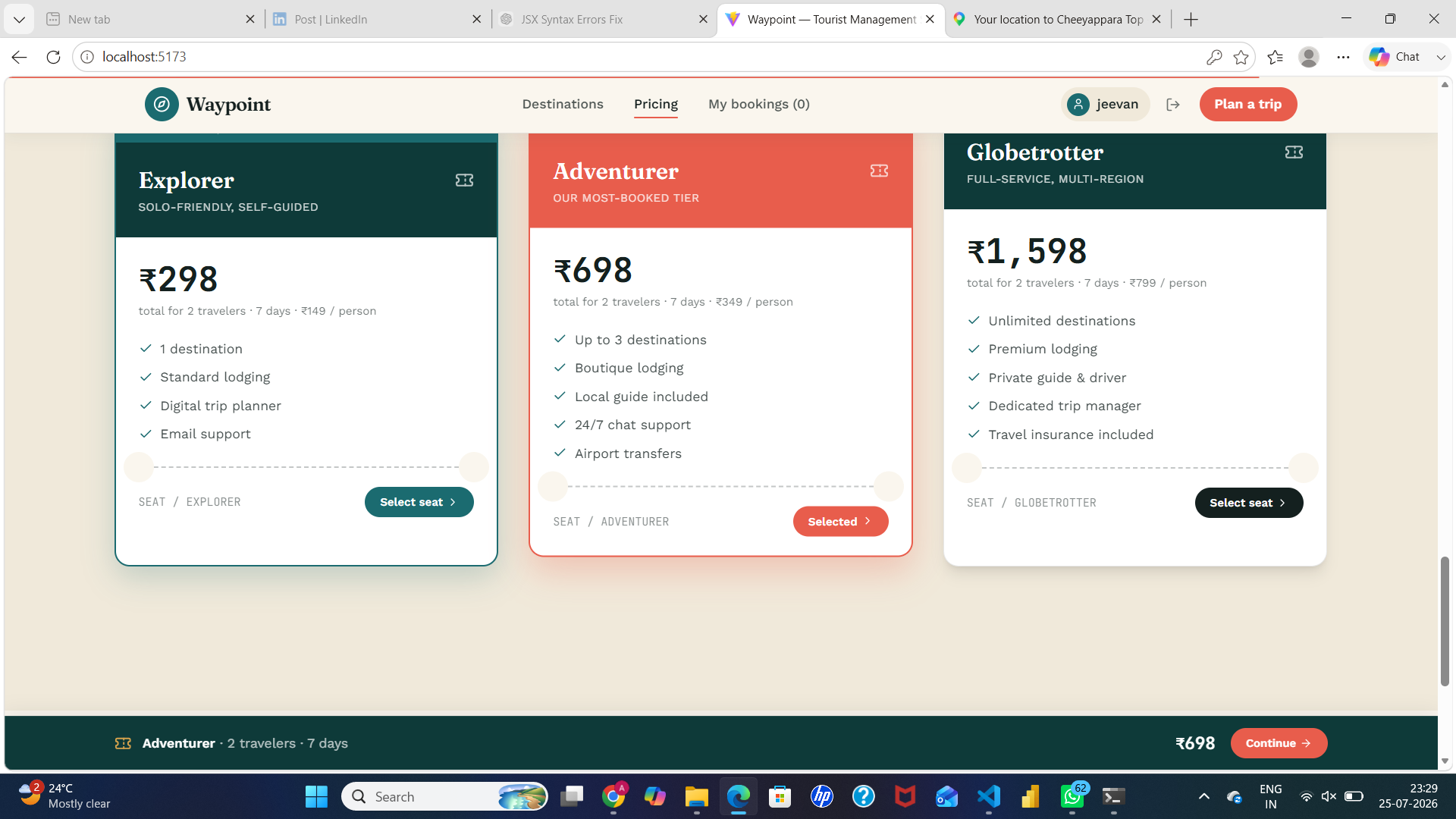
expenses with booking slot page
-
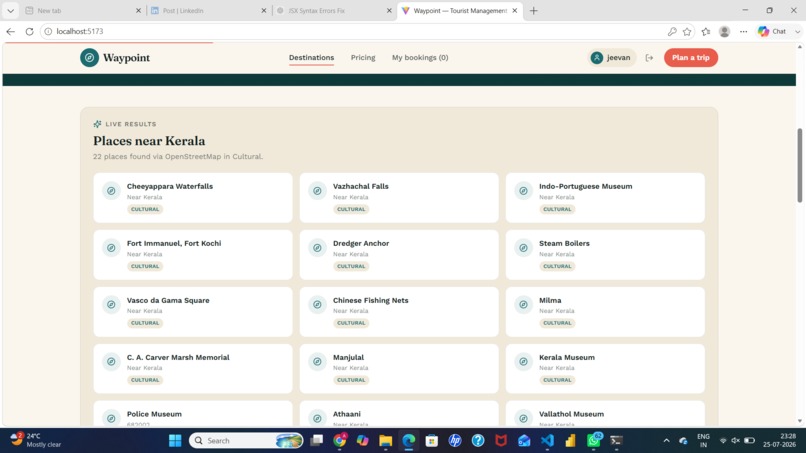
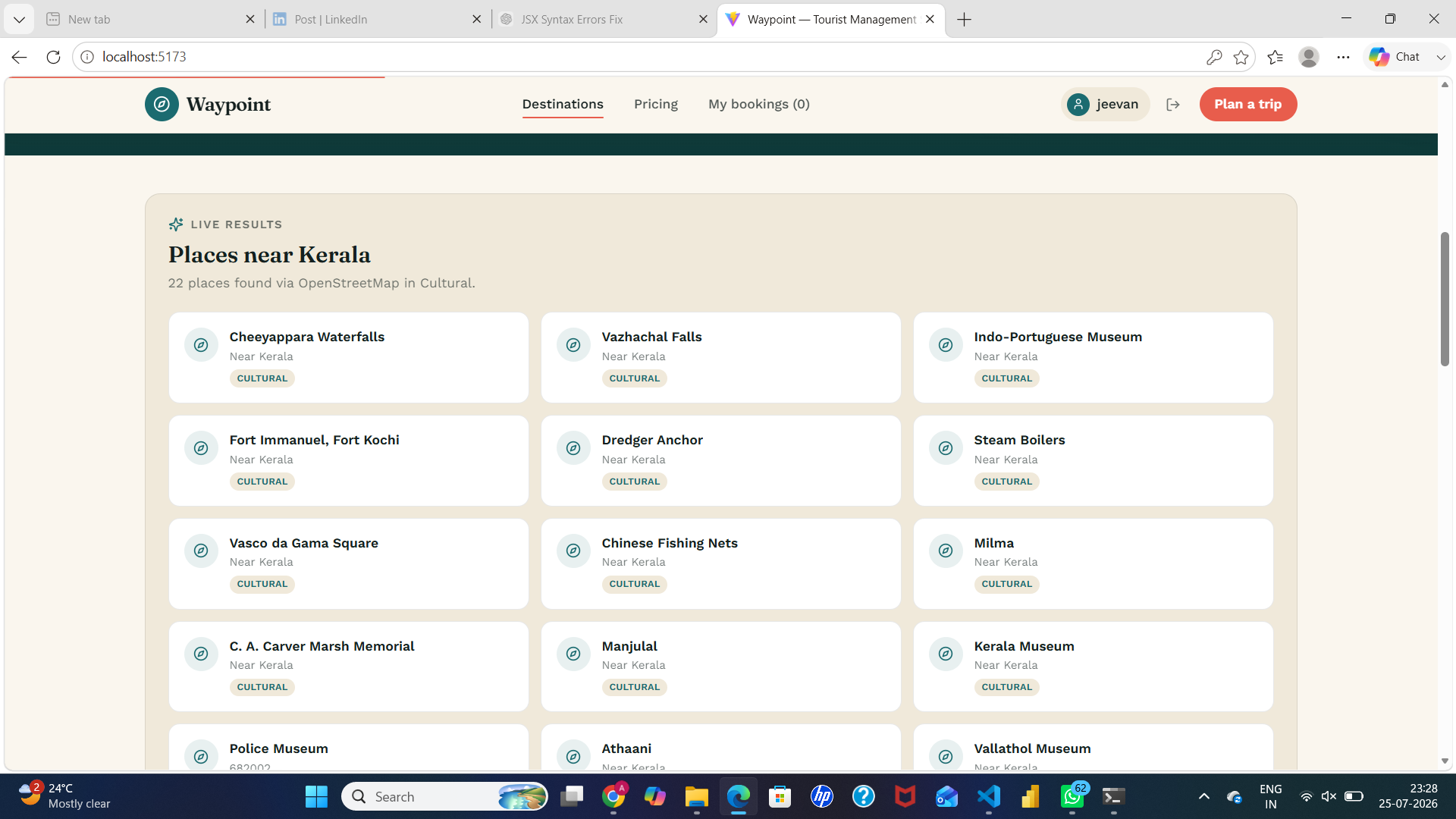
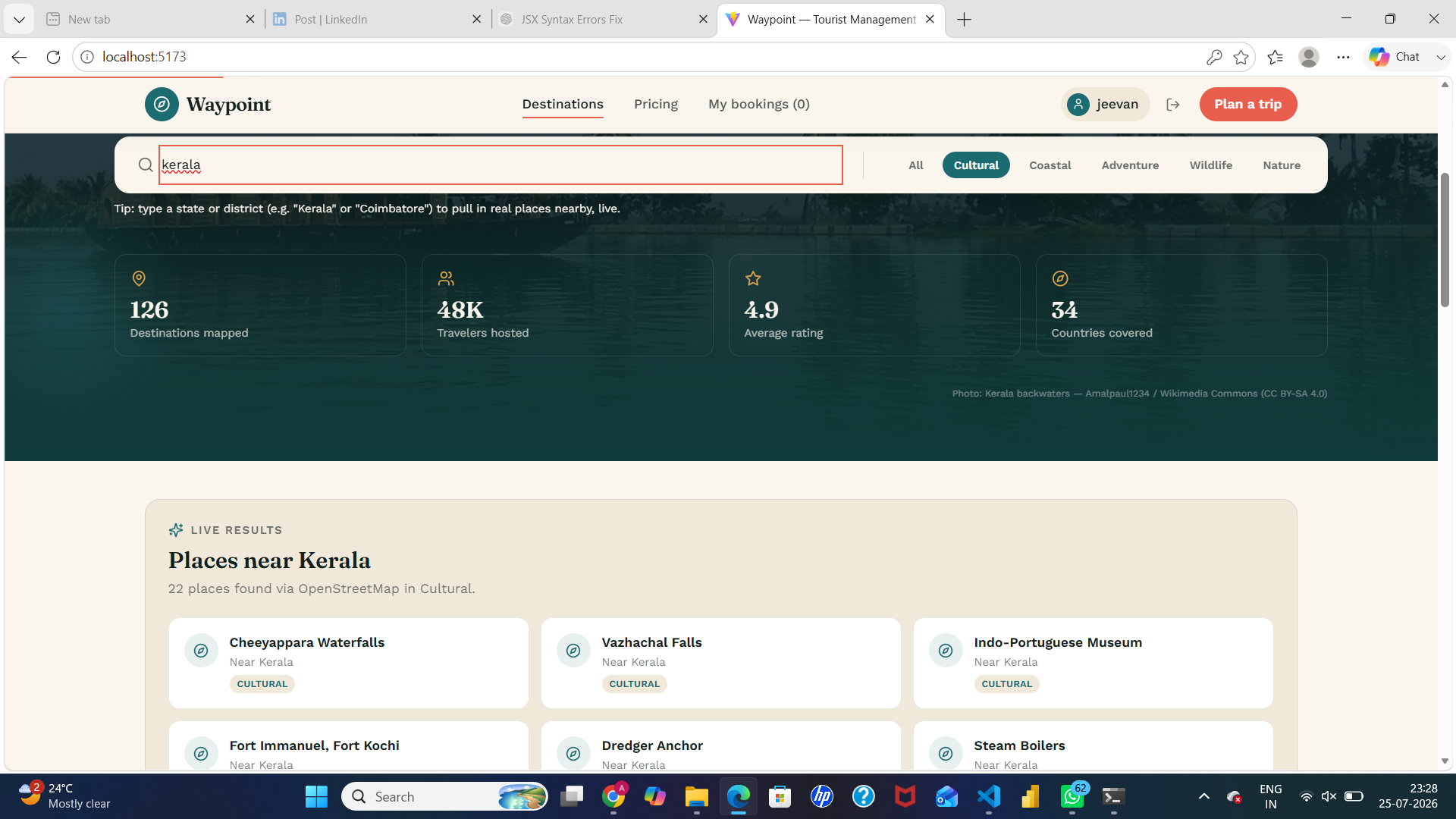
based on the search bar it give the places
-
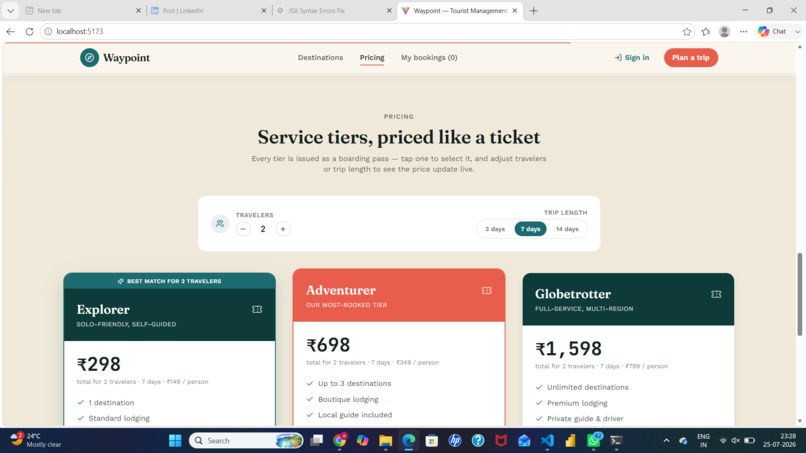
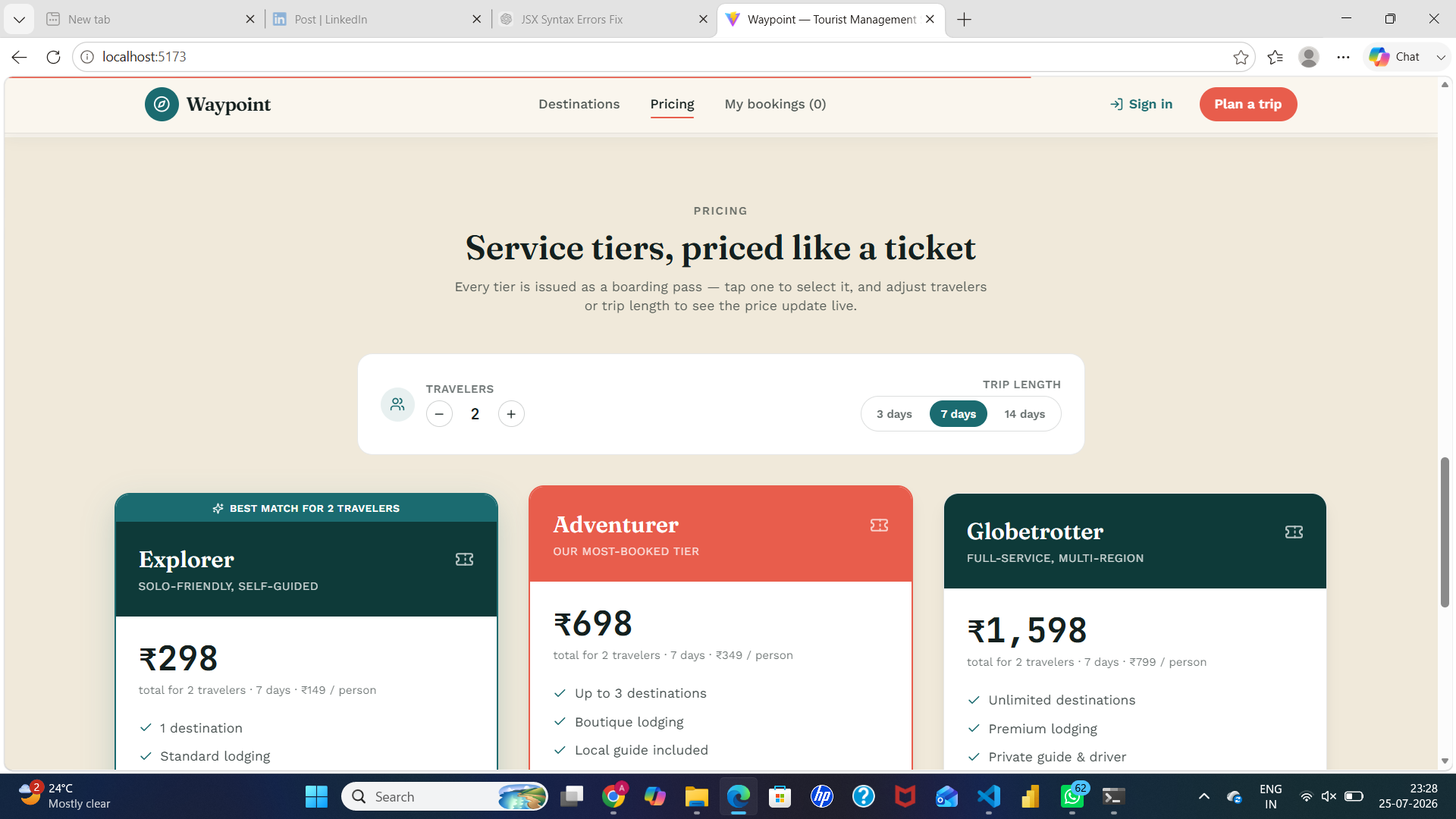
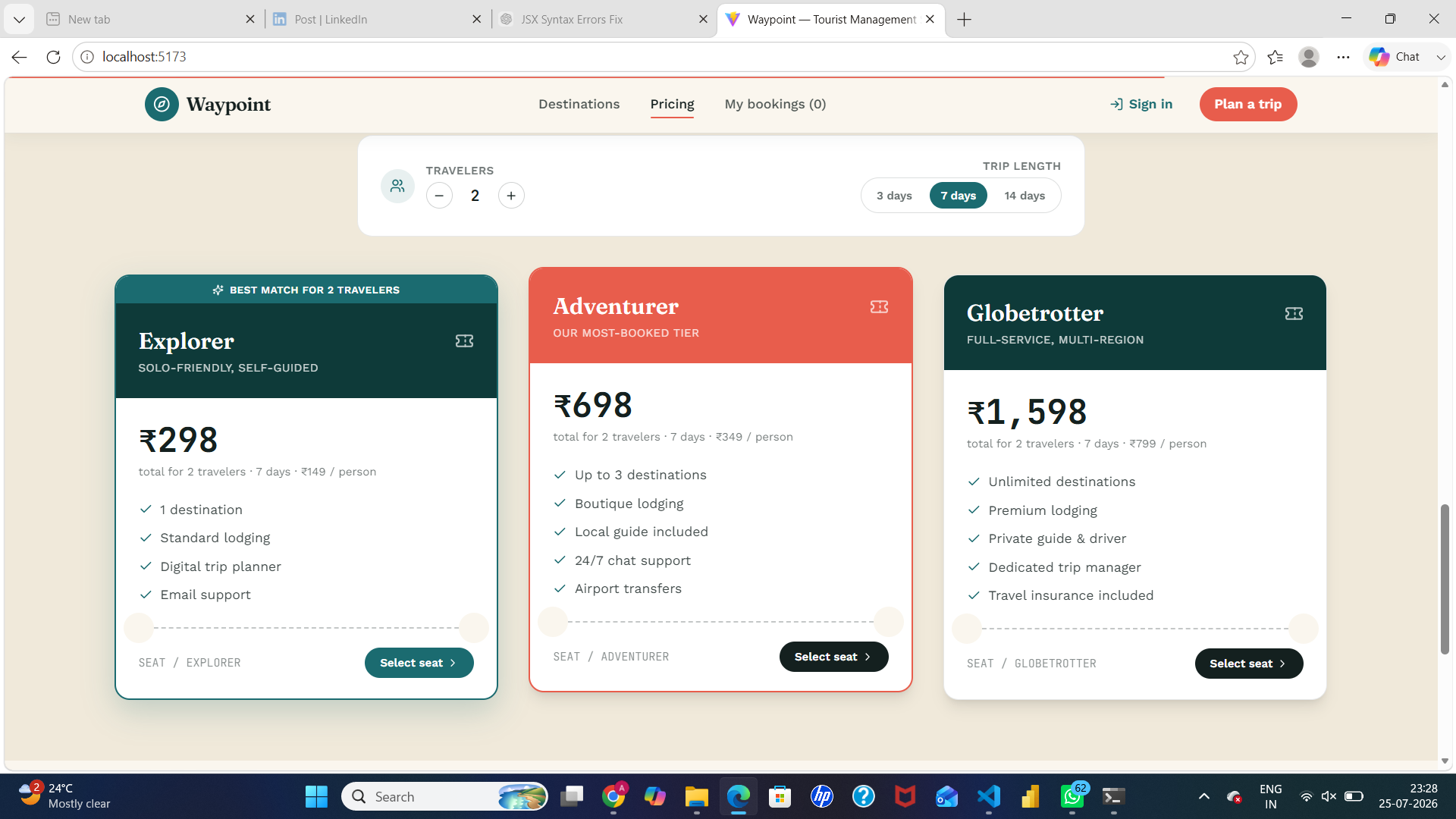
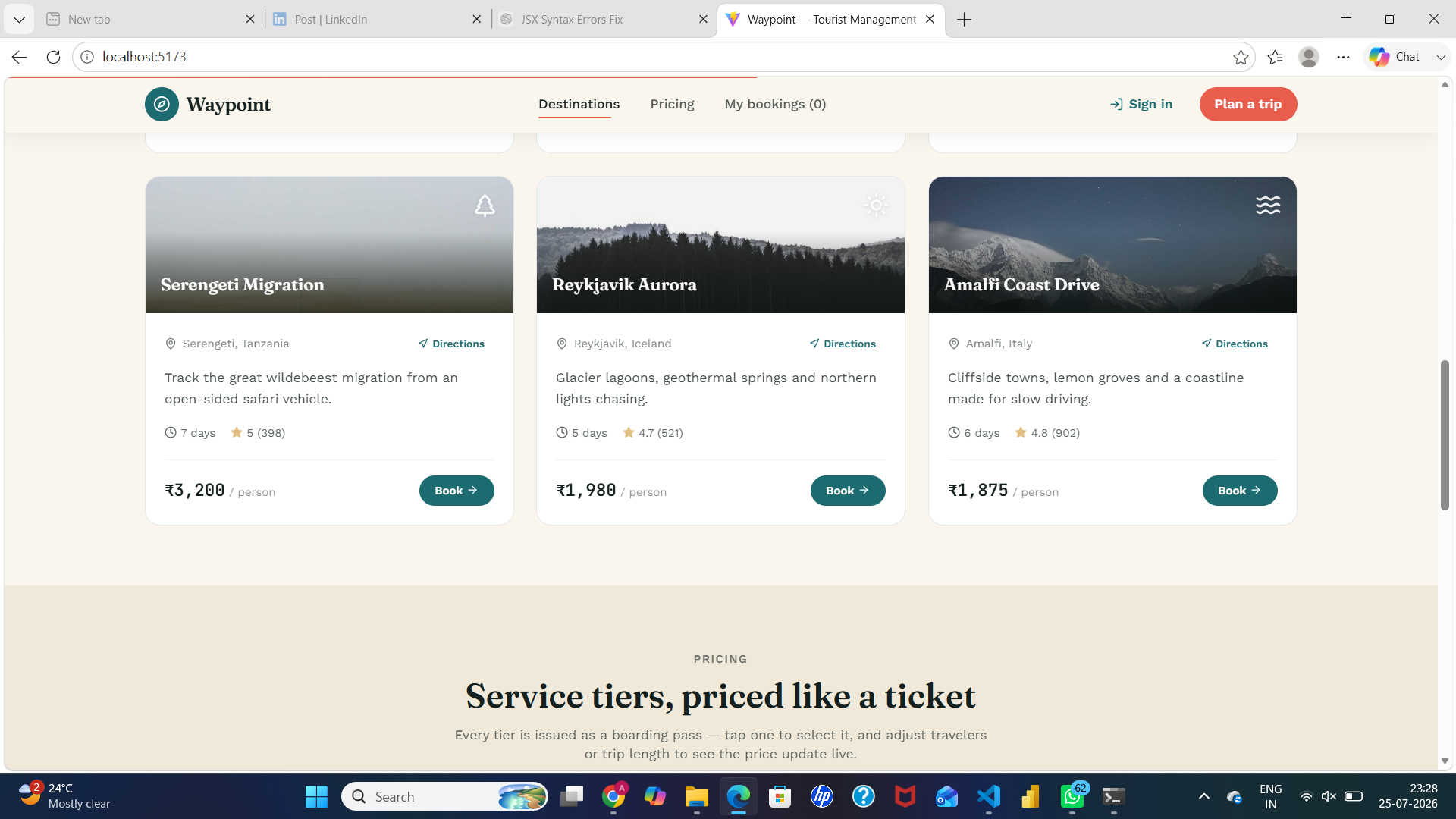
tourist places expenses
-
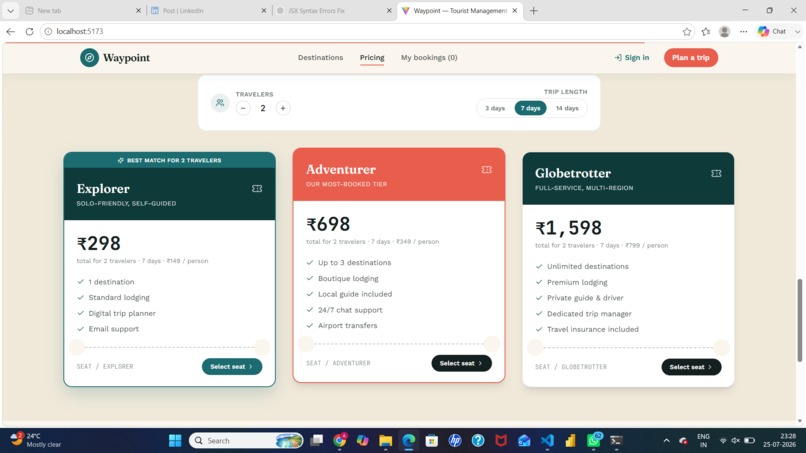
tourist places expenses
-
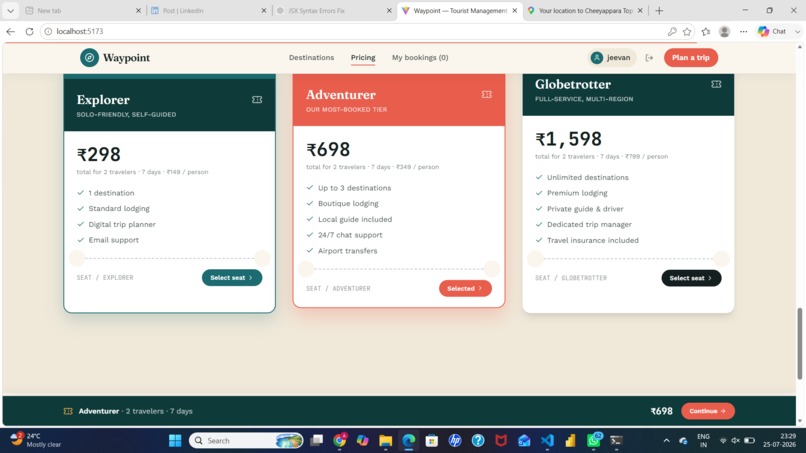
based on the number of persons it update the prices
-
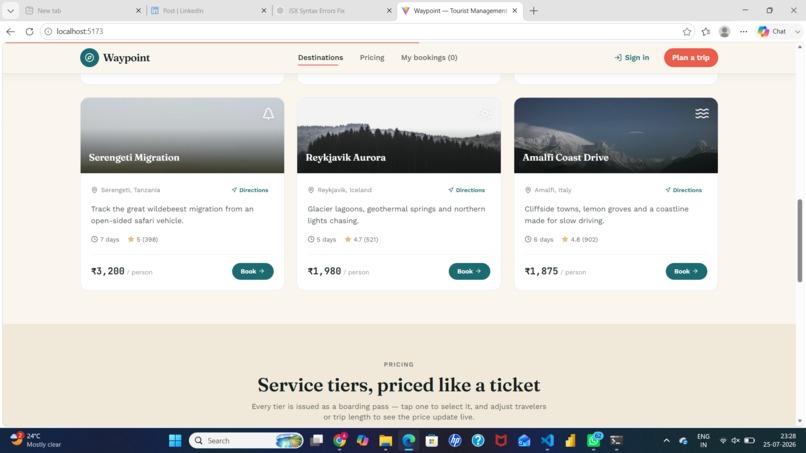
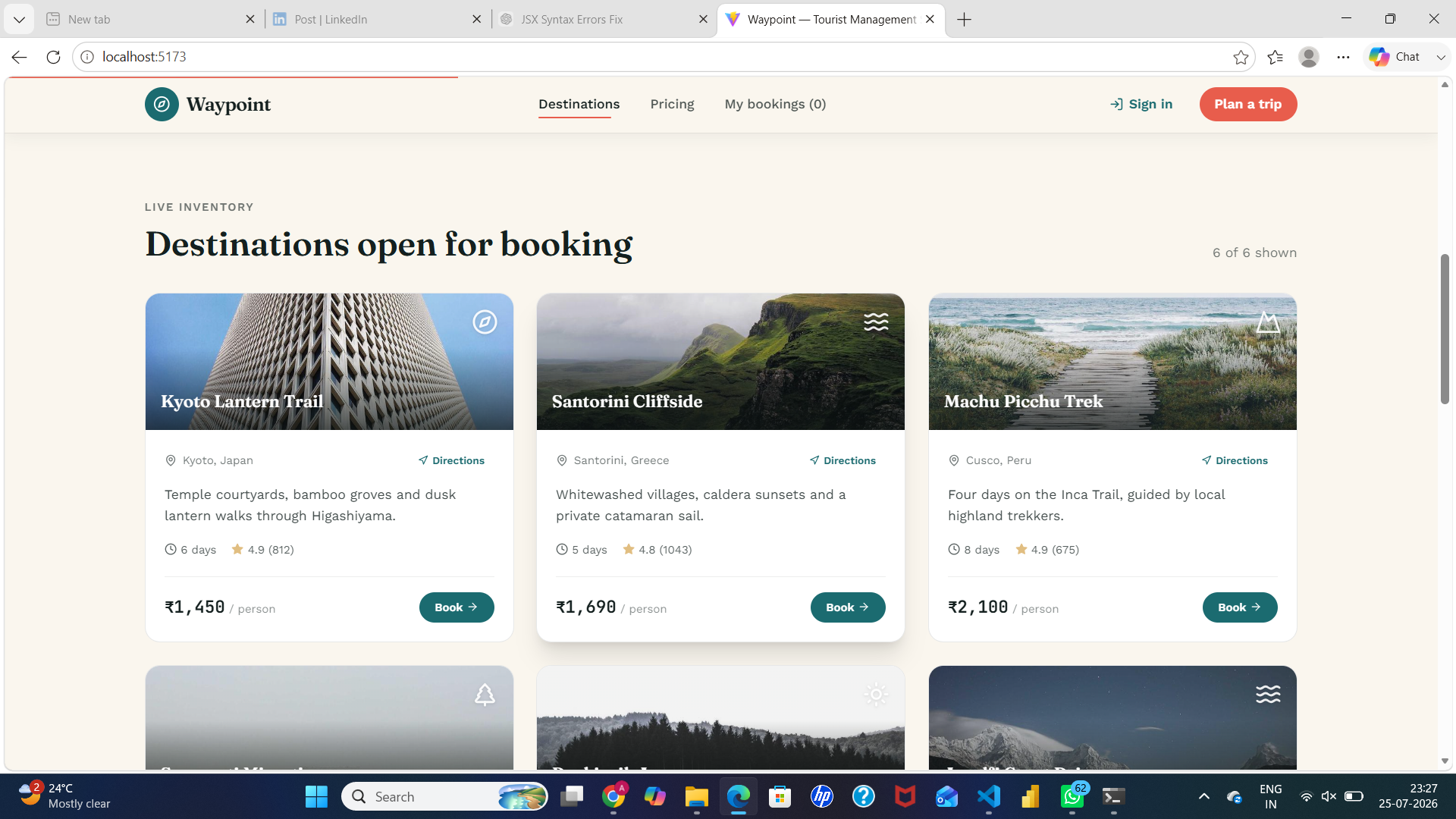
tourist places
-
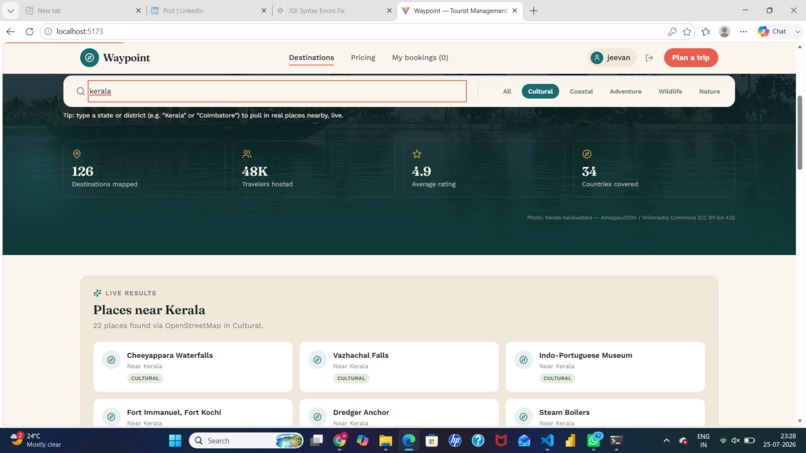
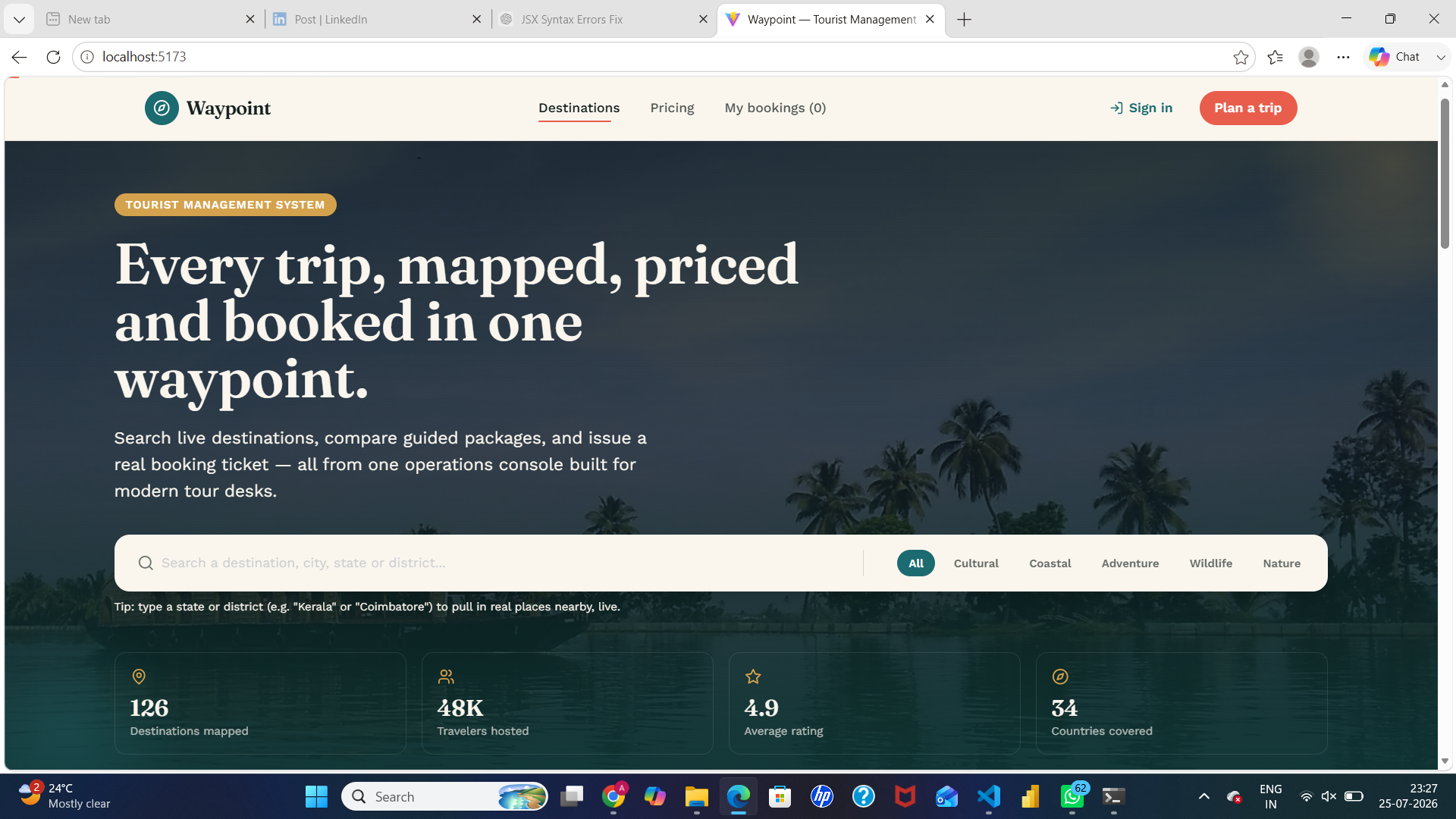
in homepage along with the search bar
-
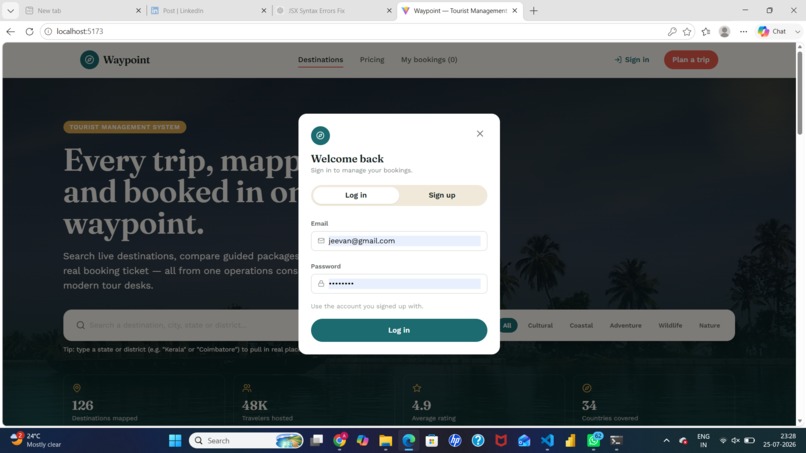
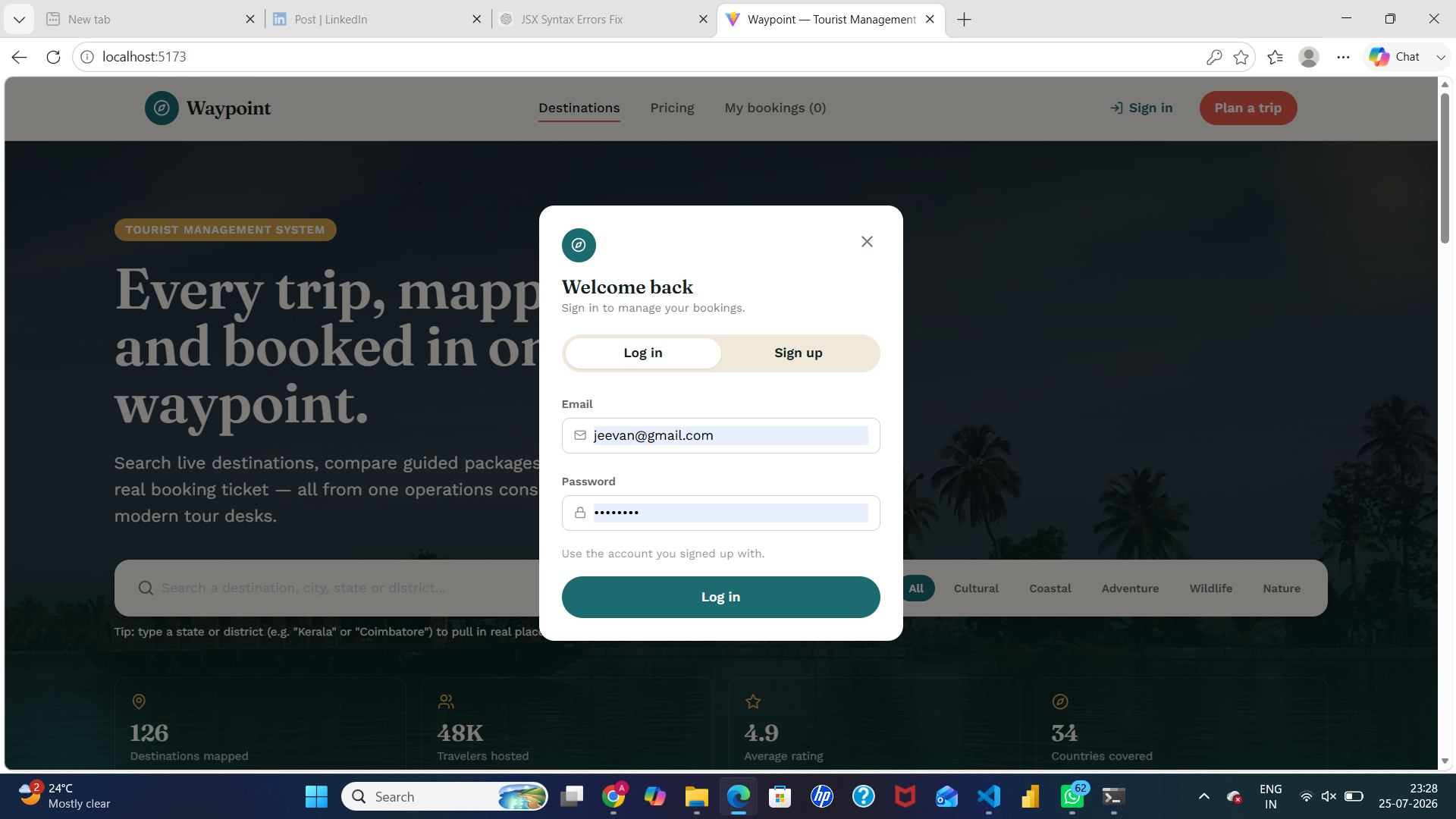
sinin and signup page
-
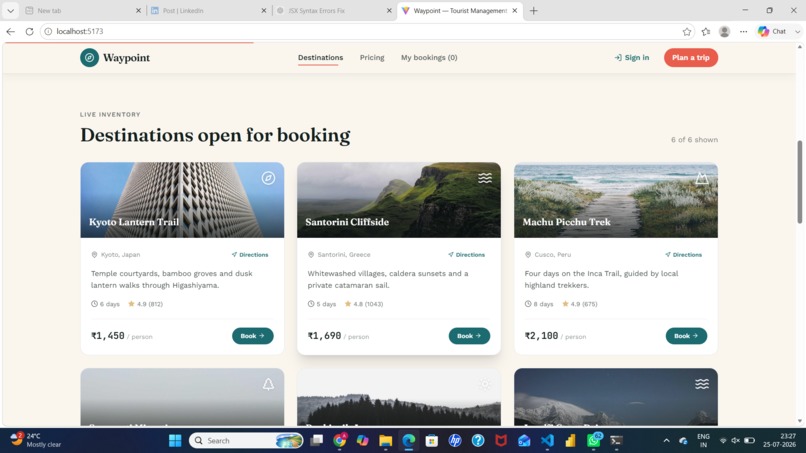
2nd page tourist places
-
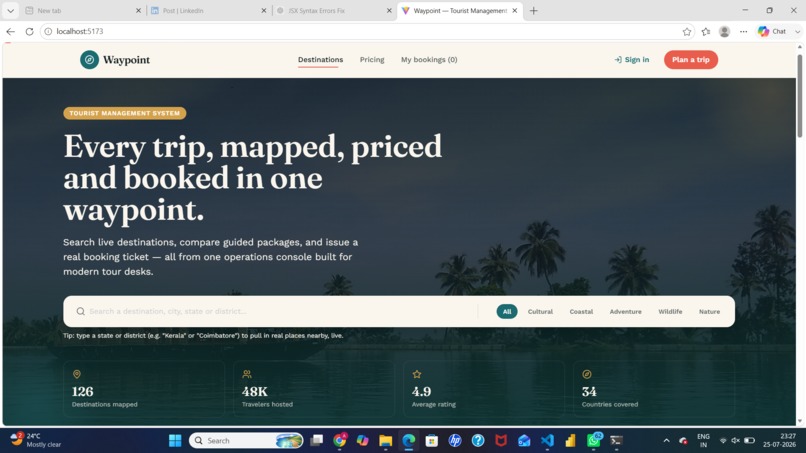
home page
-
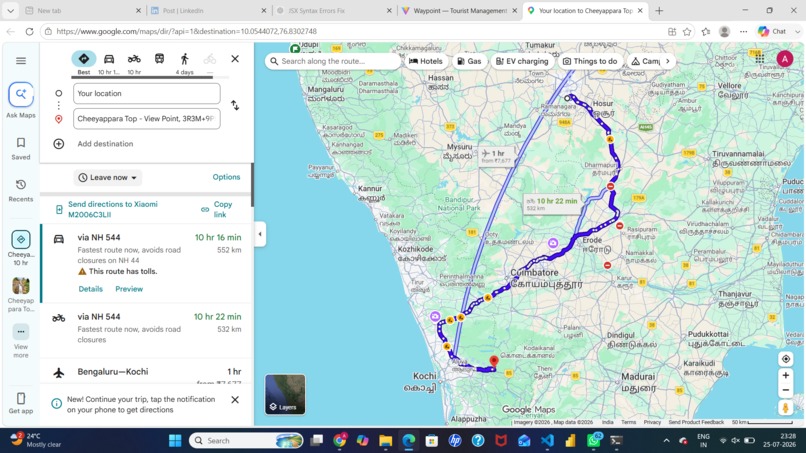
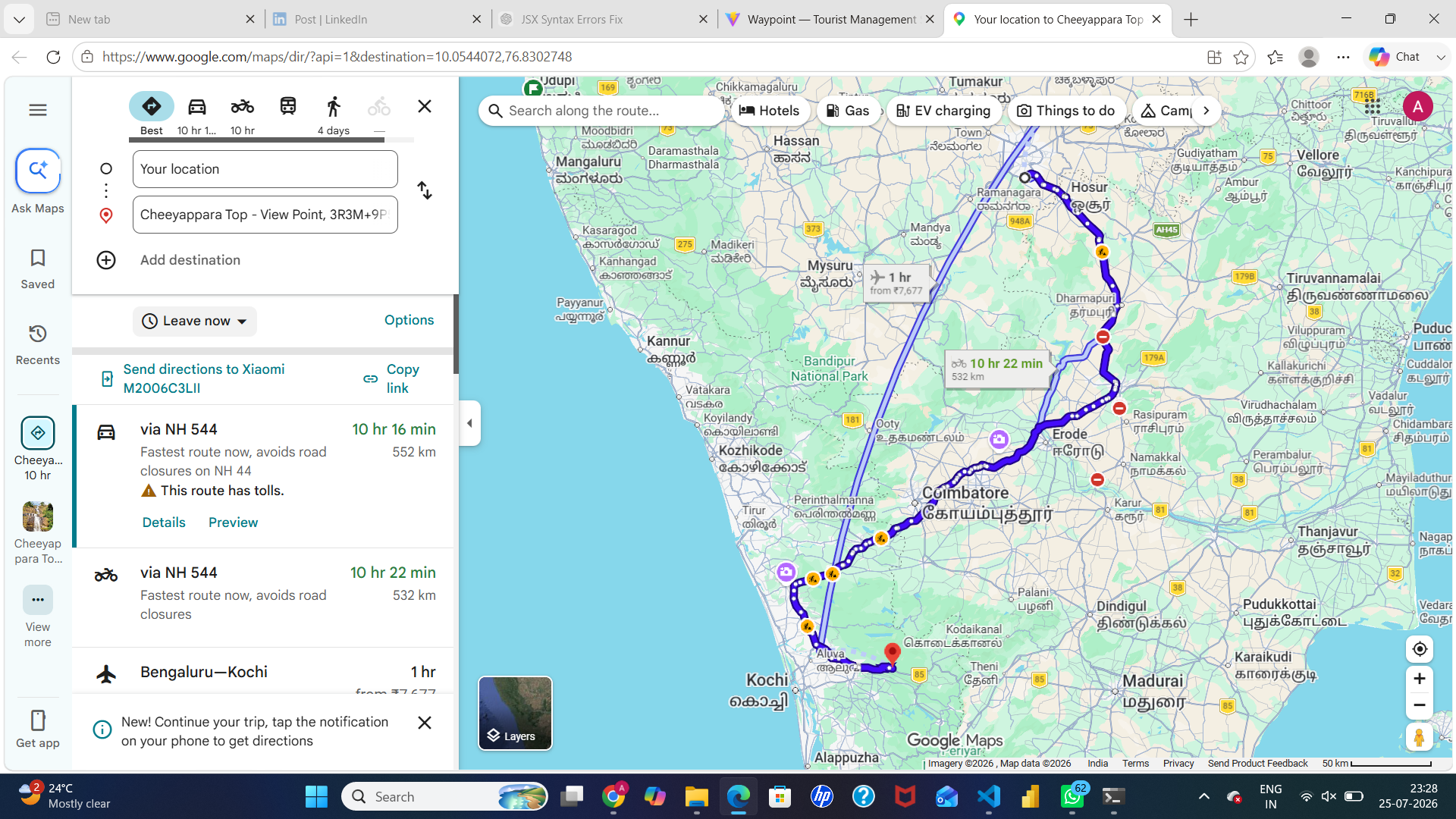
for that place it also shown the direction in google map
What it does
Waypoint – Tourist Management System is a smart tourism platform that enables users to:
Search for tourist destinations by city, district, or state. Discover nearby attractions using live OpenStreetMap data. Filter destinations by categories such as temples, waterfalls, forts, museums, beaches, parks, and more. View location details and addresses. Get instant navigation through Google Maps. Enjoy a responsive and user-friendly interface for both desktop and mobile devices. Experience fast and dynamic search with real-time location suggestions. How we built it
We developed the application using a modern full-stack architecture.
Frontend
React.js JavaScript Tailwind CSS Lucide React Icons
Backend
Node.js Express.js JWT Authentication bcrypt for password security
APIs & Services
OpenStreetMap Nominatim API (Location Search) Overpass API (Nearby Tourist Places) Google Maps Directions Integration
The frontend communicates with the backend and mapping services to fetch live locations, search nearby attractions, and display them in an intuitive interface.
Challenges we ran into Integrating OpenStreetMap's Nominatim and Overpass APIs efficiently. Handling API rate limits and asynchronous requests. Categorizing tourist places from raw OpenStreetMap data. Preventing outdated search results during rapid user input. Designing a responsive UI that works seamlessly across devices. Managing live search performance while maintaining a smooth user experience. Accomplishments that we're proud of Successfully integrated live location search with OpenStreetMap. Built a fast real-time tourist discovery system. Implemented category-based filtering for better exploration. Added one-click Google Maps navigation for every destination. Created a clean, responsive, and modern user interface. Developed a scalable architecture that can support additional tourism features in the future. What we learned
During this project, we gained practical experience in:
Building scalable React applications. Integrating third-party mapping APIs. Working with geolocation and geocoding services. Managing asynchronous API calls and state efficiently. Designing responsive user interfaces with Tailwind CSS. Securing backend services using JWT authentication. Improving application performance through debounced search and optimized API requests.
Built With
- api
- css
- design
- gps
- interactive
- javascript
- location
- management
- maps
- nearby
- node.js
- openstreetmap
- places
- planner
- react
- real-time
- responsive
- rest
- search
- services
- tailwind
- tourism
- travel
- web

Log in or sign up for Devpost to join the conversation.