-
-
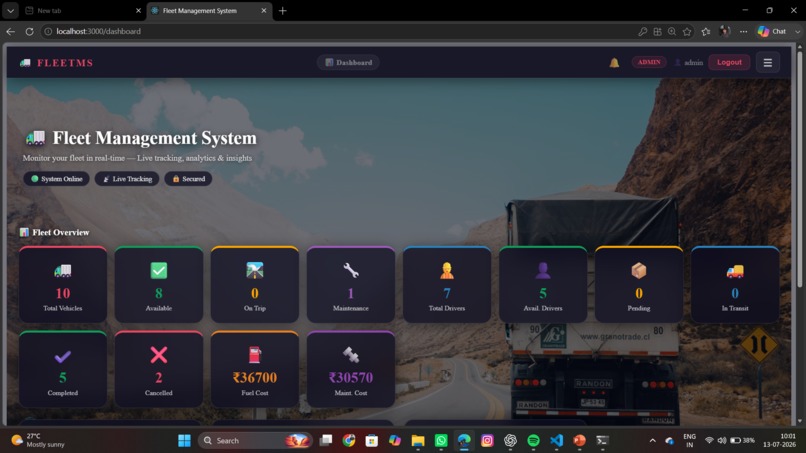
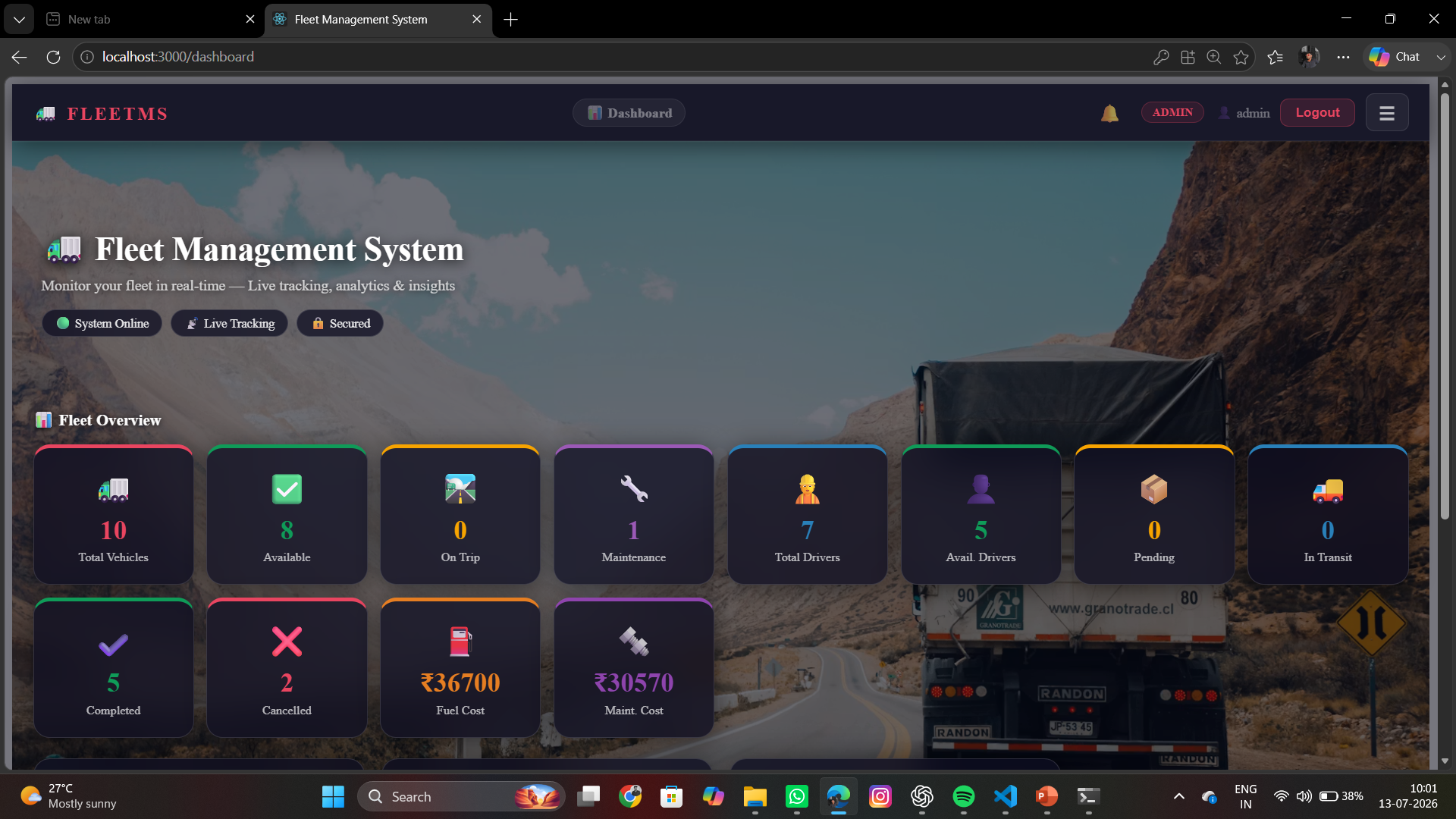
DashBoard Page
-
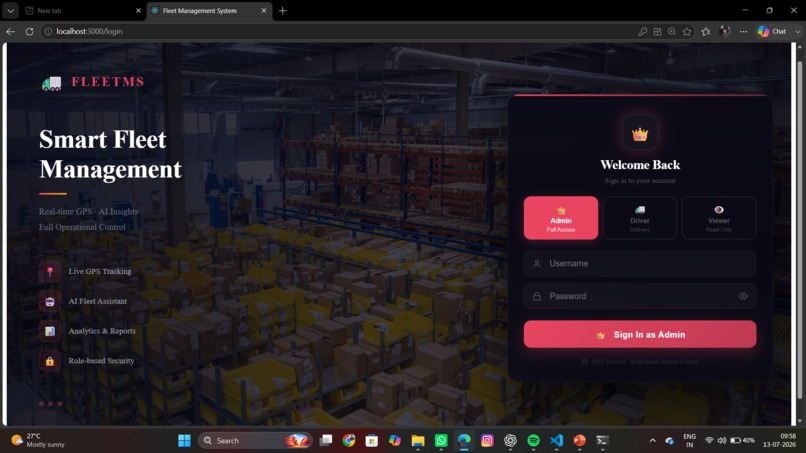
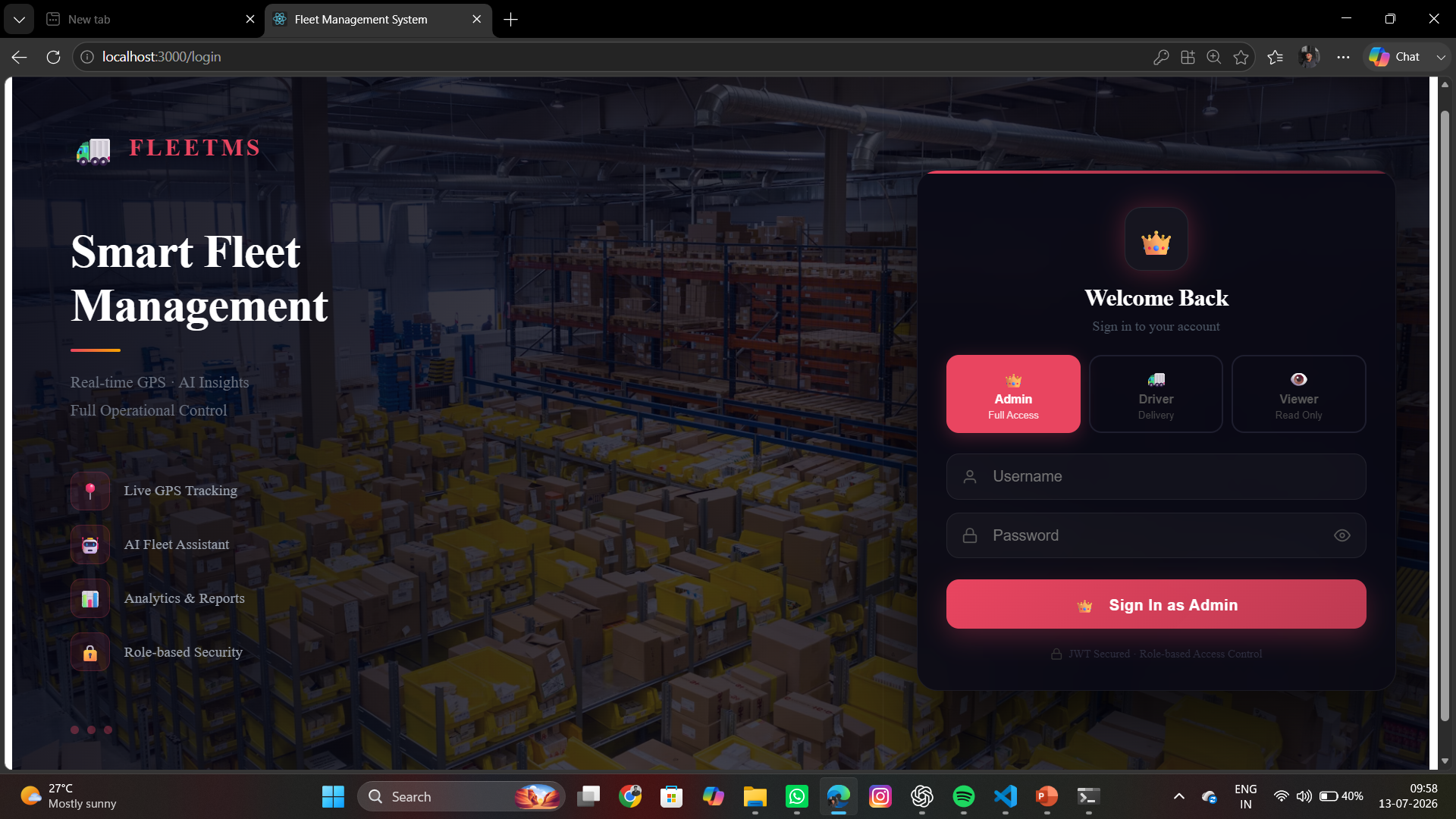
Login Page
## Inspiration
Managing a fleet involves more than simply keeping vehicle records. Fleet operators need to coordinate vehicles, drivers, routes, deliveries, maintenance, fuel, and real-time movement.
We wanted to build a single platform that could bring these activities together and provide better visibility into fleet operations. This led us to create Smart Fleet Management System (FleetMS) — a centralized platform combining fleet management with real-time GPS tracking and intelligent route assistance.
What it does
FleetMS provides a centralized system for managing day-to-day fleet operations.
Key features include:
- 🚚 Vehicle management and status monitoring
- 👨✈️ Driver management and assignments
- 🗺️ Route creation and location mapping
- 📦 Delivery scheduling and status tracking
- 📍 Real-time vehicle GPS tracking
- 🔔 Real-time notifications and alerts
- ⛽ Fuel record management
- 🔧 Vehicle maintenance management
- 📊 Fleet dashboards, analytics, and reports
- 🤖 AI-assisted route optimization
- 🔐 Secure role-based access for administrators, drivers, and viewers
The Fleet Monitor provides a live map view where vehicle locations can be monitored as GPS updates are received.
How we built it
We built FleetMS as a full-stack web application.
Frontend
The frontend uses React.js with a responsive dashboard and dedicated modules for vehicles, drivers, routes, deliveries, monitoring, maintenance, fuel, reports, and notifications.
Axios is used for API communication, while React Router manages application navigation and protected routes.
Backend
The backend is developed using Java and Spring Boot.
We created REST APIs for fleet operations and used Spring Security with JWT for authentication and role-based authorization.
Database
MySQL stores the application's operational data, including users, vehicles, drivers, routes, deliveries, vehicle locations, fuel records, maintenance records, and notifications.
Real-Time Tracking
For live GPS tracking, we implemented WebSocket/STOMP communication.
Vehicle GPS
     ↓
WebSocket / STOMP
     ↓
Spring Boot Backend
     ↓
Vehicle Location Service
     ↓
Database
     ↓
WebSocket Broadcast
     ↓
React Fleet Monitor
     ↓
Live Map
Vehicle locations are visualized using Leaflet and OpenStreetMap.
For route management, location names can be converted into geographical coordinates through geocoding, allowing routes to be displayed on the map.
Challenges we ran into
One of our biggest challenges was implementing real-time GPS tracking. Traditional REST requests are not ideal for continuously changing location data, so we had to implement WebSocket communication between the frontend and backend.
Another challenge was connecting different fleet modules while maintaining consistent relationships between vehicles, drivers, routes, and deliveries.
Implementing JWT authentication and role-based access was also important because administrators, drivers, and viewers require different permissions.
Synchronizing live GPS updates with the interactive map was another challenge. The frontend needed to receive location events and update vehicle markers dynamically without refreshing the page.
Accomplishments that we're proud of
We are proud of building a complete full-stack fleet management platform that connects multiple operational modules into one system.
Our key accomplishments include:
- Building a functional React + Spring Boot architecture
- Implementing secure JWT authentication
- Creating role-based access for different users
- Implementing real-time GPS tracking using WebSocket
- Integrating an interactive Leaflet/OpenStreetMap fleet map
- Connecting vehicles, drivers, routes, and deliveries
- Adding fuel and maintenance management
- Building dashboards and operational reports
- Integrating intelligent route assistance into the platform
Most importantly, FleetMS demonstrates how real-time data and intelligent decision support can be combined with traditional fleet management.
What we learned
Through this project, we gained practical experience in developing and connecting the different layers of a full-stack application.
We learned about:
- React.js application development
- Spring Boot REST API development
- MySQL database design
- JPA/Hibernate
- JWT authentication and authorization
- WebSocket/STOMP real-time communication
- GPS location handling
- Interactive map integration
- API integration and testing
- Dashboard and data visualization
- Modular full-stack architecture
We also learned that building a real-world application requires more than implementing individual features — the modules must communicate reliably and provide a consistent user experience.
What's next for Smart Fleet Management System (FleetMS)
We plan to extend FleetMS into a more intelligent and scalable logistics platform.
Future improvements include:
- 🤖 Advanced AI-based route optimization
- 🔮 Predictive maintenance using historical vehicle data
- ⏱️ Delivery time prediction
- 📡 IoT sensor integration
- 📊 Advanced fleet analytics
- 📱 Dedicated driver mobile application
- ☁️ Cloud deployment and scalable infrastructure
- 🧠 AI-powered fleet assistant
Our vision is to evolve FleetMS from a fleet management application into an intelligent logistics decision-support platform that helps organizations monitor operations, optimize resources, and make faster data-driven decisions.
Built With
- api
- axios
- boot
- fleet
- git
- github
- gps
- hibernate
- java
- javascript
- jpa
- jwt
- leaflet.js
- logistics
- management
- maven
- mysql
- openstreetmap
- react
- real-time
- rest
- security
- spring
- stomp
- websocket


Log in or sign up for Devpost to join the conversation.