Inspiration
Every year, countless injured wild animals are found by hikers, drivers, park visitors, and ordinary people who want to help but don't know what to do. During these critical moments, people often search online for answers, but information can be slow, confusing, or unsafe. The delay between finding an injured animal and getting professional help can make the situation worse.
I wanted to create a tool that could guide people during those first few minutes providing safe advice, identifying the situation, and connecting them with the right wildlife rescue support.
What it does
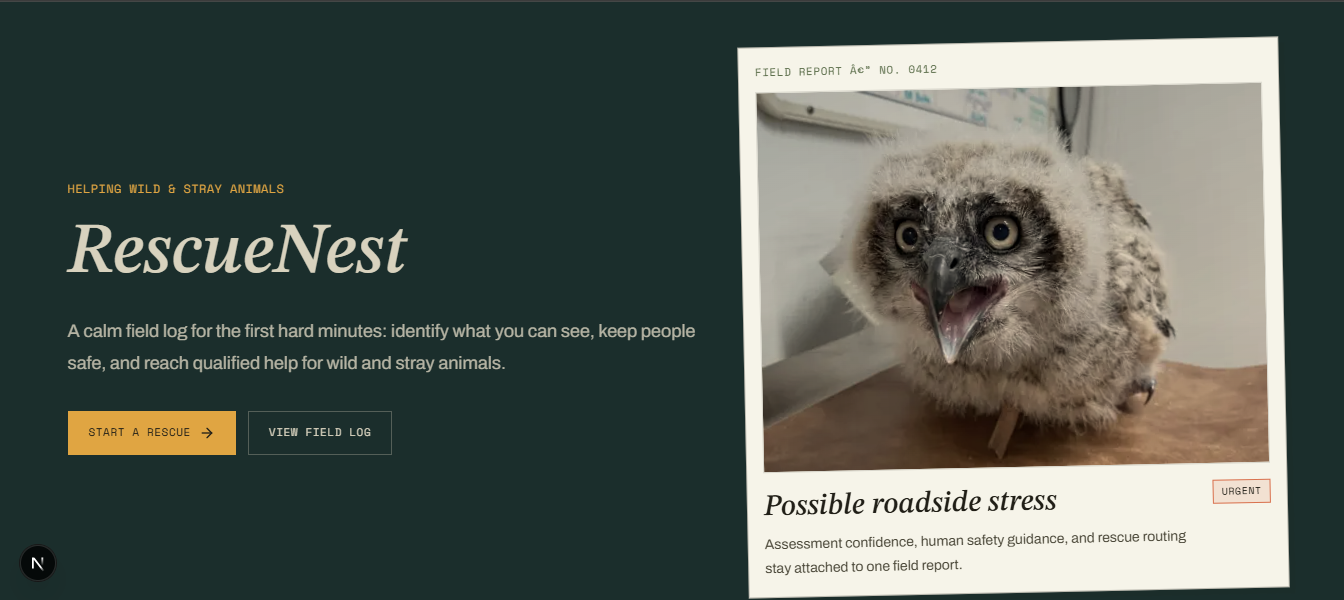
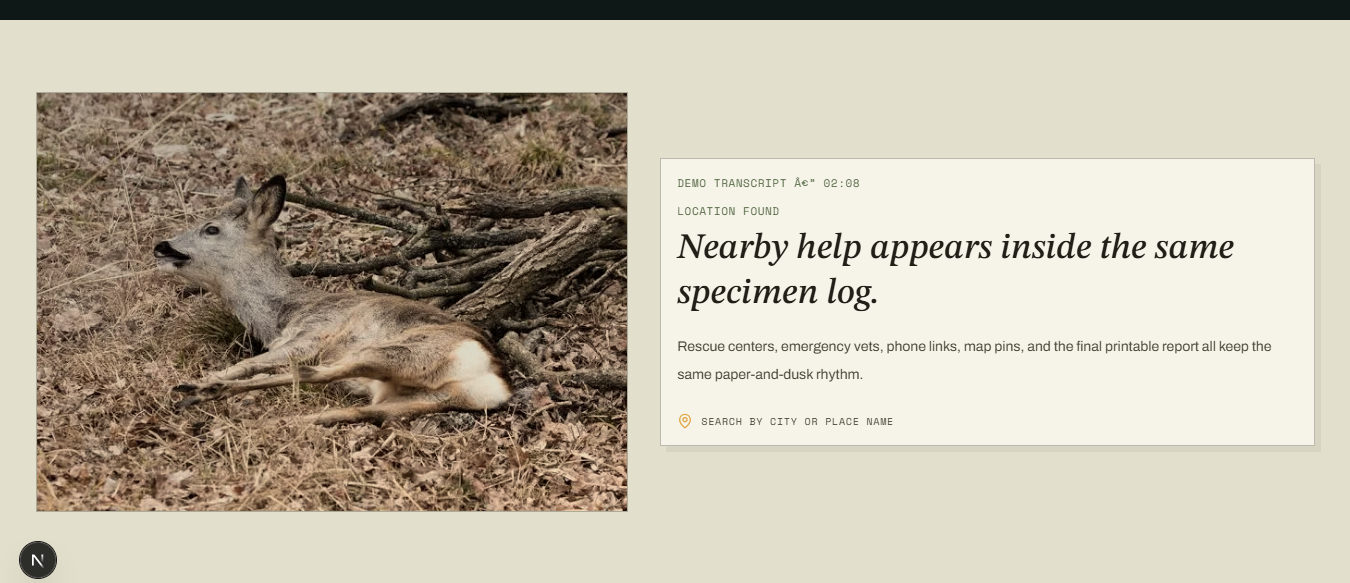
RescueNest helps users respond to wildlife emergencies by combining AI image analysis, emergency guidance, and rescue coordination.
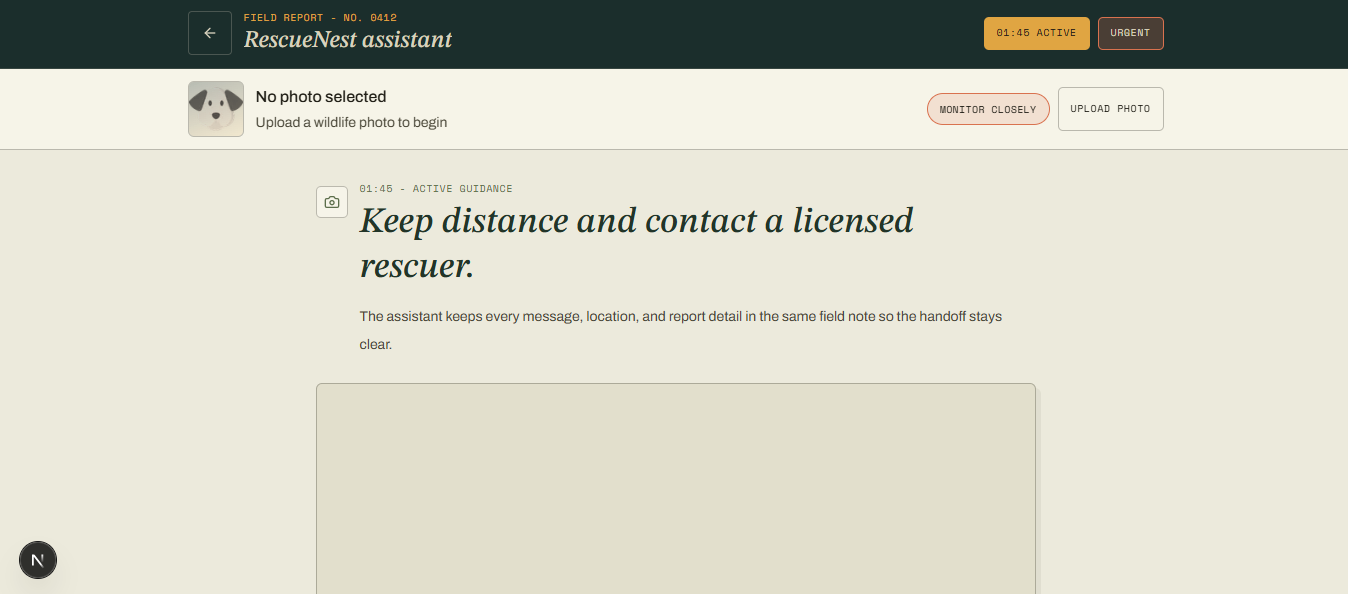
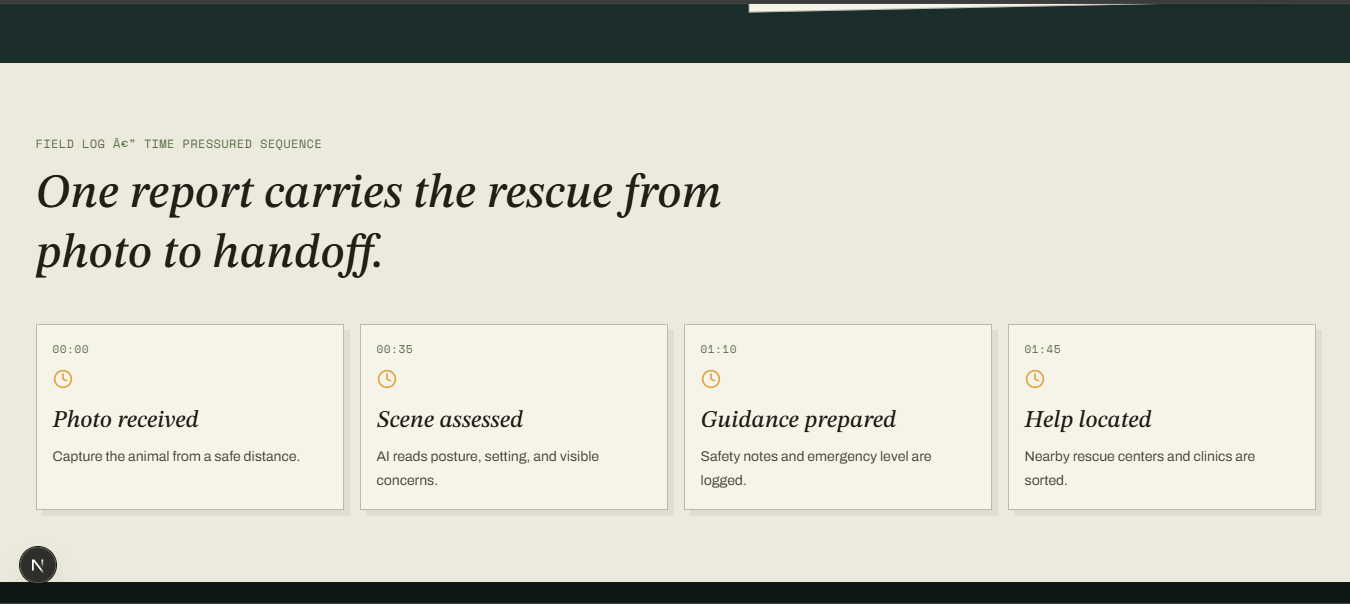
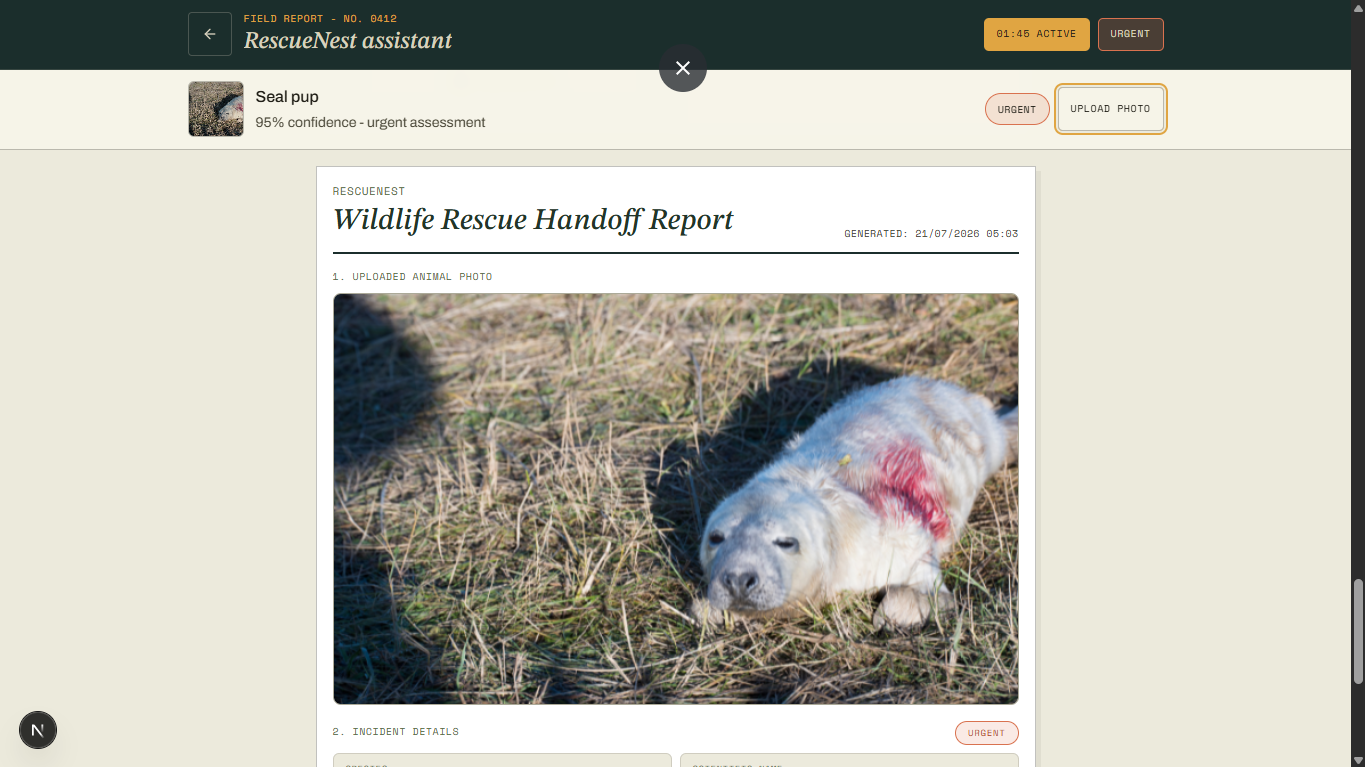
Users can upload an image of an injured wild animal, and RescueNest:
- Identifies the possible animal species using AI
- Evaluates the urgency of the situation
- Provides safe first-aid instructions
- Explains actions to avoid that could harm the animal
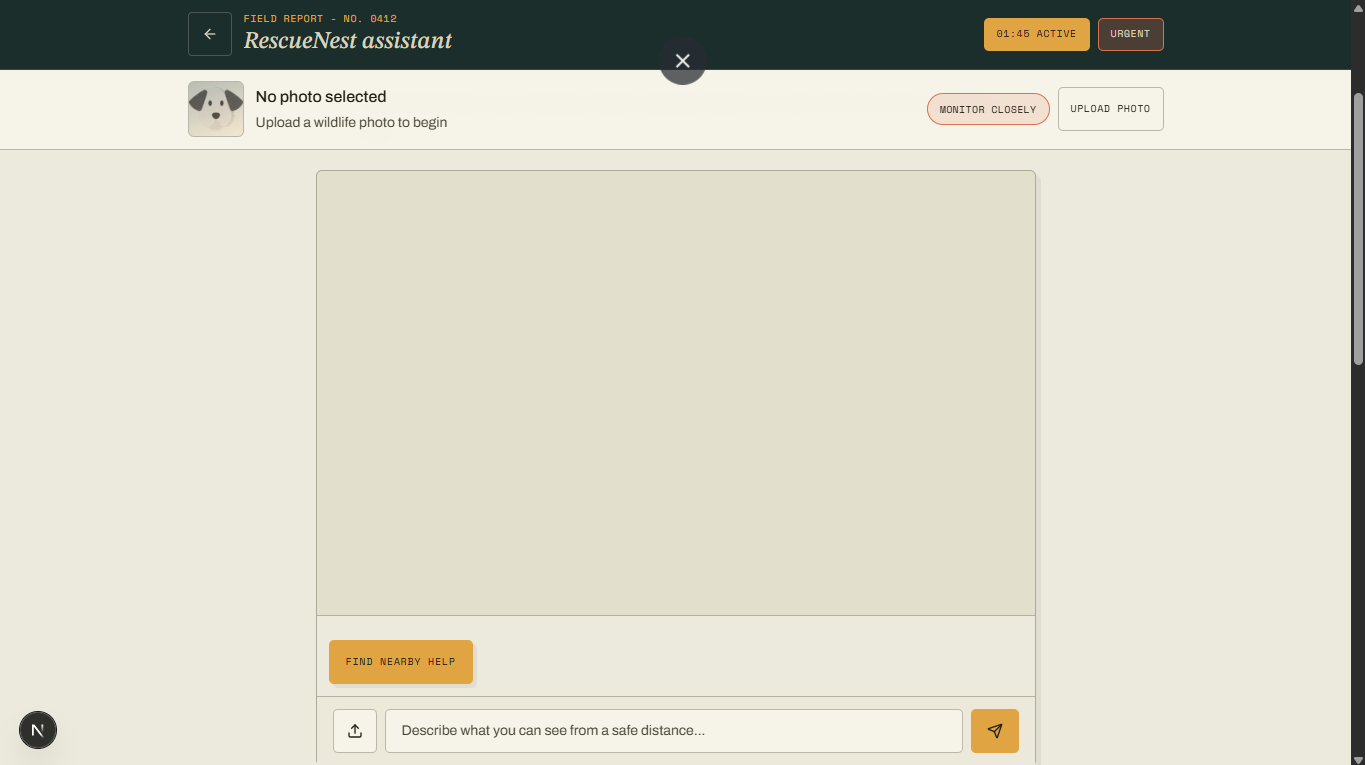
- Asks only essential follow-up questions
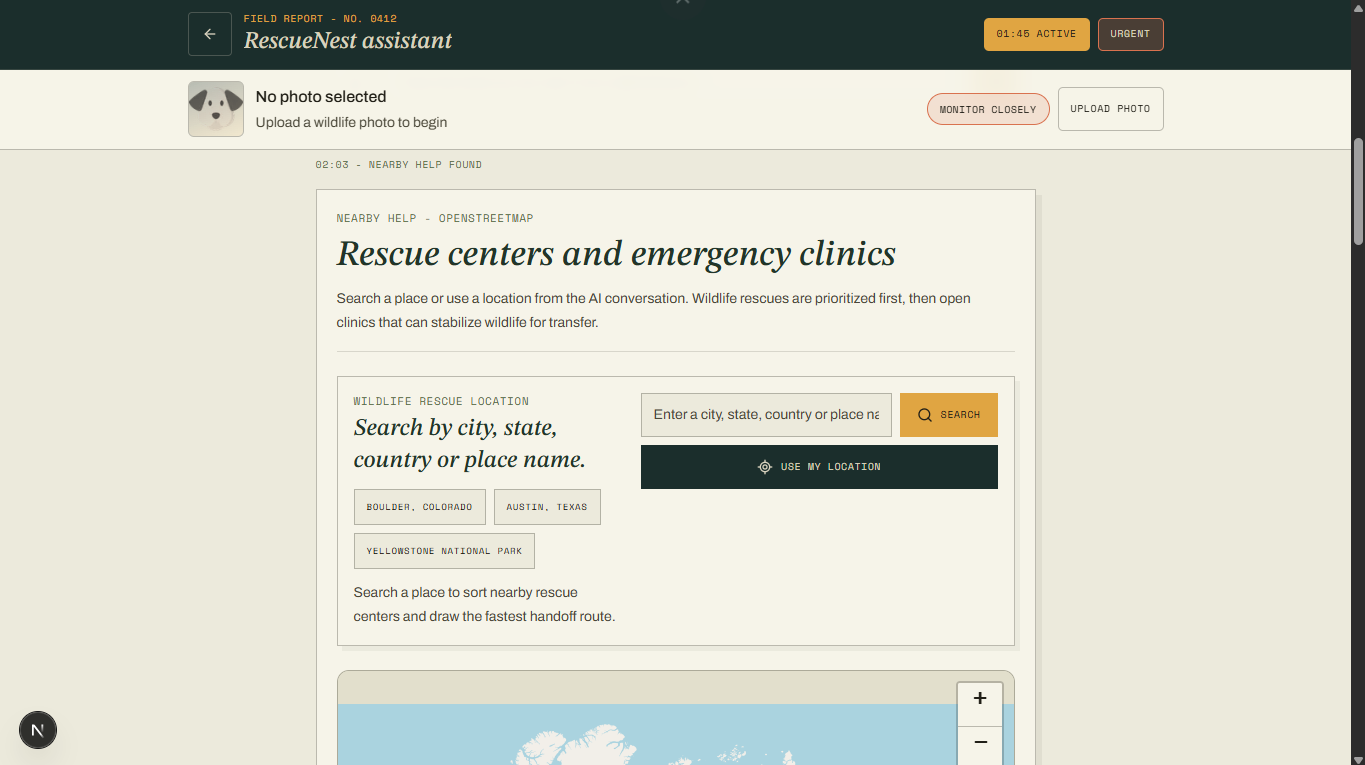
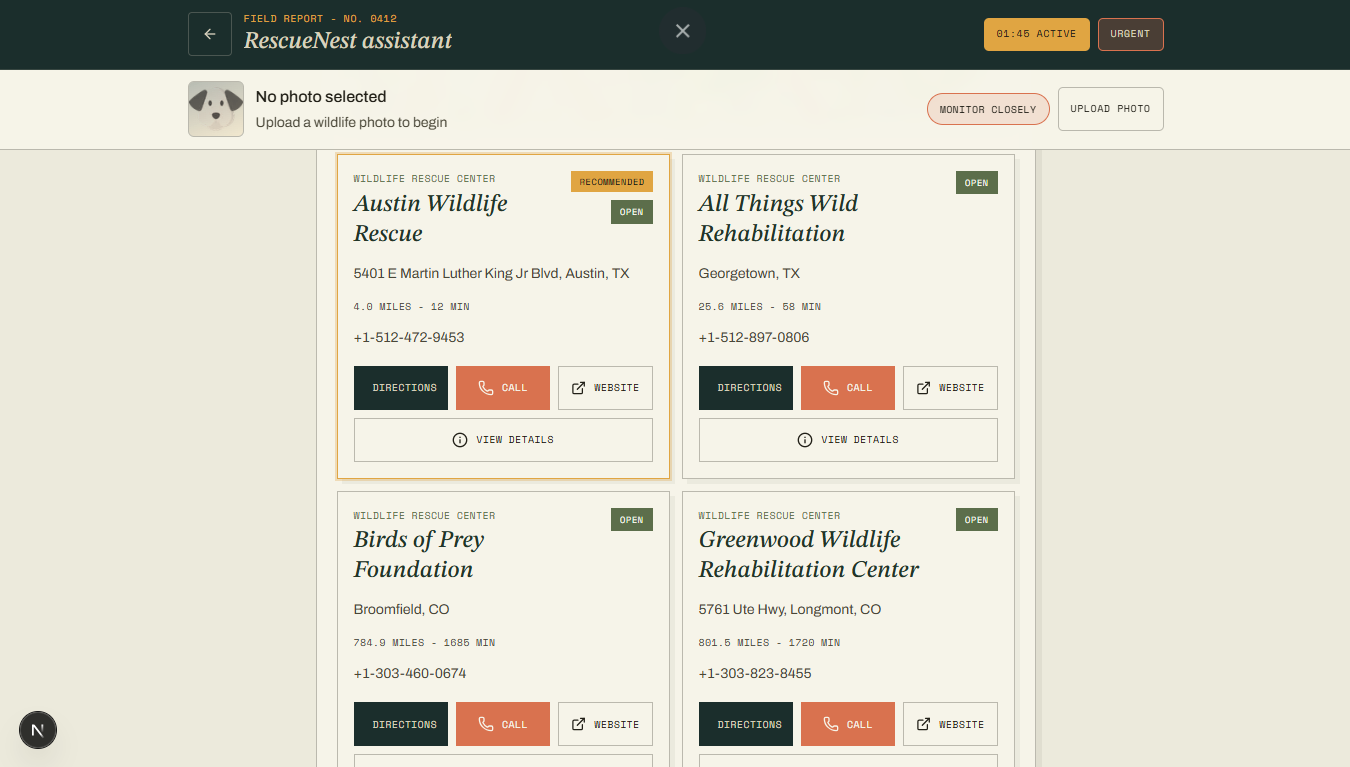
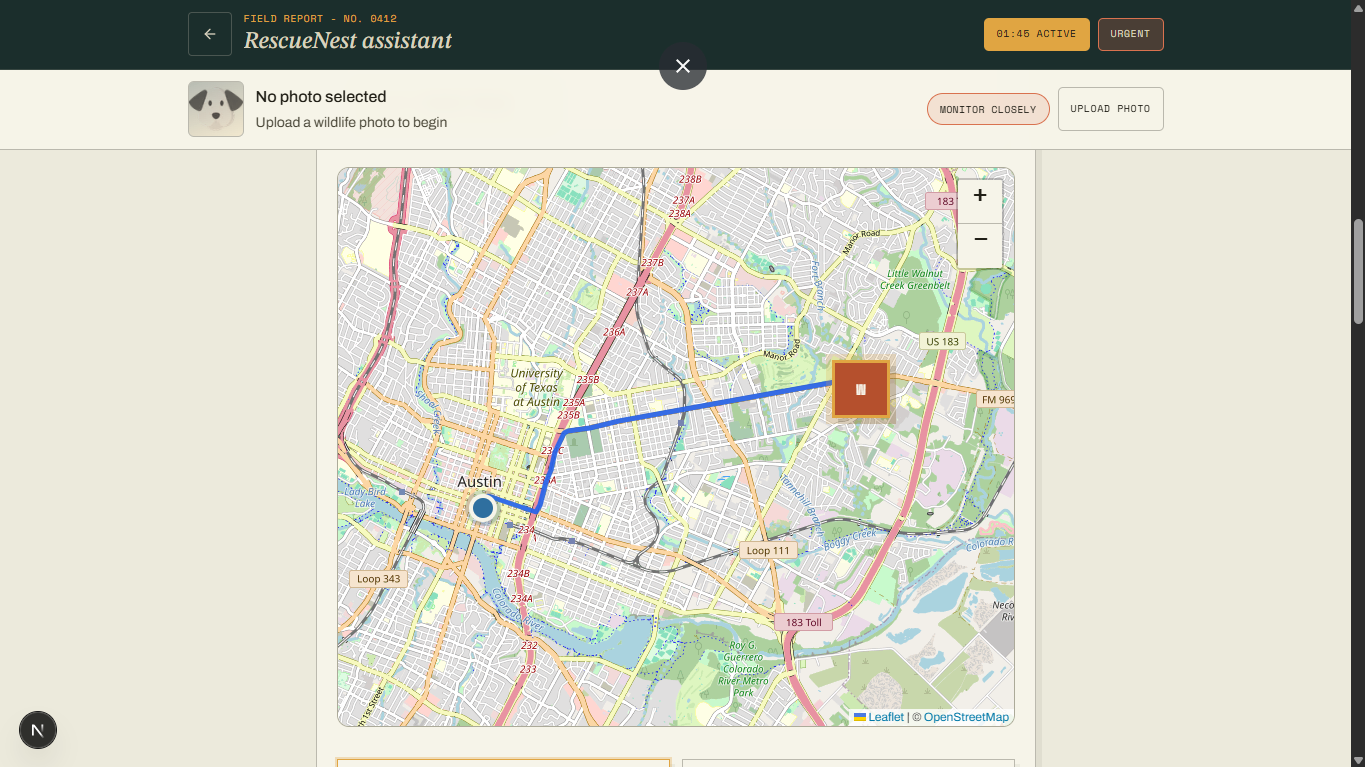
- Helps locate nearby wildlife rescue organizations
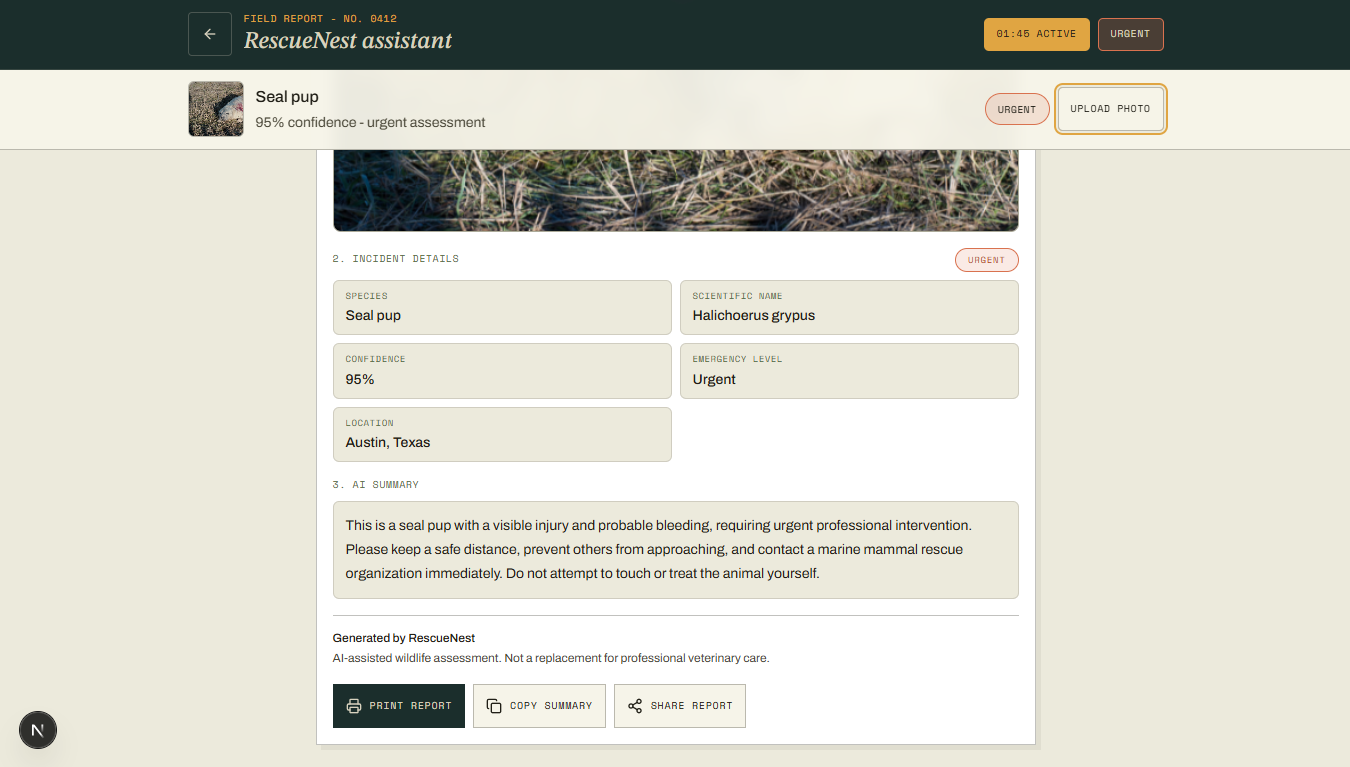
- Generates a professional rescue handoff report that can be shared with experts
The goal is not to replace wildlife professionals, but to help people make safer decisions until trained rescuers can intervene.
How i built it
RescueNest was built as a full-stack AI-powered web application.
Frontend
- Next.js
- React
- TypeScript
- Tailwind CSS
Backend
- FastAPI
- Python
- Pydantic
AI Integration
I integrated a multimodal AI model capable of analyzing wildlife images and generating structured emergency assessments.
The AI workflow was designed to:
- understand uploaded animal images
- assess possible injuries
- provide emergency recommendations
- generate structured rescue reports
During development, i used OpenAI Codex to accelerate coding, refactoring, UI improvements, debugging, and feature development. We also used GPT-5.6 as an engineering assistant for architecture decisions, prompt design, and improving the emergency response workflow.
Challenges I ran into
One of the biggest challenges was making the AI behave like a wildlife emergency assistant instead of a general chatbot.
Initial versions provided too much information and asked unnecessary questions before giving useful guidance.
We improved the system by refining prompts and response structures so the AI could:
- prioritize urgent first-aid instructions
- ask only necessary questions
- avoid unsafe recommendations
- remain cautious when uncertain
- provide clear and actionable steps
Another challenge was designing an experience that was simple enough for stressed users while still collecting enough information to generate useful rescue assistance.
Accomplishments that i am proud of
I am proud of building a complete AI-powered rescue workflow from image analysis to professional rescue handoff.
Key accomplishments include:
- Built an end-to-end wildlife emergency assistant prototype
- Created an AI workflow that combines image understanding with emergency reasoning
- Designed a user-friendly interface focused on fast decision-making
- Developed a rescue report generation system for sharing information with professionals
- Improved AI reliability through prompt engineering and structured outputs
- Created a solution that focuses on real-world impact by helping people respond better during wildlife emergencies
What I Learned
This project taught us that building AI applications is not only about connecting a model to a frontend.
The hardest part is designing reliable workflows, refining prompts, validating AI outputs, and creating experiences where users can trust the system during important moments.
I learned how powerful AI-assisted development can be for speeding up implementation, exploring ideas, debugging problems, and improving product quality.
Most importantly, we learned that technology can create meaningful impact when it is designed around real human and environmental challenges.
What's next for RescueNest
My future plans for RescueNest include:
- Expanding support for more wildlife species
- Improving rescue center coverage across different regions
- Adding multilingual support
- Providing offline emergency guidance
- Integrating directly with wildlife rehabilitation organizations
- Improving AI accuracy through more wildlife-specific data
My long-term vision is to make RescueNest a trusted first-response companion that helps people protect wildlife anywhere in the world.
Built With
- codex
- fastapi
- gps
- gpt
- image
- next.js
- openai
- openstreetmap
- python
- rest
- tailwind

Log in or sign up for Devpost to join the conversation.