-
-
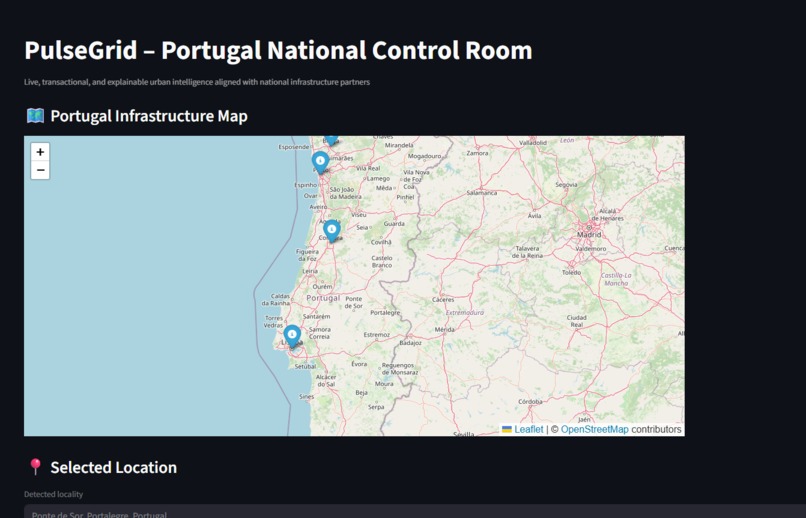
Portugal Control Room
-
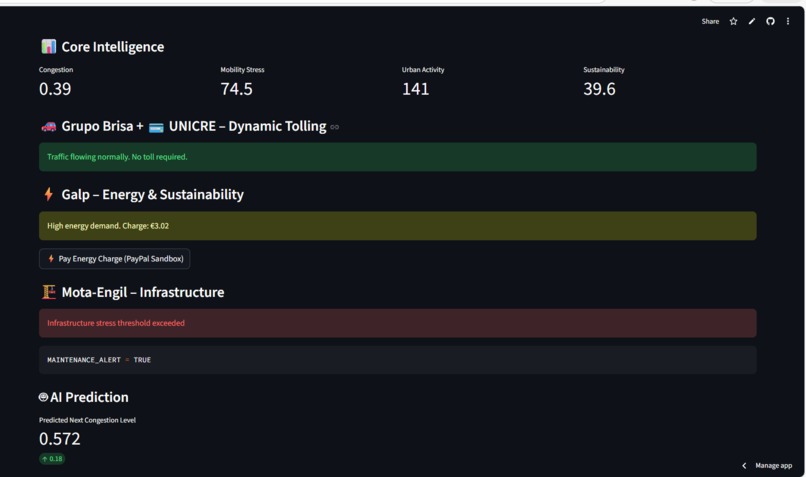
Analysis and Predictions
-
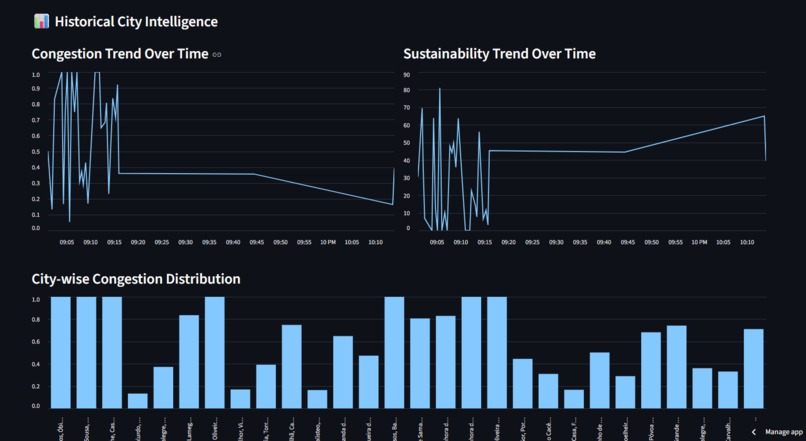
Data visualisation
-
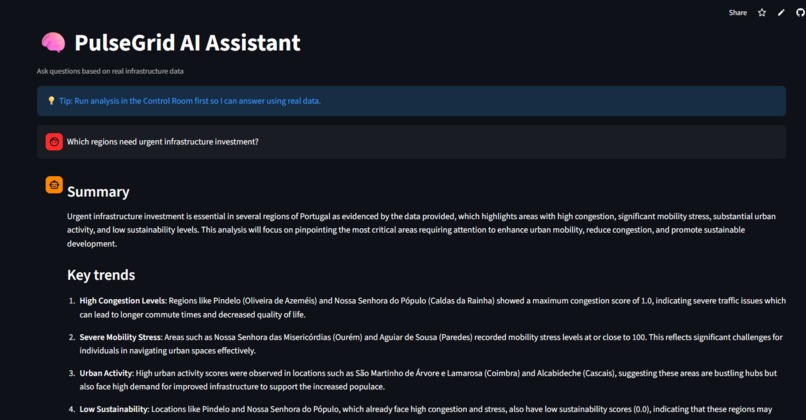
AI Assistant
-

About

Inspiration
Modern cities generate massive amounts of data, yet critical urban decisions are still reactive, fragmented, and slow. Traffic congestion, energy overload, and infrastructure stress are often addressed after damage is done.
PulseGrid was inspired by a simple question: What if cities could see, understand, and act in real time — like a national control room?
By combining live open data, AI-driven intelligence, and transactional policy mechanisms, PulseGrid reimagines how cities like those in Portugal can manage infrastructure proactively, sustainably, and transparently.
What it does
PulseGrid is a real-time urban intelligence platform that acts as a digital national control room for cities.
It:
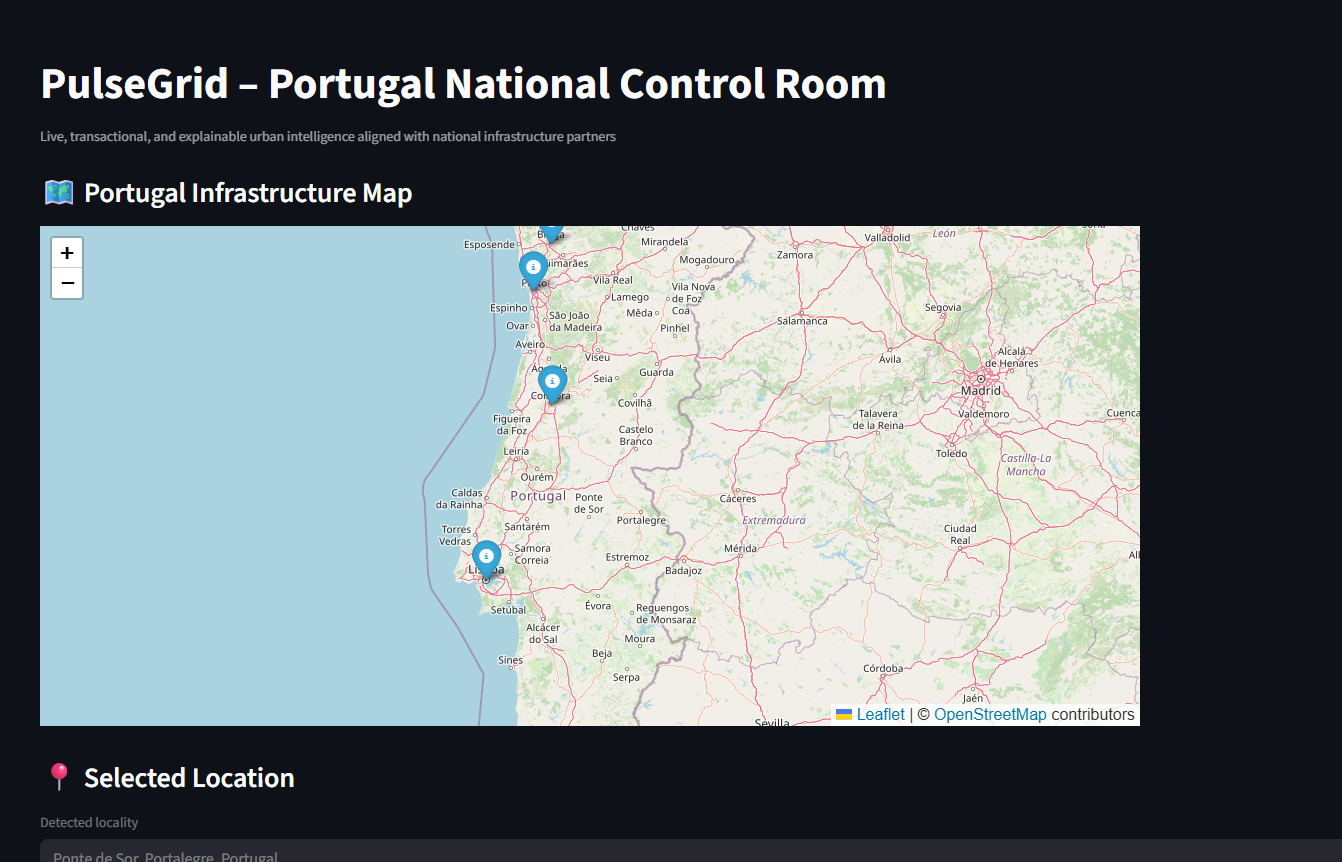
Monitors live road and infrastructure data using OpenStreetMap
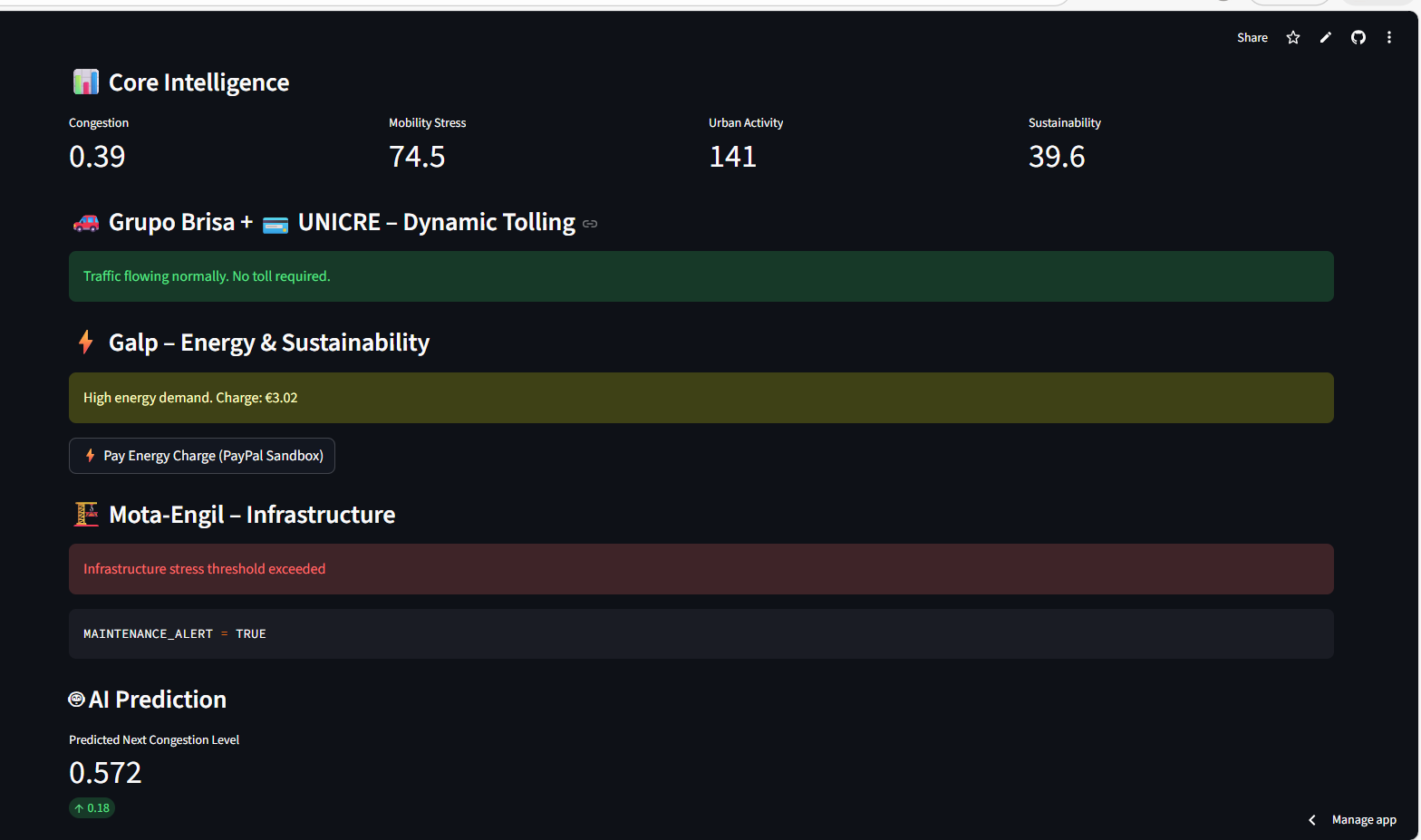
Analyzes congestion, mobility stress, urban activity, and sustainability
Applies AI-driven policy logic such as dynamic tolling and energy pricing
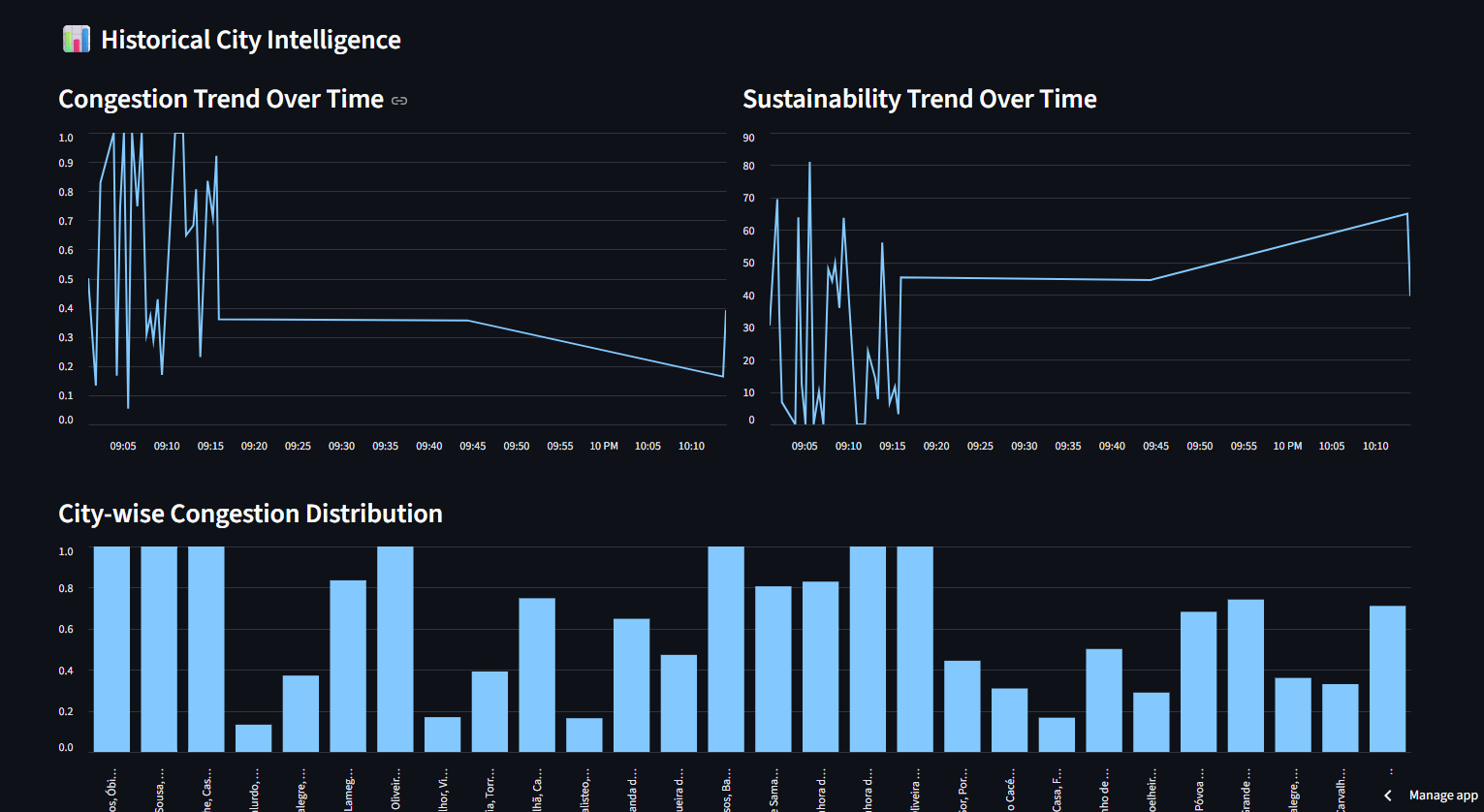
Stores historical city intelligence for long-term planning and analytics
Predicts future congestion using machine learning
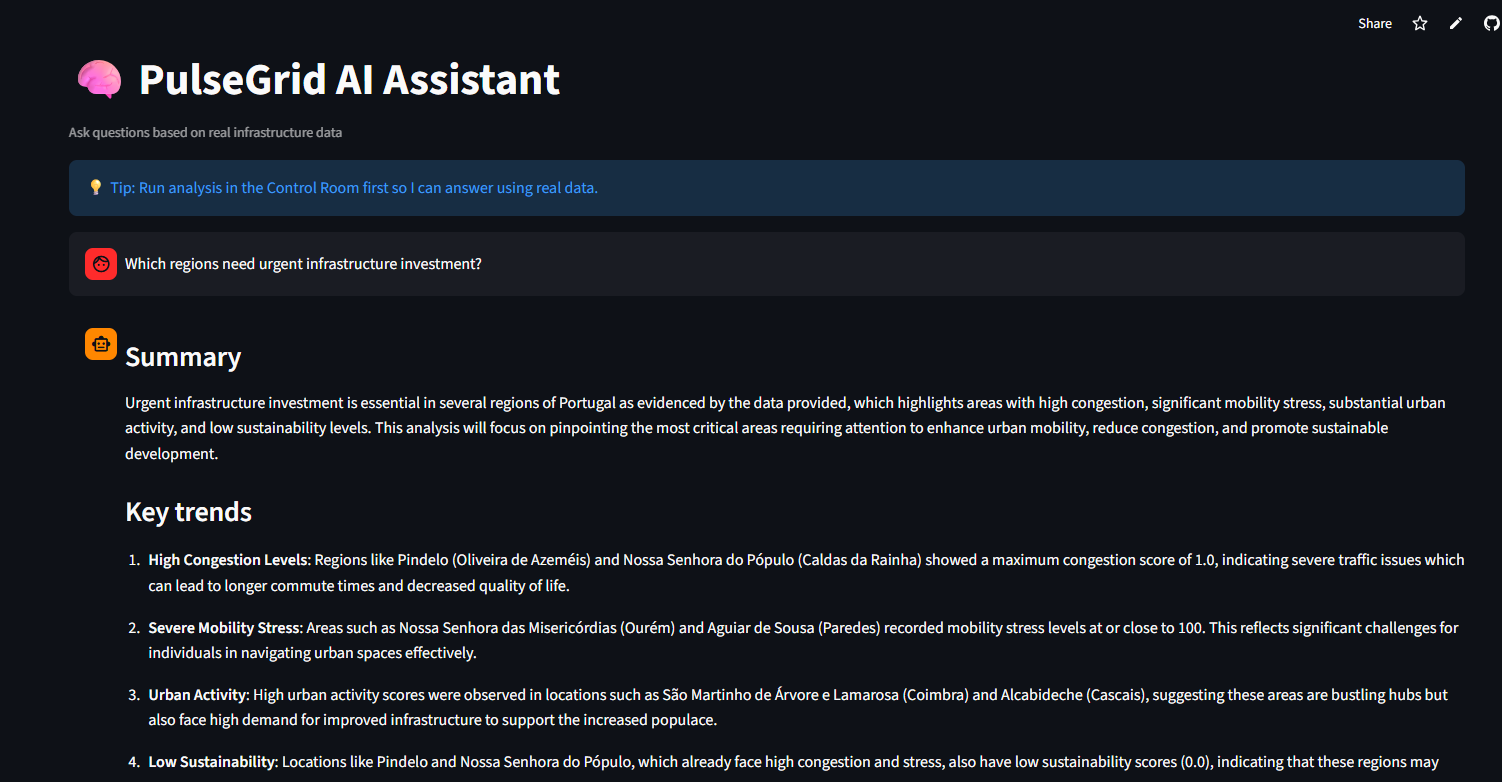
Provides an AI assistant that answers policy and planning questions using real city data
In short, PulseGrid turns raw city data into actionable decisions.
How we built it
PulseGrid was built as a full-stack, data-driven system:
Frontend & App Layer: Streamlit for rapid, interactive dashboards
Mapping & Geospatial: Folium + OpenStreetMap (Overpass API)
Live Data Processing: Real-time road topology and activity analysis
AI & Intelligence Layer:
Rule-based policy engine for congestion and sustainability
Machine learning (Linear Regression) for congestion prediction
Data Persistence: Excel-based historical storage for transparency and auditability
Payments (Simulation): PayPal Sandbox for policy-linked transactions
AI Assistant: OpenAI API used to analyze historical datasets and generate structured policy insights
Architecture: Modular, scalable, and ready for cloud deployment
All components were designed with real-world deployment in mind, not just a demo.
Challenges we ran into
Handling live data reliability: Overpass API limits and failures required fallback strategies.
Session state management: Ensuring analytics, payments, and chatbot interactions didn’t interfere with each other.
Data persistence: Designing a system that preserves intelligence across sessions while remaining transparent.
AI grounding: Ensuring the chatbot answers only using real, stored city data — not hallucinations.
Security & deployment: Managing API keys and complying with GitHub push protection rules.
Each challenge pushed us to architect PulseGrid closer to a production-grade system.
Accomplishments that we're proud of
Built a live, end-to-end urban intelligence platform in a short timeframe
Integrated real-world open data with AI decision-making
Created a policy-aware AI assistant grounded in actual infrastructure data
Designed a system suitable for governments, operators, and investors
Ensured transparency, explainability, and ethical data use throughout
PulseGrid goes beyond visualization — it executes policy logic.
What we learned
Open data becomes powerful only when paired with clear decision frameworks
AI is most impactful when constrained by real, verifiable datasets
Infrastructure intelligence requires both real-time reaction and historical context
Designing for governments and cities demands clarity, trust, and explainability
Small architectural choices today define whether a system can scale tomorrow
This project deepened our understanding of AI governance, urban analytics, and system design.
What's next for PulseGrid — Real-Time Intelligence for Cities in Portugal
PulseGrid is just getting started.
Next steps include:
Migrating data storage to a scalable database (PostgreSQL / BigQuery)
Advanced ML models for long-term traffic and energy forecasting
Real-time IoT integration (traffic sensors, energy meters)
Role-based dashboards for governments, operators, and citizens
Smart contracts for automated tolling and energy credits
Expansion beyond Portugal to pan-European smart city deployments
Our vision is bold but clear: PulseGrid becomes the operating system for intelligent cities

Log in or sign up for Devpost to join the conversation.