-
-
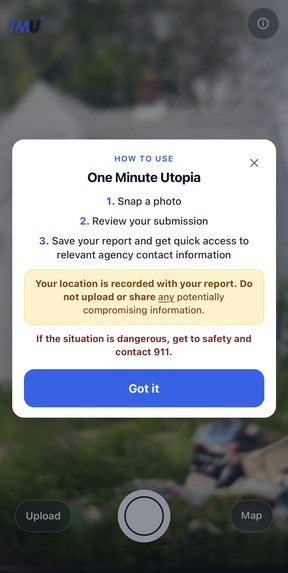
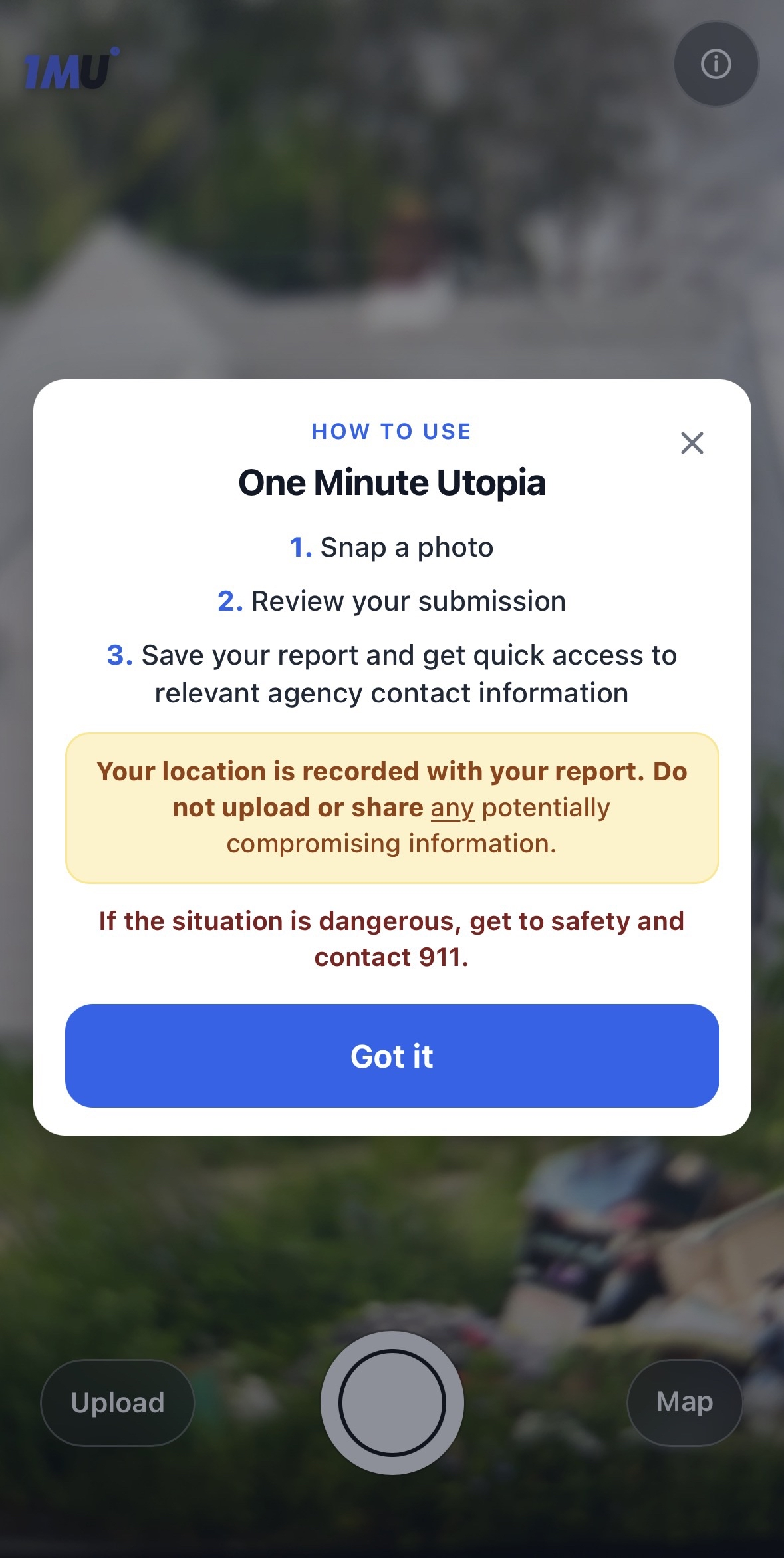
User onboarding info page
-
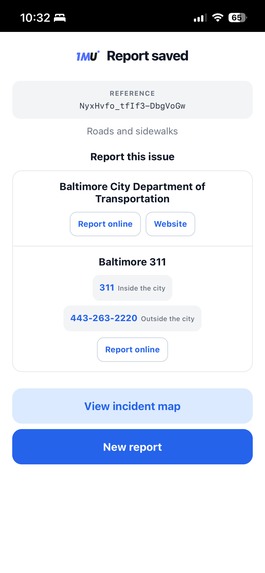
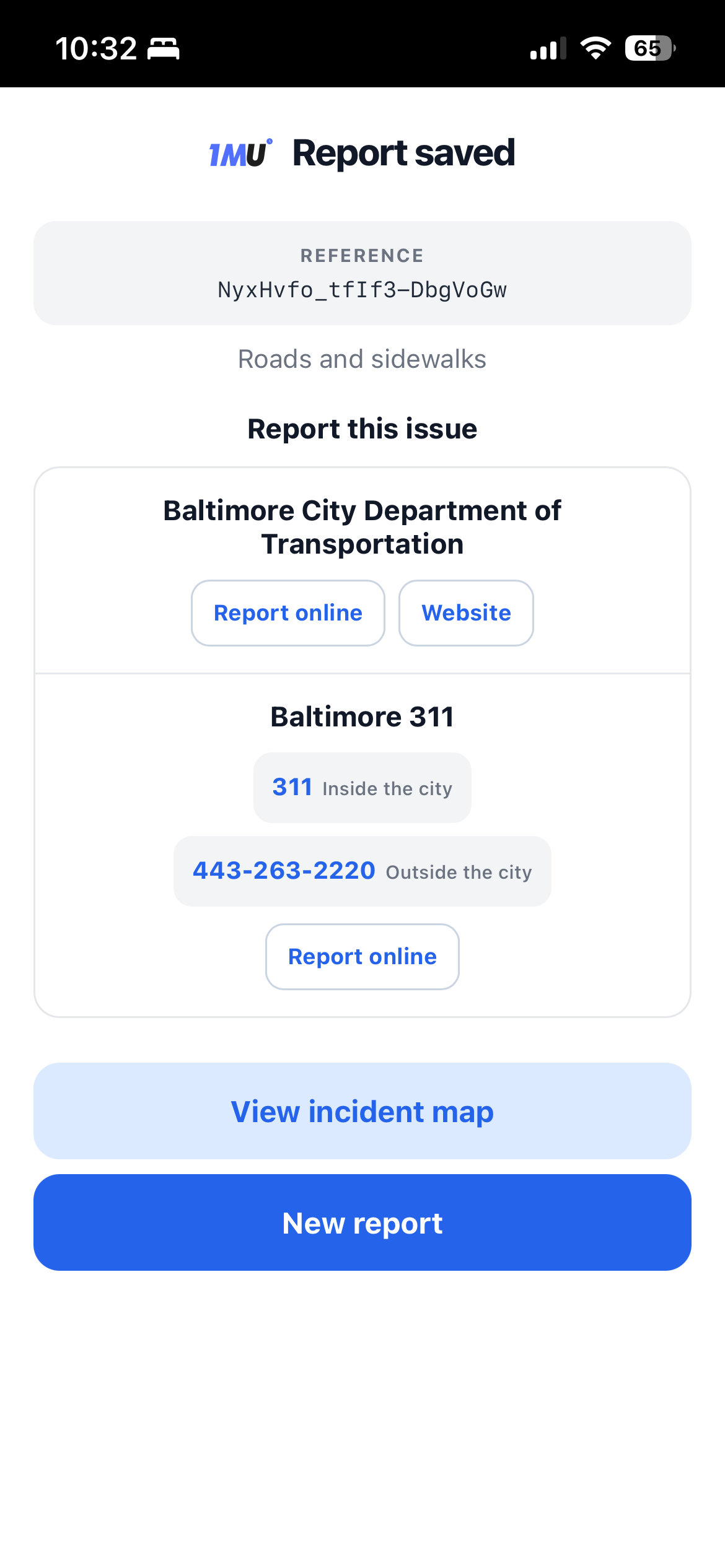
Post-report confirmation page
-
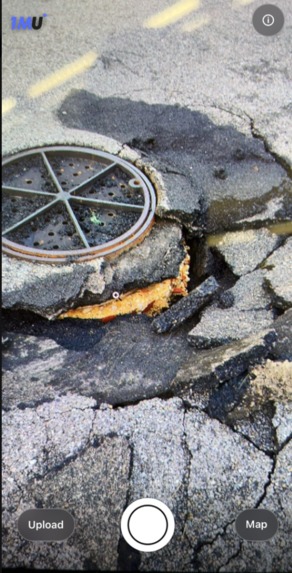
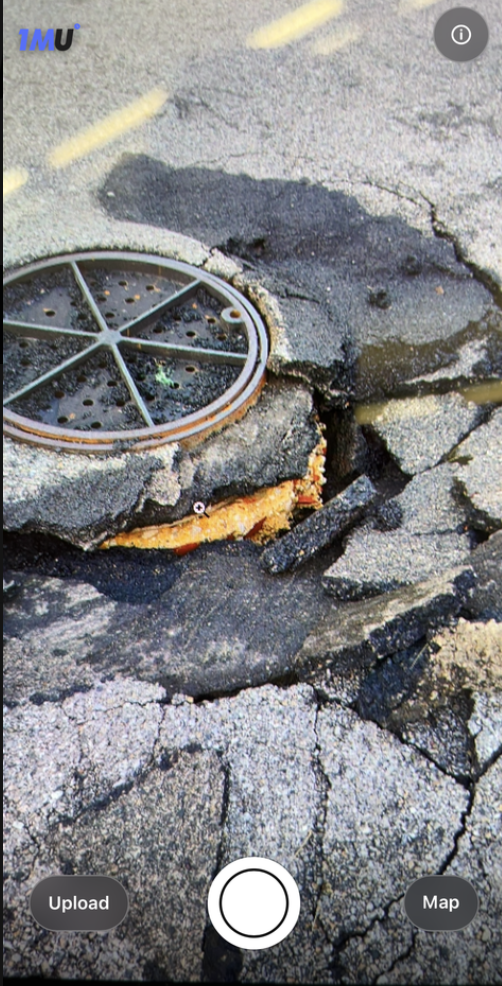
Image capture page
-
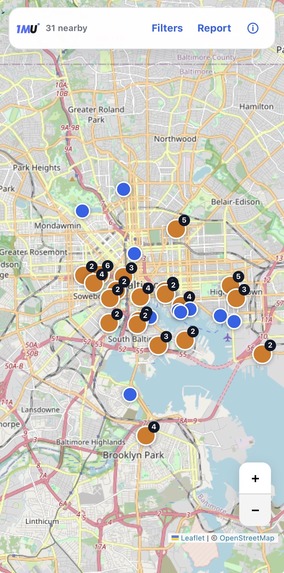
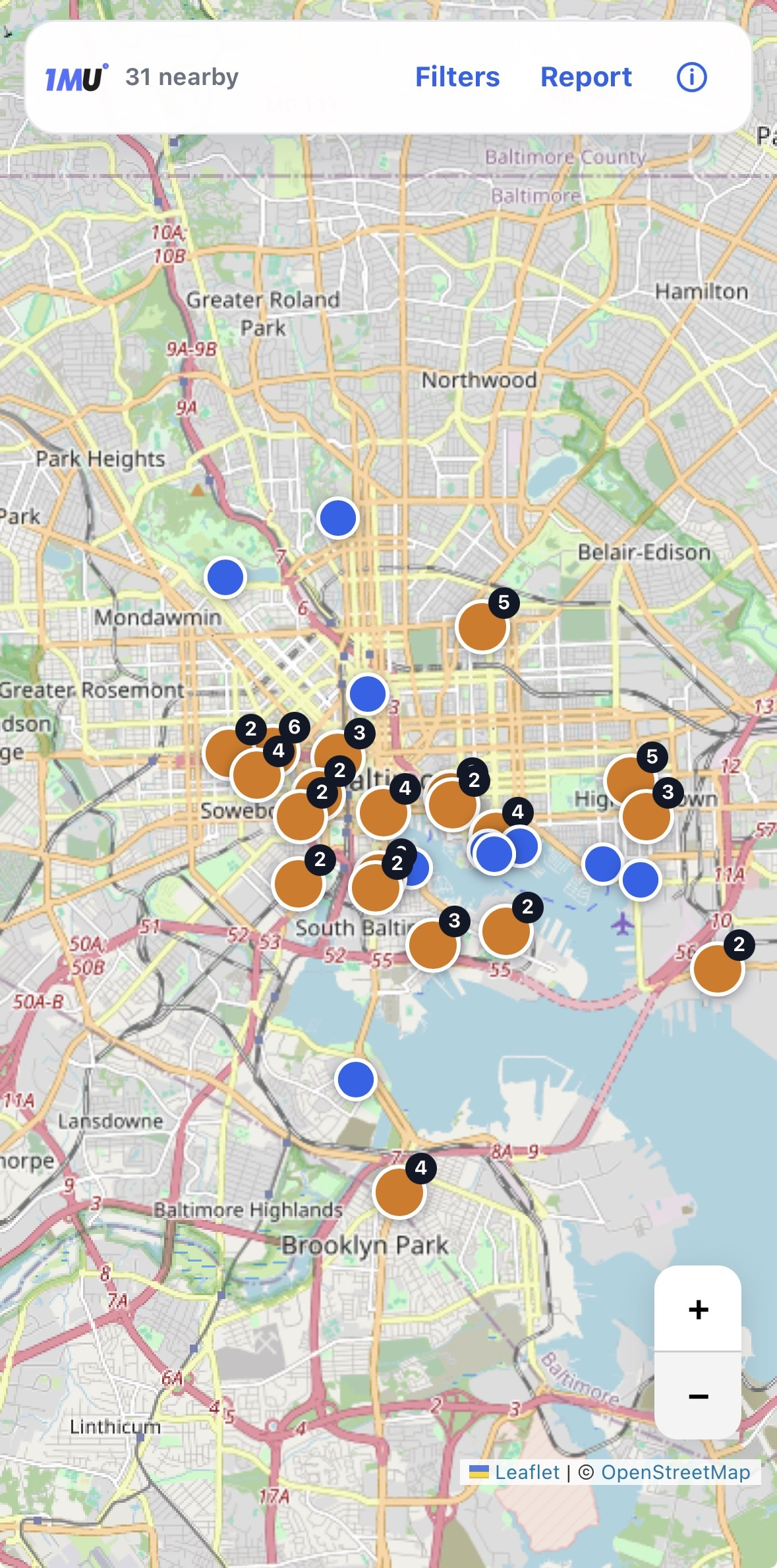
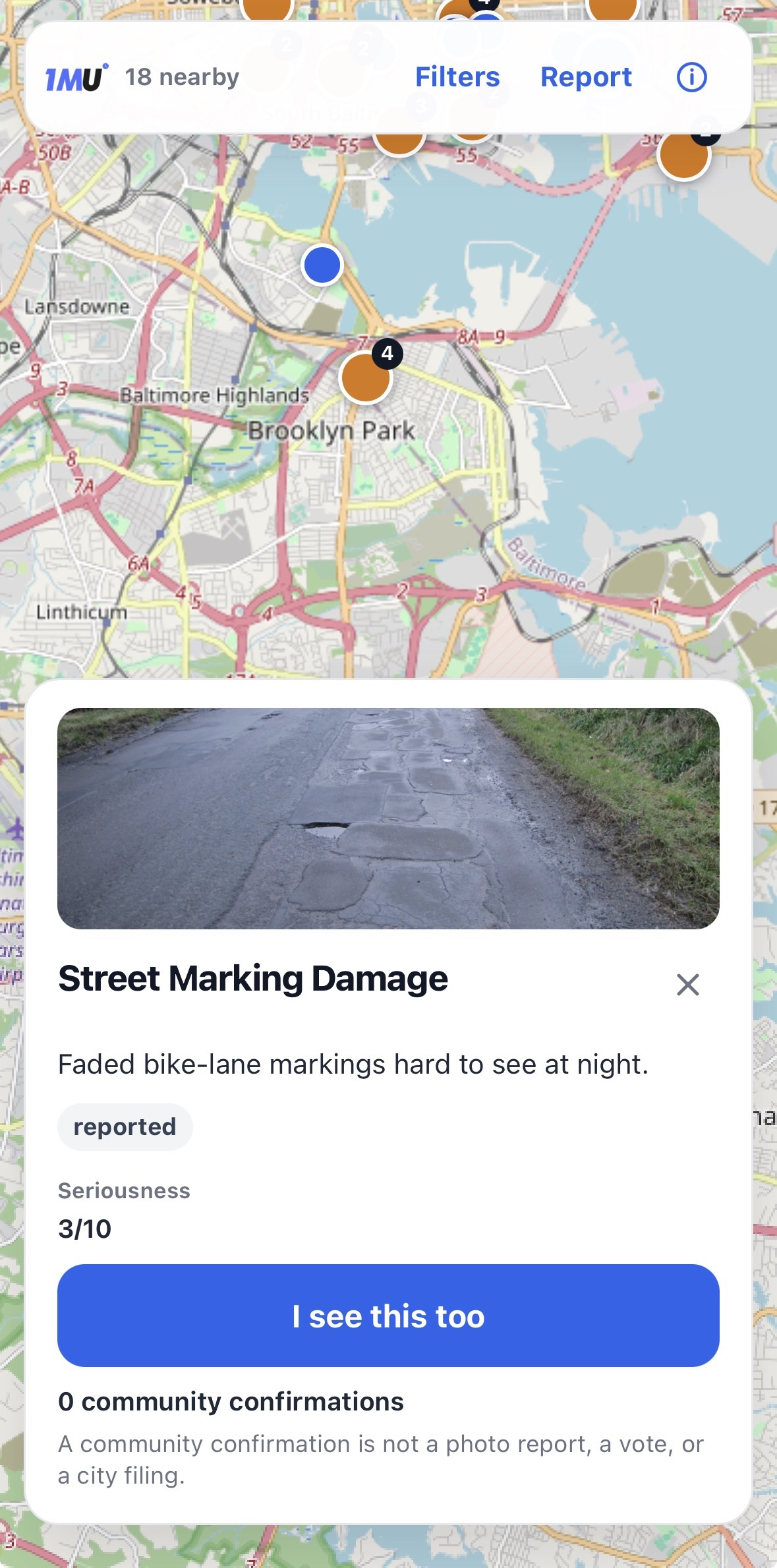
Community incidents map (1)
-
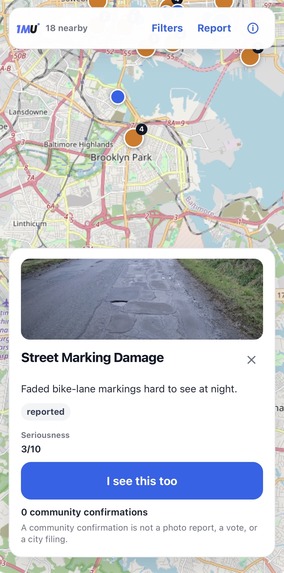
Community incidents map (2)
-
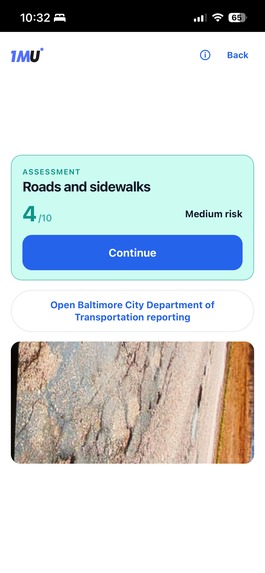
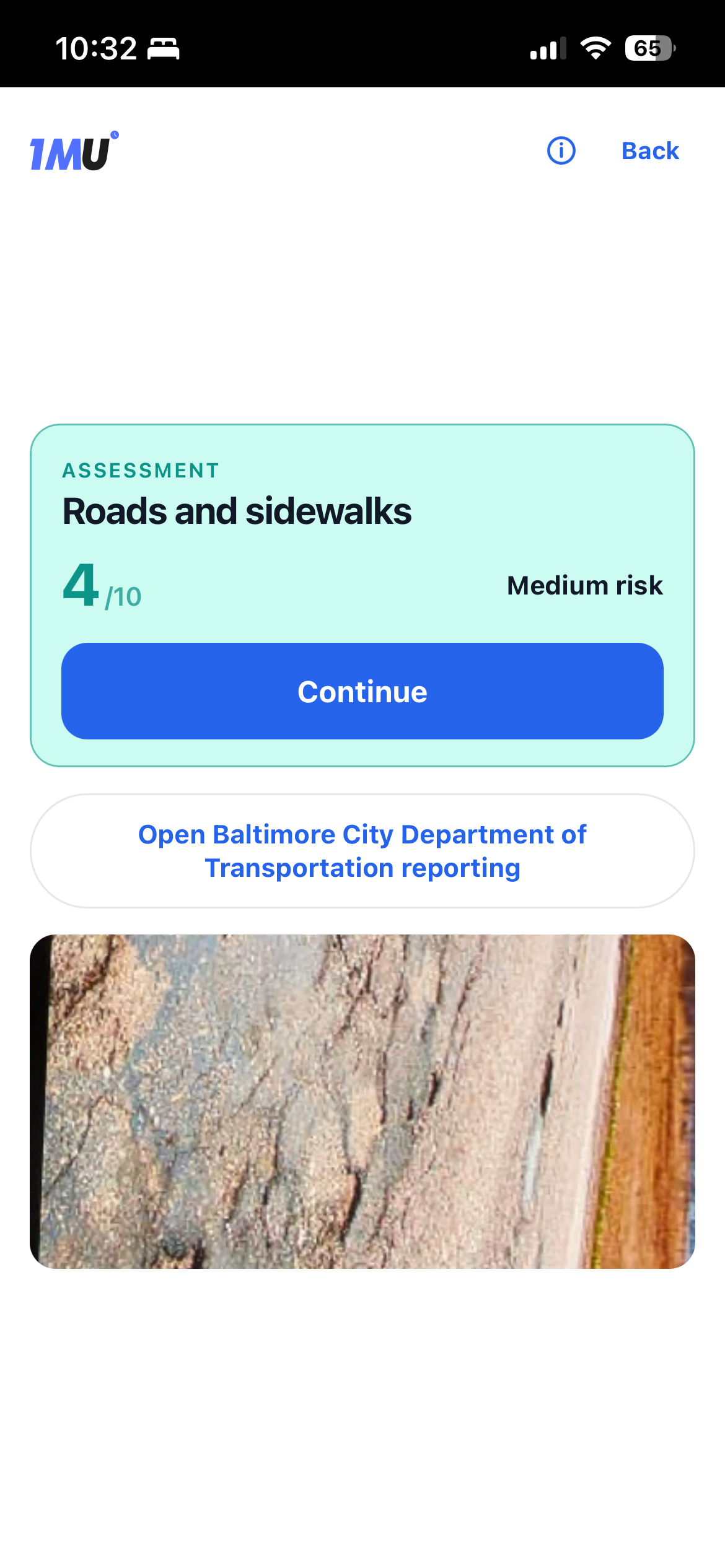
Report analysis page
-
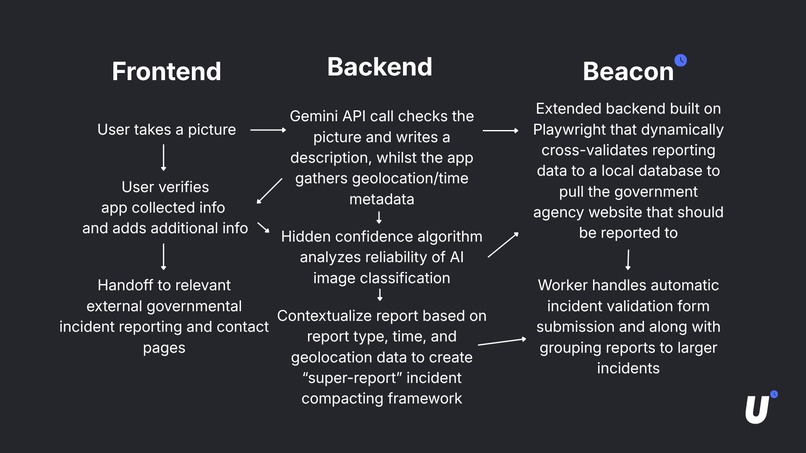
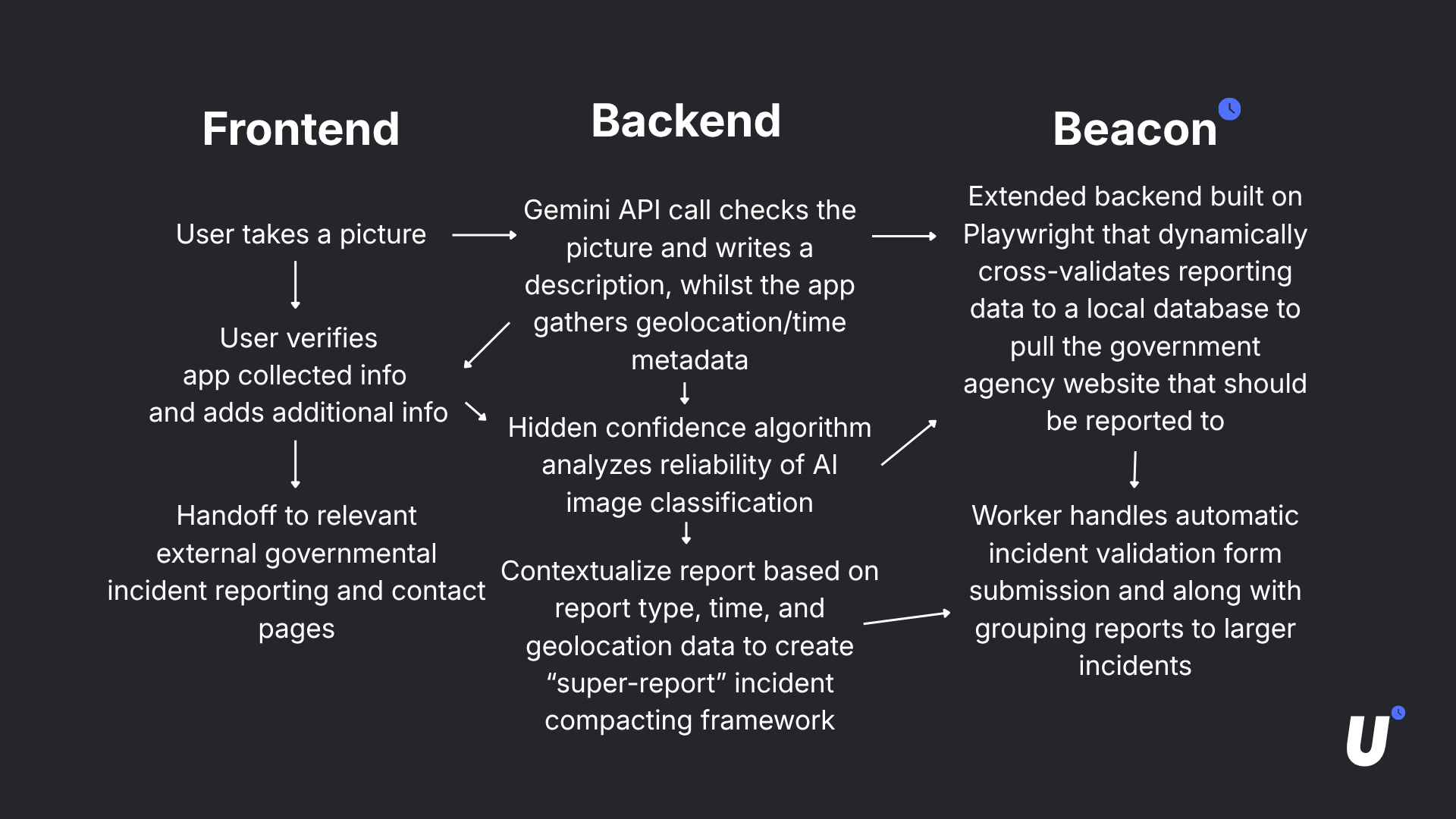
Infrastructure overview
-
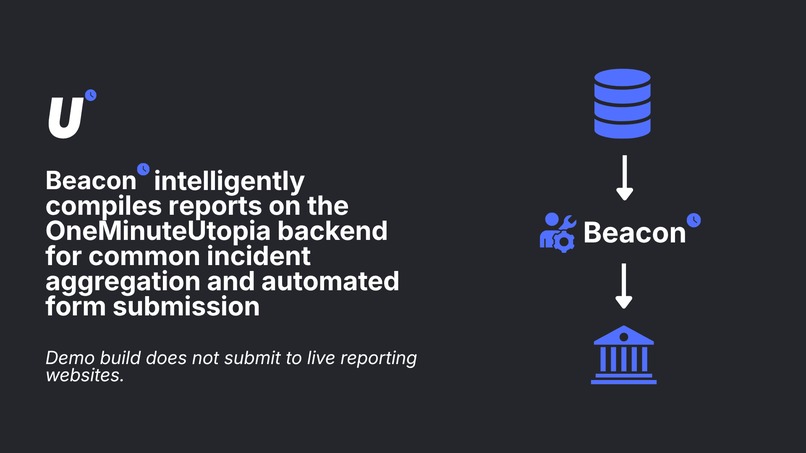
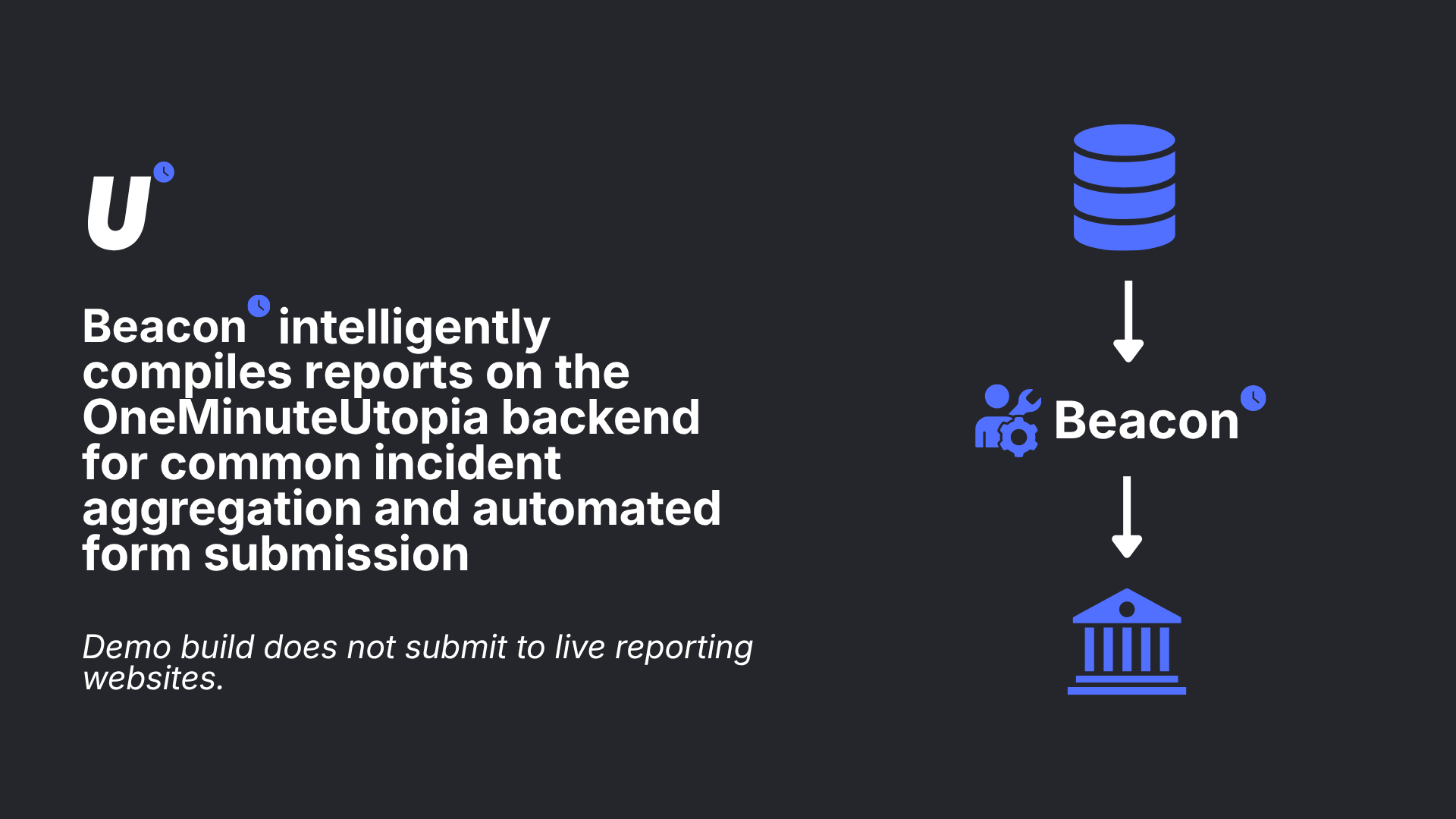
Beacon Autonomous Reporting Agent description
Inspiration
We decided on the philanthropy track quite early and ended up looking at civic reporting software for inspiration, and one of our members had the CITIZEN app. In the CITIZEN app, we noticed many city issues, including gunshots, car crashes, fire, but there are no reports of issues like a cracked road or a broken red light. And many people aren't aware that these issues can even be reported using 311 or fire department websites. These things also affect people's daily lives and should be fixed and avoided. When we tried to see how to report these smaller issues through government agency websites, we quickly found the process was way too long and complicated. A study in the Journal of Experimental Criminology by Prof. Jochem Tolsma from the University of Groningen showed that people's willingness to report less serious incidents decreases significantly as the reporting process gets more complicated and longer. To illustrate, one of our members called 311 to report an incident a few months ago, and it took about 10 minutes to get off hold. That experience decreased his willingness to report non-urgent issues in the future. In order to make our cities better places, we need to make the reporting process easier for citizens so the problems can be noticed by the government agencies and solved.
What One Minute Utopia does
- The user takes a picture of the incident
- AI dynamically checks the picture and matches a categorical description; and the app also auto-gathers relevant metadata such as time and location.
- The app checks if the report is pointing to the same incident by cross-validating cases in the database and determines if the incident is important enough to be reported or is waiting for more user reports of the incident
- After reports are submitted, the app hands off to a prototype workflow for automatic reporting. The app contextualizes from the aggregate report data which government agency an incident should be reported to, and forwards this to Beacon, our automatic reporting system. Beacon will automatically reference prior cross-validation of existing cases to ensure it doesn’t create a new report for an existing incident.
- If validated properly, Beacon will auto-fill out the form on the appropriate government agency website and submit it if it meets our criteria for novel form submission. For the purpose of our app and its constraints, this is only built in a demo environment and does not work with actual government agency websites.
- To address the common issue of high-volume common-incident 311 reporting: after form submission, the incident is marked as reported in the database with a flag. If other users report it in the future, Beacon will not report it to the government again.
We think that the coolest thing is that the user is only involved in the first two steps, which take only a few seconds. After submission, the user is also pointed to relevant contact information and form submission links depending on how their reported incident was classified, to give our project complete utility even in this current demo state. The endgame implementation of Beacon aims to completely remove the step of having to visit relevant reporting webpages.
One Minute Utopia was designed to solve 3 major issues:
- It simplifies the reporting process for the users. The only thing the user needs to do is take a picture of the incident, which takes less than a minute.
- For moderate or minor issues such as continuous litter, it doesn’t report the problem to the government agency right away; instead, it waits for several other user reports for the same issue before it is actually reported to the government. This way, One Minute Utopia runs a cross-authentication check and also only reports these non-dangerous issues when it actually bothers some number of people, to save government work.
- It marks multiple user reports of the same issue in the same location as an incident, and reports it at once, so it prevents sending the government duplicate forms of the same issue. When we classify two user reports as the same case, we check whether the reports are in the same category and whether their location radii overlap.
Beacon Report Validation
For improved validation of Beacon auto-reporting, we have a custom scoring system for user-submitted reports for severity (1 - 10). For cases like mass litter on the ground, the user report has a danger score of roughly 4. For cases like extremely cracked roads, the user report has a danger score of roughly 7. To build off this scoring system, we have an algorithm for dismissing the return when calculating the score for an incident using the scores of the user reports. When the score is high enough for an incident (which means it is either a serious situation or a minor situation that bothers a lot of people), the automatic reporting agent would combine the information and submit it to the government website (for the scope of this project, we built two mock government websites because we don’t want to send test data to real government agencies).
How we built it
There are three parts of this project: front end, backend, and the reporting agent. Technologies that we’ve used include node.js and next.js , sql database, playwright, Gemini api, GPS… We used Cursor Agents, Grok Bot, Codex, and Gemini to develop our platform with an agentic workflow. We did most development with a quad-agent setup (one agent for primary development, one agent for review, one agent for Q/A, and one agent for polish), each delegating tasks to under-the-hood subagents in Cursor while also automatically updating code. We primarily used Grok Bot and Cursor to build this agentic setup, and we used Codex for algorithm generation and high-level debugging on simpler, single-task tasks.
Challenges we ran into
We ran into challenges setting up the Gemini API through Google Cloud, building the image analysis algorithm, and finding a consistent way to decide when to report a complaint. We also spent time learning the specifics of the different tools needed for the application, such as Vercel and the Gemini API.
Accomplishments that we're proud of
This was our first hackathon, and we built a working full-stack application that fulfilled all the functions we wanted. We are proud of the fact that the app actually works within the scope we built it for.
What we learned
We learned to develop a full-stack application using a variety of API’s, setting up a group of Grok bots, each with specific roles to work together, and hosting a website.
What's next for One Minute Utopia
We plan to incorporate government reporting APIs and expand to cities outside of Baltimore. We also hope to find a more efficient algorithm for determining when to submit the reports to the government website, utilizing a larger variety; and for deployment in real-world infrastructure, we want to implement a more robust version of data validation all-around (AI image confidence, user submission trust, and better cross-referencing).
https://oneminuteutopia.vercel.app/ https://github.com/gitpaperclip/oneminuteutopia/
Built With
- codex
- cursor
- cursoragents
- gemini
- geminiapi
- github
- google-cloud
- gps
- grokbot
- javascript
- leaflet.js
- love
- next.js
- node.js
- openstreetmap
- playwright
- supabase
- typescript
- vercel
- vscode


Log in or sign up for Devpost to join the conversation.