-
-
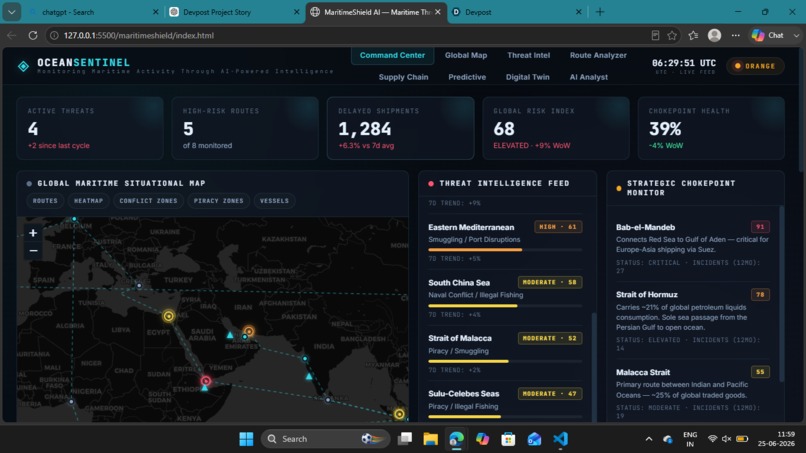
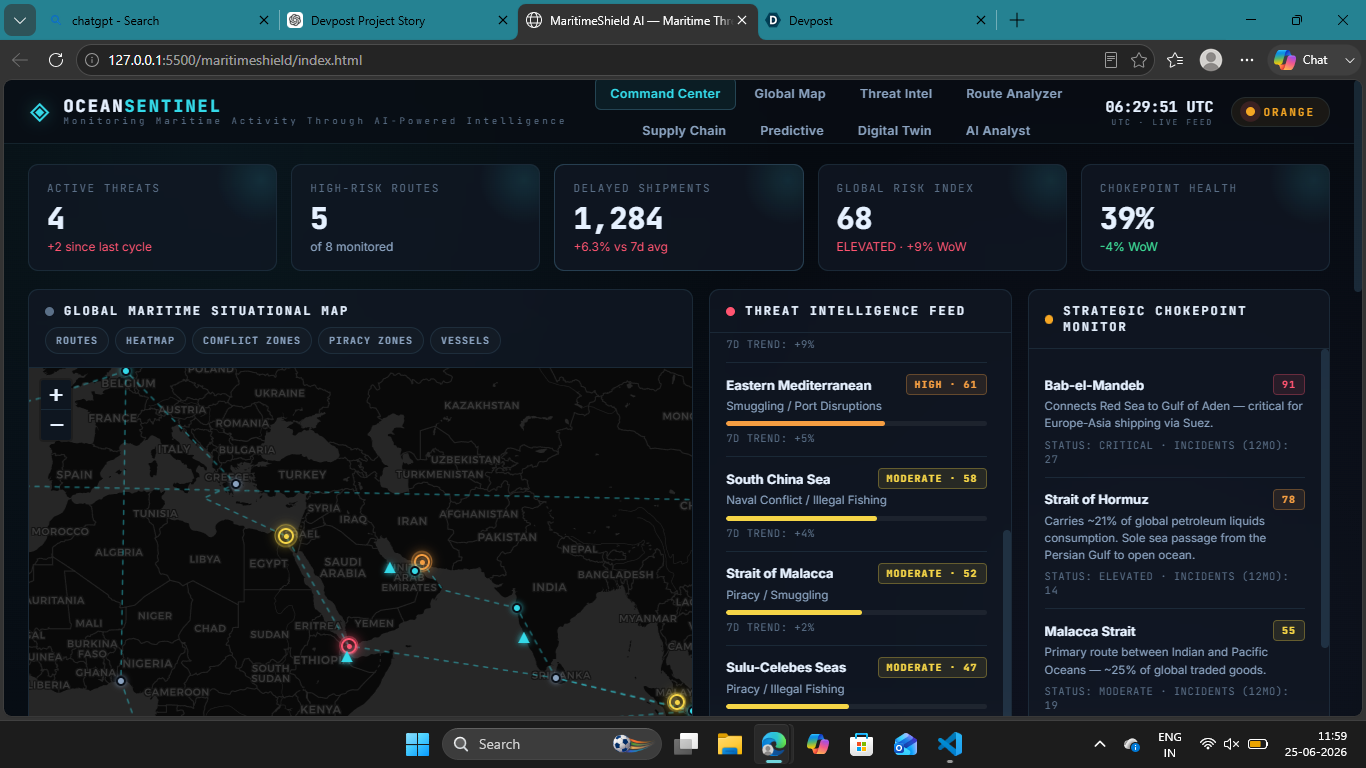
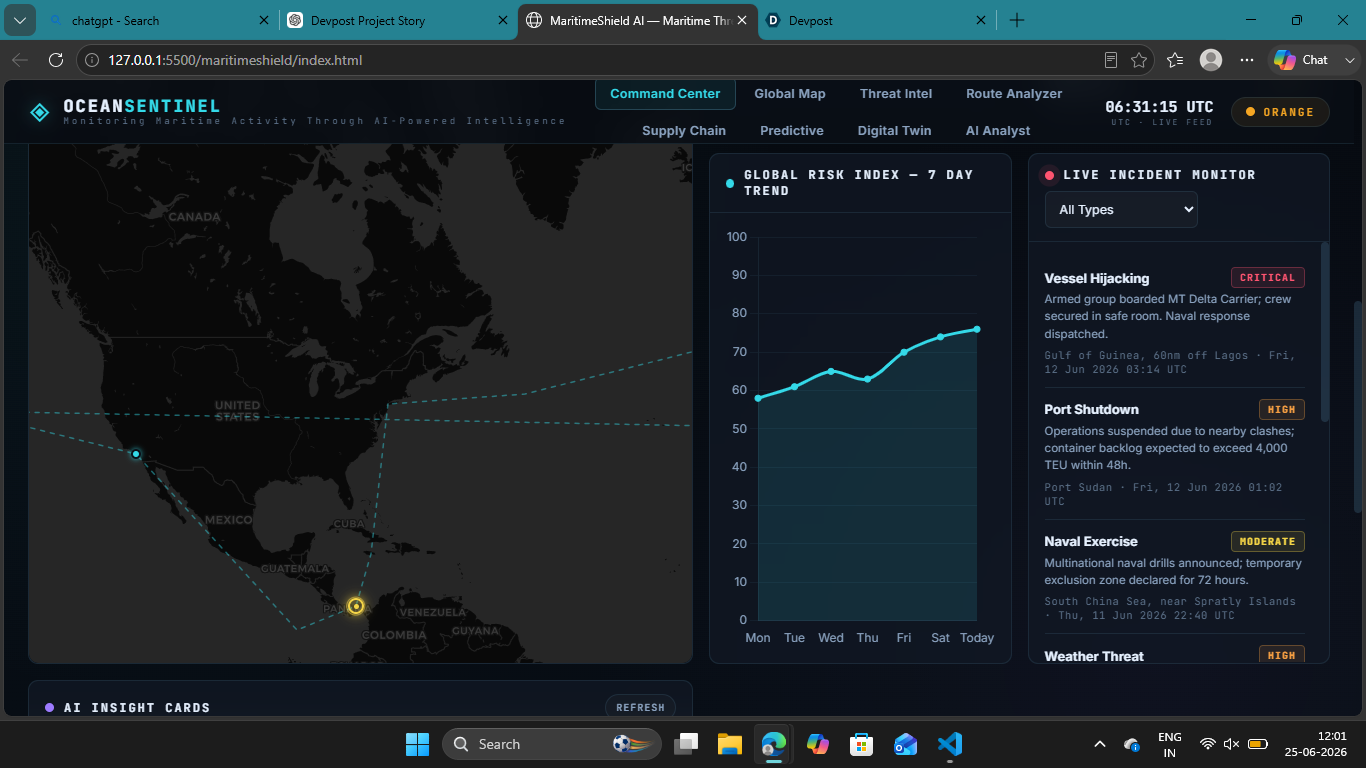
The Dashboard pt.1
-
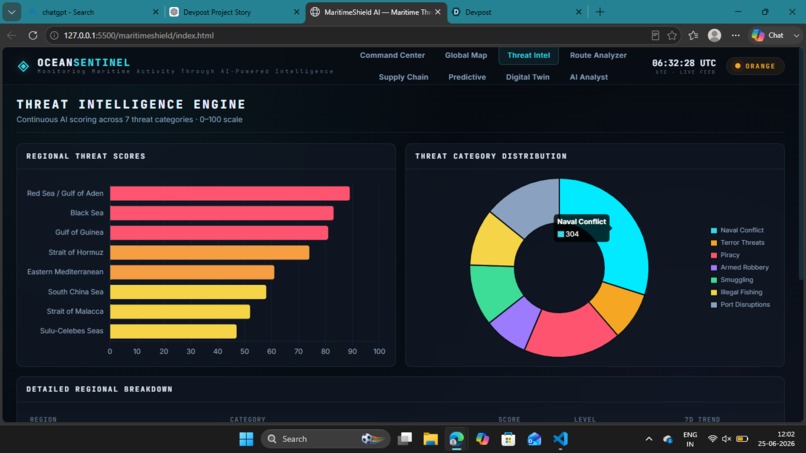
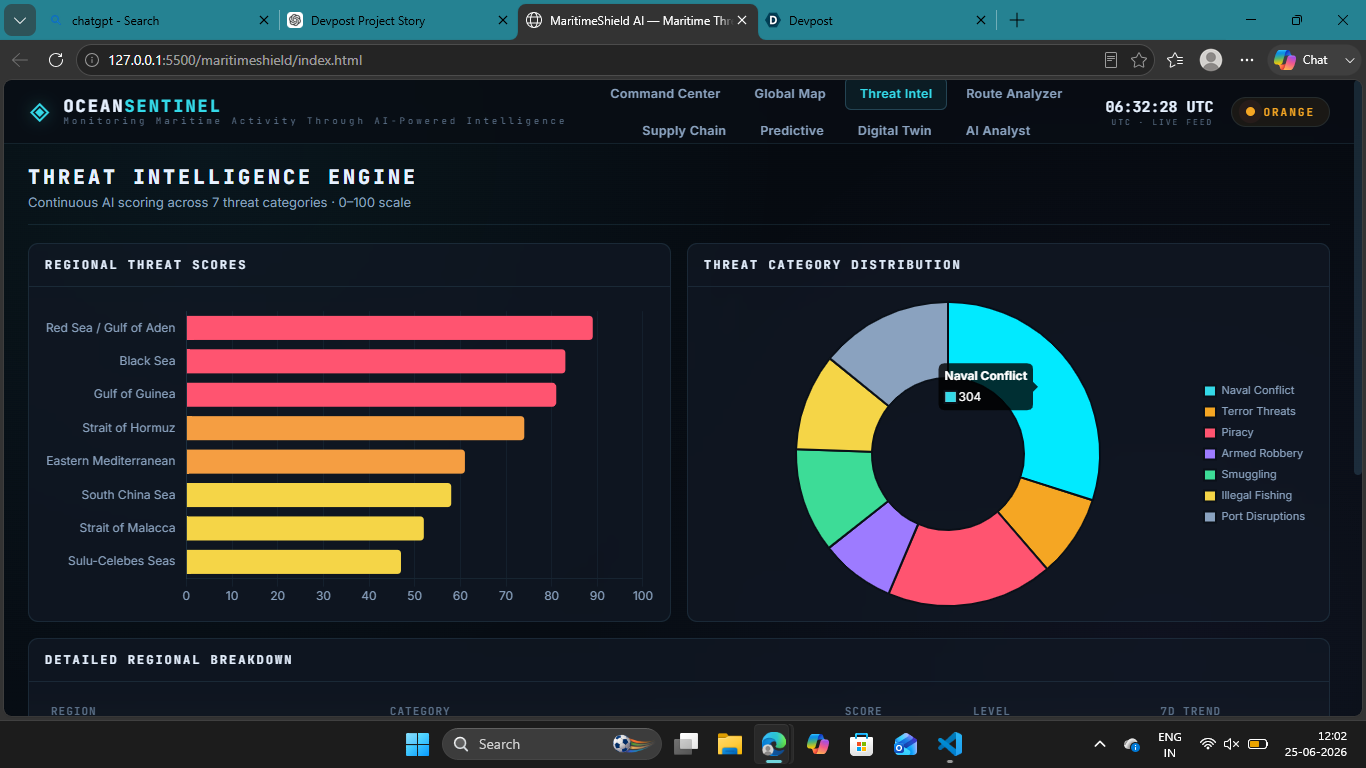
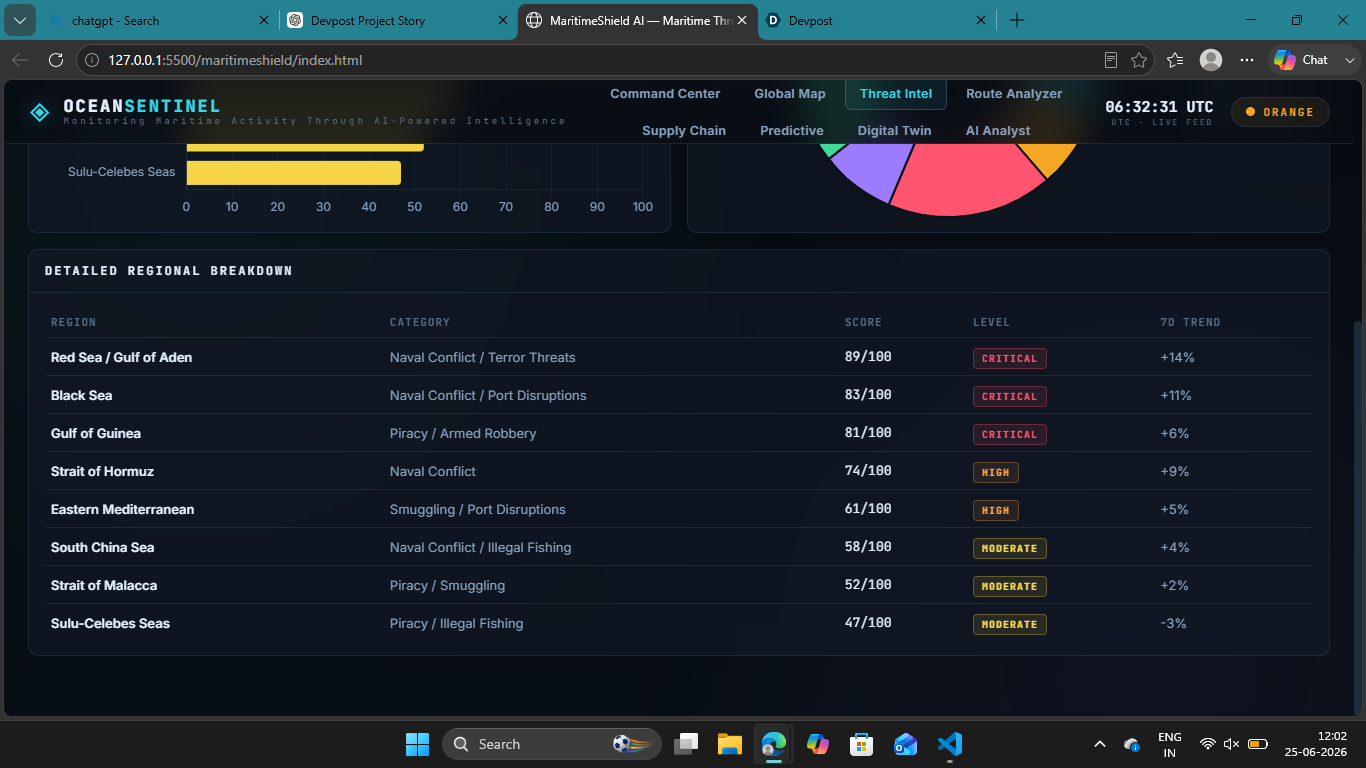
Threat Intelligence Engine
-
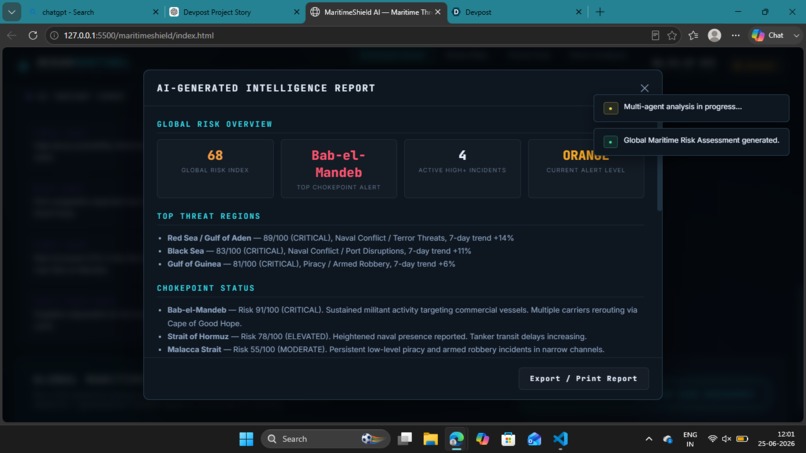
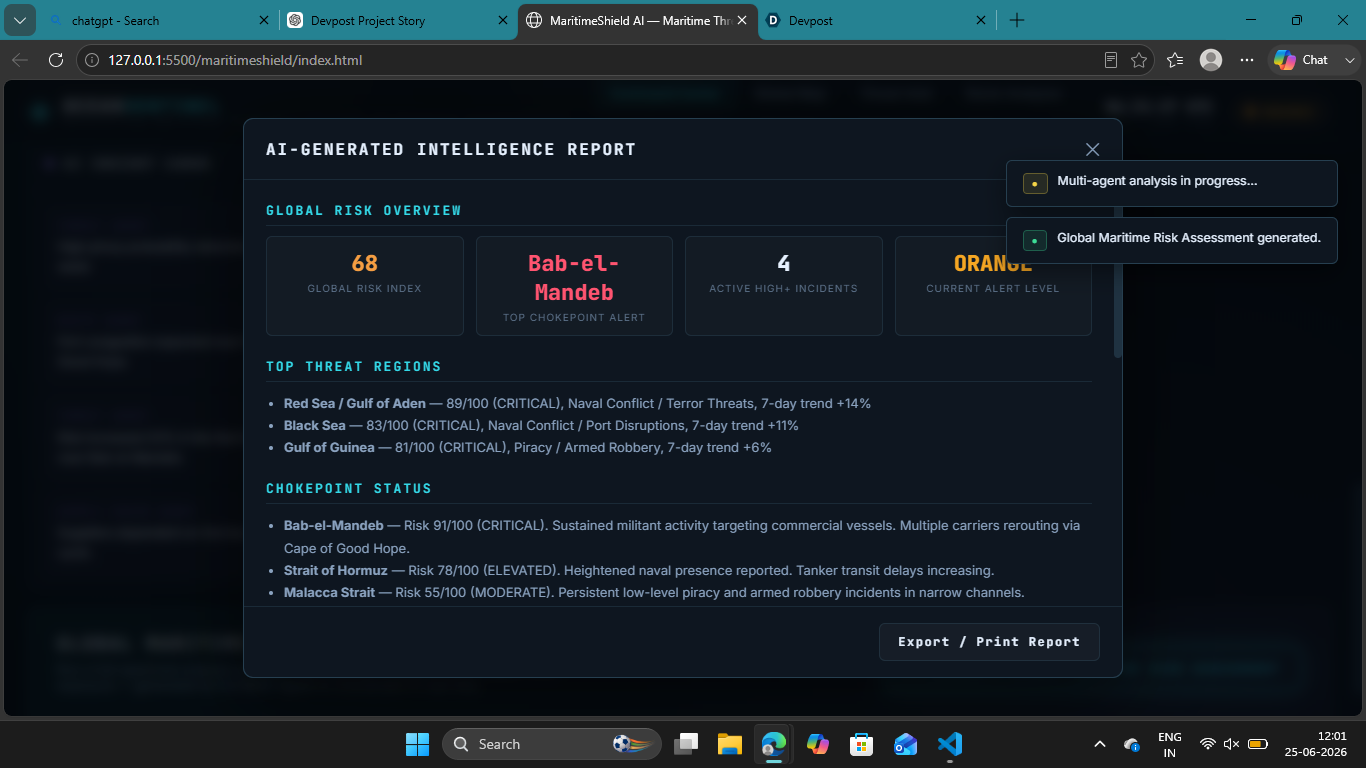
Global Maritime Risk Assessment Simulation
-
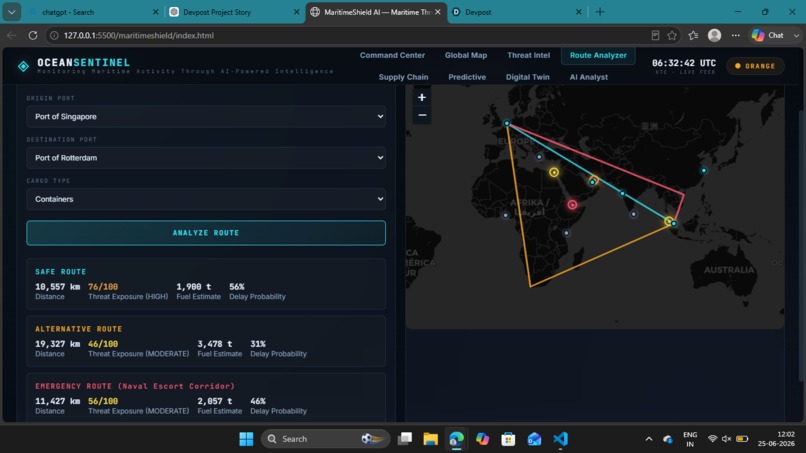
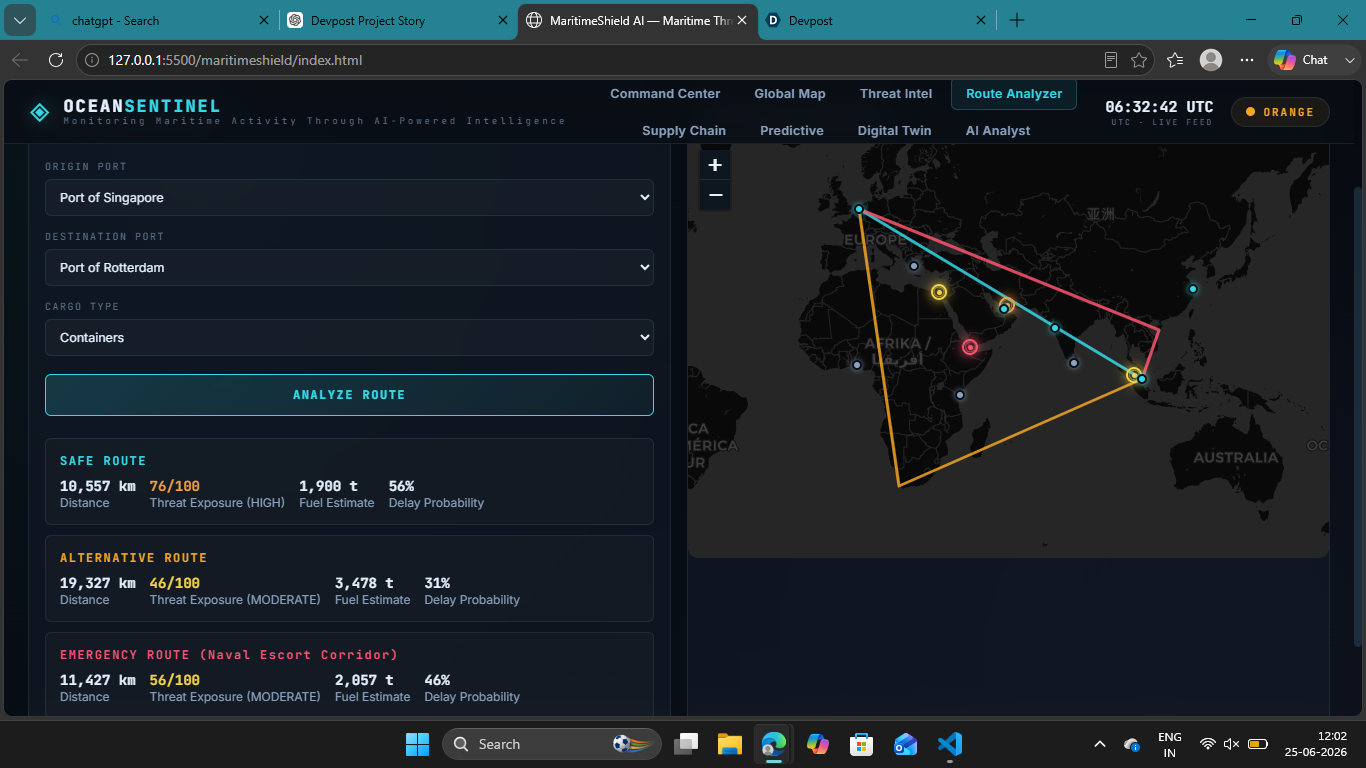
AI powered Route Analyzer
-
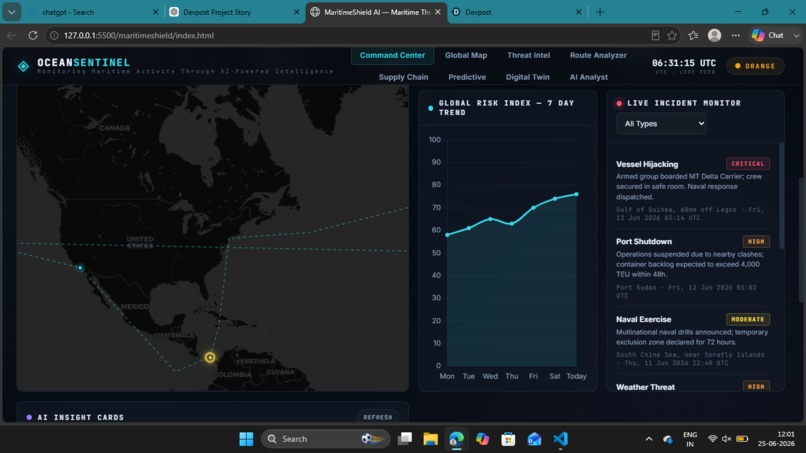
Dashboard pt.2
-
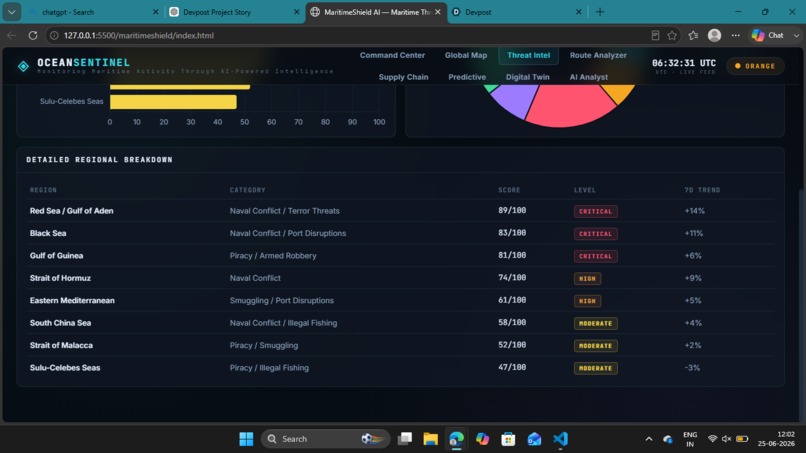
Detailed Breakdown of Threat
-
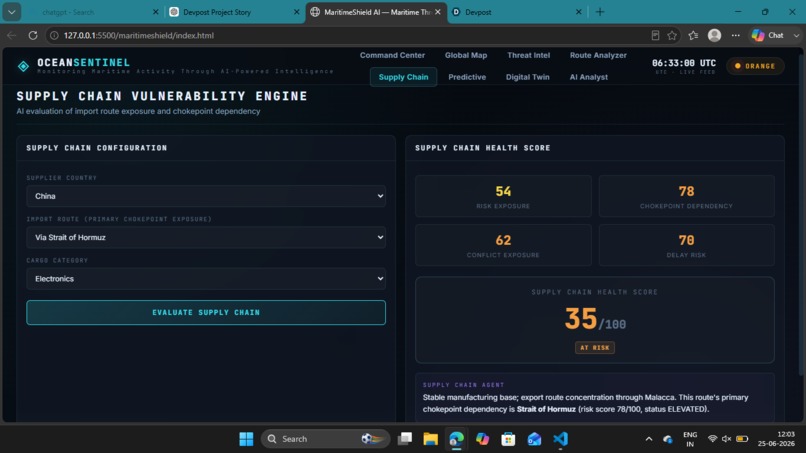
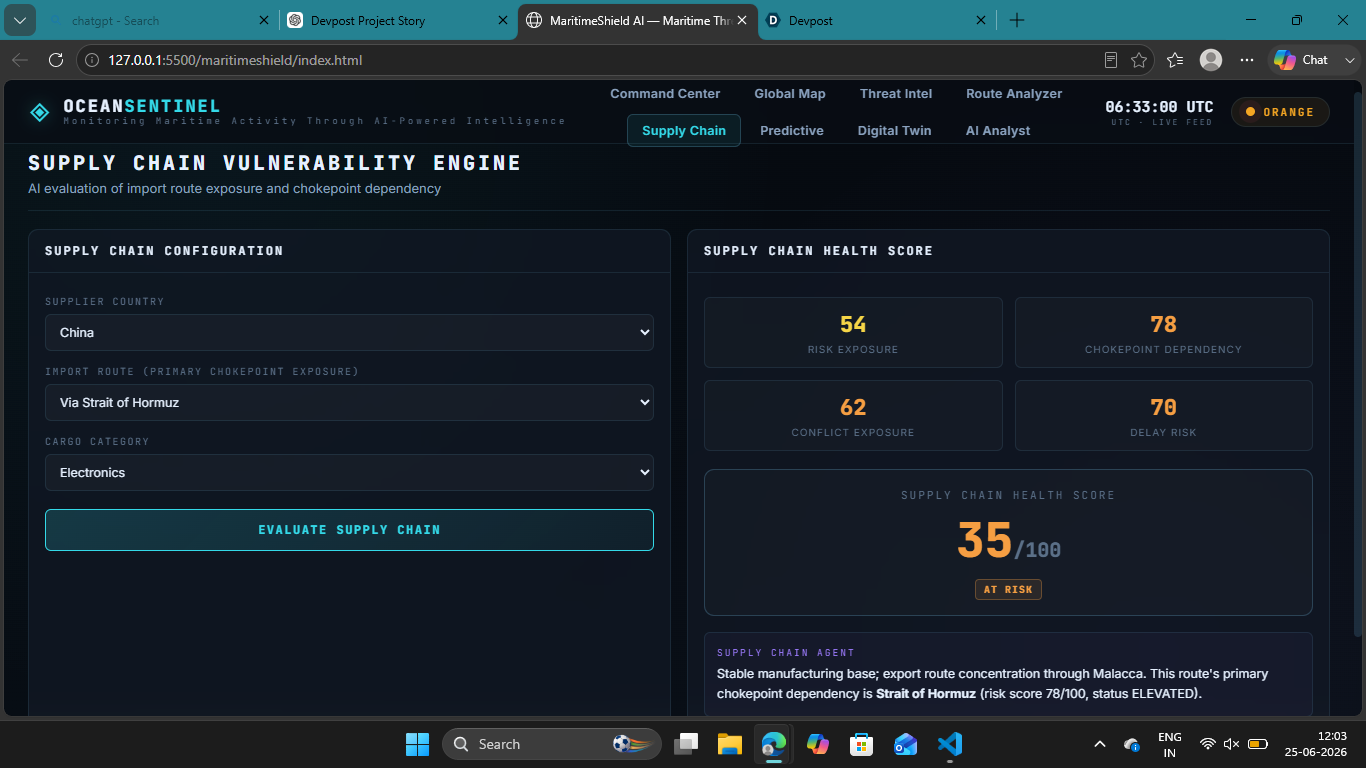
Supply Chain Vulnerability Engine
-
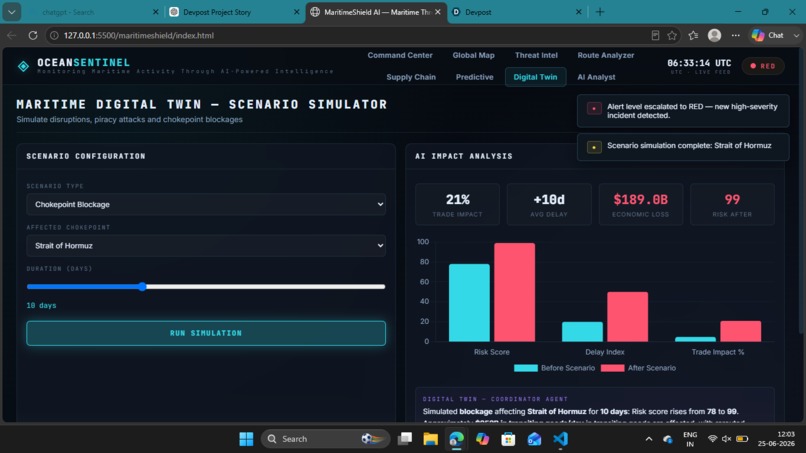
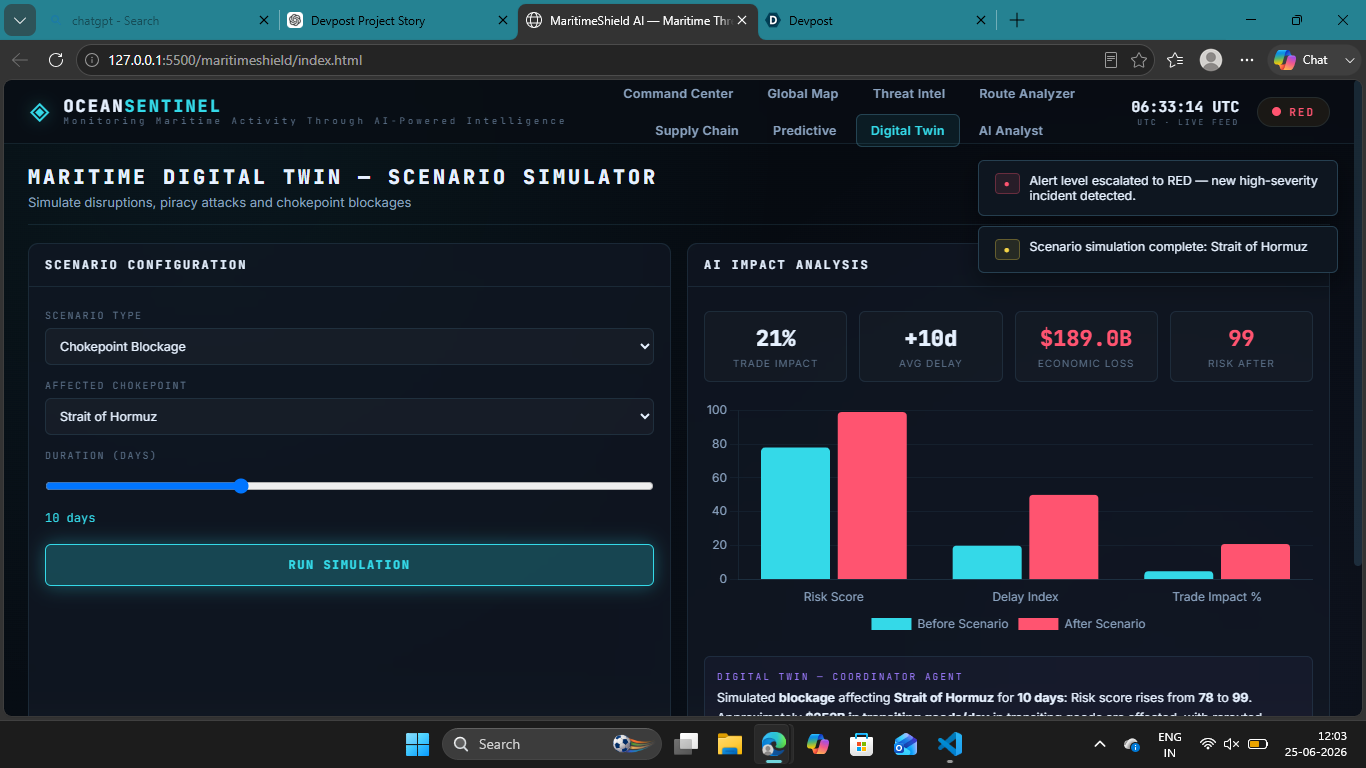
Simulate disruptions, piracy attacks and chokepoint blockages based on past activities and global geopolitical situatiom
-
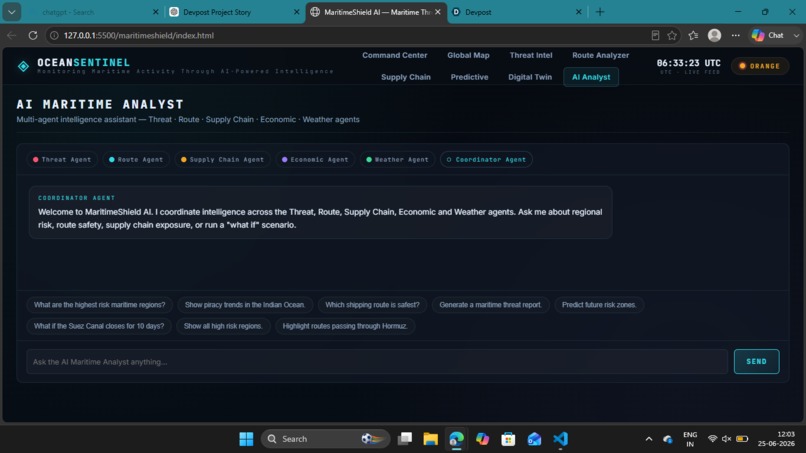
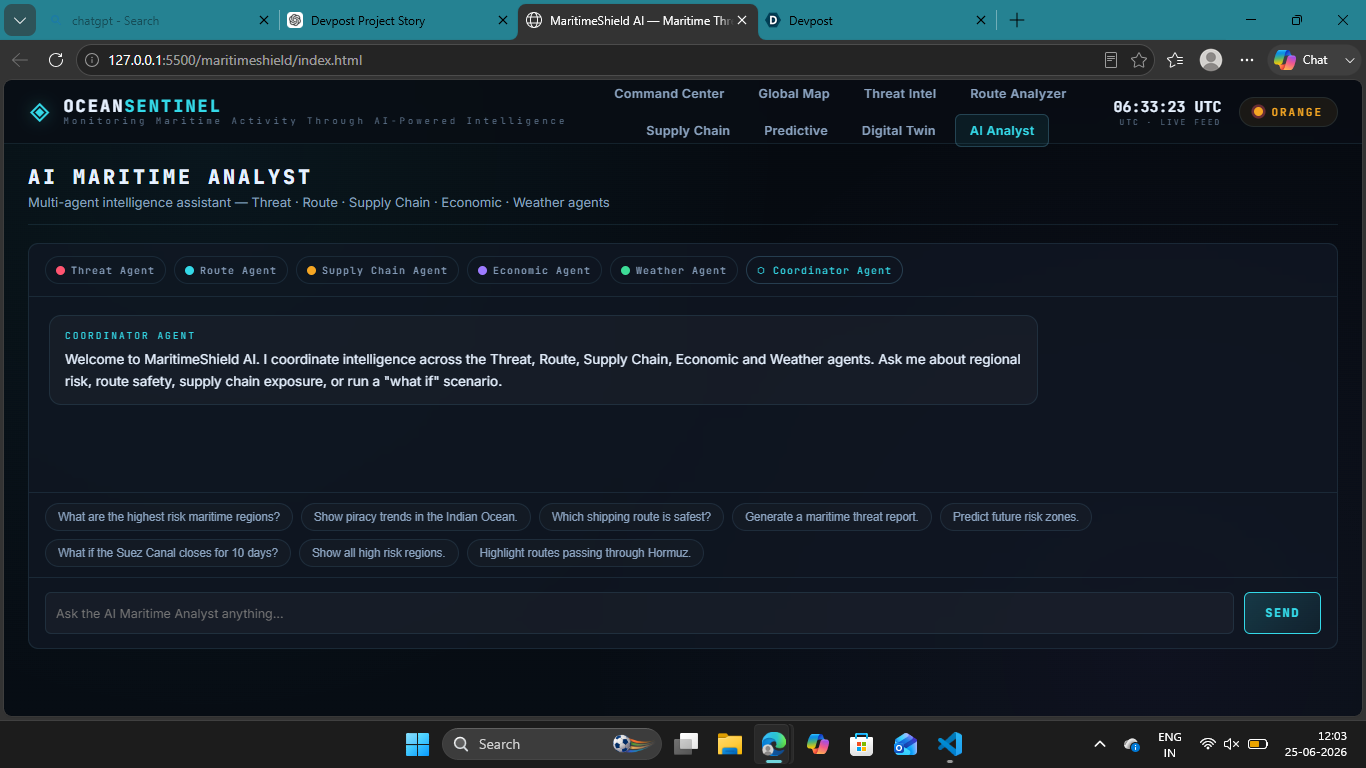
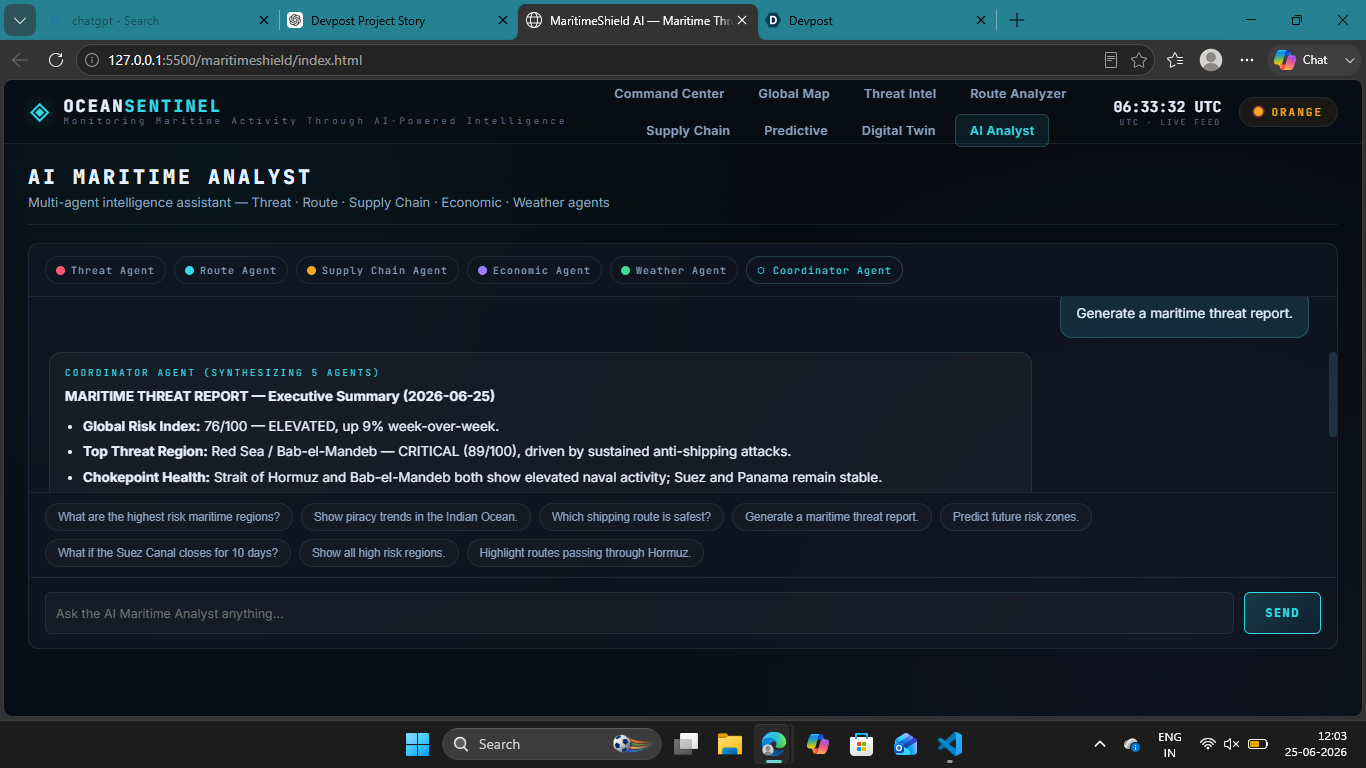
AI maritime Analyst
-
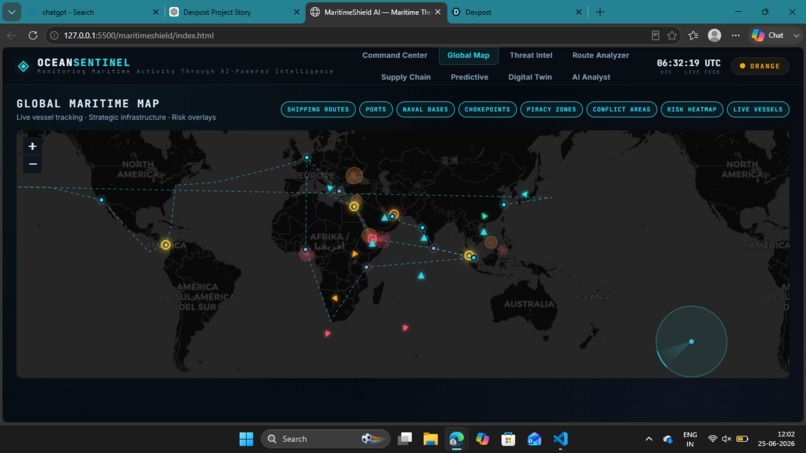
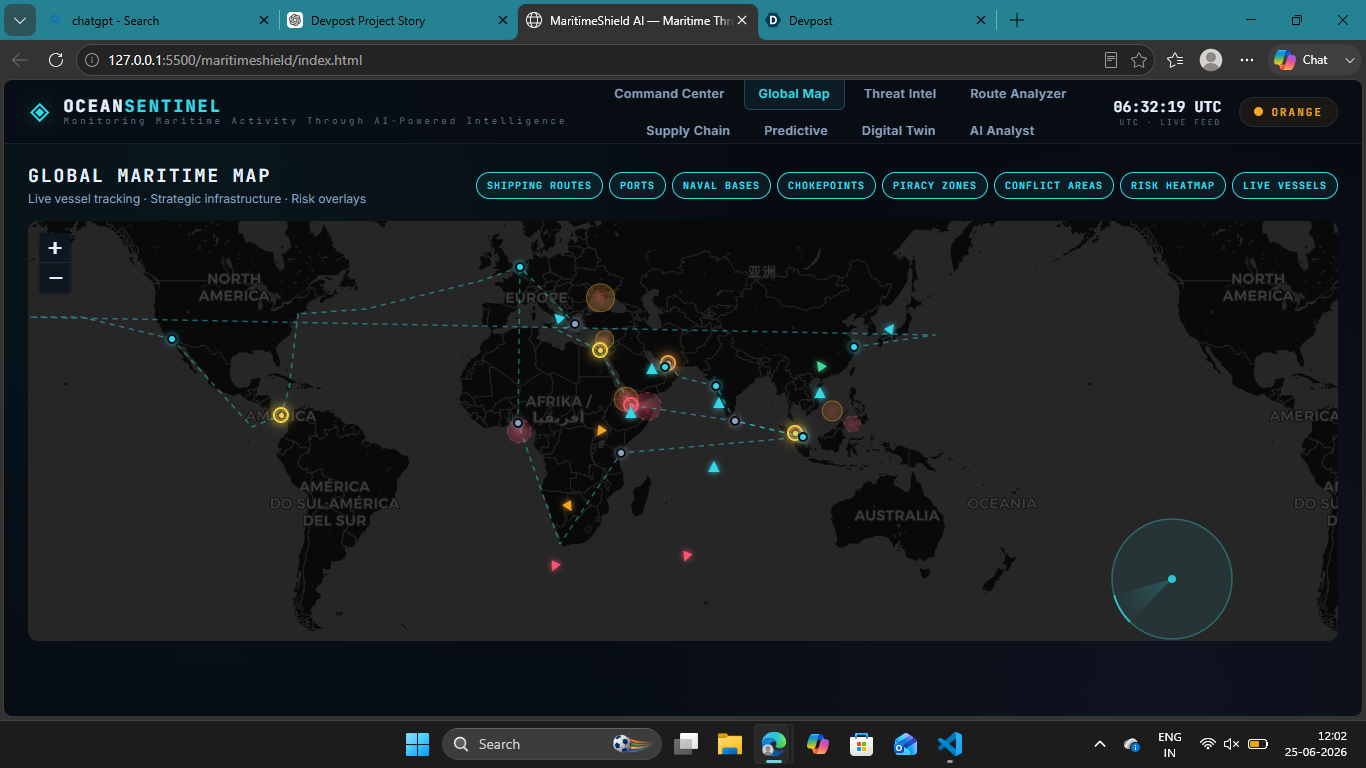
Global Map
-
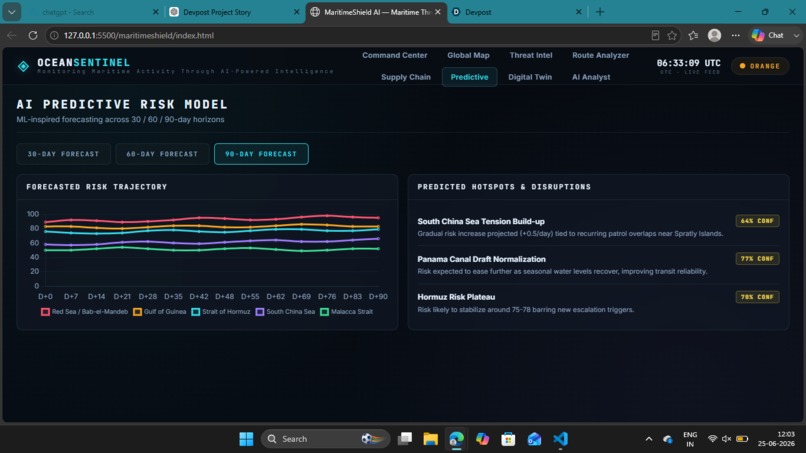
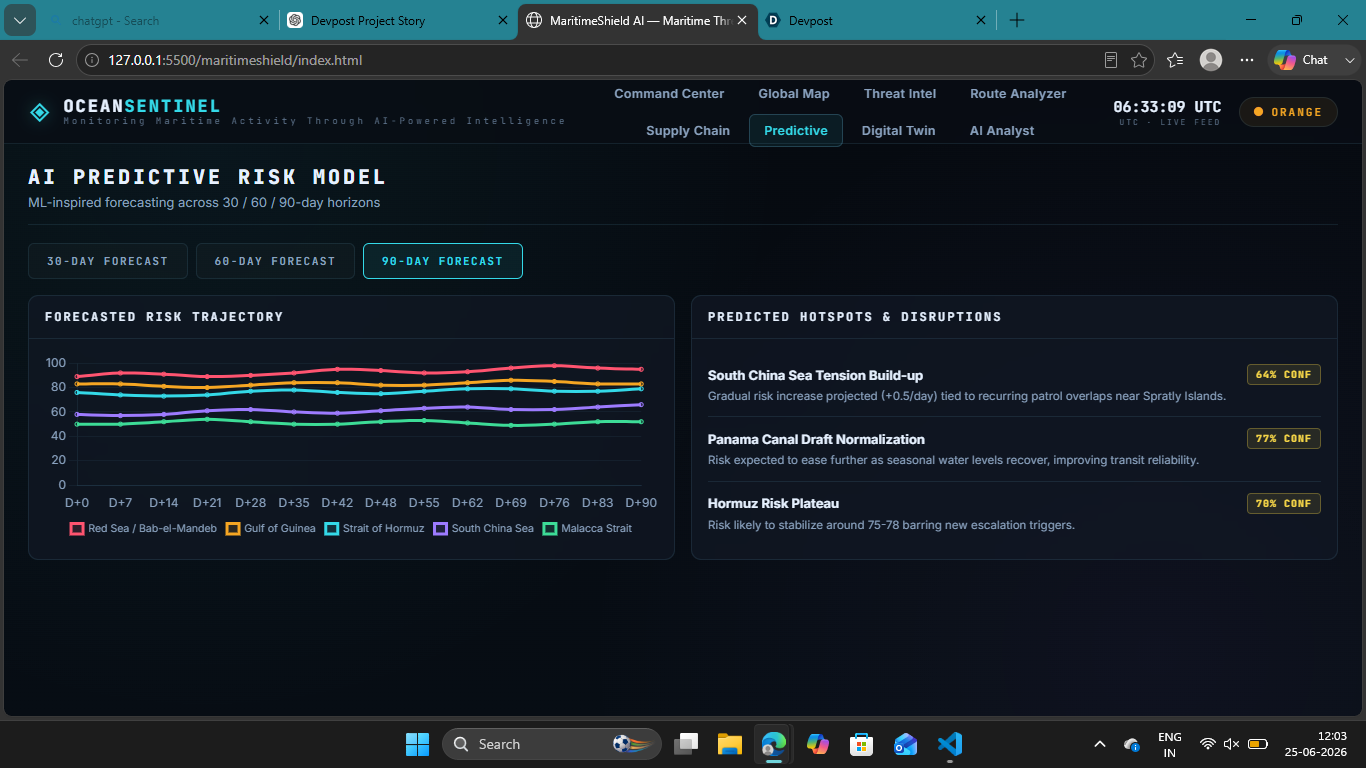
ML inspired Forecasting Model
-
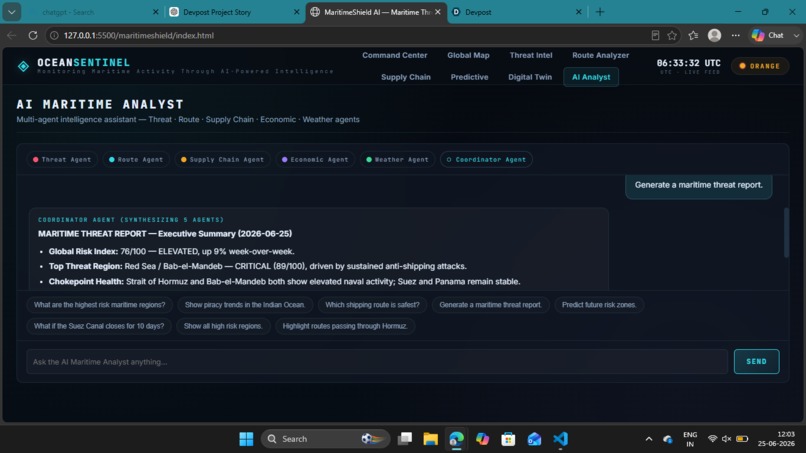
AI maritime Analyst Simulation
-
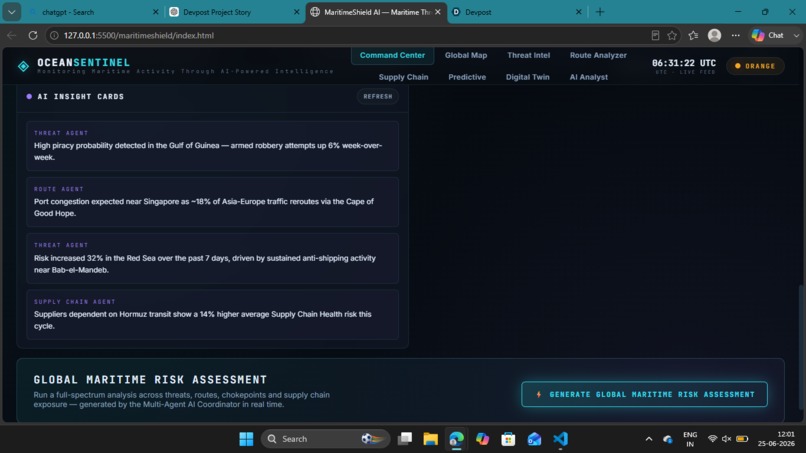
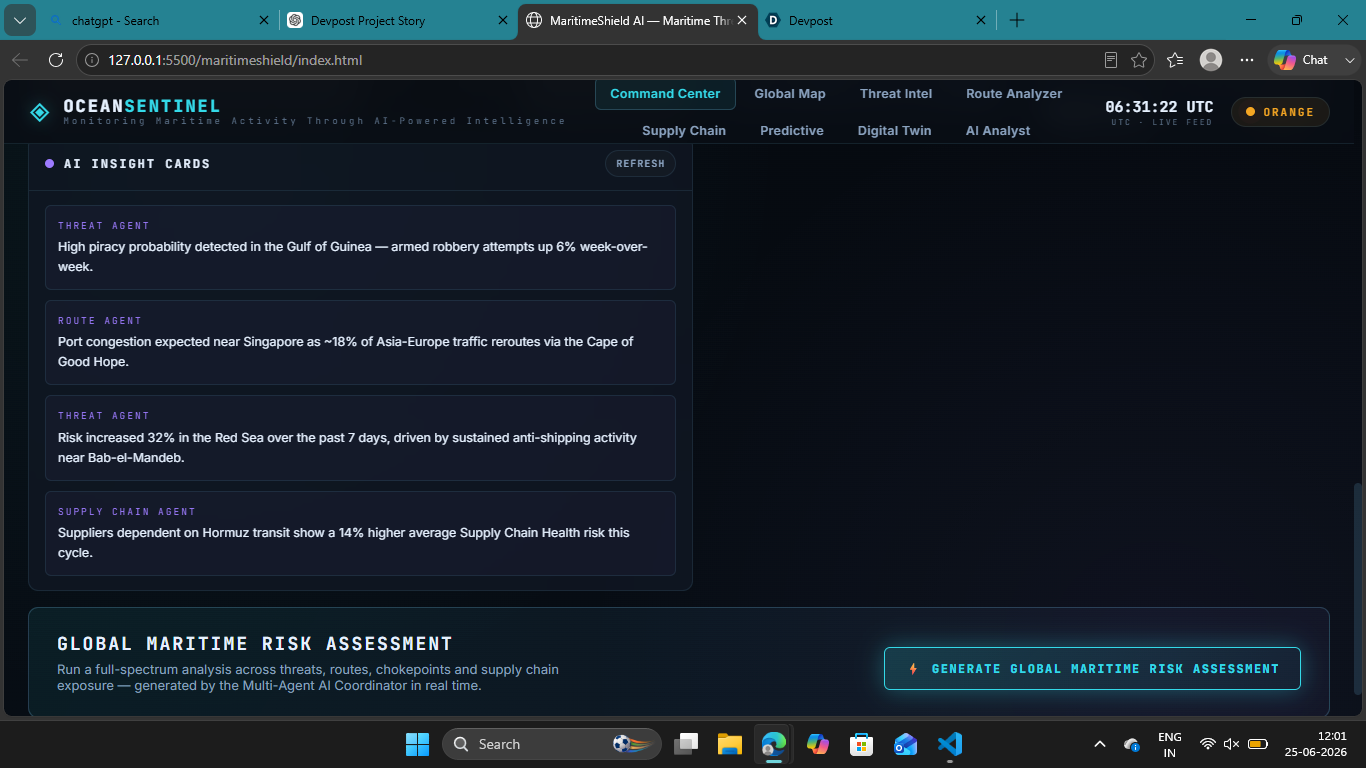
AI insight Cards and Global Maritime Risk Assessment
About the Project
Inspiration
Over 80% of global trade moves by sea, making maritime transportation the backbone of the world economy. However, shipping routes remain vulnerable to piracy, geopolitical conflicts, chokepoint blockages, severe weather, and supply-chain disruptions. Recent global events demonstrated how a single maritime incident can delay cargo, increase costs, and impact economies worldwide.
These challenges inspired us to build OceanSentinel, an AI-powered maritime intelligence platform that enables organizations to monitor, analyze, and anticipate maritime risks before they escalate into major disruptions. Rather than reacting to incidents after they occur, our vision was to provide decision-makers with a unified platform for proactive risk assessment and operational planning.
How We Built It
OceanSentinel was developed as a modular web-based intelligence platform using HTML, CSS, and JavaScript. We integrated Leaflet.js to visualize global maritime activity on interactive maps and Chart.js to present threat trends, predictive analytics, and risk assessments.
The platform consists of multiple interconnected modules, including a real-time dashboard, global maritime map, threat intelligence center, route risk analyzer, supply-chain analytics, predictive forecasting, a digital twin simulator, and an AI-powered maritime assistant.
To emulate intelligent decision-making, we designed a multi-agent architecture where specialized agents focus on different aspects of maritime operations, such as threat detection, route optimization, weather analysis, supply-chain resilience, and economic impact. These agents work together to generate actionable insights and scenario-based recommendations for users.
Challenges We Faced
One of our biggest challenges was designing a comprehensive intelligence platform while keeping the interface intuitive and easy to navigate. Maritime intelligence involves multiple data sources and analytical perspectives, making information architecture an important consideration.
Another challenge was the limited availability of publicly accessible maritime datasets. Since implementing a full machine learning pipeline was beyond the scope of the hackathon, we focused on building realistic AI-inspired workflows and simulation-based intelligence. Managing multiple interactive maps, dashboards, and analytical components while maintaining good performance also required careful frontend architecture and modular design.
What We Learned
Building OceanSentinel gave us valuable insights into the complexity of global maritime operations and the importance of proactive risk management. We learned that effective visualization plays a crucial role in helping users interpret complex operational data and make informed decisions.
From a technical perspective, we gained experience designing large-scale frontend applications, structuring modular interfaces, and coordinating multiple visualization libraries. We also discovered that AI-inspired systems can provide meaningful decision support even without a complete machine learning backend, provided the user experience and analytical workflows are thoughtfully designed.
OceanSentinel represents our vision of a next-generation maritime decision intelligence platform that helps governments, logistics providers, insurers, and shipping companies anticipate risks instead of simply responding to them.
Built With
- antigravity
- canva
- chart.js
- chrome-devtools
- css3
- devpost
- eslint
- figma
- geojson
- github
- global-risk-kpi
- gsap
- html
- javascript
- leaflet.js
- openstreetmap
- route-navigation-kpi
- visual-studio-code


Log in or sign up for Devpost to join the conversation.