-
-
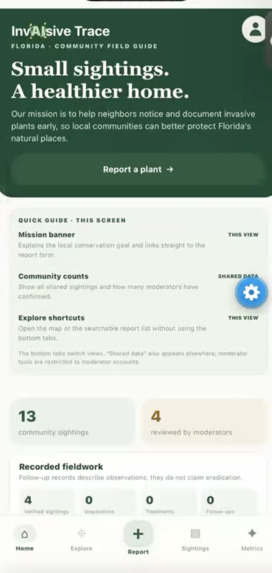
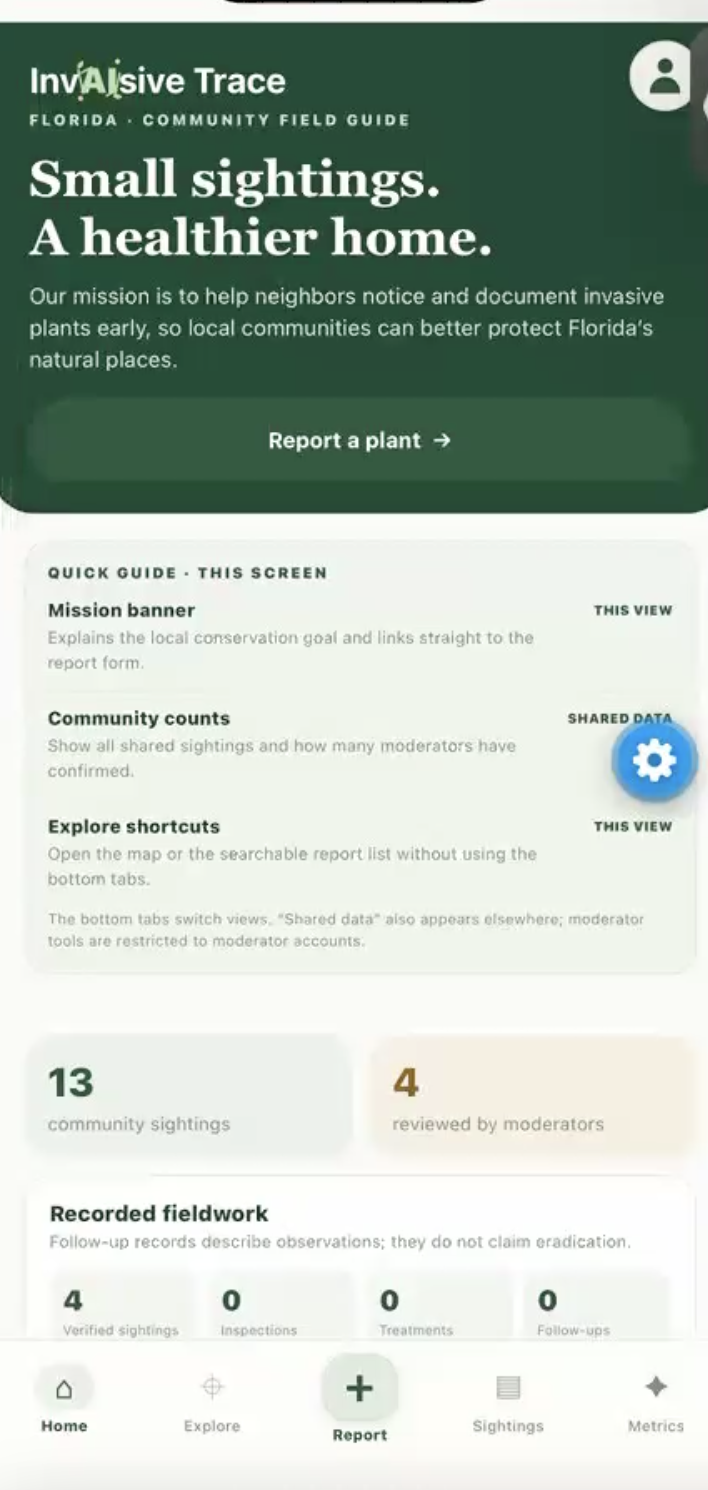
Home Page
Inspiration
We were inspired by seeing invasive plants like Brazilian pepper trees and kudzu overtake native vegetation in our local parks, pathways, and wooded areas. We wondered whether there could be a simple way for people to report these sightings so communities could respond and help protect local ecosystems. That question became the starting point for our project.
What it does
InvAIsive Trace helps residents in a community document and track possible invasive plants in their community. People can submit a plant photo, get an optional AI identification suggestion, confirm a match from Florida’s invasive plant catalog or enter a possible unlisted species, and add a map location with a choice to share it precisely or approximately. The community can explore and search sightings, while moderators review reports, correct identifications, and record inspections, treatments, or follow-ups. The app also summarizes community activity and, for eligible verified sightings, can provide a rough AI removal cost estimate.
How we built it
We built InvAIsive Trace as a mobile app with React Native and Expo, backed by a local API and PocketBase database. The app connects a photo-based reporting flow to Gemini for optional, tentative plant identification and a searchable catalog of Florida invasive plants. Reporters can confirm or correct suggestions, add a location and field notes, and choose whether to share precise coordinates. PocketBase stores accounts, photos, sightings, and review activity, while dedicated map, sightings, metrics, and moderator screens let the community explore reports and track follow-up work.
Challenges we ran into
One challenge was making AI suggestions useful without presenting them as certain—the app needed people to confirm or correct every identification, including reports for plants outside the reference catalog. We also had to balance useful location data with reporter privacy, and design the review process so community sightings remain clearly unverified until a moderator checks them.
Accomplishments that we're proud of
We’re proud to have built a community reporting tool that lets people explore sightings near them and filter reports by plant, creating a growing, searchable record of invasive species. Over time, this shared database could help ecologists and local communities spot patterns in where plants are spreading and better target follow-up efforts.
What we learned
We learned that building a useful community science tool takes more than collecting reports: people need clear guidance, a way to review uncertain identifications, and control over how their location is shared. We also learned how AI suggestions, a trusted species catalog, and human review can work together to make sightings easier to submit while keeping the data transparent and useful.
What's next for InvAIsive Trace
Next, we’d like to bring InvAIsive Trace to more communities, expand its species catalog, possibly to include invasive animals as well, and local partnerships, and make it easier for ecologists and land managers to use the reports. With more sightings and follow-up records, the app could help reveal how invasive plants spread over time and support more focused monitoring and removal efforts.
Built With
- expo.io
- express.js
- gemini
- geojson
- json
- leaflet.js
- multer
- node.js
- openstreetmap
- pocketbase
- python
- react
- rest
- sharp
- typescript


Log in or sign up for Devpost to join the conversation.