🌱 Green Yuva (ग्रीन युवा) Youth-Led Climate Action & Campus Decarbonization Ecosystem
💡 Inspiration
Across India’s 45,000+ colleges and universities, more than 4.1 crore youth live and study in campus ecosystems that act as miniature cities. Every year, these campuses generate metric tons of single-use waste, consume massive grid energy, and face escalating seasonal air quality hazards (PM2.5 and PM10).
While students genuinely want to protect the environment, grassroots youth climate action frequently stalls because of three structural barriers:
- The Intangibility Deficit: Students cannot visualize the real-time localized carbon and ecological impact of their daily choices.
- Missing Hyperlocal Incentives: Climate tasks feel like unpaid volunteer chores without immediate feedback, peer prestige, or tangible campus utility.
- Linear Campus Consumption: Textbooks, drafters, calculators, and lab gear are discarded or left idle after each semester instead of circulating within a local circular economy.
We asked ourselves:What if climate stewardship felt as engaging as a location-based game, rewarded students at campus cafeterias, and directly mapped green action across every university in India? That vision sparked Green Yuva.
🚀 What It Does
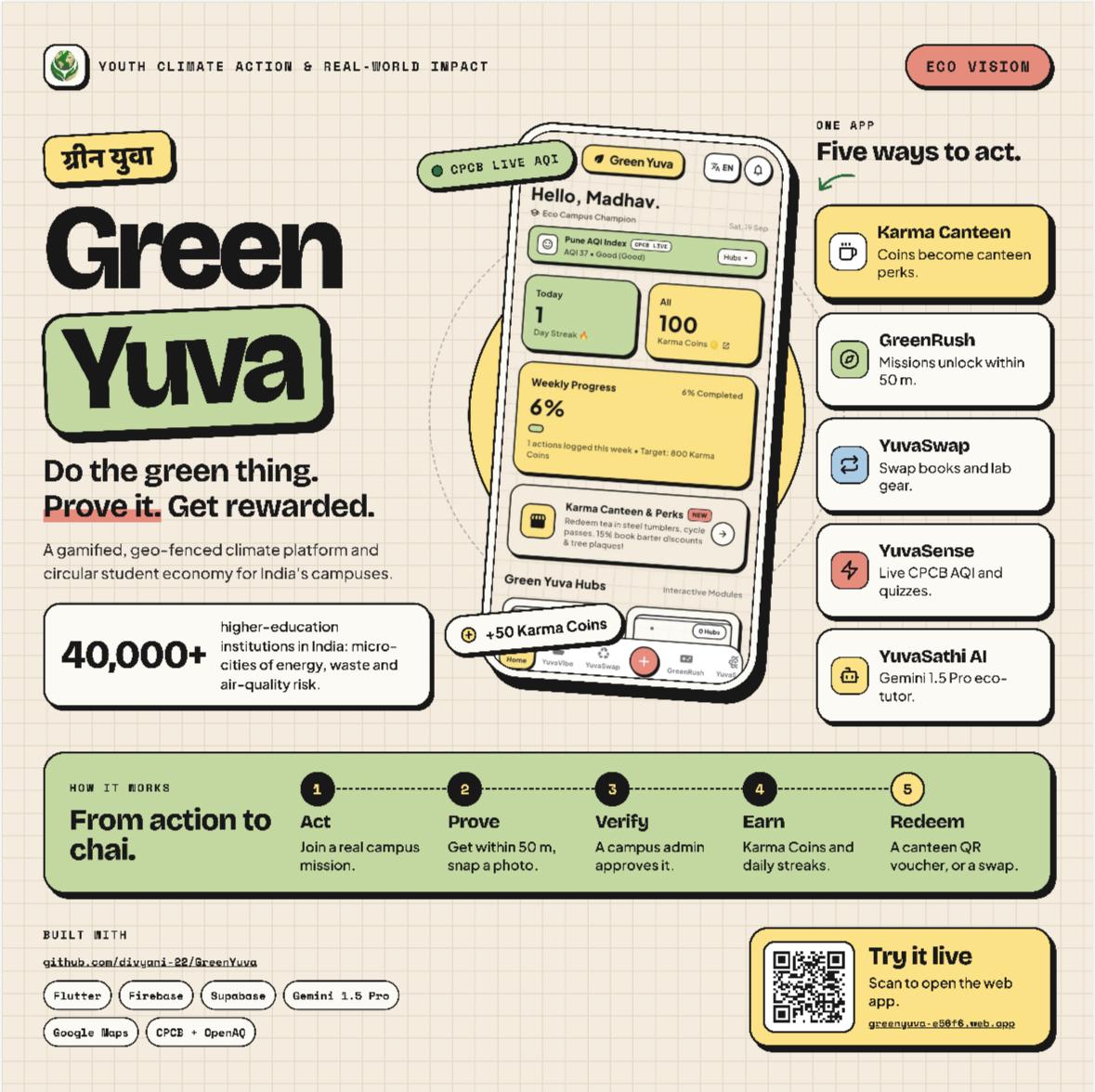
Green Yuva bridges the gap between digital engagement and verified on-the-ground sustainability through four integrated modules:
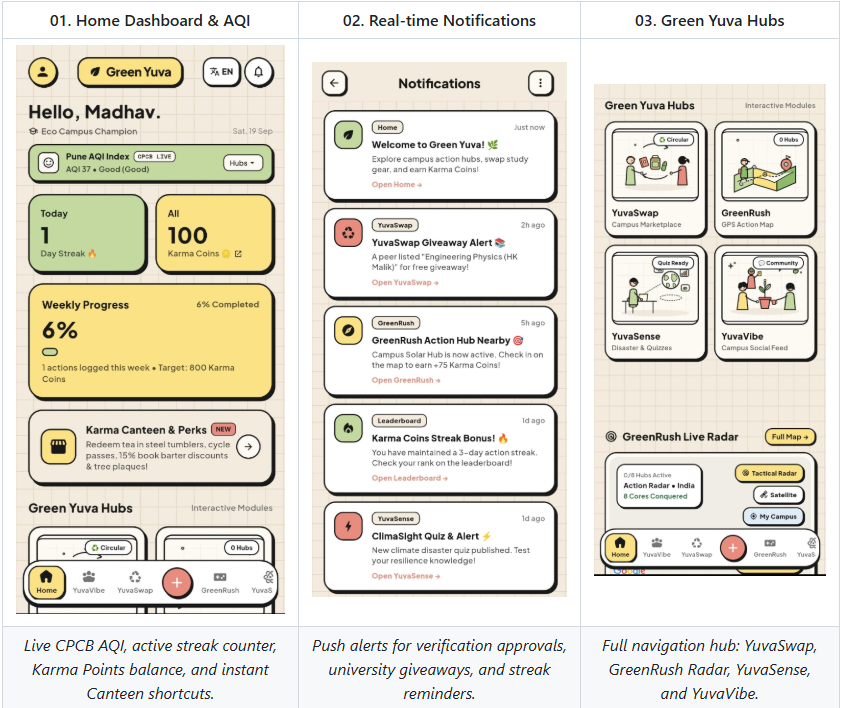
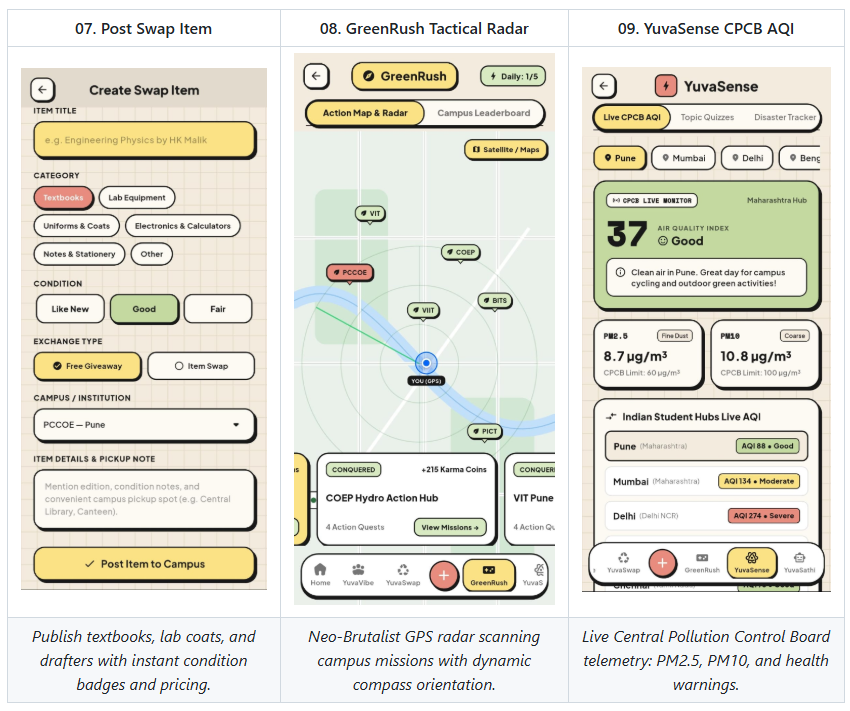
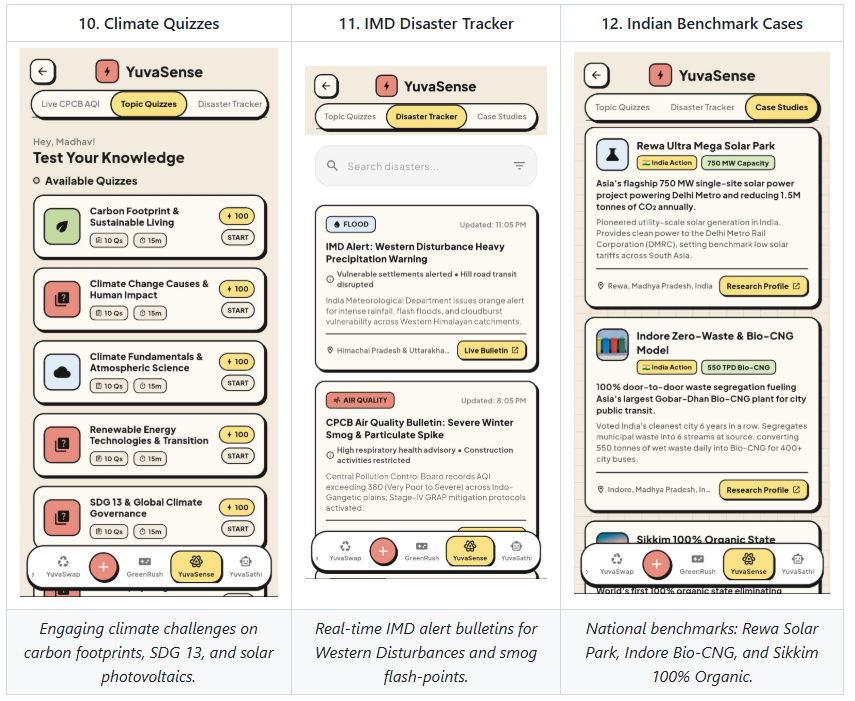
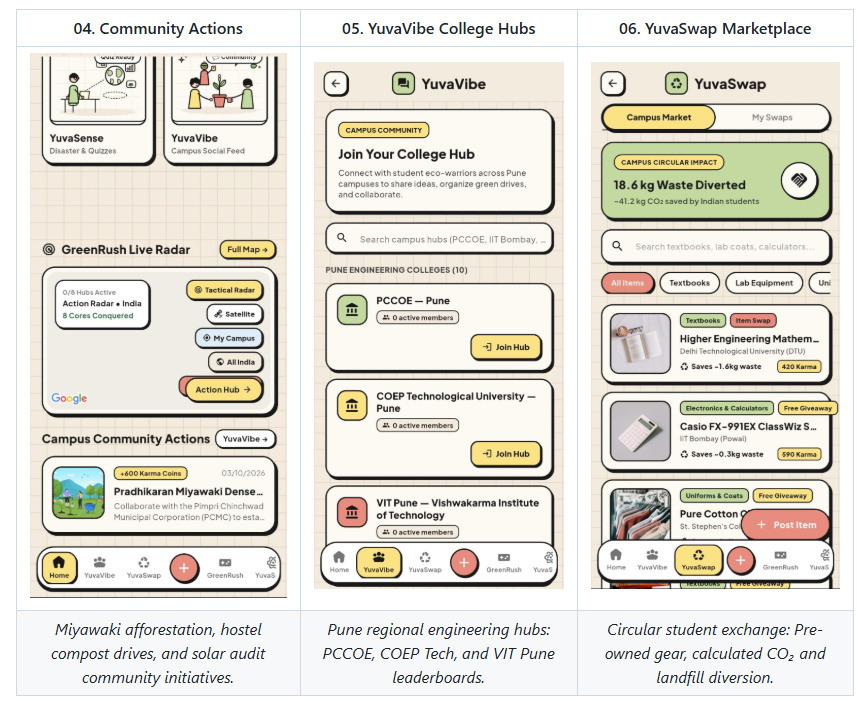
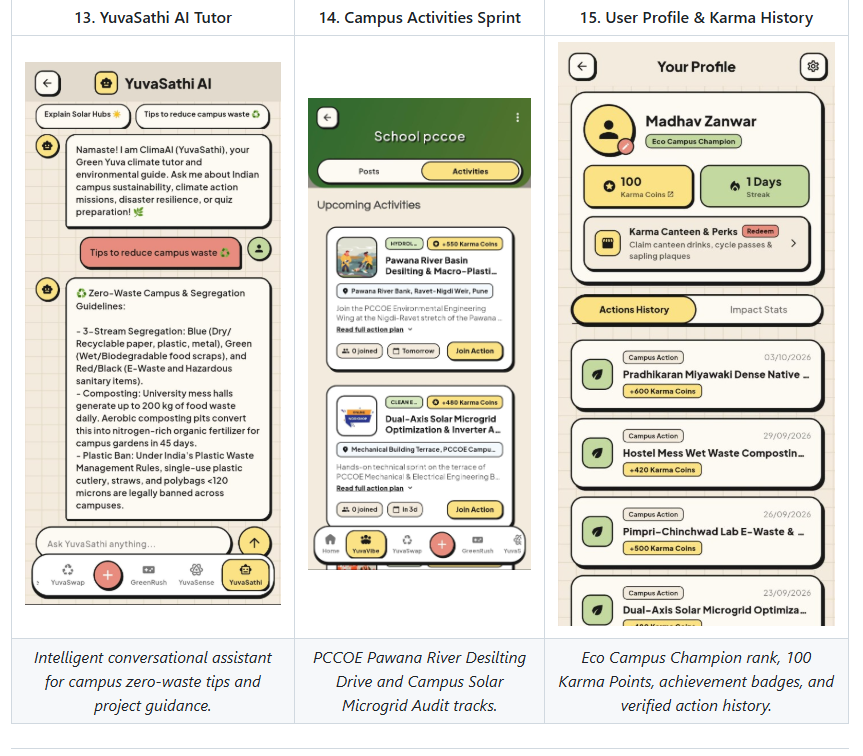
🎯 Green Rush (Interactive Campus Geo-Locator & Quests): A keyless spatial map powered by OpenStreetMap and high-resolution Esri Satellite imagery that dynamically detects student location via GPS, calculates geodesic distances to partner campuses, and launches location-specific environmental quests (campus clean-ups, energy audits, tree census). 🔄 YuvaSwap (Peer-to-Peer Circular Student Economy): A zero-commission campus thrift marketplace enabling students to buy, sell, or donate used academic essentials (textbooks, lab kits, drafters), directly diverting municipal solid waste. 🌬️ Real-Time Telemetry & CPCB AQI: Live environmental telemetry syncing with Central Pollution Control Board (CPCB) sensors to provide localized Air Quality Index alerts and actionable safety recommendations. 💎 Karma Points & Cafeteria Utility: Completing verified eco-missions awards Karma Coins that can be redeemed for discounts at campus cafeterias and stationery stores, closing the loop between green behavior and tangible reward. 🤖 AI Climate Mentor (Powered by Google Gemini 1.5 Pro): An embedded multilingual climate tutor that assists students with localized sustainability advice, eco-project guidance, and waste segregation rules.
🛠️ How We Built It
Green Yuva was engineered with a privacy-first, cloud-resilient architecture built for multi-platform delivery:
Frontend & Client Core: Built with Flutter 3.x and Dart, delivering responsive Neo-Brutalist UI experiences across Android, iOS, and Web.
Keyless Geospatial Engine: Integrated flutter_map with vector OpenStreetMap and Esri World Imagery tiles. This eliminated reliance on paid Google Maps JavaScript API keys and quota restrictions while ensuring complete zero-crash cross-browser reliability.
Geodesic Distance & Location Engine: Calculated real-time spatial proximity between user GPS coordinates and campus nodal hubs using the Haversine geodesic formula.
Backend & Authentication: Firebase Authentication handles seamless anonymous and email/password authentication, while Cloud Firestore manages real-time mission states and school leaderboards. Asset Storage & Microservices: Utilized Supabase Storage for user-uploaded mission proof photos and listing media with low-latency CDN delivery. AI Integration: Integrated Google Gemini 1.5 Pro via REST endpoints to parse mission submissions, validate eco-actions, and answer climate queries in real time.
🧗 Challenges We Faced
- Map Rendering & Missing API Keys on Web: Standard Google Maps plugins on Flutter Web often fail due to strict referrer restrictions and missing JavaScript keys. We solved this by architecting a keyless GIS layer leveraging OpenStreetMap and Esri Satellite tile endpoints, ensuring fluid Web and mobile map execution with zero API overhead.
- Dynamic Haversine Sorting on Low-End Devices: Sorting dozens of regional campuses dynamically based on live GPS tracking caused minor UI frame drops. We optimized calculations with cached geodesic coordinates and asynchronous worker isolates.
- PWA & Offline Resilience: Campuses often have patchy Wi-Fi in basements or field audit zones. We engineered local cache fallbacks using
shared_preferencesand Firestore offline persistence so students can draft mission completions offline.
📚 What We Learned
Behavioral Gamification Drives Long-Term Habits: Nudging students through tangible cafeteria rewards and campus leaderboard prestige converts passive awareness into repeated daily environmental action. Open Geospatial Standards Are Powerful: Building with open GIS standards (OSM & Esri tiles) provides unmatched freedom from proprietary cloud billing while maintaining high visual quality. Circular Economies Belong on Campus: University student cycles (semesters) are ideally suited for localized reuse models that keep functional goods out of landfills.
🔮 What's Next for Green Yuva
Campus Microgrid & Solar Telemetry: Integrating campus IoT power meters to show real-time dormitory energy conservation metrics. Autonomous AI Verification: Deploying edge-vision models to verify uploaded cleanup and recycling photos automatically. Nationwide Inter-Collegiate Eco-Cup: Expanding our verified campus directory to onboard student environmental cells and NSS chapters across all 28 states in India.
Built With
- circular-economy
- clean-tech
- climate-tech
- cloud-firestore
- dart
- firebase
- firebase-authentication
- flutter
- gamification
- gemini-api
- geospatial
- gis
- google-gemini
- gps
- iot
- latex
- leaflet.js
- mobile
- openstreetmap
- pwa
- rest-api
- supabase
- sustainability
- web


Log in or sign up for Devpost to join the conversation.