Inspiration
Most of us are international students, and none of us could visit Georgia Tech before applying. We had to figure out what campus was like from photos, videos, and a lot of guessing. Even after getting in, finding anything meant opening a different website for each thing: one for buildings, one for food, one for rooms, one for printing, one for clubs, one for reporting a broken thing. Nothing talked to anything else.
We wanted one map that gives you a feel for campus life without having to be there. Where do people eat? Where do they study? What's happening this week? It should also make things easier for students who are already here.
What it does
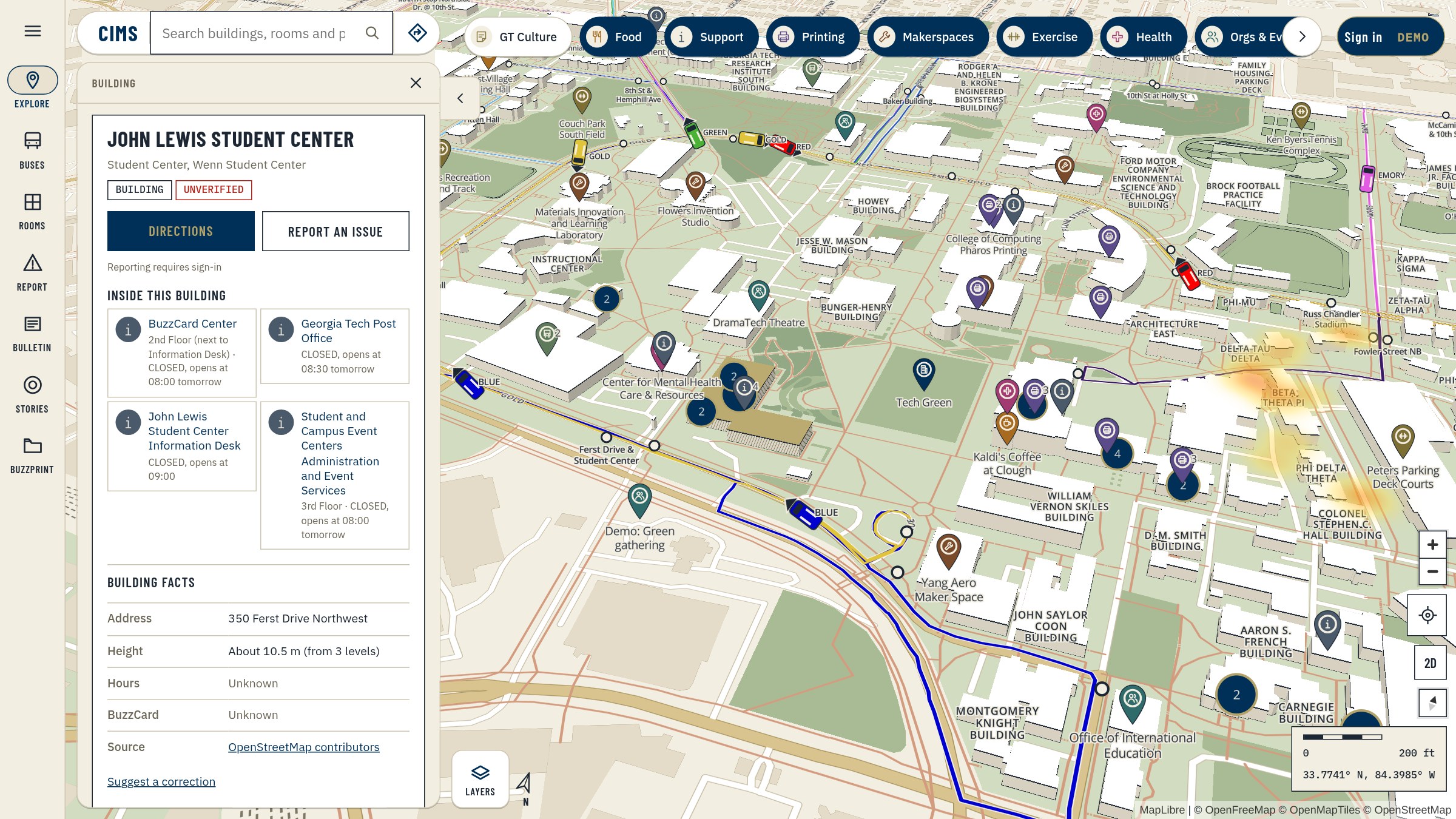
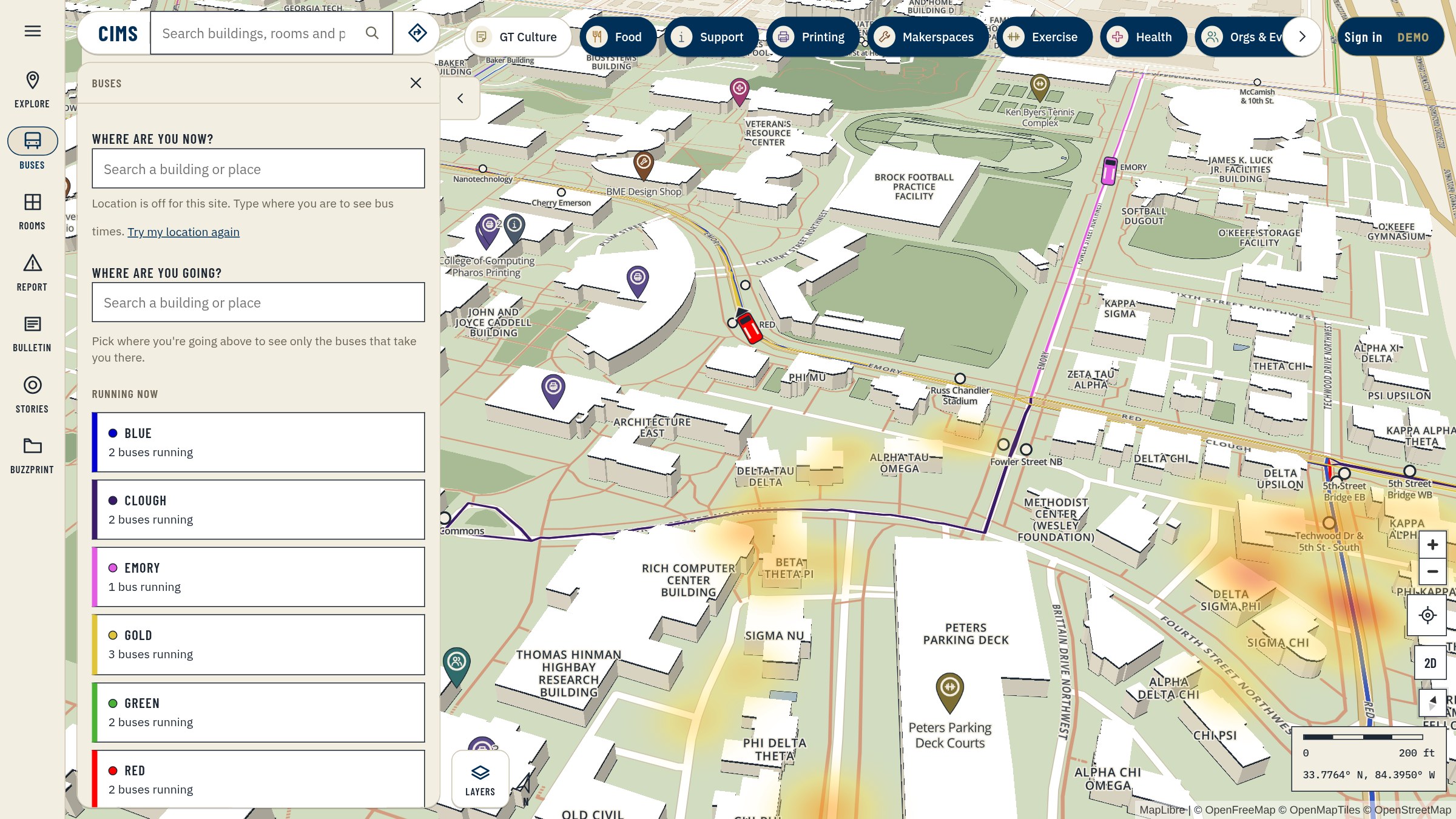
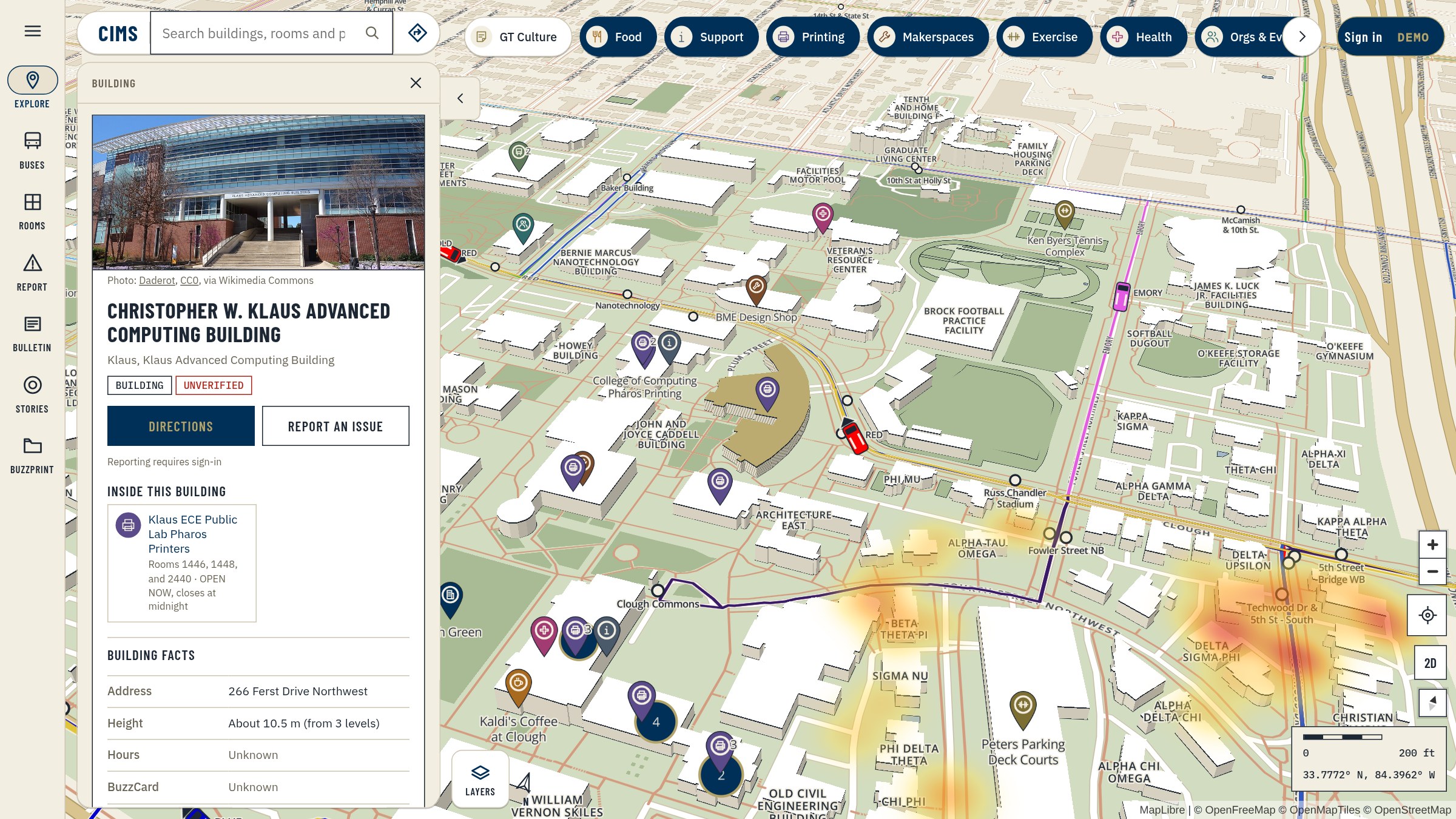
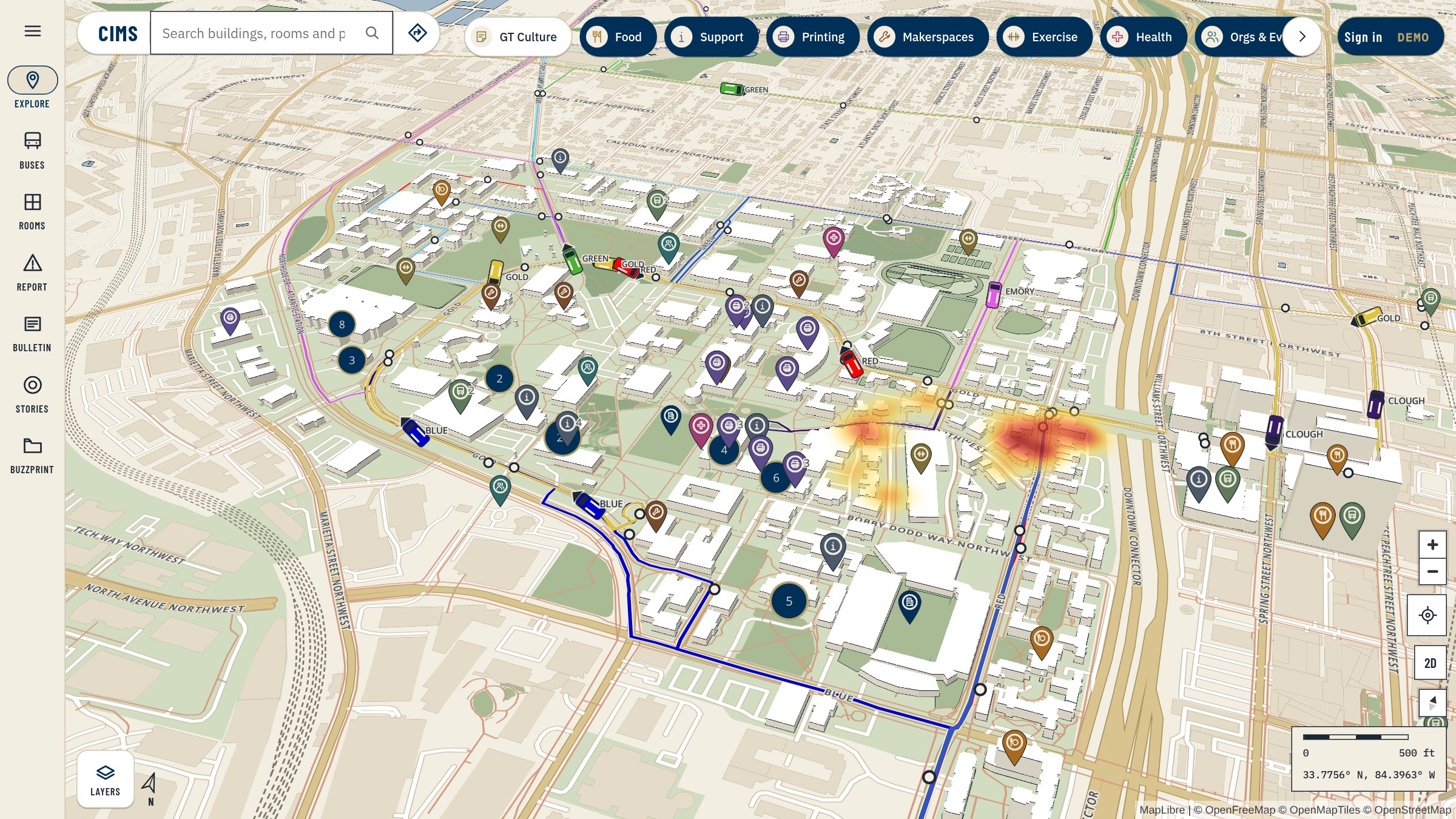
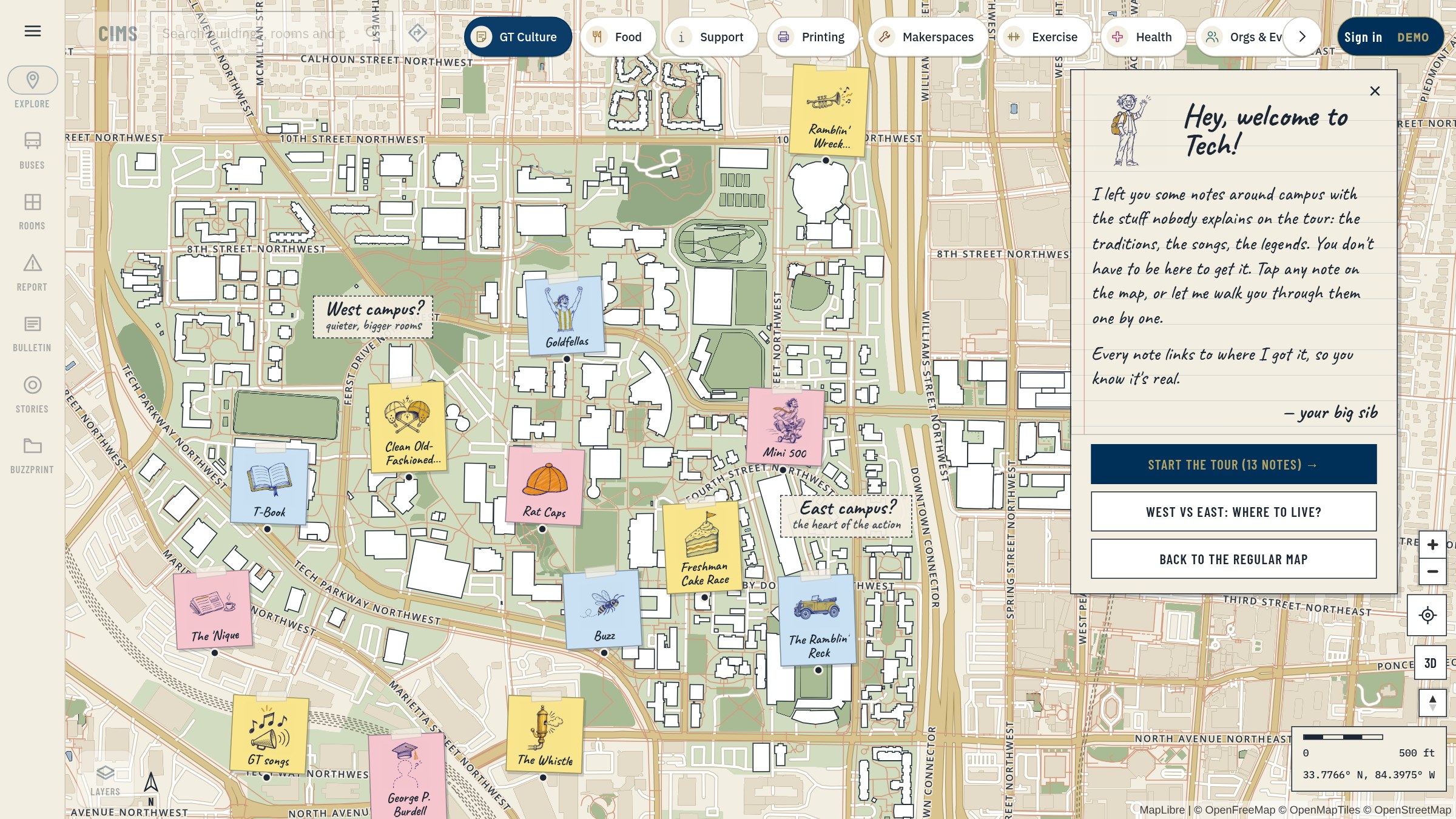
CIMS (Campus Interactive Map System) is an interactive map of Georgia Tech. You can:
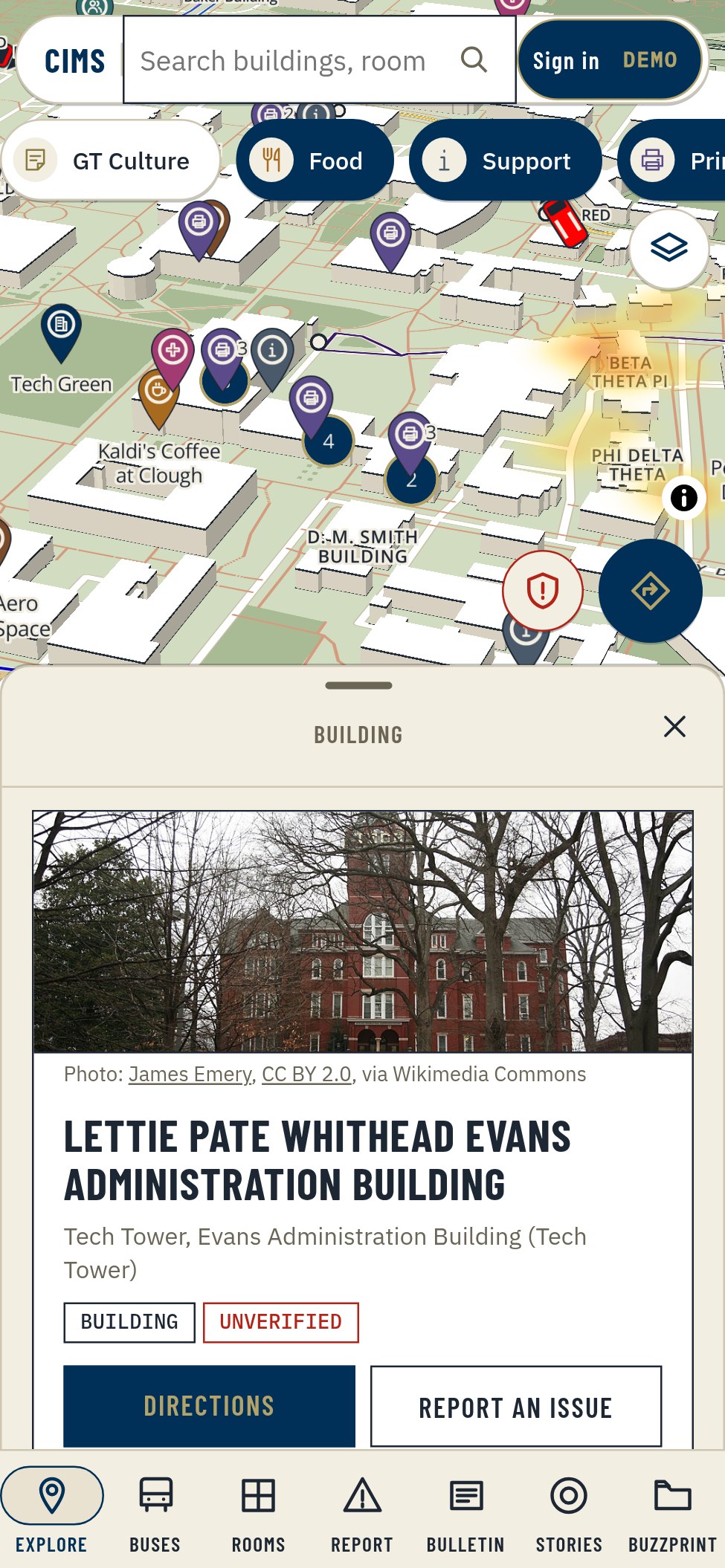
- Browse buildings, food, support desks, makerspaces, printing, health, and transit as toggleable layers
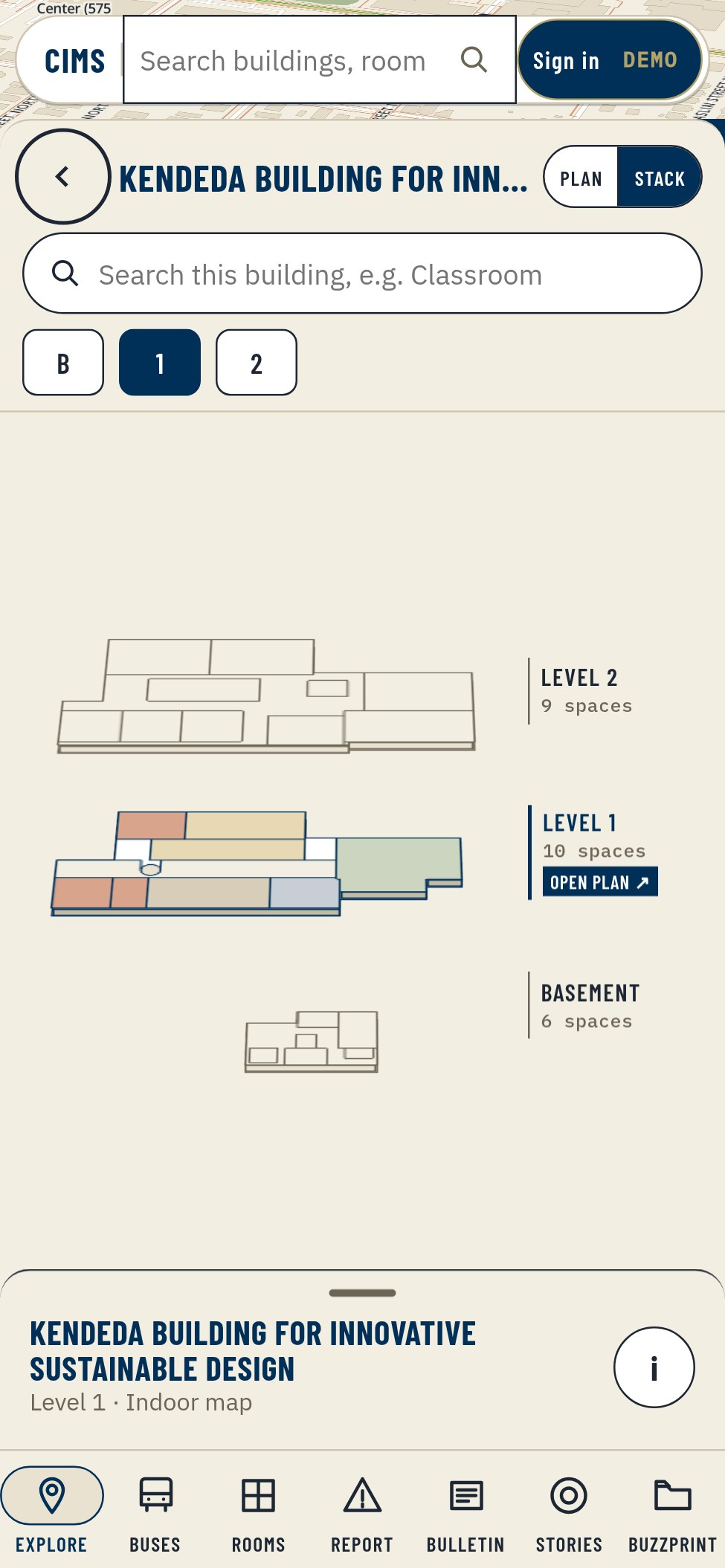
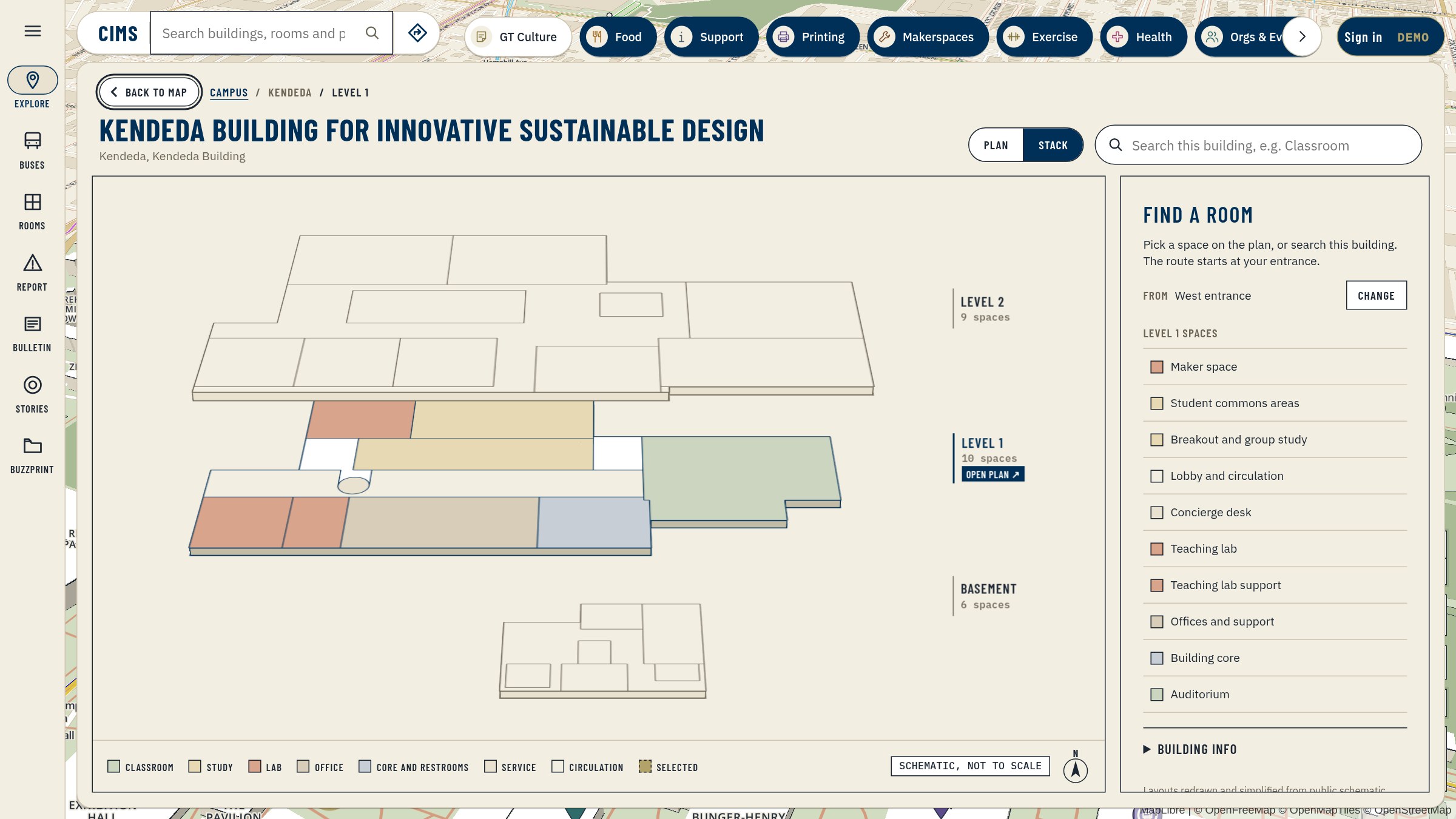
- Open floor plans and find rooms inside a building, with routes to them
- Check which rooms are free right now
- Report maintenance issues tied to a specific room
- Discover student orgs, events, and alumni visits on a bulletin board
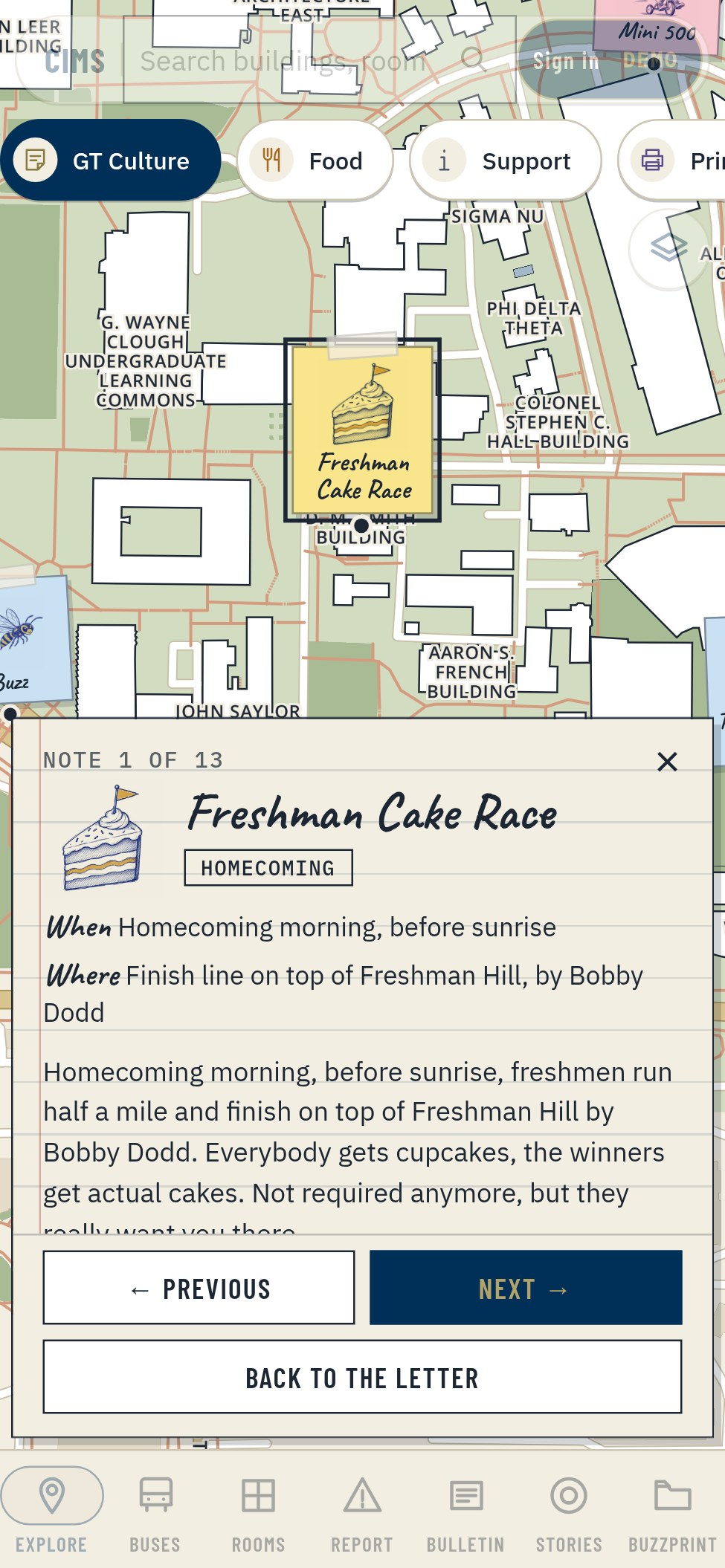
- Play small map games and explore GT culture, like traditions and landmarks
How we built it
The map runs on Vite, React, and TypeScript, with MapLibre GL and OpenStreetMap tiles, so it needs no paid API key. Campus data lives in plain JSON files, and every place carries a status of seed, draft, or verified, so unconfirmed information never shows up as fact. A small script checks the data in CI. We worked as a team of five with short branches, draft pull requests, and a preview link for every branch, so everyone could see changes within a minute of pushing.
Challenges
The hardest part was the indoor maps. Floor plans mostly exist as flat PDFs, so we redrew them by hand into something clickable and searchable. We also hit a lot of small map quirks, like layers silently refusing to draw because of a missing font. Keeping four people's work from colliding was its own challenge. And since we can't walk the campus as easily as locals, we had to be honest about what we had confirmed and what we had not.
What we learned
We learned that a good campus tool is mostly about trust in the data, not about flashy features. We also learned how much simpler things get when you put everything where people already look, which is the map. Working as a distributed team taught us to keep changes small and review often.
What's next
We want to confirm more doors and rooms on site, add outdoor routing of our own, and bring in a 3D campus view.
Built With
- cloudflare
- codex
- docker
- geojson
- github
- maplibre-gl
- nginx
- node.js
- openstreetmap
- postgresql
- react
- supabase
- traefik
- typescript
- vite


