Devpost
Participate in our public hackathons
Devpost for Teams
Access your company's private hackathons
Grow your developer ecosystem and promote your platform
Drive innovation, collaboration, and retention within your organization
By use case
Blog
Insights into hackathon planning and participation
Customer stories
Inspiration from peers and other industry leaders
Planning guides
Best practices for planning online and in-person hackathons
Webinars & events
Upcoming events and on-demand recordings
Help desk
Common questions and support documentation
Sort by:
Catch context regressions before they break your AI agents—test DataHub metadata, lineage, semantics, retrieval, and agent behavior before changes reach production.
Trust the graph. Not the prompt.
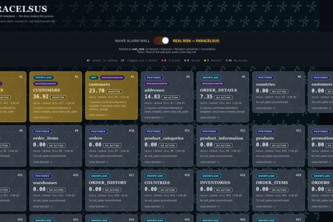
Data tools rank problems by how broken something is. Paracelsus ranks them by how much harm can actually reach someone, then writes the verdict back into DataHub. The dose makes the poison.
DataHub knows your owners, PII tags and freshness. It has no opinion. mlgate is that opinion: it gates ML releases on lineage and writes the verdict back.
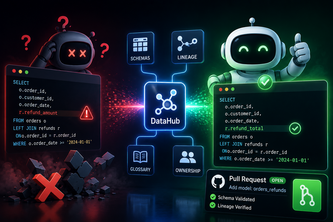
An agent that reads your real DataHub schema before writing SQL and then proves it did.
AI chat assistant that answers questions about datasets, columns, and lineage by reading live metadata from your DataHub instance.
The Context Layer for Consistent AI Personas
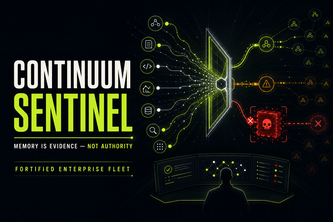
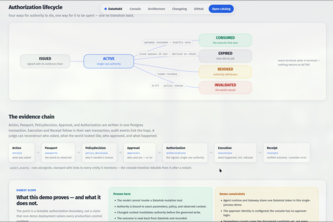
An evidence-first control plane that catches poisoned, contradictory, and cross-tenant agent memory before it becomes an irreversible enterprise action.
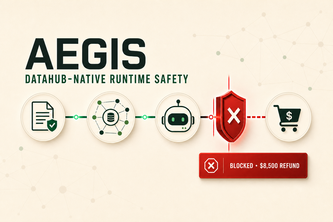
Aegis uses DataHub’s context graph to detect data risks, trace downstream impact, and keep AI-driven changes safe, compliant, and explainable.
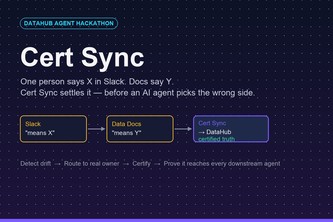
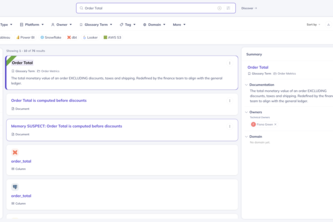
Someone says a metric means one thing on Slack. Your data docs say another. Cert Sync catches the disagreement, gets it settled, and keeps every AI agent on the same page.
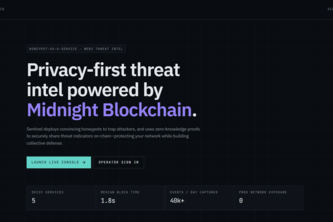
Trap hackers with edge honeypots and securely share threat intelligence globally using Midnight's ZK-proofs, protecting enterprise privacy while building collective defense.
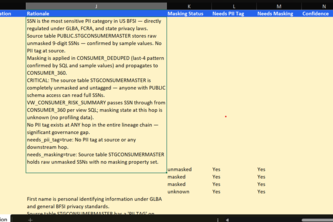
An autonomous agentic AI system that identifies which columns should be classified as PII by tracing schema, existing tags/glossary, lineage, sample values, and masking status across a data pipeline.
Catch silent ML failures before production. Traces DataHub lineage from training data → features → models → deploy, blocks risky releases, and writes risk evidence back to the catalog.
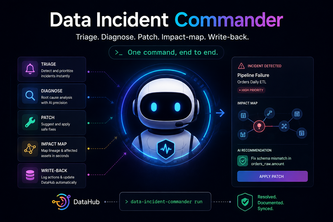
Autonomous incident commander for DataHub: triage, diagnose, patch, impact-map, and write-back — one command, end to end.
DataHubX is a governance layer for AI agents acting on DataHub. Every change is approved against live data and re-verified at execution — if the data changed since approval, the action is blocked.
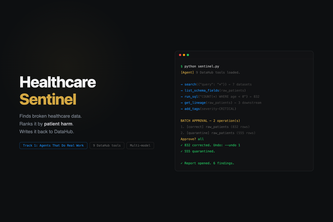
Healthcare Sentinel is an AI agent that triages healthcare data quality like a clinician — discovers issues in DataHub, explains patient harm, remediates with approval, and learns across runs.
DataHub tells you what changed. GlassBox proves which AI decisions can no longer be trusted—and safely closes the loop.
AI agent & DataHub Skill that evaluates SQL PRs for column-level downstream impact, checks data contracts, scores risk, & performs reversible 2-way catalog write-back.
The shared intent layer that keeps founders, developers, and AI agents aligned—tracing changed decisions, exposing their blast radius, and blocking stale execution.
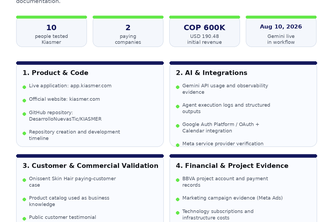
Kiasmer helps small businesses turn conversations into opportunities with AI agents that respond, qualify, schedule, follow up, and escalate to humans when appropriate.
DataHub agents can already write what they learn back to the catalog. Nothing ever takes it away. Half-Life expires agent memories when the schema, glossary or ownership beneath them changes.
One capture, any app — Residence remembers so your tools don't have to.
ML Guard is a production ML agent that uses DataHub’s context graph to detect target leakage and stale-model risk, trace every finding through column lineage, and write evidence back to DataHub.
A living cursor that understands context.