-
-
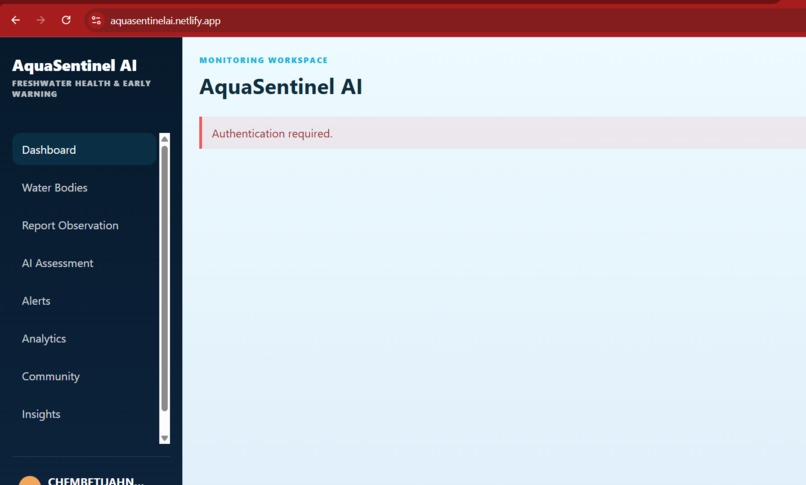
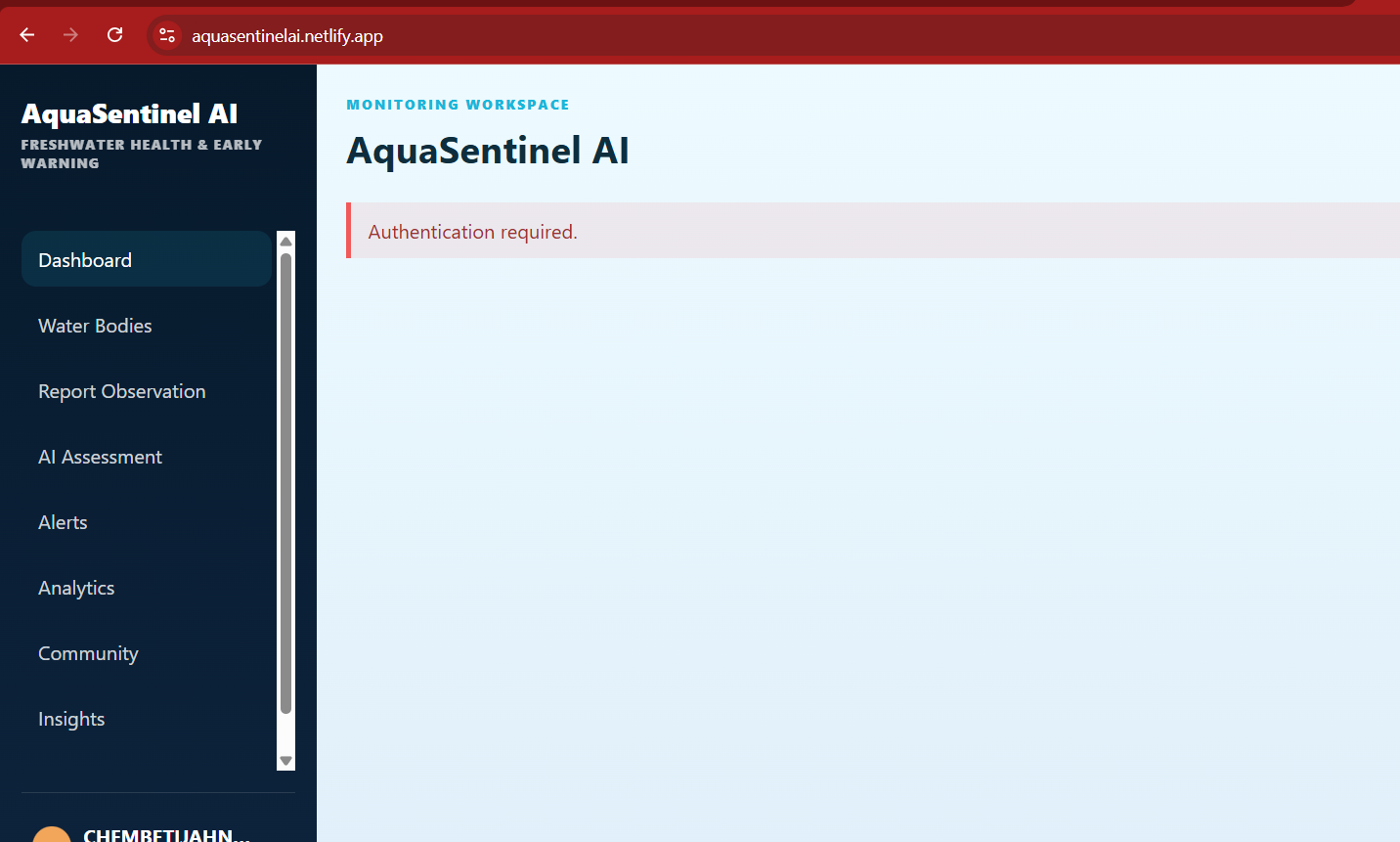
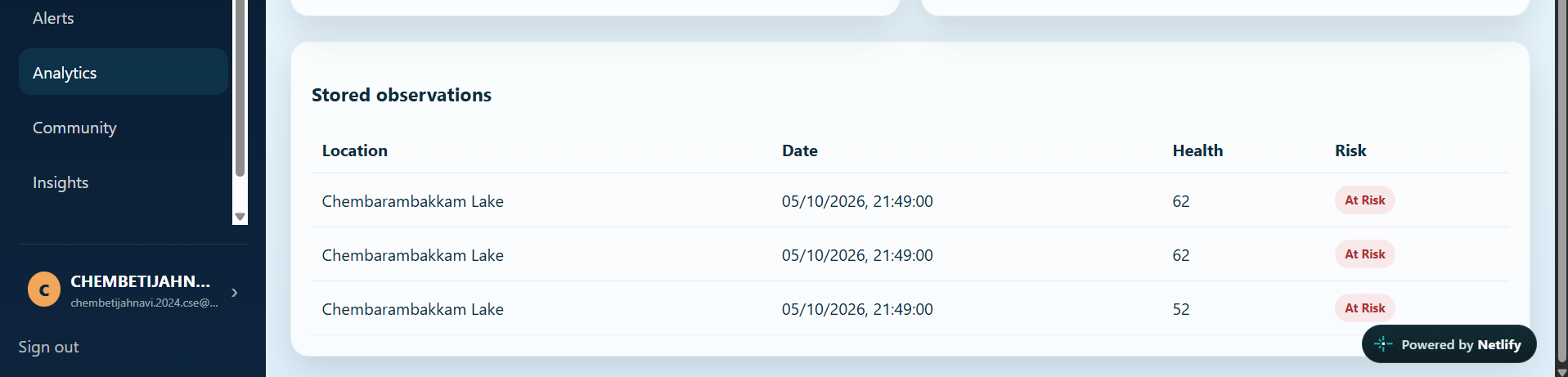
Dashboard
-
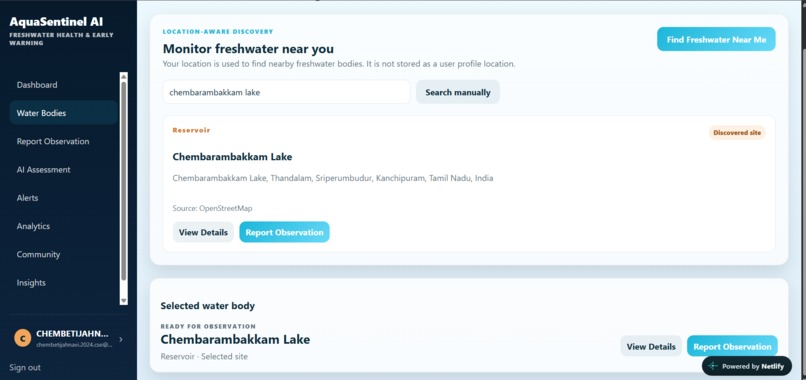
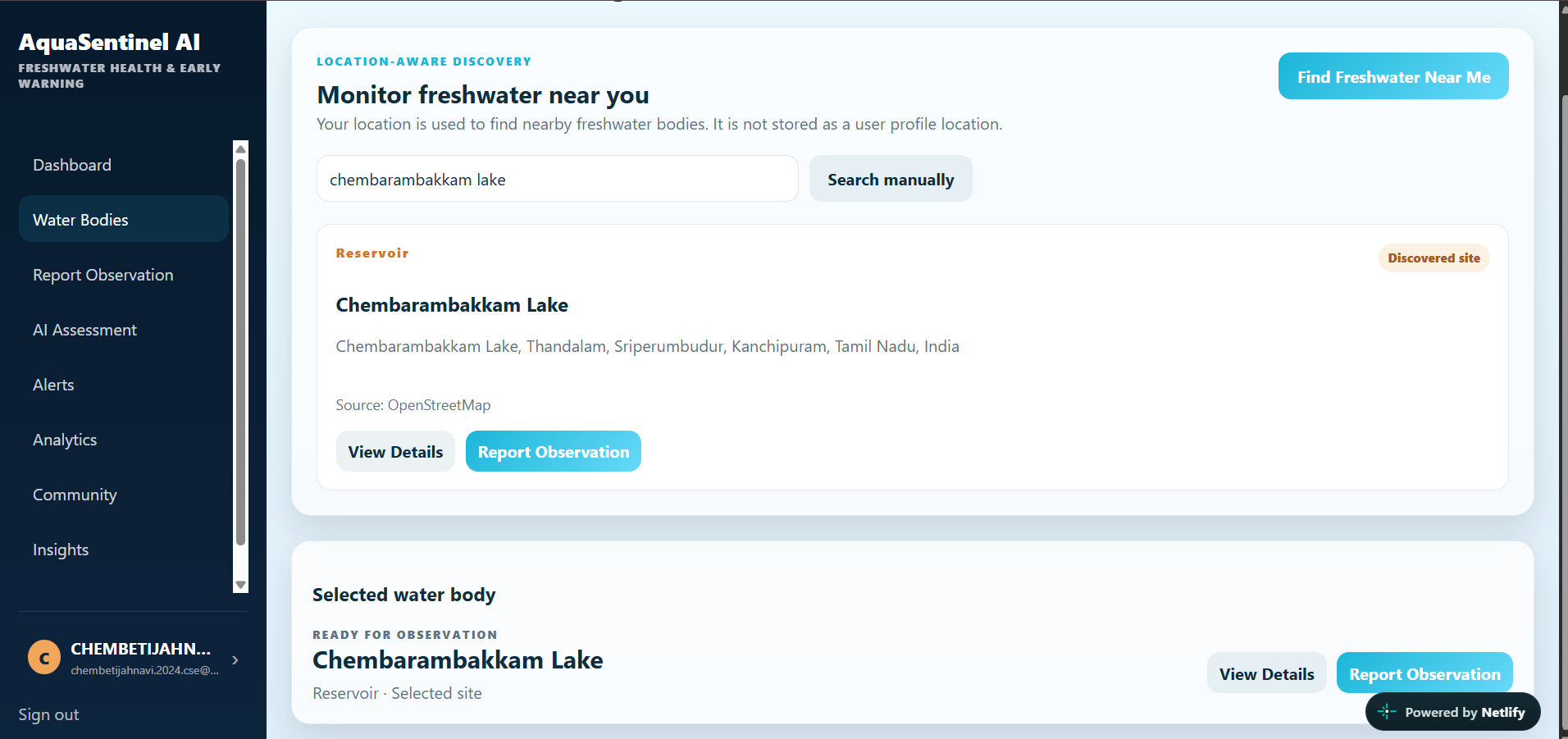
Finding Water Bodies
-
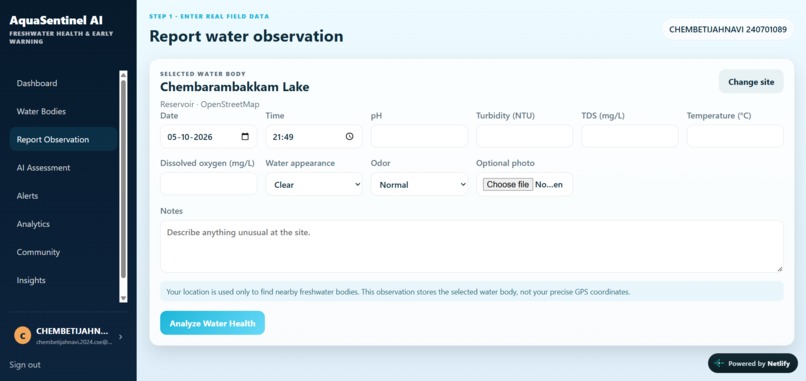
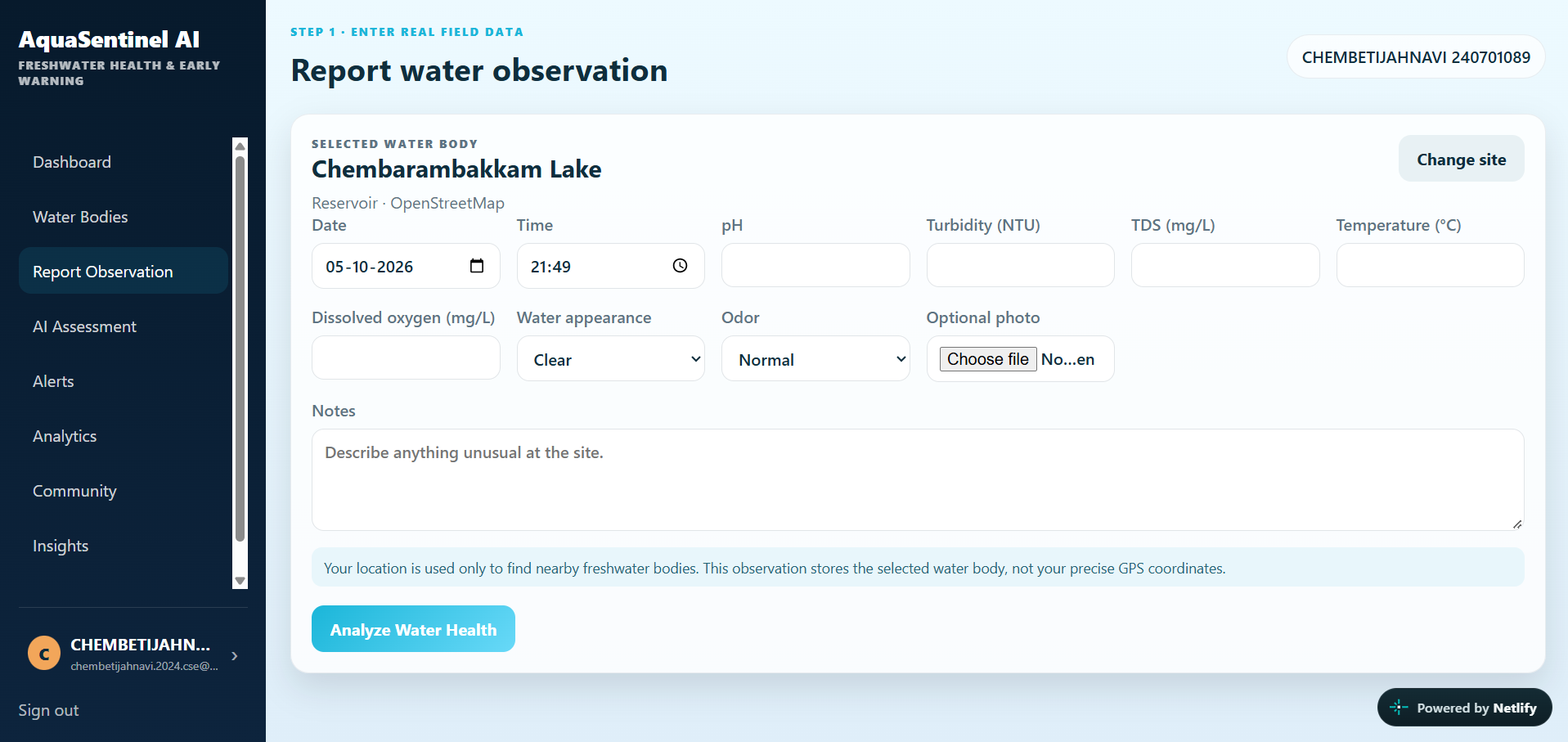
Report Values-1
-
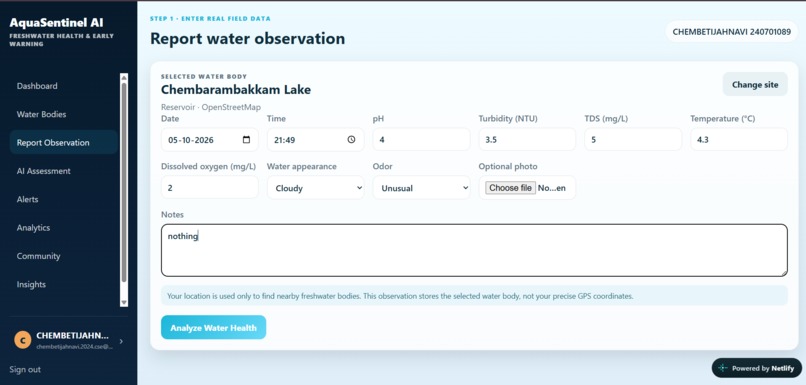
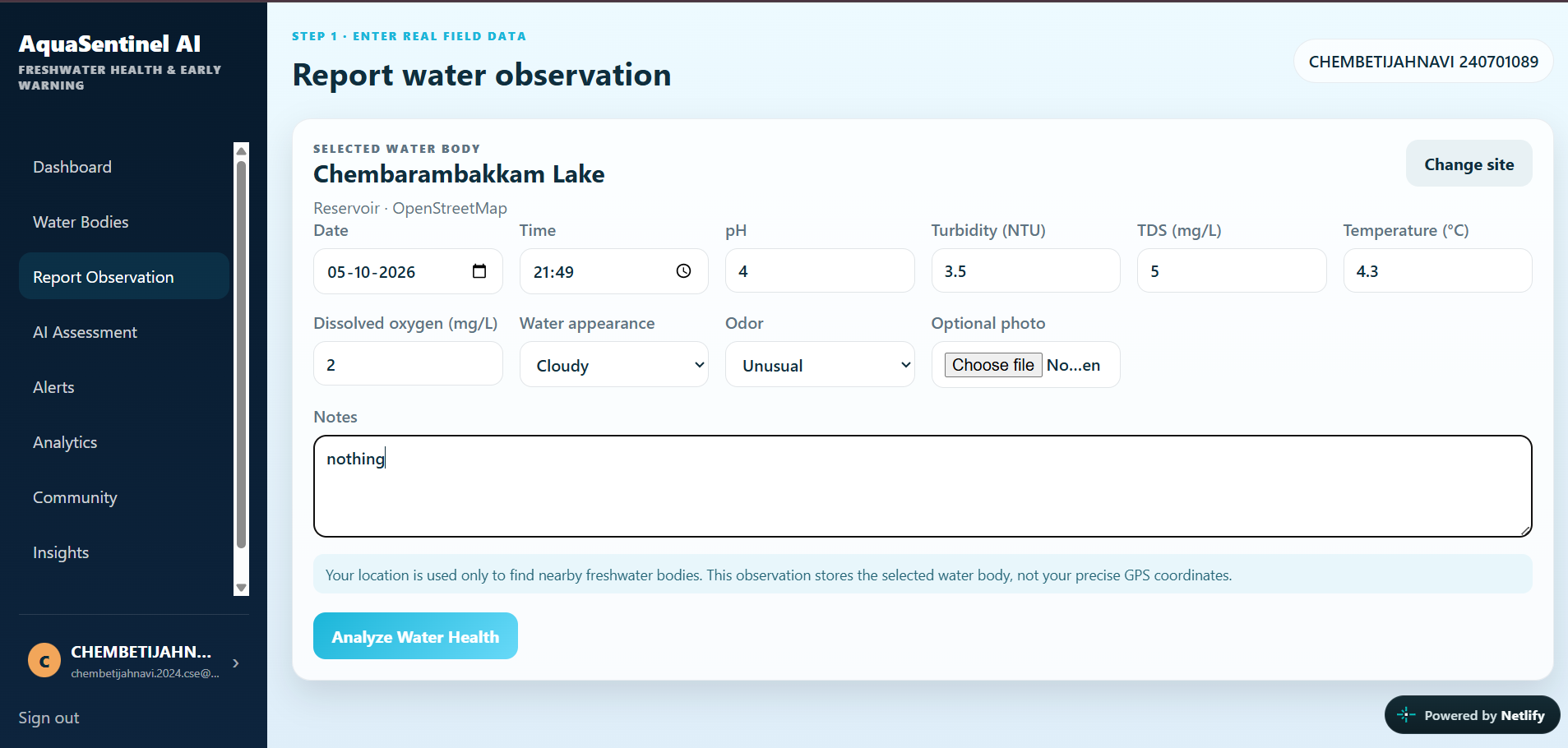
Report values-2
-
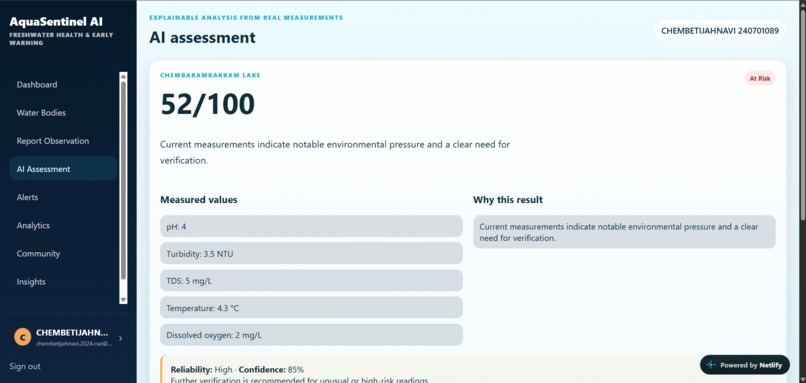
AI Suggestion-1
-
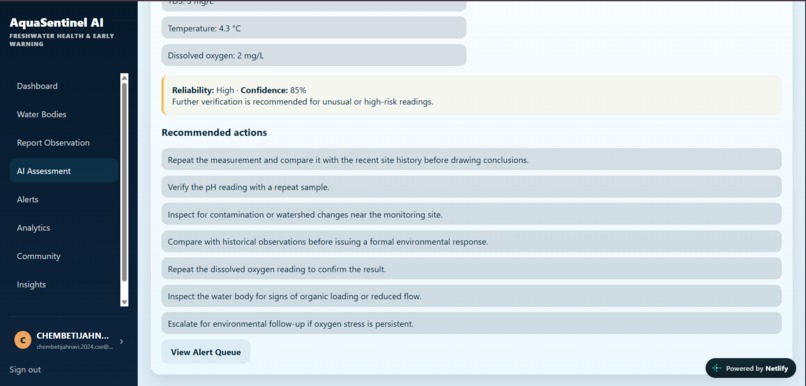
AI Suggestion-2
-
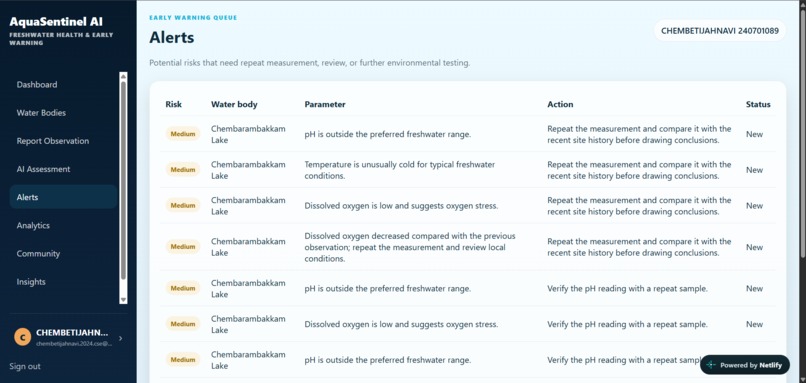
Alert Message
-
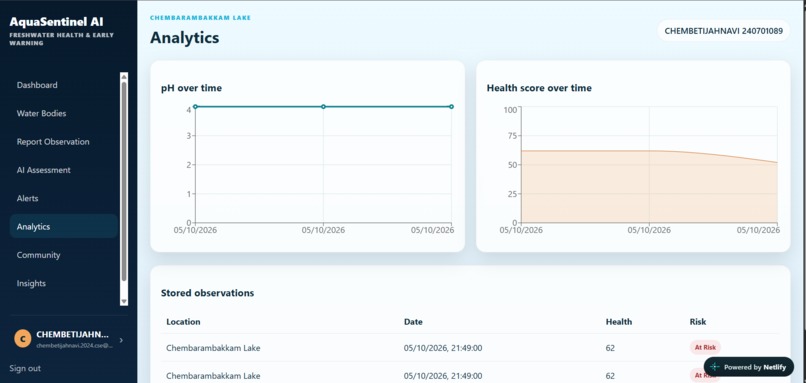
Report-1
-
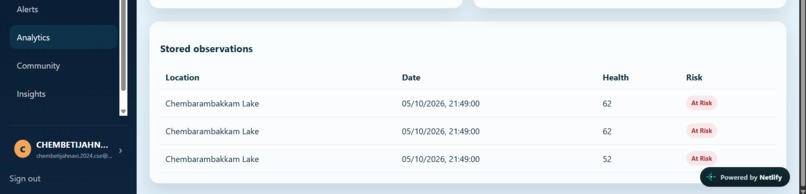
Report-2
-
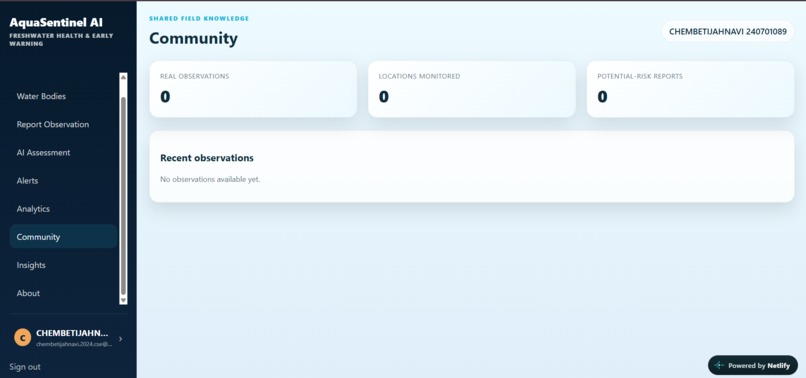
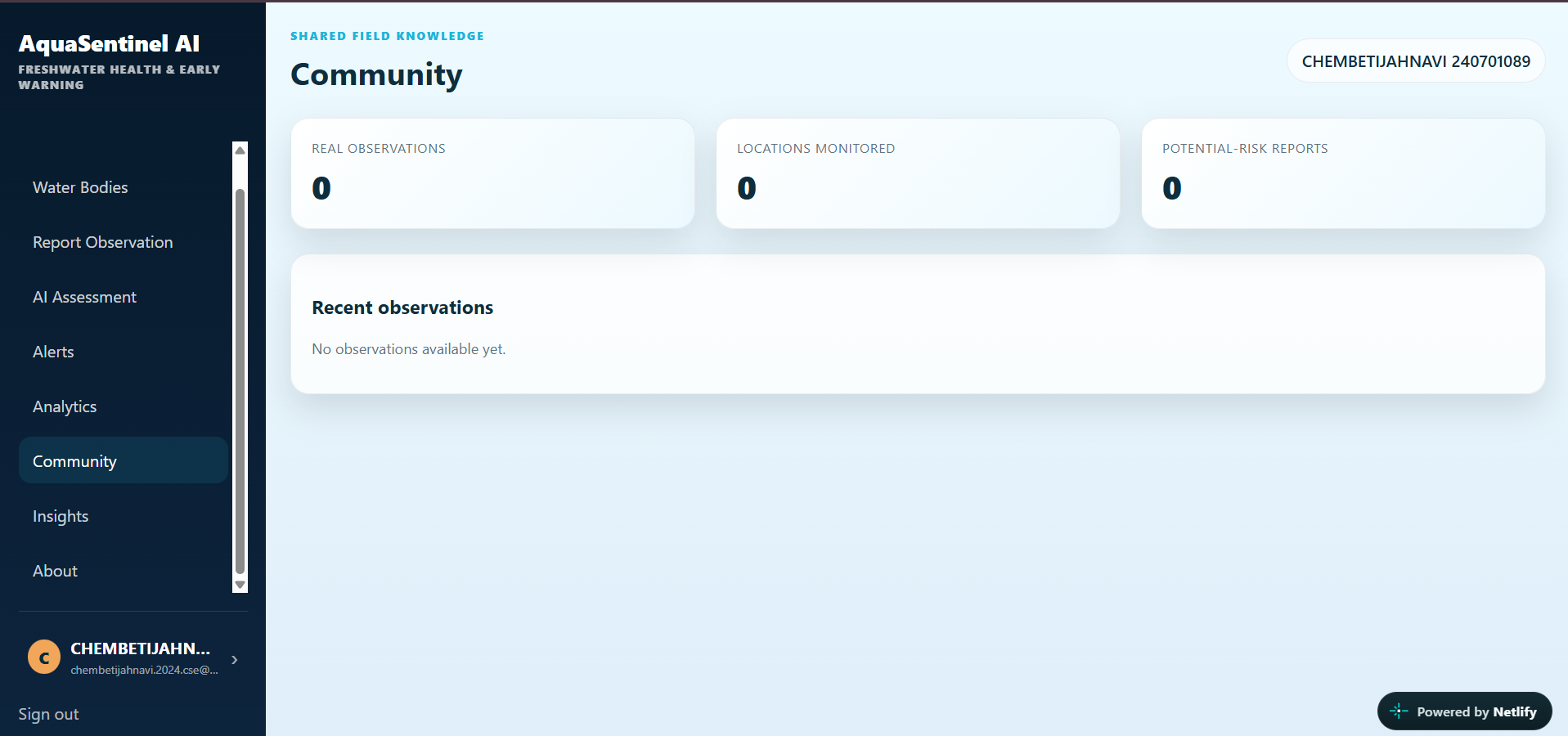
Community
-
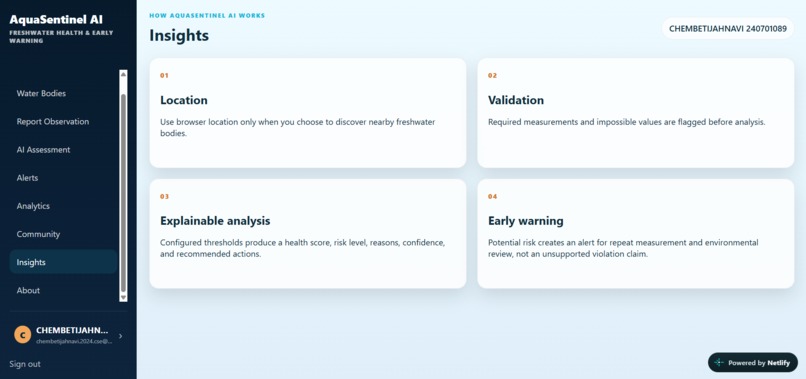
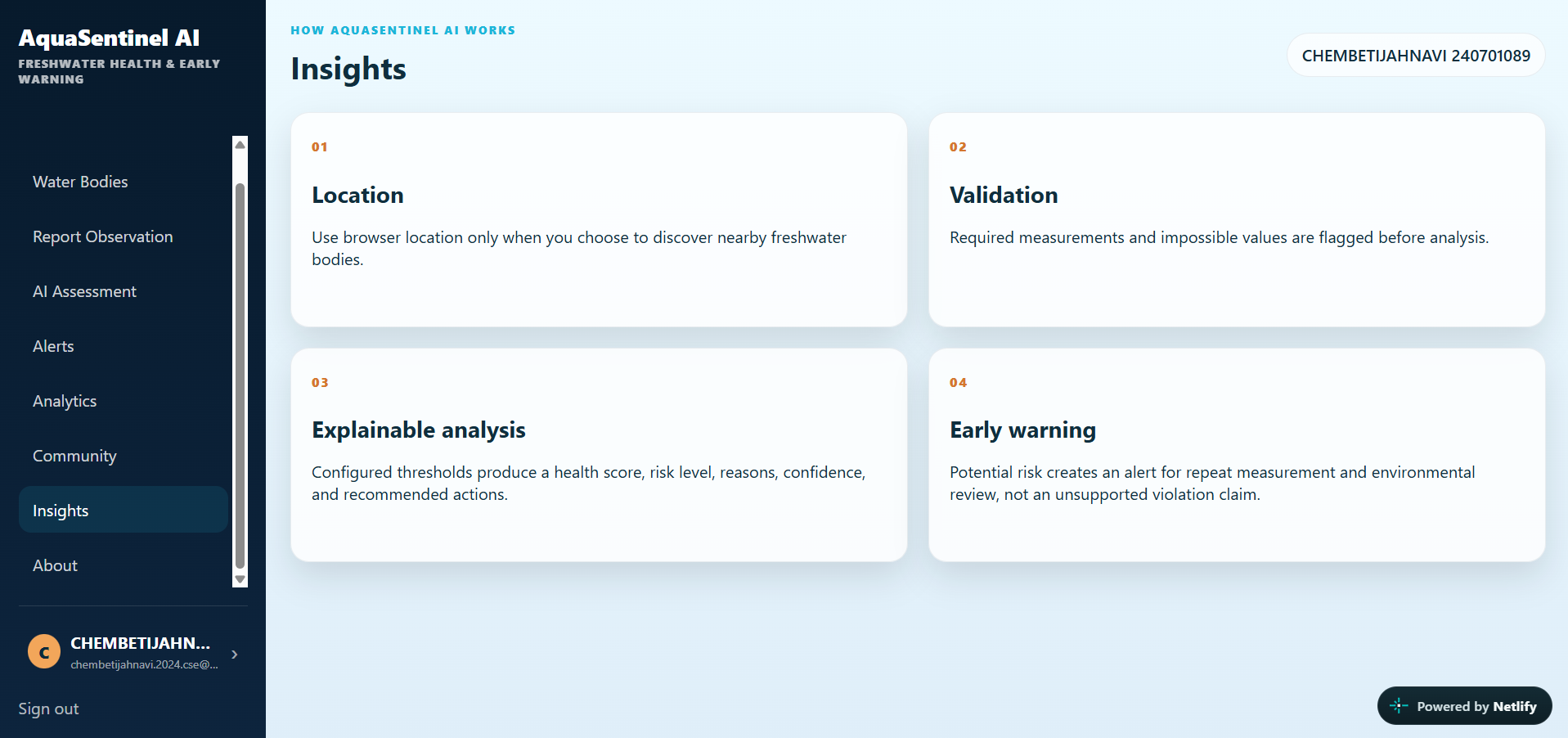
Insights
-
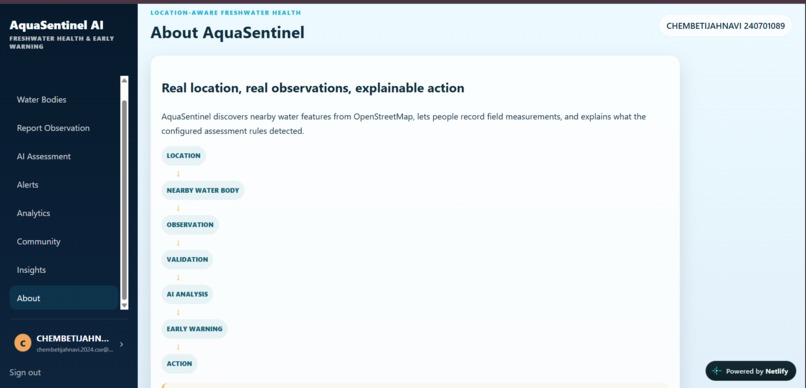
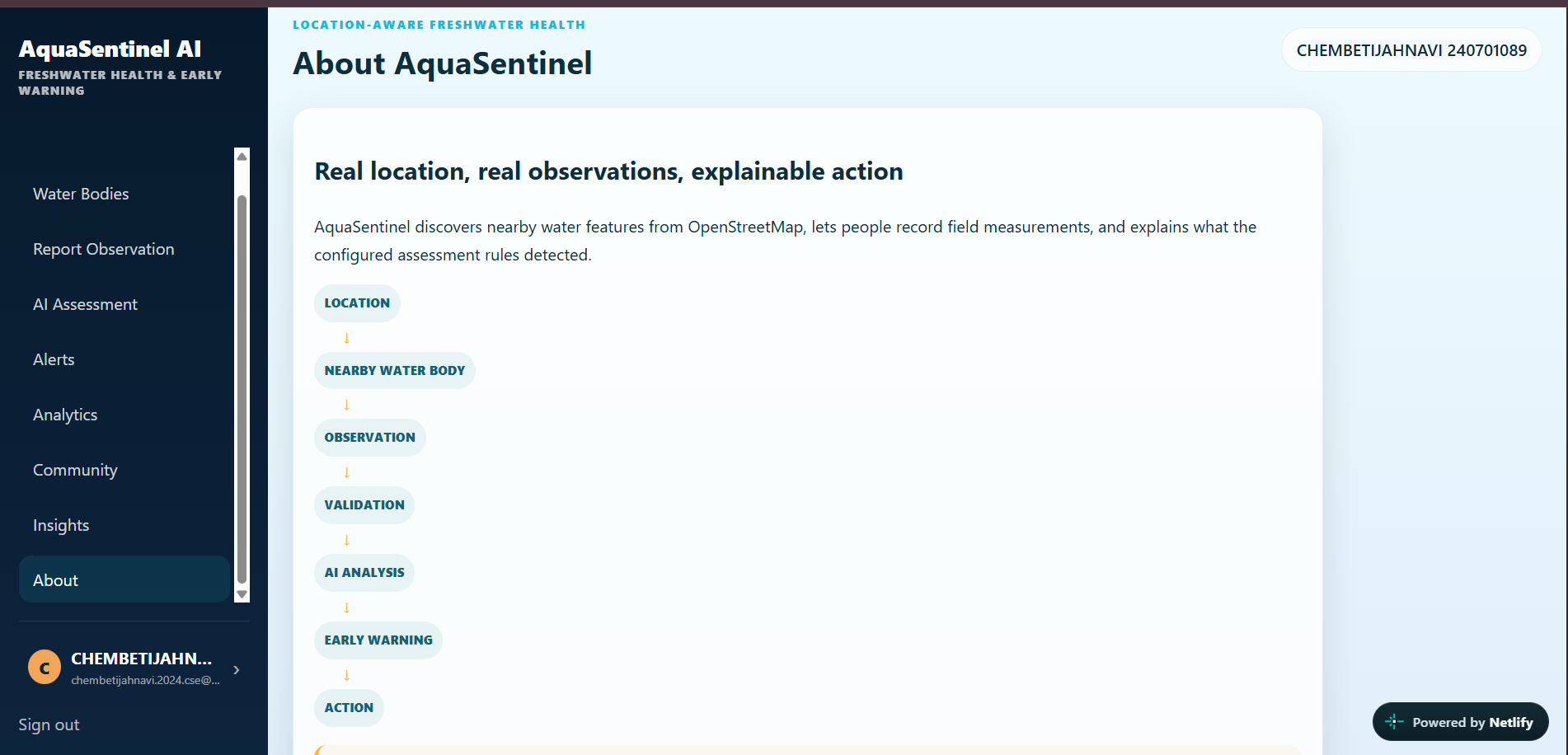
About
Inspiration
Freshwater ecosystems are essential for biodiversity, communities, and human well-being, but water-quality information can be difficult for ordinary users to collect, understand, and act upon. We were inspired by the idea of combining location-based freshwater monitoring, citizen observations, and explainable AI to turn raw water-quality data into meaningful environmental insights. This led us to build AquaSentinel AI with the vision of helping people move from simply collecting water data to understanding potential risks and taking informed action.
What it does
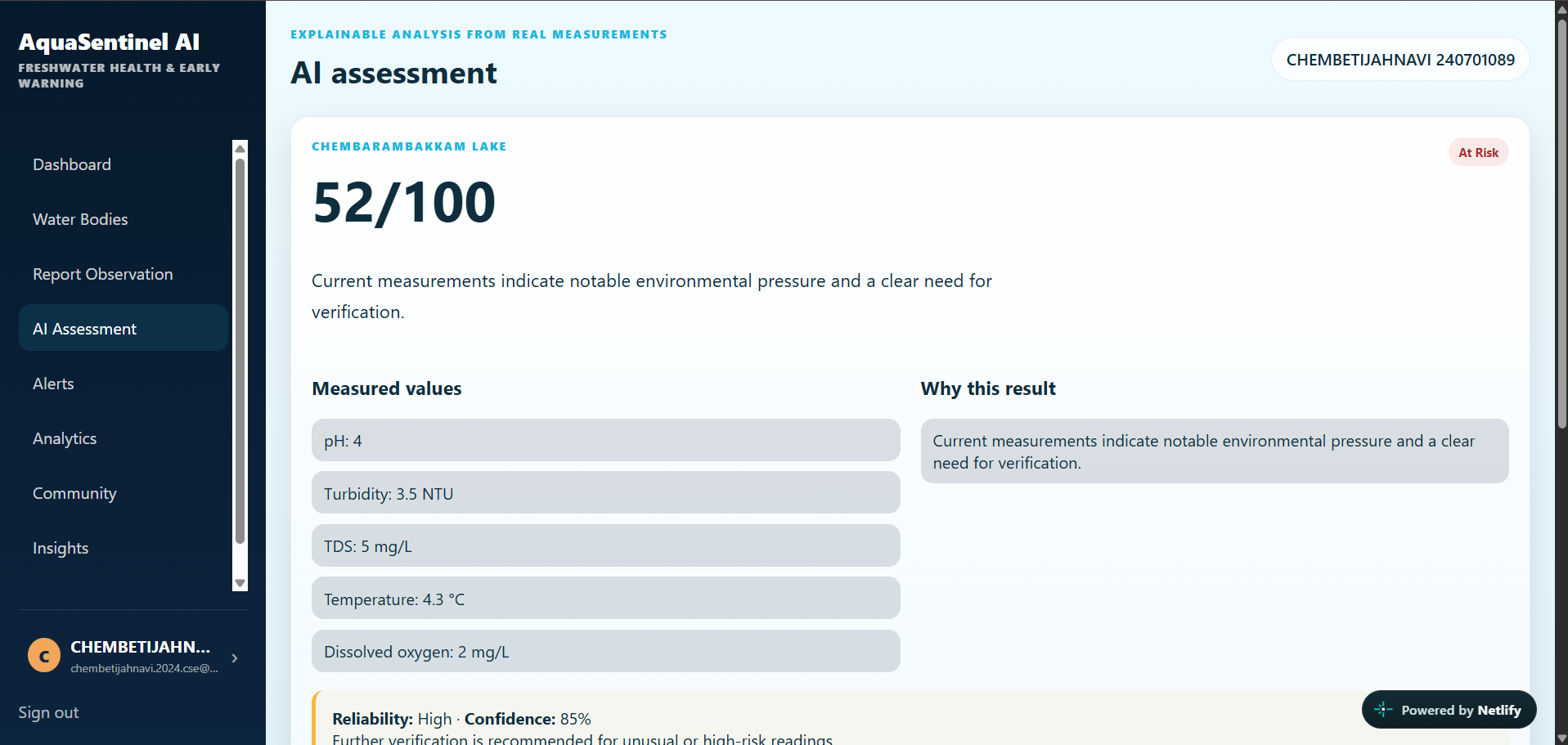
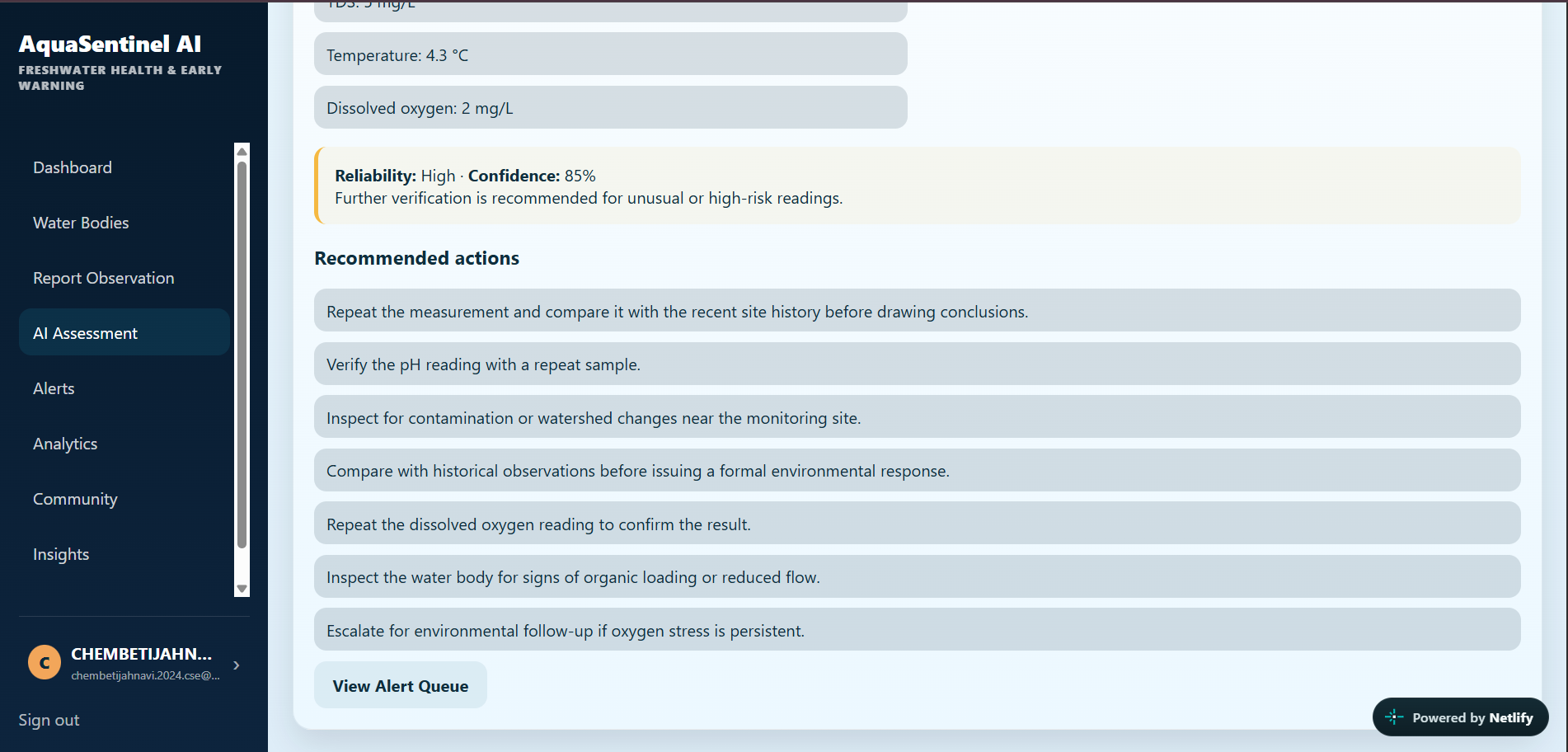
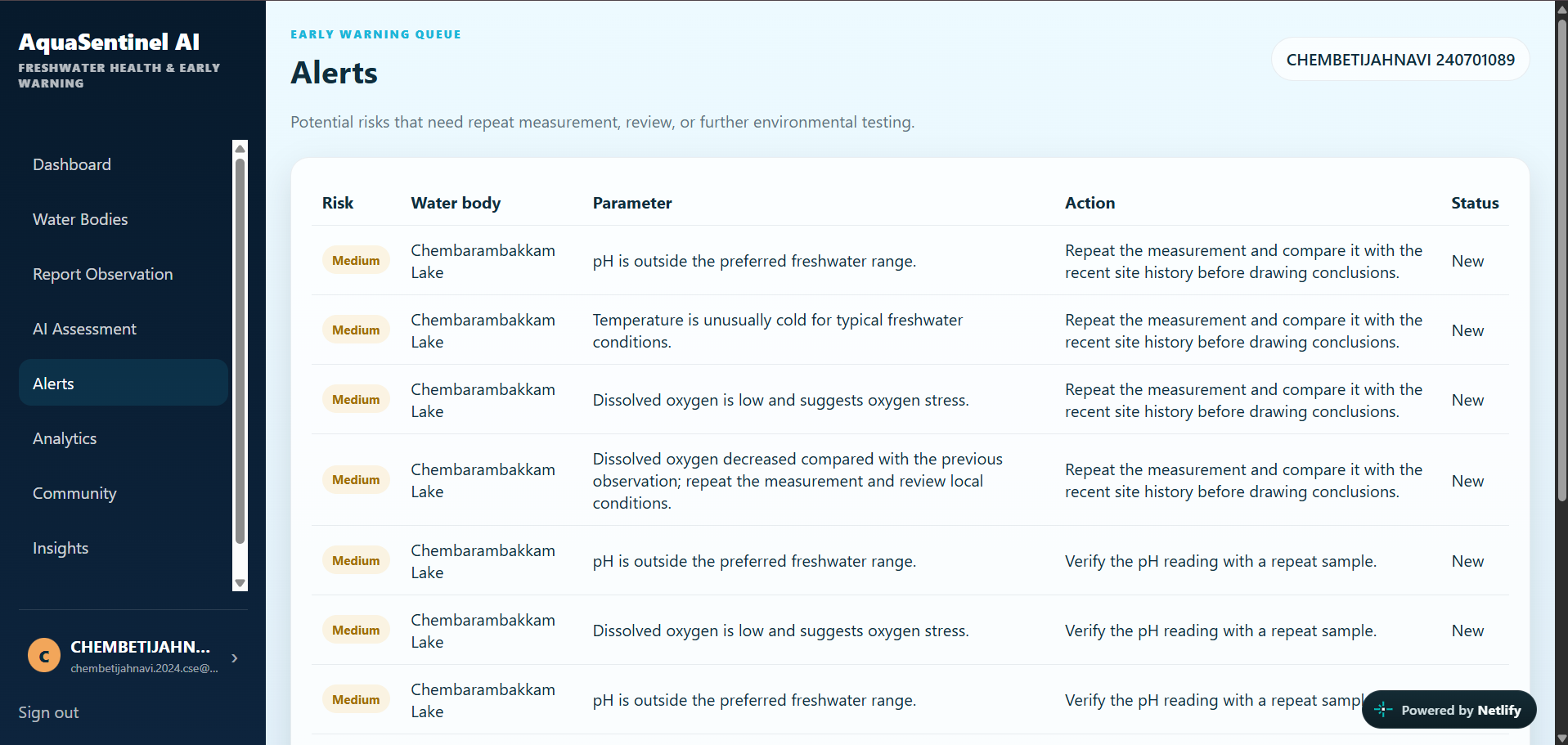
AquaSentinel AI is a location-aware freshwater health monitoring and early-warning platform. Users can allow location access to discover nearby freshwater bodies and select one to report observations such as pH, turbidity, TDS, temperature, dissolved oxygen, water appearance, and notes. The system validates the submitted data and performs AI-supported analysis to generate a freshwater health score, risk level, parameter-level insights, explanations, observation reliability, early warnings, and recommended follow-up actions. It is designed to support citizens, researchers, and local authorities in understanding potential freshwater-health risks.
How we built it
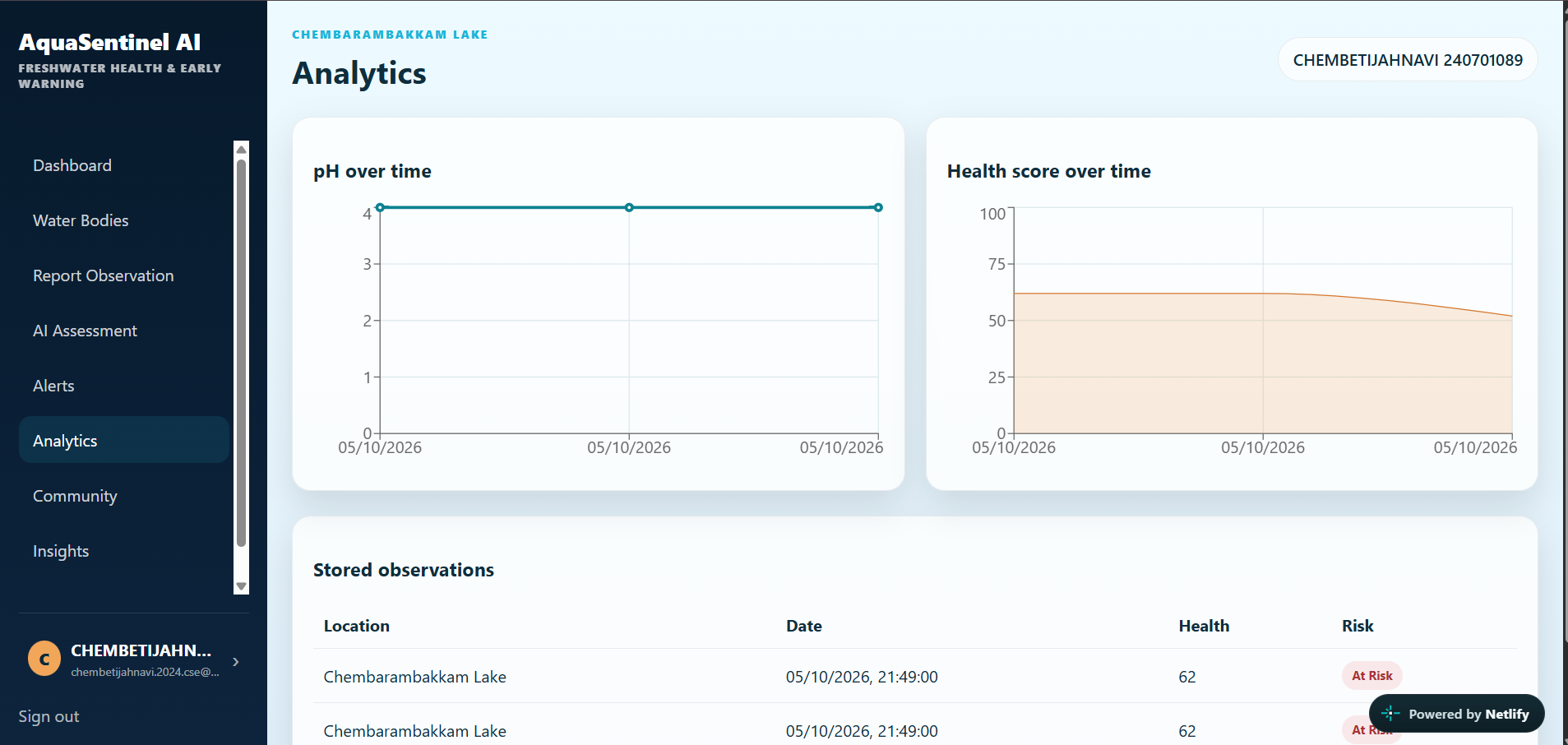
We built AquaSentinel AI using a frontend and backend architecture. The frontend provides the location-based water-body discovery, monitoring dashboard, observation forms, AI assessment results, alerts, analytics, and visualizations. The backend handles water-body information, observations, validation, AI-supported assessment, and alert generation. The system uses browser geolocation to identify the user's location and connects it with nearby freshwater-body information. The AI assessment uses explainable scoring and rule-based analysis of water-quality parameters so that users can understand not only the result but also the reasons behind it. The overall workflow is: User Location → Nearby Freshwater Body → Citizen Observation → Data Validation → AI Analysis → Health Assessment → Risk Detection → Early Warning → Recommended Action.
Challenges we ran into
One of our main challenges was connecting real-world location information with freshwater monitoring while handling incomplete or inconsistent observations. We also needed to design the AI assessment so that unusual readings were not automatically treated as pollution. Another challenge was making the AI results understandable to non-technical users by providing clear explanations, confidence or reliability information, and actionable recommendations. Integrating the frontend, backend, location services, data validation, and AI assessment into one smooth workflow was also an important development challenge.
Accomplishments that we're proud of
We are proud of creating an end-to-end concept that connects location-based freshwater discovery with citizen observations and AI-supported environmental assessment. Instead of presenting only raw water-quality numbers, AquaSentinel AI converts observations into understandable health scores, risk levels, explanations, alerts, and recommended actions. We are also proud of incorporating explainability and data-quality validation so that the system supports human decision-making rather than presenting AI results as unquestionable conclusions.
What we learned
We learned how different technologies can work together to solve an environmental problem, including geolocation, frontend development, backend APIs, data handling, visualization, validation, and explainable AI. We also learned that responsible AI requires communicating uncertainty and limitations clearly. A particularly important lesson was that an unusual observation should be verified rather than immediately interpreted as an environmental problem.
What's next for AquaSentinel AI
Our next steps are to improve the accuracy and intelligence of the assessment engine, integrate more reliable freshwater and environmental datasets, support sensor and IoT-based observations, improve historical trend analysis, and develop stronger anomaly detection. We also plan to enhance the location-based monitoring experience, provide more advanced alerts for researchers and local authorities, and eventually support predictive insights that can identify emerging freshwater-health risks earlier. Our long-term vision is to make AquaSentinel AI a practical decision-support platform connecting citizens, environmental data, AI, and freshwater ecosystem management.
Built With
- ai
- api
- artificial
- data
- environmental
- explainable
- flask
- gps
- intelligence
- javascript
- leaflet.js
- monitoring
- openstreetmap
- python
- quality
- react
- rest
- sqlite
- vite
- water

Log in or sign up for Devpost to join the conversation.