Inspiration
A slurp lasts a second. The culture behind it takes generations. We want both to have a future.
We started ZUZUZU because we love Japanese soba culture—and we fear losing it.
As we visited soba shops and buckwheat-growing communities, we came to understand how fragile the future of something we had taken for granted could be. Growers are struggling to find successors. Craftspeople face the challenge of passing on their skills. The people who sustain this culture do not always receive enough value to keep it alive.
We want to protect that culture by helping more people fall in love with it: to make soba something the next generation wants to carry forward, and people around the world want to experience and support.
For us, that begins with a sound.
Zuzuzu—the sound of slurping soba.
In some cultures, slurping can be heard as rude. In Japanese soba culture, it is a familiar part of enjoying the noodles and their aroma. For us at ZUZUZU, it carries something more: appreciation for the meal, respect for the craft, and gratitude to the people behind the bowl.
That is what we want the world to hear.
We want people beyond Japan to discover slurping as an expression of iki (粋): a distinctly Japanese sense of understated style, confidence, and knowing how to enjoy the moment. Our hope is that, in the context of enjoying soba, a sound that once felt unfamiliar can become a gesture people understand, appreciate, and make their own.
ZUZUZU brings together soba lovers, musicians, and creators to give that sound a new cultural life.
We see these sounds as the material for an evolving collective artwork.
Like an archive of heartbeats, each recording carries the presence of a person and a moment that will never happen in quite the same way again. Each slurp is different. Behind each one is a bowl, a place, a craft, and a chain of people who made the experience possible.
Through music and moving images, those everyday moments can become works people feel, remember, and share. Together, they can form a living portrait of soba culture—one that grows as more people take part.
The app is one tool for making that vision possible. It gives anyone a simple way to contribute their own sound, turn it into a small work of their own, and connect it to the place where it happened.
Our purpose is to help soba culture thrive, with its sound carrying appreciation across generations and borders.
Slurp the Soba Culture.
What it does
Turn a moment of appreciation into a piece of music.
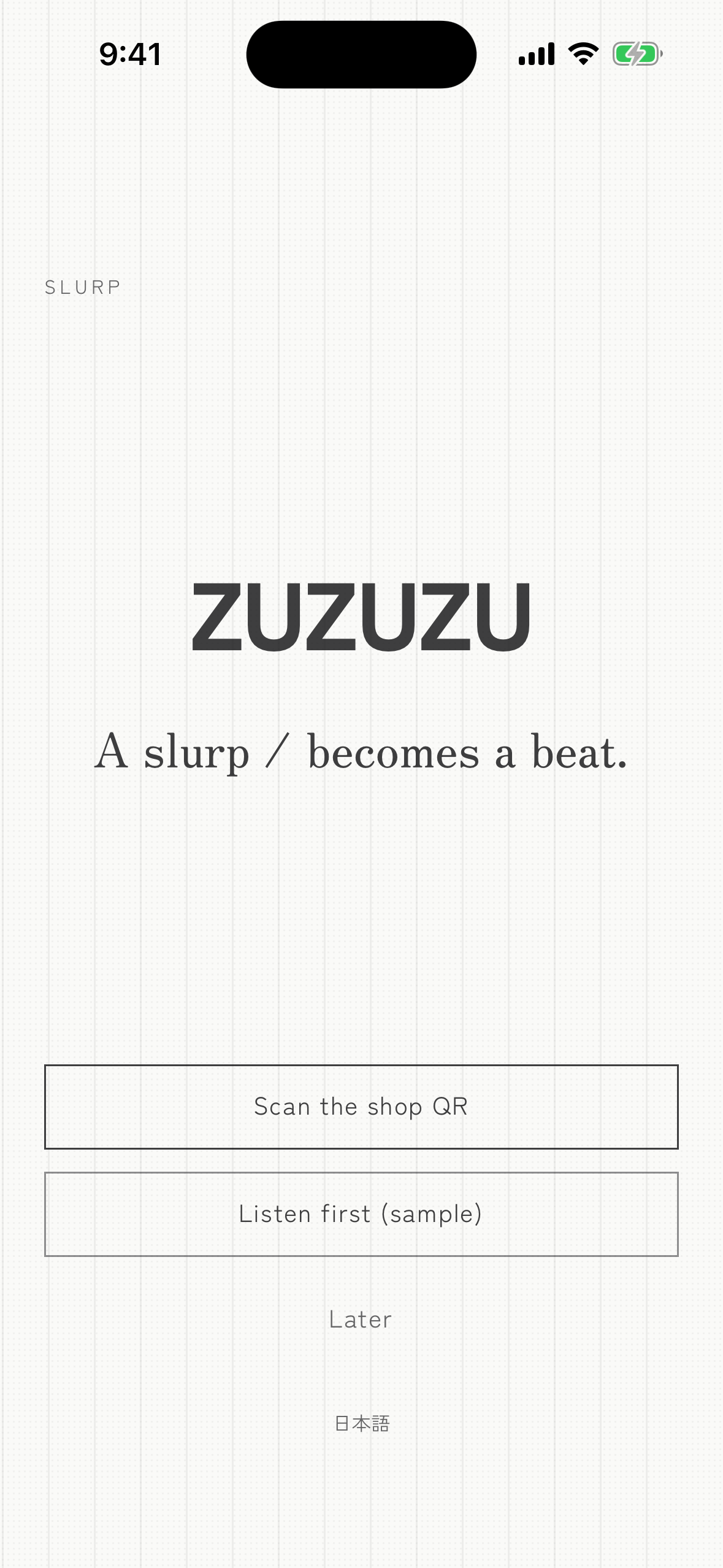
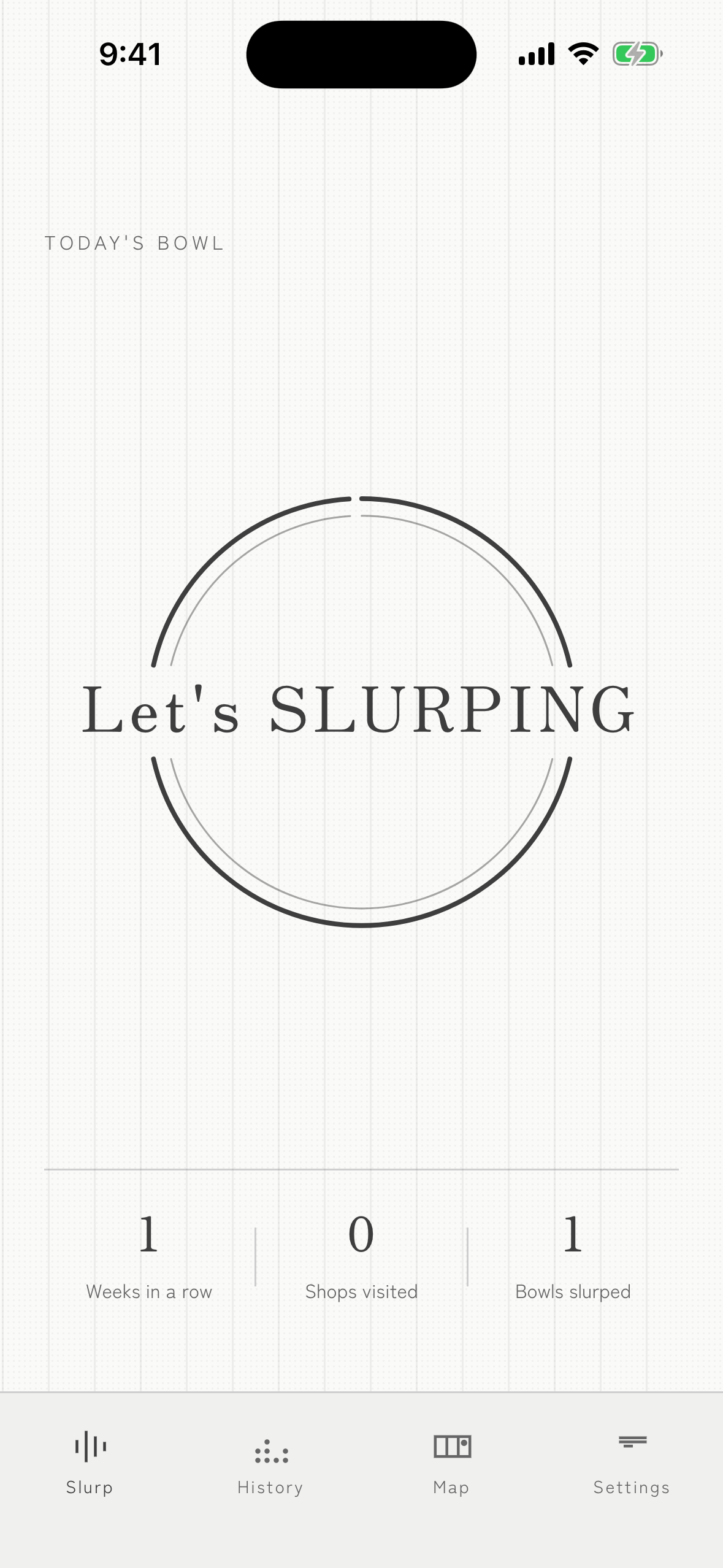
The ZUZUZU app is a participatory entry point into our wider cultural project. It lets you record your slurp, discover its character, and turn it into a short audiovisual work connected to your experience of soba.
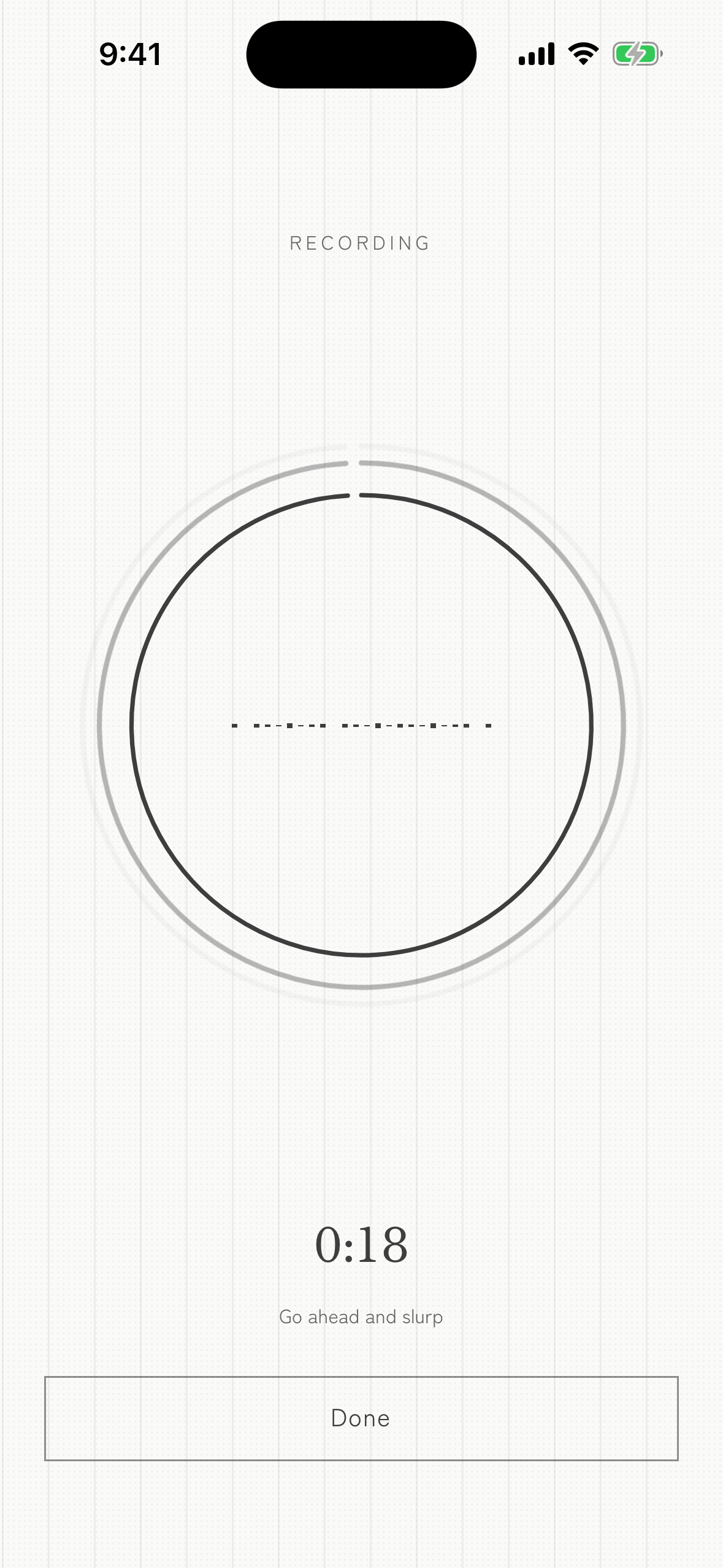
Capture your sound. The app records in iOS's measurement audio mode, which minimizes the system's built-in voice processing—such as automatic gain control—to preserve the attack, sustain, and decay that give your slurp its character.
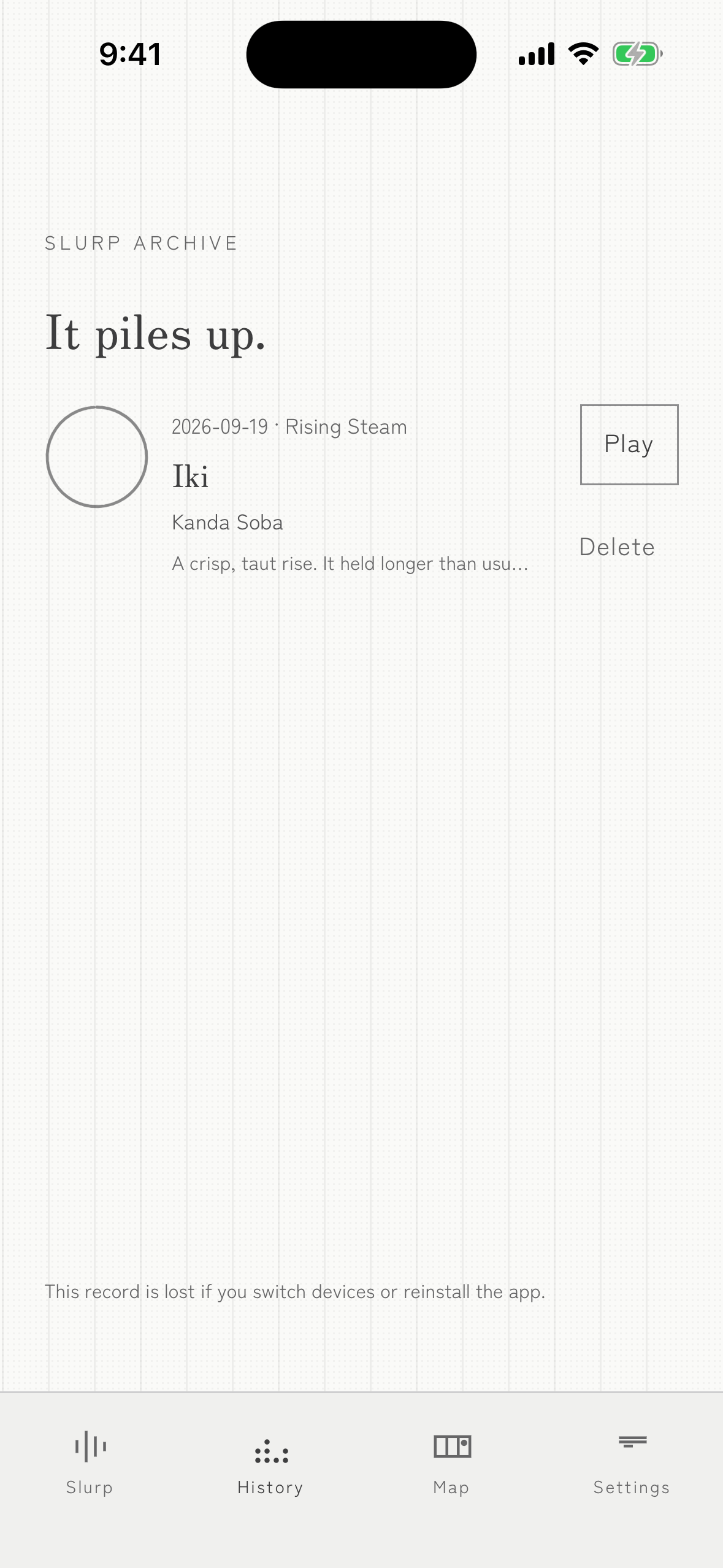
Discover your form. Those three cues place your slurp into one of four named forms: Iki (粋), Taki (滝), Hayashi (囃子), or Taiko (太鼓). Three short notes describe its distinctive qualities. There is no numerical score or ranking: each sound brings its own character to the experience.
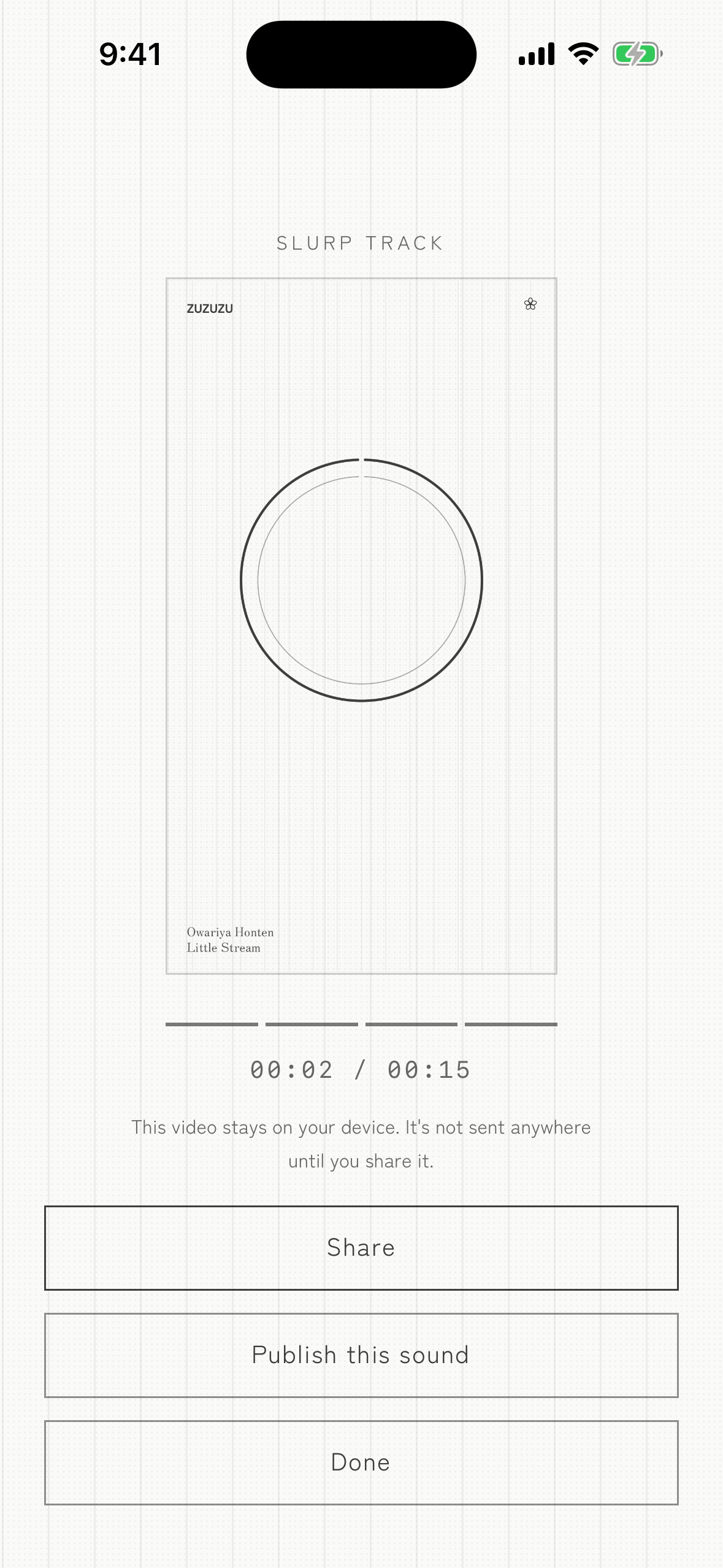
Create a SLURP TRACK. Your actual recording becomes part of one of ten original beats, rendered on your device into a 15-second video. Your contribution is audible in the work itself—a moment from your meal, given a musical form.
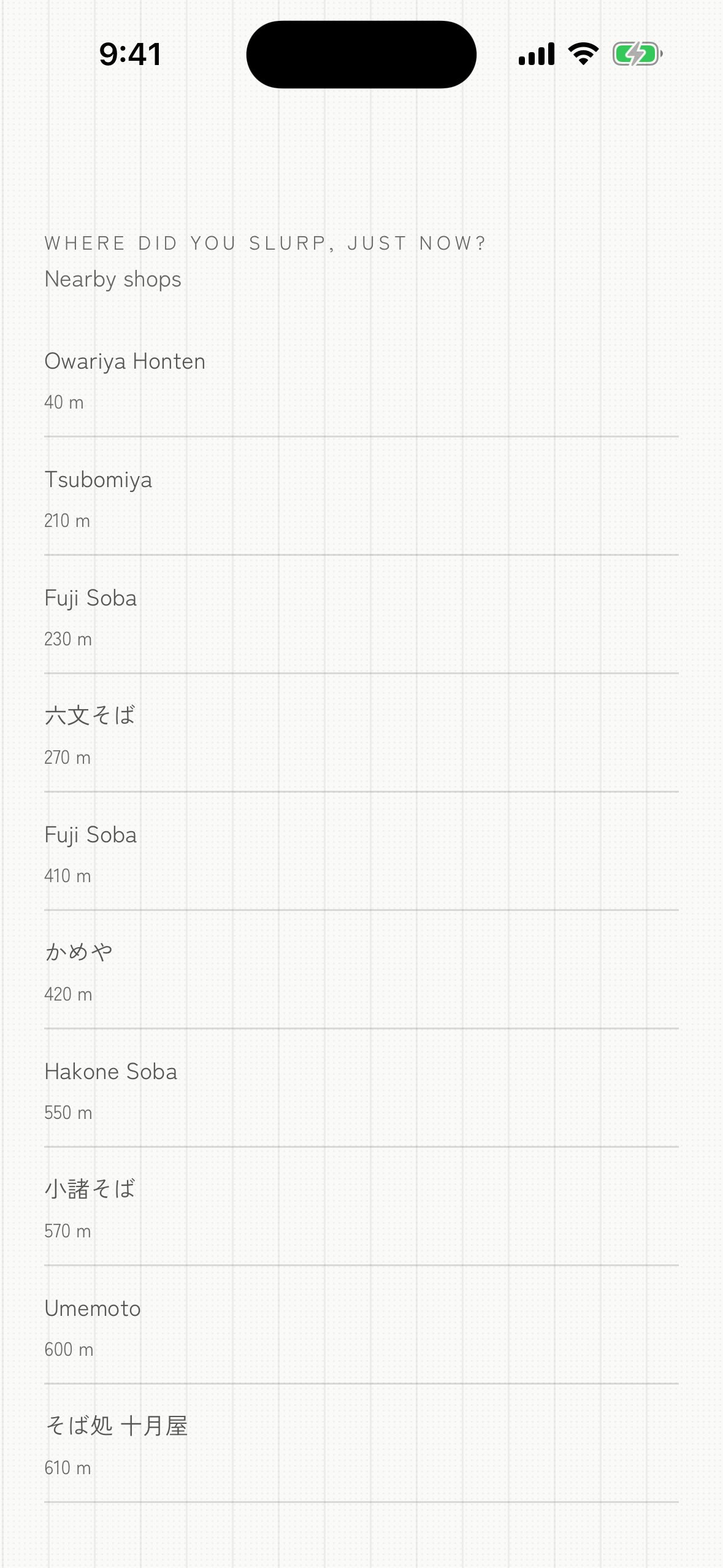
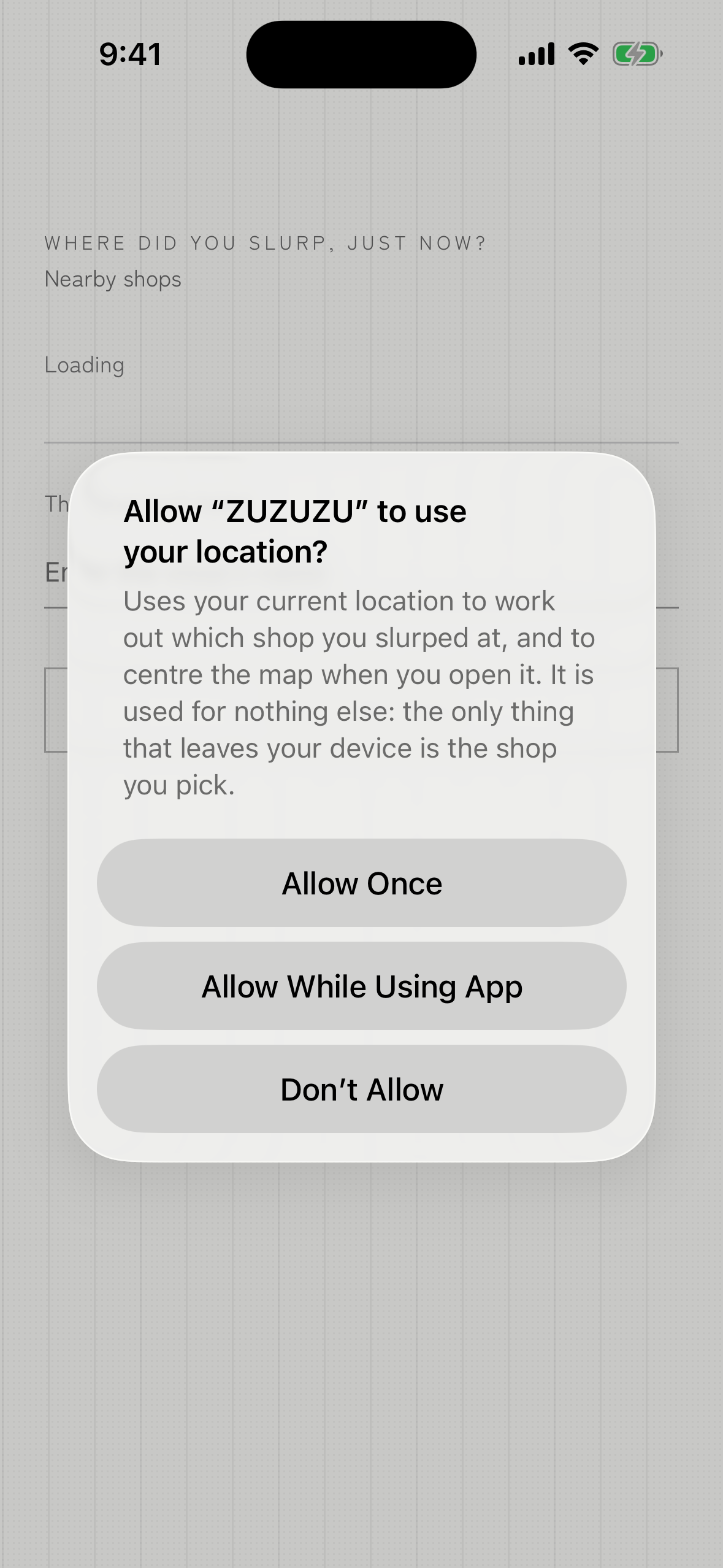
Connect your work to a place. Your track stays on your phone unless you choose to publish it. Publishing places a pin at the soba shop where you ate, connecting the sound to the place behind it. Unpublishing removes the post and its published video.
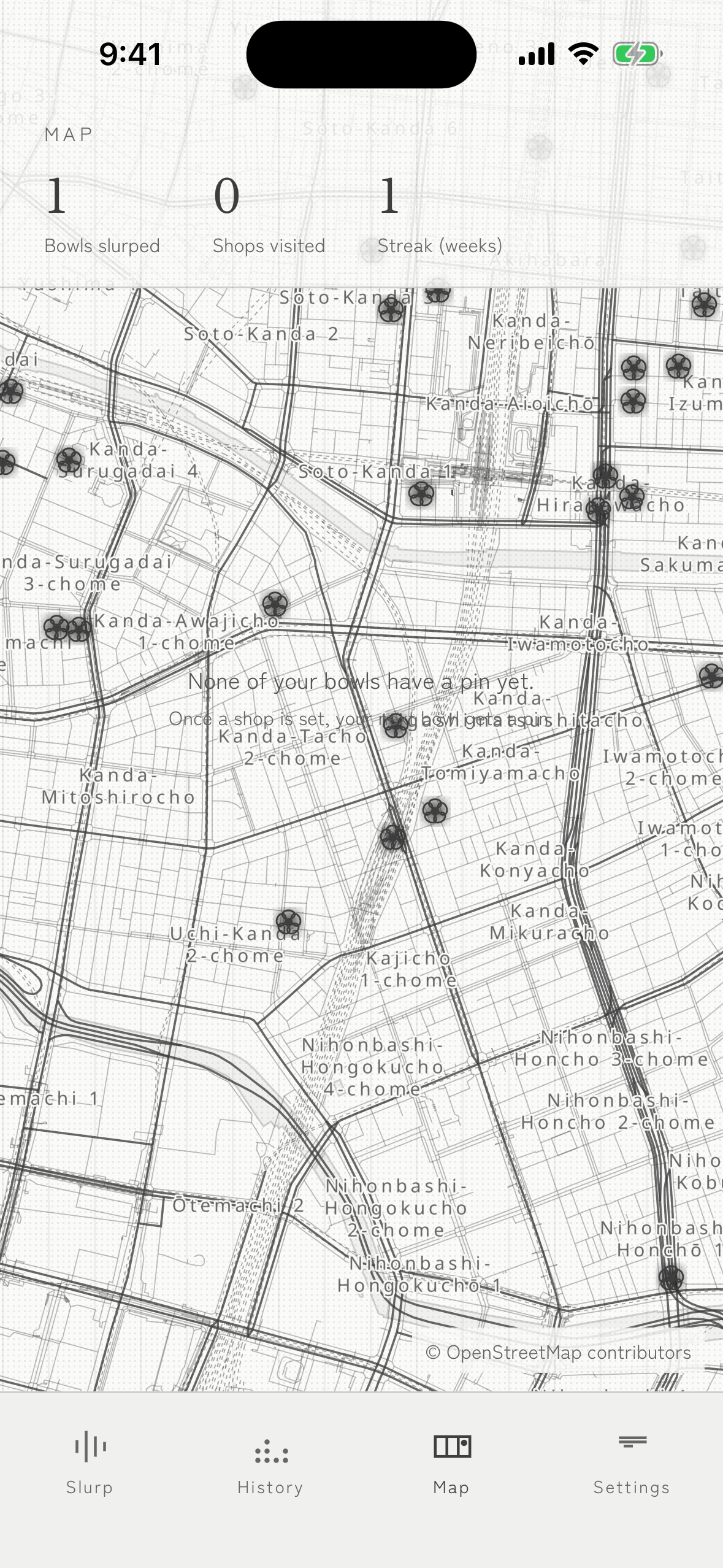
Explore a growing soundscape. Listen to tracks other people have shared at soba shops. Each pin holds someone's moment of enjoying a bowl. Together, these individual works begin to form a shared soundscape of soba culture, inviting curiosity about the people and places that sustain it.
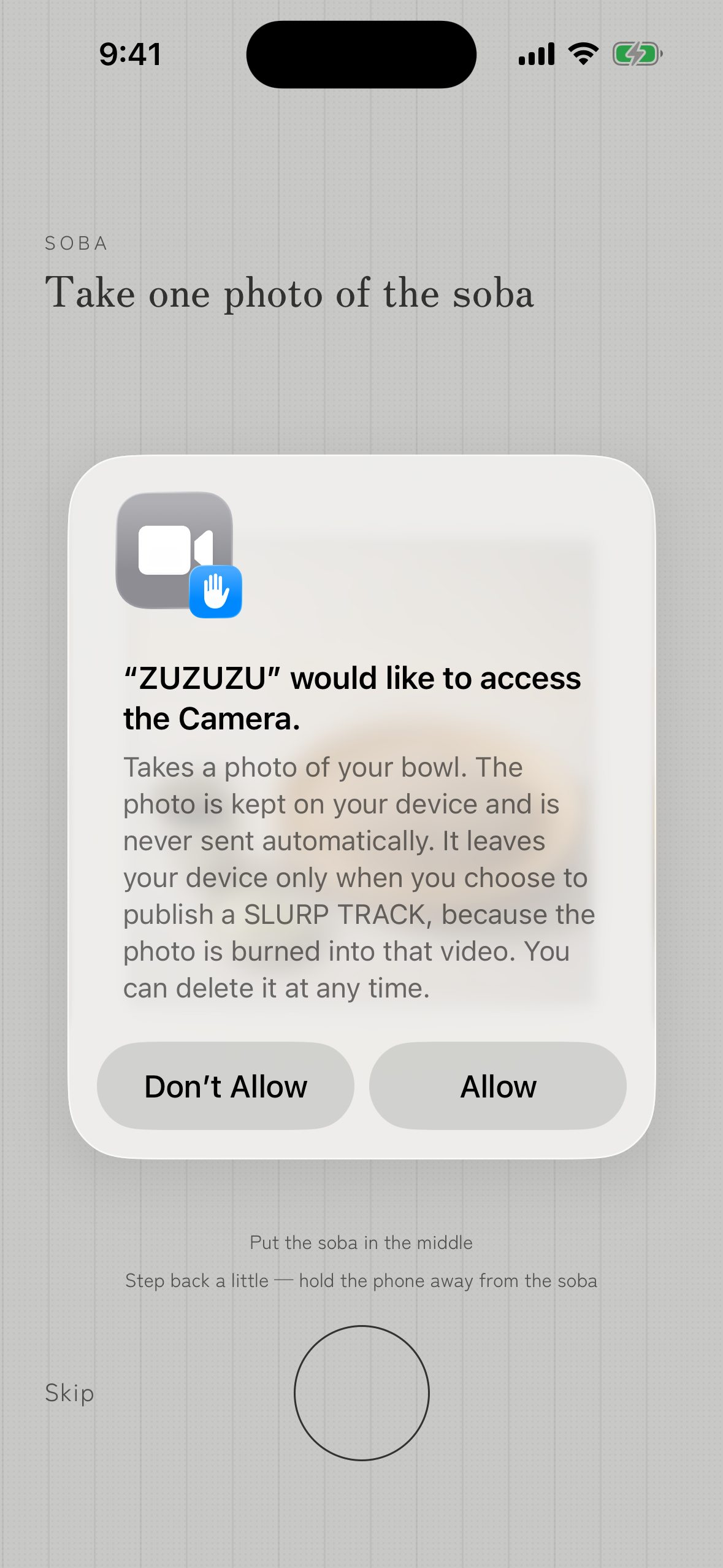
No soba nearby? Start with the built-in sample. You can experience the creative loop in about 90 seconds, without recording or granting microphone access.
How we built it
- App — Expo SDK 57 with React Native 0.86 and TypeScript, fully bilingual (English and Japanese, chosen from the device language).
- Recording —
react-native-audio-apiconfigures the audio session in iOS's measurement mode before the microphone opens. The attack, sustain, and decay are read from the raw take on the device. - SLURP TRACK — composed on the device with
@shopify/react-native-skiaand@azzapp/react-native-skia-videointo a 15-second, 720×1280 H.264 video. Nothing is rendered on a server. - Beats — all ten are synthesized by a script in our repository from a deterministic random generator: no samples, nothing licensed, nothing downloaded. Each beat deliberately leaves one frequency band open so the slurp has room to sit.
- Map — MapLibre with OpenStreetMap data and a custom symbol layer for the pins.
- Backend — Cloudflare Workers, with D1 for pins and posts, two private R2 buckets for audio and published tracks (there is no public object URL anywhere in the system), and KV for rate limiting.
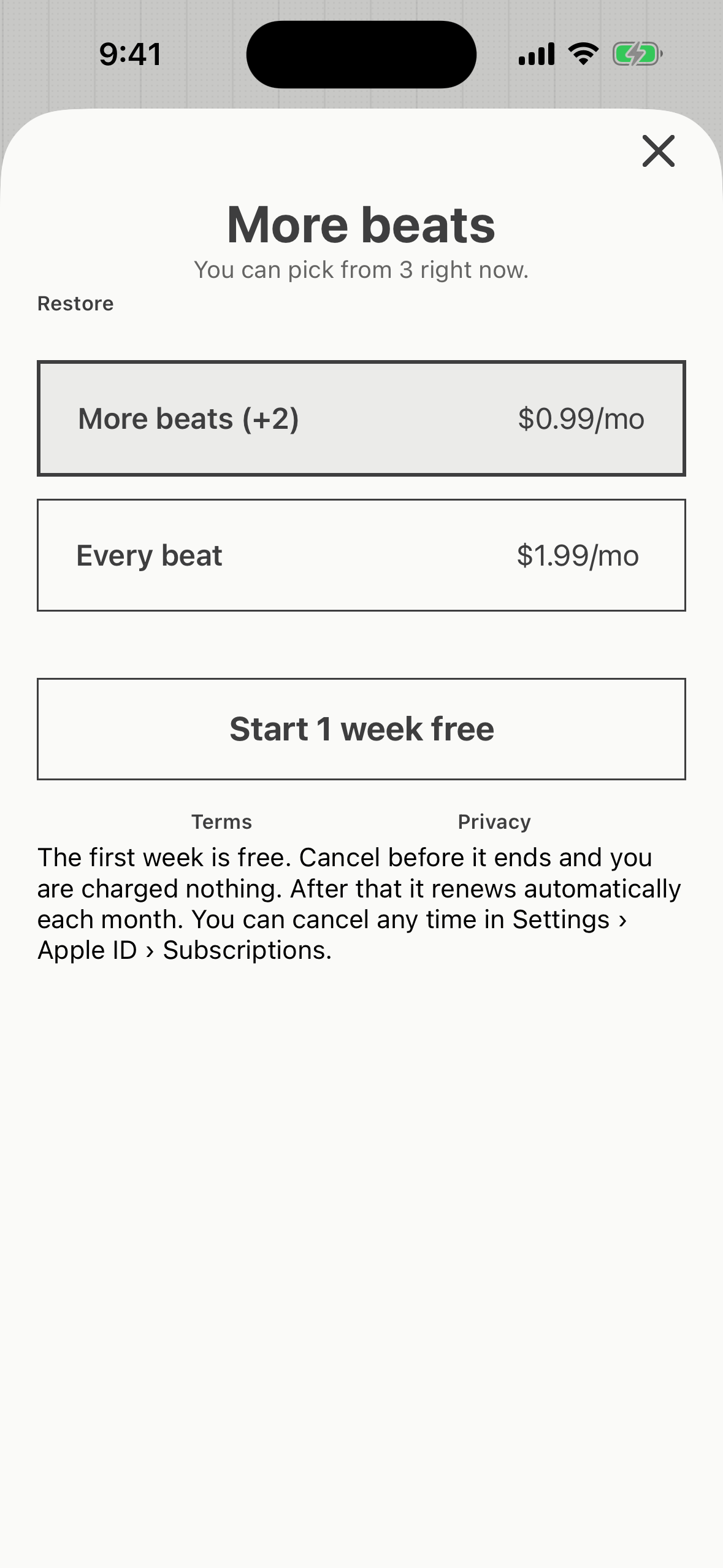
- Monetization — RevenueCat (
react-native-purchaseswith a remote paywall), so pricing and offers can change without shipping a build. Both subscriptions include a 7-day free trial.
Challenges we ran into
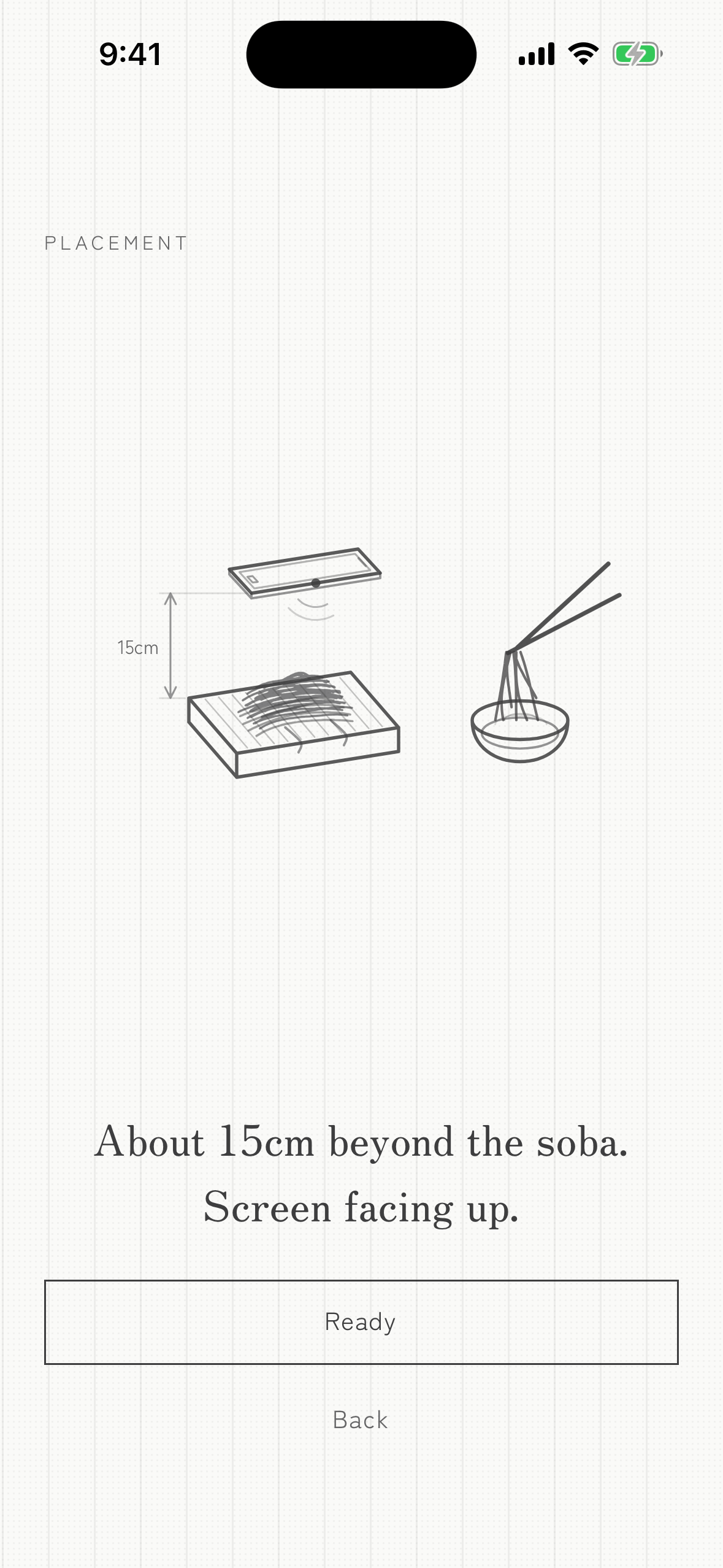
Making a slurp survive the recording stack. A slurp is exactly the kind of broadband turbulence that phone voice processing is designed to remove. We record in measurement mode, and then had to tell people where to put the phone: the placement screen ("about 15 cm beyond the soba, screen facing up") exists because an early test in a real shop produced a run of unusable recordings from a phone lying face-down next to the bowl.
Designing a verdict nobody can lose at. Our first version had numbers. A number invites comparison, and comparison invites shame about how you eat. Replacing the score with a named form and three sentences took longer than building the scoring did.
Shipping user-generated content responsibly. Publishing audio recorded in a real restaurant pulled in reporting, blocking, auto-hiding after multiple reports, an age-rating questionnaire, and a privacy declaration that had to match the code exactly. We rewrote the privacy policy before building the feature, so the document describes what the software actually does.
App Review. Our first submission was rejected under guideline 3.1.2. There were two gaps, both in the paid flow: a missing EULA link on the listing, and no Terms/Privacy links on the fallback paywall shown when the remote one cannot load. Both are fixed, and the fallback is now covered by a test so it cannot quietly disappear again.
Accomplishments that we're proud of
- Live on the App Store since August 30, 2026, with the subscription working on day one—and version 1.0.1 shipped on September 23.
- Ten original beats generated from source. Nothing licensed, nothing sampled, and the metadata the matching algorithm reads is verified against the audio the script actually produced.
- A verdict with no number in it. Four forms, three cues, no rank. A 0–100 score would have been far easier to ship.
- Nothing published by accident. Recording, keeping, and publishing are three separate decisions, and the map only ever shows the third.
- Everything creative happens on the device. The analysis and the 15-second video are produced on the phone; the server only stores what someone chooses to publish.
What we learned
Honest numbers first: as of September 17, ZUZUZU had 8 first-time downloads and $0 in revenue—555 impressions, 35 product page views, a 1.84% conversion rate.
The lesson is narrower and more useful than "we should have marketed more." Our App Store listing is still Japanese-only, while the app behind it has been fully bilingual from the start. We built the product for an international audience and the shopfront for a domestic one, and did not notice until we looked at the funnel.
We also learned that shipping early is worth more than the month of polish it costs: rejections, declarations, and paid-app agreements all have queue times you cannot compress.
What's next for ZUZUZU
Our ambition is to create a living cultural artwork that helps sustain the culture it comes from.
The app provides the first building blocks: individual sounds, personal SLURP TRACKs, and a map connecting them to soba shops. Our longer-term creative ambition is to bring voluntarily contributed recordings into larger musical and audiovisual works, with appropriate permission from their contributors.
We imagine a work that grows across places and generations—carrying the sounds of people discovering, enjoying, and appreciating soba.
Our next steps are to:
- Develop the collective artwork. Explore how individual slurps can be composed into larger works of music and moving image, with a clear, separate choice for people who want their recordings included.
- Share the meaning behind the sound. Help international audiences discover soba, understand what slurping means to us, and experience iki through participation.
- Make discovery bilingual. Launch an English App Store listing so the invitation is as accessible as the bilingual app itself.
- Complete and document our first producer giveback. Our commitment is to use part of subscription proceeds to purchase buckwheat flour from producers. The first purchase remains pending; we will report completed support only after it has happened.
- Bring participation into soba shops. Introduce QR codes that connect a real bowl and a real place to the creative experience.
- Expand to Android. Open participation to more people around the world.
Success, for us, means that a sound sparks curiosity, curiosity brings someone closer to soba, and that connection helps its growers, craftspeople, and shops continue.
We want future generations to inherit a culture they love—and add their own sound to it.
Built With
- cloudflare-d1
- cloudflare-kv
- cloudflare-r2
- cloudflare-workers
- expo.io
- ios
- maplibre
- openstreetmap
- react-native
- react-native-audio-api
- reanimated
- revenuecat
- skia
- typescript

Log in or sign up for Devpost to join the conversation.