-
-
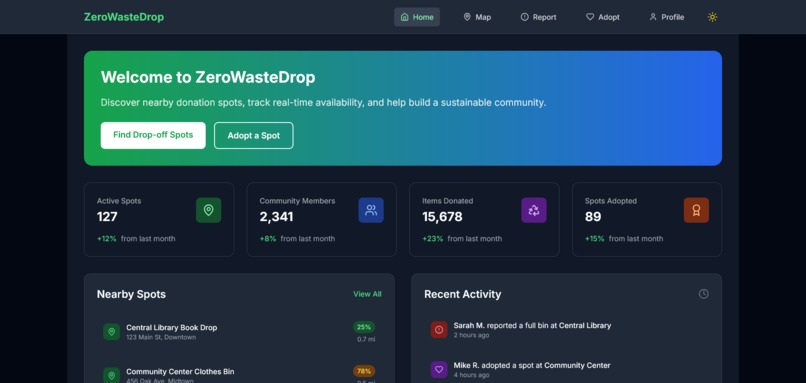
Homepage-dark
-
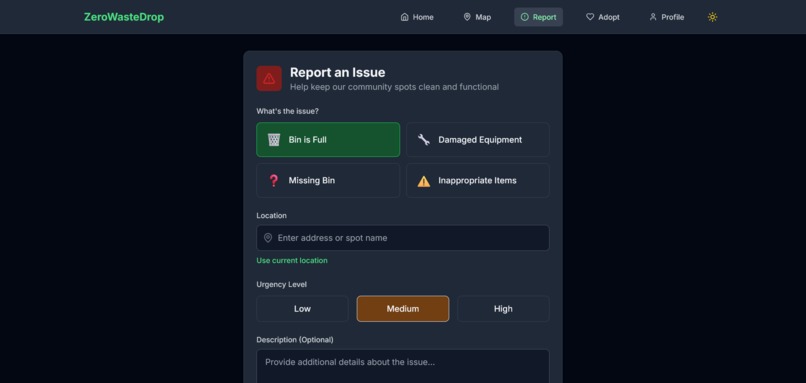
Report-a-spot
-
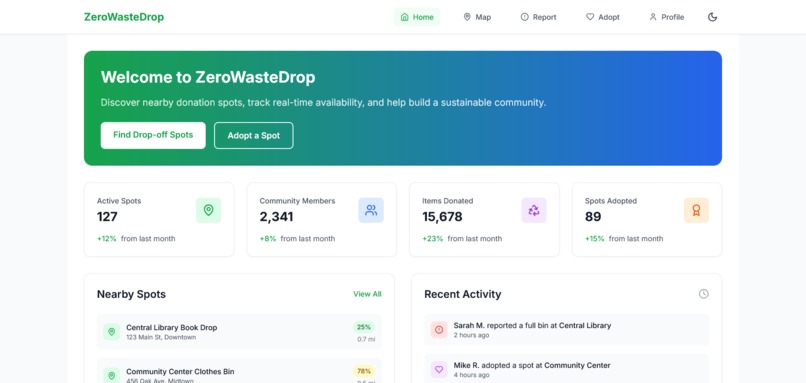
Homepage-light
-
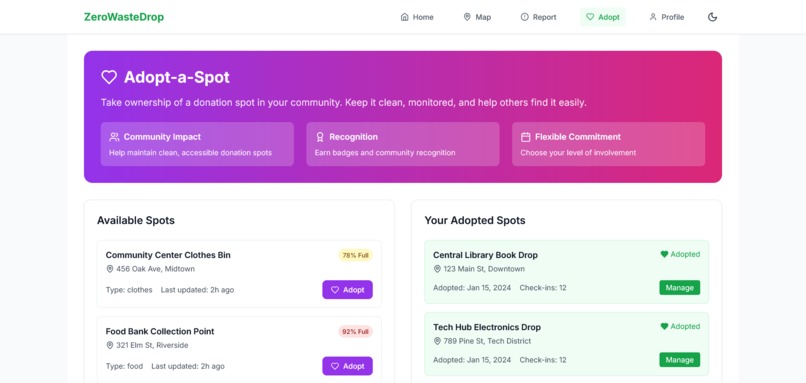
Adopt-a-spot
-
Profile-dark
-
Maps
Inspiration
Inspiration for ZeroWasteDrop came from a common issue in our communities: the lack of organized donation and recycling compartments. Many people want to donate or recycle items, but upon reaching a bin, they find it unmaintained or overflowing. Often, items are left on the ground, exposed to the weather—or worse, thrown away—despite being reusable.
What It Does
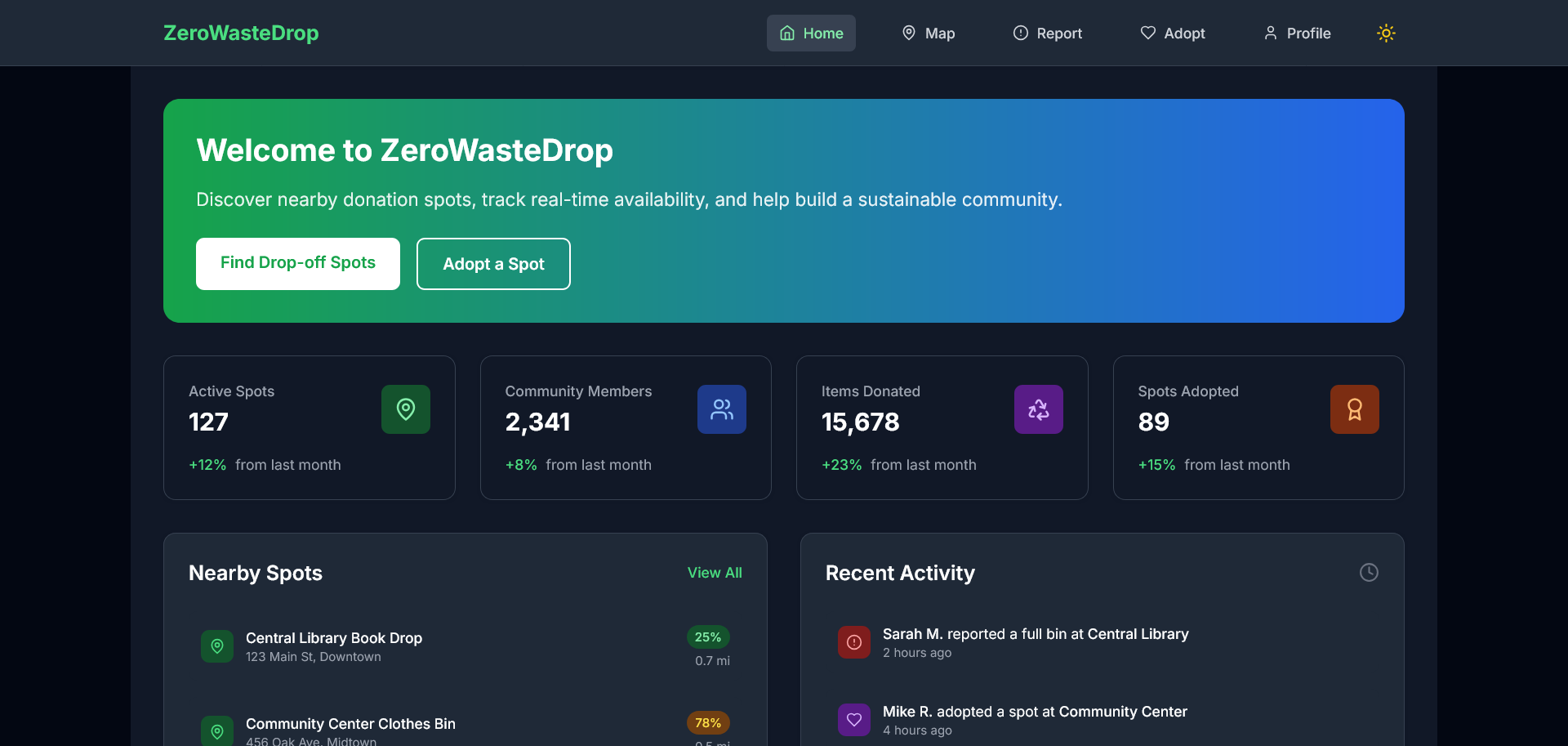
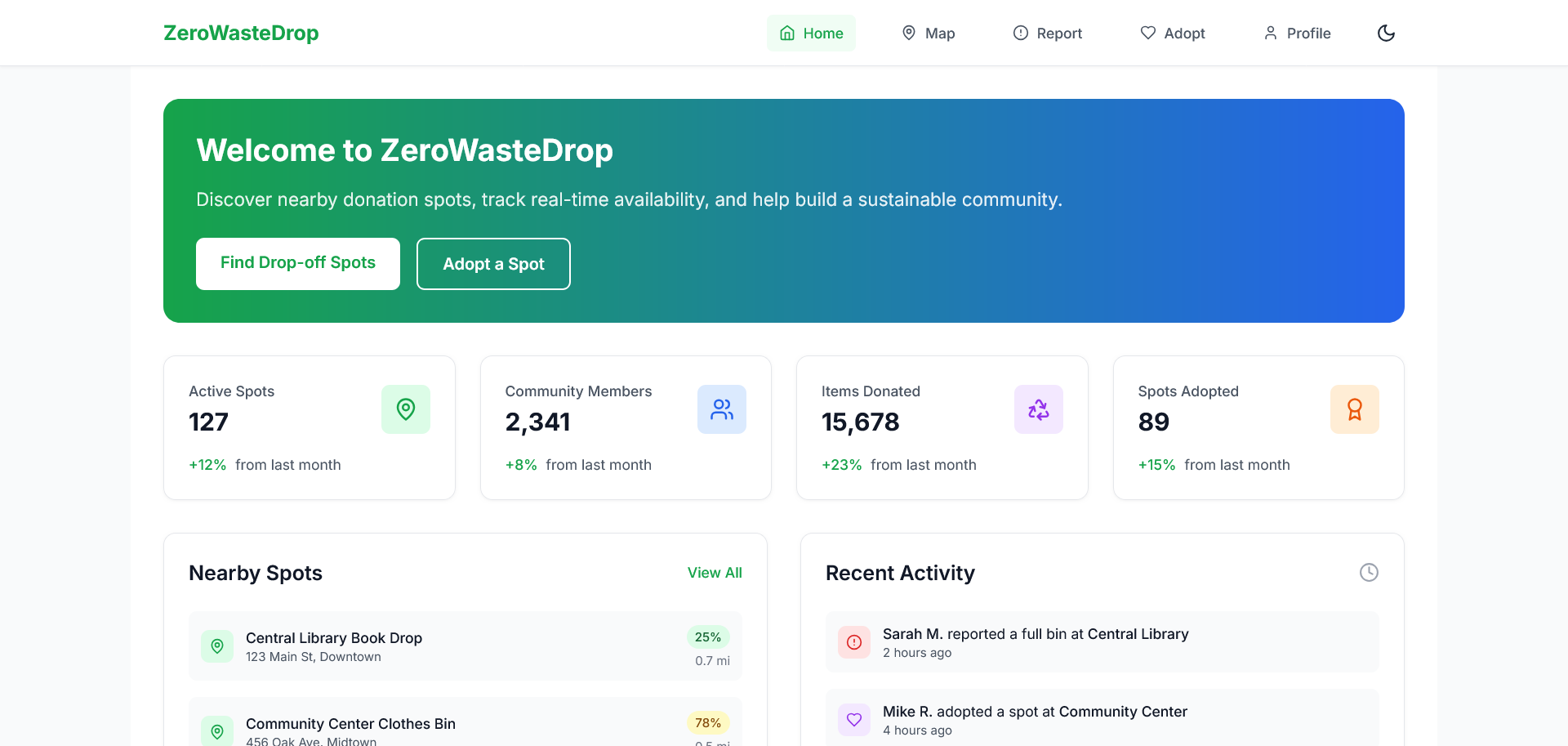
ZeroWasteDrop is a hyperlocal, community-operated app that maps charity and recycling spots in real time. The platform connects citizens with city services and local collection initiatives through the following features:
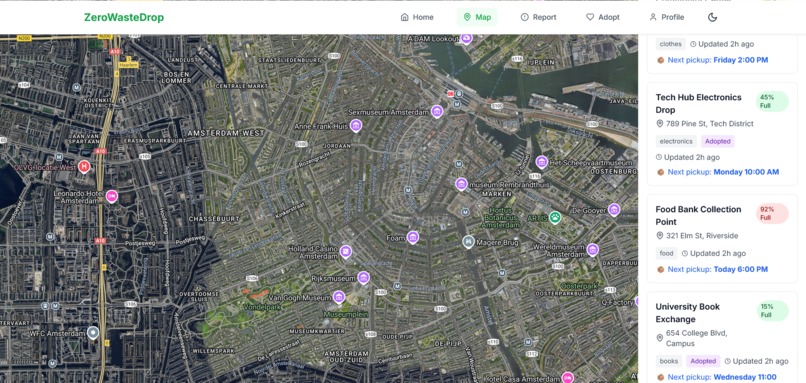
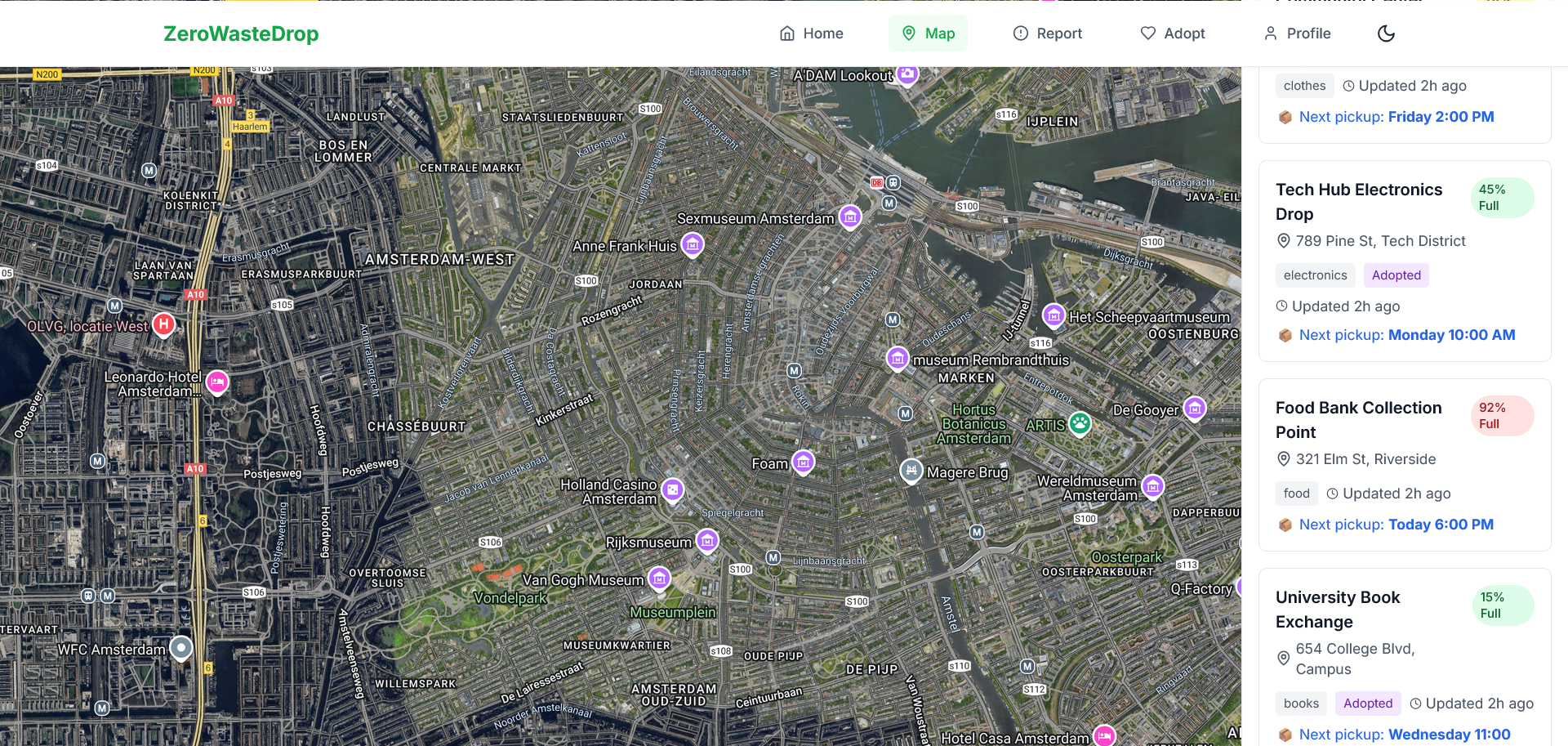
- Interactive map showing nearby recycling and donation bins with real-time fill levels
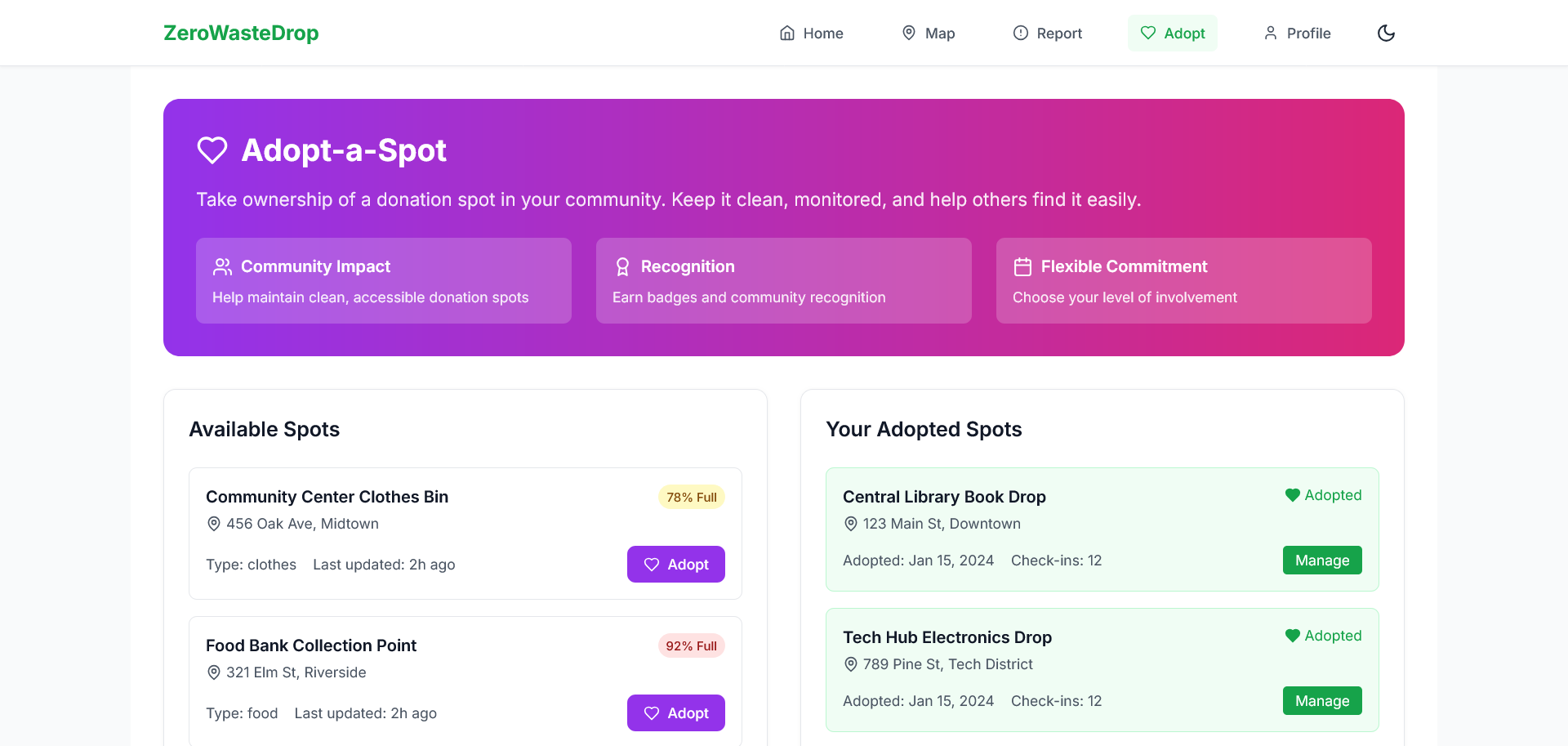
- "Adopt-a-Spot" system that allows users to take ownership of compartments in their neighborhood
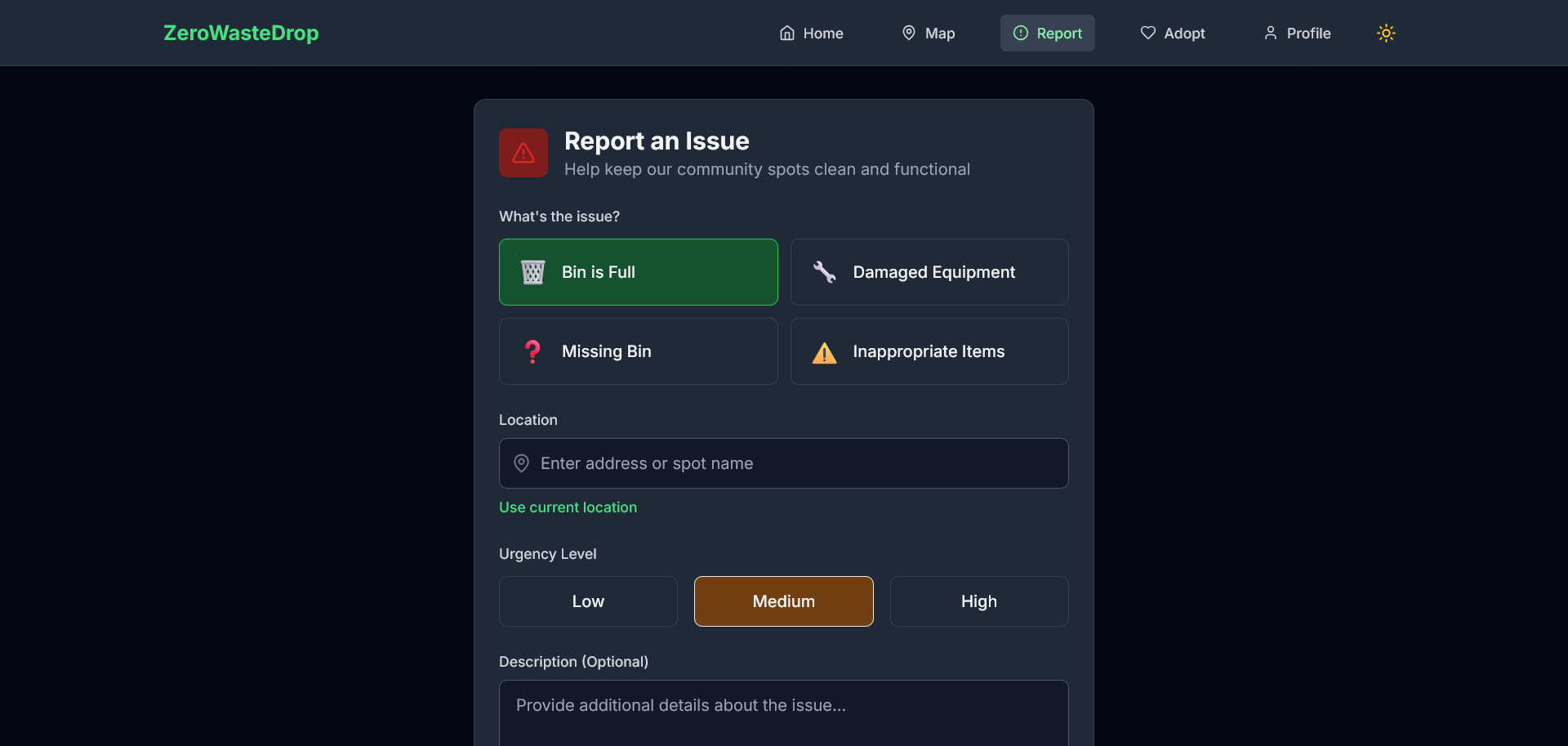
- Ability to report full bins and other issues to help others avoid wasted trips
- Real-time activity feed showing recent reports and community updates
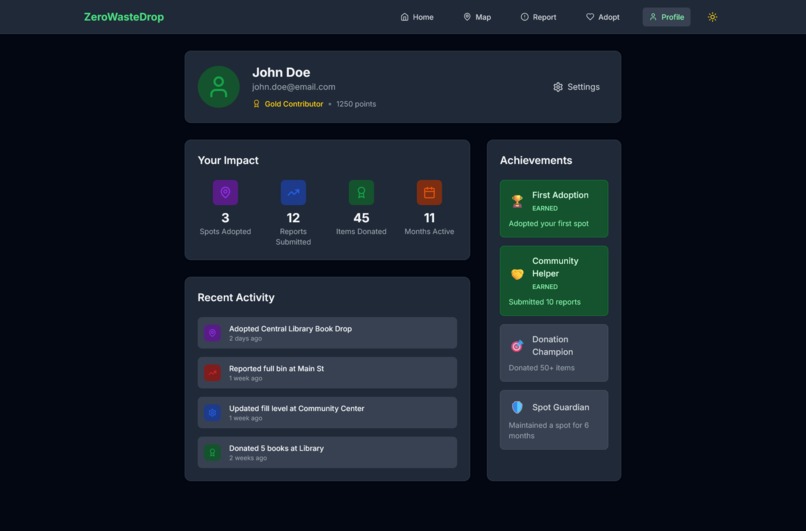
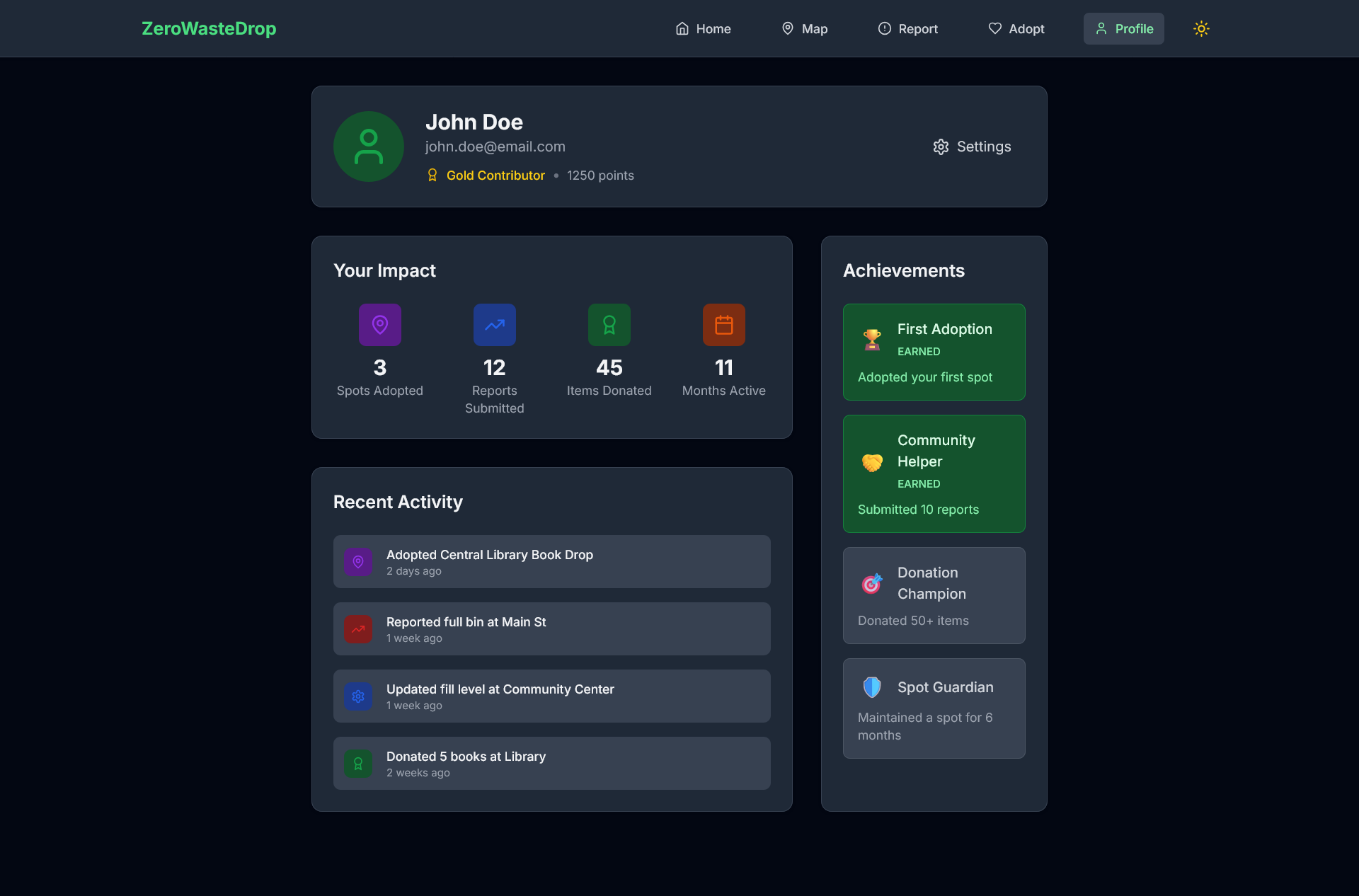
- Achievement system that promotes long-term eco-friendly behavior
- Integration with city pickup schedules to alert users of upcoming collections
- Personal environmental impact tracker on user profiles
How We Built It
We created ZeroWasteDrop using a modern technical stack focused on performance and user experience:
- React with TypeScript – For type safety and a component-based architecture
- Vite – As our build tool for rapid development and optimized production
- Tailwind CSS – For a consistent and responsive design system
- Lucide Icons – For a clean, uniform icon set across the application
- React Router – For smooth navigation between pages
We followed clean architecture principles by separating concerns:
- Components – Reusable UI elements
- Pages – Full page layouts built by combining components
- Data Layer – Mock data simulating real API responses
For mapping functionality, we implemented interactive components that let users easily find and interact with donation spots. Adoption and reporting tools were designed to encourage user engagement and make it easy for anyone to contribute.
Challenges We Ran Into
Building ZeroWasteDrop involved several key challenges:
- Balancing real-time data updates with performance
- Verifying user reports without discouraging participation
- Integrating an interactive map with custom markers and real-time updates
- Ensuring mobile responsiveness without compromising functionality
- Designing incentives to promote ongoing participation and community engagement
Accomplishments That We're Proud Of
Despite the challenges, we’re proud of what we achieved:
- Creating an intuitive and engaging user experience
- Designing a clean, accessible interface that promotes sustainable behavior
- Building a scalable application architecture suitable for city-level integration
- Successfully implementing responsive design that works across all devices
What We Learned
While developing ZeroWasteDrop, we gained several key insights:
- The importance of user-centered design in environmental applications
- How gamification can drive participation in sustainability initiatives
- Techniques for optimizing performance in map-based applications
- Strategies to foster community engagement and collective action
- Managing the technical challenges of real-time data synchronization
- The power of community-sourced data to solve shared problems
What's Next for "ZeroWasteDrop" – Community Recycling & Donation Map
Our upcoming plans include:
- Community Challenges – Introducing neighborhood competitions to boost engagement
- Mobile App Development – Creating a native mobile experience with push notifications
- Impact Visualization – Showing the environmental impact of community efforts
Our final vision is to build a nationwide network of community-powered donation and recycling points, making sustainable choices the easiest option for everyone.


Log in or sign up for Devpost to join the conversation.