-
-
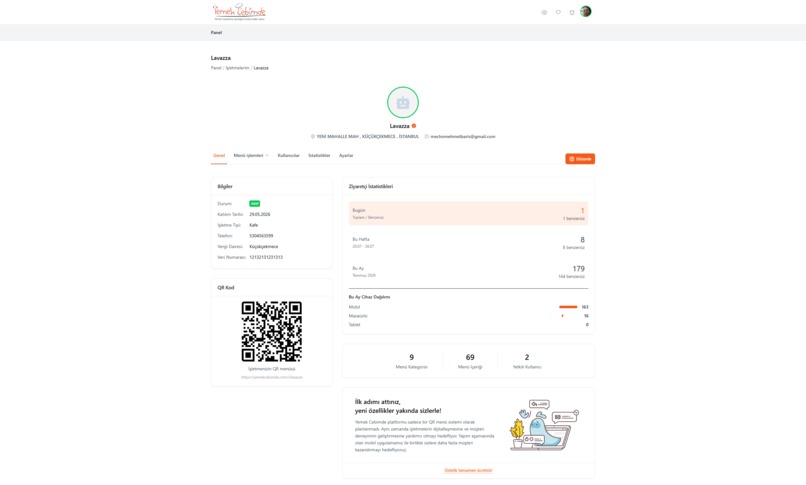
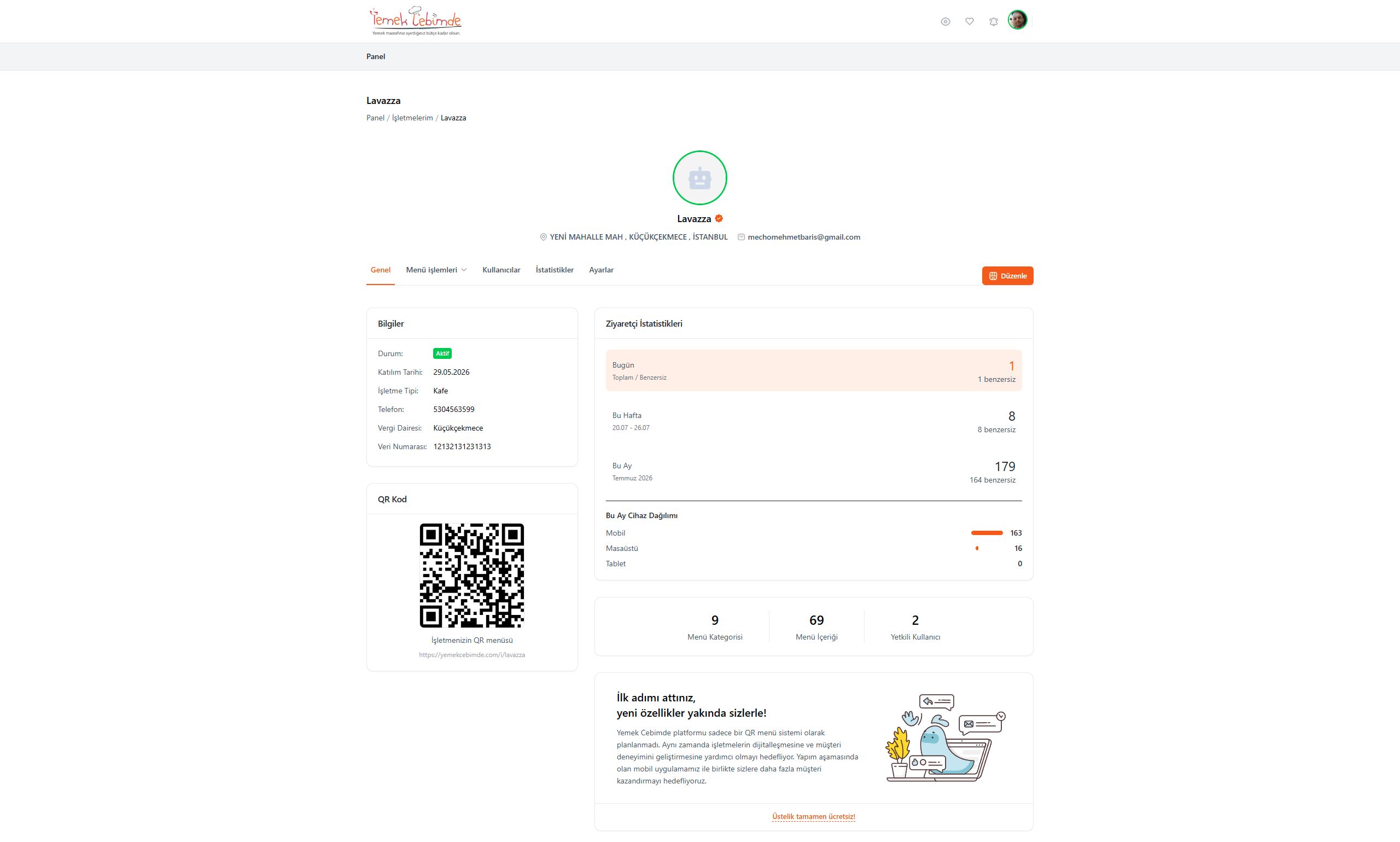
Control Panel
-
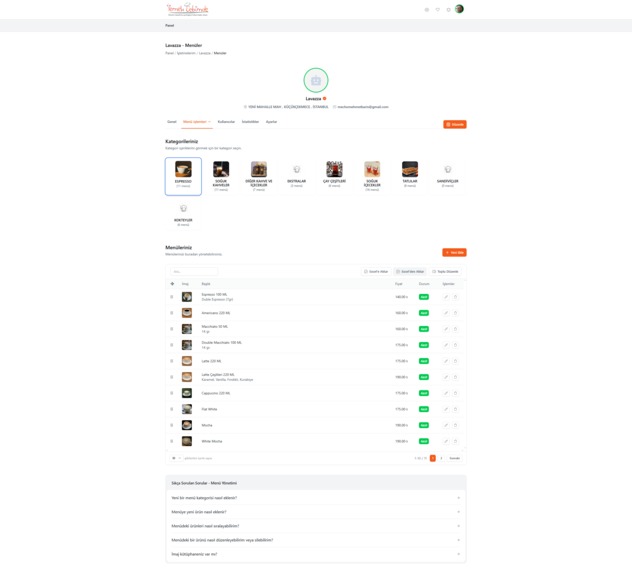
Control Panel Menu
-
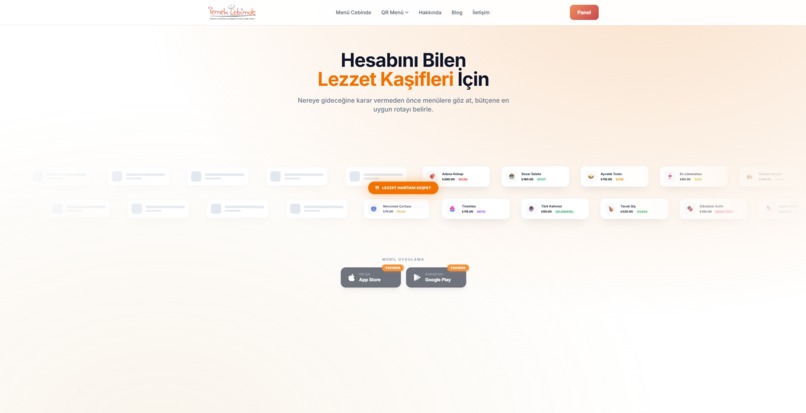
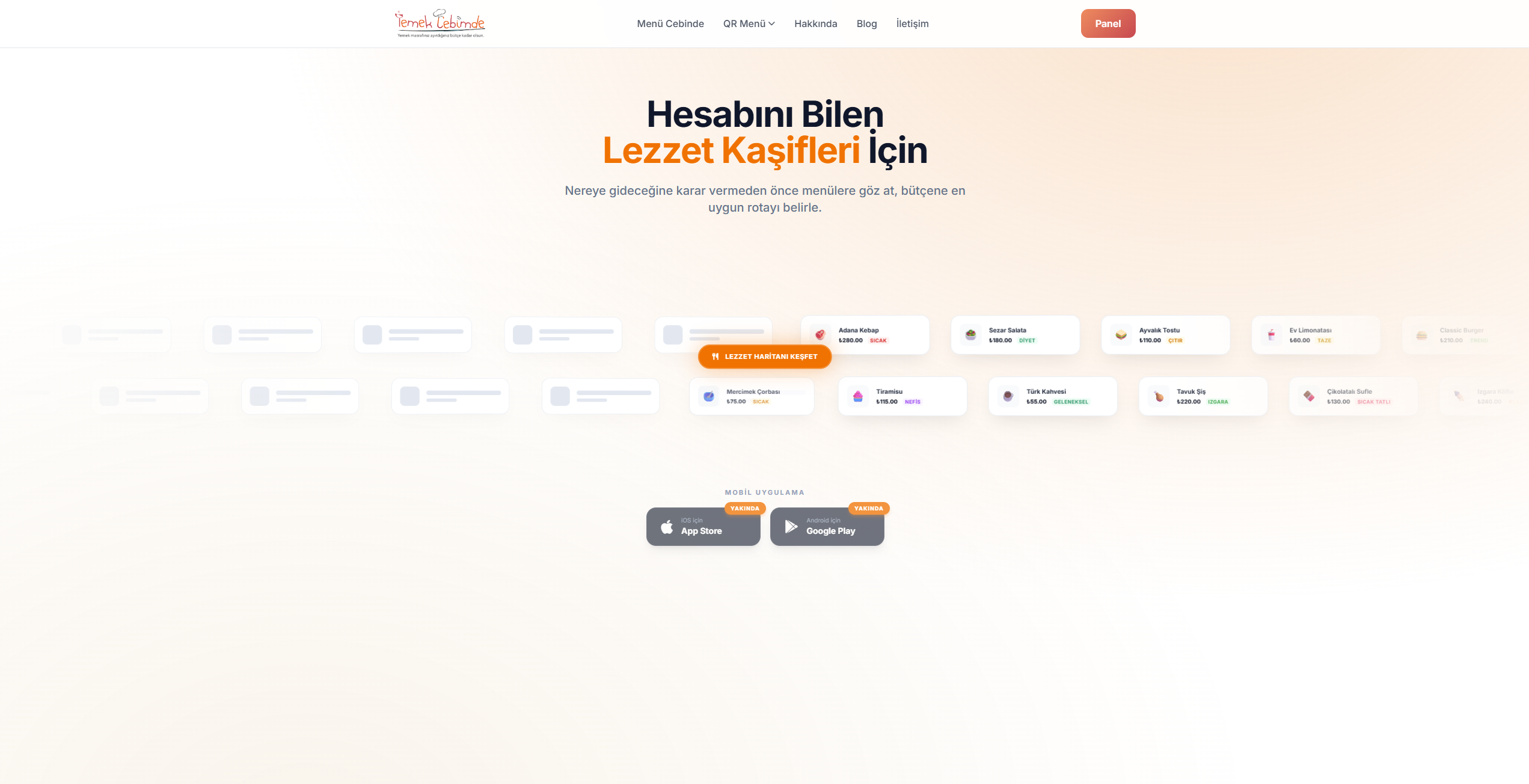
Home Page
-
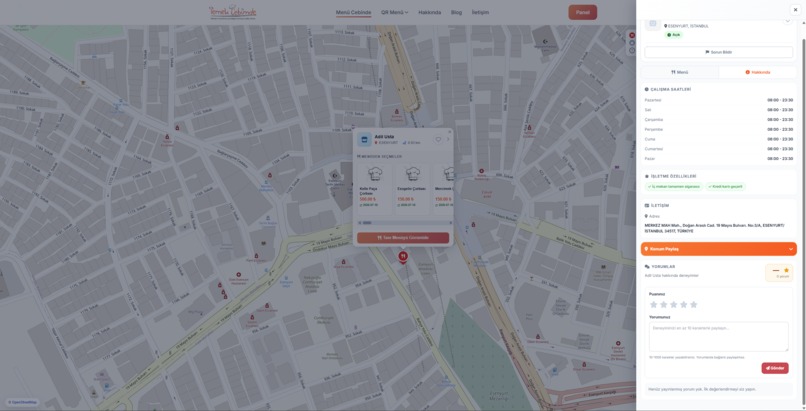
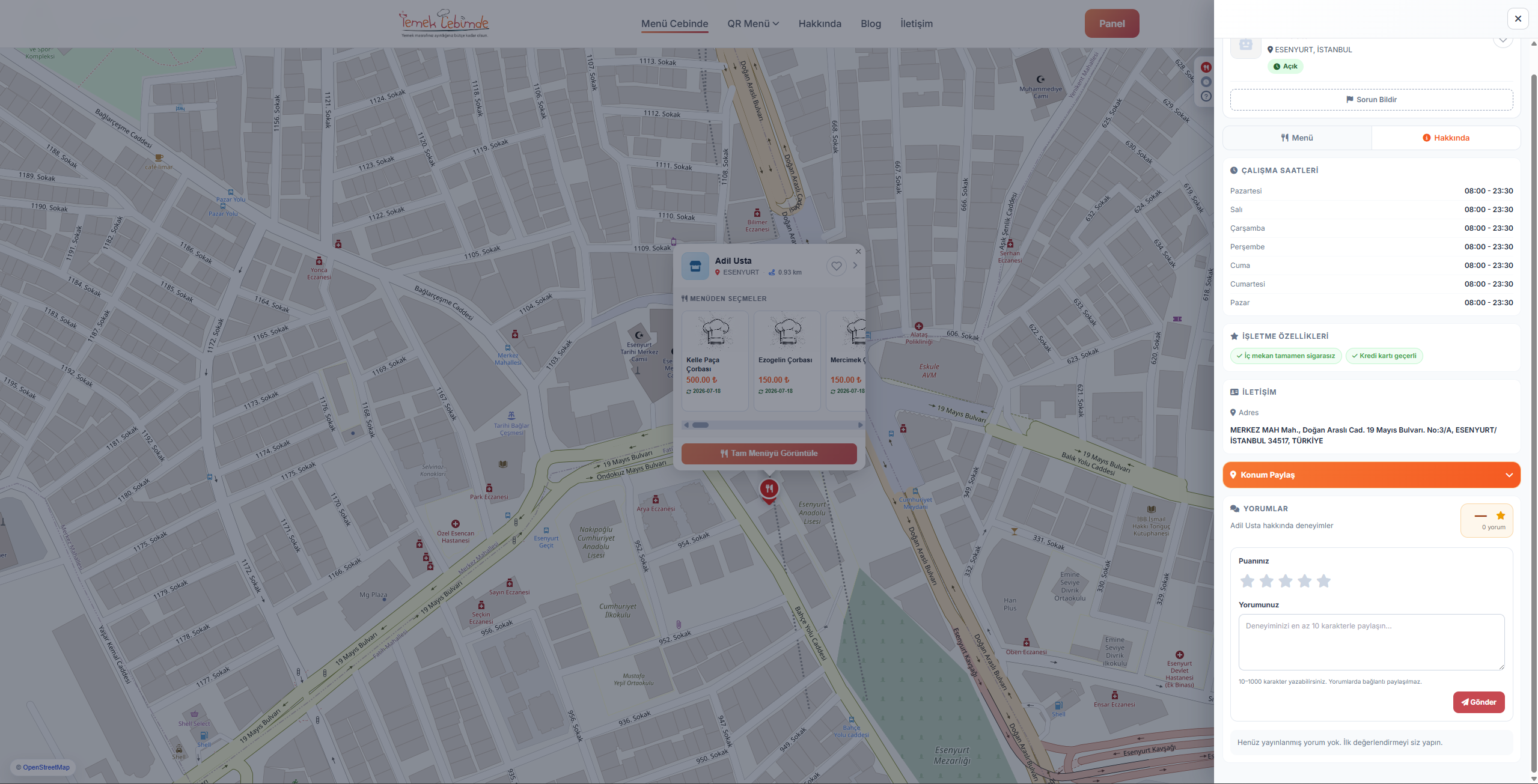
Comments
-
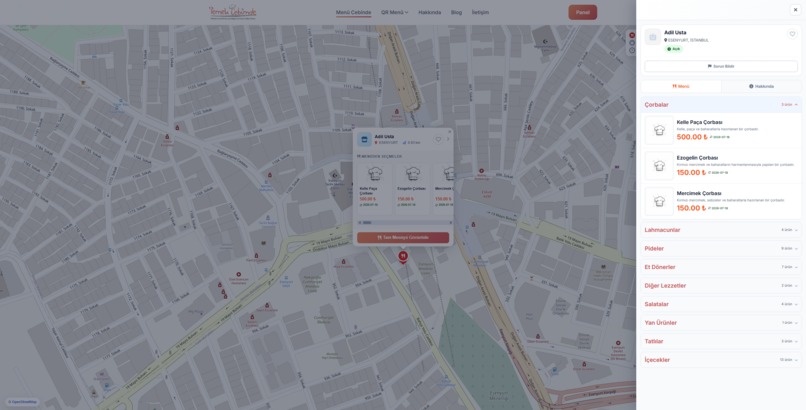
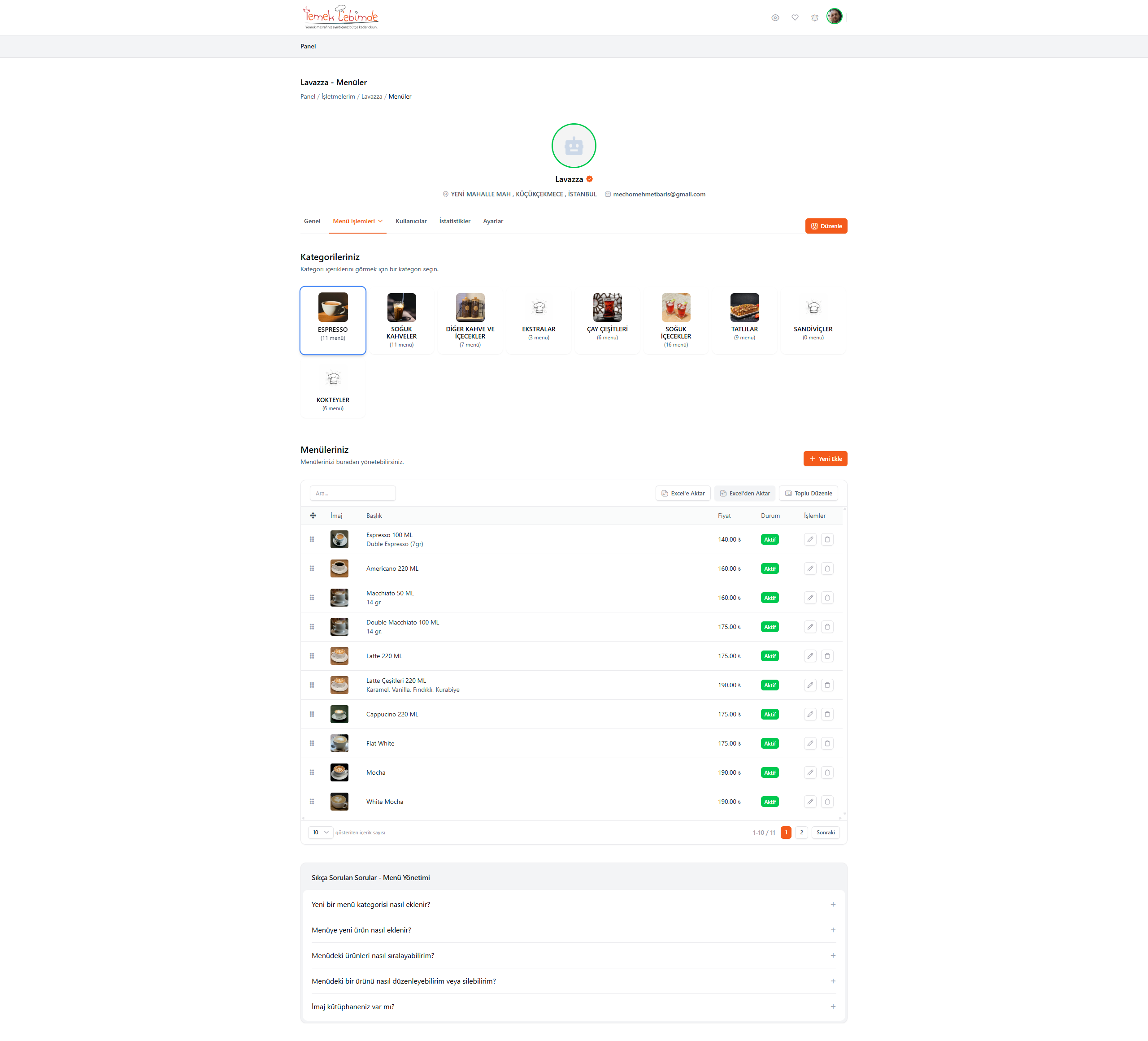
Menu List
-
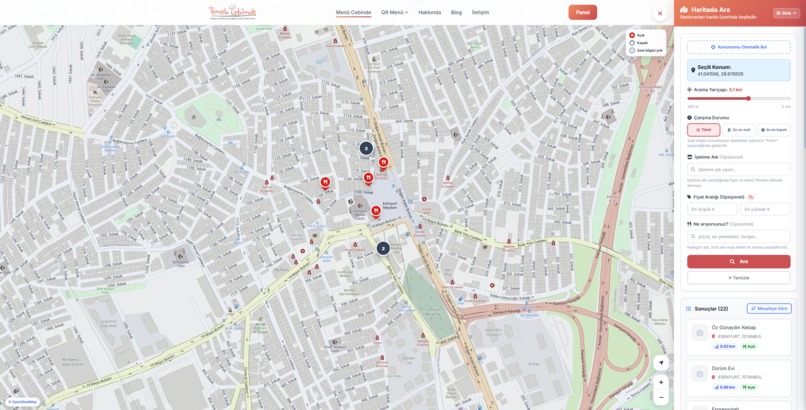
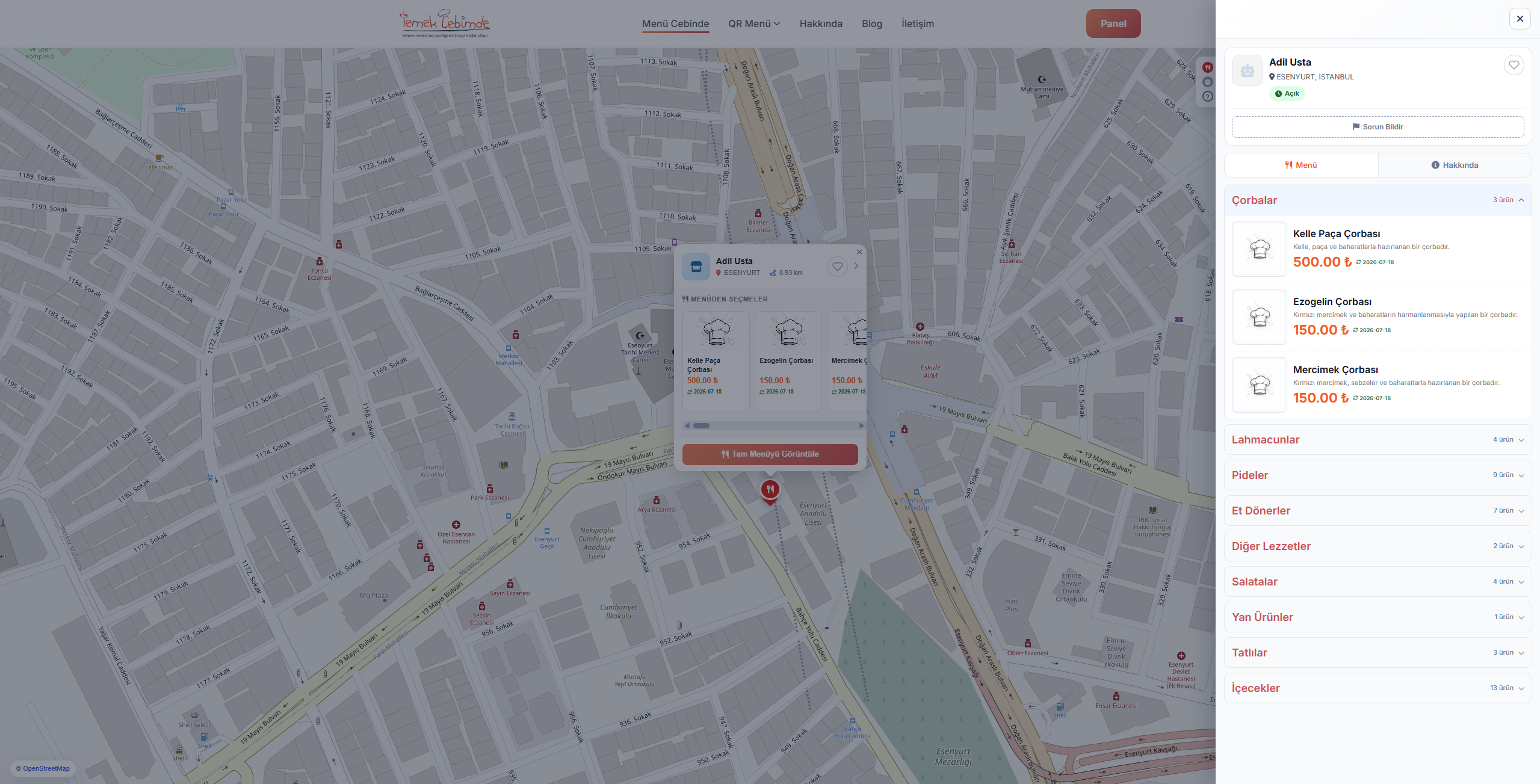
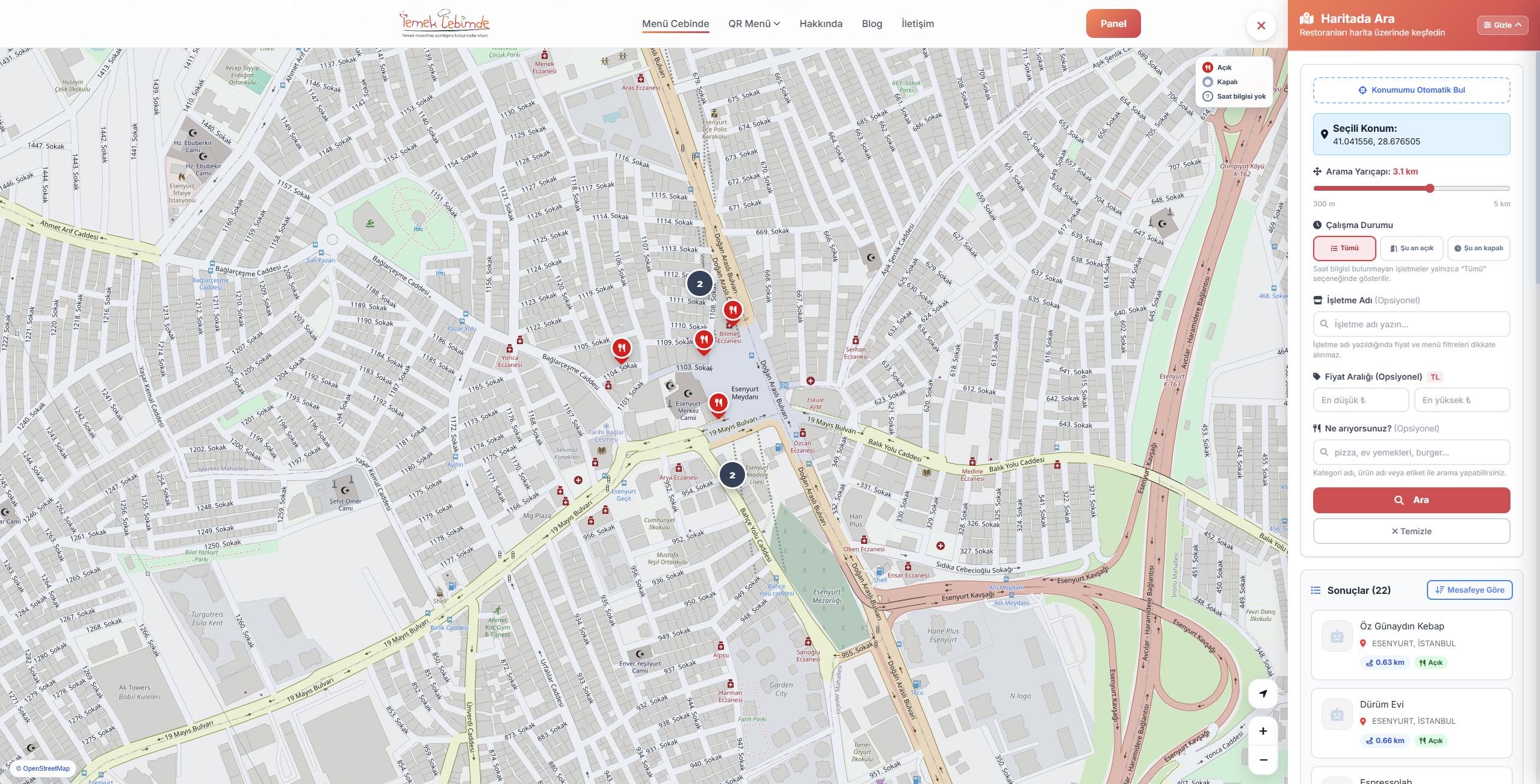
Map Control
-
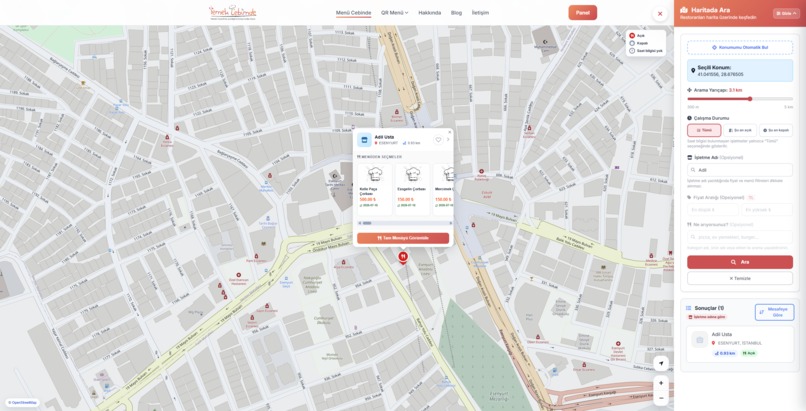
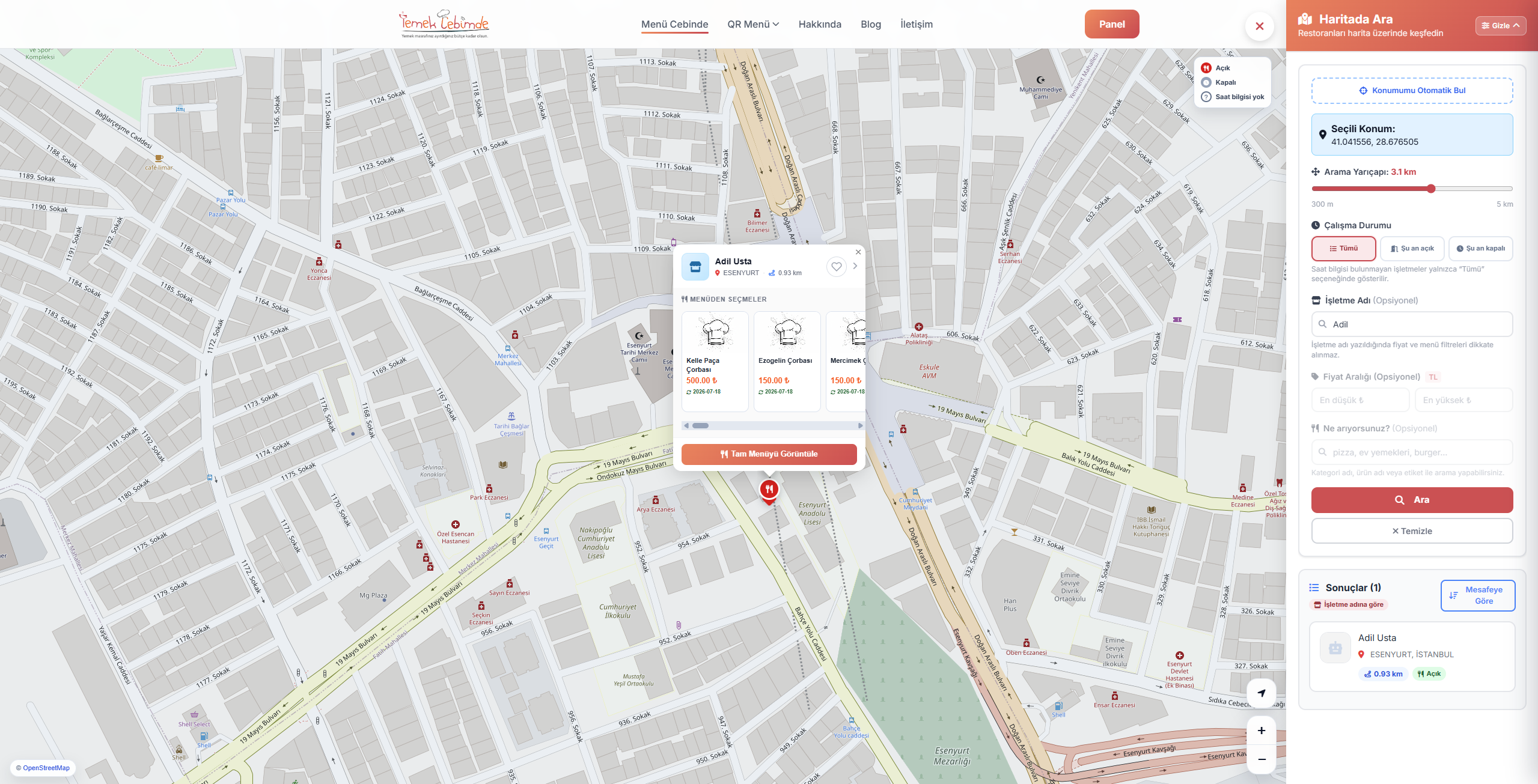
Filter
-
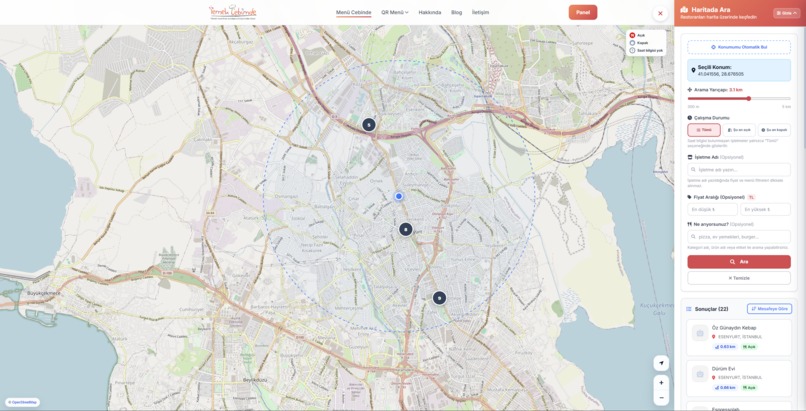
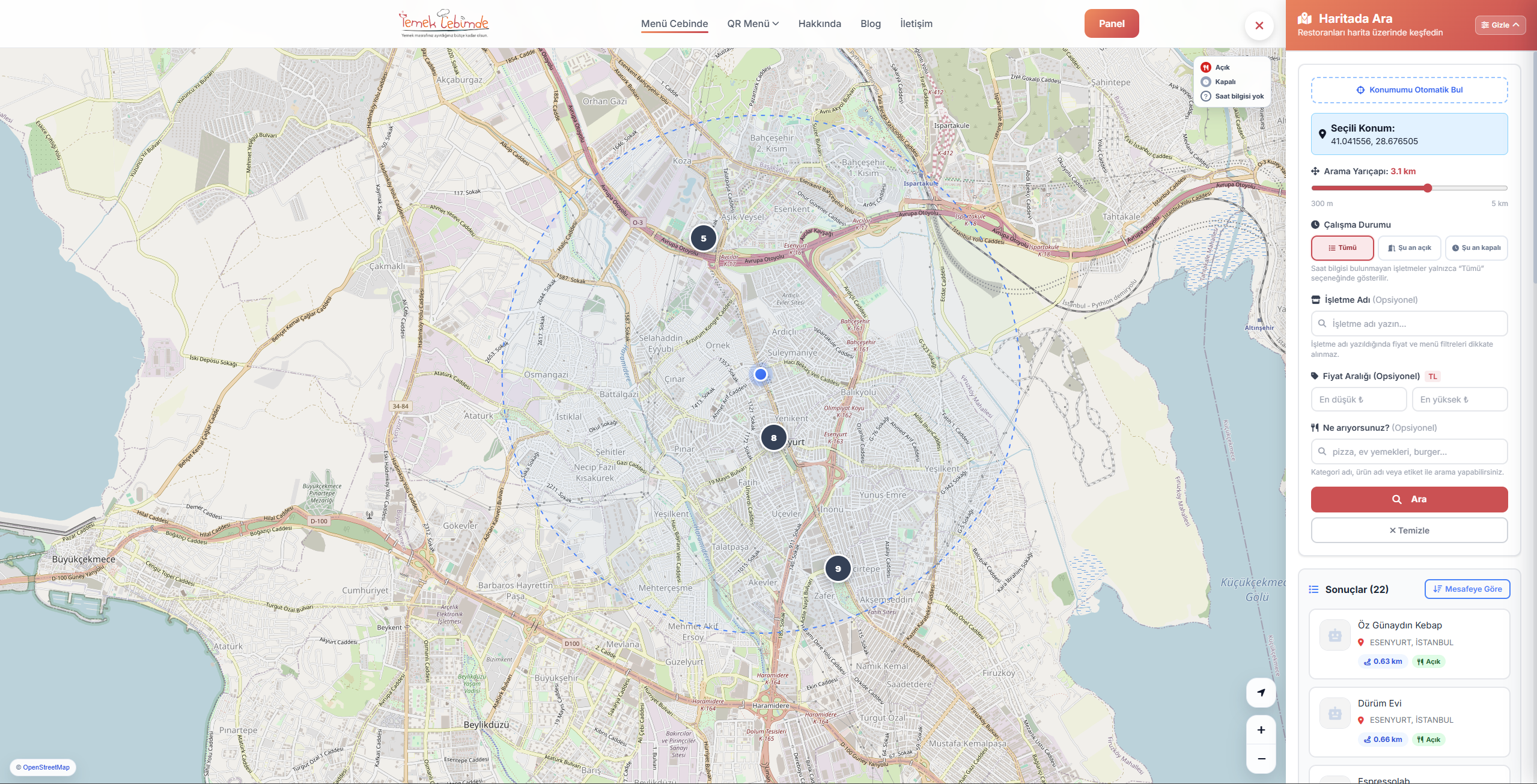
Map
Inspiration
Eating out often begins with uncertainty. People may not know what a restaurant serves, whether its prices fit their budget, or whether the menu they found online is still current. At the same time, small restaurants need a simple way to publish and update their menus without printing costs, advertising, or high marketplace commissions.
Yemek Cebimde was created to connect these two needs: helping people discover where and what they can eat before they arrive, while giving local food businesses a free digital menu and discovery platform.
What it does
Yemek Cebimde is a location-based restaurant discovery, QR menu, and consumer companion platform.
Consumers can:
- Discover nearby restaurants and cafés on an interactive map
- Browse current menus and in-store prices before visiting
- Search by location, distance, menu content, and budget
- Save favorite businesses and follow their updates
- Receive in-app notifications
- Rate and review businesses
- Manage their profile, addresses, favorites, and reviews
- Use the experience through the responsive website and Flutter mobile application
Businesses can:
- Create and update mobile-friendly QR menus
- Manage categories, products, prices, images, and availability
- Publish Turkish and English menu content
- Generate QR codes without advertisements
- Manage multiple businesses and authorized team members
- Reach consumers without adding marketplace commissions to menu prices
What we built during OpenAI Build Week
Yemek Cebimde existed before OpenAI Build Week. For the competition, we meaningfully extended the existing platform using Codex and GPT-5.6. The pre-existing foundation included QR menu management, location-based discovery, favorites, notifications, and the core mobile API.
During the Build Week submission period, we added:
A complete ratings and reviews experience
We implemented ratings and written reviews across the public web experience and mobile API. Users can create, edit, remove, and report reviews. Business owners and authorized staff cannot review their own businesses.
The system supports review summaries, pagination, user privacy through abbreviated display names, moderation states, configurable blocked-term detection, reporting workflows, and notifications for business owners.
Users also received a dedicated dashboard where they can view and manage all of their reviews and see how each review appears in the product.
A stronger mobile API security layer
We extended the API with platform-specific Android and iOS application keys, key rotation, optional legacy-client migration, installation UUID validation, application version and platform headers, HTTPS enforcement, HSTS, security headers, and server-only credentials for external administration endpoints.
This allowed us to improve security without immediately breaking older mobile builds.
A structured data onboarding pipeline
We developed a validation and import workflow for authorized restaurant datasets. It validates nested restaurant and menu structures, normalizes text, verifies coordinates, resolves Turkish province, district, and neighborhood data, detects duplicate categories and products, tracks source provenance, supports dry runs, and flags uncertain addresses for manual review.
Only data that we are authorized to use is eligible for this workflow.
How we used Codex and GPT-5.6
We used Codex with GPT-5.6 as an engineering partner throughout the Build Week extension.
Codex helped us:
- Translate product requirements into Laravel services, controllers, middleware, migrations, and tests
- Design transactional review and reporting workflows
- Identify authorization, cache, privacy, and backward-compatibility risks
- Build the mobile API security and key-rotation strategy
- Implement the user review-management interface
- Create validation and test scenarios for malformed or incomplete restaurant data
- Review changes across web, mobile API, database, and documentation layers
We made the final product and engineering decisions, including the moderation rules, privacy model, backward-compatible mobile rollout, and the separation between public consumer data and server-only administration.
Challenges we faced
The main challenge was extending a live, multi-surface product without breaking existing users.
Review data had to remain consistent across the map, business detail views, the user dashboard, and the mobile API. Security improvements also needed a staged rollout so older application versions could continue working while new versions adopted installation and platform headers.
Another challenge was handling imperfect restaurant and address data. Instead of silently importing questionable records, we created explicit validation results and manual-review paths.
Accomplishments that we are proud of
We transformed a QR menu product into a more complete trust and discovery experience.
The new review system is not just a star field: it includes ownership rules, moderation, reports, privacy-aware public identities, business notifications, user review management, API support, and automated tests.
We are also proud that the security work was designed as a deployable migration path rather than a breaking one-time change.
What we learned
Codex was most valuable when we gave it project-specific constraints and asked it to reason across the complete system rather than generate isolated code snippets.
The combination of repository context, iterative review, tests, and human product decisions helped us move from an idea to an integrated implementation much faster.
What's next
Next, we plan to:
- Complete Android and iOS distribution
- Expand verified restaurant coverage
- Improve personalized discovery and budget-based recommendations
- Add richer business update and notification controls
- Introduce multilingual experiences for international visitors
- Continue strengthening review quality and abuse prevention
Latest Build Week improvements
During OpenAI Build Week, we extended both the Laravel web/API platform and the Flutter mobile application.
The new work includes:
- A complete web and mobile ratings and reviews experience
- Review creation, editing, soft removal, reporting, pagination, and moderation
- A user dashboard for managing submitted reviews
- Business-name search across web and mobile
- Open, closed, and unknown operating-status calculations
- Support for overnight shifts, breaks, and 24-hour businesses
- Open/closed business filtering
- Dependency-free marker clustering on the web
- Clustered and status-aware map markers in Flutter
- Secure Google authentication and controlled account linking
- Platform-specific mobile API keys and key rotation
- Persistent installation UUID and application-version headers
- HTTPS, HSTS, server-only administration credentials, and layered rate limiting
- Android APK build and signing workflows
- Expanded automated tests across Laravel and Flutter
The pre-existing product provided the QR menu, discovery, favorites, notifications, and core mobile API foundation. The capabilities listed above were implemented as meaningful extensions during the Build Week submission period using Codex and GPT-5.6.
Built With
- alpine.js
- api
- codex
- css
- dart
- flutter
- gpt-5.6
- javascript
- laravel
- leaflet.js
- mysql
- openai
- openstreetmap
- php
- phpunit
- rest
- sanctum
- tailwind
- vite

Log in or sign up for Devpost to join the conversation.