-
-
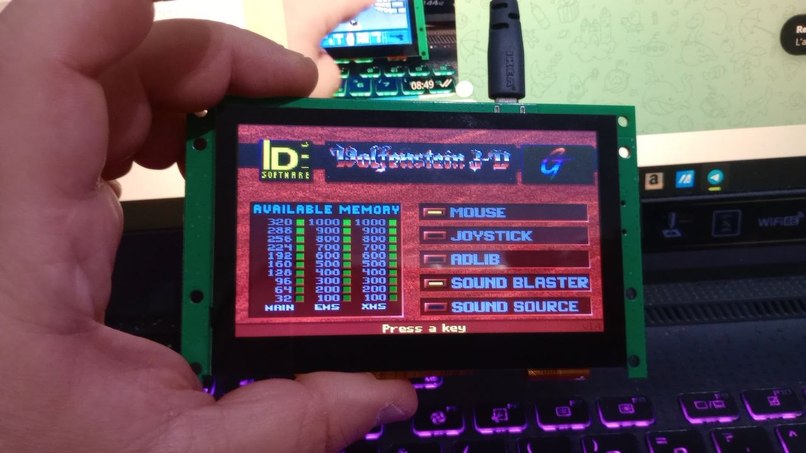
first test
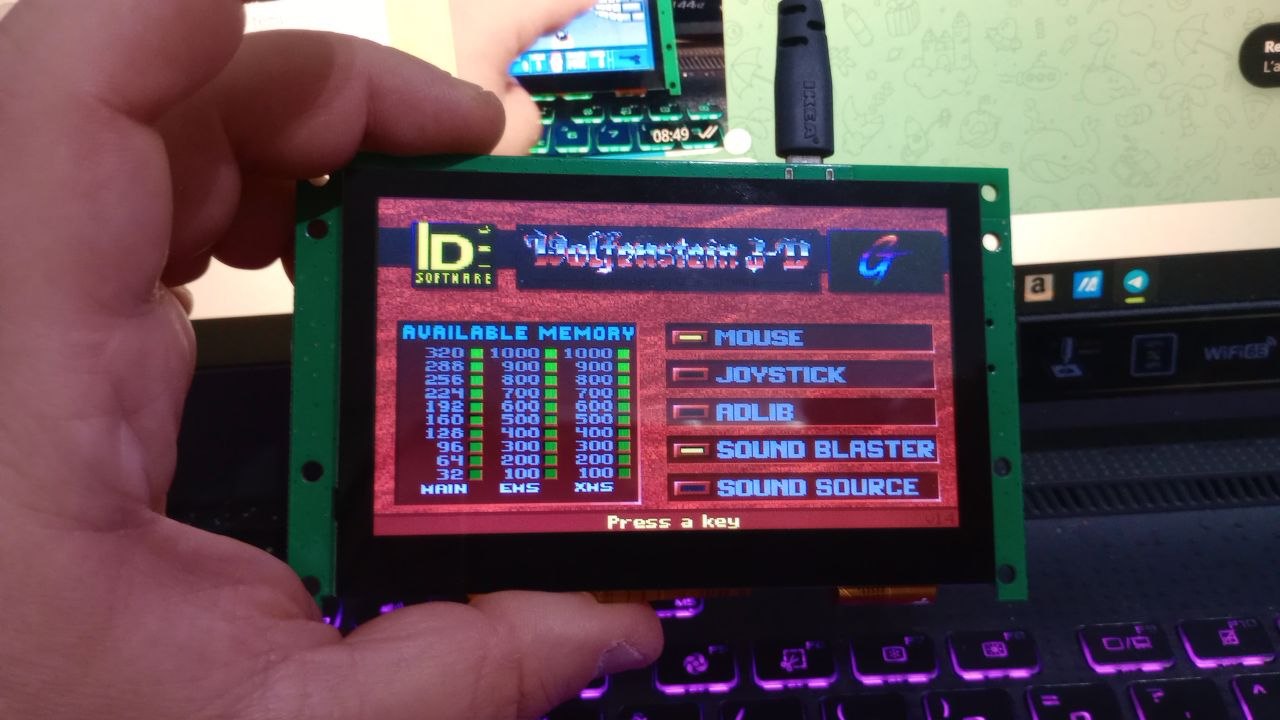
Inspiration
Wolf3D started as a practical experiment: can a classic PC game be adapted to run efficiently on a low-power embedded Linux touchscreen device?
Instead of treating old hardware as obsolete, I used it as a laboratory for learning C, understanding a historical codebase, debugging SDL rendering, and working within strict CPU, memory, display, and input constraints.
Wolf3D is also a real-world case study for RetroPort AI, a workflow that explores how AI can assist developers in studying, porting, debugging, optimizing, and documenting legacy software.
What it does
Wolf3D brings Wolfenstein 3D to an ARM-based embedded Linux device equipped with a touchscreen.
The project includes:
- SDL rendering and performance optimizations
- Touchscreen input and coordinate calibration
- Platform-specific compatibility fixes
- Adaptation to a constrained embedded Linux environment
- Documentation of the human-AI development workflow
- Reproducible build, deployment, and testing notes
The goal is not only to run the game, but also to document the engineering process required to make legacy software work on unusual and resource-constrained hardware.
How I built it
I studied the C codebase and adapted its platform-dependent components for the target device.
The work focused mainly on:
- Video initialization and SDL rendering
- Input translation from touchscreen events to game controls
- Display scaling and coordinate calibration
- ARM and embedded Linux compatibility
- Filesystem and runtime integration
- Performance profiling and optimization
- Debugging crashes and unexpected behavior on real hardware
Development followed an iterative workflow:
- Modify the source code
- Cross-compile the project
- Deploy it to the device
- Test it on real hardware
- Analyze the results
- Refine the implementation
AI was used as an engineering support tool for source-code analysis, debugging hypotheses, refactoring suggestions, documentation, and comparison of possible solutions.
Every modification was manually reviewed and tested on the physical device.
Challenges
The main challenge was working with a limited and non-standard embedded environment.
Problems included:
- Limited CPU and memory resources
- Legacy libraries and toolchains
- Device-specific video behavior
- Touchscreen calibration and coordinate mapping
- Minimal debugging tools on the target system
- Platform assumptions inside decades-old code
- Differences between desktop and embedded SDL environments
AI could suggest possible causes and solutions, but the real hardware remained the source of truth. Many ideas had to be measured, rejected, or modified after testing.
Accomplishments
- Running Wolfenstein 3D on a low-power embedded touchscreen device
- Improving SDL rendering performance
- Implementing usable touchscreen controls
- Fixing platform-specific compatibility issues
- Creating a repeatable legacy-porting workflow
- Documenting the interaction between AI assistance and hardware validation
- Using AI as a technical assistant rather than as a replacement for engineering work
What I learned
This project improved my understanding of:
- C programming
- SDL rendering
- Embedded Linux
- ARM platforms
- Touchscreen input handling
- Legacy-code analysis
- Performance optimization
- Cross-compilation and deployment
- Hardware-based debugging
It also demonstrated an important limitation of AI-assisted development: AI can accelerate investigation and generate useful hypotheses, but successful low-level porting still requires measurements, hardware tests, and careful technical validation.
What's next
The next steps are:
- Further performance profiling
- Improved touchscreen controls
- Cleaner separation of platform-specific code
- Automated build and deployment scripts
- Additional benchmarks and technical documentation
- Support for more embedded Linux devices
- Applying the RetroPort AI workflow to other legacy applications and games
Legal note
Wolf3D does not distribute proprietary Wolfenstein 3D game data.
Users must provide their own legally obtained game files. The project repository contains only source code, patches, build tools, and documentation required for the port.
Wolfenstein 3D is a trademark of its respective owners. This project is an independent technical and educational porting experiment and is not affiliated with or endorsed by the original rights holders.

Log in or sign up for Devpost to join the conversation.