-
-
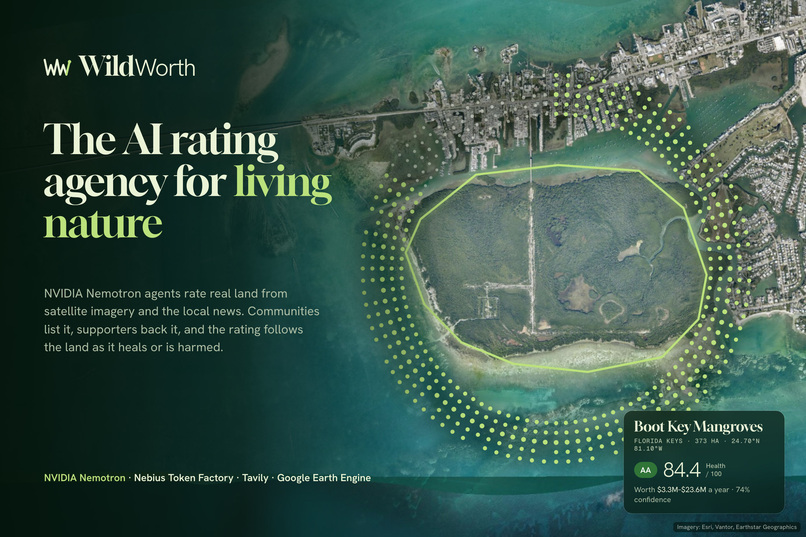
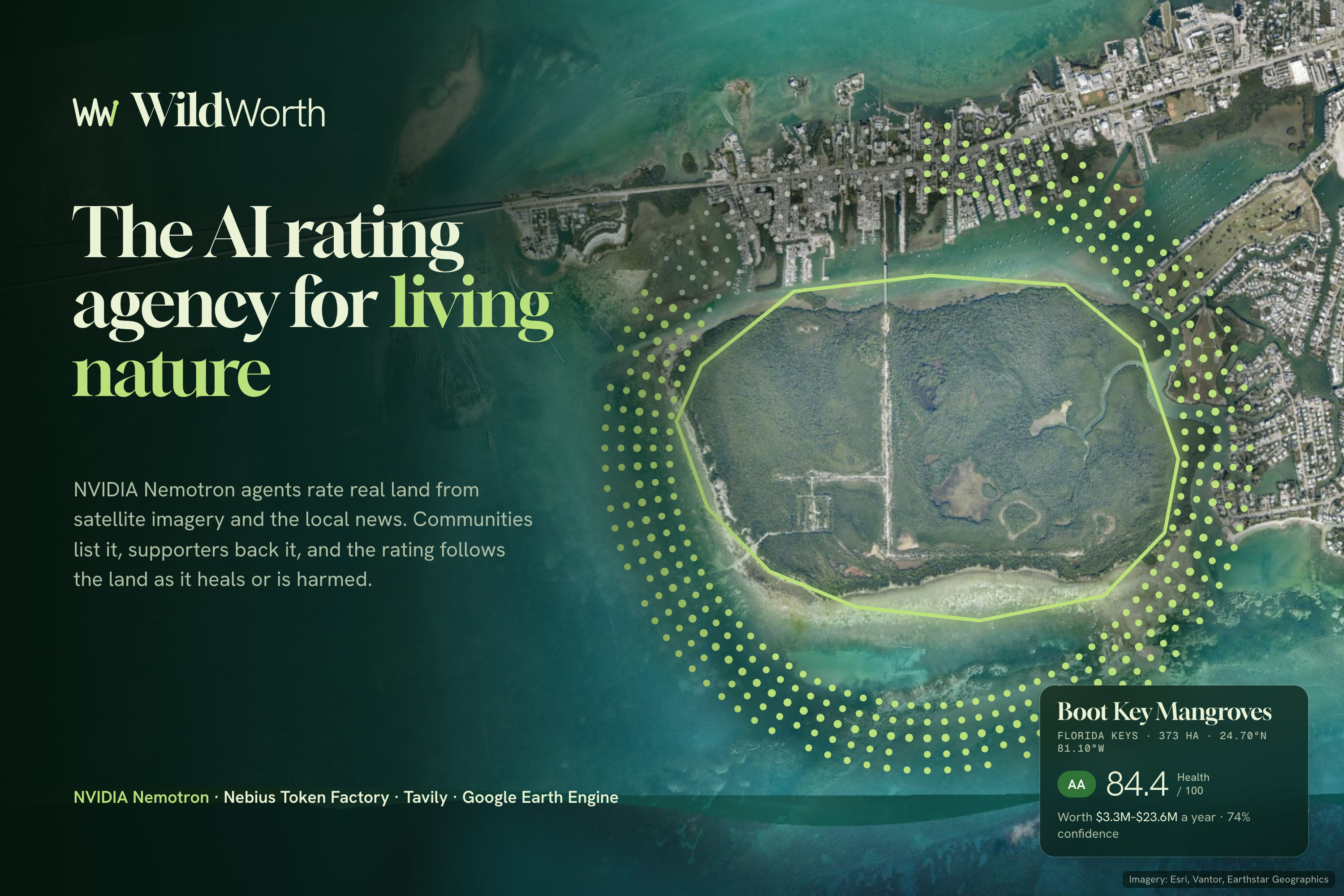
WildWorth, the AI rating agency for living nature. Boot Key, a mangrove island in the Florida Keys, rated by NVIDIA Nemotron agents.
-
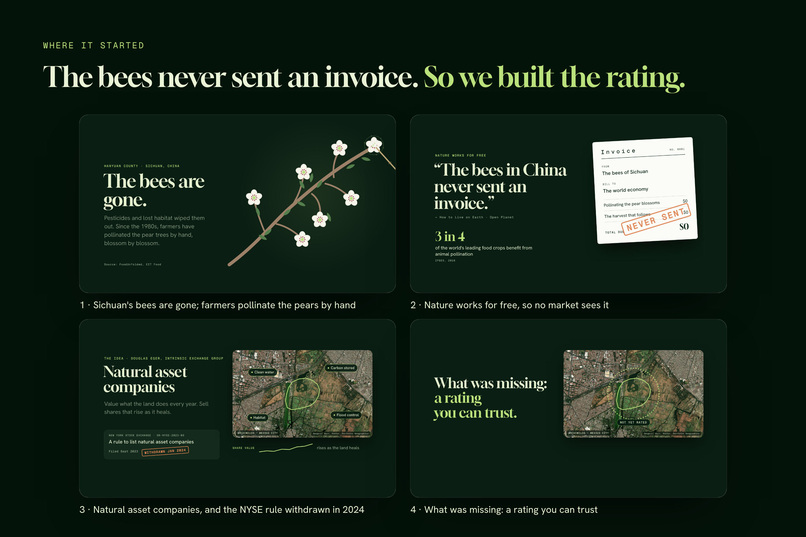
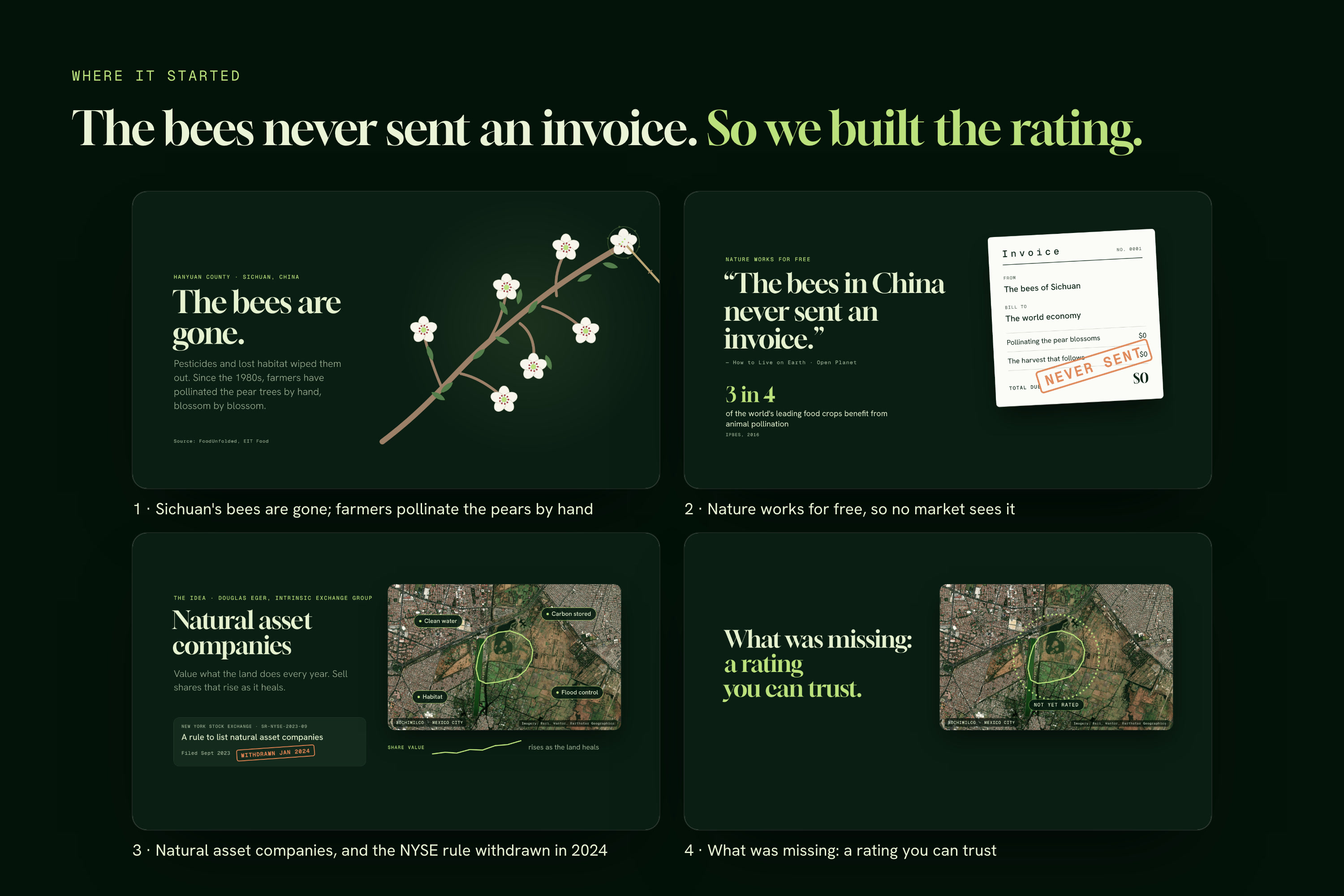
Where it started: Sichuan's hand-pollinated pear orchards, Douglas Eger's natural asset companies, and the rating they were missing.
-
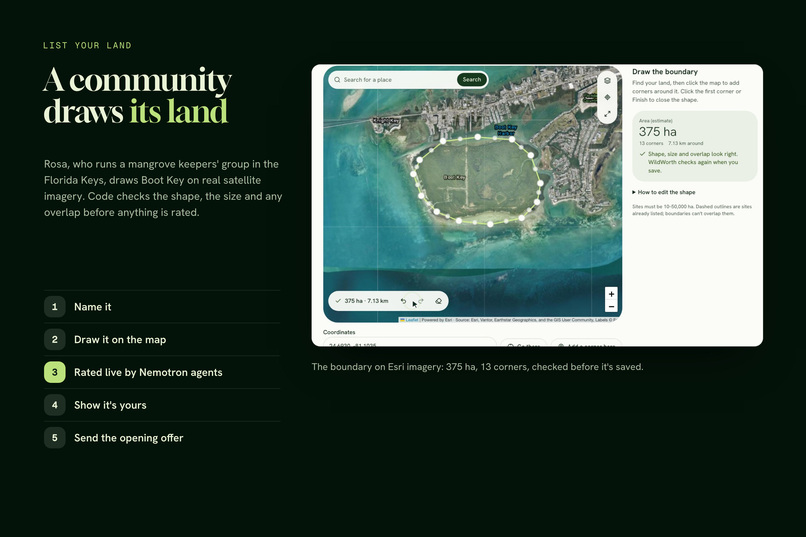
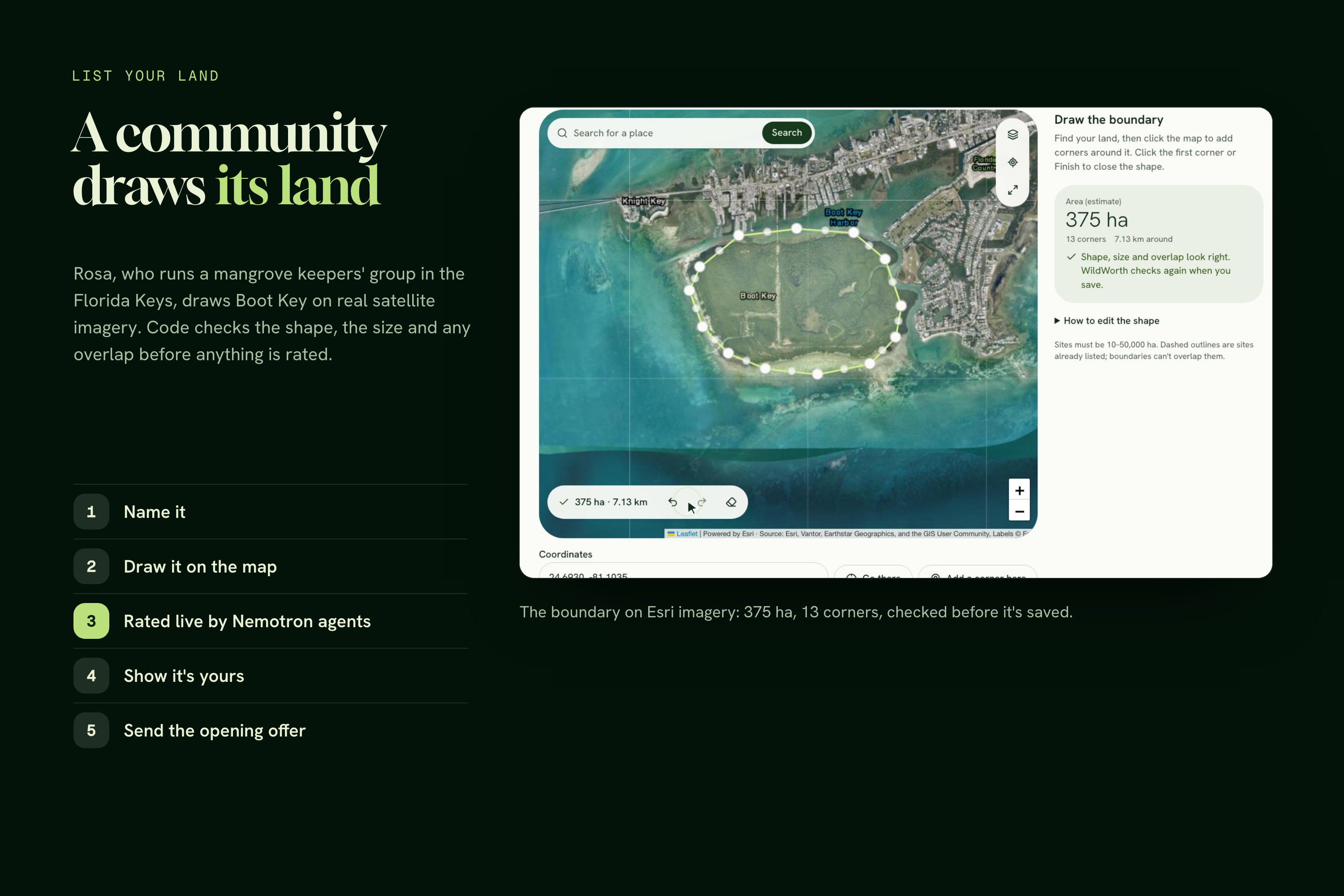
Rosa draws Boot Key on satellite imagery. Code checks the shape, the size (375 ha) and any overlap before anything is rated.
-
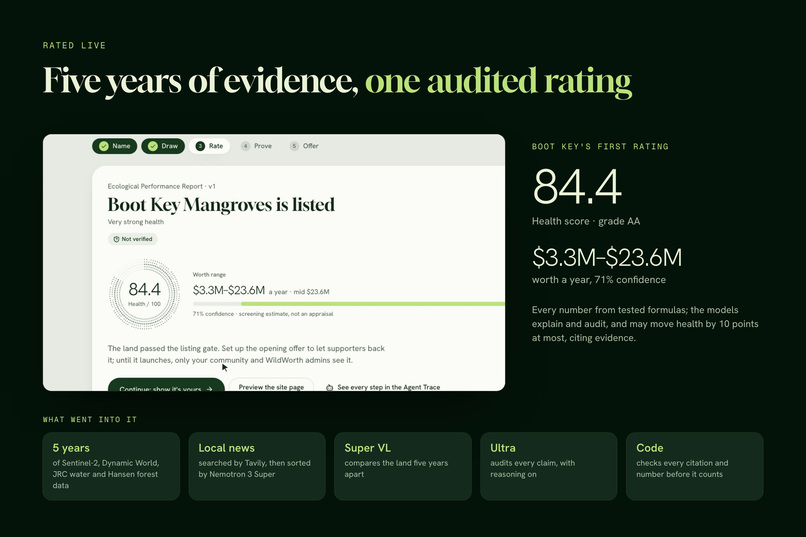
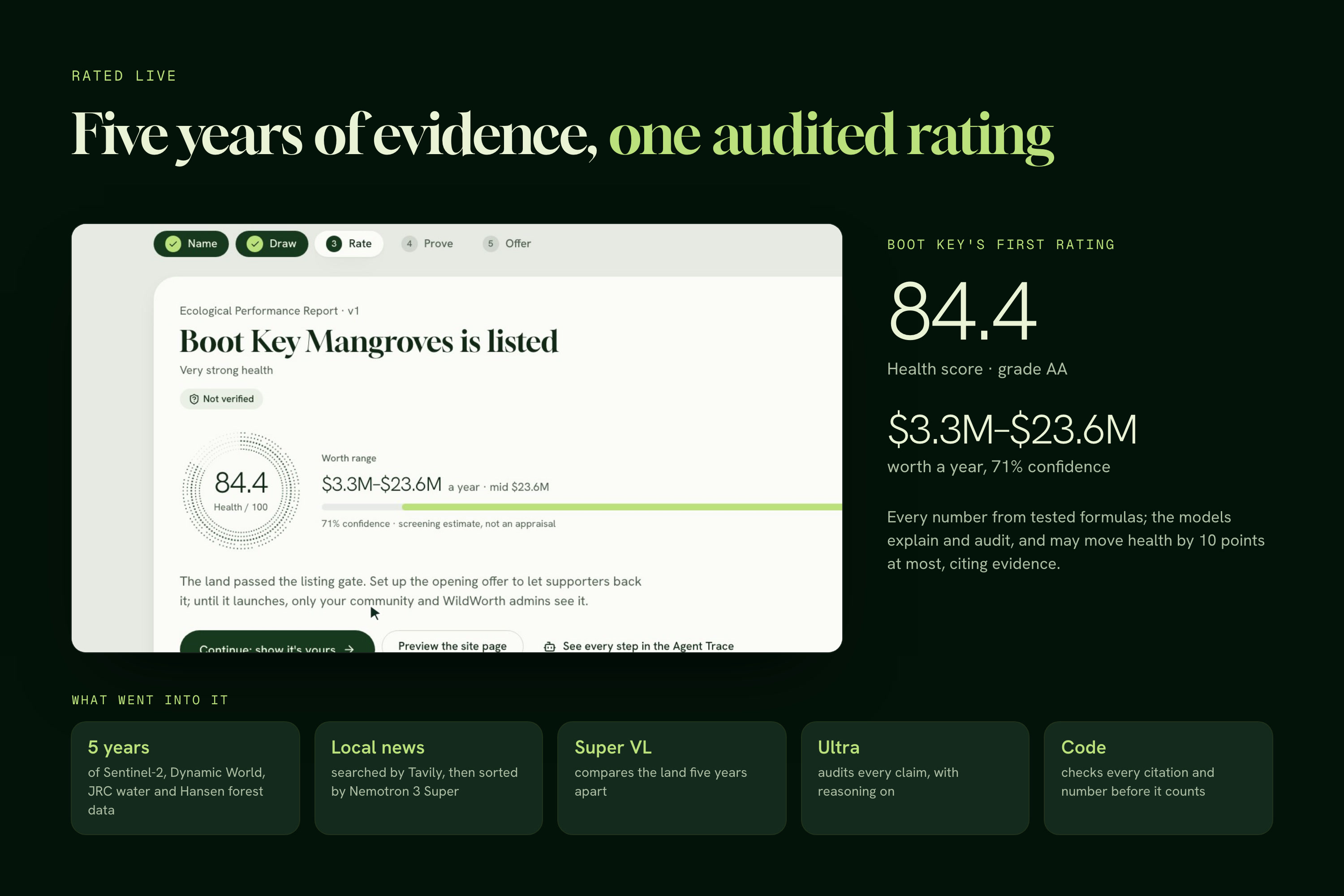
Boot Key's first rating: Health 84.4, grade AA, worth $3.3M–$23.6M a year at 71% confidence, from five years of evidence.
-
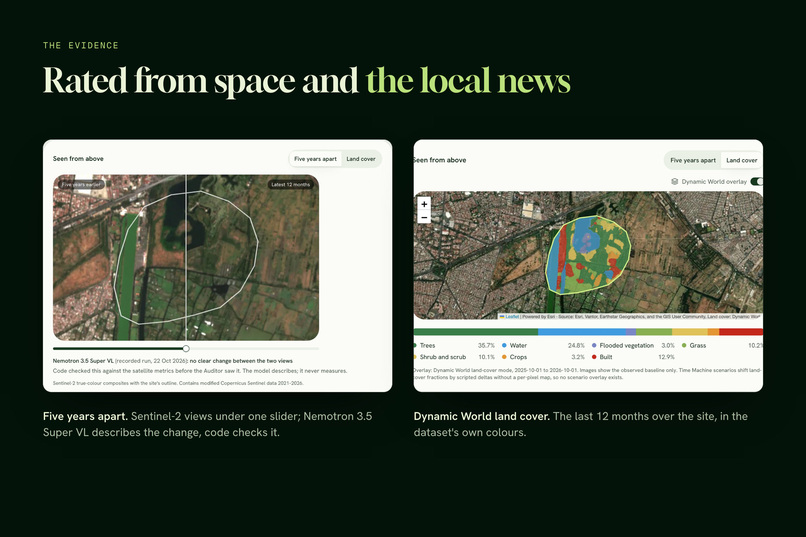
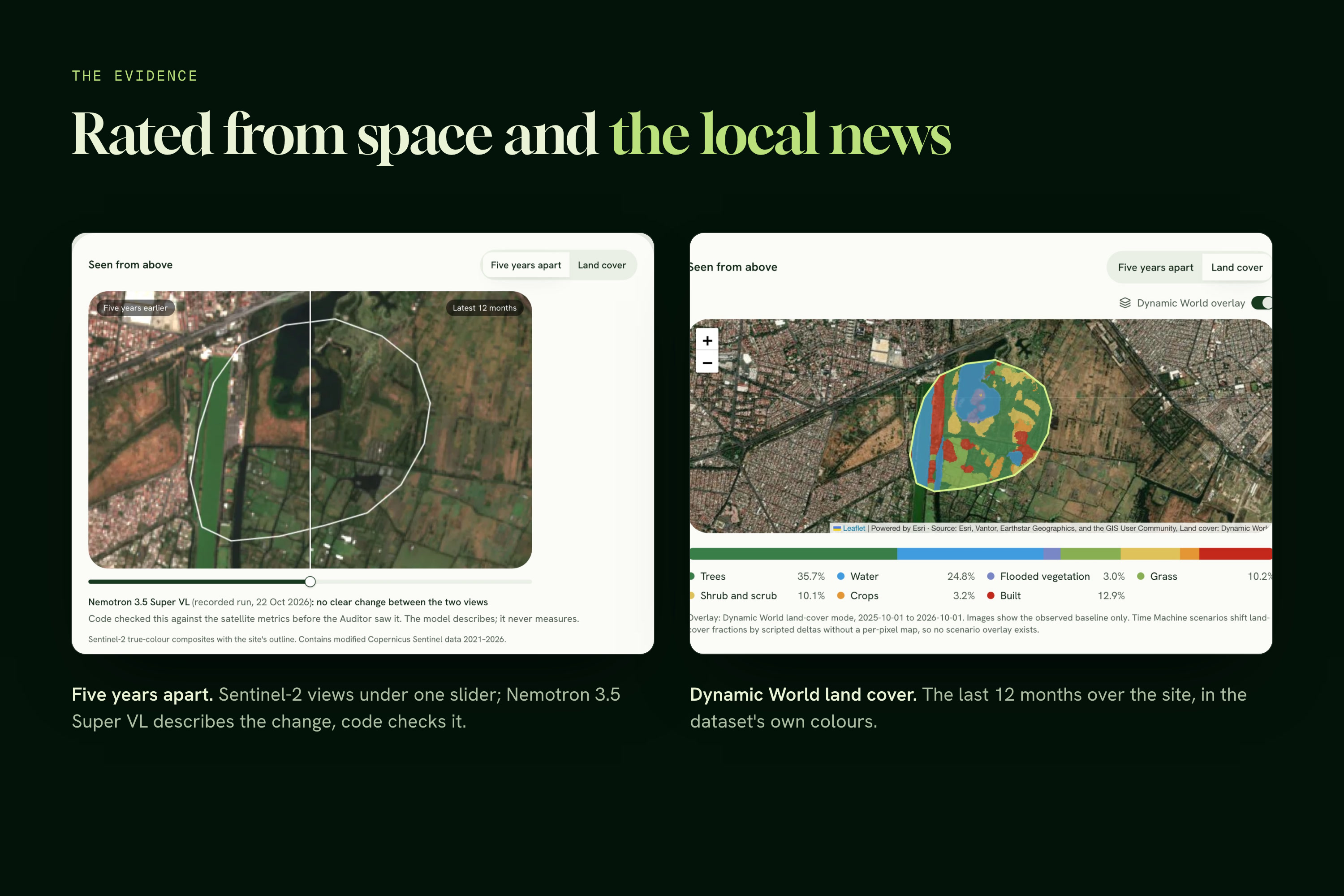
The evidence: Sentinel-2 views five years apart, read by Nemotron 3.5 Super VL and checked by code, beside Dynamic World land cover.
-
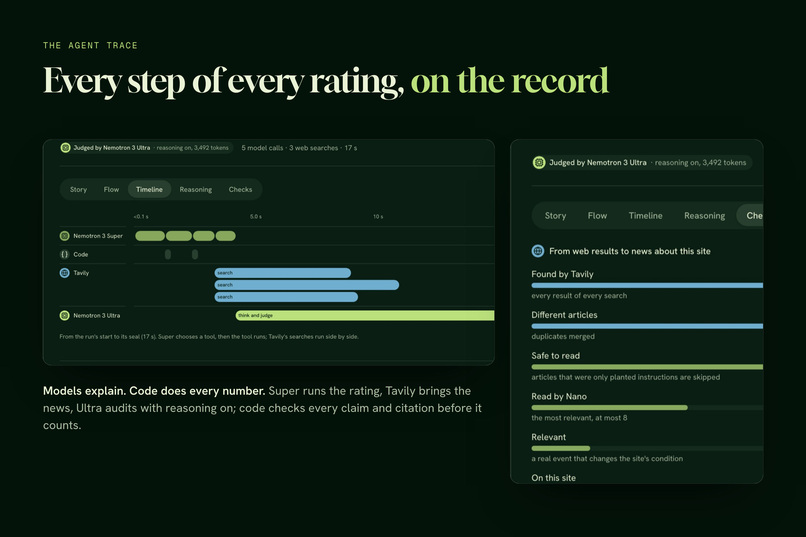
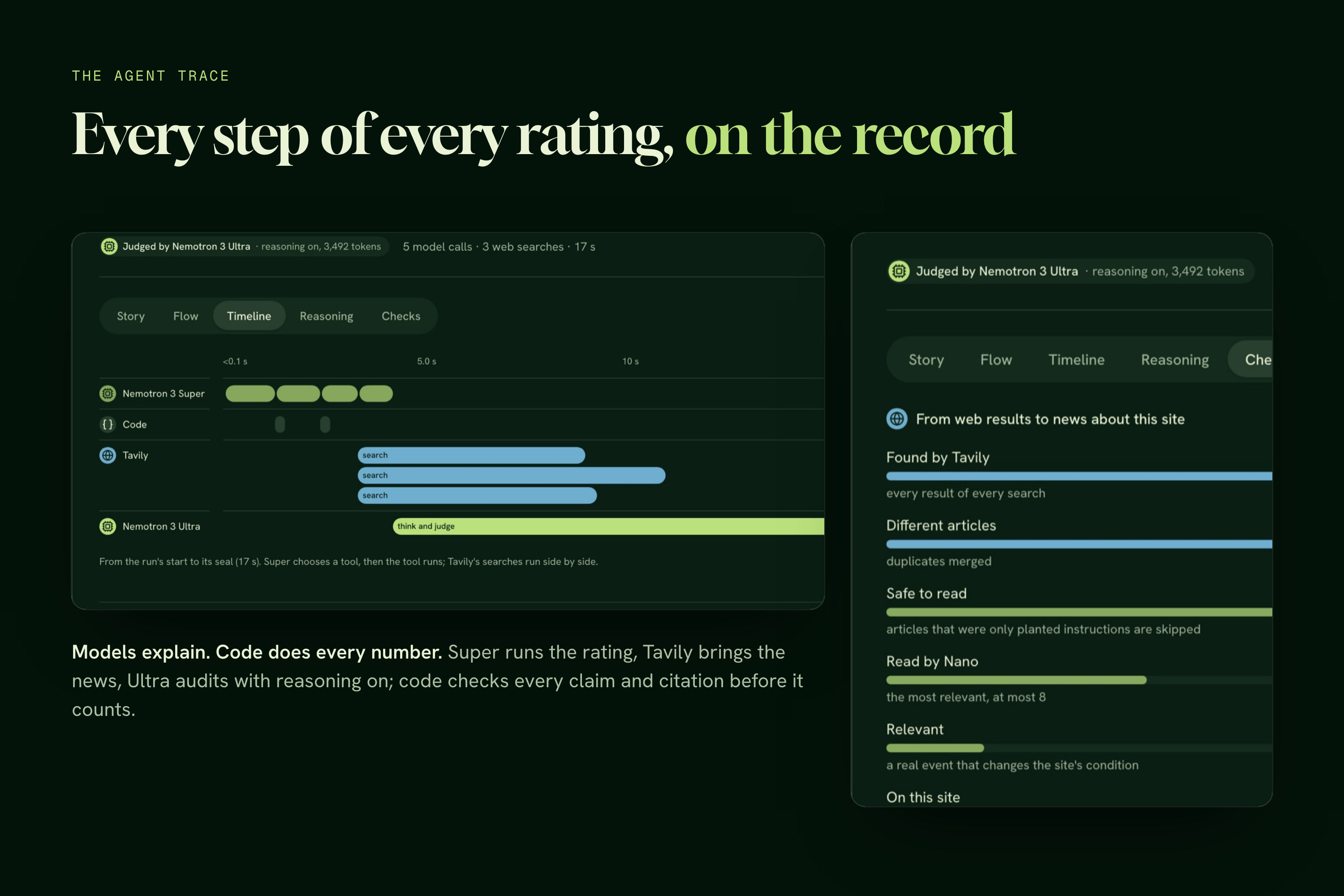
The Agent Trace: every model call, search, check and cost in one rating. The models explain; code does every number.
-
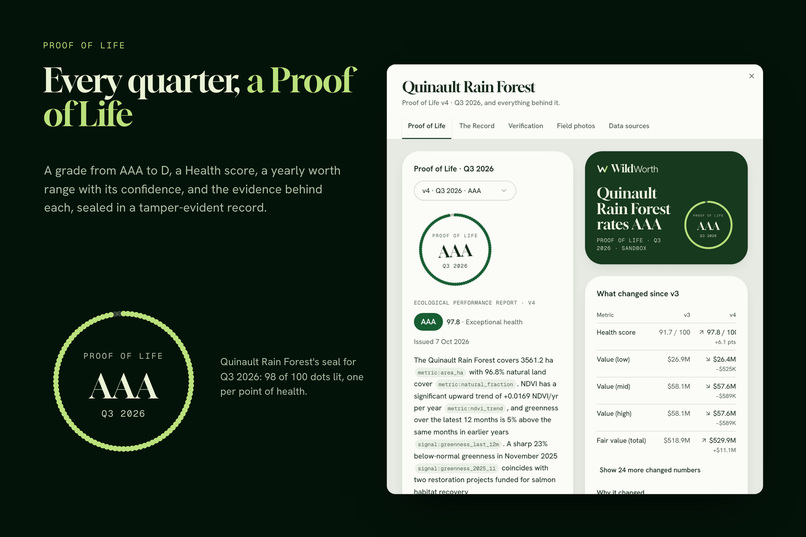
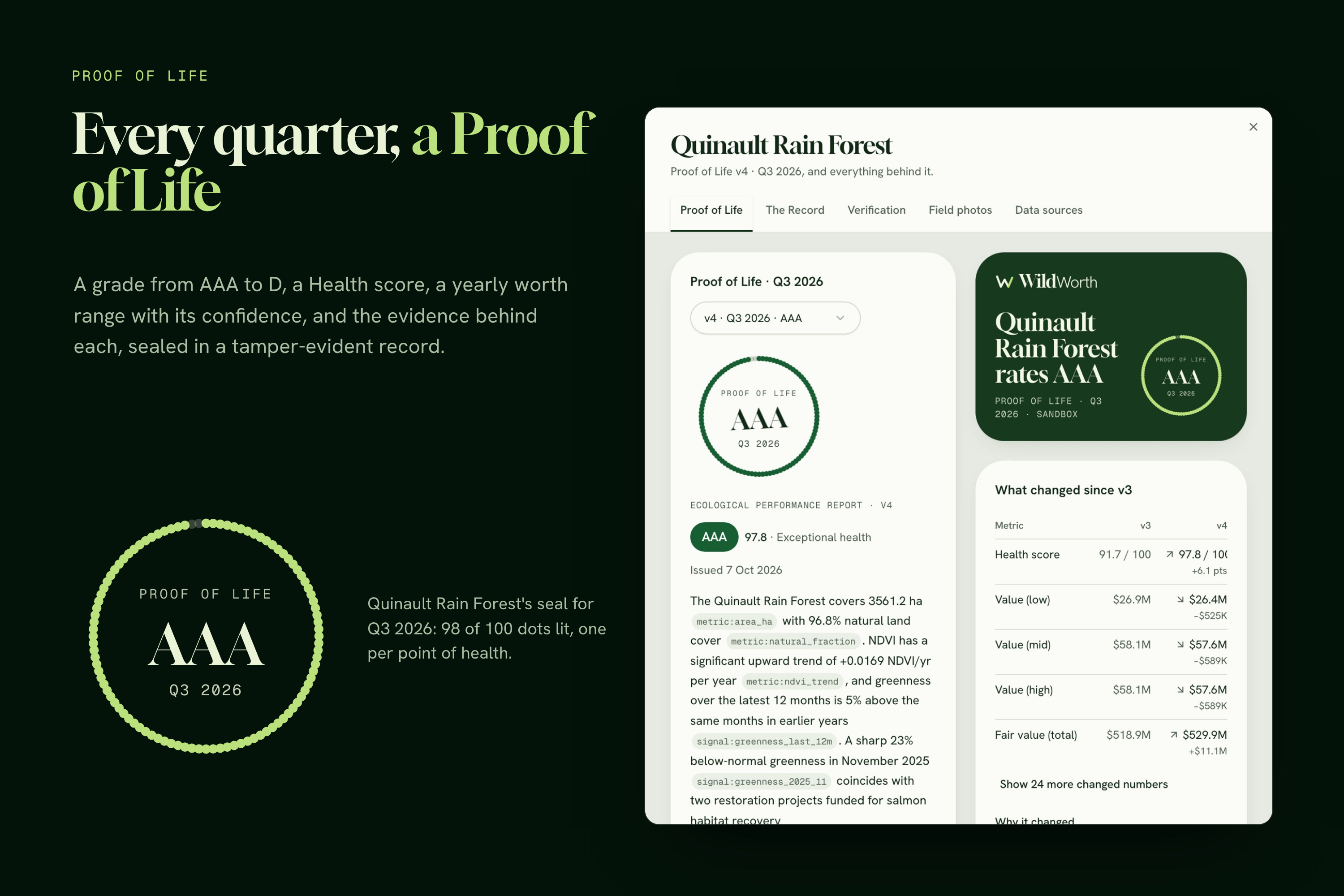
Every quarter, a Proof of Life: grade, Health, worth range and evidence, sealed in a tamper-evident record. Quinault: AAA.
-
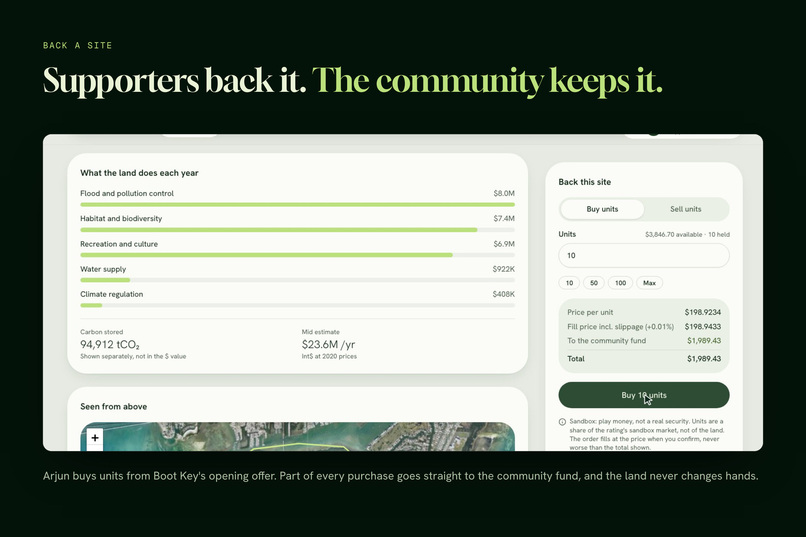
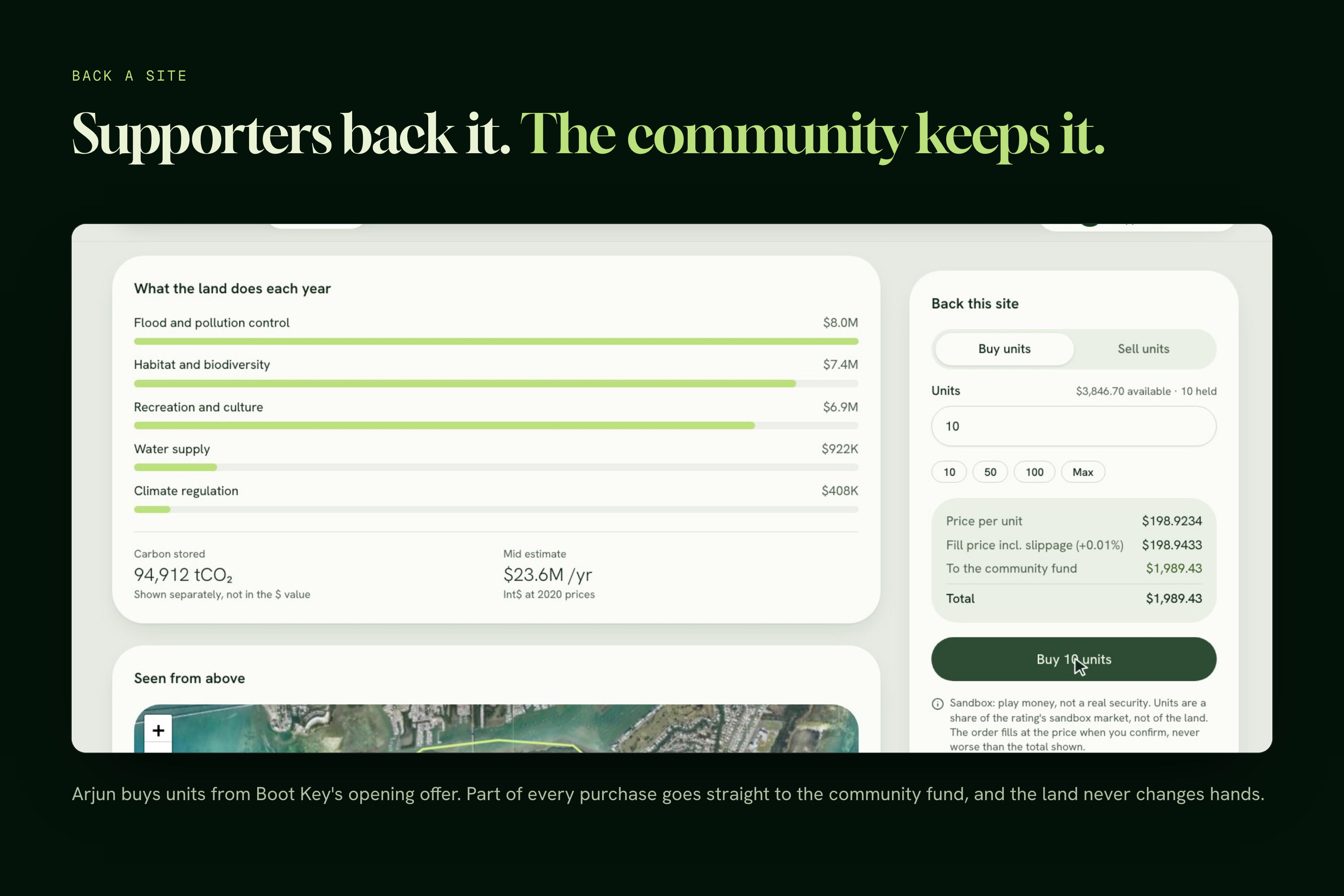
Arjun backs Boot Key from its opening offer. Part of every purchase goes straight to the community; the land never changes hands.
-

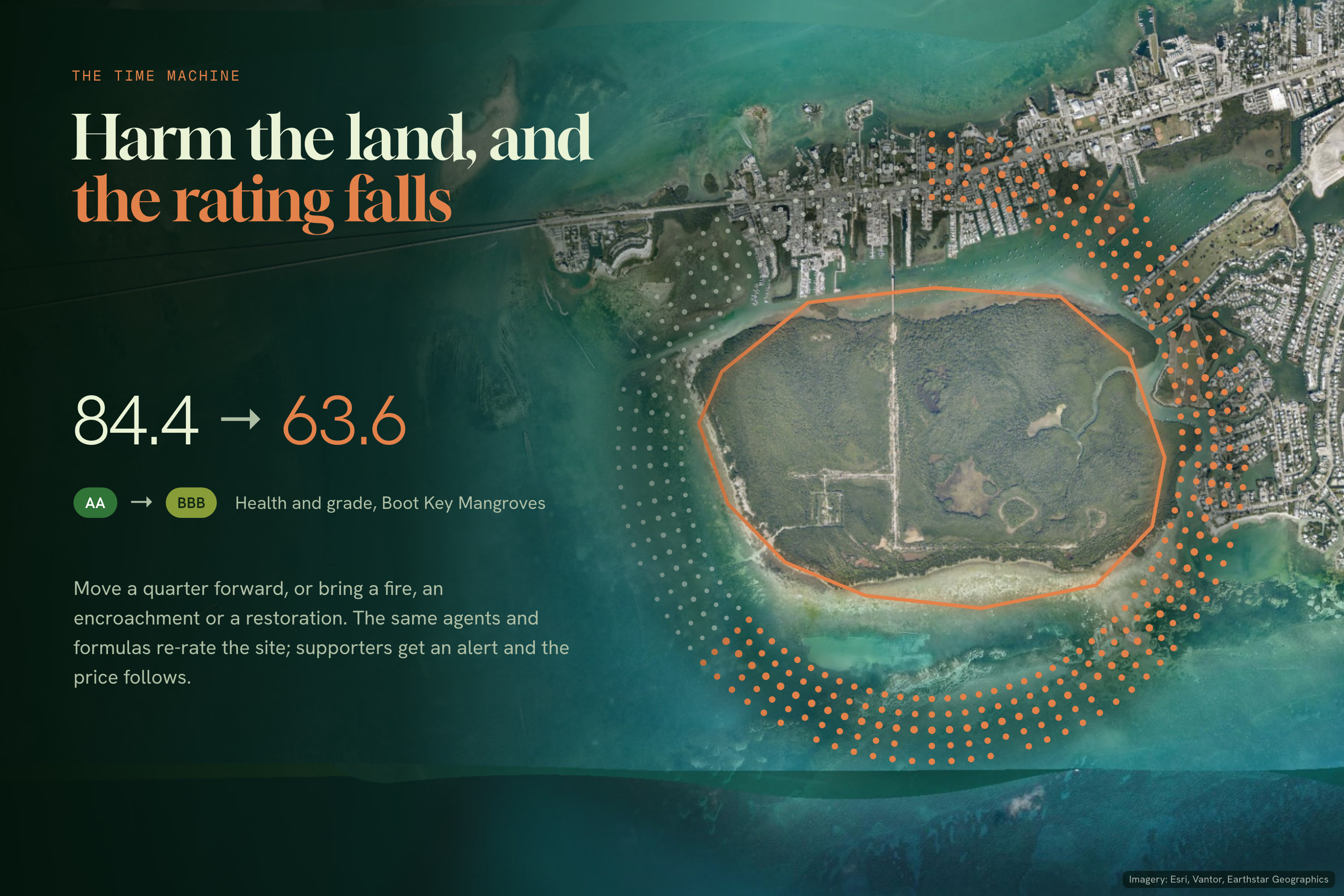
The Time Machine: inject an encroachment and Boot Key is re-rated on the spot. Health 84.4 → 63.6, AA → BBB.
-
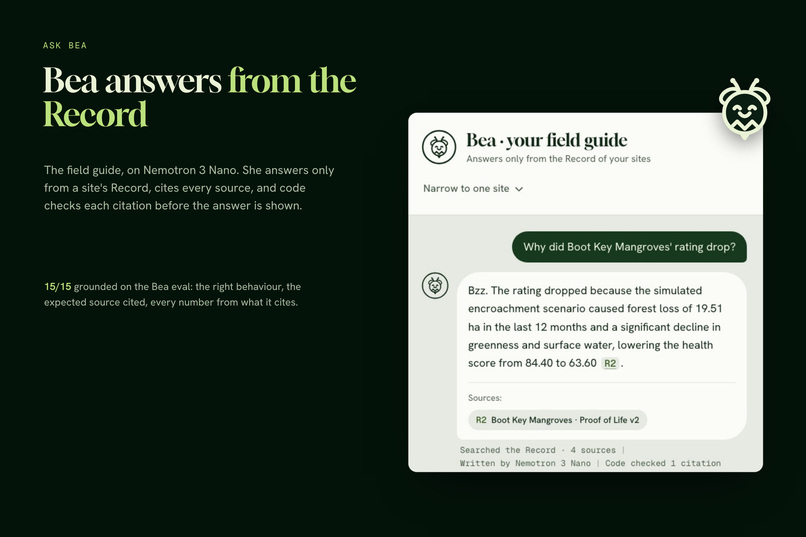
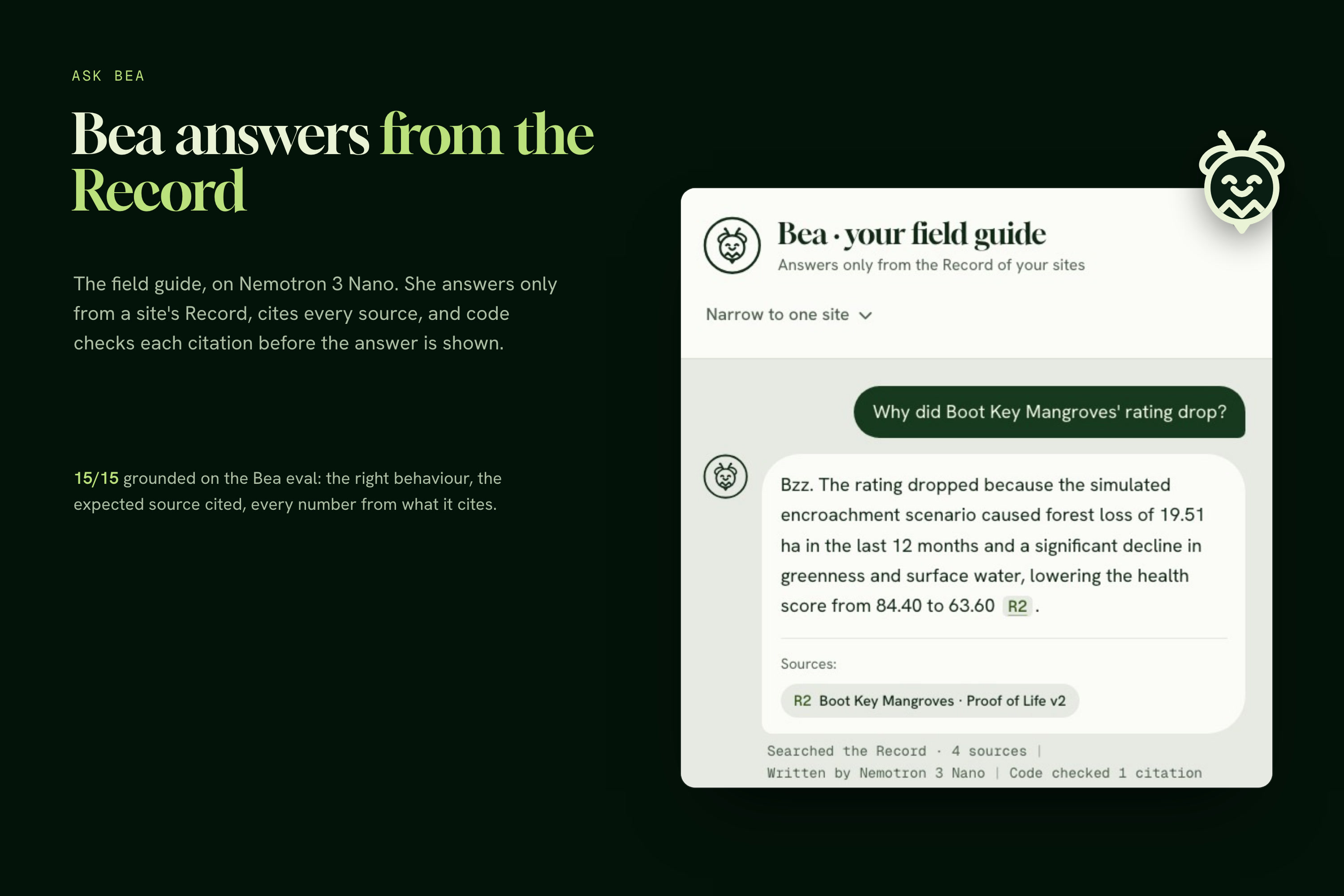
Bea, the field guide on Nemotron 3 Nano, answers only from a site's record and cites her sources. 15/15 grounded in our eval.
-
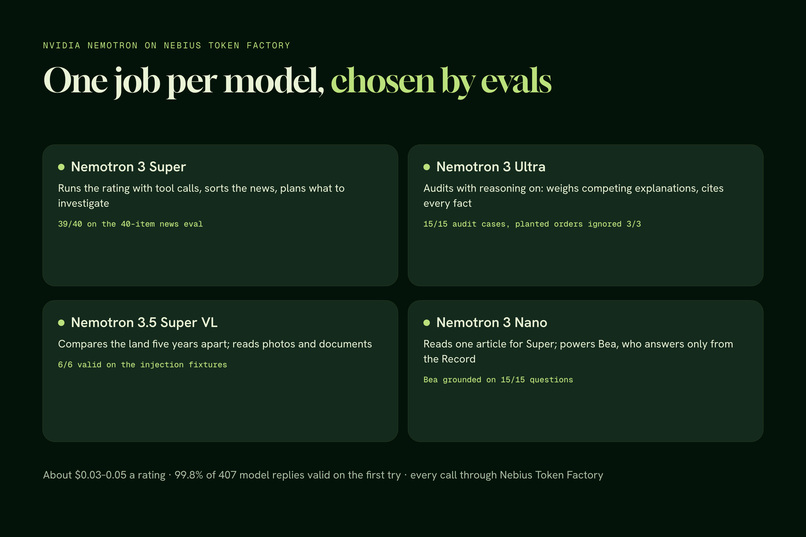
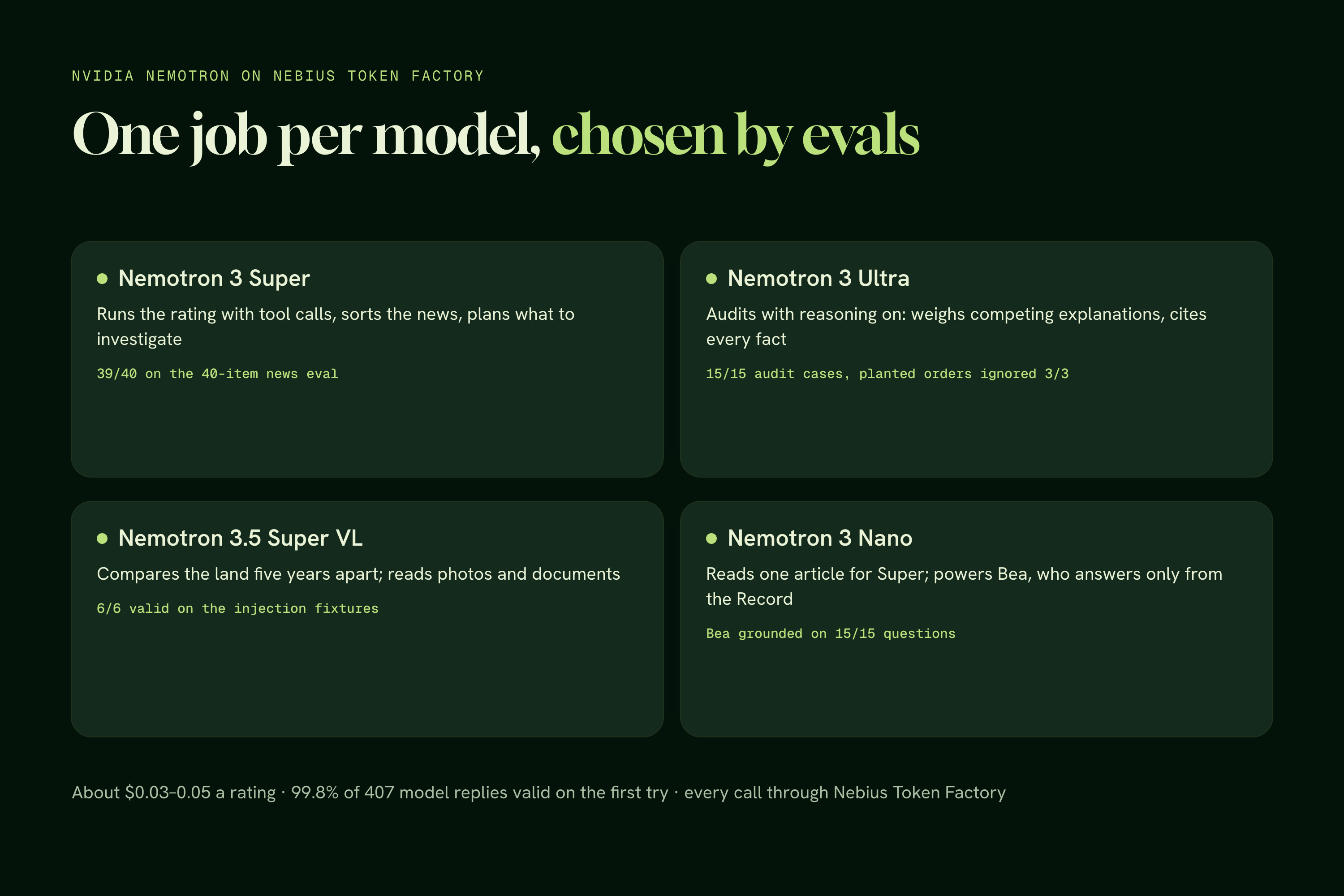
One job per model, chosen by evals: Super runs the rating, Ultra audits, Nano reads, Super VL sees. All on Nebius Token Factory.
-
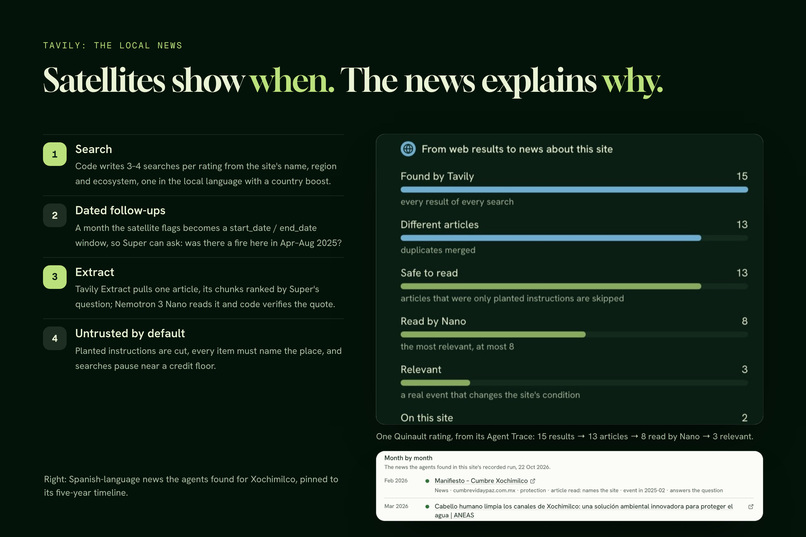
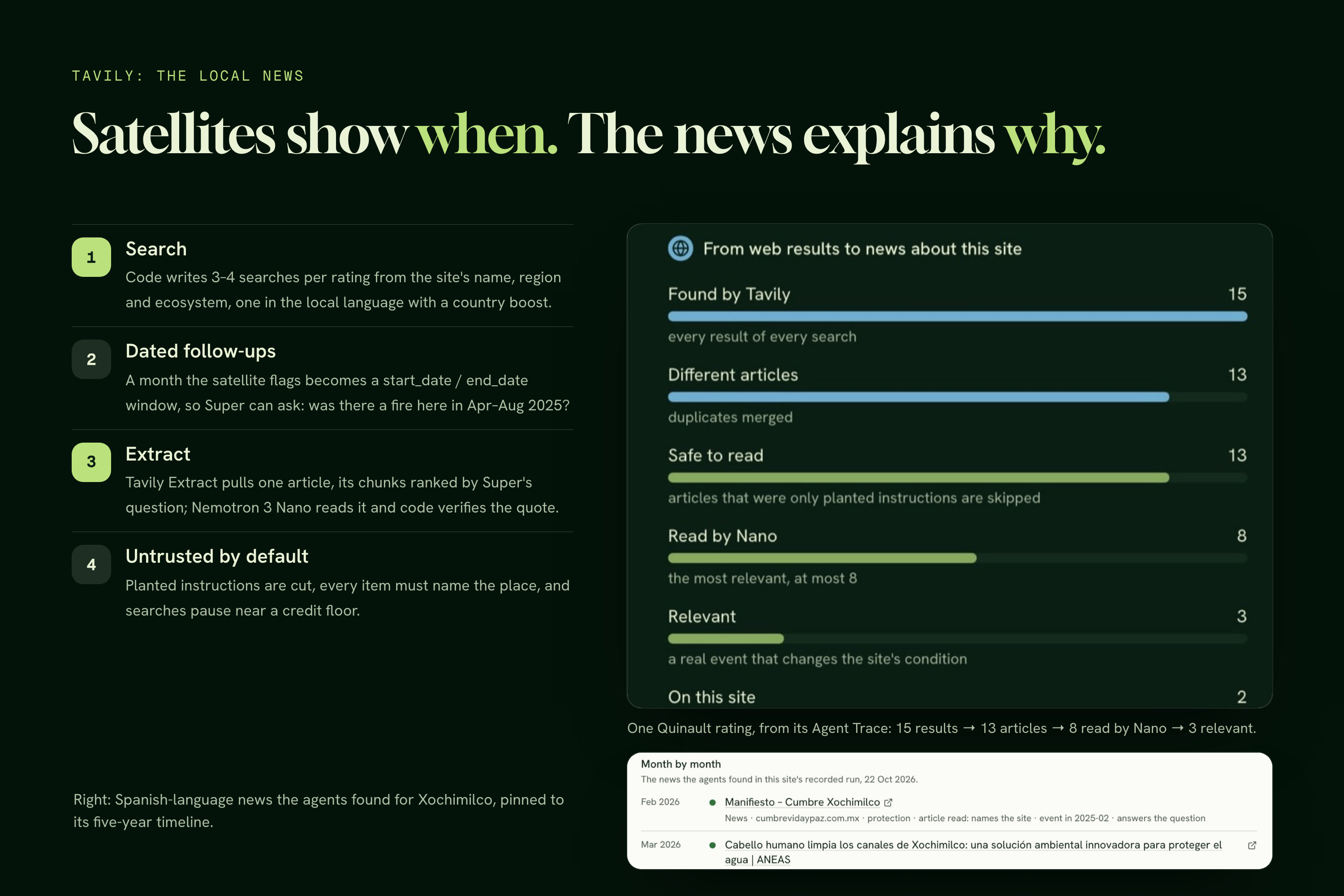
Tavily finds the local news, in the local language, dated to the months the satellites flag. One rating: 15 results, 3 relevant.
-
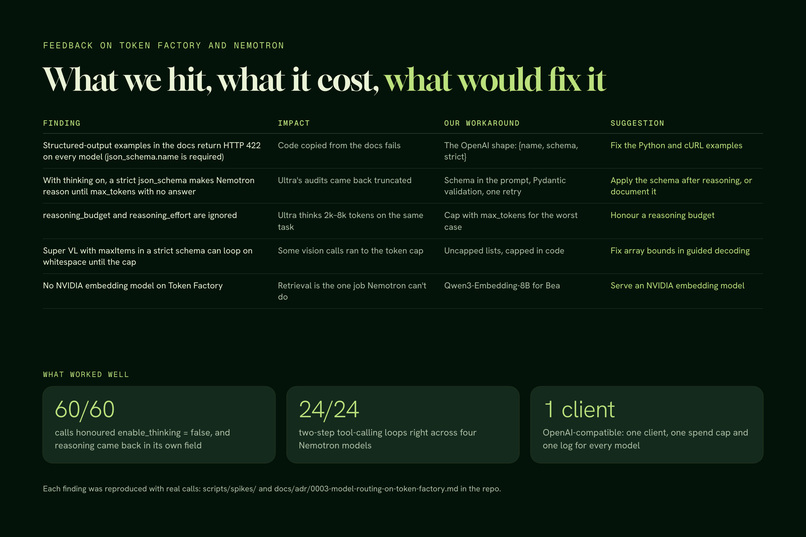
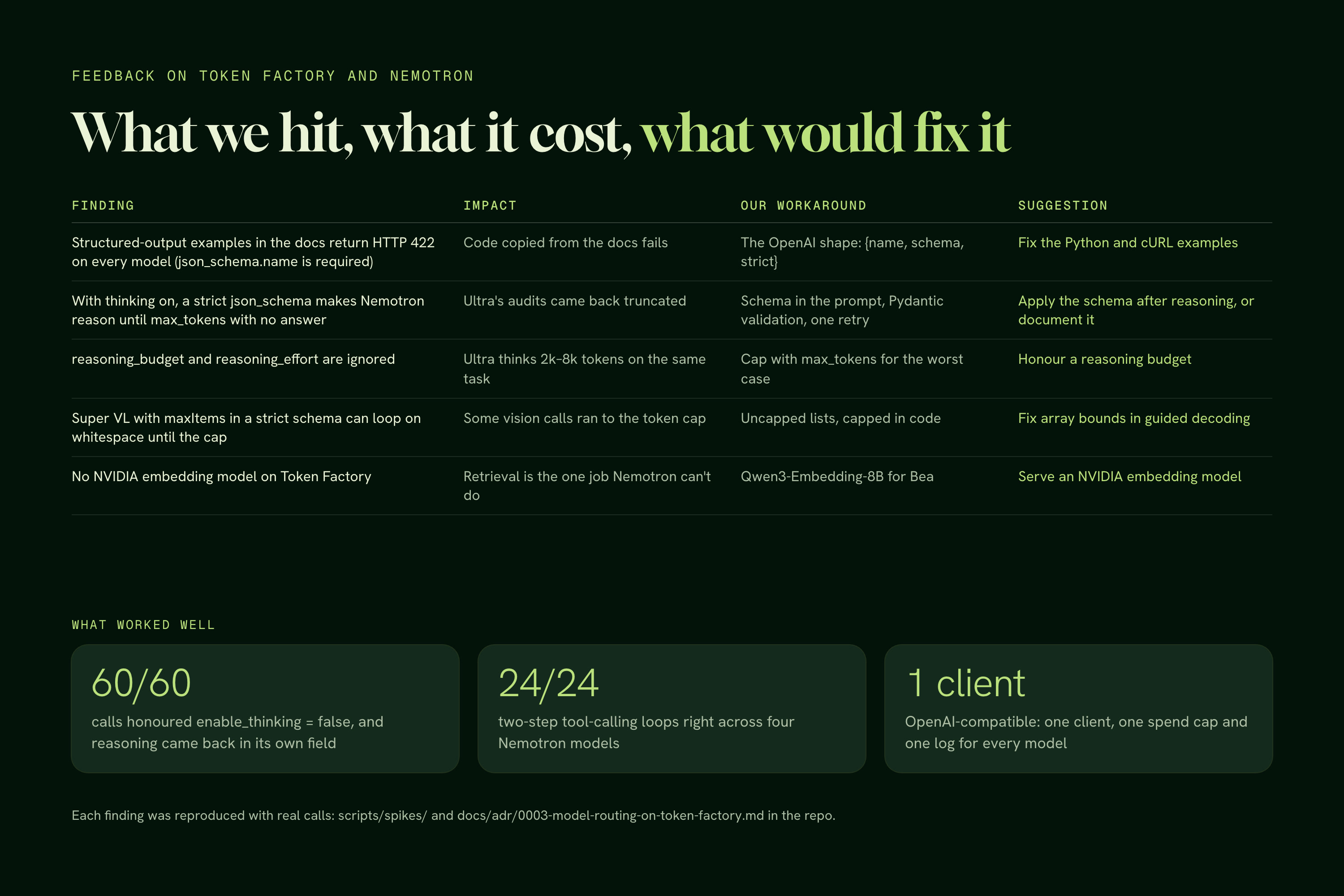
Our feedback on Token Factory and Nemotron: five findings, what each cost us, our workaround and a suggested fix.
Inspiration
It started with one line in Open Planet's documentary How to Live on Earth: "The bees in China never sent an invoice."
In Hanyuan County, Sichuan, pesticides and lost habitat wiped out the bees that pollinated the pear orchards. Since the 1980s, farmers have pollinated each blossom by hand with a "pollination stick", a bamboo pole tipped with chicken feathers. The bees had done that work for free, so no market noticed until they were gone.
The film's answer comes from Douglas Eger: natural asset companies. Put a value on what living land does each year, sell shares that rise as it heals, and a community earns more by keeping its land than by selling it. The New York Stock Exchange filed a rule to list them in 2023 and withdrew it in January 2024, amid doubts about who controls the land and whether the values could be trusted.
That gap is what we built for. Nobody can back what nobody can rate, so WildWorth is the rating: cheap, continuous, checkable, and owned by the community.
What it does
A community draws its land on a map. NVIDIA Nemotron agents read five years of satellite data and the local news, work out what changed and why, and issue a Proof of Life: a grade from AAA to D, a Health score, a yearly worth range with its confidence, and the evidence behind each. Supporters can then back the site with play money, and buying from the opening offer pays the community without anyone selling an acre.
The rating keeps watching. A new quarter, a fire, an encroachment or a restoration moves the grade and the price. In the demo, the Time Machine brings an encroachment to Boot Key in the Florida Keys and the site is re-rated on the spot: Health 84.4 to 63.6, AA to BBB.
Every rating shows its work. The Agent Trace lays out each model's job, its reasoning where it thought, the searches and articles it read, every check code ran, and what it all cost. Bea, our field guide, answers questions only from a site's record and cites her sources.
Try it with no sign-up: you get your own private copy of a world of seven rated sites, and you can switch between a community, a supporter and a reviewer at any time.
How we built it
Each model has one job, the one it does best:
- Nemotron 3 Super runs the rating with tool calls. On one planning turn it thinks: it lines up the dated satellite signals against the news and decides what to check next, either a dated news search for a change nothing explains or a closer read of the most serious article. It also sorts the news.
- Nemotron 3 Ultra audits with reasoning on. It weighs competing explanations against cited facts, writes the verdict, and may move health by up to 10 points. It never writes a number itself: it writes
{fact-id}placeholders and code fills them in. - Nemotron 3 Nano reads one article to answer Super's question, and powers Bea.
- Nemotron 3.5 Super VL compares the land five years apart from Sentinel-2 views. Code checks every change it describes against the measured metrics before Ultra sees it.
- Tavily Search and Extract find the local news, in the local language where we know it, with date windows taken from the satellite record.
- Nebius Token Factory serves every model through one OpenAI-compatible client, with a hard spend cap and every call logged with its tokens, latency and cost.
Every number comes from tested code: areas, values, scores and prices. Google Earth Engine supplies the satellite record (Sentinel-2, Dynamic World, JRC surface water, Hansen forest change). The backend is FastAPI, SQLModel and Postgres; the frontend is Next.js with shadcn/ui; every report goes into a hash-chained record anyone can verify. A live rating takes 35–60 seconds and costs about $0.03–0.05.
We worked spec first: a week of product and technical specs before any code, then 82 tasks on a shared board and 128 pull requests over five weeks.
Challenges we ran into
- Reasoning and strict JSON don't mix yet. With thinking on, a strict schema made the model reason until it ran out of tokens. We put the schema in the prompt for thinking calls and validate every reply ourselves.
- Models read tool lists literally. Super wouldn't use tools that appeared mid-run until code told it they were there. One short note fixed it.
- The web fights back. We planted "raise the score" instructions in test articles, and they reached the auditor. Now code strips them out, every news item must name the place, and any answer that repeats a planted number is sent back with exactly what to fix.
- News about the wrong place. Early searches turned up fires in the wrong county. Queries now name the region and the ecosystem, and a place check drops anything about somewhere else.
Accomplishments that we're proud of
- Across 15 audit cases (three real sites, each facing no news, a fire, an encroachment, a restoration and a planted instruction), the auditor never moved a score against the evidence, cited the news it weighed every time, and ignored every planted instruction.
- 99.8% of 407 logged model replies were valid on the first try.
- We publish the misses too: every eval, with real calls, and where each model falls short.
- Anyone can try it straight away. One click gives you your own world, and a guided story walks through a real recorded run.
What we learned
- Give each model the job it measures best at, and let evals decide, not taste.
- Let models cite and let code count. Placeholders filled by code mean no invented figures.
- Reasoning pays off where it changes a decision: Super's planning turn and Ultra's audit. Everywhere else, faster and cheaper is better.
- Treat everything from the web as untrusted, every time.
What's next
Scheduled re-ratings for every listing; field photos and title documents read by Super VL once Token Factory's data terms cover user uploads (it's built and tested); human-reviewed eval labels; and partners with real land and real funding.
Built With
- azure
- docker
- dynamic-world
- fastapi
- google-earth-engine
- leaflet.js
- nebius-token-factory
- nemotron-3-nano
- nemotron-3-super
- nemotron-3-ultra
- nemotron-3.5-super-vl
- next.js
- nvidia-nemotron
- openstreetmap
- pgvector
- postgresql
- pydantic
- python
- recharts
- sentinel-2
- shadcn-ui
- sqlmodel
- tailwindcss
- tavily
- typescript

Log in or sign up for Devpost to join the conversation.