-
-
home
-
level
-
upload
-
descriptions
-
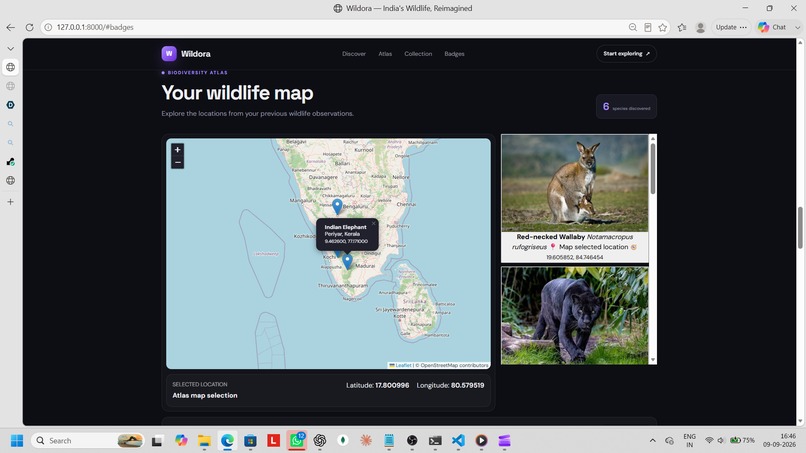
map
-
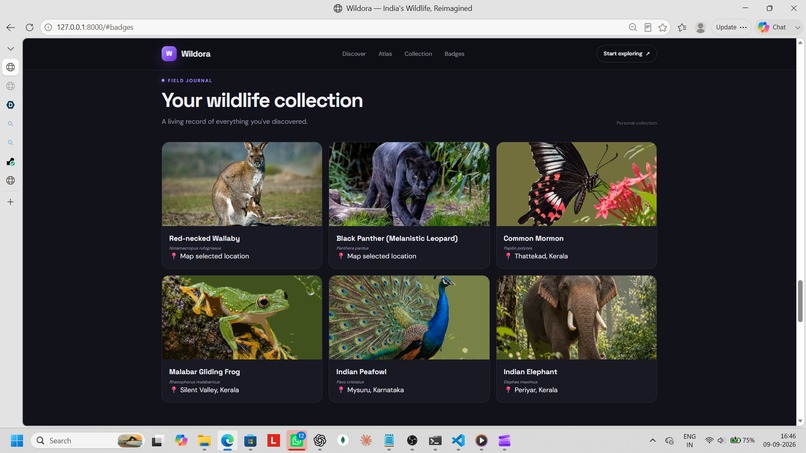
collections
-
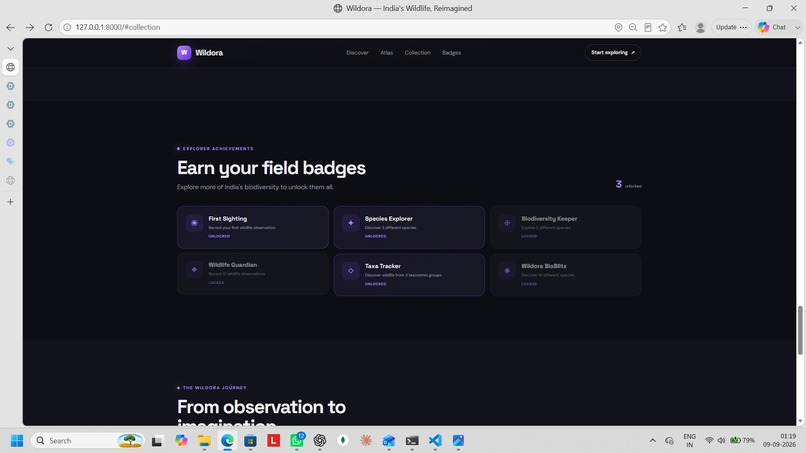
badges
-
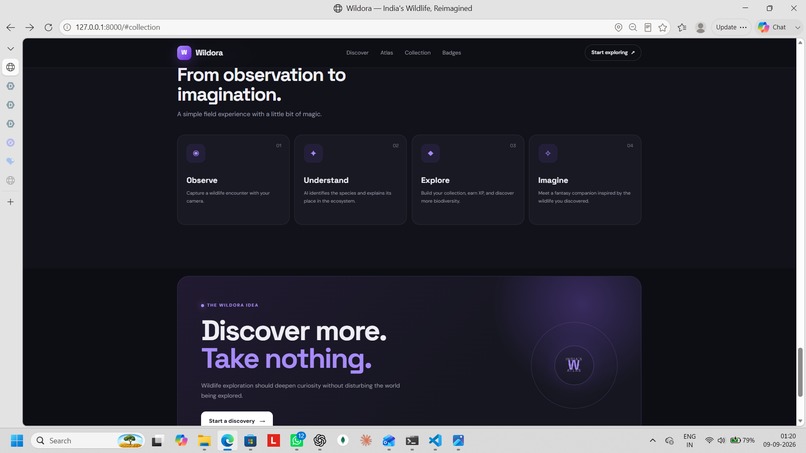
informations
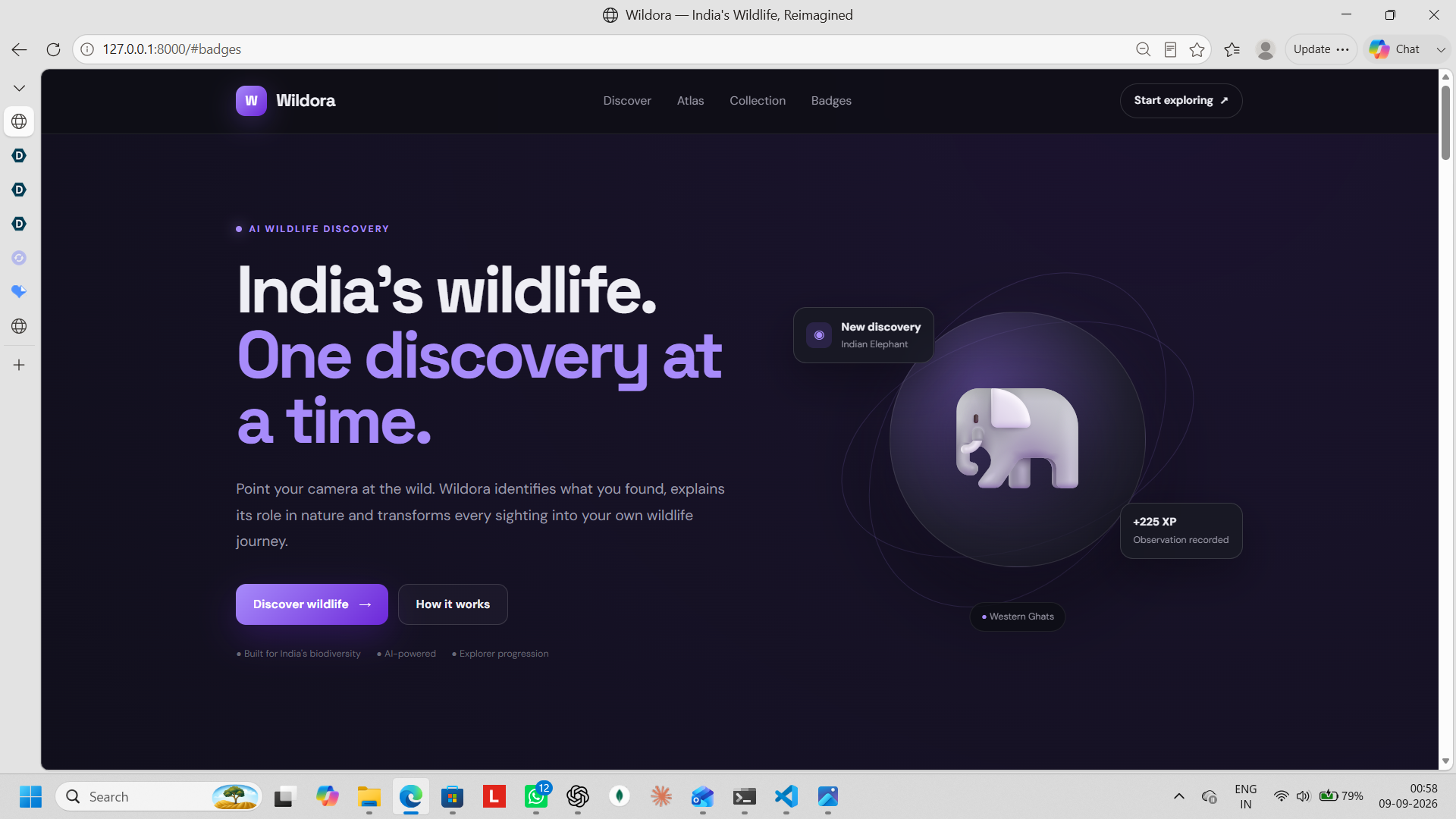
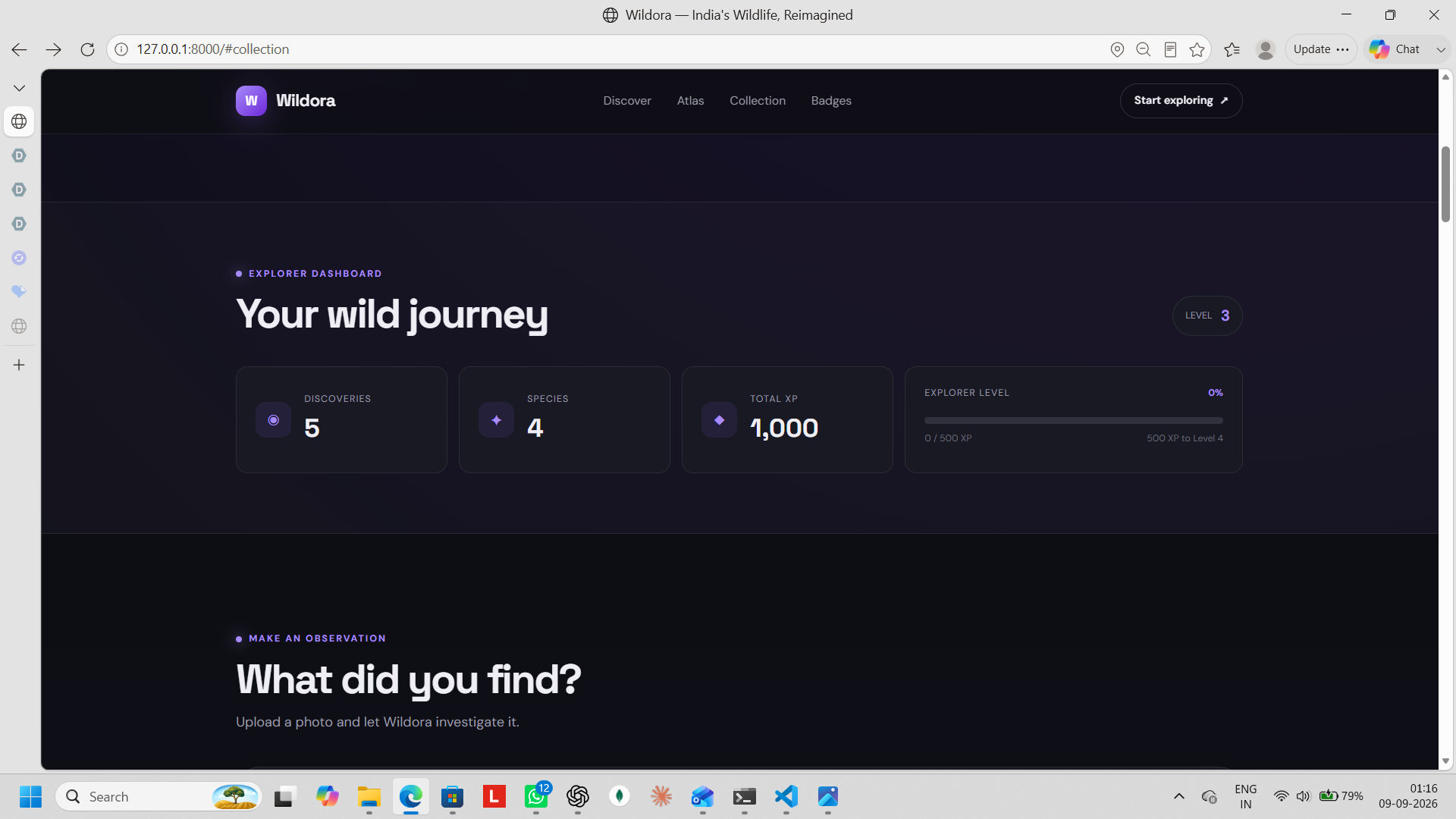
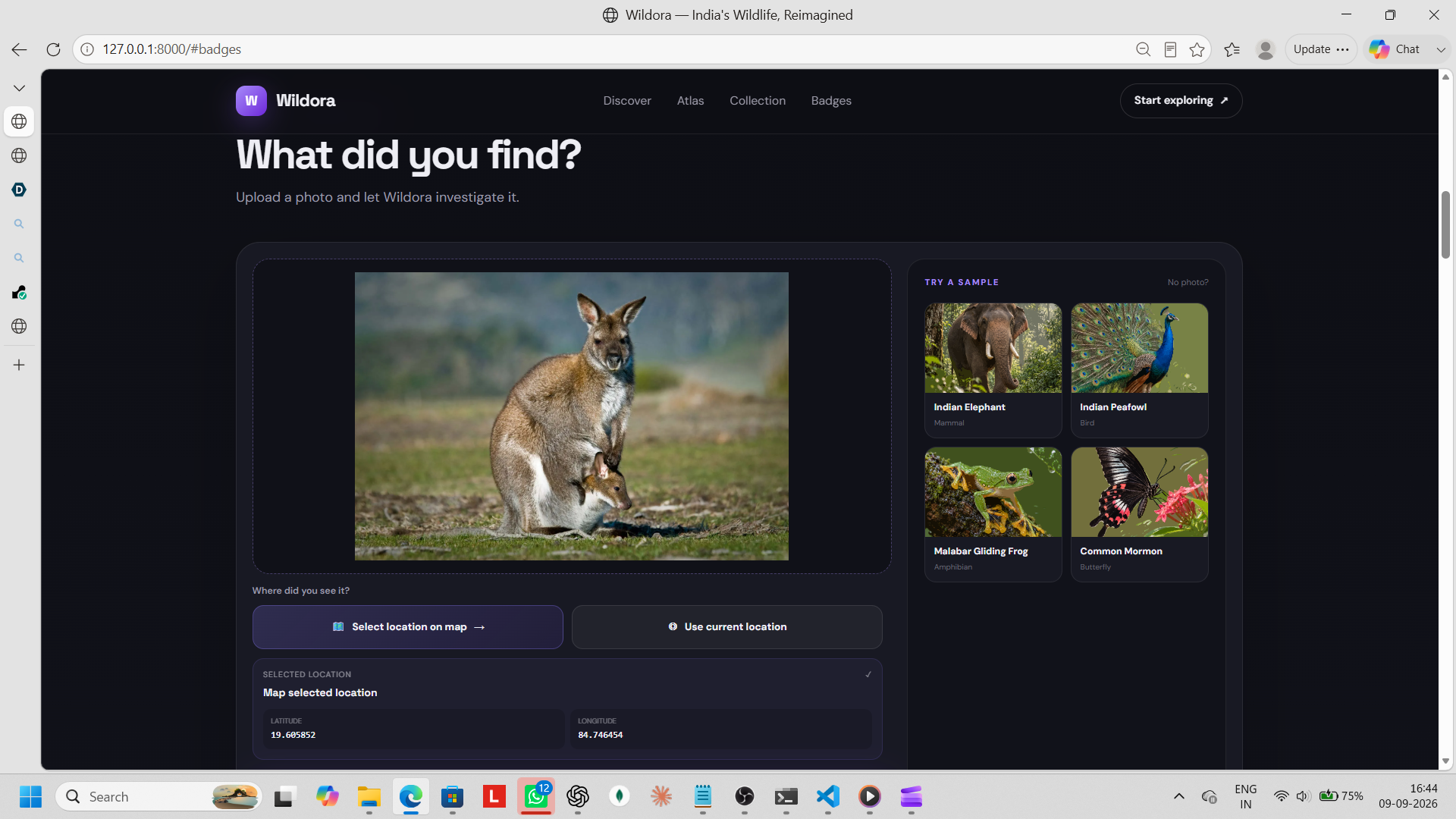
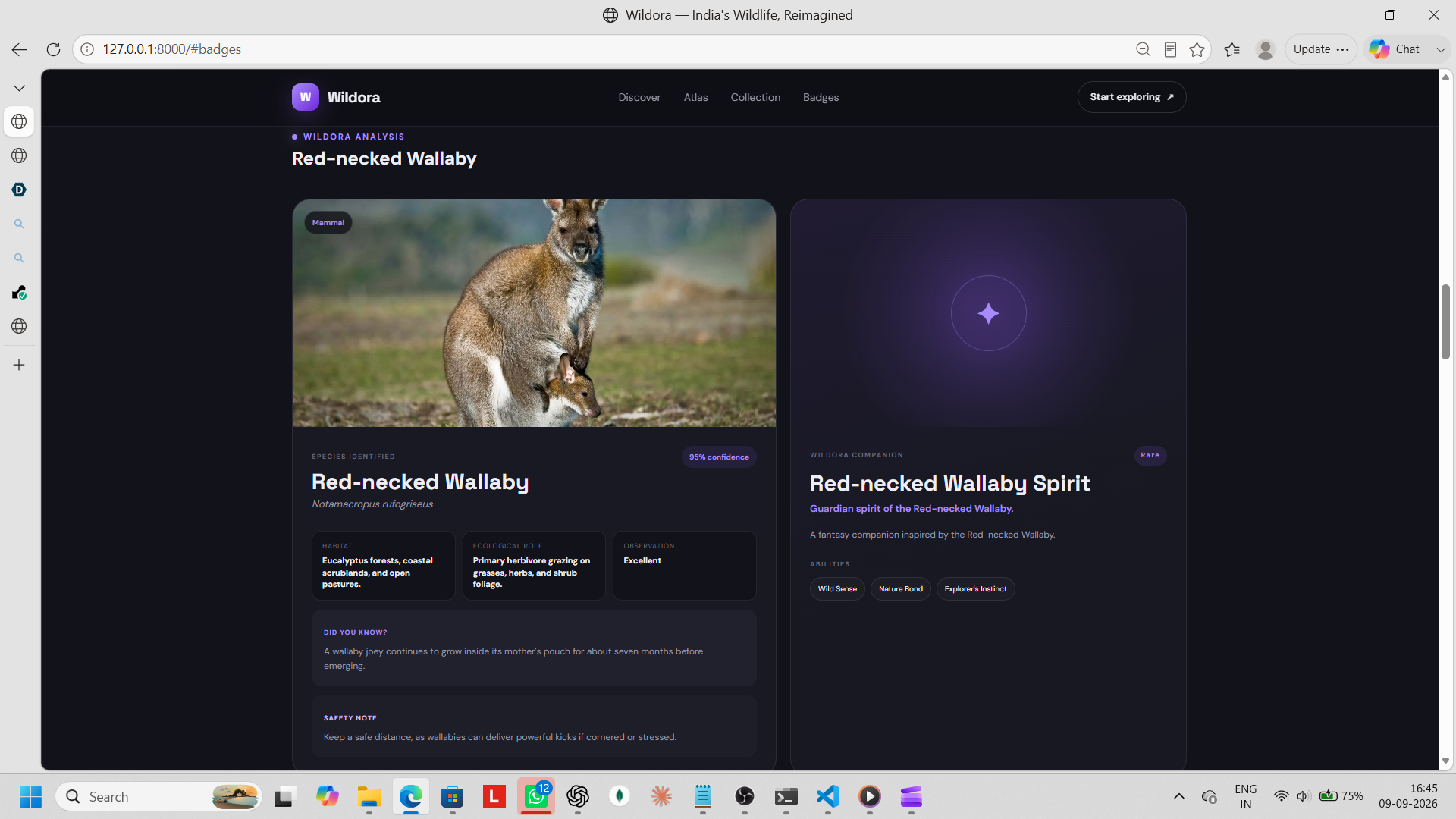
Inspiration
Every day, people encounter wildlife without knowing what they are looking at. At the same time, games have made creature discovery, collecting, and progression incredibly engaging.
We asked ourselves:
What if the excitement of discovering fictional creatures could encourage people to notice and learn about real wildlife?
That idea became Wildora.
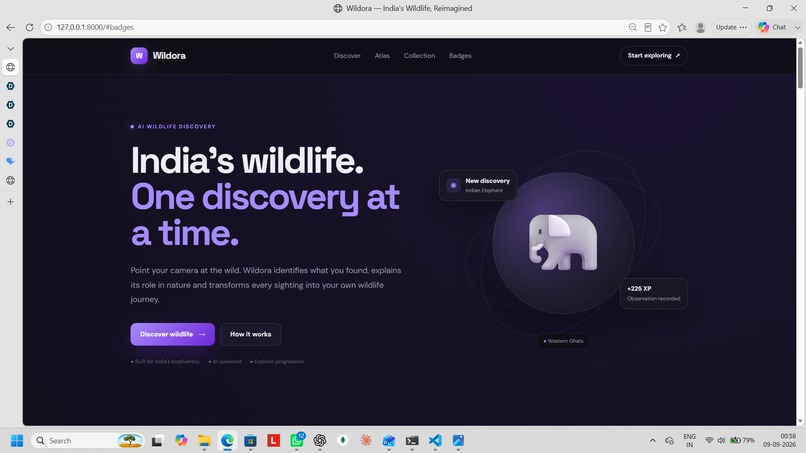
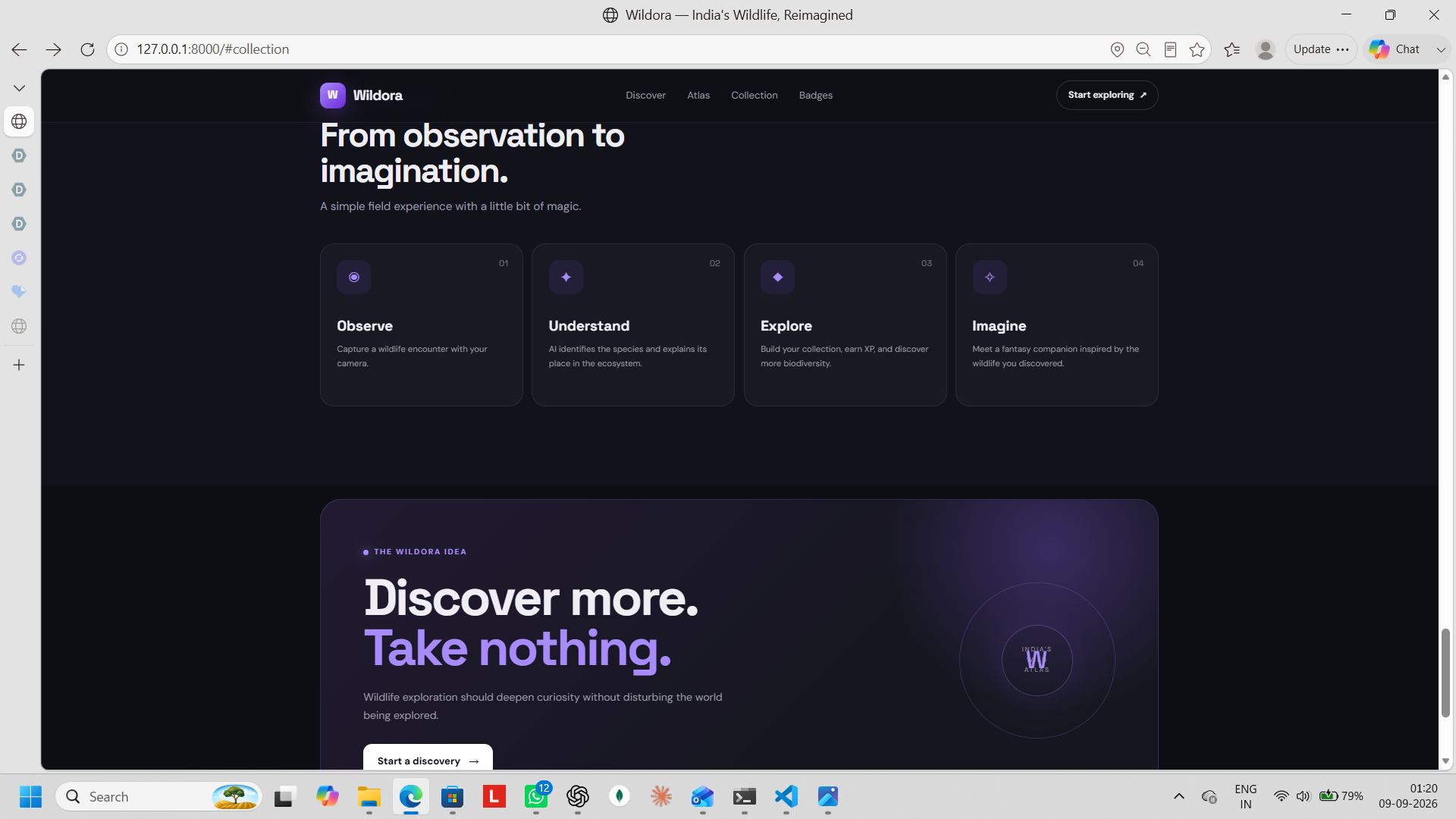
Instead of catching creatures, Wildora encourages users to observe them. A real wildlife sighting becomes the starting point for an interactive journey: identify the species, learn about its role in nature, unlock a fantasy companion, earn XP, and contribute to a biodiversity atlas.
Our goal was to make learning about biodiversity feel less like reading a textbook and more like discovering something new.
What it does
Wildora is an AI-powered wildlife discovery and gamification platform focused on biodiversity.
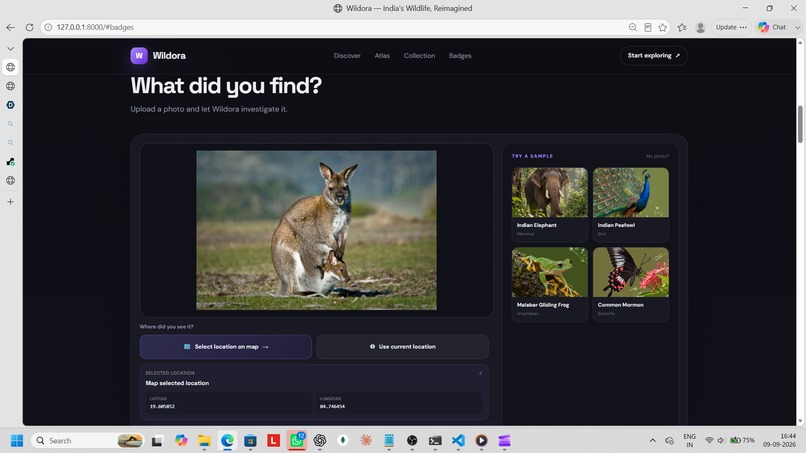
Users can upload a wildlife photograph and Wildora uses Gemini's multimodal capabilities to analyze the image and identify the most likely species.
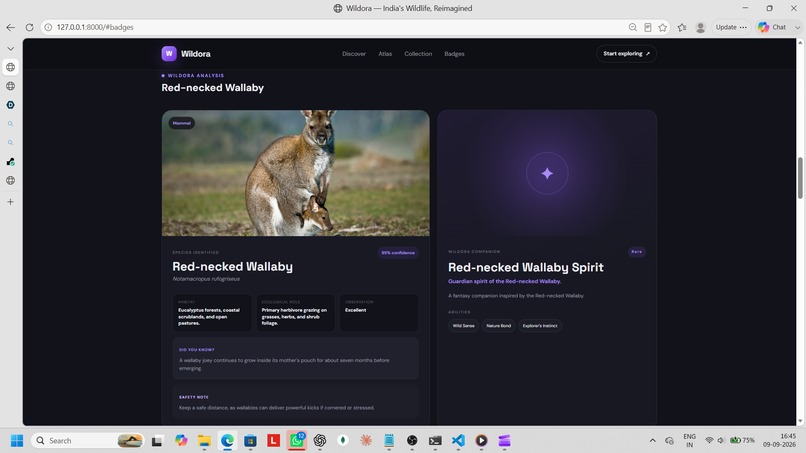
For each observation, Wildora provides:
- Common and scientific species names
- Taxonomic group
- AI confidence level
- Observation quality
- Habitat information
- Conservation context
- Interesting facts
- Responsible wildlife observation guidance
The experience then becomes more interactive.
Based on the identified species, Wildora creates a unique fantasy wildlife companion inspired by the animal's characteristics, ecology, and appearance.
Users can then:
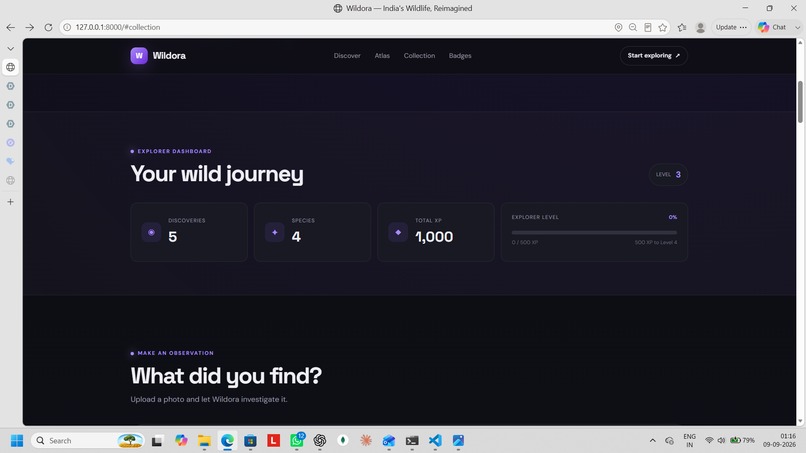
- Earn XP from wildlife observations
- Level up their Field Explorer profile
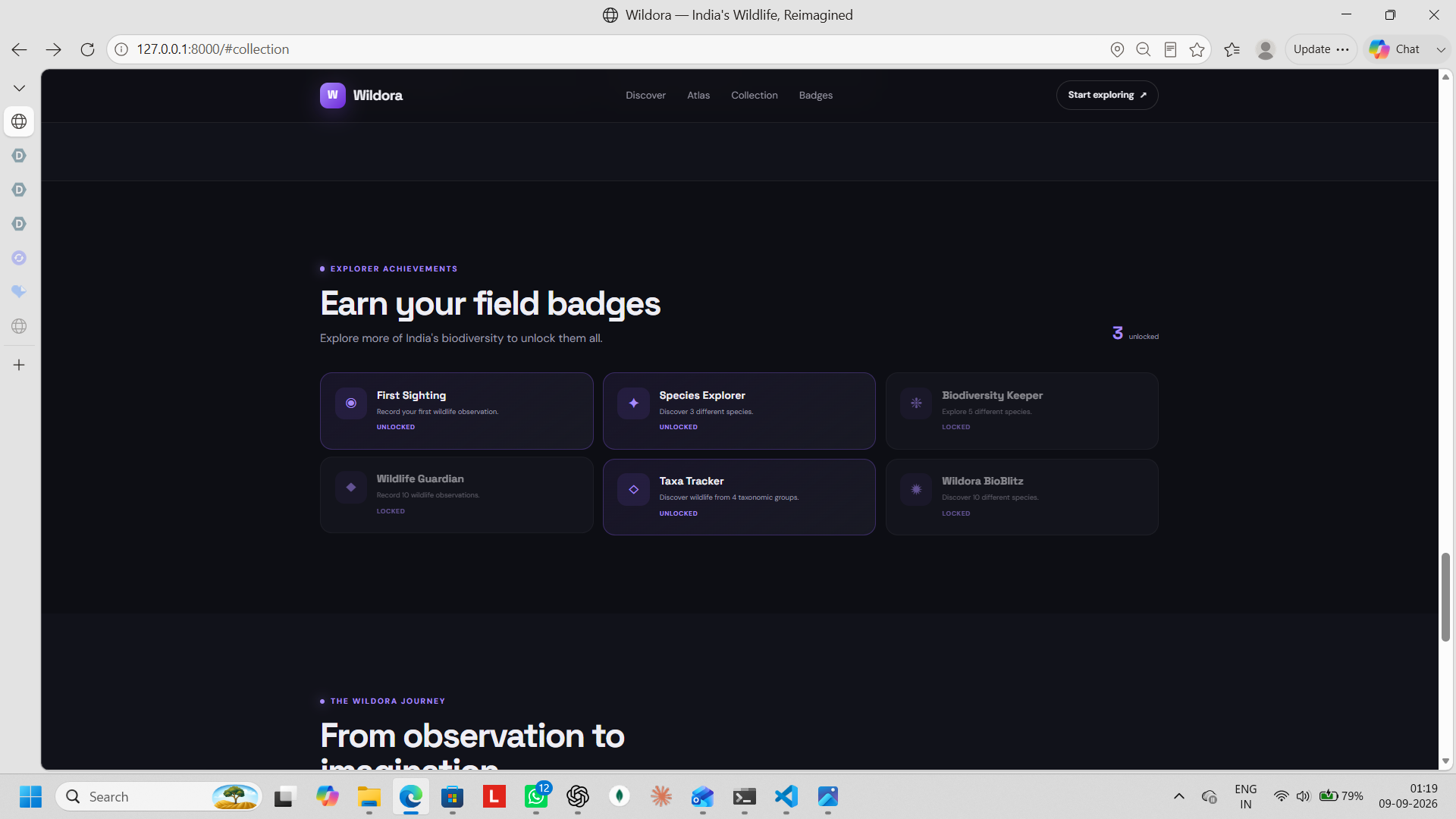
- Unlock achievements and badges
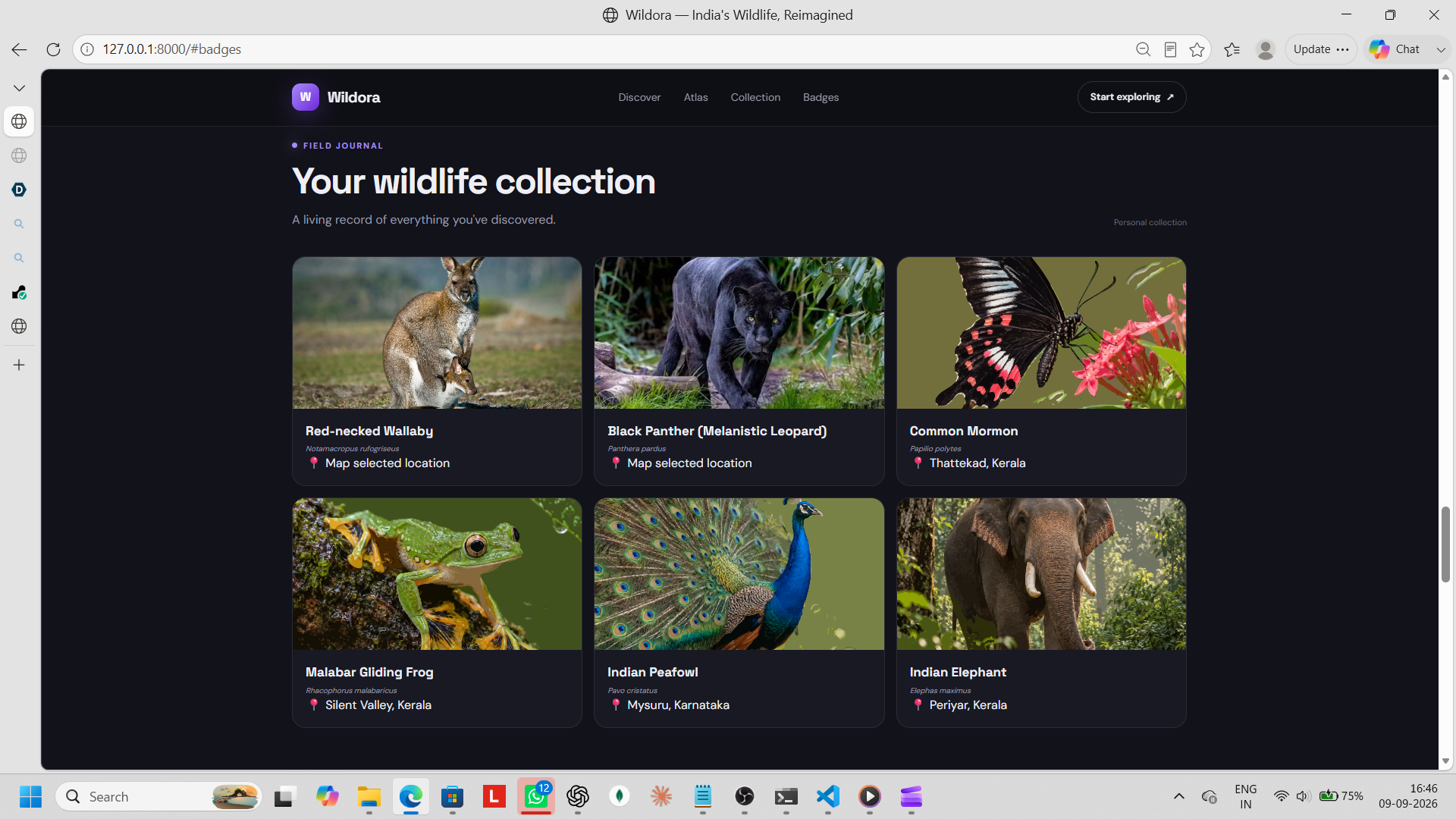
- Build a personal wildlife collection
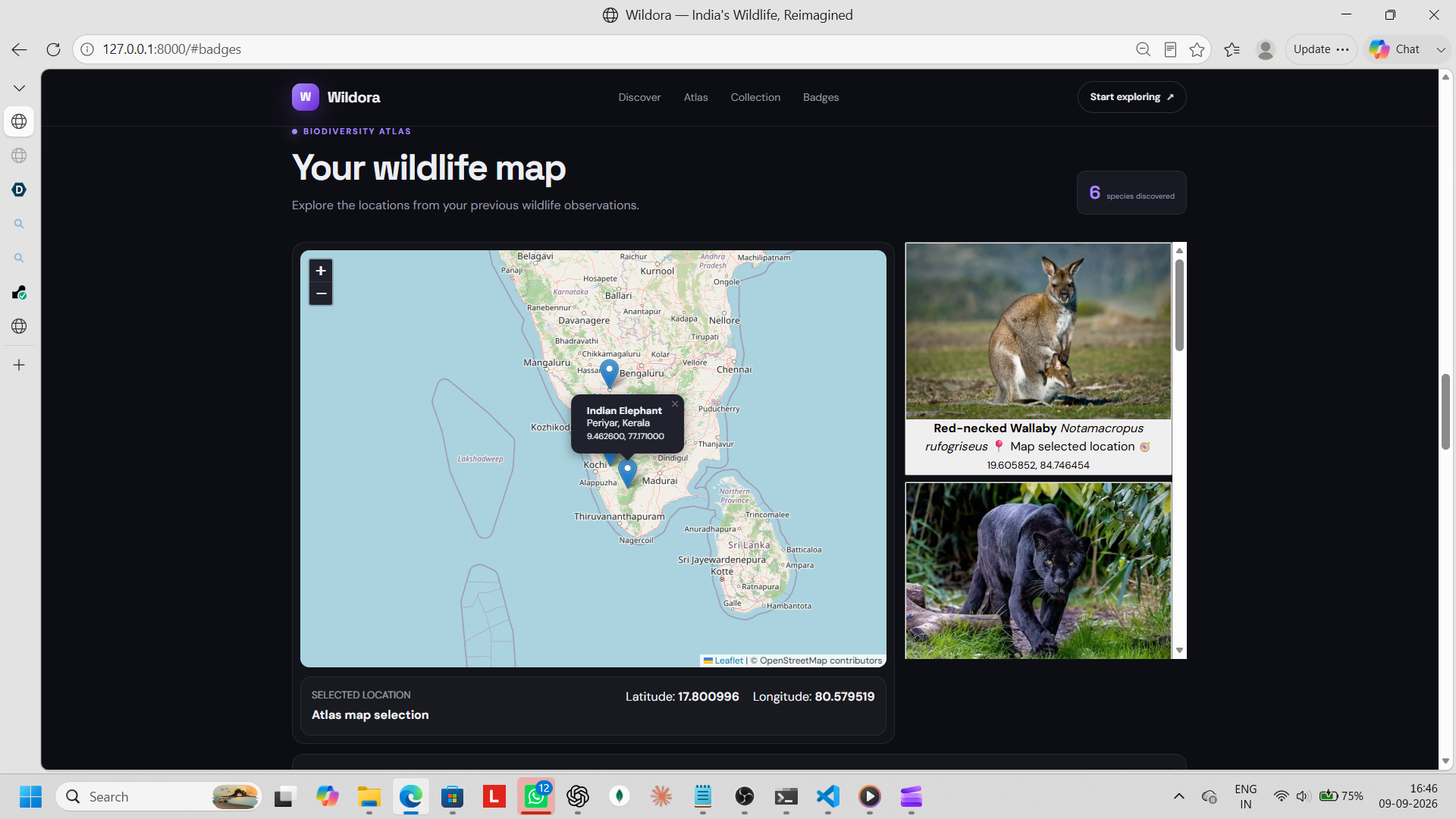
- Explore observations through a biodiversity atlas
- Record optional observation locations
- Discover connections between wildlife and their ecosystems
The core idea is simple:
Observe wildlife → Identify → Learn → Earn → Explore → Conserve
The fantasy companion is the reward, but the real-world wildlife observation is the value.
How we built it
We built Wildora as a full-stack web application with a FastAPI backend and a lightweight HTML, CSS, and JavaScript frontend.
The main architecture is:
Photo Upload → AI Vision → Species Analysis → Structured Data → Companion Creation → XP & Progression → Biodiversity Atlas
AI
Gemini is at the center of the wildlife analysis workflow.
We use multimodal AI to analyze uploaded image data and return structured wildlife information including species identification, confidence, taxonomy, habitat, conservation context, and observation guidance.
The application validates and normalizes the AI response before using it in the rest of the application.
We also use AI to create original fantasy companion concepts inspired by the identified species.
Backend
The backend is built with:
- Python
- FastAPI
- SQLite
- Google Gemini API
FastAPI handles image uploads, wildlife analysis requests, observations, progression, and API communication with the frontend.
SQLite stores observations and user progression data locally, keeping the prototype lightweight and easy to run.
Frontend
The frontend uses:
- HTML5
- CSS3
- JavaScript
- Leaflet
- OpenStreetMap
We designed the interface around a modern dark, glass-inspired visual style with interactive cards, progress indicators, collection views, achievement badges, and a biodiversity map.
Demo reliability
We also created a deterministic demo mode so the core experience can be demonstrated quickly using predefined wildlife examples without depending entirely on live AI responses.
This gives us a reliable way to demonstrate the complete product flow during presentations while still supporting real wildlife image analysis when Gemini is available.
Challenges we ran into
One of our biggest challenges was making AI-powered wildlife identification reliable enough for a real user experience.
Wildlife photographs can be blurry, partially visible, poorly lit, or contain visually similar species. An AI model can therefore be confident while still being wrong.
We addressed this by:
- Asking the model to analyze the actual image rather than relying on filenames or assumptions
- Using confidence scores
- Avoiding claims of absolute certainty
- Providing observation-quality information
- Adding responsible wildlife observation guidance
- Normalizing AI responses before displaying them
Another challenge was separating our deterministic demo experience from real AI analysis. We needed sample wildlife buttons to behave predictably while ensuring that a normal uploaded photograph was actually sent to the vision model.
We also had to handle real-world API issues such as temporary model unavailability and design the application so that the user experience remained understandable when an AI request could not be completed.
Finally, we wanted the gamification to encourage observation rather than interference with wildlife. The system therefore emphasizes photographing and learning from animals rather than approaching, touching, feeding, or disturbing them.
Accomplishments that we're proud of
We are proud that Wildora evolved beyond a simple wildlife image classifier into a complete interactive experience.
Our major accomplishments include:
- Real-time AI wildlife identification
- Structured wildlife information generated from photographs
- Species confidence and observation-quality information
- Educational and conservation context
- Responsible wildlife observation guidance
- Original fantasy companion generation
- XP and Field Level progression
- Achievement and badge system
- Personal wildlife collection
- Biodiversity atlas with map-based observations
- Optional location-based observations
- Deterministic demo mode for reliable presentations
- A complete end-to-end user experience connecting AI, education, gamification, and biodiversity
Most importantly, we created a system where the AI is not simply answering a question.
It turns a real-world observation into an experience that encourages the user to notice, understand, and remember the wildlife around them.
What we learned
We learned that building an AI application is not just about connecting an API to a user interface.
The difficult part is designing what happens around the AI.
Wildlife identification taught us the importance of handling uncertainty instead of presenting every AI prediction as a fact. We learned to use confidence, validation, structured outputs, and responsible guidance to make the experience more trustworthy.
We also learned how different technologies can work together to create a complete product:
Computer vision + AI + backend APIs + databases + gamification + mapping + user experience
Most importantly, we learned that AI can be used not only to automate tasks, but also to create motivation.
Wildora uses AI to turn perception into curiosity:
See something → understand it → become curious → keep exploring.
What's next for Wildora
We want Wildora to grow from a prototype into a larger biodiversity discovery platform.
Our future plans include:
- Community wildlife observations
- Expert and naturalist verification
- Improved species identification
- Support for more Indian species
- Better handling of visually similar species
- Geoprivacy protection for sensitive wildlife locations
- School and college biodiversity challenges
- Community BioBlitz events
- Wildlife conservation challenges
- Offline observation logging
- A dedicated mobile application
- Richer biodiversity analytics
- Integration with conservation and biodiversity datasets
Our long-term vision is to create a platform where discovering wildlife becomes an ongoing adventure.
The fantasy world is Wildora.
The wildlife is real.
Built With
- css3
- fastapi
- gemini-3.1-flash-image
- gemini-3.6-flash
- gemini-api
- html5
- javascript
- leaflet.js
- openstreetmap
- python
- sqlite


Log in or sign up for Devpost to join the conversation.