-
-
Portfolio

Inspiration
With the recent South African flooding and the snowstorm seen in Texas last winter, global warming and climate changes have become much closer than we've expected. Never before have we seen this many extinct animals or such a large fluctuation of weather within a single location. 41% of all CO2 emissions have been from transportation from personal vehicles to public transportation. Many competitor apps focus on aspects such as food consumption or water usage, but we decided to stick with only transportation because that is the large portion we wanted to tackle and reduce. We hope to raise awareness of how our main mode of transportation by car causes the most carbon emissions out of all transportation options and allow users to actively make more sustainable choices.
What it does
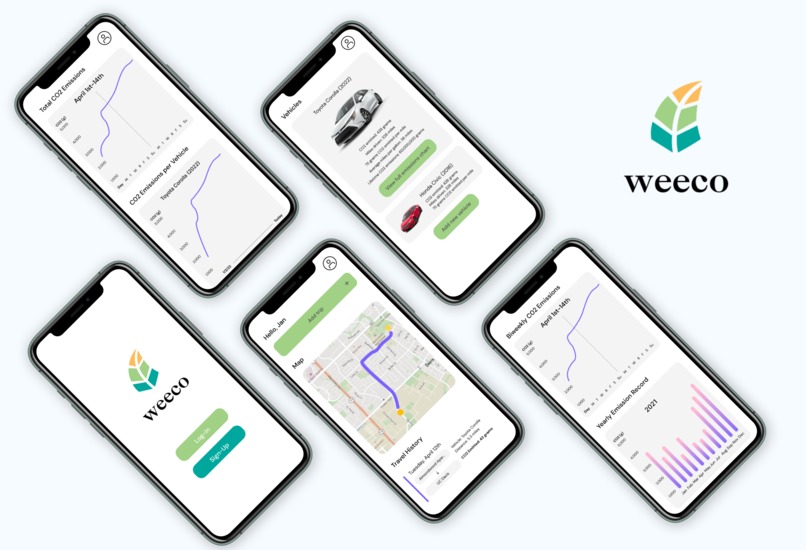
At WEECO, our goal is to raise awareness of the carbon emission that is a byproduct of fossil fuels transportation methods. WEECO keeps track of carbon emissions based on the mileage and car you used (hybrid, gas, electric) and evaluates your weekly/monthly rates compared to the average threshold set by our database, which changes based on seasons, holidays, and gas prices. While keeping track of the number of emissions saved, we want to use our app to reward users for accomplishing our monthly goal of limiting emissions by giving them an incentive.
We aim to partner with eco-friendly businesses and collaborate on rewards for users if they stay under a carbon emission threshold. Tracking the user’s carbon footprint and having a reward system, allows us to incentivize lower carbon emissions while promoting eco-friendly businesses that are not as well known or available to the public.
How we built it
First, we made sketches by hand to create the basic screens of the low fidelity wireframe. Then we created a full prototype of the low fidelity wireframe on Figma and used components to speed up the process. We conducted user testing on a few individuals with our low fidelity prototype and used the feedback we got for our high fidelity wireframes. For our high fidelity wireframes, we first created a logo using Adobe Illustrator and curated a color palette. Then, we implemented the elements and added colors and images where they were needed. After we completed the UI, we made some finishing tweaks to the prototyping and finished the product.
Challenges we ran into
One of the main challenges we found when starting the project and coming up with an idea but having everyone come in with different takes on it. With each of our members being indifferent majors/sectors from marketing to design there were many conflicts that arose when trying to find an idea that worked for all of us. Members in marketing want to focus on the competitors and incentives that would promote the app for future usage, as well as a small focus on reasons why a user might not want to use the app. Design members focused more on the user interface, and design system and had particular trouble with the logo design as we wanted it to be abstract but direct at the same time.
Another challenge was the code development of our app. Due to unfamiliarity with mobile development and technologies around it, we learned a lot about the Swift programming language. However, we
After making a prototype of our app, we walked around testing the app and seeing what users found to be confusing or unclear.
Accomplishments that we're proud of
We’re proud of presenting a high-fidelity prototype through Figma after in-depth discussions about the app features and user testing. We’re also proud of the logo and the fonts because we had a lot of trouble thinking of something to accurately represent our app. We are also proud that we were able to communicate efficiently and keep to our schedule.
What we learned
While we had an idea of how much carbon driving emits, we were able to learn a lot from the research we did on how cars leave the highest carbon footprint out of all transportation options. We also learned a lot about how to ideate by thinking of the big picture as well as how to collaborate and compromise as a team. At the beginning of the hackathon, we came up with many ideas but many were unrealistic or too general. We learned how to think realistically and come up with a schedule to make sure everyone would be able to get their parts done efficiently.
What's next for Weeco
We will continue user testing and implement more iterations following feedback. Additionally, while we were unable to fulfill a working code version of WEECO, the next stage would be to continue development in Swift for a viable mobile app. After completing development, we would pitch this idea to local eco-friendly businesses to partner with them in raising awareness about our carbon footprints.
Built With
- adobe-illustrator
- figma
- procreate
- swift

Log in or sign up for Devpost to join the conversation.