-
-
-

Travel Notes
-
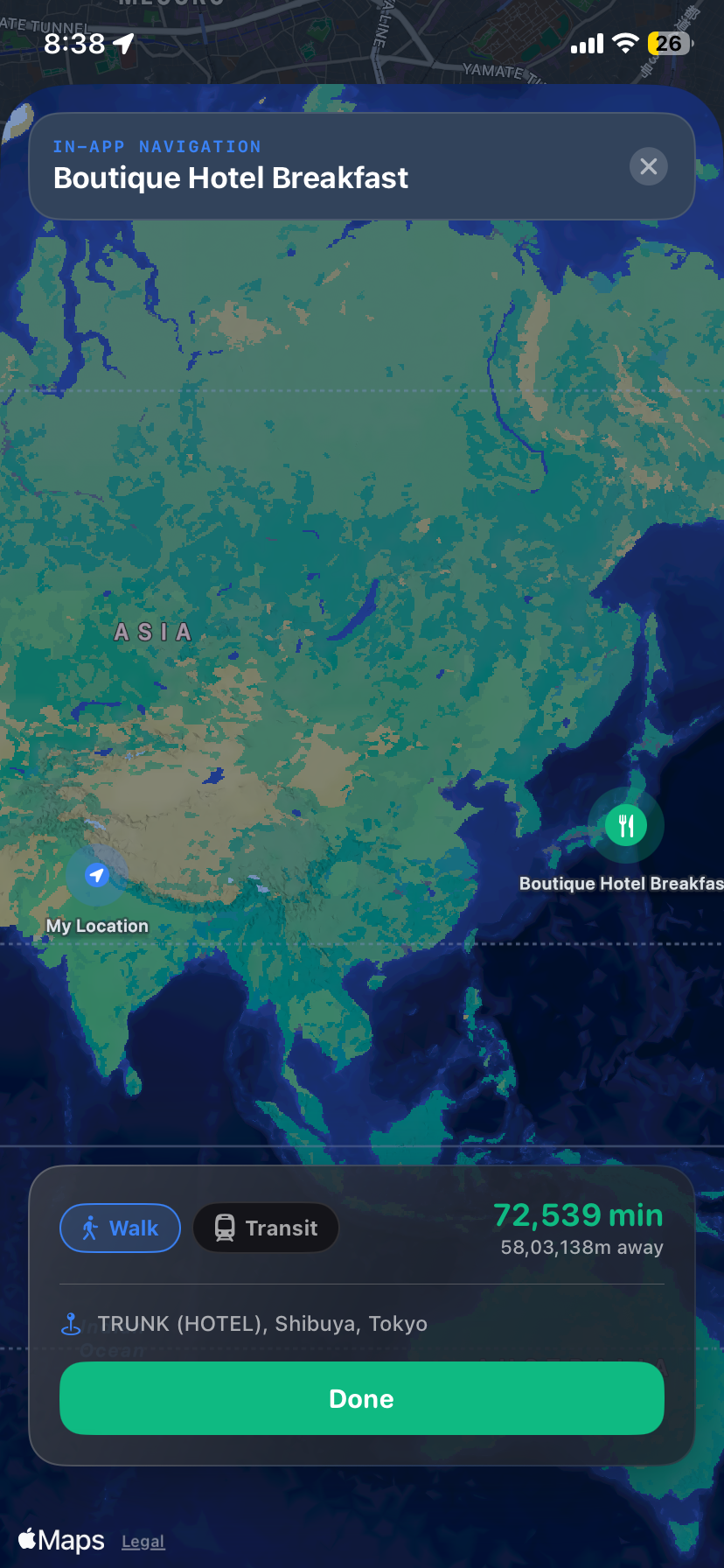
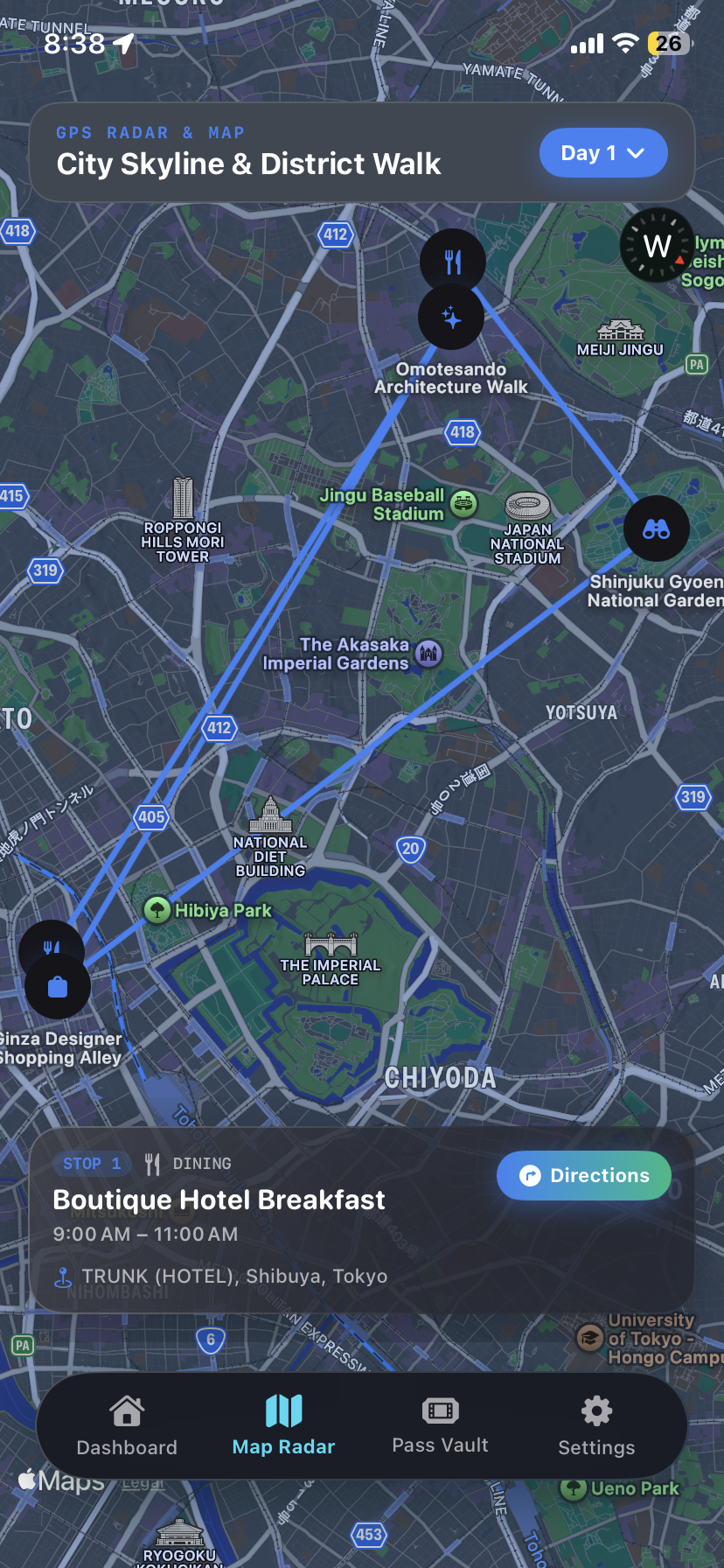
DIRECTION TO EACH LOCATION ACCORDING TO PLAN
-
-
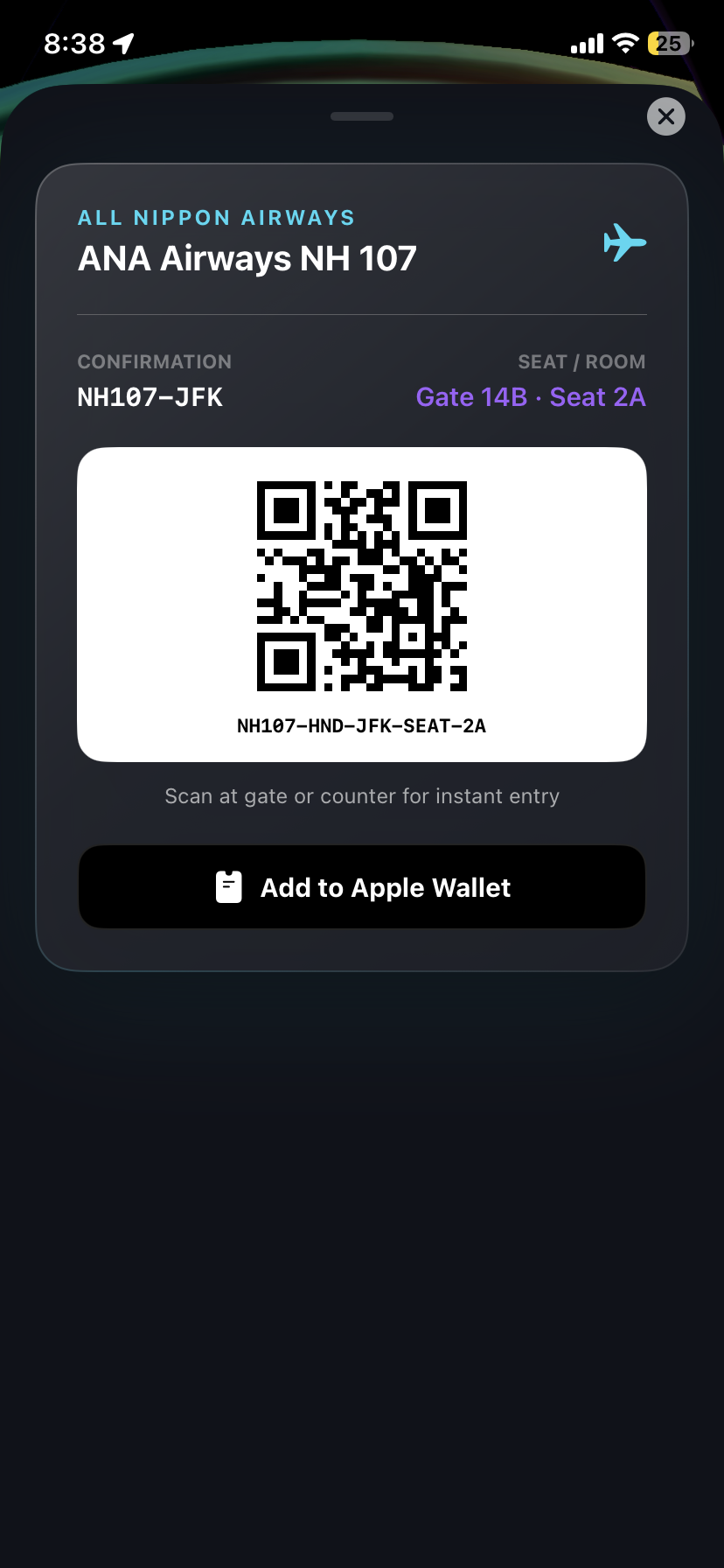
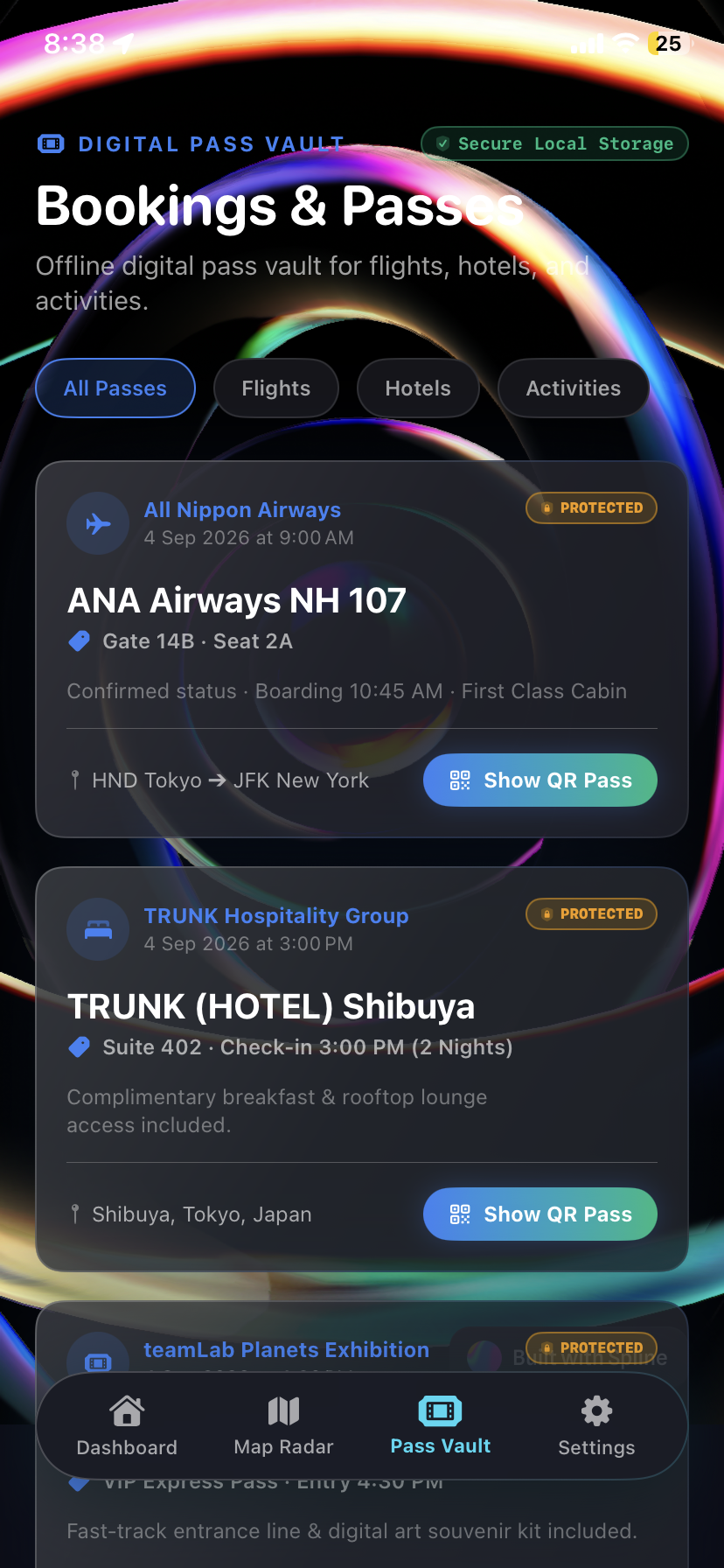
PASSES
-
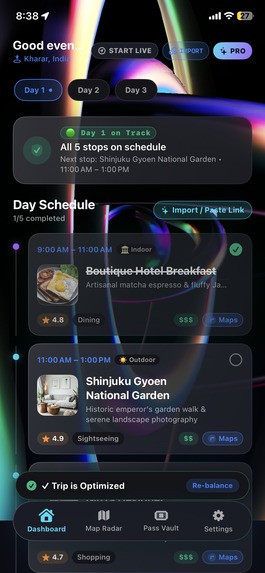
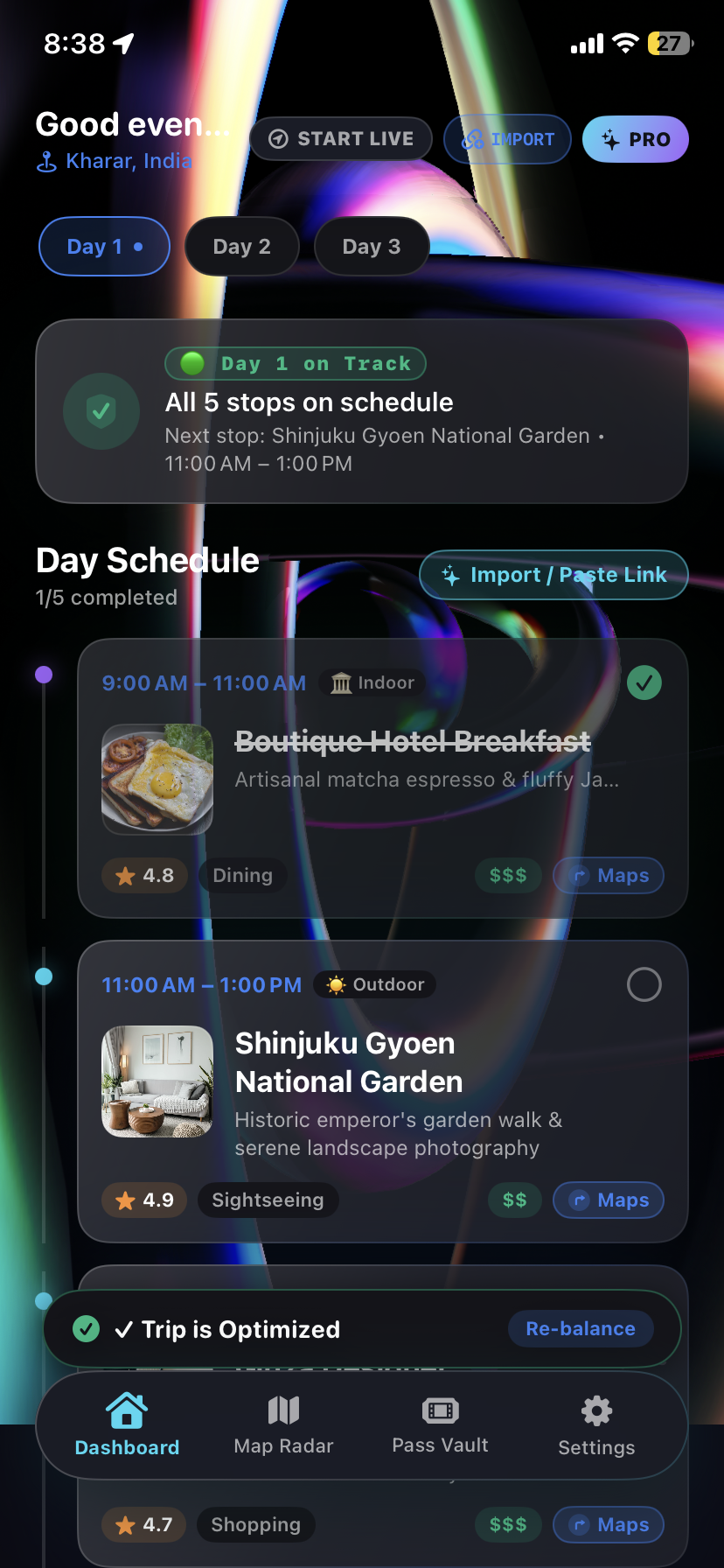
HOME PAGE
-
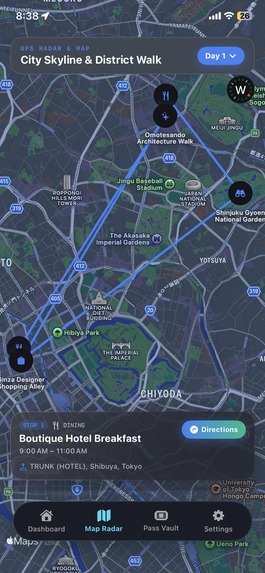
MAPS
-



Inspiration
Most consumer travel applications are built on an unrealistic premise: permanent, high-bandwidth cellular connectivity.
When travel disruptions strike—canceled underground subway connections, delayed airport tarmac transfers, or sudden rainstorms—they invariably happen where roaming and cellular signals fail completely. Traditional apps present an endless loading spinner because their rerouting engines are tethered to remote servers.
I built WayPoint as a solo developer to flip this architecture: turning the device itself into the autonomous, single source of operational truth.
What It Does
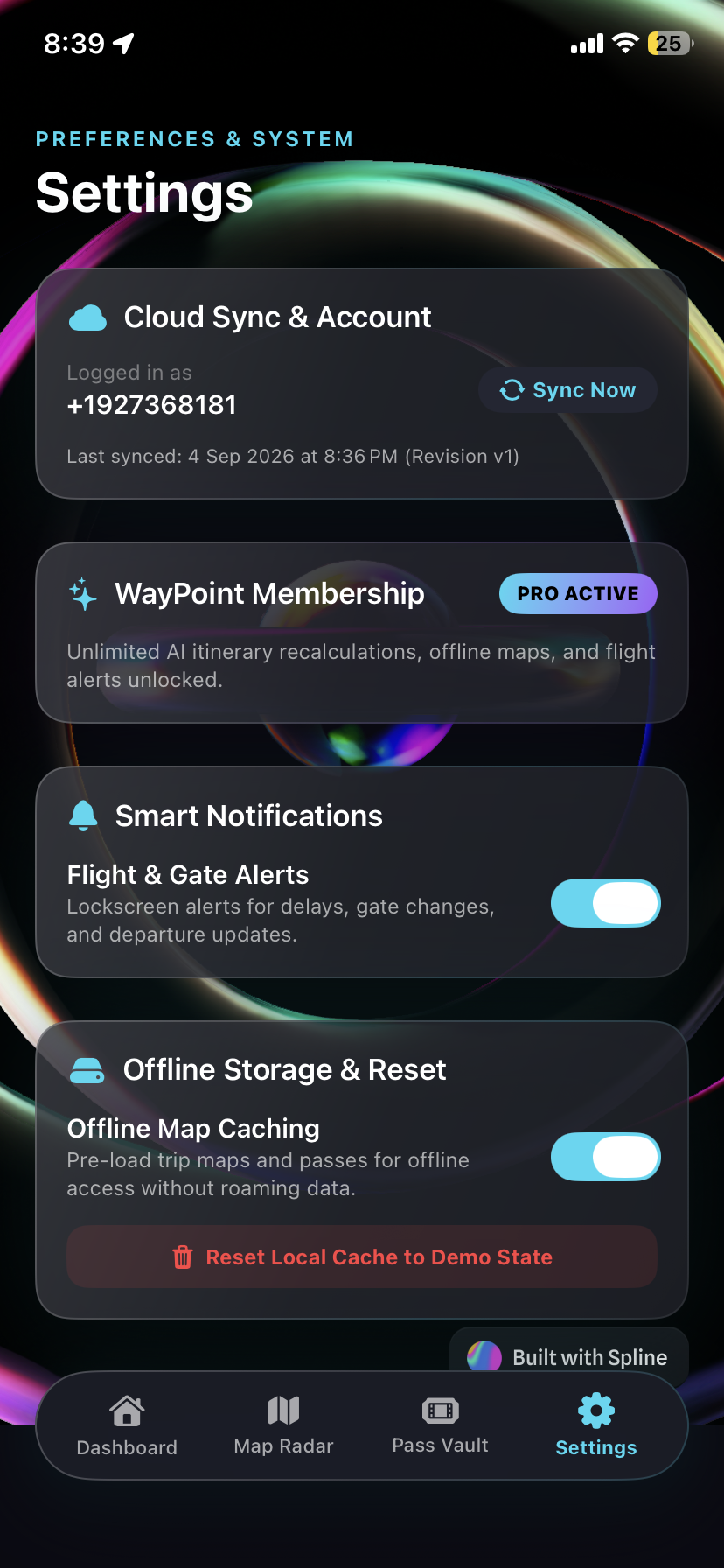
WayPoint is an edge-first iOS travel co-pilot engineered to function continuously with zero bytes of cellular data:
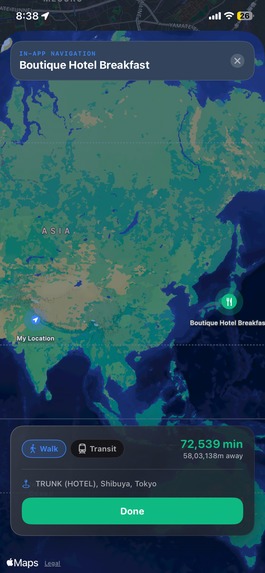
- ~260ms On-Device Panic Pivot: When bad weather or transit cancelations occur, WayPoint calculates alternative topological routing directly on Apple Silicon in sub-second time.
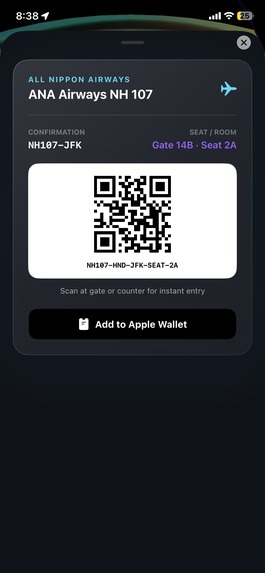
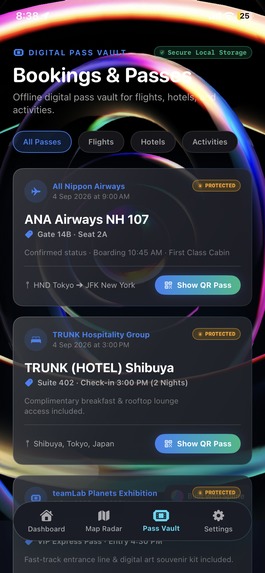
- AES-256 Secure Enclave Ticket Vault: Offline boarding passes and transit barcodes are encrypted locally on hardware. Turnstiles and airport gates scan instantly in airplane mode without remote authentication handshakes.
- Live Journey Telemetry: Real-time platform track numbers and departure countdowns stream natively to the Dynamic Island and Apple Watch via ActivityKit.
- Next Gen Architecture: Designed for resilient transit without ongoing server reliance.
How I Built It
- Frontend & UX: Built natively in SwiftUI with fluid gesture interactions, tactile haptics, and Dynamic Island Live Activities.
- Local Data & Graph Solver: Implemented using SwiftData on-device models to traverse pre-compiled transit graphs and station topologies.
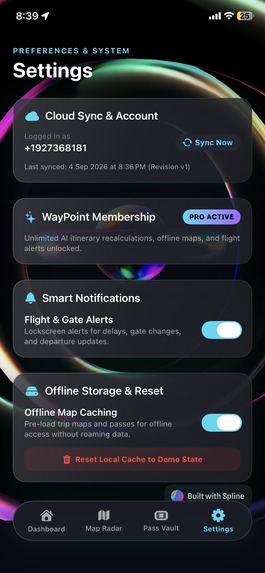
- Hardware Security: Leveraged Apple's LocalAuthentication and CryptoKit to interface with the Secure Enclave for biometric-locked AES-256 pass storage.
- Monetization Architecture: Architected with RevenueCat to manage multi-city offline vector graph downloads and premium vault features (
waypoint_pro). - Web Simulation Sandbox: Deployed a synchronized Next.js simulation engine to Vercel to allow judges and beta testers to test the disruption state machine directly in the browser.
Challenges I Faced
- Local Graph Traversal Overhead: Optimizing Dijkstra and topological routing algorithms to run within strict mobile memory footprints while executing in under 300 milliseconds.
- Offline Hardware Encryption: Guaranteeing that pass barcodes decrypt instantly via Secure Enclave without causing UI stutter at turnstile scanners.
- Graceful Degradation: Designing an architecture that seamlessly balances cached topological layers with live network states when connectivity occasionally returns.
What I Learned
Treating offline mode as an active edge-computing system rather than passive static caching transforms the entire user experience. Mobile apps do not need to rely on remote server round-trips for core decision-making when local silicon can handle complex graph evaluation natively.
What's Next for WayPoint
- Multi-modal offline routing including ferry networks and bike-share hubs.
- Rollout to my first 50 TestFlight beta testers.
- Production integration of RevenueCat in-app subscriptions across global city graph packs.
Built With
- activitykit
- ios
- next.js
- revenuecat
- supabase
- swift
- swiftdata
- swiftui
- tailwind-css
- typescript
- vercel


Log in or sign up for Devpost to join the conversation.