-
-
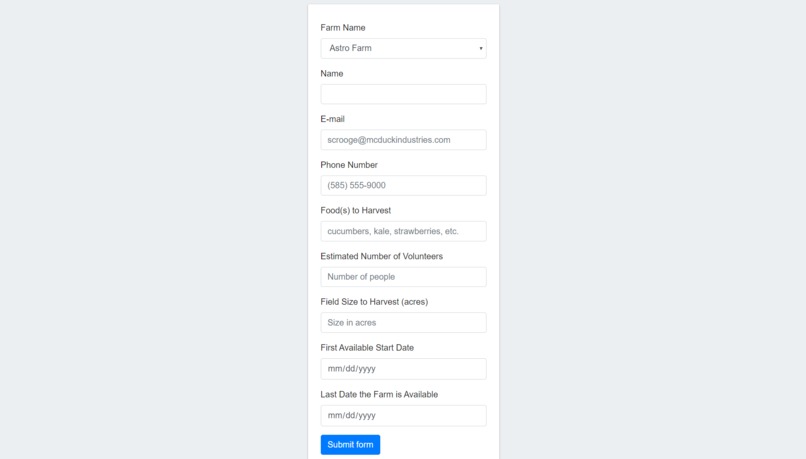
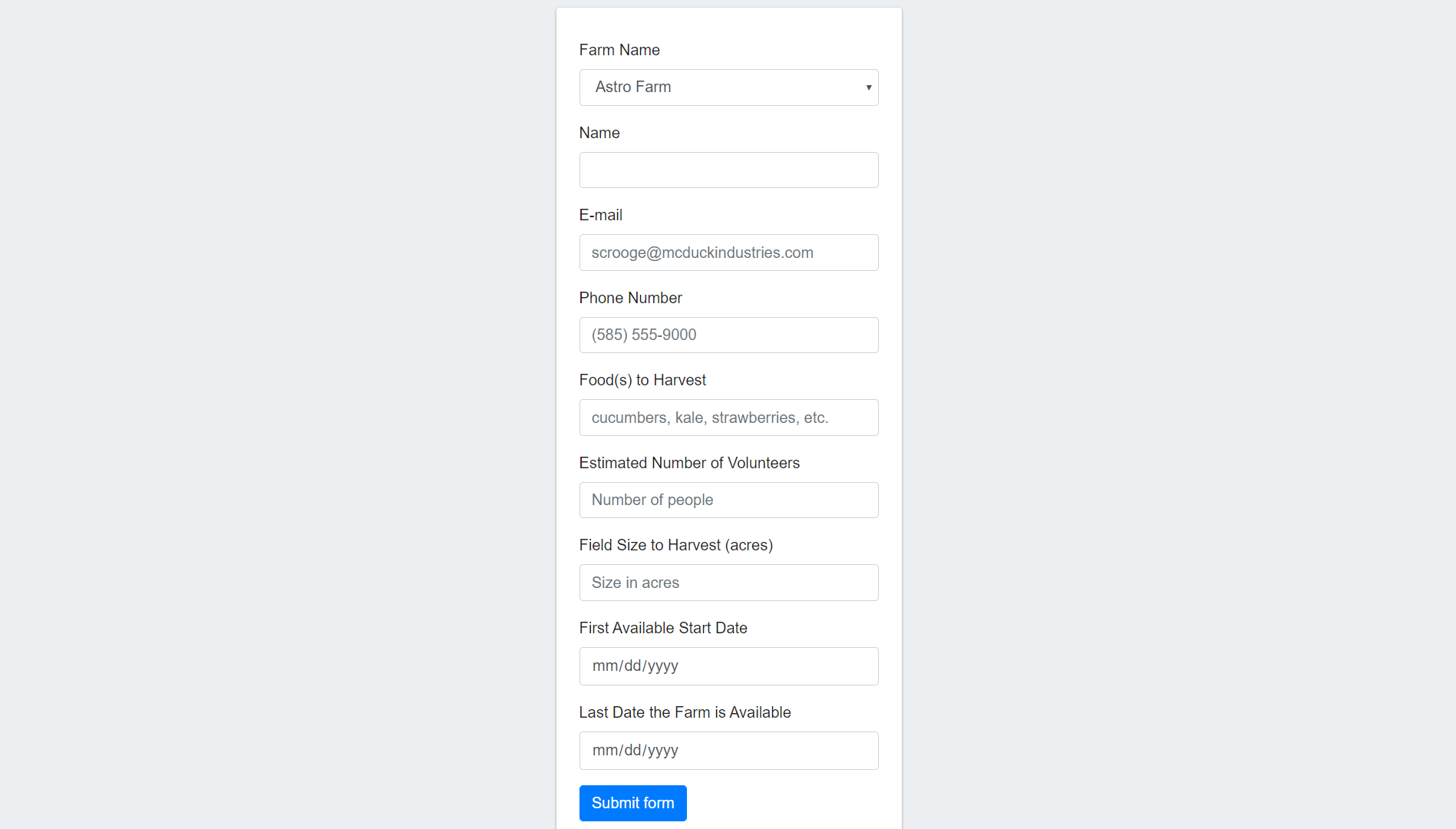
Form for farmers to request aid from organizations or volunteers with their excess food
-
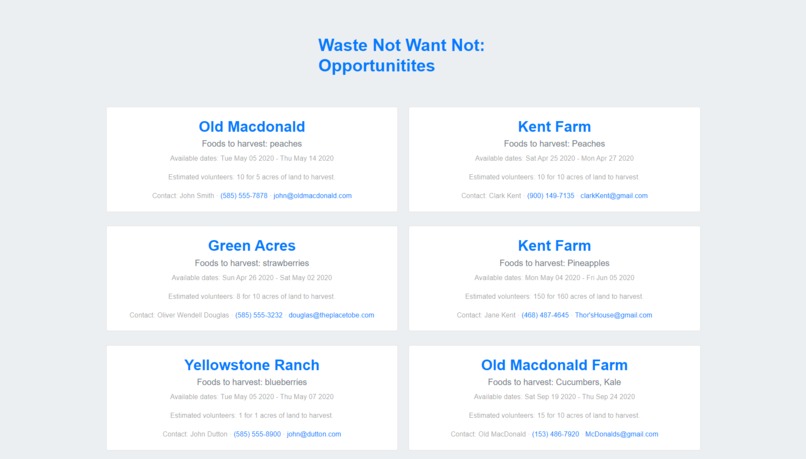
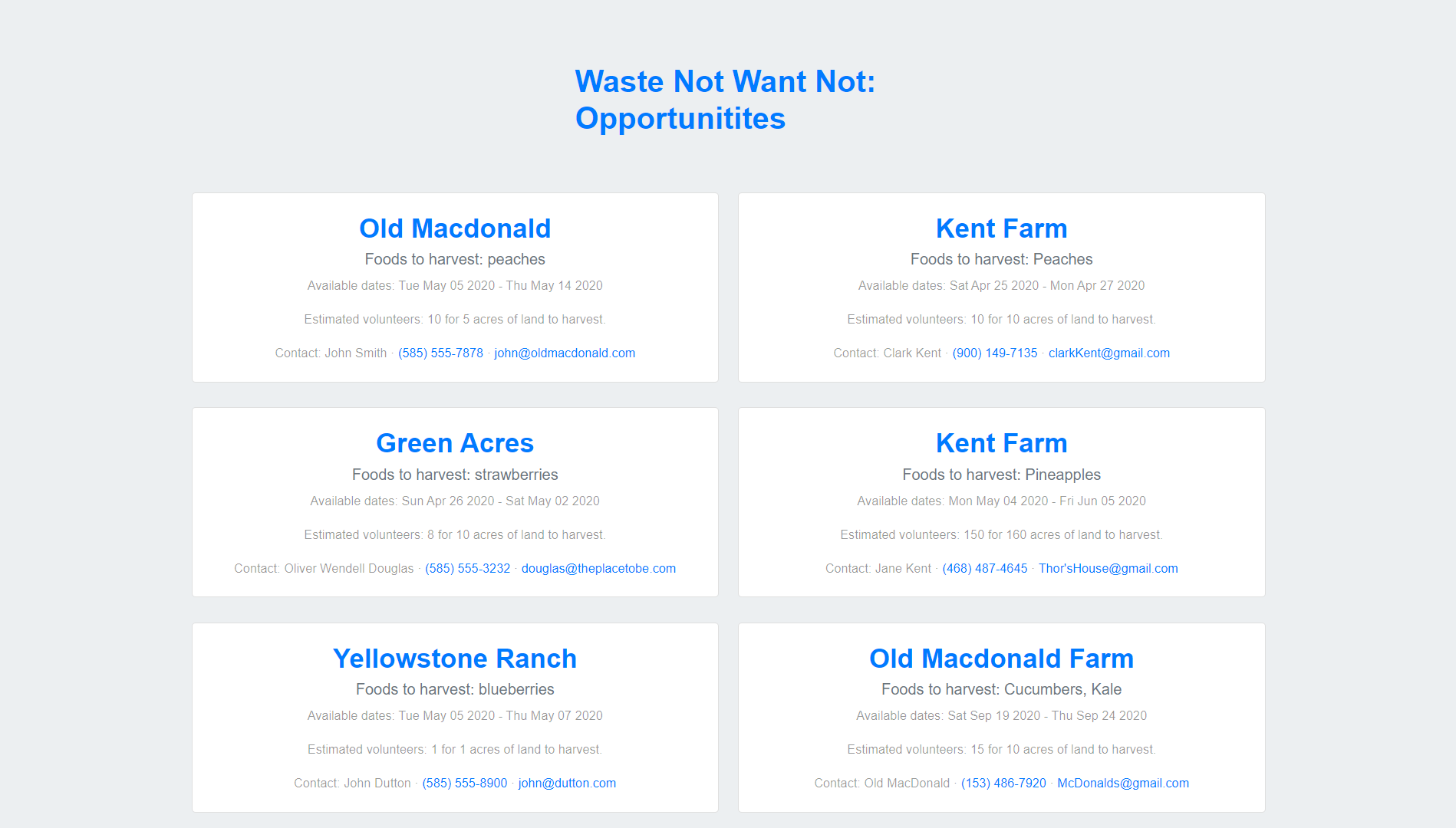
List of available opportunities to help farmers
-
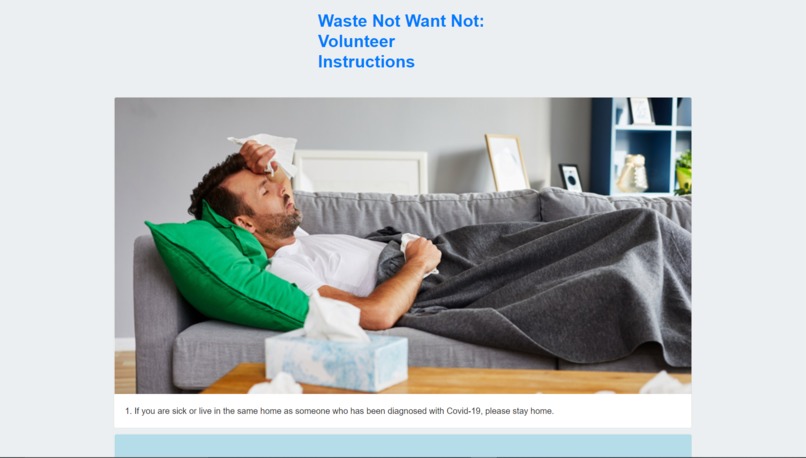
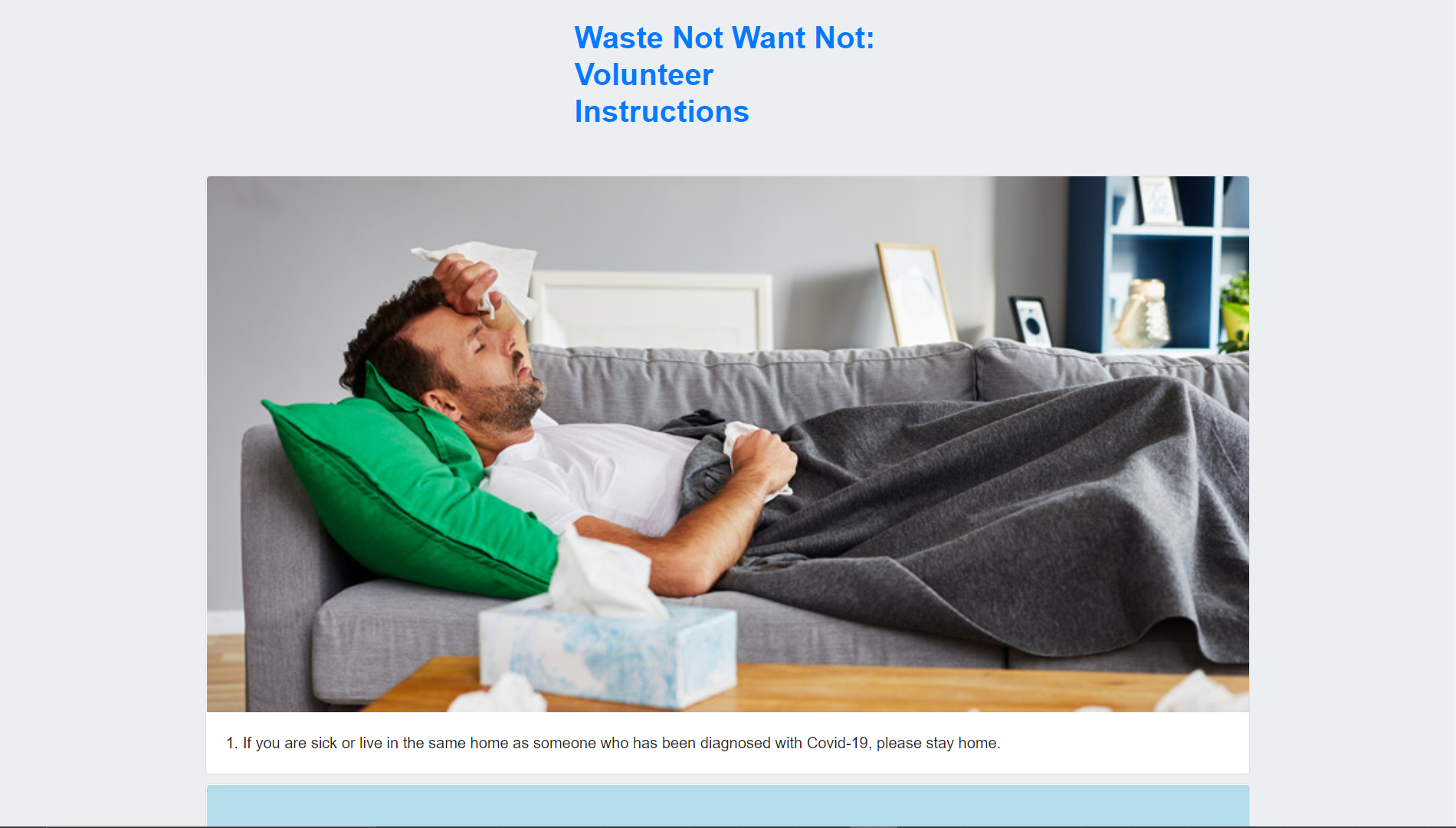
Social Behavior Guidelines for Volunteers to practice during service
Inspiration
Both of our families have a background in farming, one of us having the opportunity to work in the fields bringing the harvest. We both understand and appreciate the value of a farmer's labor, their means of serving humanity. We recently read an article about how 1.6 billion tons of food each year is lost, spoiled, or goes to waste. This is a third of all food produced in the world and is worth over a trillion dollars. While there are numerous reasons for food waste, we wanted to reduce the amount wasted on farms themselves while involving the community to help feed those who do not have enough to eat.
What it does
Organizations like churches, schools, and even the occasional corporation doing community outreach with their employees sign up in advance indicating they are interested in opportunities in their area like helping to harvest food at farms for food banks. Farmers sign up to our platform so they can indicate whenever they have an excess amount of food. Whenever a farm is in the appropriate range of an organization willing to help, the organization will get a message (currently as an SMS text message). Organizations then sign up their volunteers with the farmer to come out on the appropriate dates to harvest the land the farmer has donated. On harvest day, volunteers are given some instructions on how to stay safe like wearing appropriate coverings like face masks, always bending with your knees with lifting things, and tips on maintaining some distance from their fellow volunteers (hint you might look like a helicopter).
How I built it
Sweat, caffeine, and tears went into building our architecture on Google Cloud Platform. Organizations and farmers interact with our platform with two different web apps. Currently, organizations are notified about new opportunities in their area via SMS provided by Twilio. The design of this platform is meant to be on-demand since harvesting food would be so cyclical, we don't want to pay an excess amount when the platform will not be used.
There was one major omission from our build process which was sleep!!
Challenges I ran into
We mentioned there are numerous reasons for why food is wasted every year, some of which are:
- Farmers are unable to sell all of their produce due to competition
- Some of the harvested food is not as visually appealing and doesn't sell, despite it being just as nutritious, if not more so.
- A surplus of food is sent to a region that already has sufficient supply, rather than redistributing it to where people are more likely to buy and use this food. As a result, the excess supply is left to spoil.
But we needed to narrow our scope to what we could build in 48 hours. So we chose to reduce waste on farms.
Accomplishments that I'm proud of
Working remotely has its ups and downs but we both were able to overcome this thanks to the cloud. Mastering GCP, Github, and Discord are what made our team successful.
What I learned
- Learned to use Google Cloud Firestore and create a real-time database
- One of our team members is inexperienced with Github and has developed more skill with Version Control with GitHub and VSCode
What's next for Waste Not Want Not
We have made plans to expand the platform to have an interactive map that can display other opportunities for social good. With a user account, volunteers will not only have access to more opportunities, but will have streaks, badges, and the choice to post to social media, further incentifying them, particularly the younger generation, to work for social good and change.


Log in or sign up for Devpost to join the conversation.