-
-
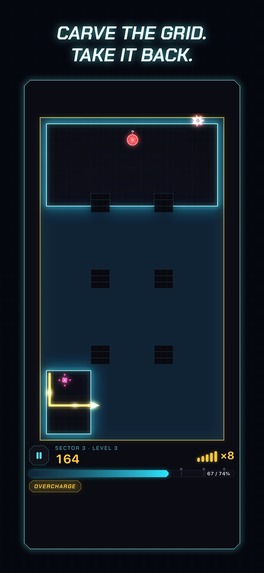
Example level
-
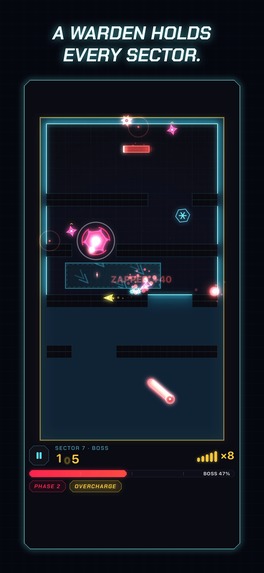
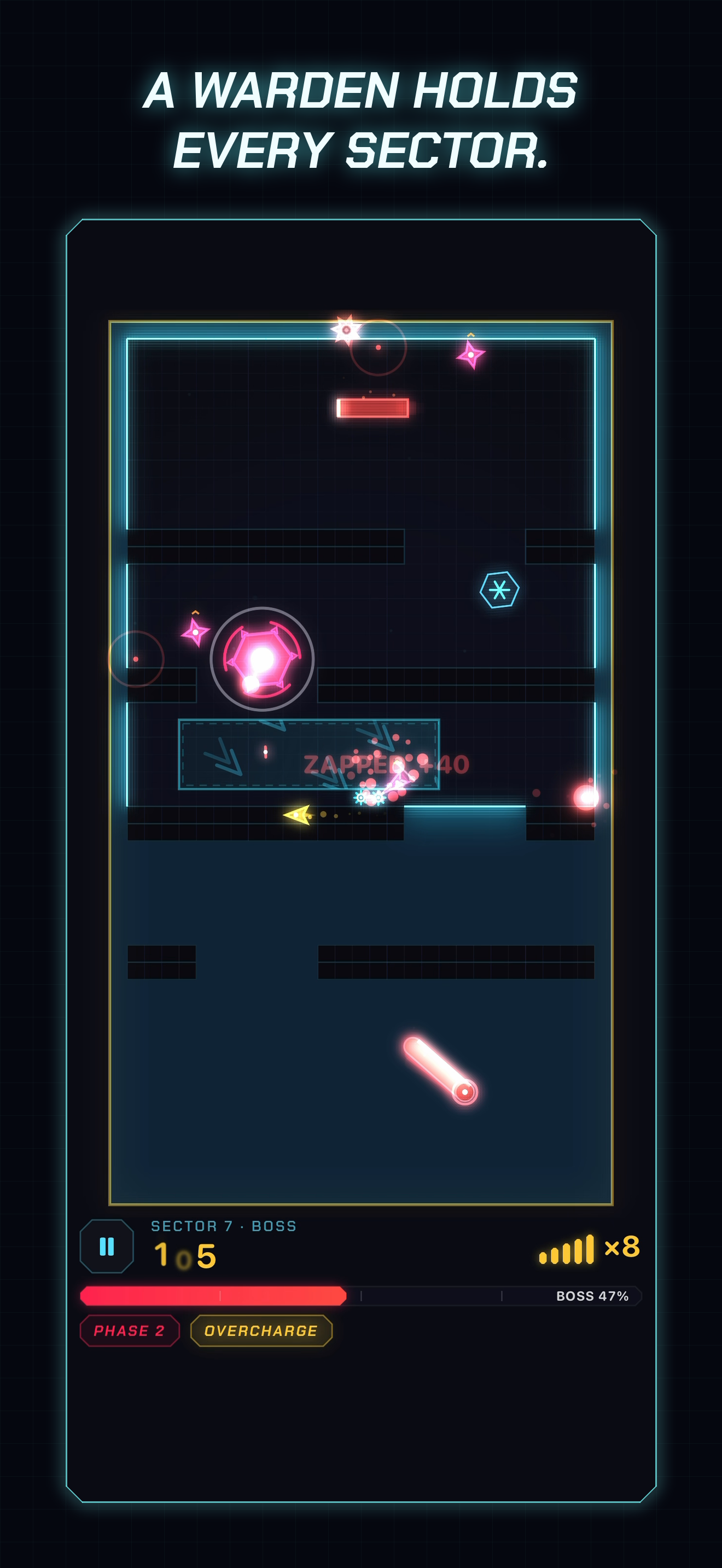
Boss Level
-

Logo
-
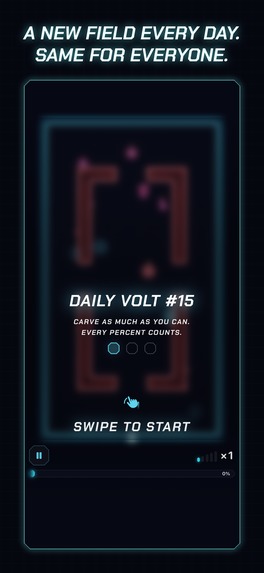
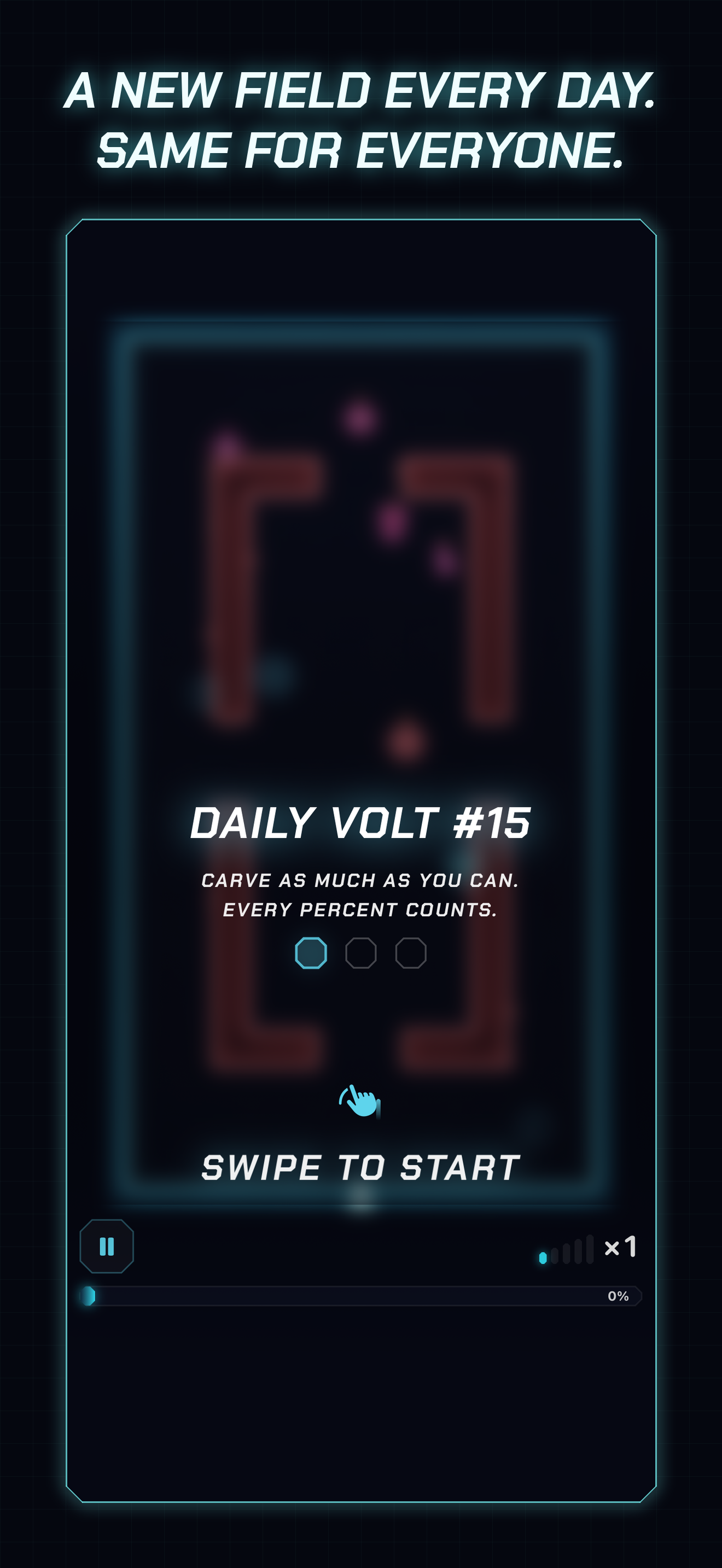
Daily Challange
Inspiration
Volfied was my college favorite. I put way too many hours into it, and the few versions left on the App Store are old ports with ads stapled on. So I built my own.
The idea is simple and nobody makes it anymore: you draw a line into enemy ground, close the shape, and that ground becomes yours. I wanted the real thing on my phone, done properly. It ended up something I fell in love with.
What it does
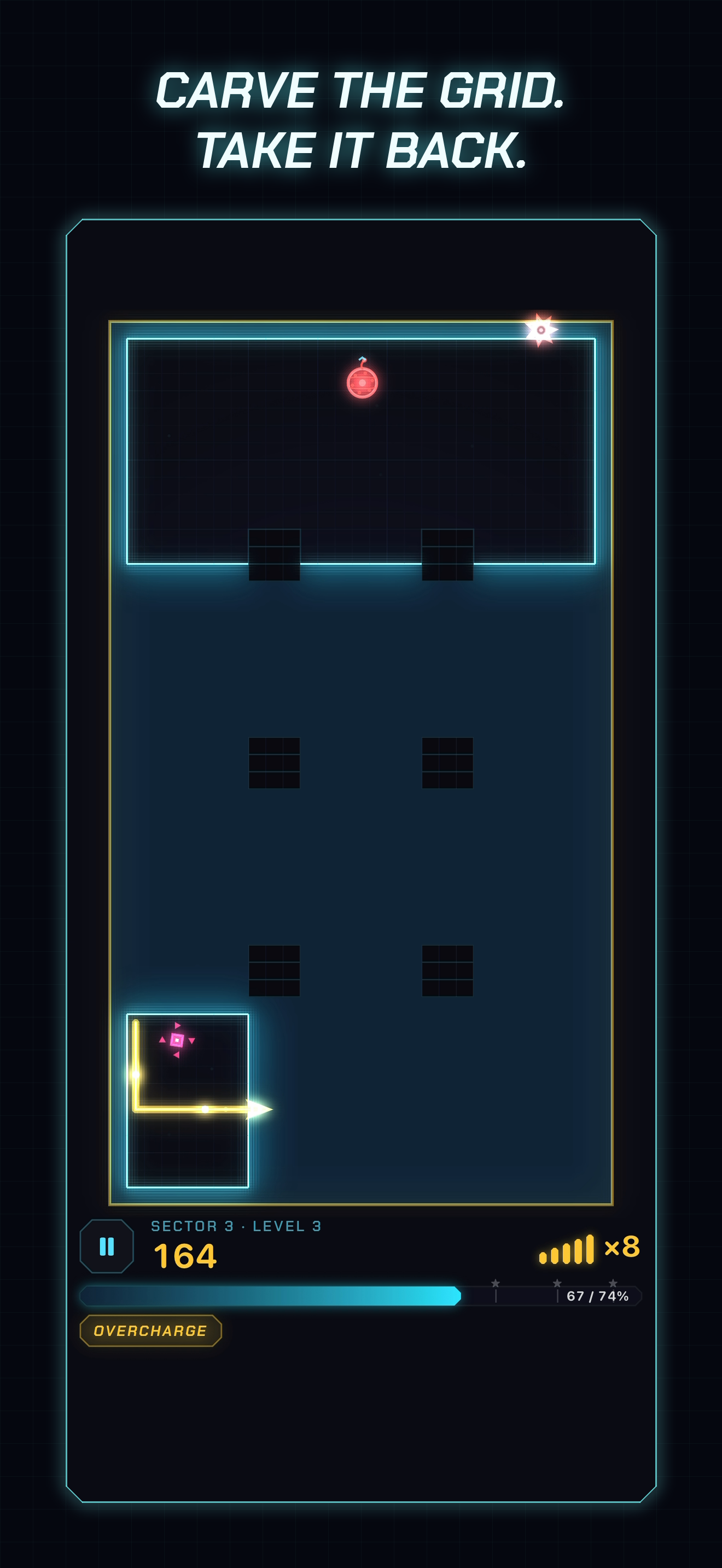
You fly out from the border, draw a line, close a shape, everything inside is yours. Anything touches the line while it is live, the run ends. One hit, no lives, straight back in.
100 levels, 10 bosses. Later levels add rotating fire arms, gates that bite on a timer, sweeping bars, and currents that push you around. Get greedy past the goal line and the enemies visibly get angry. Finishing is fair, three stars is hard. My favorite kind of balance.
There is also the Daily Volt. One puzzle a day, the same arena for every player in the world, three attempts. When you are done you get a spoiler free emoji grid to send to your friends, Wordle style.
Free, no ads. Core packs are the only purchase (that is the RevenueCat part) and nothing is locked behind them.
How I built it
From my iPhone. Mostly in the bathroom, instead of scrolling social media.
Two reasons, and neither is "I had no computer". I wanted to keep building in the moments I am away from a keyboard, and I wanted to find the limits of cloud agents. So I told Claude Code on the web what I wanted. It wrote the Swift, built and tested it on Limrun's cloud Macs and simulators (disclosure: I work there), and pushed a TestFlight build. In the evening I played the build and sent notes like "still too easy" or "this gate looks like a sticker on the wall, not an opening". Then we went again. 98 builds to reach the App Store.
One rule from day one: zero assets. No images, no sound files. Every pixel is drawn by code at runtime, every sound is synthesized at launch, even the synthwave music loop is generated. The whole bundle is an icon, three fonts, and code.
That rule paid off in a way I did not plan. Everything generated means everything is deterministic: same seed, same level, everywhere. The daily puzzle fell out of that almost for free. So did the highlight clips: the game never records your screen, it just replays your last 8 seconds inside the engine and renders a video from it. No permission popup, no recording icon.
Challenges we ran into
The app crashed on real phones because of audio. iOS throws audio engine failures as Objective-C exceptions, and Swift try/catch ignores those, so our guard code was decorative. The fix was the project's first Objective-C file. A game should never die over a sound.
The replay clips lied once. A clip showed me dying on a run I had actually won, off a stale timestamp. Now every replay is fingerprinted against the live run, and the game refuses to save a clip that does not match what really happened.
And WhatsApp refused our videos for weeks. We fixed the video container, fixed the frame ordering, still refused. Turns out WhatsApp does not accept 60fps video. Nobody documents that anywhere.
What I learned
You can ship a real, monetized, App Store approved game from a phone. But only if you are stubborn about quality and play every single build yourself. The AI wrote the code. The taste, the "this does not feel right yet", stayed with me. That was the actual work.
As for the limits of cloud agents: they are further out than I thought. I did not reach them on this project.
What's next
Rankings inside the game, because Game Center's own screens are painful (in review as I write this). Deep links into the daily puzzle. And more languages, but not translations: each one written from scratch by someone thinking in it.
Built With
- avfoundation
- gamekit
- ios
- metal
- revenuecat
- storekit
- swift
- swiftui


Log in or sign up for Devpost to join the conversation.