-
-
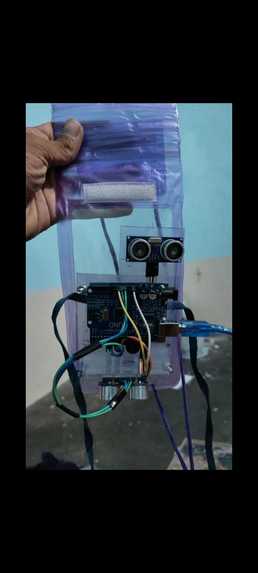
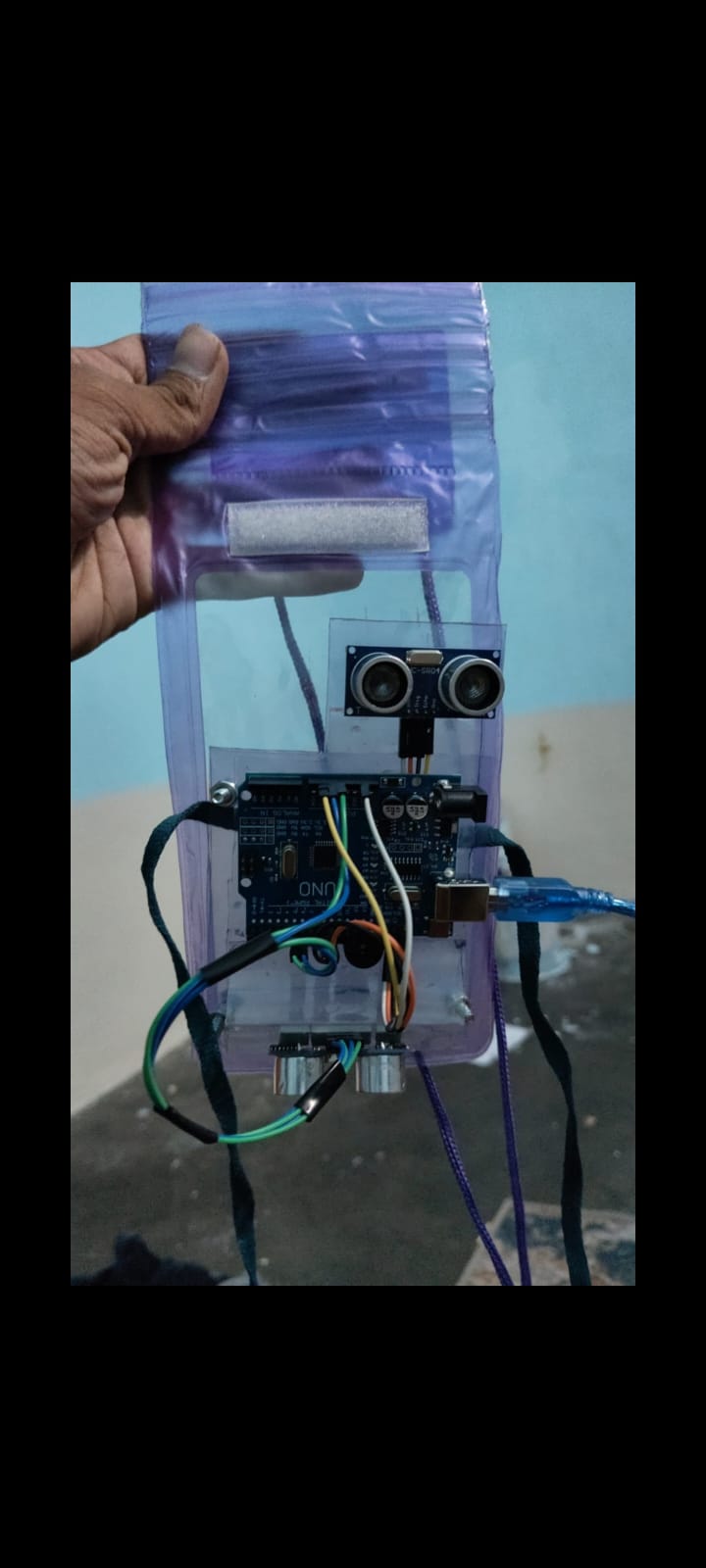
Hardware
-
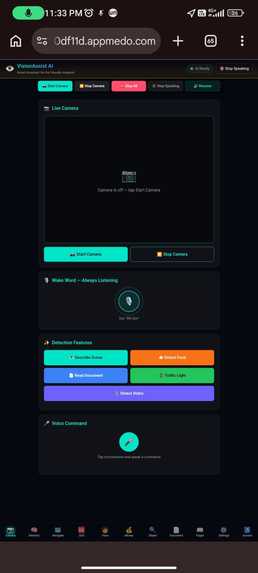
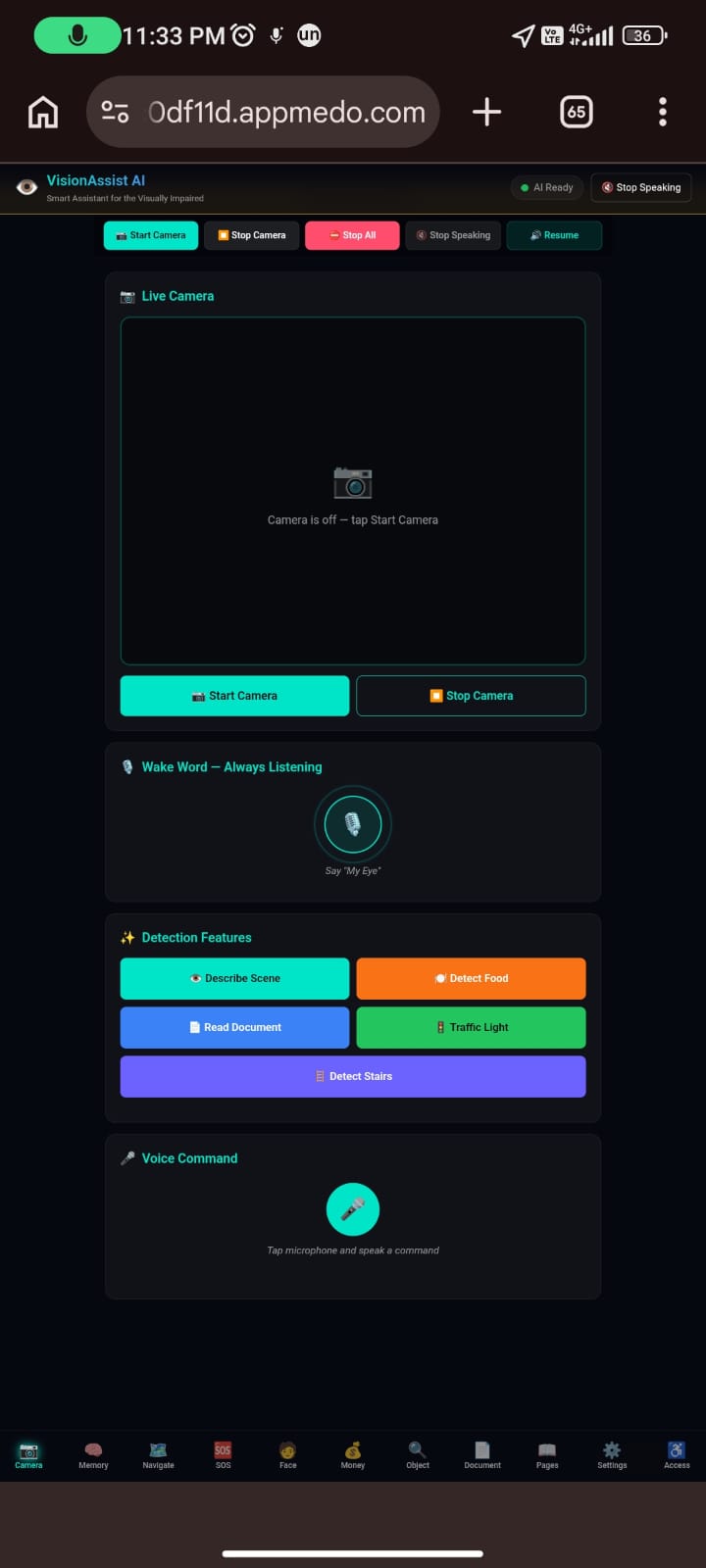
Software
Inspiration
My grandmother once spent 45 minutes searching for her glasses. They were on her head the whole time. She laughed, but I saw the frustration.
Then a visually impaired friend told me he avoids new restaurants. He can't read menus. He can't identify food on his plate. He can't eat alone.
285 million people are visually impaired. Most assistive tech costs between ₹25,000 and ₹3,00,000 — unaffordable for most Indian families.
I built VisionAssist AI to change that. One voice. Zero dependence. Complete independence.
What it does
Say "My Eye" followed by a command. The AI responds instantly.
Traffic Light — Tells red, yellow, or green. Scans vehicle lights. Red light means cars stop, so it announces "Safe to cross." Green light means cars are moving, so it triggers a "Stop" warning. Perfect for roads without pedestrian signals. Response under 2 seconds. Our traffic light detection is currently in an optimized beta phase, functioning as a secondary awareness tool while we continue refining its real-world edge accuracy.
Food — Identifies what's on your plate. Names each item and quantity.
Page Reader — Reads prescriptions, bills, books aloud. Word for word.
Object Finder 360° — Say "find my keys." Turn around slowly. AI tells direction and distance.
Scene Description — "What's in front of me?" AI describes objects, people, and distances.
Dual Mode — Normal mode for accuracy. Live mode runs continuously, only speaks when something changes.
Outdoor Navigation — "Navigate to market." Voice GPS directions.
These are the core features we have focused on deeply. The app also includes face recognition, currency detection, scene description, stair safety,indoor navigation, and emergency SOS — added specifically around the needs of blind users. Some of these are in early stages and we are actively improving them. Our priority has always been depth over breadth — we would rather one feature work perfectly in the real world than ten features work halfway. All hands-free. Works in Hindi, English, and Hinglish.
How we built it
I built VisionAssist AI using around 40 conversations with MeDo.
I started with the core interface. Then added features one by one. Each feature took 2-4 conversations.
Traffic Light — 3 conversations — Add detection. Make it faster. Add safety check.
Food — 3 conversations — Add detection. Add quantities. Shorten response.
Page Reader — 3 conversations — Extract text. Auto-detect documents. Read clearly.
Object Finder 360° — 3 conversations — Capture 4 frames during rotation. Send all at once. Return direction and distance.
Dual Mode THE BEST PART WHICH IMPROVED THE ACCURACY— 2 conversations — Normal mode for accuracy. Live mode for continuous awareness.
Navigation — 3 conversations — GPS directions. Voice guidance. Indoor video upload. Room mapping. Pathway generation. Voice commands.
Bug fixes — 10 conversations — Fixed voice collisions. Rate limits. Language support.
Each conversation built on the last. MeDo remembered context.
Total: around 40 conversations. 8 features. 1 working app.
Challenges we ran into
Latency — AI takes 1.5-2.5 seconds. For crossing a road, that's too long. Solved with Dual Mode. Live mode runs continuously. Only speaks when something changes.
Traffic light wrong in low light — Added color analysis as backup. If AI or color says red, announce red to be safe.
Indoor map broke sometimes — Added fallback functions to extract valid data.
API rate limits — Made one AI primary for multi-frame tasks. Added retry logic.
Accomplishments we're proud of
Eight features in one voice app. Most accessibility apps have 3-4.
Zero build cost. Free tiers only. No credit card needed.
Dual Mode is unique. It has normal + live mode.
Dual verification for traffic lights. Safety first.
Real user validation. A tester said: "I don't need someone with me anymore. I can walk alone, read my prescription, know what I'm eating. That's freedom."
What we learned
Start simple, then scale. Safety first. Never assume AI is correct. Voice-first design is underrated. Clear prompts matter. MeDo can build complex apps. Free tiers are enough.
What's next
Medication verification with expiry alerts. Offline mode for rural areas. More Indian languages. Crowdsourced hazard alerts.
The goal: VisionAssist AI on every smartphone in India. Pre-installed. Zero cost. Blind people lead independent lives.
Production Economics & Global Scalability
1. Low-Cost Cyber-Physical Hardware Layer The Prototype Cost (Total: ₹540 / $6.50): Built completely from accessible, off-the-shelf components: Arduino Clone (₹250 / $3.00), 2 Ultrasonic Sensors (₹140 / $1.70), and Buzzer/Wires/Pouch (₹150 / $1.80). Simplicity & Mass Manufacture: The plug-and-play circuit design is incredibly simple to assemble. When scaled for mass production using custom PCBs and modular 3D-printed enclosures, the hardware manufacturing cost drops to just ₹250 to ₹300 ($3.00 to $3.60) per unit.
2. Zero-Cost Cloud Infrastructure Forever Free Tier: By assigning a unique Groq API key per user account, the system utilizes Groq's instant-reset free tier. For standard daily navigation, object finding, and page reading, the software remains 100% free indefinitely for users across the world. Ultra-Cheap Paid Scaling: Even if a heavy user bypasses the free limits, Groq Vision costs a mere $0.18 per million tokens. Making 500 continuous live vision scans a day costs less than ₹10 ($0.13) daily (~₹300 / $3.60 a month).
3. The Market Disruption While industrial market alternatives (like OrCam) force users to buy expensive custom computer rigs costing upwards of ₹3,00,000 ($3,600+), VisionAssist AI offloads 100% of the processing brain to the user's existing smartphone. By combining MeDo's free cloud orchestration with our hardware scaling roadmap, we can retail the entire physical system for around ₹1300 ($15.50) — making elite accessibility affordable for all 285 Million+ visually impaired individuals across the globe.
Built With
MeDo Conversational AI Builder — around 40 conversations generated all features.
External APIs — Groq AI, Gemini AI, Web Speech API, OpenStreetMap, Twilio.
The MeDo Edge: Enterprise-Grade Deployment Made Simple
One-Click Instant Deployment: Instead of wasting days manually configuring servers, dealing with SSL certificates, or managing cloud infrastructure, MeDo handled the entire backend setup instantly. A single deployment command made our live app url globally active and production-ready in seconds.
Handling Complex Orchestration Professionally: Blind assistive tools require flawless reliability. MeDo seamlessly managed the heavy background tasks — routing multiple external APIs (Groq, Gemini, OpenStreetMap, Twilio) and coordinating data flows with zero lag. It allowed a solo developer to achieve enterprise-level hosting stability without writing complex DevOps pipelines.
Try It Out
Live App URL: https://app-bnr6fc0df11d.appmedo.com/
Demo Video: https://youtu.be/2WkE8oBpjUs?si=IeBmT7wxdh8fxAKN
The Real Impact
A tester said: "I don't need someone with me anymore. That's not convenience. That's freedom."
We don't want blind people to beg. We want them to lead.
Built With
- geminiapi
- groqapi
- html
- medo
- openstreetmap
- python
- twilio
- web-speech-api

Log in or sign up for Devpost to join the conversation.