-
-
Poster
-
-
-
-
Inspiration
Stepping outside in Pune and not knowing if the hazy sky was just fog or genuinely harmful air. Most weather apps tell you temperature — none of them tell you should I put on a mask today? I wanted something that could answer that question personally, not generically.
What it does
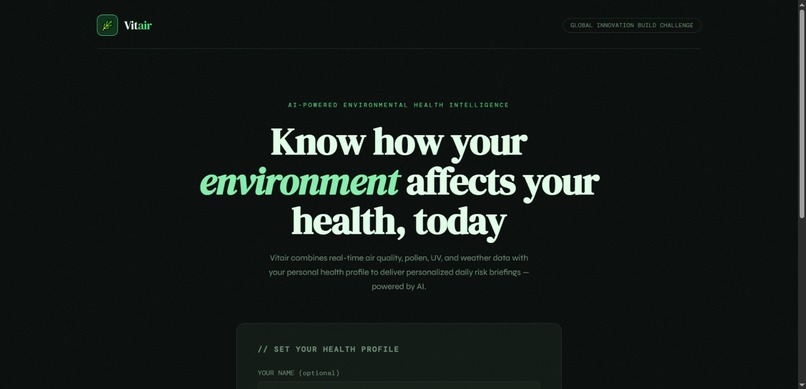
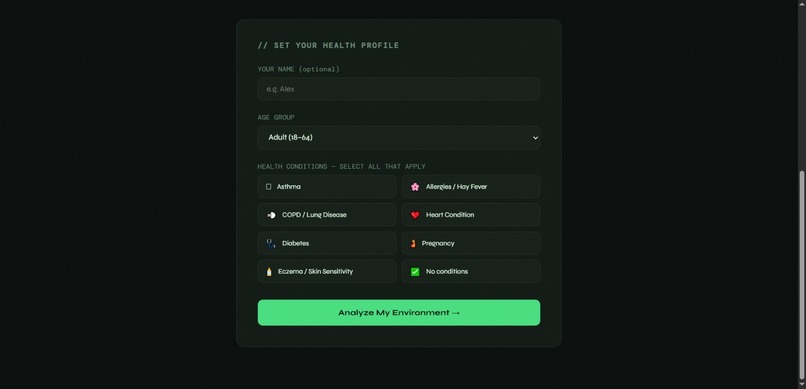
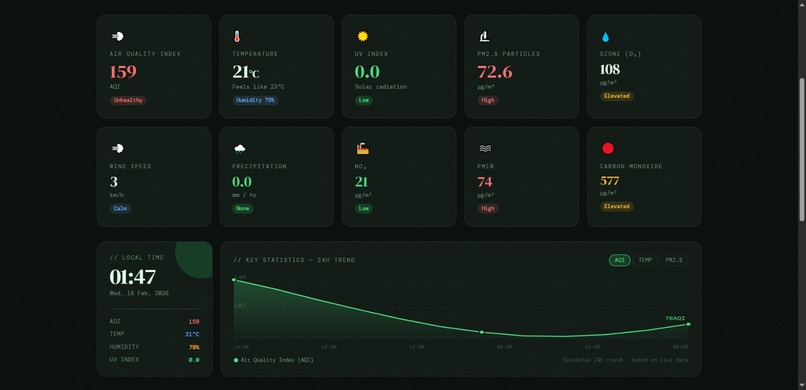
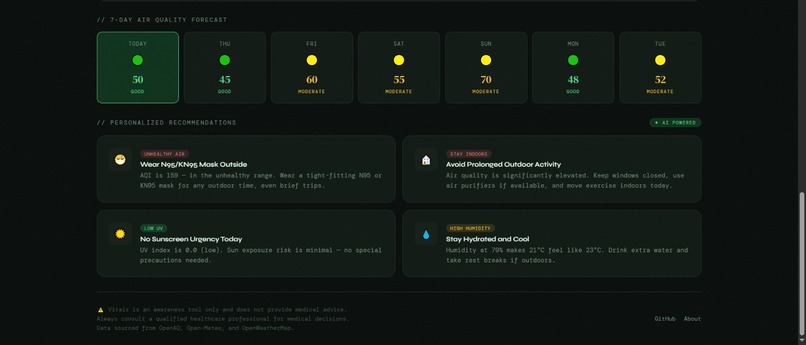
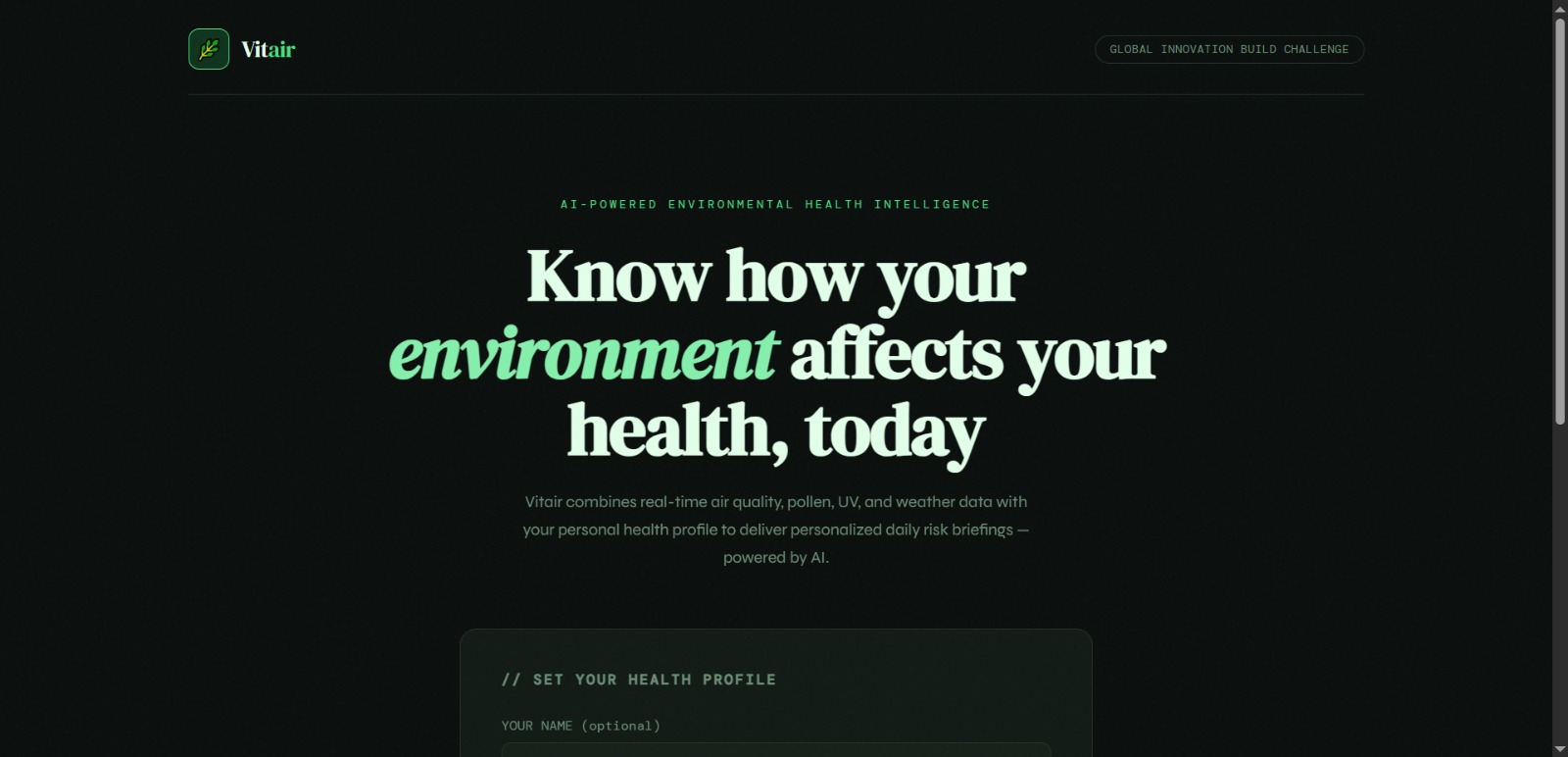
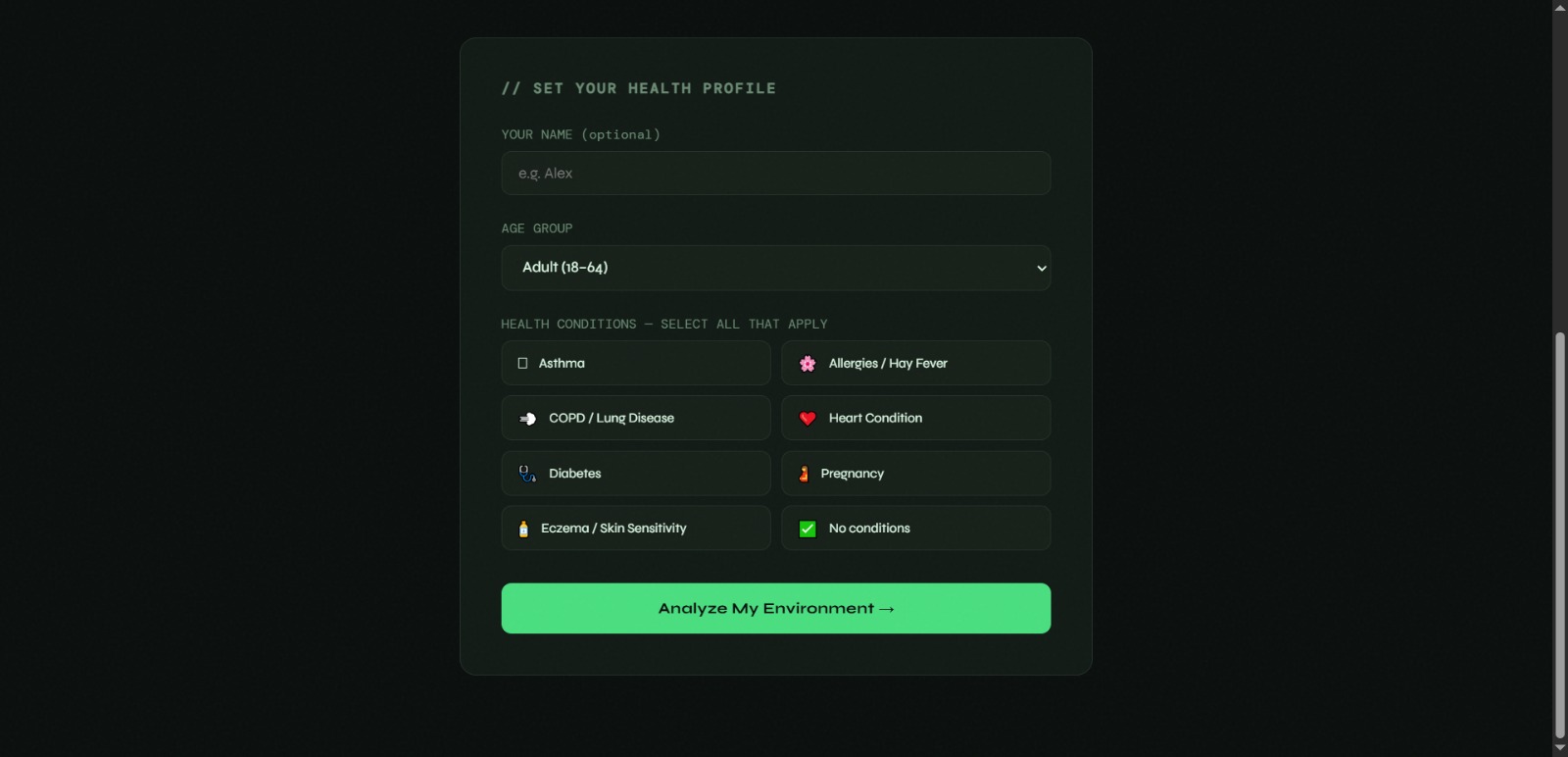
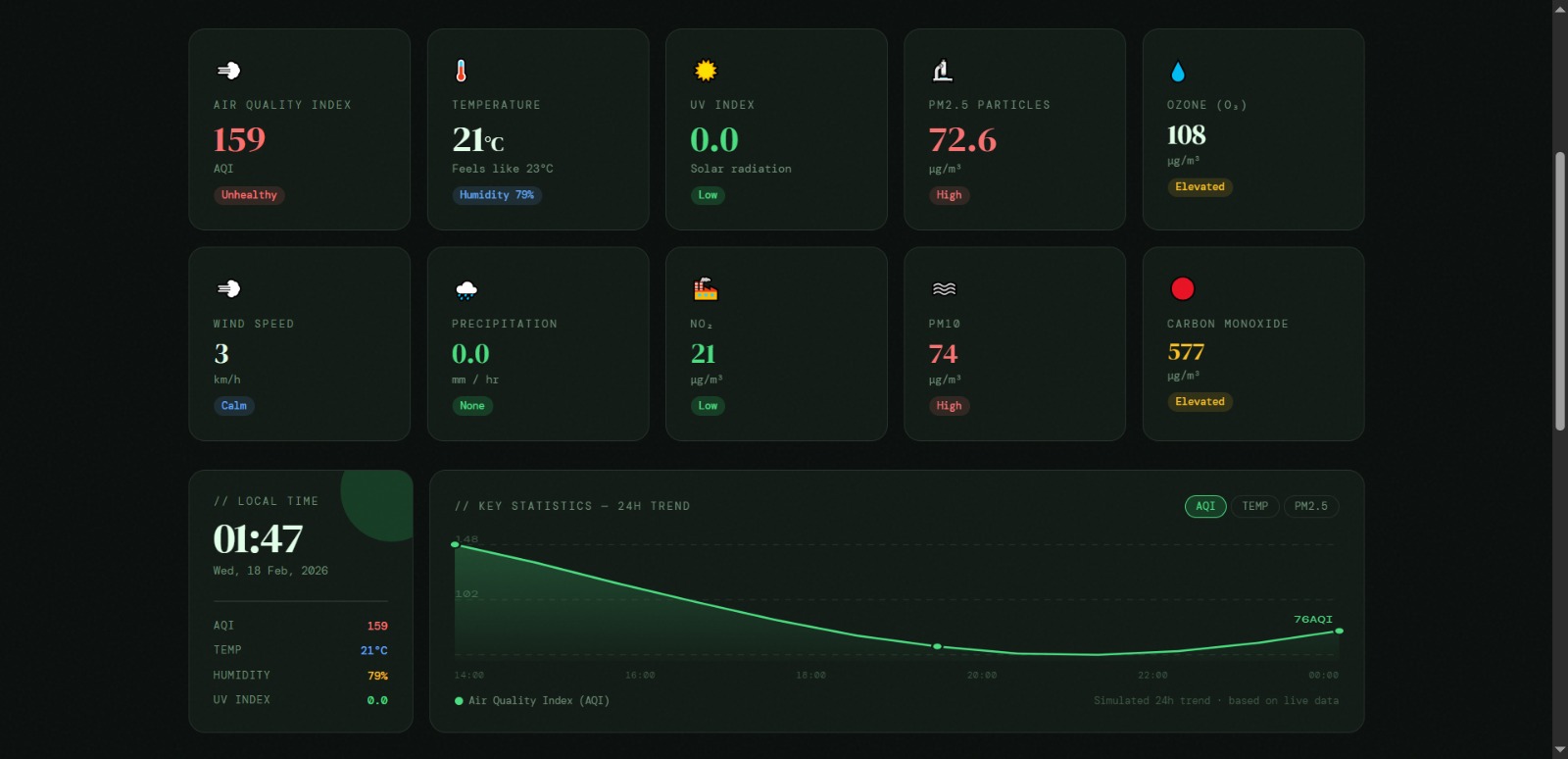
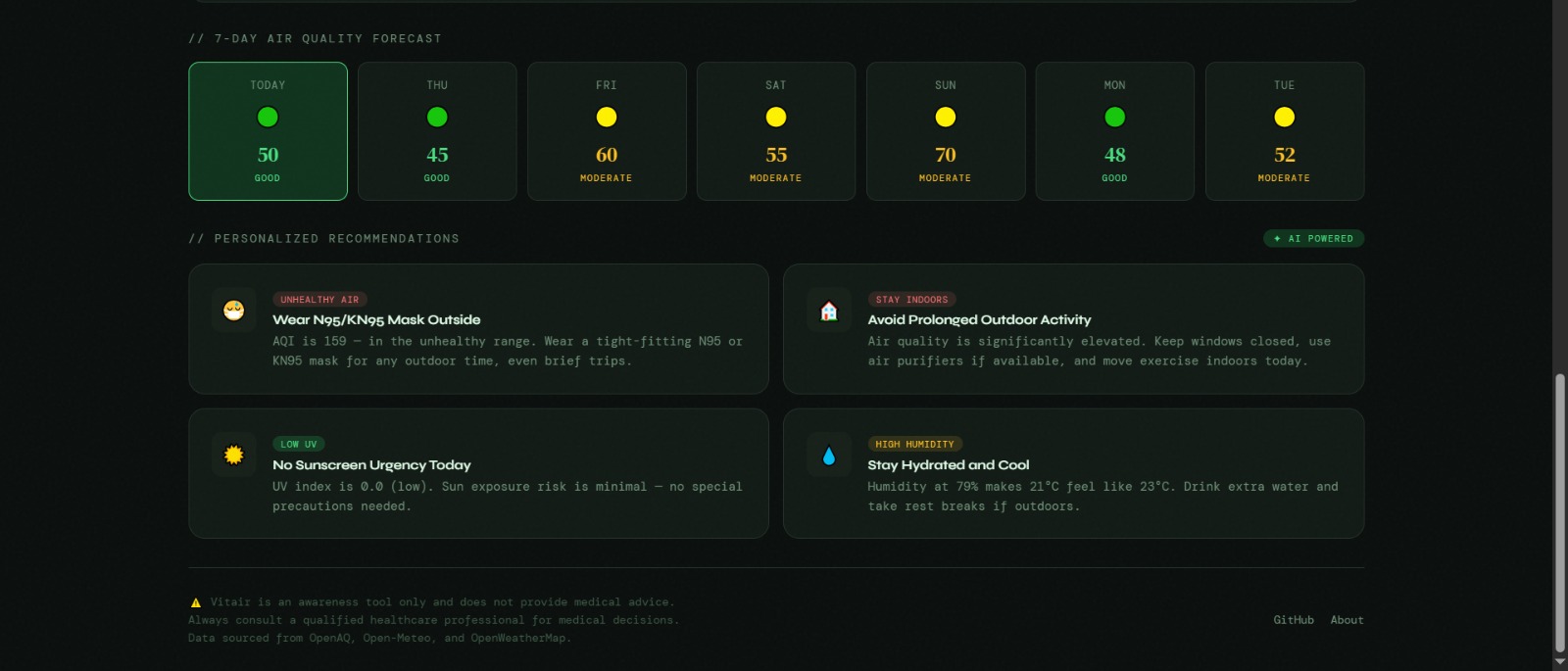
VitAir pulls real-time air quality (AQI, PM2.5, PM10, NO₂, CO, Ozone), weather, and UV data for your exact GPS location, then cross-references it with your health profile (asthma, heart condition, pregnancy, etc.) to generate a personalized risk score and daily health briefing — powered by Claude AI. It also shows a 7-day AQI forecast, a 24h trend chart, and 4 AI-generated recommendations that actually make sense for your conditions and today's air.
How we built it
Single-file HTML/CSS/JS — no backend, no build tools, no framework. Data comes from three free APIs: Open-Meteo (weather + AQI), OpenAQ, and Nominatim (reverse geocoding). The AI briefing and recommendations are generated live via the Anthropic Claude API (claude-sonnet). The whole thing runs in the browser.
Challenges we ran into
Getting the recommendations to be coherent was harder than expected — early versions would simultaneously tell you "air quality is dangerous" and "great day for a run!" in the same panel. Fixing that meant scrapping the rule-based system entirely and handing it to Claude with strict consistency instructions. Also wrangling browser geolocation permissions — turns out people click "Block" and then wonder why they're seeing New York's weather in Pune.
Accomplishments that we're proud of
The whole thing is a single .html file with zero dependencies you need to install. It works offline-first with graceful fallbacks, generates genuinely personalized AI health briefings (not just mad-libs with your name), and looks good doing it. The location permission screen that actually explains what to click and why felt like a small but satisfying UX win.
What we learned
We learned that "free, no-key APIs" is a beautiful phrase that deserves more appreciation.
What's next for VitAir
- Push notifications — morning briefings delivered before you step outside
- Pollen & allergen data for hay fever and allergy sufferers
- Indoor vs outdoor AQI comparison using sensor data
- Weekly health trend tracking — how has your exposure changed over time?
- Wearable integration — correlate air quality with heart rate / SpO₂ data
Built With
- anthropic
- api
- claude
- css
- html
- java
- javascript
- openstreetmap

Log in or sign up for Devpost to join the conversation.