-
-
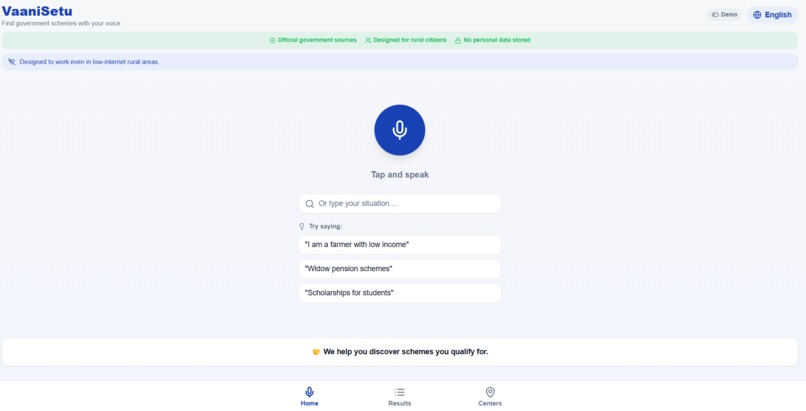
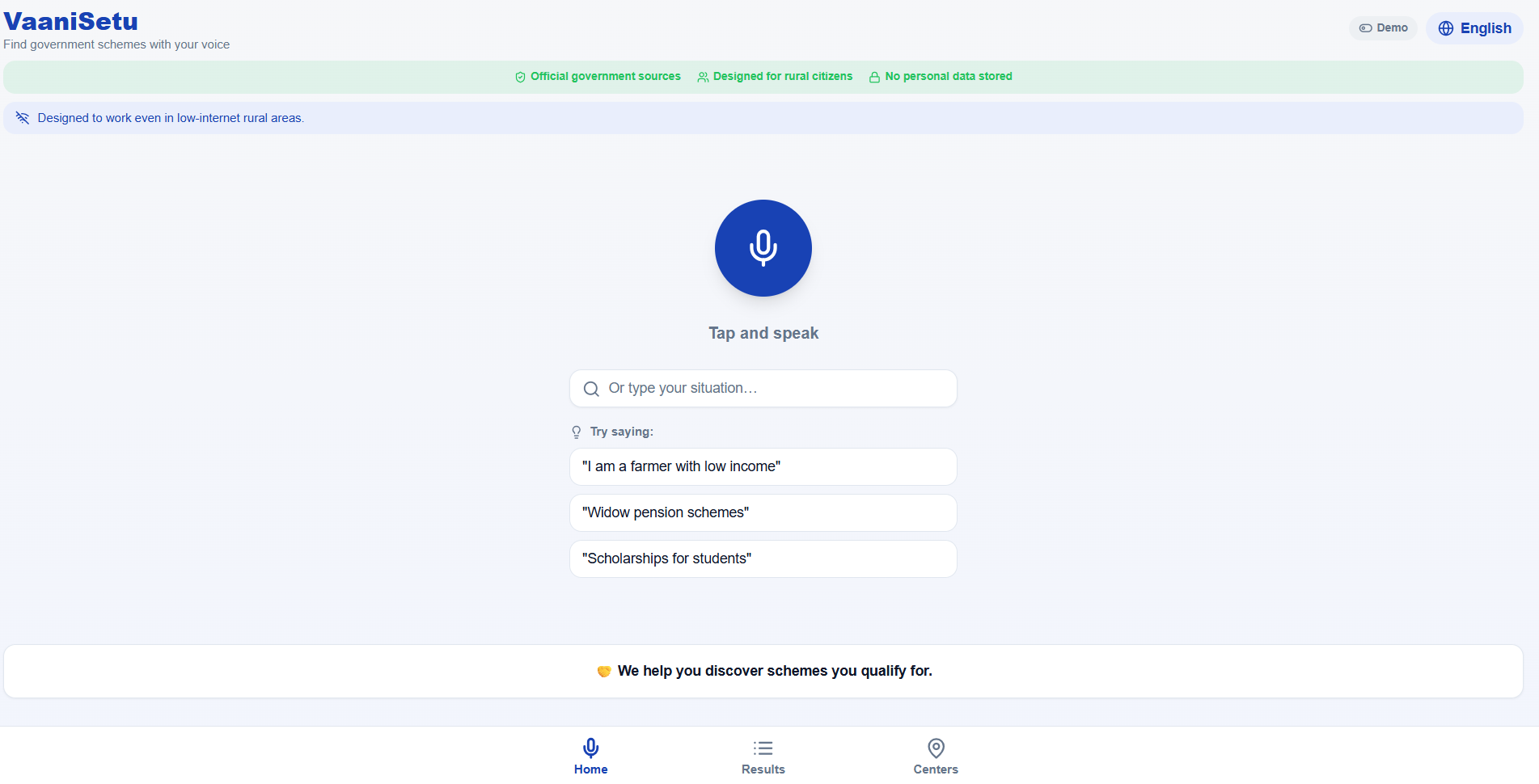
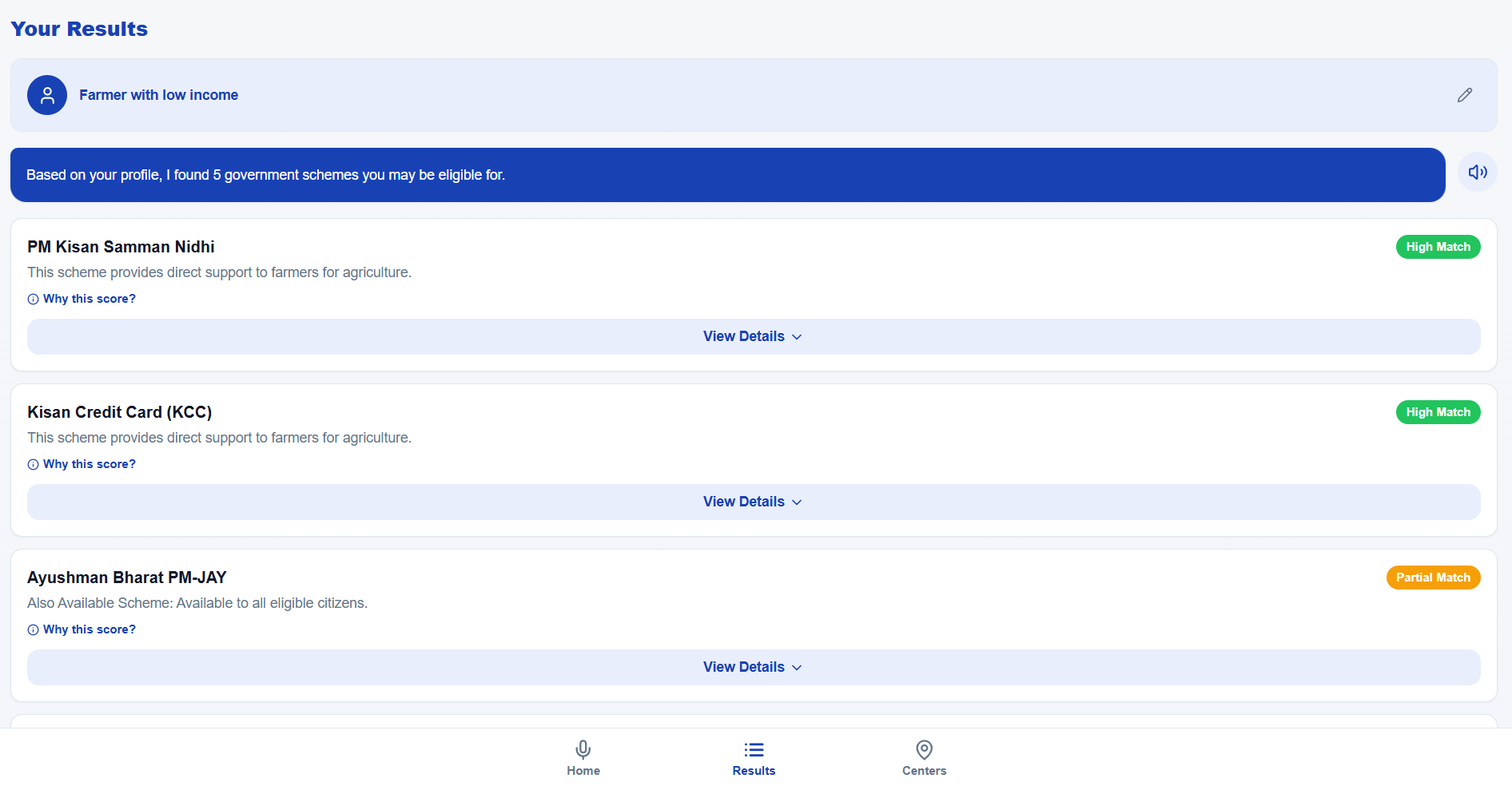
A voice-first AI interface built for low digital literacy users, enabling scheme discovery through natural conversation.
-
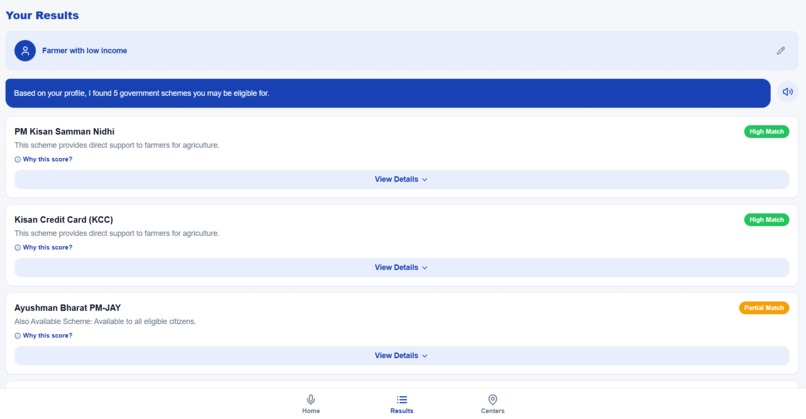
Personalized scheme recommendations with explainable AI scoring and structured application guidance.
-
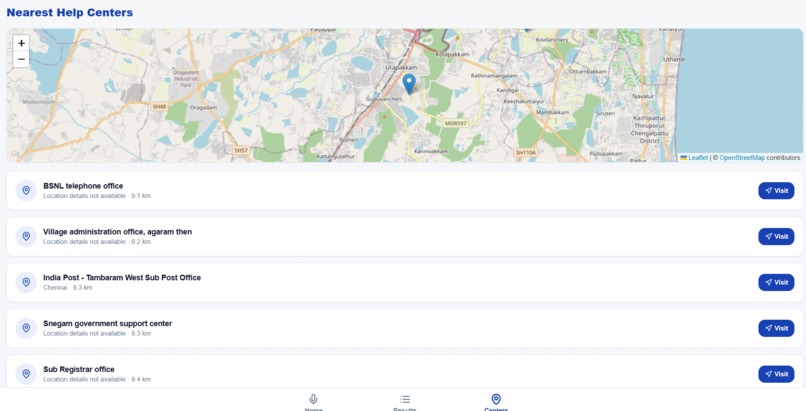
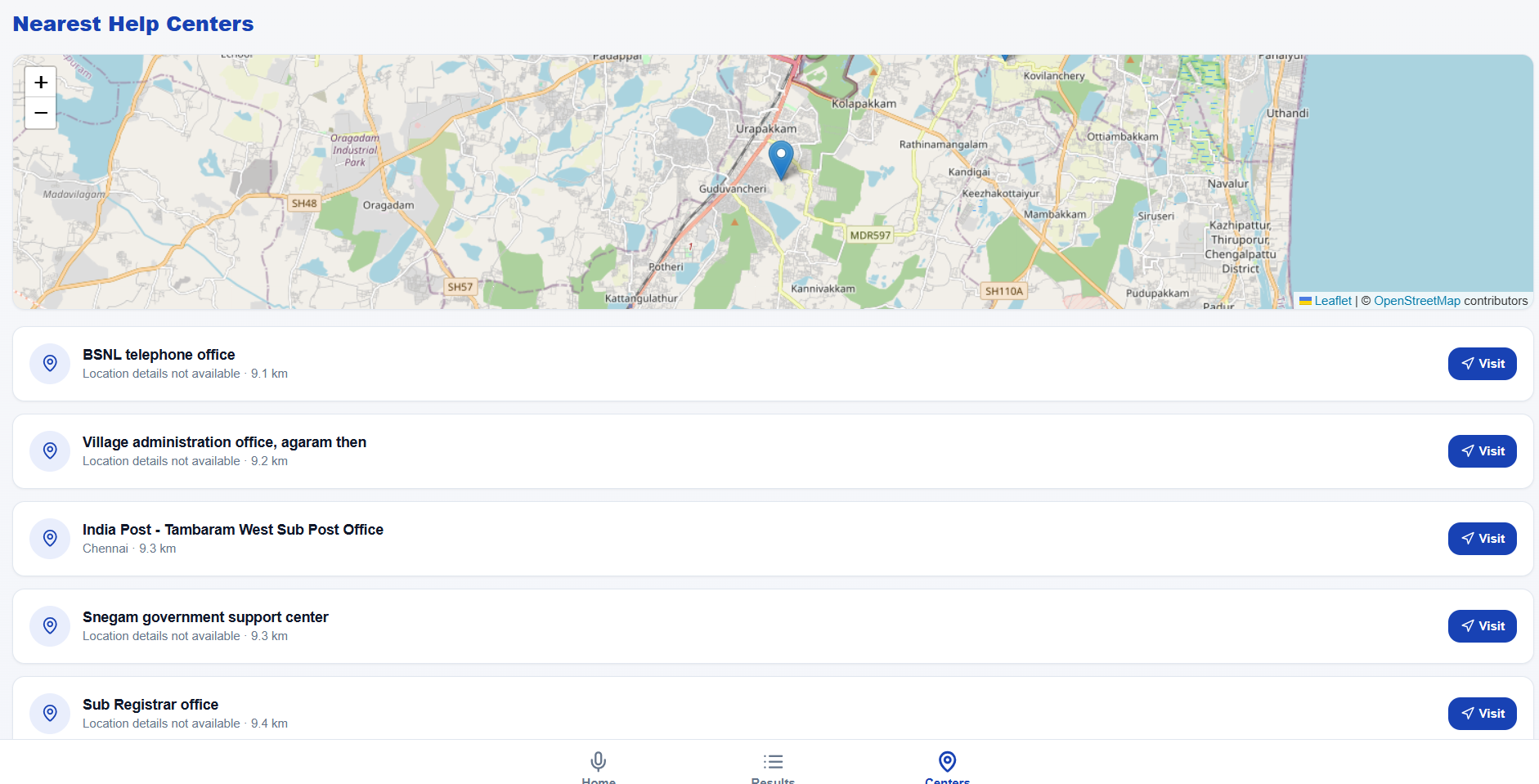
Geolocation-powered support center finder to bridge the gap between online information and offline assistance.
🌾 Inspiration
In India, thousands of government welfare schemes exist — for farmers, students, senior citizens, low-income families — but millions of eligible citizens never benefit from them.
Why?
Because:
Information is scattered across complex portals
Language barriers prevent access
Many rural users are not digitally literate
Government websites are overwhelming
I realized that the real problem is not the absence of schemes — it is the absence of accessibility.
That’s when I asked:
What if discovering government benefits was as simple as having a conversation?
That idea became VaaniSetu — a voice-first AI bridge between citizens and government welfare.
💡 What It Does
VaaniSetu allows users to simply say:
"I am a farmer from Andhra Pradesh with low income"
And instantly receive:
🎯 Personalized government scheme matches
📊 Eligibility score (High / Partial / Low)
🧾 Required document checklist
🪜 Step-by-step application process
🔗 Direct official government website links
💰 Estimated potential benefits
It removes the need to search through multiple confusing portals.
🏗 How I Built It
The system has three main layers:
🖥 Frontend (Voice-First UI)
React + Vite
TailwindCSS
Framer Motion animations
Web Speech API for voice input
Browser Speech Synthesis for text-to-speech output
Deployed on Vercel
⚙ Backend (AI Matching Engine)
FastAPI
Pydantic v2
Supabase (PostgreSQL database)
In-memory caching for performance
Deployed on Render
🧠 Intelligent Matching Logic
The eligibility scoring engine works on weighted logic:
Occupation match → 40%
Income match → 30%
State match → 20%
Category relevance → 10%
Only schemes above a minimum threshold are shown.
The system also supports:
State-specific schemes (e.g., Andhra Pradesh, Tamil Nadu)
National schemes
Fallback mode if database is unavailable
Demo mode for presentations
🚧 Challenges Faced 1️⃣ Broken Government Links
Many official portals redirect to 404 pages. Solution: Verified and manually updated working official URLs.
2️⃣ Deployment Errors
Python version conflicts and Rust dependency errors occurred during deployment. Solution: Pinned stable Python version (3.11) and adjusted dependency builds.
3️⃣ State Detection Errors
User typos like “framer” instead of “farmer” caused extraction failures. Solution: Improved NLP parsing and fallback handling.
4️⃣ Database Failures During Demo
If Supabase disconnects, demo could break. Solution: Implemented local JSON fallback and in-memory scheme cache.
📚 What I Learned
Production deployment is harder than building features.
Real-world data is messy.
Government tech requires reliability and trust.
Performance optimization (caching) matters.
Secure environment variable handling is critical.
Most importantly, I learned how to build a full-stack AI product that is:
Scalable
Deployable
Fault-tolerant
User-centric
🌍 Impact
VaaniSetu can:
Increase scheme awareness in rural India
Reduce digital literacy barriers
Improve welfare distribution efficiency
Help students and farmers discover benefits instantly
It turns complex bureaucracy into a simple voice conversation.
Built With
- 3.11
- api
- cloud
- fastapi
- framer
- gps
- hosting
- motion
- postgresql
- pydantic
- python
- react
- render
- rest
- speech
- supabase
- synthesis
- tailwindcss
- v2
- vercel
- vite
- web


Log in or sign up for Devpost to join the conversation.