Inspiration
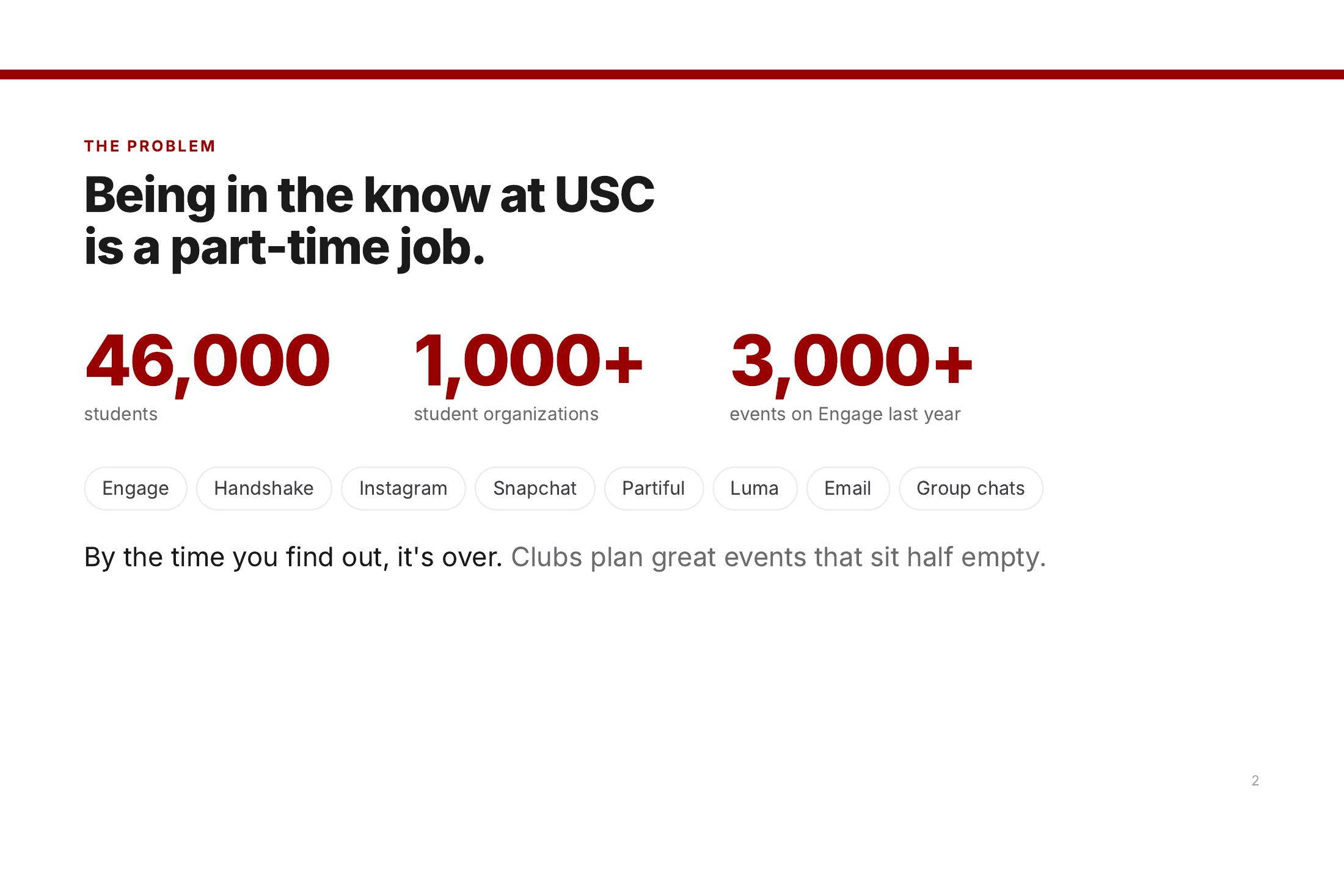
Some of us almost missed this hackathon. We only heard about it through word of mouth. That’s the problem at USC. So much is happening, but it’s scattered across Engage, Handshake, Instagram, Snapchat, Partiful, Luma, email, and group chats. Students feel out of the loop on their own campus, and clubs plan great events that end up half empty. We wanted one place that shows what’s happening at USC right now and what’s actually worth walking to.
What it does
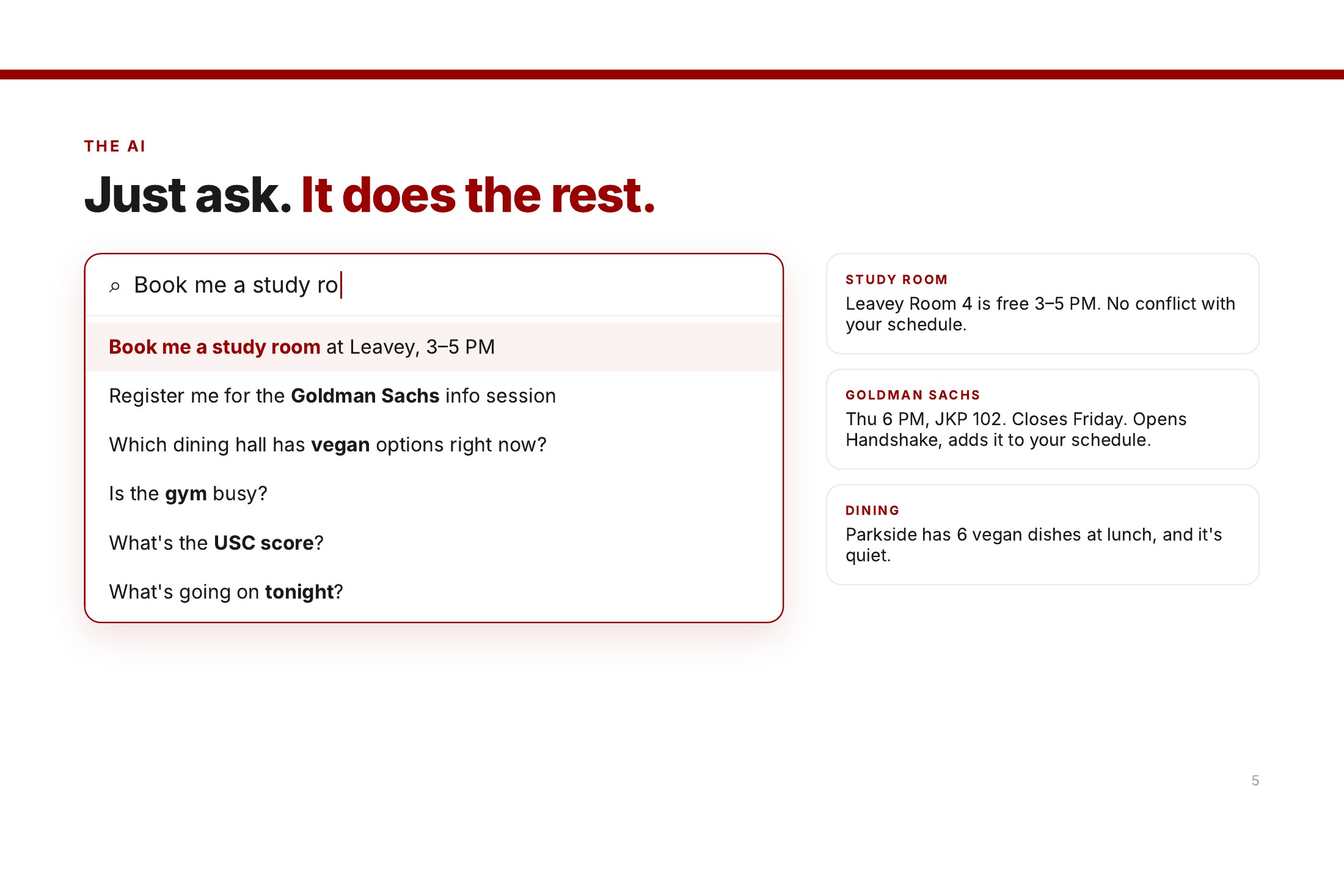
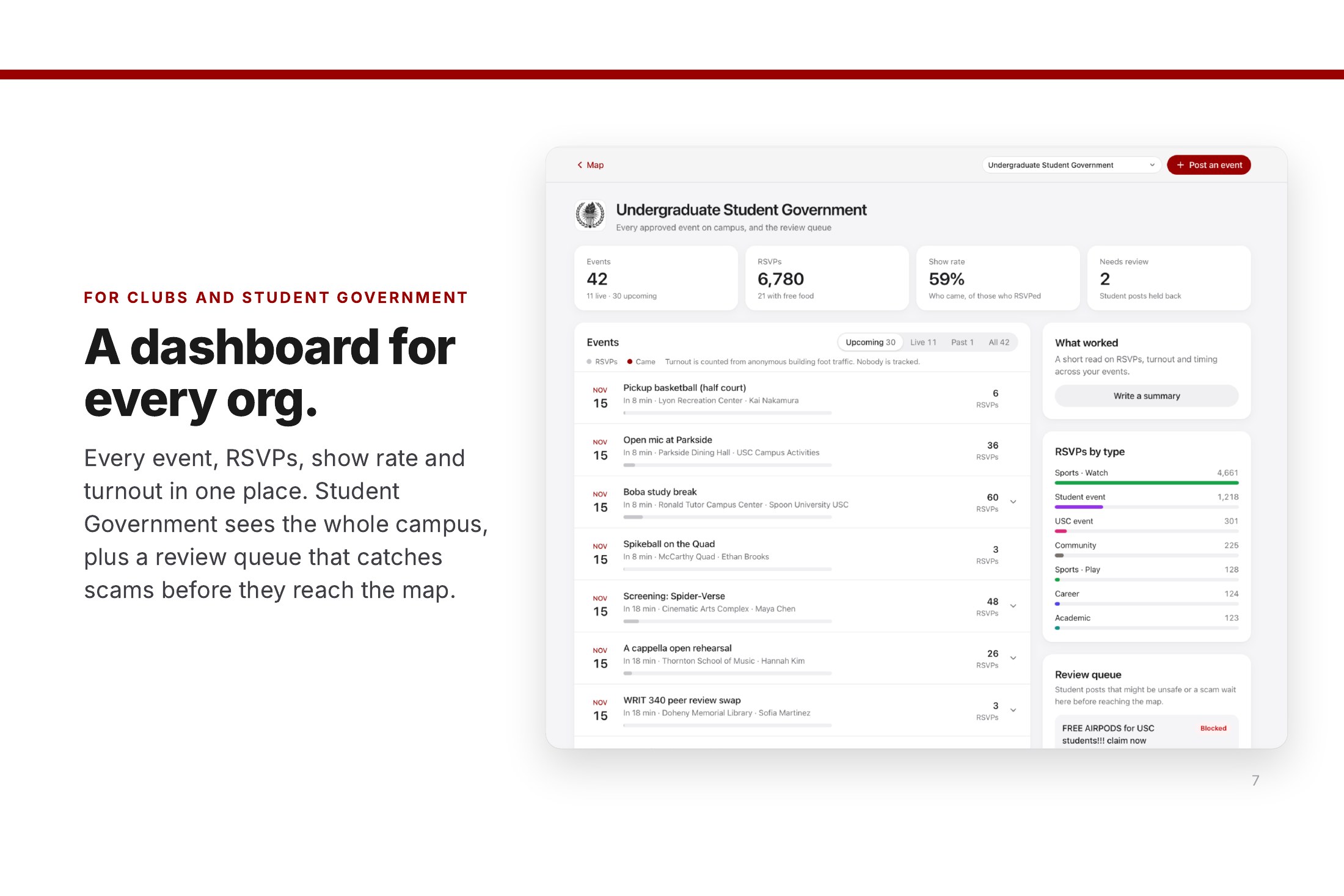
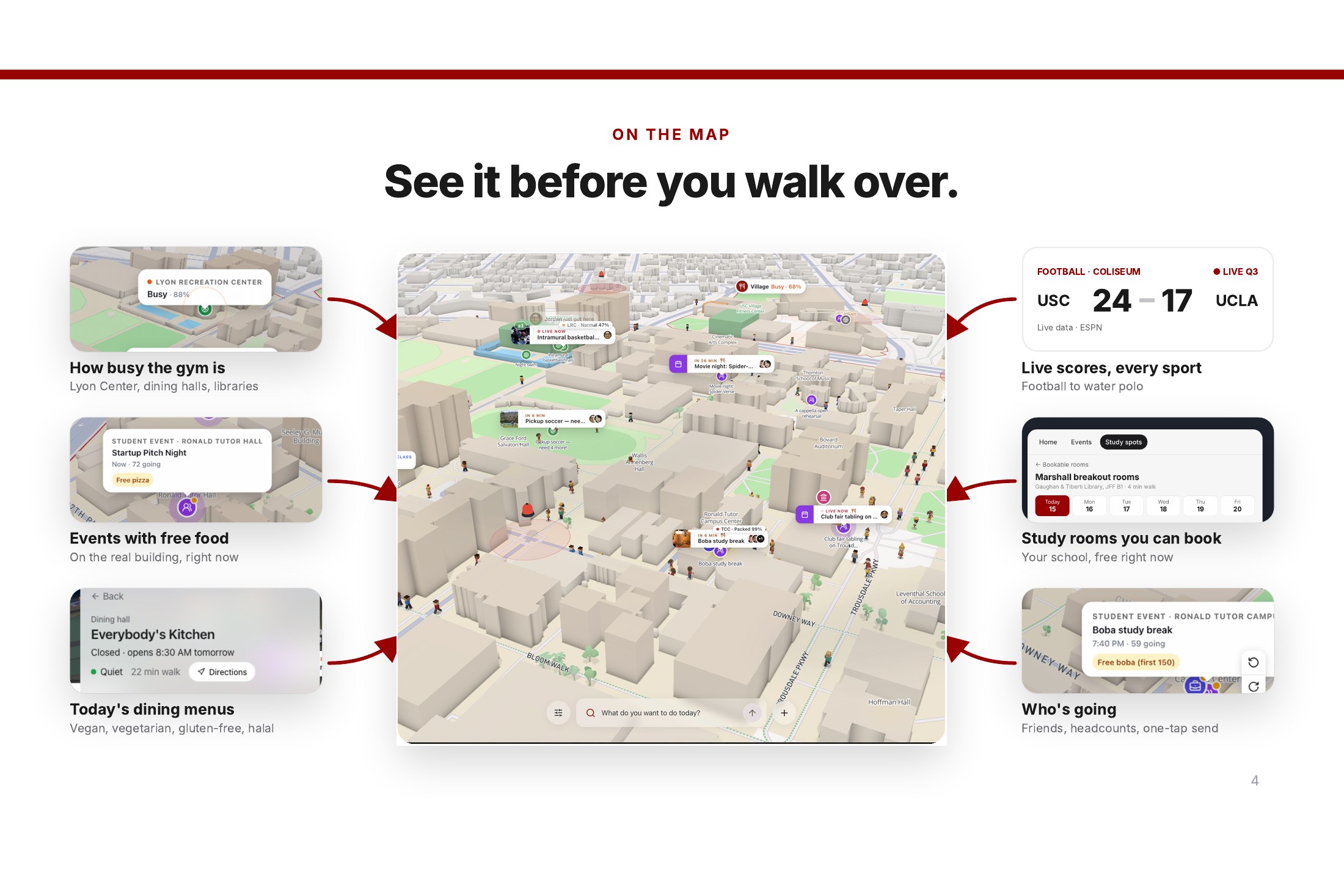
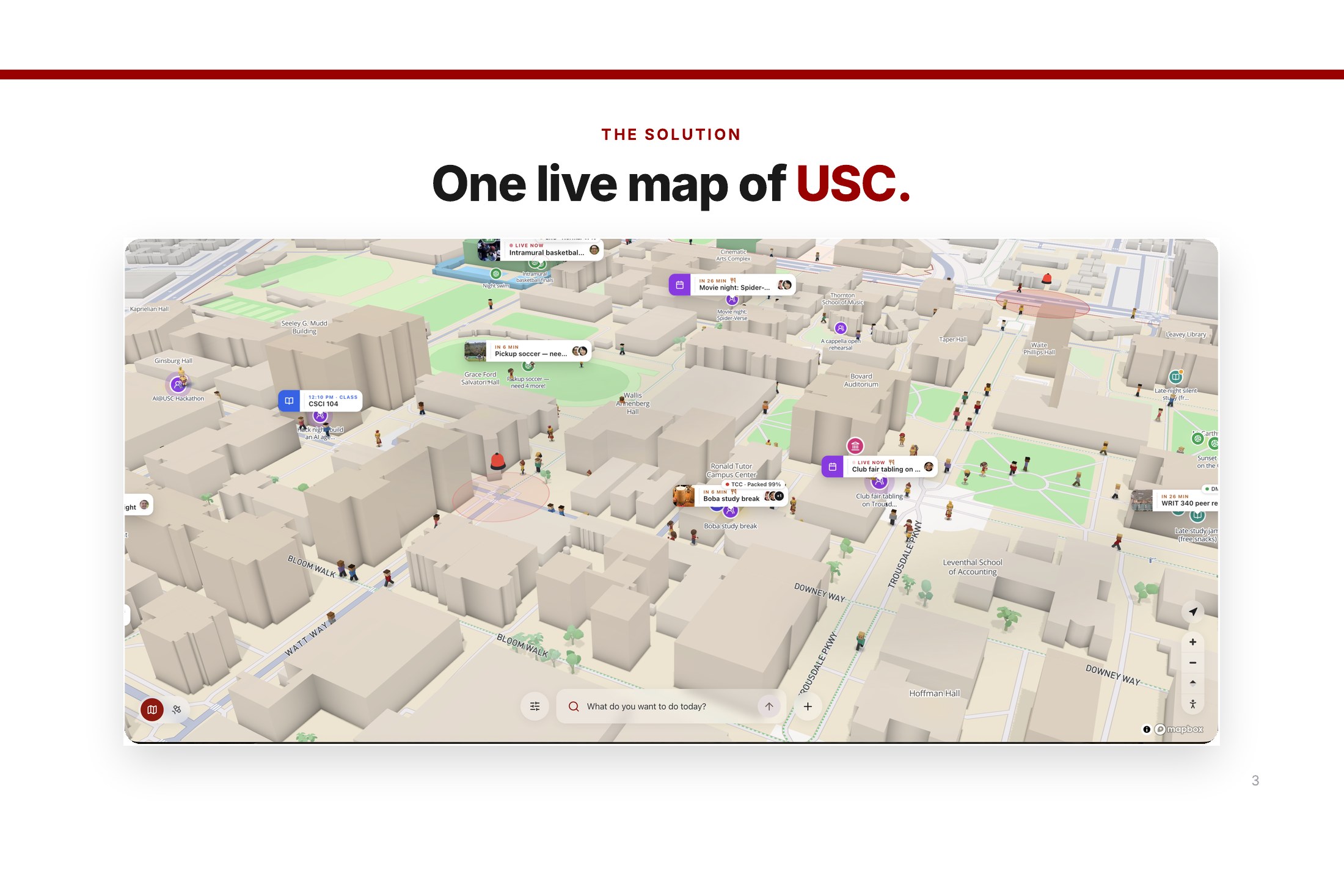
USCLive is a live 3D map of USC built around one question: what’s worth walking to right now? It shows events happening now and next, each pinned to its real building, and it has live scores and schedules for every USC sport, today’s real dining hall menus, DPS safety zone alerts, and how busy the dining halls, gym, and study rooms are before you walk over. You can register for events in one tap, and it checks your Google Calendar first, so you don’t double-book a class. It shows which study rooms your school lets you book and which are free, then opens the official booking page. You can add friends, see who’s going, and send each other events, with all sharing off by default. The AI assistant ties it all together. Ask “I have 15 minutes before my 2 PM and I’m hungry” or “What’s a high-protein dining hall right now?” and it finds free food nearby or the dining hall you should go to, shows which friends are there, and walks you there. Clubs can create events, import them from an Engage or Handshake link, and track sign-ups live.
How we built it
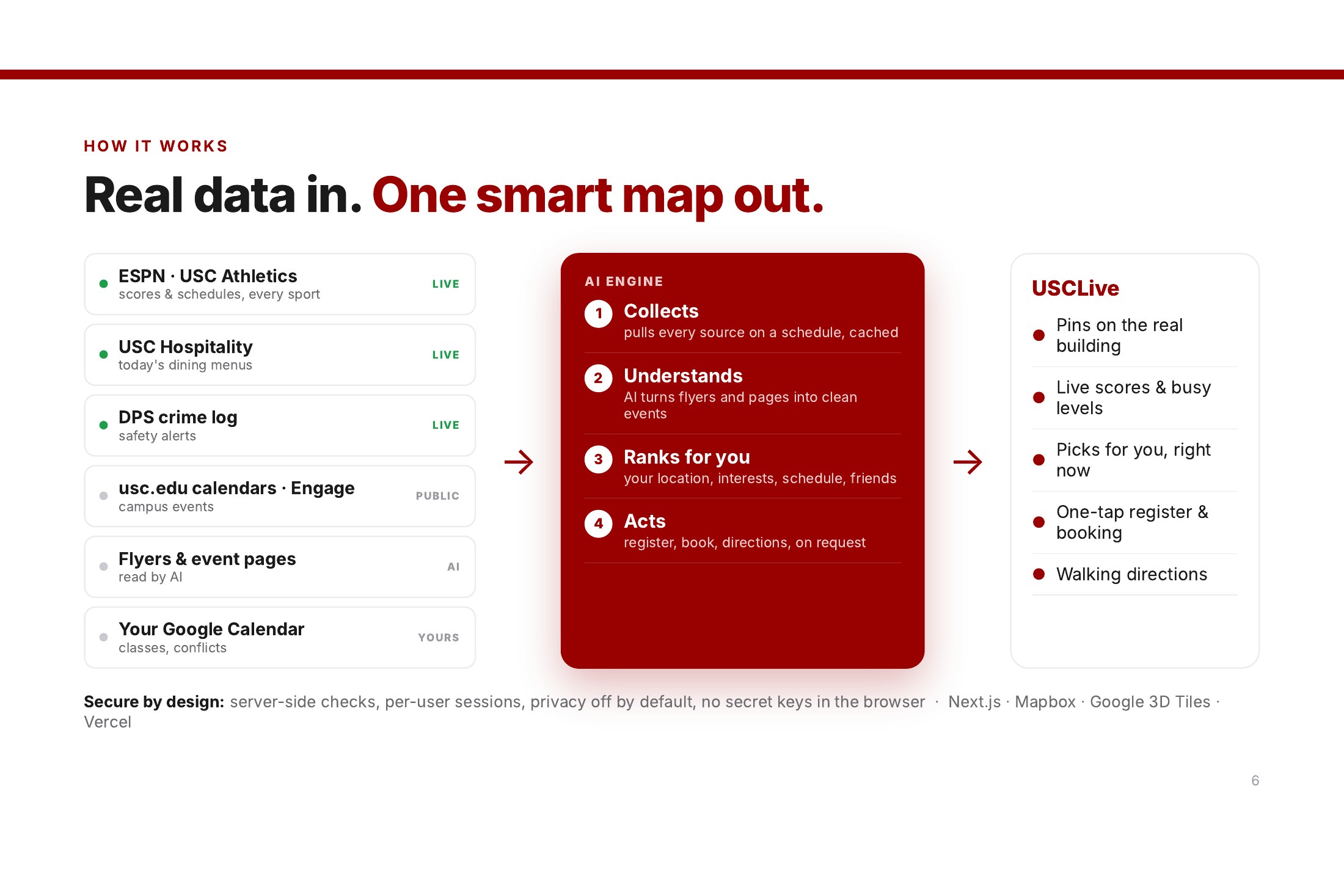
We built it with Next.js, React, and TypeScript, mobile-first and installable on iPhone. The 3D campus runs on Mapbox, with OpenStreetMap building footprints. An OpenAI-powered assistant calls live tools for crowds, events, dining, and your schedule.
Live data comes from ESPN, USC Athletics, USC Hospitality, the DPS daily crime log, live weather, and USC calendar pages. All of it is cached and checked on our server, and anything without a public source is clearly labeled as demo data. Four of us worked on separate Git branches and merged through pull requests, using Claude Code and Codex as our AI coding tools.
Challenges we ran into
Pinning events and walking routes to the right spot on a tilted 3D map was harder than it looked, since labels had to stay on the right building while you rotate and zoom. Performance was the other big one. At one point, the map was redrawing the whole 3D scene up to 60 times a second while nothing moved. We traced it to a loop measuring building heights, cut idle work to nearly zero, and a final audit roughly doubled our speed. We also had to figure out which USC data is public and which needs permission, and handle each honestly. And with four people pushing changes every few minutes, merge conflicts were constant, so we learned to merge often and agree on one design.
Accomplishments that we’re proud of
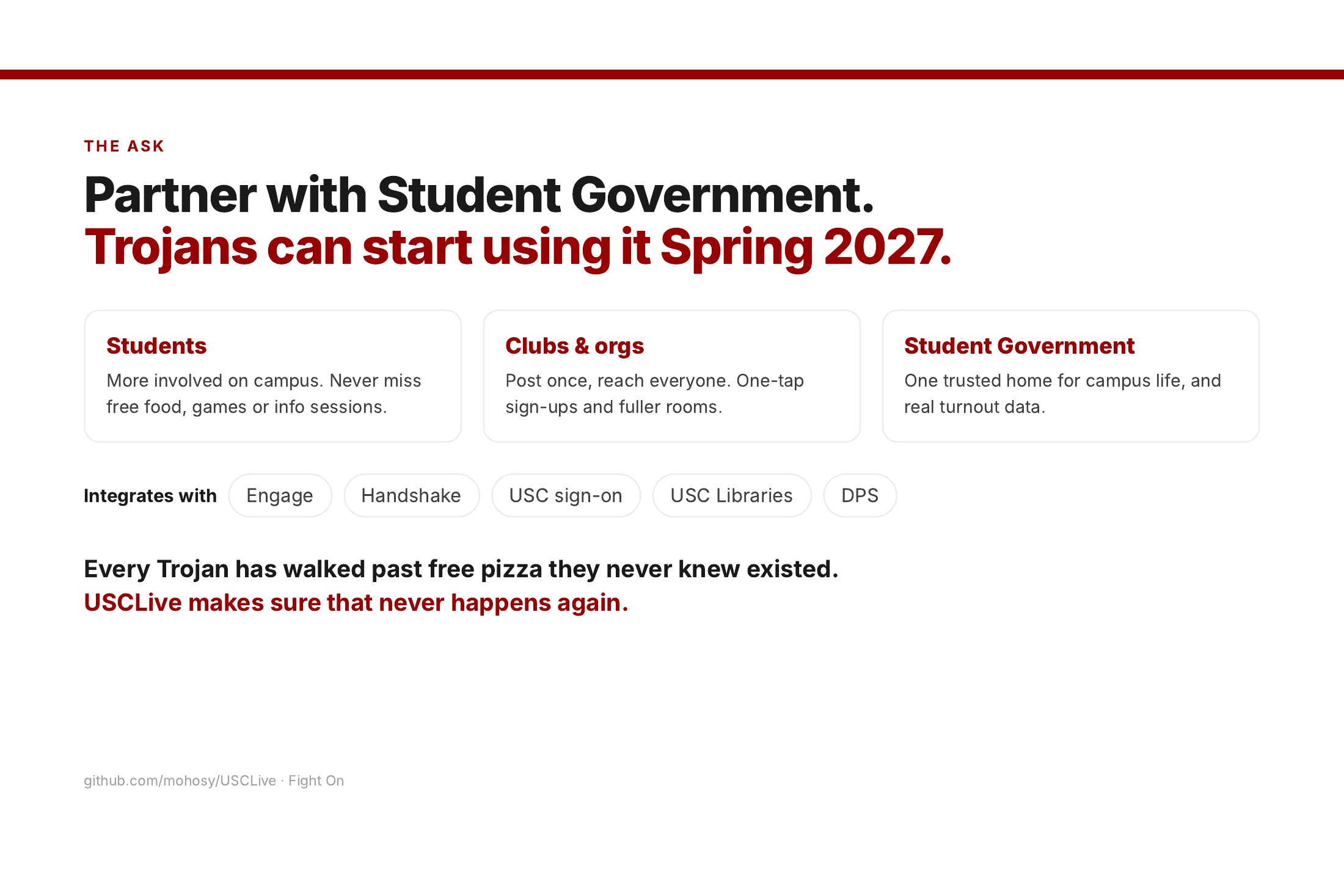
In 24 hours we went from an idea to something that feels like a real product: AI event creation, registration, friends, study rooms, and an organizer dashboard, all on one map, live at usclive.vercel.app. To run it campus-wide, we’d only need three things from USC: an Engage data feed, USC single sign-on, and permission to use the library booking and dining data directly.
But the thing we’re proudest of isn’t in the code. Some of us walked in as strangers and are walking out as friends. One of us came to build an app and ended up bonding with a teammate over soccer, and that’s a friendship that’s going to last well past this weekend. We already have plans to hang out after and play soccer. For a project that’s all about helping Trojans find each other and show up for what’s happening on campus, it feels fitting that this hackathon did exactly that for us.
What we learned
Building with people who see things differently makes the product better. We pushed back on each other’s ideas constantly, and almost every argument made the app simpler and more useful. We also learned how far a clear problem plus AI tools can take you in a weekend, and we made real friends along the way.
What’s next for USCLive
We want to pilot USCLive with USG and a handful of student orgs in Spring 2027. Next, we’d connect Engage and USC single sign-on, add live library room availability, and let clubs connect their Instagram so every flyer they post lands on the map automatically.
Engage tells you what’s scheduled. USCLive tells you what’s worth walking to.
Built With
- calednar
- claudecode
- github
- google-maps
- next.js
- node.js
- openstreetmap
- react
- supabase
- tailwind
- typescript
- vercel
