-
-
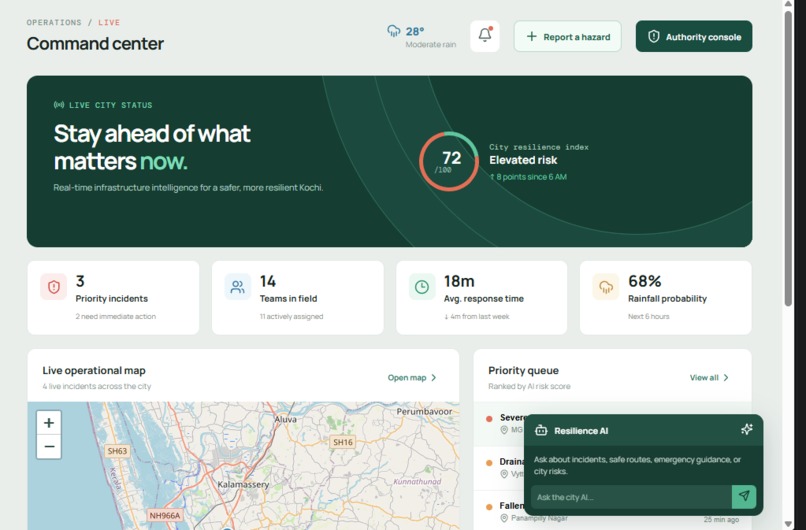
AI-Powered Urban Operations & Emergency Response Platform or
-
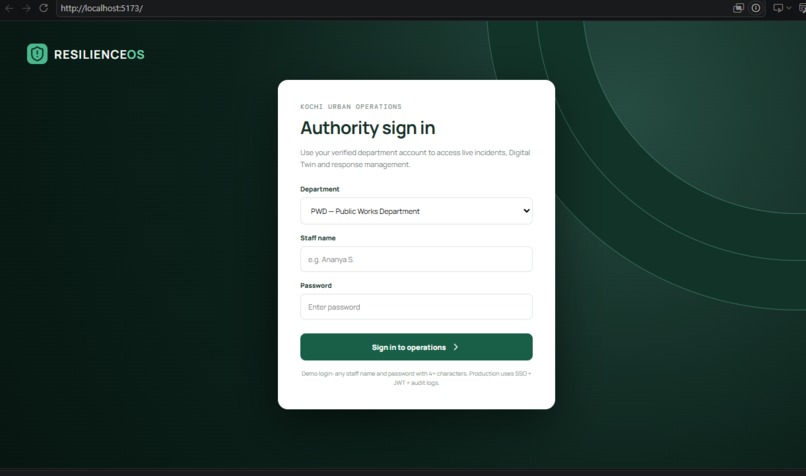
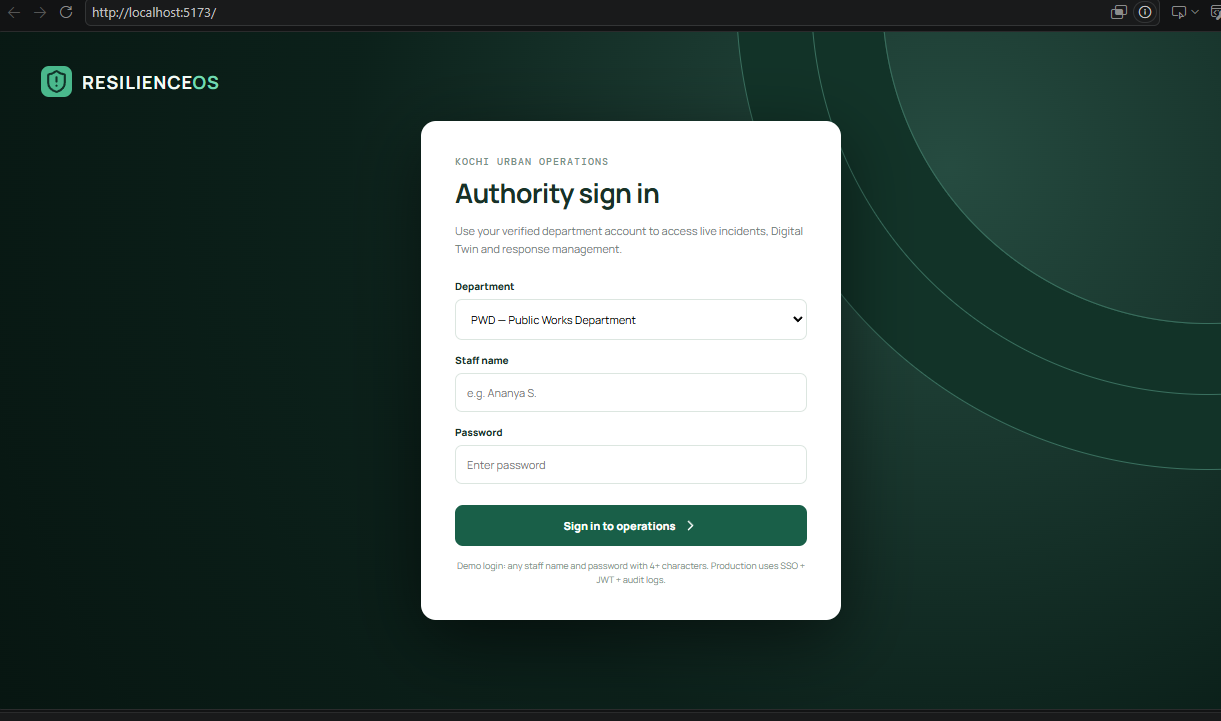
Authority Operations Portal
-
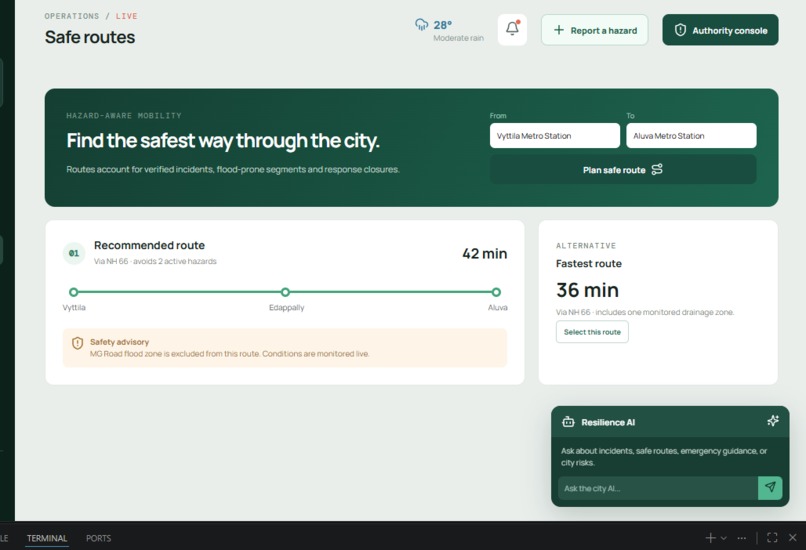
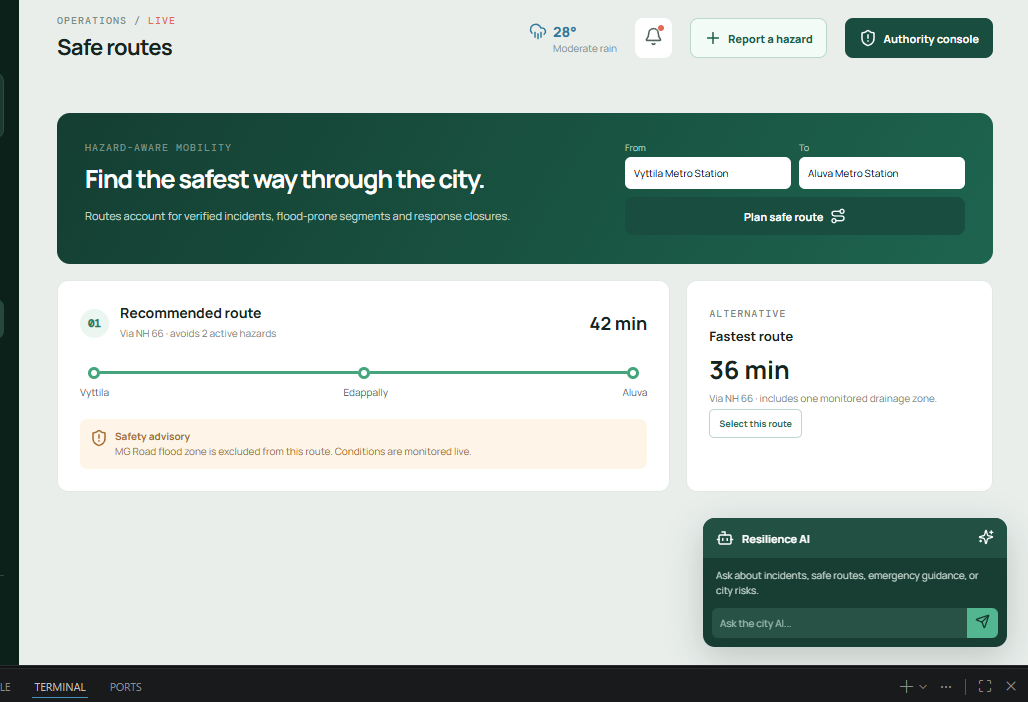
AI Safe Route Planner
-
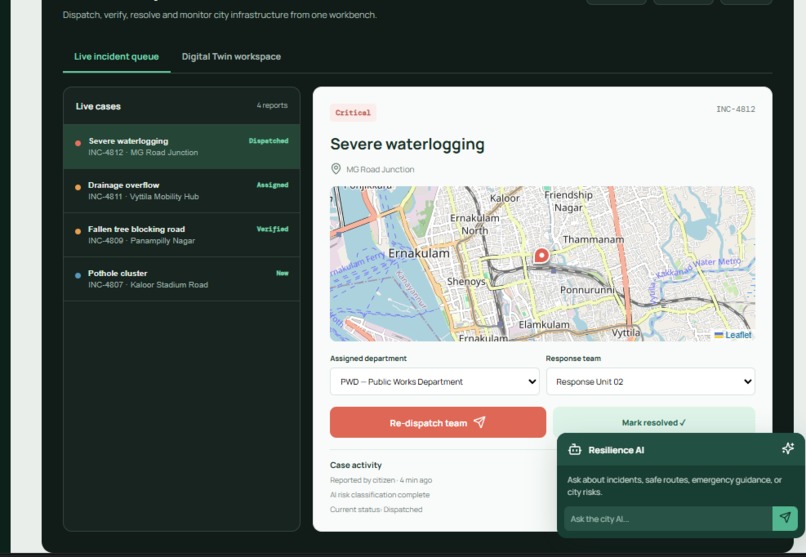
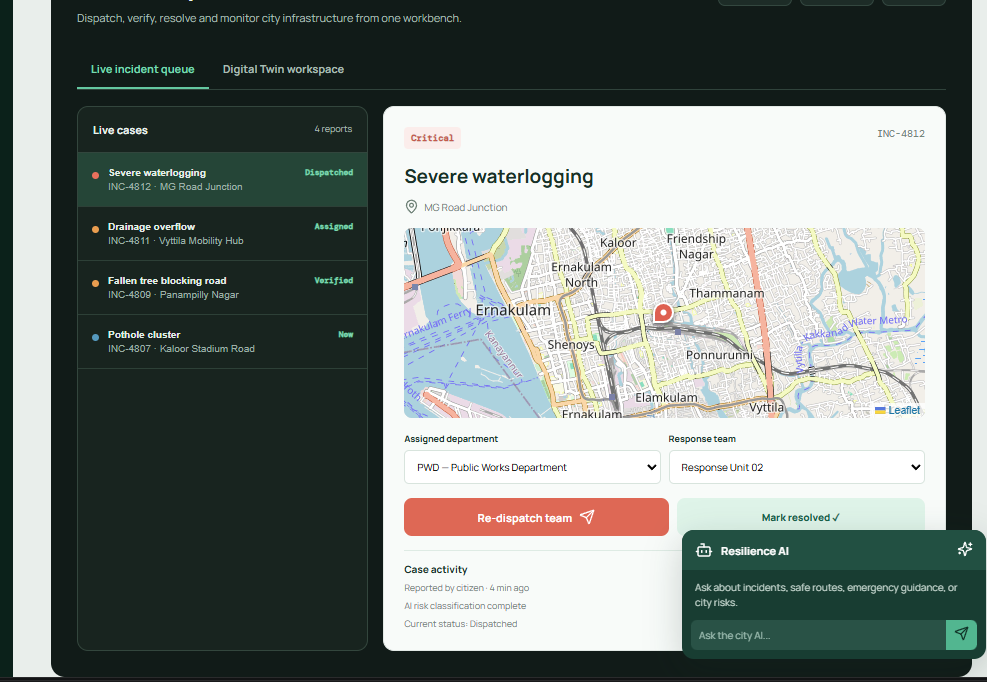
authority Dashboard,Dispatch teams, coordinate departments, and monitor incident resolution in real time.
-
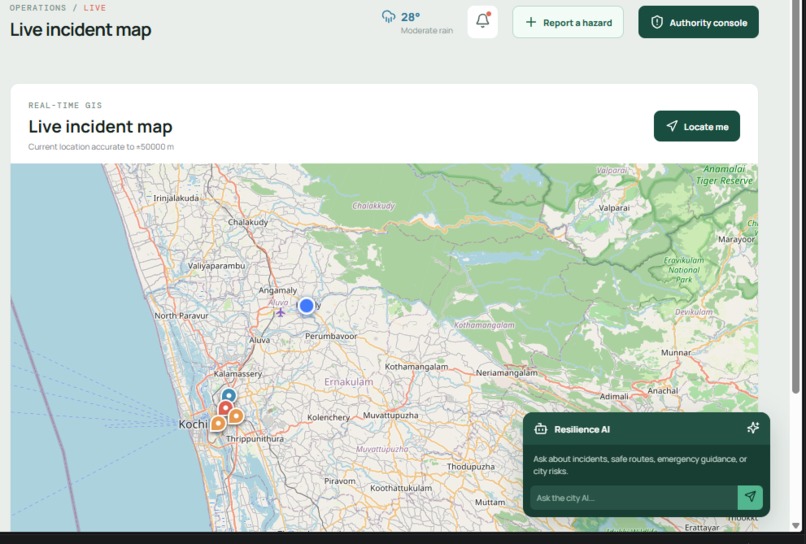
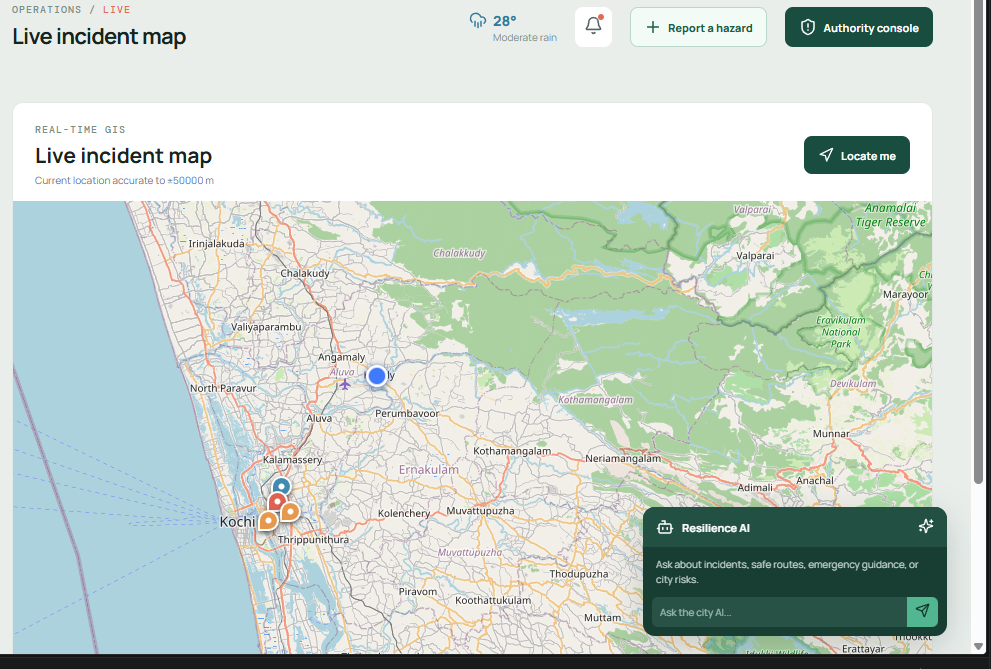
Live Incident Intelligence Map
Inspiration
Urban emergencies such as waterlogging, blocked drainage, road damage, fallen trees, traffic congestion, and infrastructure failures cause major disruption in cities every day. These incidents often remain unresolved because authorities receive delayed information, departments work independently, and emergency response is not coordinated.
We wanted to build an AI-powered Urban Resilience Platform that helps cities detect, prioritize, and respond to incidents in real time while improving coordination between multiple government departments.
What it does
UrbanResilience AI is an intelligent city command platform that connects citizens, AI, and government authorities.
Citizens can instantly report incidents by uploading photos, videos, voice messages, or location. AI automatically analyzes the incident using computer vision and GPT, identifies its severity, categorizes the issue, and routes it to the appropriate department.
Depending on the incident, the platform automatically dispatches it to the responsible authority such as:
- Public Works Department (PWD)
- Corporation/Municipality
- Water Authority
- Disaster Management Authority
- Police Department
- Fire & Rescue Services
- Traffic Control
- Emergency Response Teams
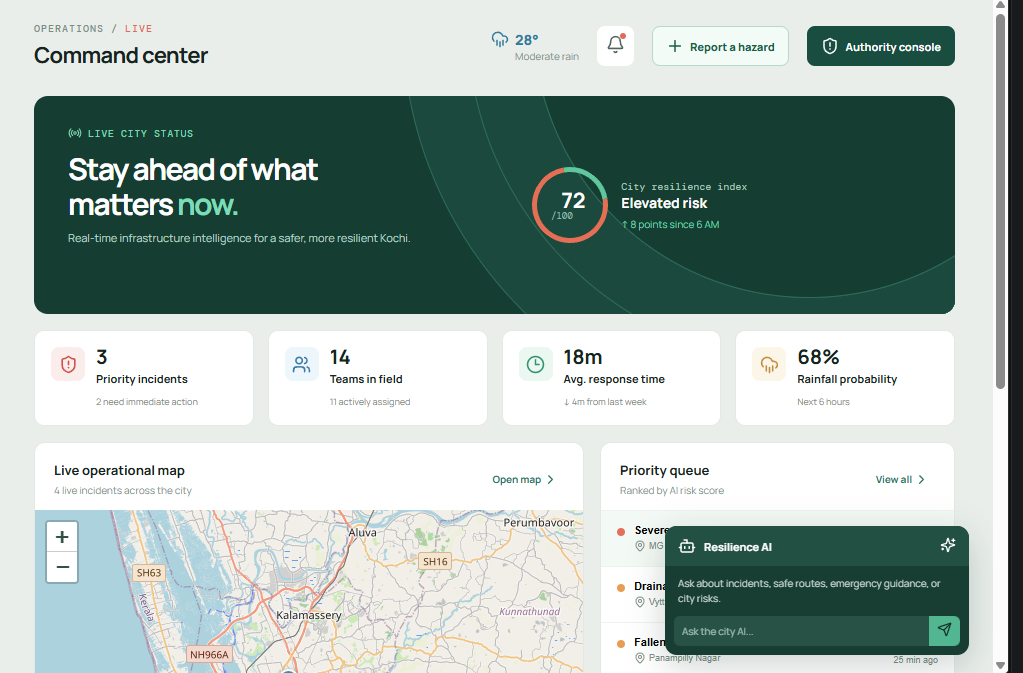
Authorities receive real-time alerts through a live dashboard showing incident location, severity, supporting images, AI analysis, and recommended actions.
The platform also visualizes all incidents on an interactive city map, helping authorities prioritize resources and respond more efficiently.
Real-world Example
During heavy rain, a citizen reports severe waterlogging on a major city road.
The AI detects flooding from the uploaded image, estimates the severity, identifies the affected location, predicts possible traffic disruption, and immediately notifies the relevant departments.
The authority dashboard recommends traffic diversion, dispatches maintenance teams, and allows officials to monitor the issue until it is resolved.
This reduces traffic delays, improves emergency response, and minimizes disruption for citizens.
How we built it
The prototype is being developed using React, FastAPI, GPT, computer vision, and interactive mapping technologies. AI analyzes reports, prioritizes incidents, and assists authorities in making faster operational decisions.
Challenges
Building a unified platform that can intelligently classify incidents, coordinate multiple government departments, and provide meaningful AI-assisted recommendations within a hackathon timeframe has been the biggest challenge.
Current Status
UrbanResilience AI is currently being developed as a working prototype. Core features including AI-assisted reporting, authority dashboard, live incident mapping, and emergency workflow are under active development.
Future Vision
Our vision is to create a scalable AI-powered command center for smart cities that enables predictive monitoring, intelligent emergency response, infrastructure management, and coordinated action across all public authorities.
Built With
- api
- codex
- computer
- css
- fastapi
- github
- gpt-5.6
- html
- javascript
- leaflet.js
- openai
- opencv
- openstreetmap
- python
- react
- rest
- vision

Log in or sign up for Devpost to join the conversation.