-
-
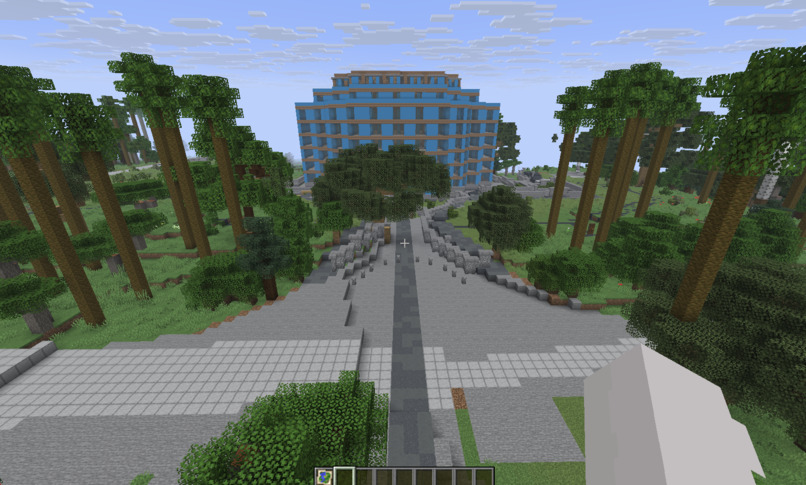
Famous Library Walk
-
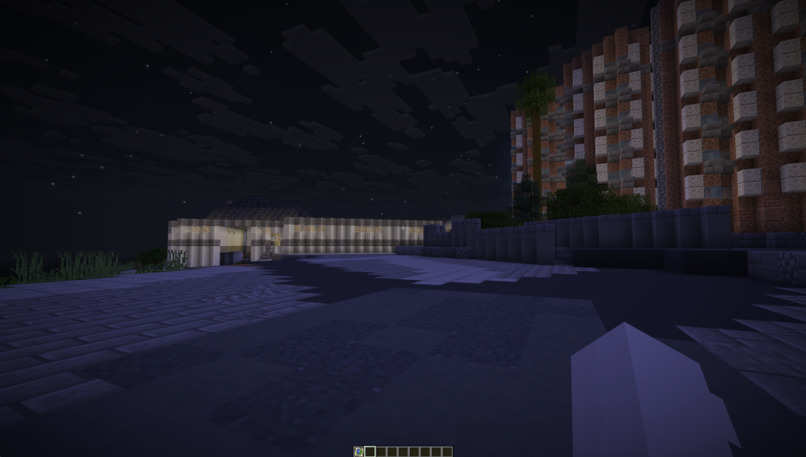
Server Spawn, where I started my UCSD journey
Inspiration
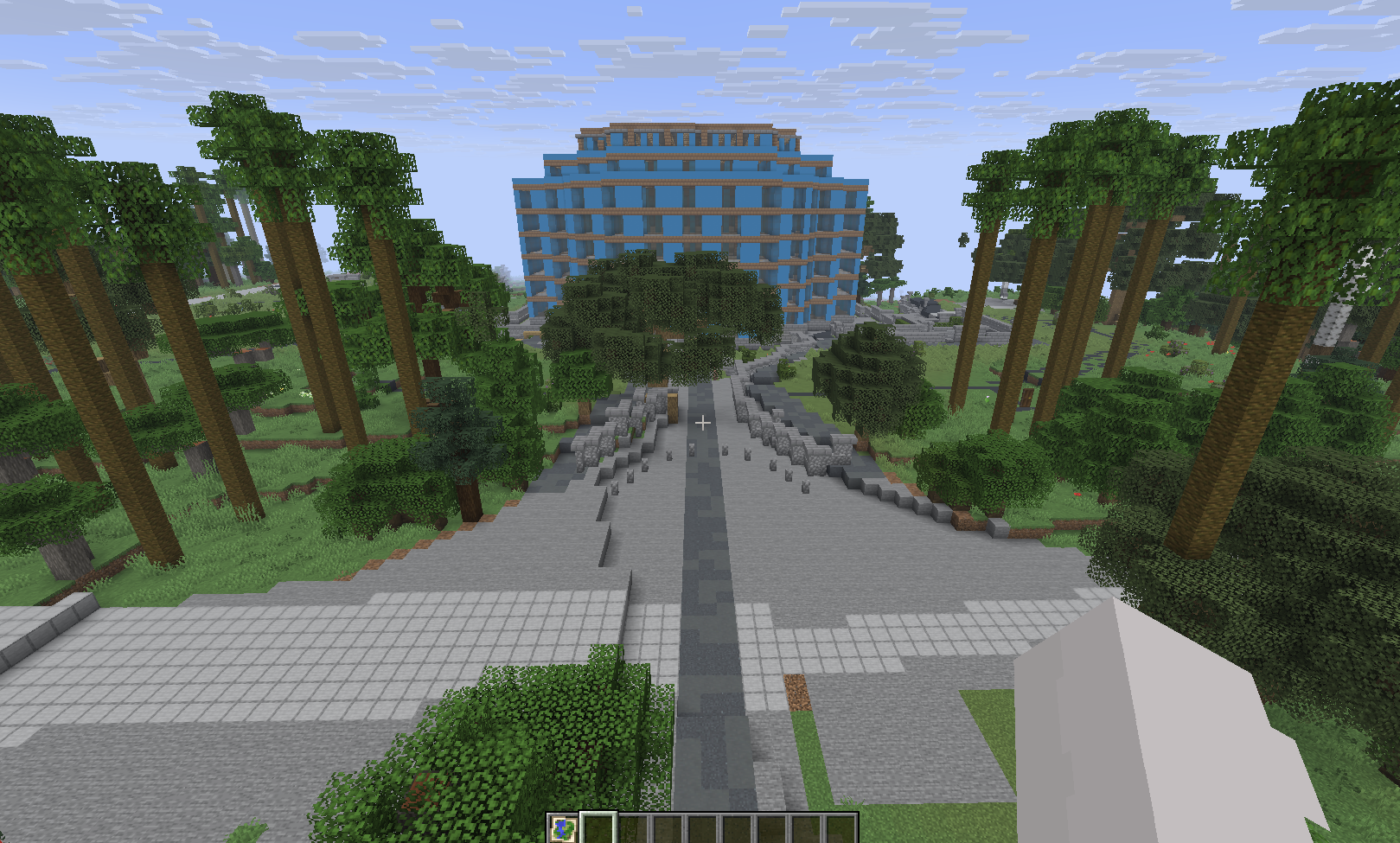
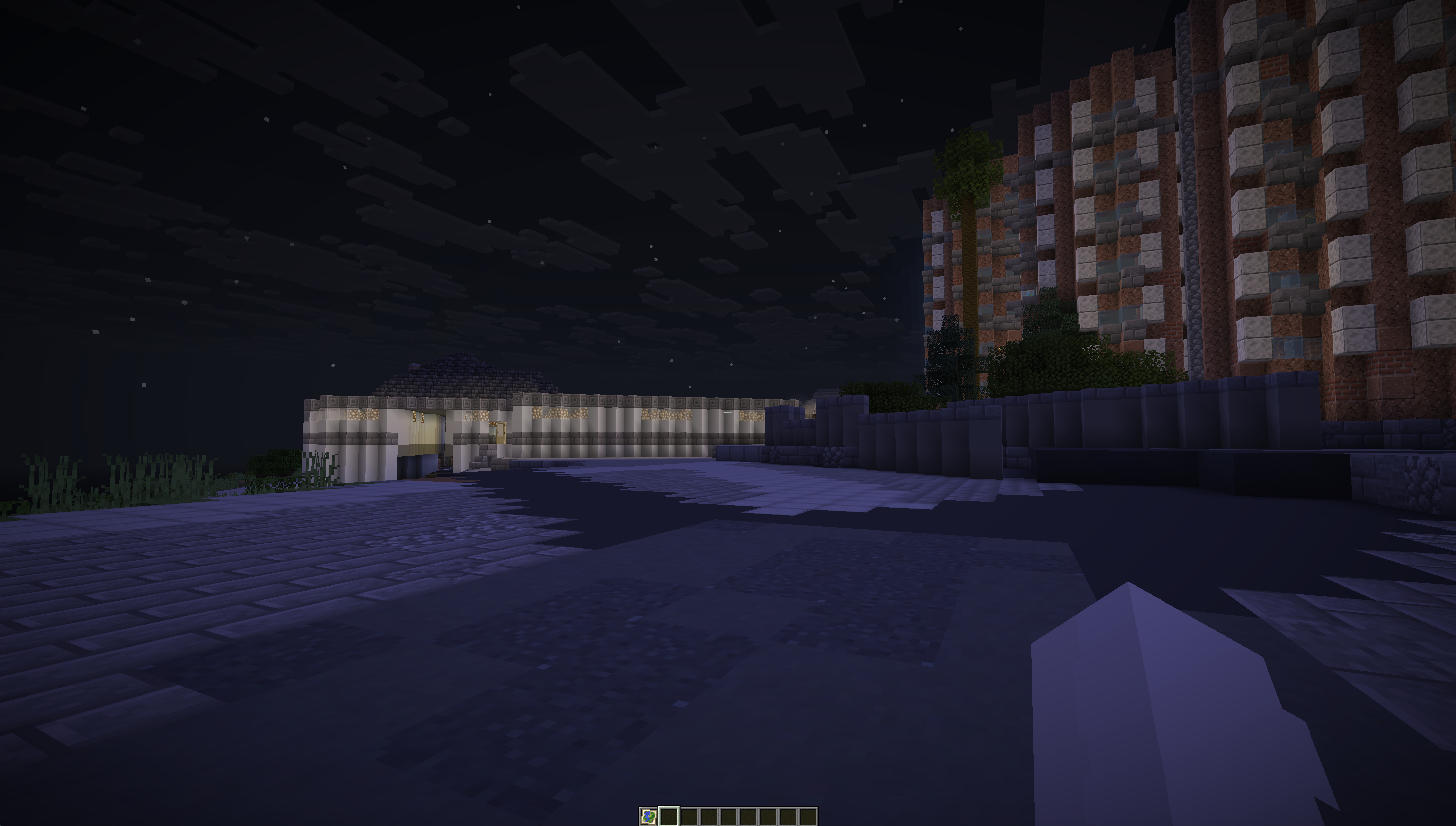
We wanted to translate the sprawling, dynamic physical environment of the UC San Diego campus into an accessible, interactive digital medium. The goal was to build an immersive virtual hub where the student community can explore, socialize, and host digital campus events, bridging the gap between physical campus life and online community building.
What it does
It is a fully functional 1:1 scale Minecraft replica of the UC San Diego campus. Players can walk the exact paths they take to class, visit their dorms, and interact with other students in a shared virtual space. It serves as a digital twin of the university, ready to host virtual campus tours, student organization fairs, and social gatherings.
How we built it
To generate the core 1:1 environment, we utilized Arnis, an open-source map generator, to parse OpenStreetMap geospatial data directly into a Cartesian block grid. Arnis translates real-world topography by applying an equirectangular approximation for localized Euclidean distance, mapping coordinates via:
$$x_{block}=\lfloor(lon-lon_{origin})\times\frac{\pi}{180}\times R\times\cos(lat_{origin}\times\frac{\pi}{180})\rfloor$$
$$z_{\text{block}}=\lfloor(\text{lat}-\text{lat}_{\text{origin}})\times\frac{\pi}{180}\times R\rfloor$$
Where R = 6,371,000 meters is the Earth's radius. Once this massive world dataset was successfully generated, we built the custom backend using PaperMC on Java 25 to heavily optimize the Java Virtual Machine for intensive chunk loading and entity management.
Challenges we ran into
Infrastructure provisioning and network routing were our most significant hurdles. We initially planned to deploy on an Oracle Cloud Ampere A1 Flex instance, but regional hardware capacity shortages blocked our cloud deployment. We rapidly pivoted to hosting the server locally on a macOS machine, explicitly tuning the Java Virtual Machine (-Xms4G -Xmx8G) to handle the heavy memory requirements.
However, the university's enterprise network enforces strict client isolation and blocks incoming external connections, rendering standard TCP 25565 port forwarding impossible. To bypass the campus firewall and allow external players to connect to the local Mac, we integrated a secure tunneling service to expose the local port to a public address without requiring administrative router access.
Accomplishments that we're proud of
We successfully maintained dimensional accuracy across the entire campus map and overcame enterprise-level network restrictions to make the server publicly accessible. Pivoting from a blocked cloud deployment to a fully functional local host behind a strict university firewall within the hackathon time limit was a major technical victory.
Built With
- arnis
- bash
- digital-twin
- geospatial-data
- gis
- java
- macos
- minecraft
- networking
- ngrok
- oci-cli
- openstreetmap
- oracle-cloud
- papermc
- playit.gg
- python
- server-administration
- tunneling

Log in or sign up for Devpost to join the conversation.