Inspiration
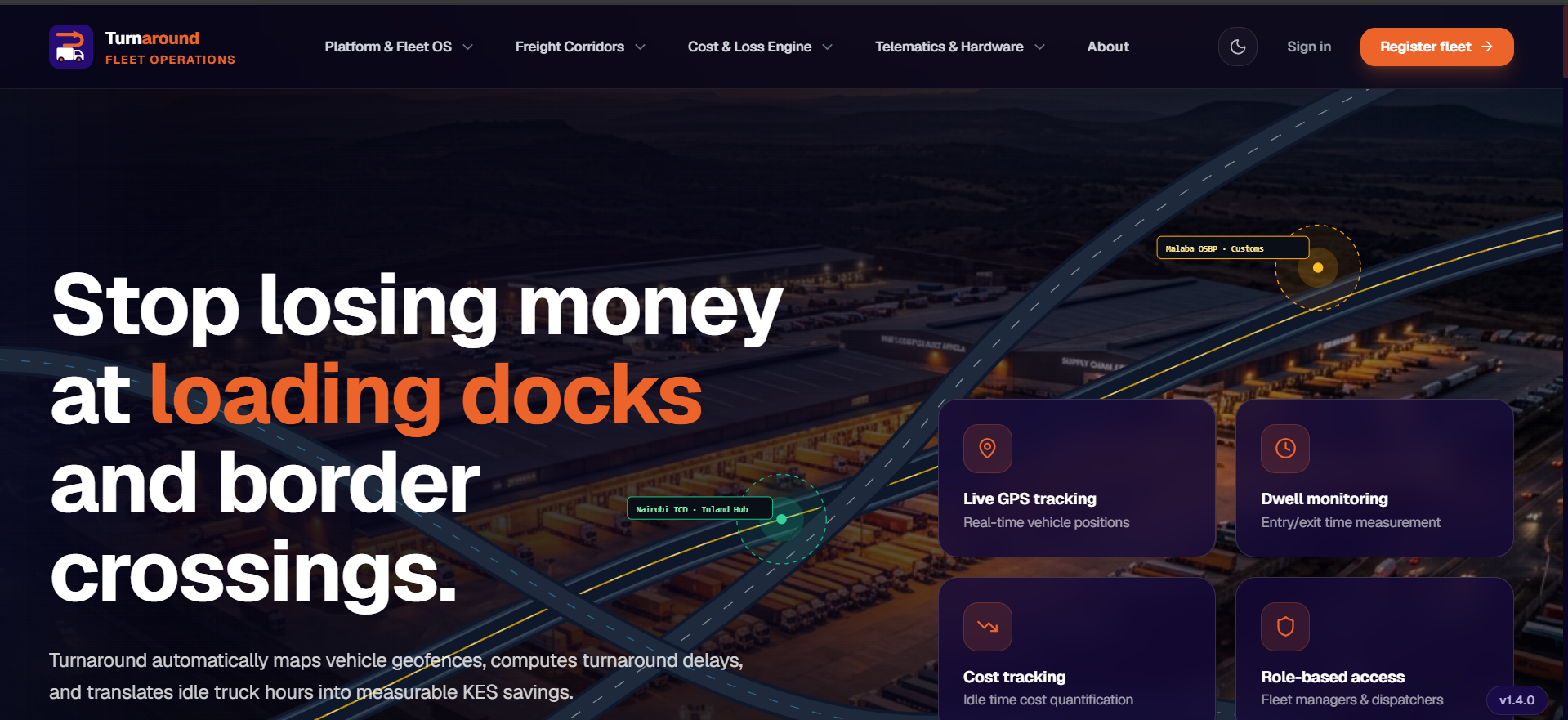
Turnaround was inspired by a real operational problem in logistics: trucks and freight assets often sit idle for long periods at ports, depots, border posts, warehouses, and customer facilities, yet the true cost of that delay is rarely visible in real time. In corridor logistics, delays can quickly turn into lost revenue, missed schedules, and increased operating costs, but teams often lack the tools to identify the root cause quickly.
I wanted to build a platform that takes raw GPS data and transforms it into meaningful operational intelligence. The goal was to give fleet managers and dispatchers a live view of where vehicles are, how long they have dwelled, and what that delay means financially. This concept was the foundation for Turnaround.
What it does
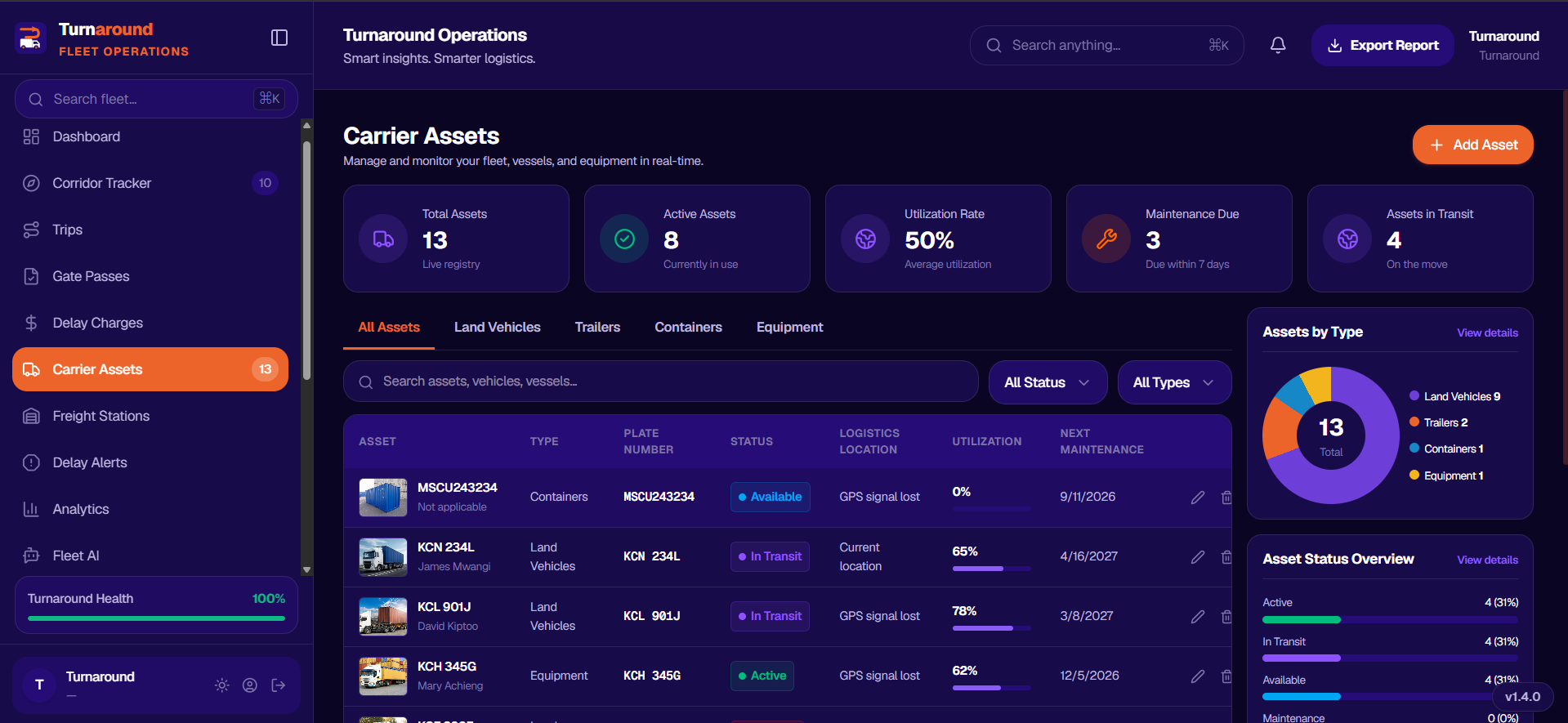
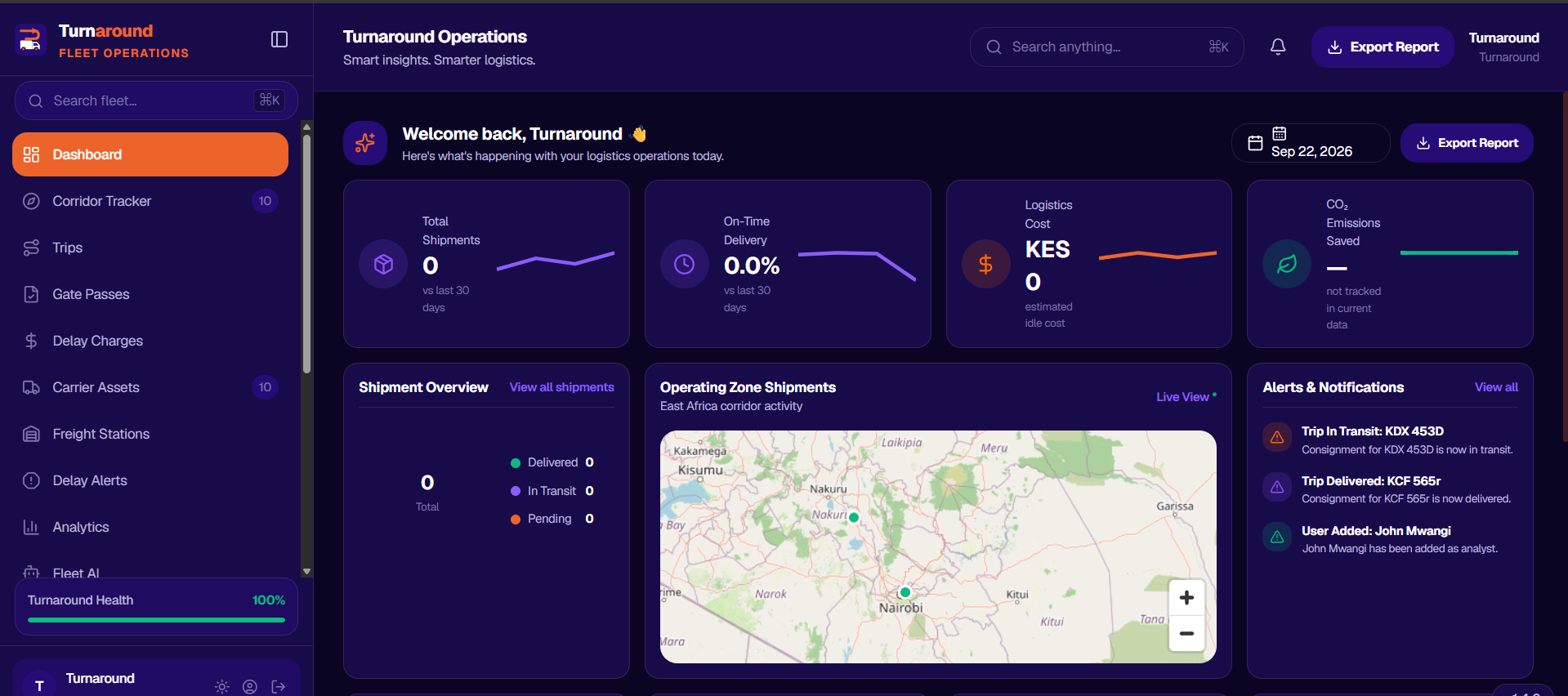
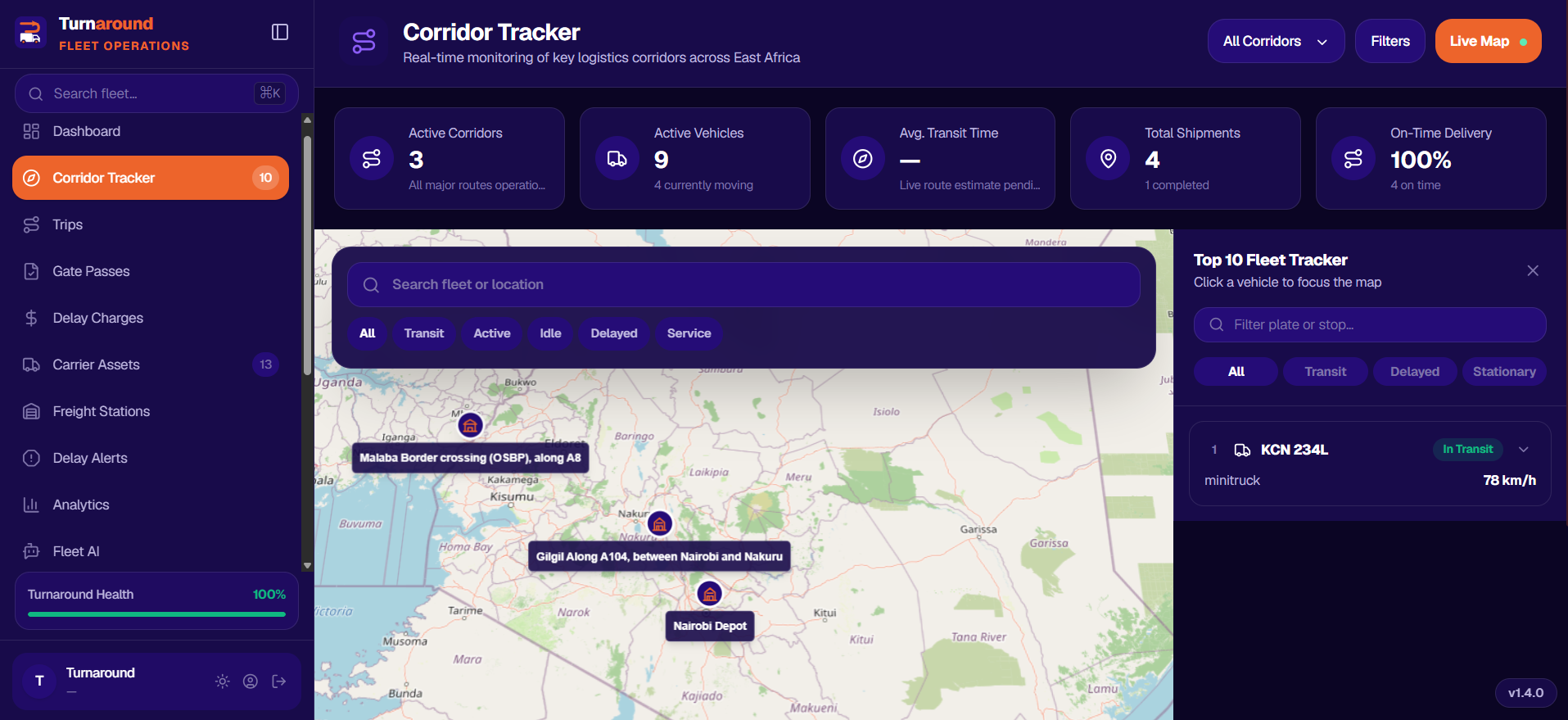
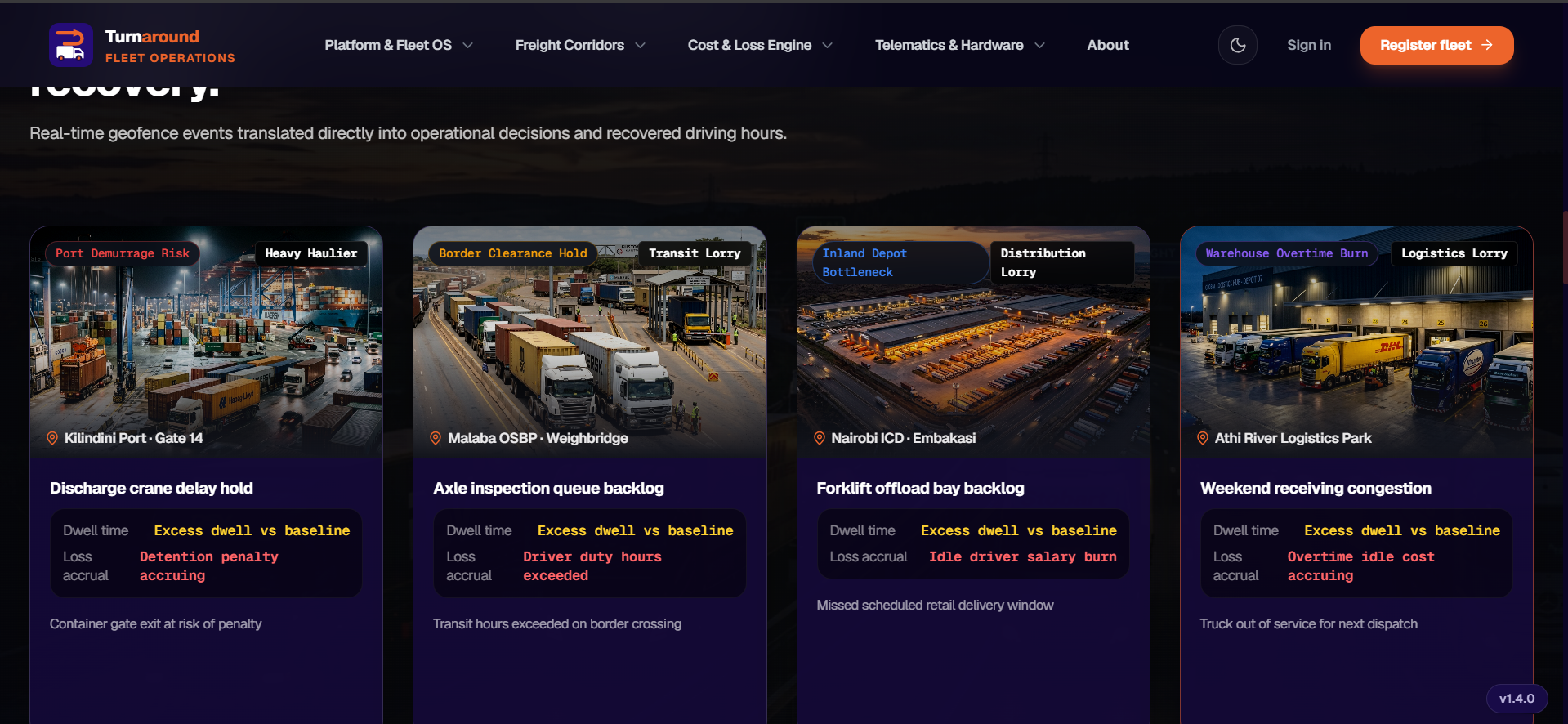
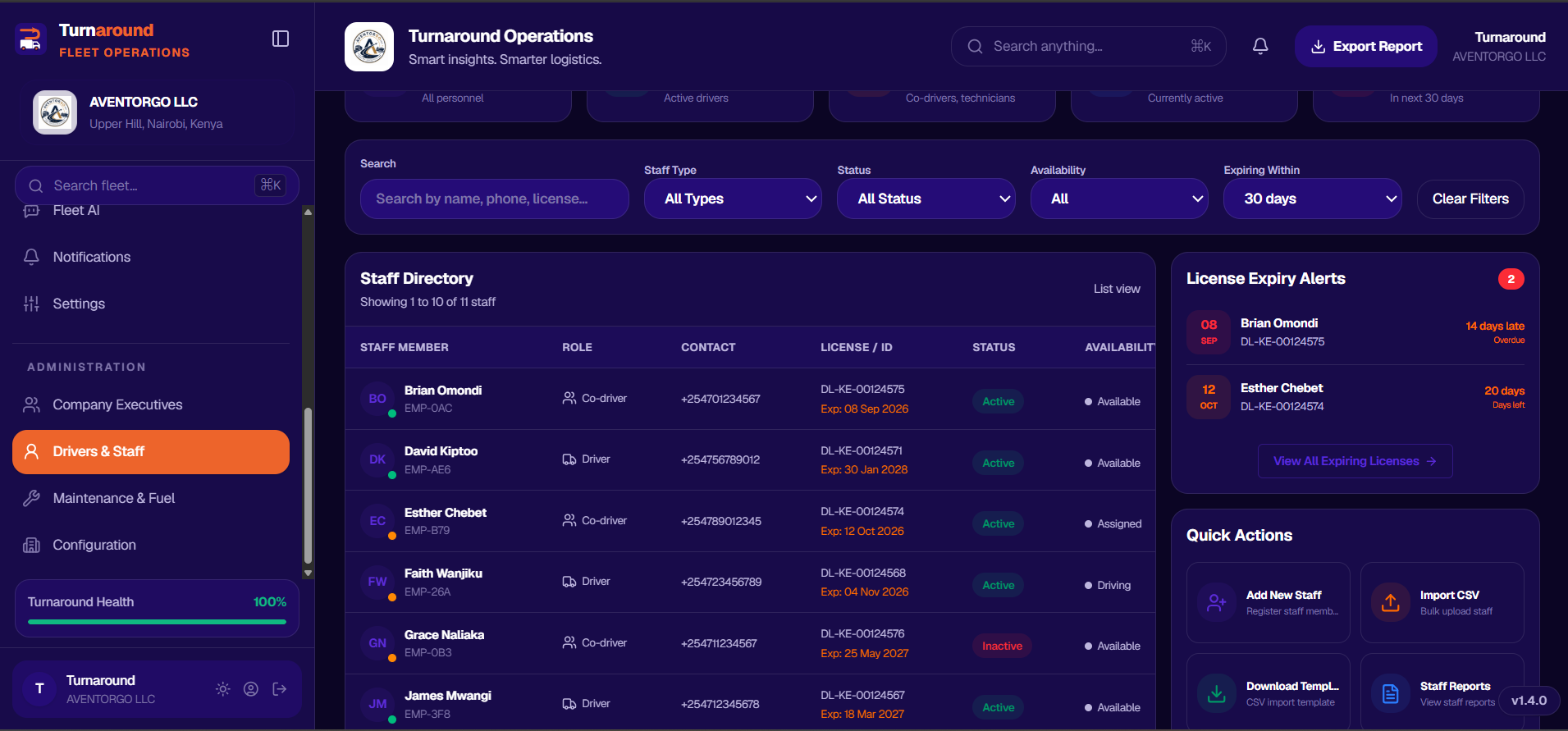
Turnaround is an operational intelligence platform for commercial fleet and corridor logistics. It helps users monitor vehicle movement, trip progress, dwell times, geofence-based facility events, and the financial impact of delays. The system connects GPS telemetry with logistics workflows to surface important insights such as:
live fleet tracking vehicle arrival and departure detection dwell and turnaround monitoring route and trip management facility and geofence awareness delay risk and bottleneck classification excess dwell cost analysis The platform is designed to help logistics teams understand not only where a vehicle is, but also why it is delayed and how significant that delay is to the business.
How we built it
I built Turnaround as a full-stack system that combines a modern frontend with a backend data-processing and analytics layer.
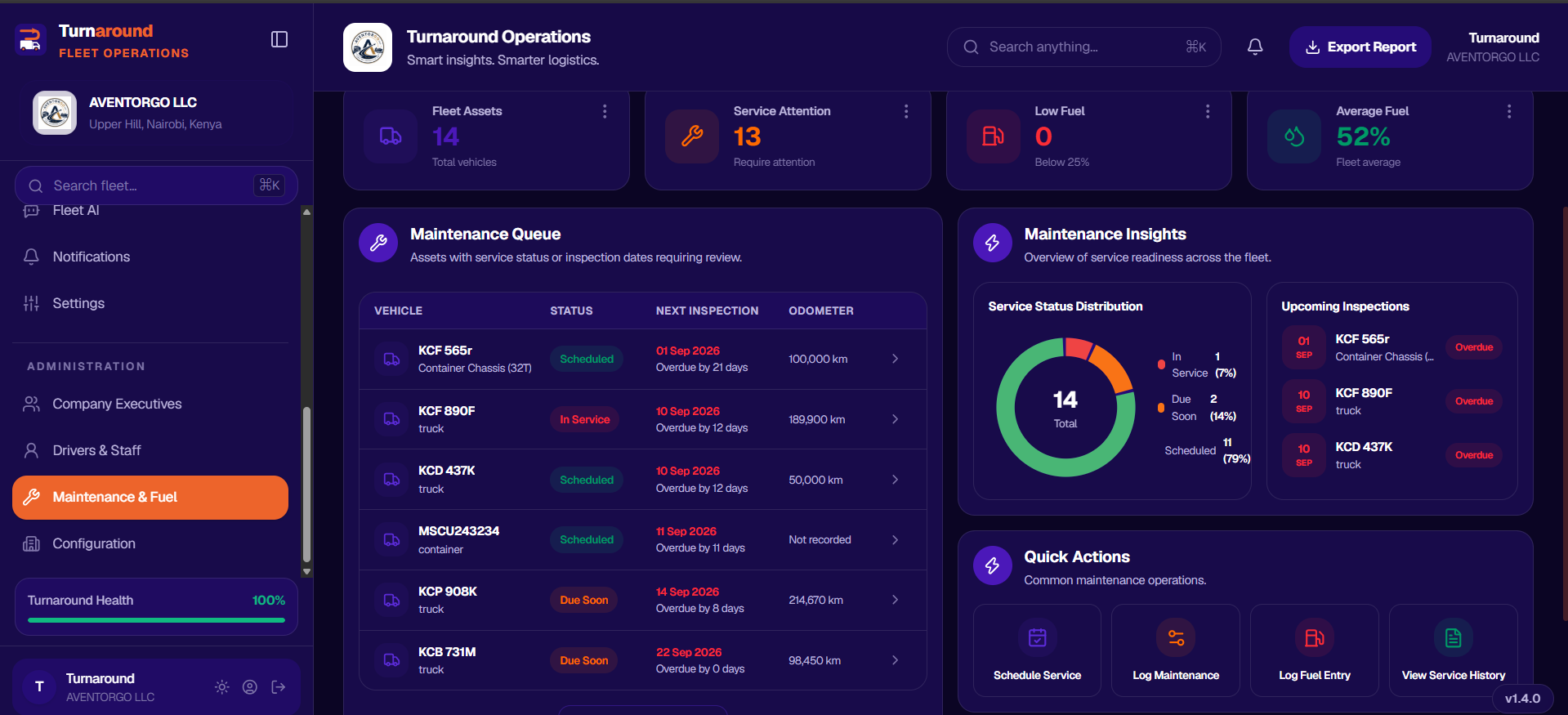
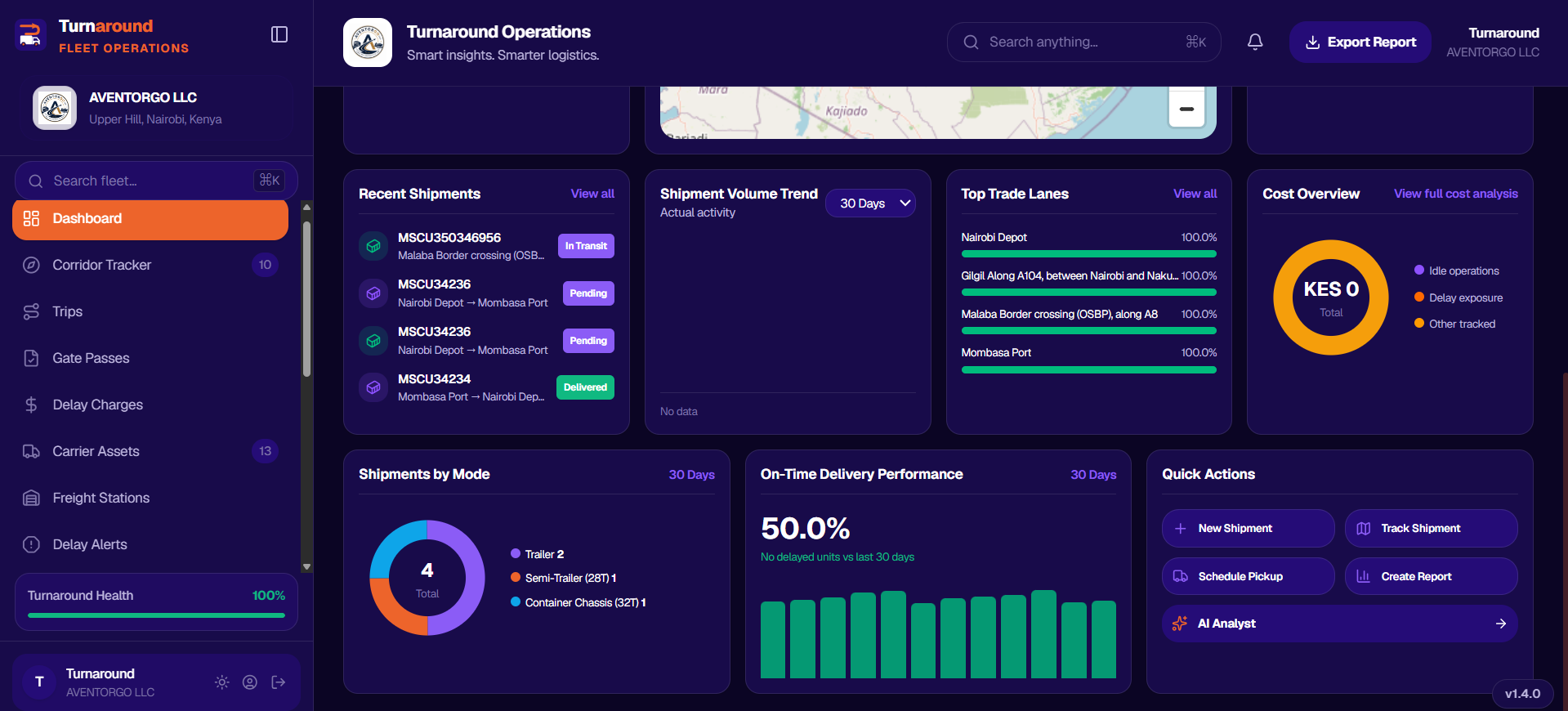
Frontend The frontend was developed with React, TypeScript, and Vite, with an operations-focused dashboard interface. It includes live mapping, fleet views, trip workflows, and analytic summaries. We used MapLibre to visualize vehicle activity and route context across corridors.
Backend The backend was built in Python using FastAPI. It handles data processing, authentication, asset management, trip operations, and complex logic around dwell tracking and operational analysis.
Data and Intelligence Layer The real power of Turnaround comes from its operational intelligence engine. It processes GPS events, identifies geofence interactions, classifies dwell states, and compares expected versus actual turnaround performance. The system then calculates the financial cost of excess dwell time using formulas like: Financial Loss=max(0,Actual Dwell−Expected Dwell)× (Hourly Cost / 60) This allows the platform to convert operational delay into measurable business impact.
Challenges we ran into
There were several major challenges during development:
Designing a data model that properly handles trucks, trailers, tankers, containers, and other logistics assets without mixing concepts that behave differently Dealing with noisy GPS data and preventing false geofence entries or exits Keeping trip, driver, vehicle, and facility records synchronized Turning raw movement data into meaningful operational states like arrival, dwell, departure, and delay Building an interface that is powerful enough for operations teams without being too overwhelming Translating delay and dwell time into business value in a way that is understandable to decision-makers These challenges pushed us to think not only about technical correctness, but also about the operational realities of managing a fleet.
Accomplishments that we're proud of
I am proud of building a platform that brings together several connected systems into one operational view:
a live fleet tracking experience geofence-aware asset monitoring delay and dwell intelligence trip and dispatch workflows business-centered cost analysis a clear product story grounded in real logistics pain points
We are especially proud of the fact that Turnaround goes beyond basic GPS tracking. It turns movement data into actionable insights that help teams understand not just where a truck is, but whether it is performing efficiently and what that means operationally.
What we learned
This project taught me a lot about building real-world software for complex industries:
The importance of modeling business rules correctly How critical clear workflows are in operational systems How location data becomes useful only when it is interpreted in context How to connect technical logic to business impact How to design dashboards that support fast, high-confidence decision-making We also learned that the most valuable systems are not always the most complex - they are the ones that make complex operations understandable.
What's next for Turnaround
The next step for Turnaround is to expand it from a strong operational prototype into a more complete logistics intelligence platform. We want to add:
deeper predictive delay analytics better route performance benchmarking automated alerts for SLA risk and bottlenecks stronger multi-tenant admin features richer reporting and executive dashboards more integrations with fleet and customs workflows
The long-term goal is to make Turnaround a practical decision-support system for corridor logistics teams, helping them reduce avoidable dwell, improve asset utilization, and make more informed operational choices.
Built With
- alembic
- asyncpg
- carto
- cloud
- css
- fastapi
- firebase
- lucide
- maplibre-gl
- messaging
- openstreetmap
- postgresql
- python
- query
- react
- react-19
- react-hook-form
- sqlalchemy-2
- tailwind
- tanstack
- typescript
- uvicorn
- vite
- zod


Log in or sign up for Devpost to join the conversation.