Inspiration
In a world where communication is often controlled or severed by centralized authorities during unrest, isolation becomes a tool of control. We were inspired by the resilience of civilians who, even in total blackouts, find ways to cross paths and share fragments of the truth. We wanted to build a tool that turns the smartphones already in people's pockets into a distributed, unbreakable information lifeline—bridging the gap between the digital and physical worlds.
What it does
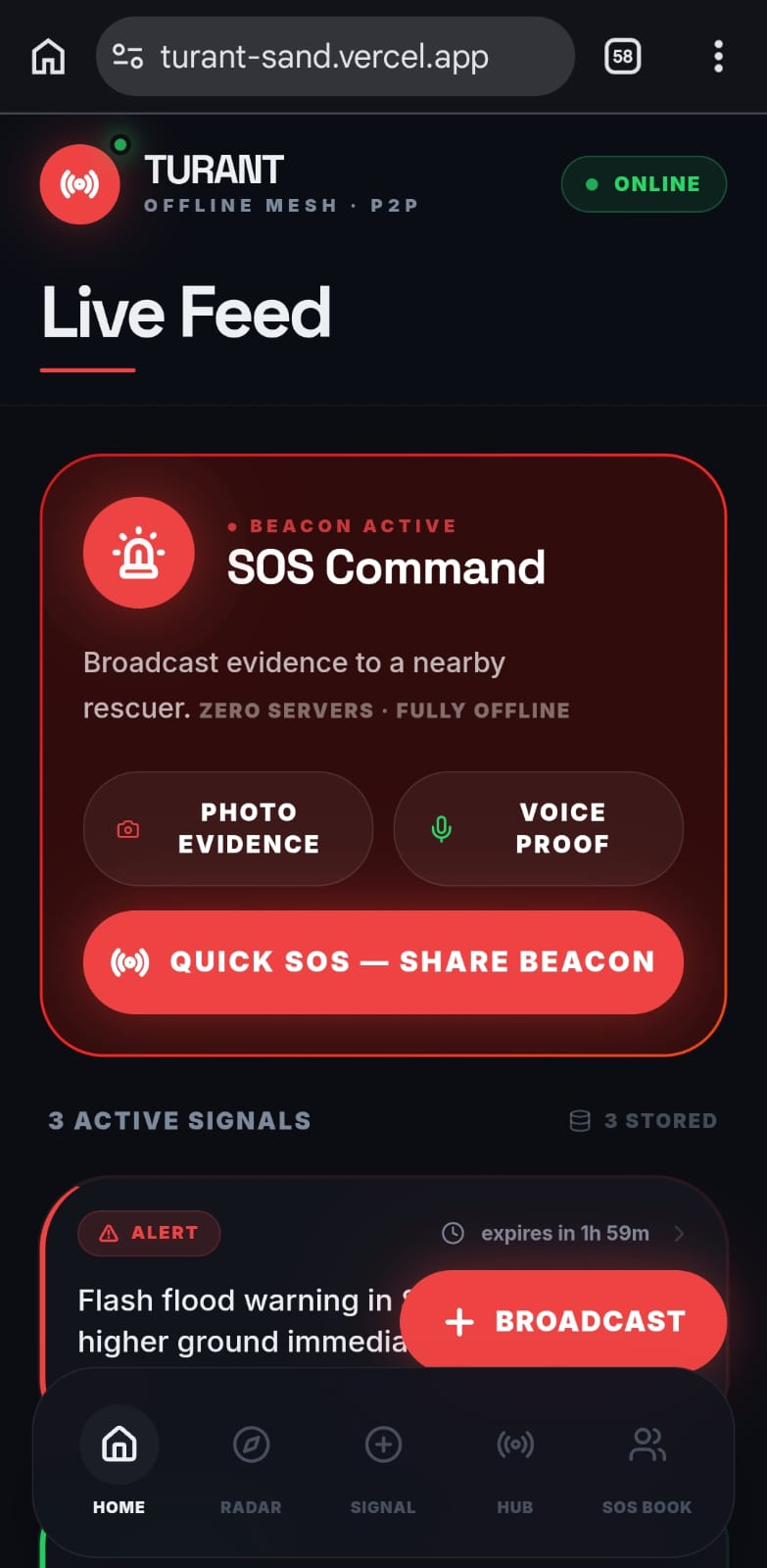
TURANT is an offline-first mesh communication protocol. It allows users to:
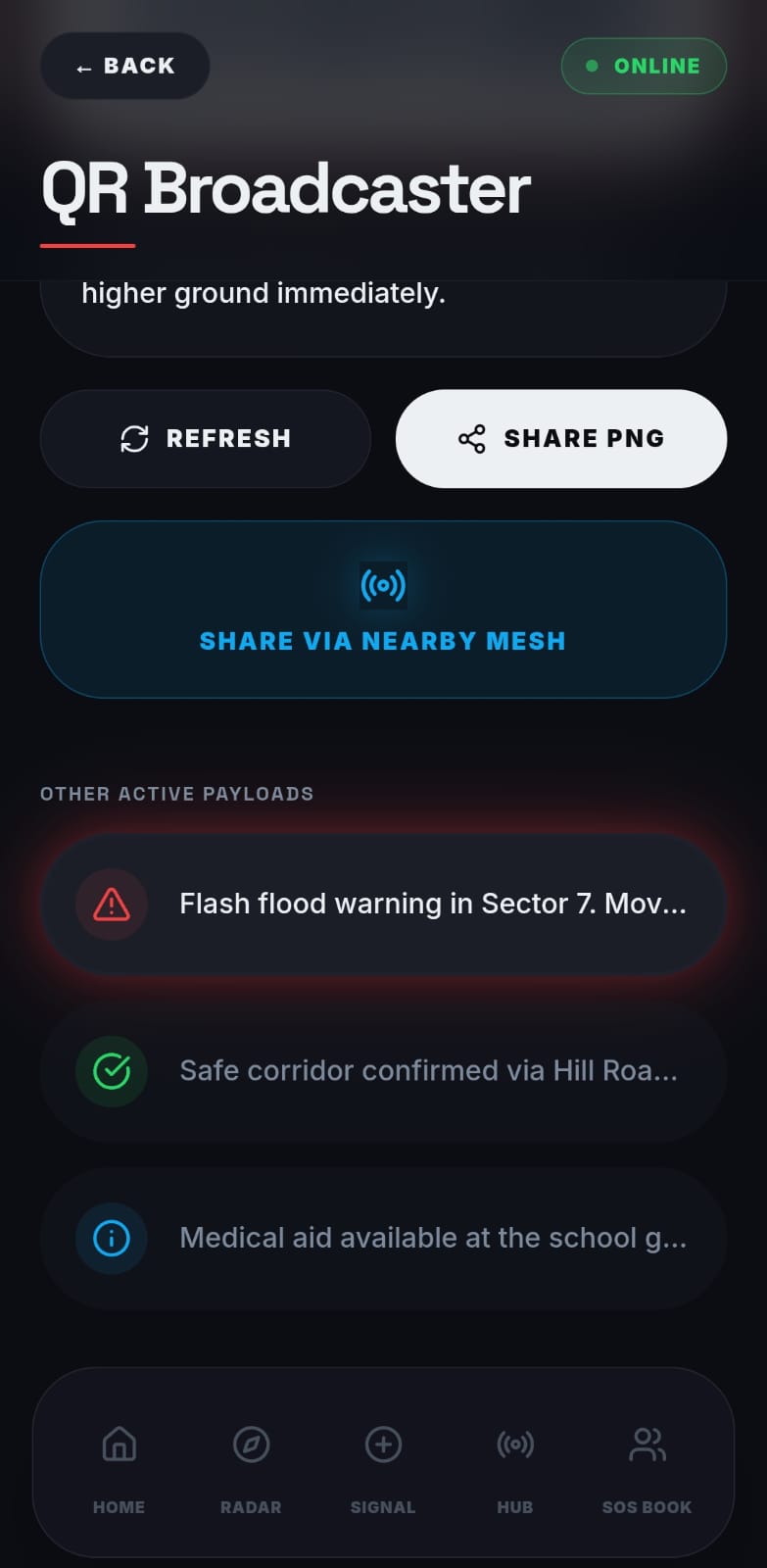
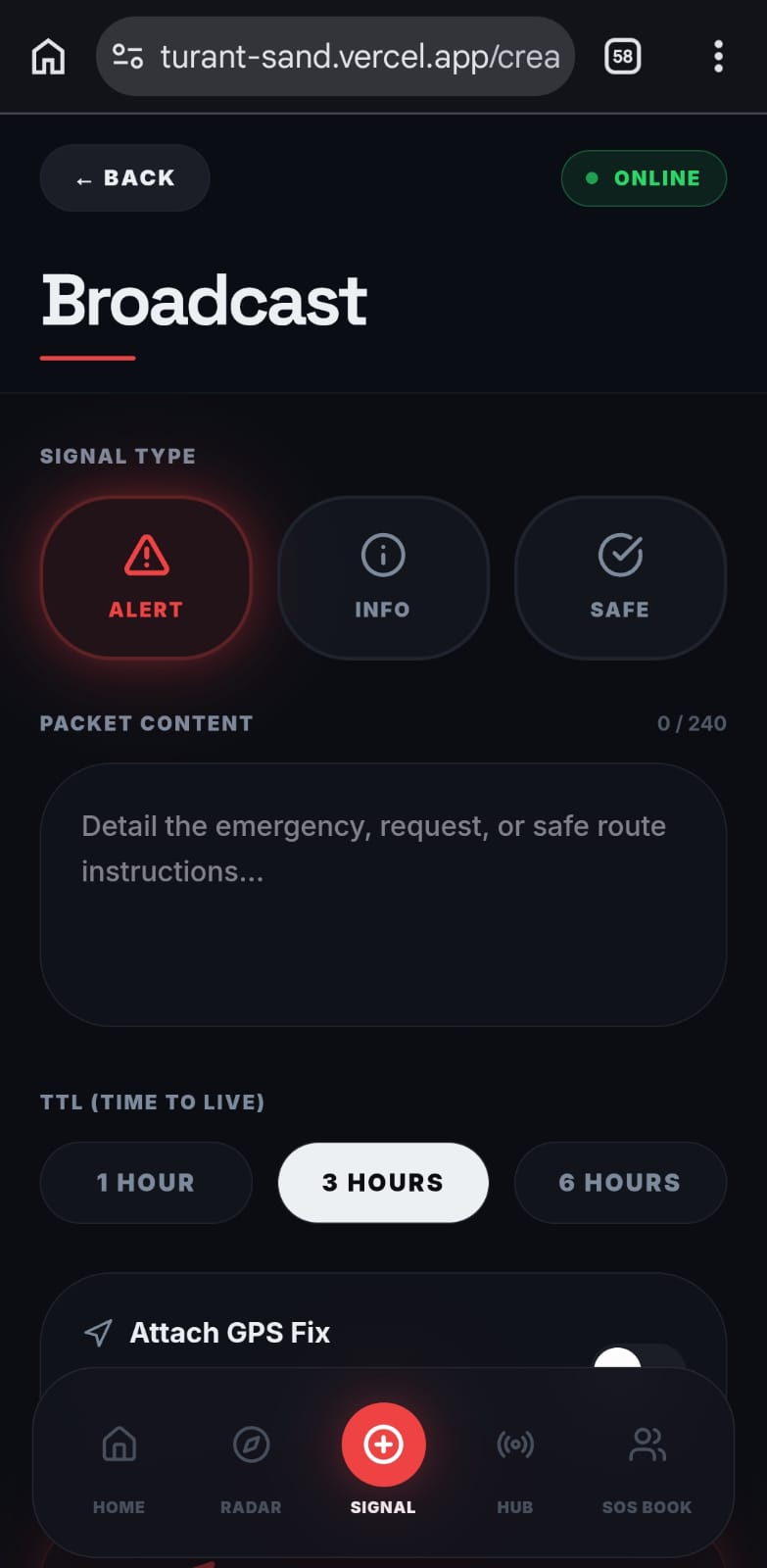
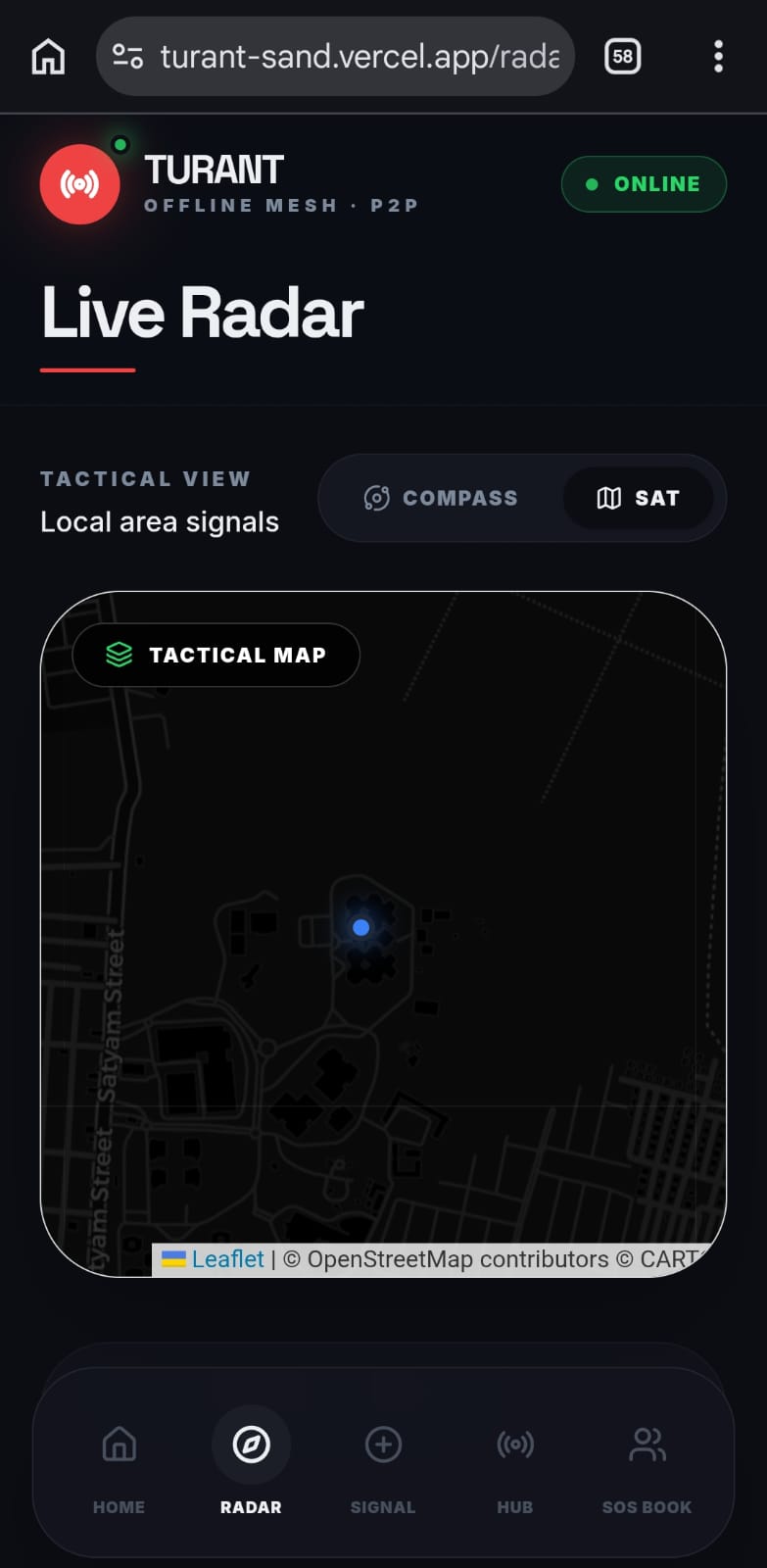
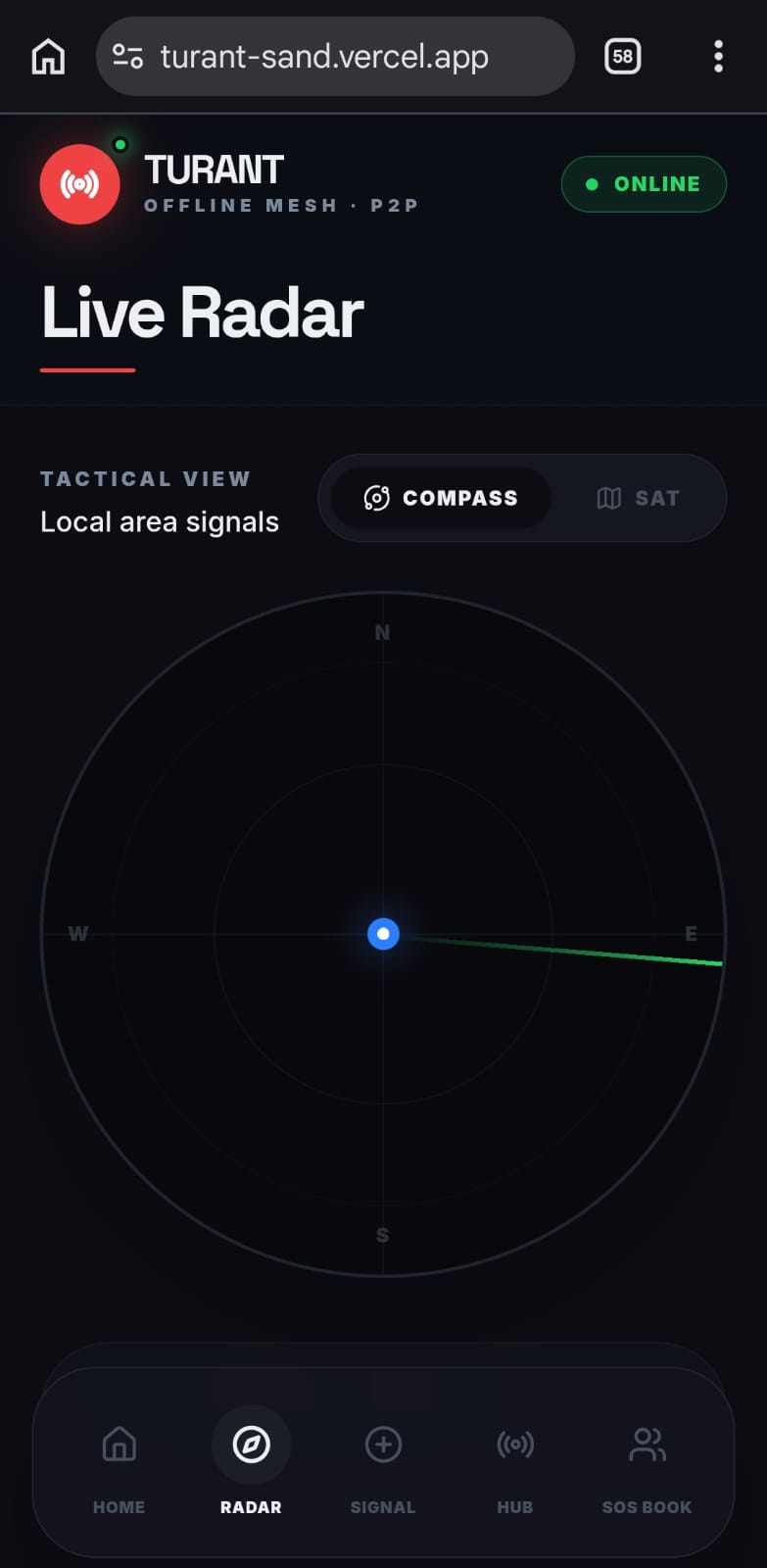
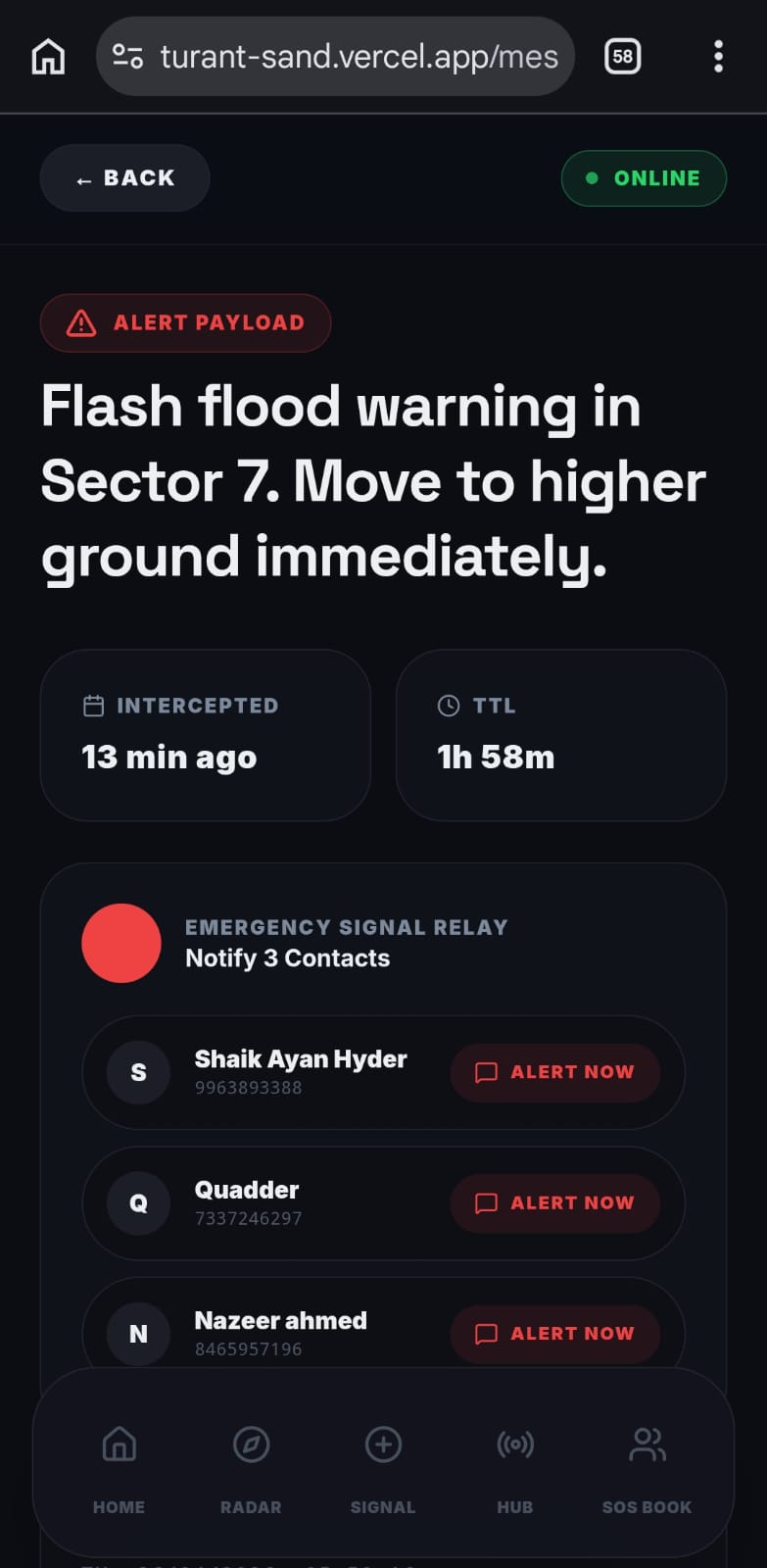
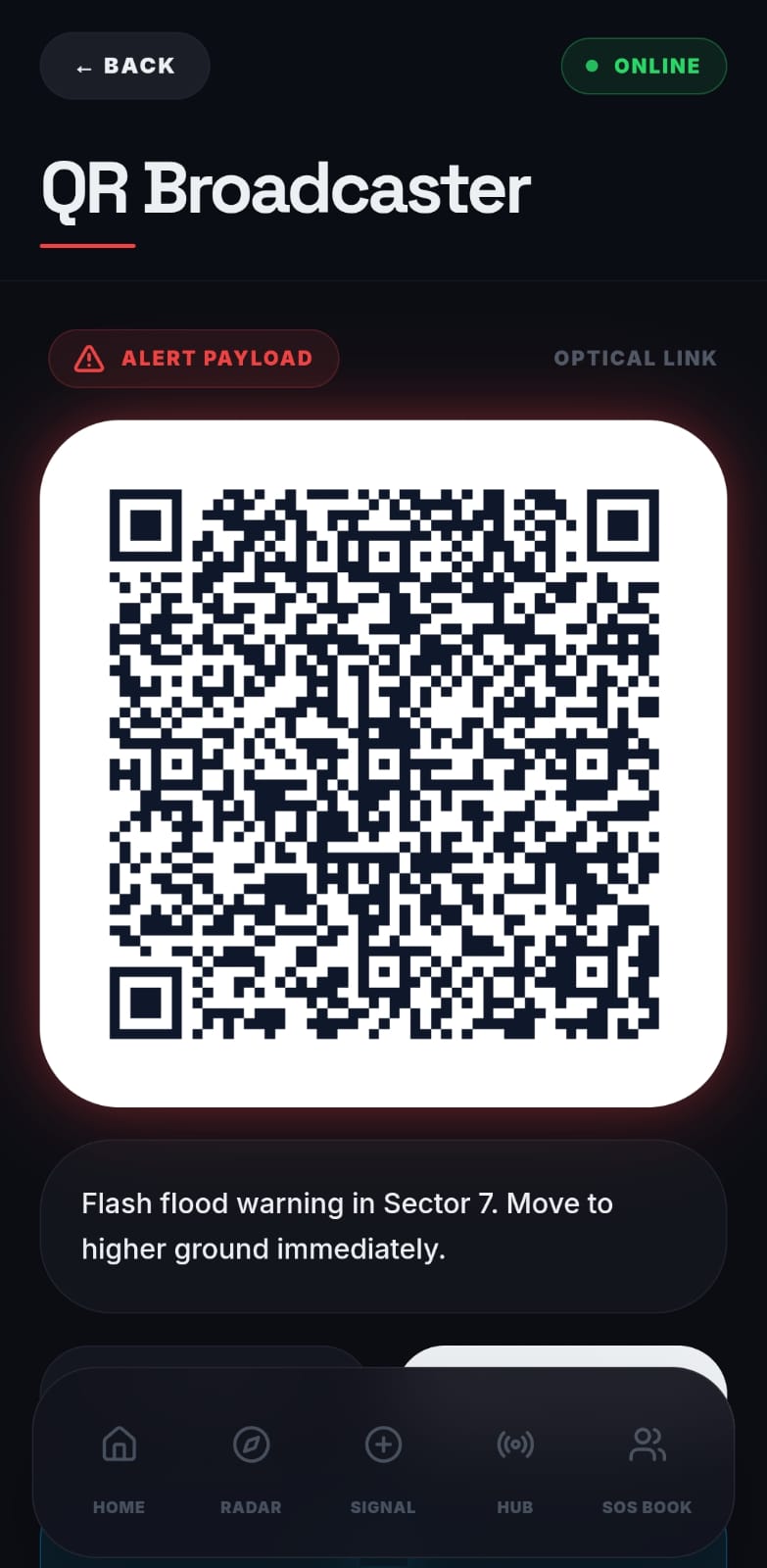
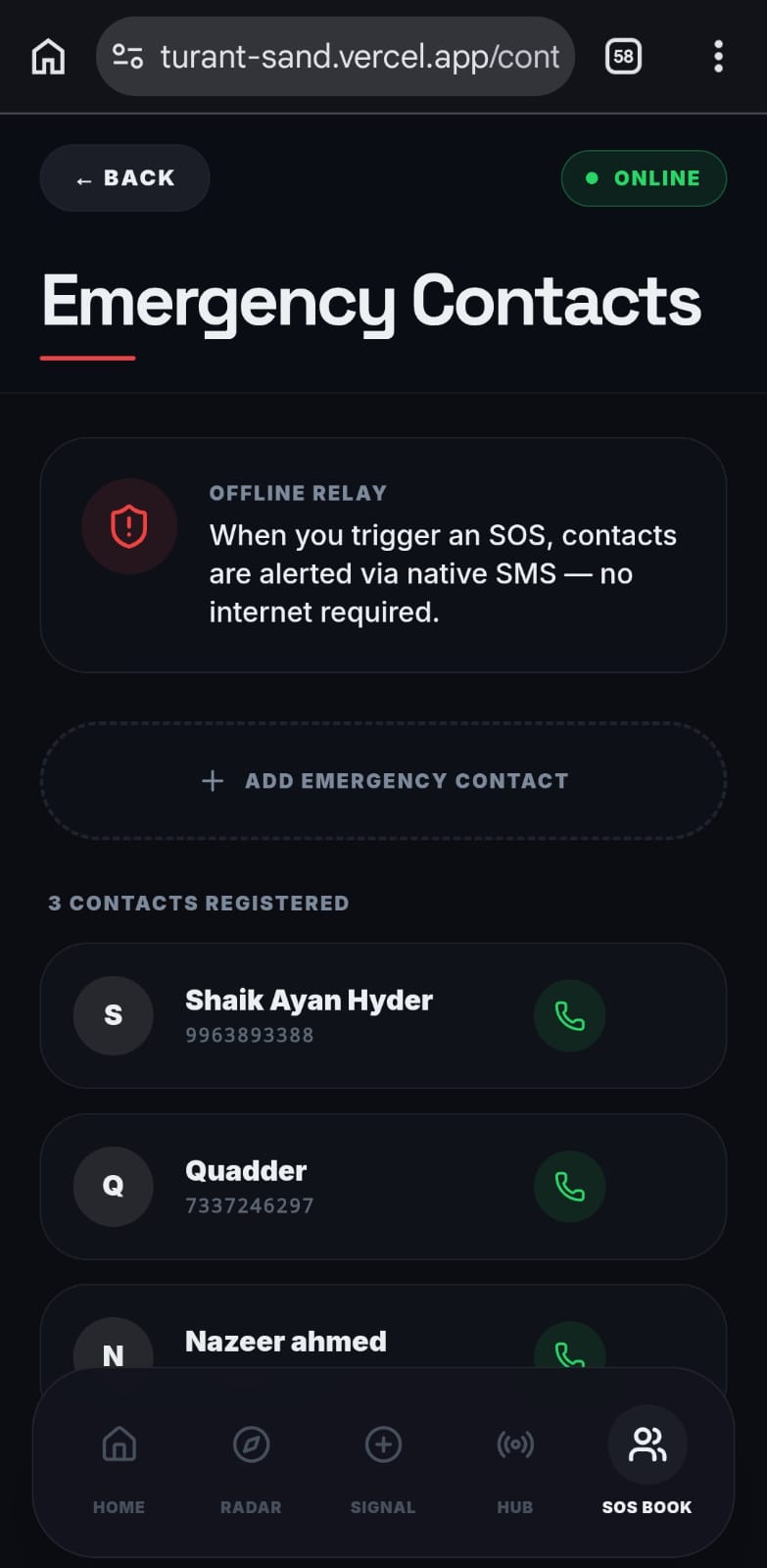
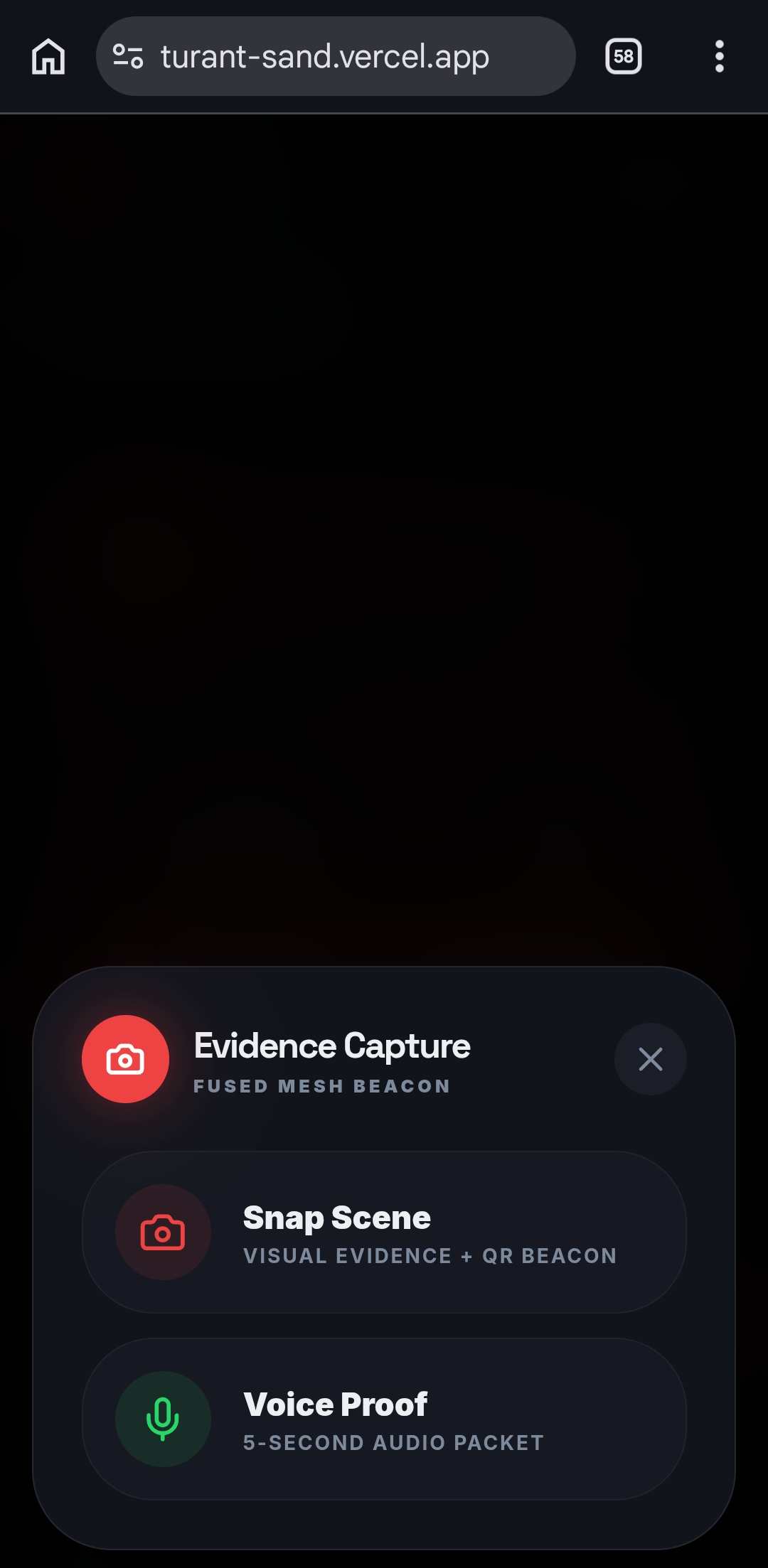
Broadcast Alerts: Share SOS signals, local news, and resource locations without internet or cell service. Fuse Evidence: Capture photos and 5-second voice memos that are programmatically "baked" into QR beacons. Tactical Routing: Share multi-point navigation paths (Safe Routes) with step-by-step instructions. Optical Mesh: Sync data across devices (even between iOS and Android) using high-density QR exchange. Physical Nodes: Generate printable A4 posters that turn any physical wall into a digital data drop for the community.
How we built it
We engineered TURANT as a 100% client-side Progressive Web App (PWA).
Storage: We used IndexedDB for high-performance local NoSQL storage of binary blobs (audio/images). Offline Engine: Service Workers and Cache Storage ensure the app remains resident on the device even in Airplane Mode. Propagation: We built a custom serialization protocol to compress tactical data into Base64-encoded QR payloads. Interface: Built with React and Tailwind CSS, featuring a tactical dark-mode UI optimized for low-light environments.
Challenges we ran into
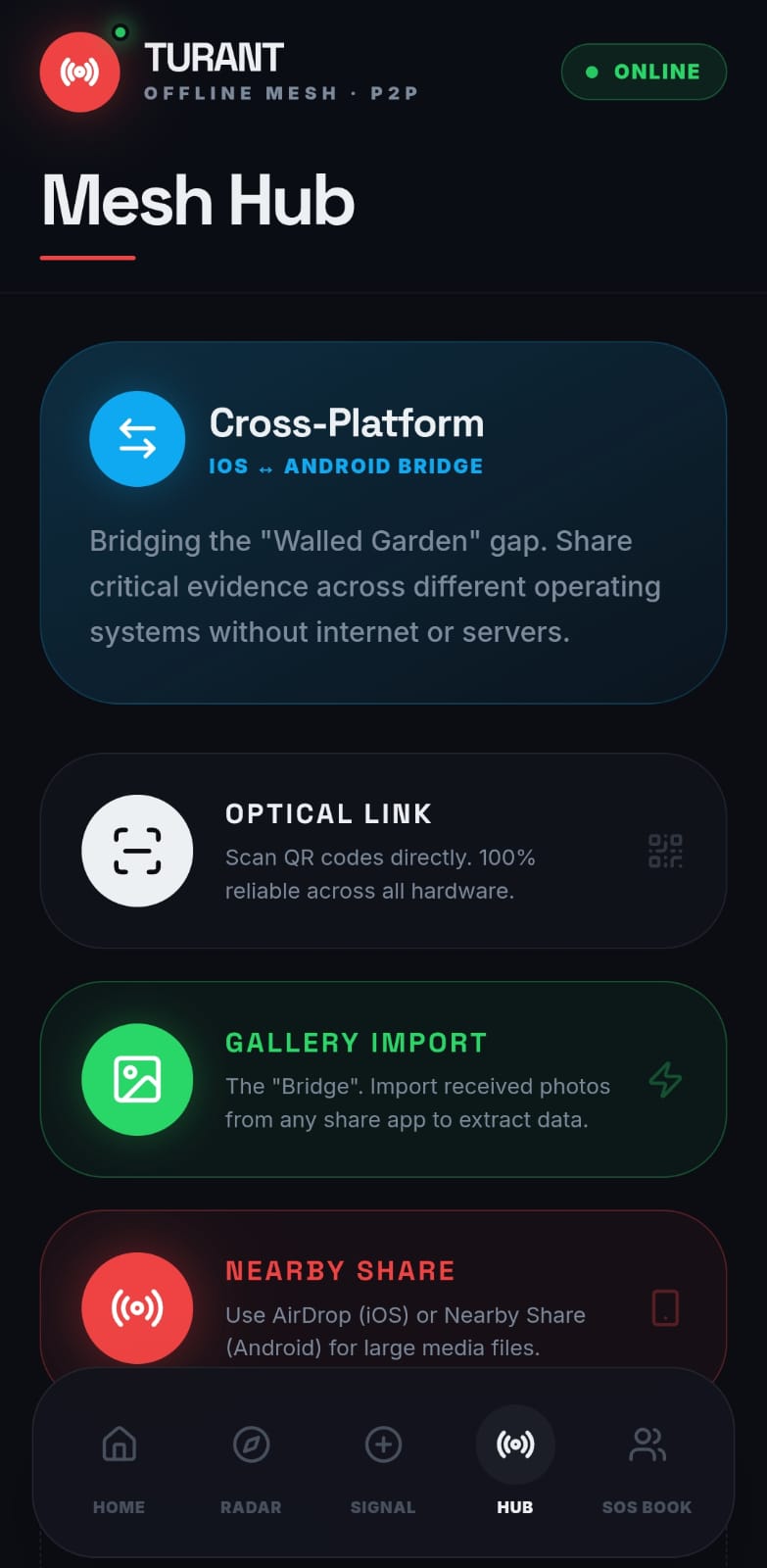
The Walled Garden: iOS and Android don't easily share files offline via native means like AirDrop. We solved this by using the "Gallery Import Bridge," where media is shared as an image and the data is reconstructed optically. Data Density: Fitting GPS, timestamps, categories, and navigation checkpoints into a scannable QR code required aggressive JSON key minification and compression. Canvas Compositing: Programmatically embedding QR codes into camera frames while maintaining image quality for "Fused Evidence" required deep dives into the HTML5 Canvas API and blob management.
Accomplishments that we're proud of
100% Infrastructure-Free: We successfully demonstrated a multi-device relay (Device A → B → C) with all devices in Airplane Mode. Cross-Platform Parity: Achieving seamless data exchange between different operating systems using only light and cameras. Tactical Resilience: Implementing an auto-purging TTL (Time-To-Live) system that protects user privacy by automatically wiping sensitive evidence after a crisis has passed.
What we learned
We learned that the modern web browser is far more powerful than most people realize. By treating the browser as an operating system rather than just a viewer, we could implement a complete P2P protocol without a single line of backend code. We also gained deep experience in data serialization and the physics of optical data transfer.
What's next for TURANT
LoRa Integration: Bridging our web mesh with long-range radio hardware for kilometer-scale communication. Mesh Encryption: Implementing local-key cryptographic signatures to verify the authenticity of news without a central authority. Distributed Sharding: Allowing large files (like long videos) to be broken into fragments and "carried" by multiple people across the mesh to be reconstructed later.
Built With
- browserbased
- crisiscomms
- decentralized
- disastertech
- emergencyresponse
- gps
- meshnetwork
- offlinefirst
- p2p
- privacy
- pwa
- react
- security
- typescript

Log in or sign up for Devpost to join the conversation.